搜索此博客

2026年3月20日星期五

Modernization theory

From Wikipedia, the free encyclopedia
https://en.wikipedia.org/wiki/Modernization_theory

Modernization theory or modernisation theory holds that as societies become more economically modernized, wealthier, and more educated, their political institutions become increasingly liberal democratic and rationalist. The "classical" theories of modernization of the 1950s and 1960s, most influentially articulated by Seymour Lipset, drew on sociological analyses of Karl Marx, Émile Durkheim, Max Weber, and Talcott Parsons. Modernization theory was a dominant paradigm in the social sciences in the 1950s and 1960s, and saw a resurgence after 1991, when Francis Fukuyama wrote about the end of the Cold War as confirmation of modernization theory.

The theory is the subject of much debate among scholars. Critics have highlighted cases where industrialization did not prompt stable democratization, such as Japan, Germany, and the Soviet Union, as well as cases of democratic backsliding in economically advanced parts of Latin America. Other critics argue the causal relationship is reverse (democracy is more likely to lead to economic modernization) or that economic modernization helps democracies survive but does not prompt democratization. Other scholars provide supporting evidence, showing that economic development significantly predicts democratization.

History

The modernization theory of the 1950s and 1960s drew on classical evolutionary theory and a Parsonian reading of Weber's ideas about a transition from traditional to modern society. Parsons had translated Weber's works into English in the 1930s and provided his own interpretation.

After 1945, the Parsonian version became widely used in sociology and other social sciences. Some of the thinkers associated with modernization theory are Marion J. Levy Jr., Gabriel Almond, Seymour Martin Lipset, Walt Rostow, Daniel Lerner, Lucian Pye, David Apter, Alex Inkeles, Cyril Edwin Black, Bert F. Hoselitz, Myron Weiner, and Karl Deutsch.

By the late 1960s opposition to modernization theory developed because the theory was too general and did not fit all societies in quite the same way. Yet, with the end of the Cold War, a few attempts to revive modernization theory were carried out. Francis Fukuyama argued for the use of modernization theory as universal history. A more academic effort to revise modernization theory was that of Ronald Inglehart and Christian Welzel in Modernization, Cultural Change, and Democracy (2005). Inglehart and Welzel amended the 1960s version of modernization theory in significant ways. Counter to Lipset, who associated industrial growth with democratization, Inglehart and Welzel did not see an association between industrialization and democratization. Rather, they held that only at a latter stage in the process of economic modernization, which various authors have characterized as post-industrial, did values conducive to democratization – which Inglehart and Welzel call "self-expression values" – emerge.

Nonetheless, these efforts to revive modernization theory were criticized by many, and the theory remained a controversial one.

Modernization and democracy

The relationship between modernization and democracy or democratization is one of the most researched studies in comparative politics. Many studies show that modernization has contributed to democracy in some countries. For example, Seymour Martin Lipset argued that modernization can turn into democracy. There is academic debate over the drivers of democracy because there are theories that support economic growth as both a cause and effect of the institution of democracy. "Lipset's observation that democracy is related to economic development, first advanced in 1959, has generated the largest body of research on any topic in comparative politics,"

Anderson explains the idea of an elongated diamond in order to describe the concentration of power in the hands of a few at the top during an authoritarian leadership. He develops this by giving an understanding of the shift in power from the elite class to the middle class that occurs when modernization is incorporated. Socioeconomic modernization allows for a democracy to further develop and influences the success of a democracy. Concluded from this, is the idea that as socioeconomic levels are leveled, democracy levels would further increase.

Larry Diamond and Juan Linz, who worked with Lipset in the book, Democracy in Developing Countries: Latin America, argue that economic performance affects the development of democracy in at least three ways. First, they argue that economic growth is more important for democracy than given levels of socioeconomic development. Second, socioeconomic development generates social changes that can potentially facilitate democratization. Third, socioeconomic development promotes other changes, like organization of the middle class, which is conducive to democracy.

As Seymour Martin Lipset put it, "All the various aspects of economic development—industrialization, urbanization, wealth and education—are so closely interrelated as to form one major factor which has the political correlate of democracy". The argument also appears in Walt W. Rostow, Politics and the Stages of Growth (1971); A. F. K. Organski, The Stages of Political Development (1965); and David Apter, The Politics of Modernization (1965). In the 1960s, some critics argued that the link between modernization and democracy was based too much on the example of European history and neglected the Third World.

One historical problem with that argument has always been Germany, whose economic modernization in the 19th century came long before the democratization after 1918. Political science professor Berman, however, concludes that a process of democratization was underway in Imperial Germany, for "during these years Germans developed many of the habits and mores that are now thought by political scientists to augur healthy political development".

One contemporary problem for modernization theory is the argument of whether modernization implies more human rights for citizens or not. China, one of the most rapidly growing economies in the world, can be observed as an example. The modernization theory implies that this should correlate to democratic growth in some regards, especially in relation to the liberalization of the middle and lower classes. However, active human rights abuses and constant oppression of Chinese citizens by the government seem to contradict the theory strongly. Interestingly enough, the irony is that increasing restrictions on Chinese citizens are a result of modernization theory.

In the 1990s, the Chinese government wanted to reform the legal system and emphasized governing the country by law. This led to a legal awakening for citizens as they were becoming more educated on the law, yet more understanding of their inequality in relation to the government. Looking down the line in the 2000s, Chinese citizens saw even more opportunities to liberalize and were able to be a part of urbanization and could access higher levels of education. This in turn resulted in the attitudes of the lower and middle classes changing to more liberal ideas, which went against the CCP. Over time, this has led to their active participation in civil society activities and similar adjacent political groups in order to make their voices heard. Consequently, the Chinese government represses Chinese citizens at a more aggressive rate, all due to modernization theory.

Ronald Inglehart and Christian Welzel contend that the realization of democracy is not based solely on an expressed desire for that form of government, but democracies are born as a result of the admixture of certain social and cultural factors. They argue the ideal social and cultural conditions for the foundation of a democracy are born of significant modernization and economic development that result in mass political participation.

Randall Peerenboom explores the relationships among democracy, the rule of law and their relationship to wealth by pointing to examples of Asian countries, such as Taiwan and South Korea, which have successfully democratized only after economic growth reached relatively high levels and to examples of countries such as the Philippines, Bangladesh, Cambodia, Thailand, Indonesia and India, which sought to democratize at lower levels of wealth but have not done as well.

Adam Przeworski and others have challenged Lipset's argument. They say political regimes do not transition to democracy as per capita incomes rise. Rather, democratic transitions occur randomly, but once there, countries with higher levels of gross domestic product per capita remain democratic. Epstein et al. (2006) retest the modernization hypothesis using new data, new techniques, and a three-way, rather than dichotomous, classification of regimes. Contrary to Przeworski, this study finds that the modernization hypothesis stands up well. Partial democracies emerge as among the most important and least understood regime types.

Daron Acemoglu and James A. Robinson (2008) further weaken the case for Lipset's argument by showing that even though there is a strong cross-country correlation between income and democracy, once one controls for country fixed effects and removes the association between income per capita and various measures of democracy, there is "no causal effect of income on democracy." In "Non-Modernization" (2022), they further argue that modernization theory cannot account for various paths of political development "because it posits a link between economics and politics that is not conditional on institutions and culture and that presumes a definite endpoint—for example, an 'end of history'."

Sirianne Dahlum and Carl Henrik Knutsen offer a test of the Ronald Inglehart and Christian Welzel revised version of modernization theory, which focuses on cultural traits triggered by economic development that are presumed to be conducive to democratization. They find "no empirical support" for the Inglehart and Welzel thesis and conclude that "self-expression values do not enhance democracy levels or democratization chances, and neither do they stabilize existing democracies."

A meta-analysis by Gerardo L. Munck of research on Lipset's argument shows that a majority of studies do not support the thesis that higher levels of economic development leads to more democracy.

Modernization and economic development

Modernization theorists often saw traditions as obstacles to economic development. According to Seymour Martin Lipset, economic conditions are heavily determined by the cultural, social values present in that given society. Furthermore, while modernization might deliver violent, radical change for traditional societies, it was thought worth the price. Critics insist that traditional societies were often destroyed without ever gaining the promised advantages. Others point to improvements in living standards, physical infrastructure, education and economic opportunity to refute such criticisms.

Modernization theorists such as Samuel P. Huntington held in the 1960s and 1970s that authoritarian regimes yielded greater economic growth than democracies. However, this view had been challenged. In Democracy and Development: Political Institutions and Well-Being in the World, 1950–1990 (2000), Adam Przeworski argued that "democracies perform as well economically as do authoritarian regimes." A study by Daron Acemoglu, Suresh Naidu, Pascual Restrepo, and James A. Robinson shows that "democracy has a positive effect on GDP per capita."

Modernization and globalization

Globalization can be defined as the integration of economic, political and social cultures. It is argued that globalization is related to the spreading of modernization across borders.

Global trade has grown continuously since the European discovery of new continents in the early modern period; it increased particularly as a result of the Industrial Revolution and the mid-20th century adoption of the intermodal container.

Annual trans-border tourist arrivals rose to 456 million by 1990 and almost tripled since, reaching a total of over 1.2 billion in 2016. Communication is another major area that has grown due to modernization. Communication industries have enabled capitalism to spread throughout the world. Telephony, television broadcasts, news services and online service providers have played a crucial part in globalization. Former U.S. president Lyndon B. Johnson was a supporter of the modernization theory and believed that television had potential to provide educational tools in development.

With the many apparent positive attributes to globalization there are also negative consequences. The dominant, neoliberal model of globalization often increases disparities between a society's rich and its poor. In major cities of developing countries there exist pockets where technologies of the modernised world, computers, cell phones and satellite television, exist alongside stark poverty. Globalists are globalization modernization theorists and argue that globalization is positive for everyone, as its benefits must eventually extend to all members of society, including vulnerable groups such as women and children.

Applications

United States foreign aid in the 1960s

President John F. Kennedy (1961–1963) relied on economists W.W. Rostow on his staff and outsider John Kenneth Galbraith for ideas on how to promote rapid economic development in the "Third World", as it was called at the time. They promoted modernization models in order to reorient American aid to Asia, Africa and Latin America. In the Rostow version in his The Stages of Economic Growth (1960) progress must pass through five stages, and for underdeveloped world the critical stages were the second one, the transition, the third stage, the takeoff into self-sustaining growth. Rostow argued that American intervention could propel a country from the second to the third stage he expected that once it reached maturity, it would have a large energized middle class that would establish democracy and civil liberties and institutionalize human rights. The result was a comprehensive theory that could be used to challenge Marxist ideologies, and thereby repel communist advances. The model provided the foundation for the Alliance for Progress in Latin America, the Peace Corps, Food for Peace, and the Agency for International Development (AID). Kennedy proclaimed the 1960s the "Development Decade" and substantially increased the budget for foreign assistance. Modernization theory supplied the design, rationale, and justification for these programs. The goals proved much too ambitious, and the economists in a few years abandoned the European-based modernization model as inappropriate to the cultures they were trying to impact.

Kennedy and his top advisers were working from implicit ideological assumptions regarding modernization. They firmly believed modernity was not only good for the target populations, but was essential to avoid communism on the one hand or extreme control of traditional rural society by the very rich landowners on the other. They believed America had a duty, as the most modern country in the world, to promulgate this ideal to the poor nations of the Third World. They wanted programs that were altruistic, and benevolent—and also tough, energetic, and determined. It was benevolence with a foreign policy purpose. Michael Latham has identified how this ideology worked out in three major programs: the Alliance for Progress, the Peace Corps, and the strategic hamlet program in South Vietnam. However, Latham argues that the ideology was a non-coercive version of the modernization goals of the imperialistic of Britain, France and other European countries in the 19th century.

Criticisms and alternatives

Anarchist protest against Trump and democratic backsliding in the United States

From the 1970s, modernization theory has been criticized by numerous scholars, including Andre Gunder Frank (1929–2005) and Immanuel Wallerstein (1930–2019). In this model, the modernization of a society required the destruction of the indigenous culture and its replacement by a more Westernized one. By one definition, modern simply refers to the present, and any society still in existence is therefore modern. Proponents of modernization typically view only Western society as being truly modern and argue that others are primitive or unevolved by comparison. That view sees unmodernized societies as inferior even if they have the same standard of living as western societies. Opponents argue that modernity is independent of culture and can be adapted to any society. Japan is cited as an example by both sides. Some see it as proof that a thoroughly modern way of life can exist in a non western society. Others argue that Japan has become distinctly more Western as a result of its modernization.

As Tipps has argued, by conflating modernization with other processes, with which theorists use interchangeably (democratization, liberalization, development), the term becomes imprecise and therefore difficult to disprove.

The theory has also been criticised empirically, as modernization theorists ignore external sources of change in societies. The binary between traditional and modern is unhelpful, as the two are linked and often interdependent, and "modernization" does not come as a whole.

Modernization theory has also been accused of being Eurocentric, as modernization began in Europe, with the Industrial Revolution, the French Revolution and the Revolutions of 1848 and has long been regarded as reaching its most advanced stage in Europe. Anthropologists typically make their criticism one step further and say that the view is ethnocentric and is specific to Western culture.

Dependency theory

One alternative model is dependency theory. It emerged in the 1950s and argues that the underdevelopment of poor nations in the Third World derived from systematic imperial and neo-colonial exploitation of raw materials. Its proponents argue that resources typically flow from a "periphery" of poor and underdeveloped states to a "core" of wealthy states, enriching the latter at the expense of the former. It is a central contention of dependency theorists such as Andre Gunder Frank that poor states are impoverished and rich ones enriched by the way poor states are integrated into the "world system".

Dependency models arose from a growing association of southern hemisphere nationalists (from Latin America and Africa) and Marxists. It was their reaction against modernization theory, which held that all societies progress through similar stages of development, that today's underdeveloped areas are thus in a similar situation to that of today's developed areas at some time in the past, and that, therefore, the task of helping the underdeveloped areas out of poverty is to accelerate them along this supposed common path of development, by various means such as investment, technology transfers, and closer integration into the world market. Dependency theory rejected this view, arguing that underdeveloped countries are not merely primitive versions of developed countries, but have unique features and structures of their own; and, importantly, are in the situation of being the weaker members in a world market economy.

Barrington Moore and comparative historical analysis

Another line of critique of modernization theory was due to sociologist Barrington Moore Jr., in his Social Origins of Dictatorship and Democracy (1966). In this classic book, Moore argues there were at least "three routes to the modern world" - the liberal democratic, the fascist, and the communist - each deriving from the timing of industrialization and the social structure at the time of transition. Counter to modernization theory, Moore held that there was not one path to the modern world and that economic development did not always bring about democracy.

Guillermo O'Donnell and bureaucratic authoritarianism

Political scientist Guillermo O'Donnell, in his Modernization and Bureaucratic Authoritarianism (1973) challenged the thesis, advanced most notably by Seymour Martin Lipset, that industrialization produced democracy. In South America, O'Donnell argued, industrialization generated not democracy, but bureaucratic authoritarianism.

Acemoglu and Robinson and institutional economics

Economists Daron Acemoglu and James A. Robinson (2022), argue that modernization theory cannot account for various paths of political development "because it posits a link between economics and politics that is not conditional on institutions and culture and that presumes a definite endpoint—for example, an 'end of history'.

Phylogenetic tree

From Wikipedia, the free encyclopedia
https://en.wikipedia.org/wiki/Phylogenetic_tree

A phylogenetic tree or phylogeny is a graphical representation which shows the evolutionary history between a set of species or taxa during a specific time. In other words, it is a branching diagram or a tree showing the evolutionary relationships among various biological species or other entities based upon similarities and differences in their physical or genetic characteristics. In evolutionary biology, all life on Earth is theoretically part of a single phylogenetic tree, indicating common ancestry. Phylogenetics is the study of phylogenetic trees. The main challenge is to find a phylogenetic tree representing optimal evolutionary ancestry between a set of species or taxa. Computational phylogenetics (also phylogeny inference) focuses on the algorithms involved in finding optimal phylogenetic tree in the phylogenetic landscape.

Phylogenetic trees may be rooted or unrooted. In a rooted phylogenetic tree, each node with descendants represents the inferred most recent common ancestor of those descendants, and the edge lengths in some trees may be interpreted as time estimates. Each node is called a taxonomic unit. Internal nodes are generally called hypothetical taxonomic units, as they cannot be directly observed. Trees are useful in fields of biology such as bioinformatics, systematics, and phylogenetics. Unrooted trees illustrate only the relatedness of the leaf nodes and do not require the ancestral root to be known or inferred.

History

The idea of a tree of life arose from ancient notions of a ladder-like progression from lower into higher forms of life (such as in the Great Chain of Being). Early representations of "branching" phylogenetic trees include a "paleontological chart" showing the geological relationships among plants and animals in the book Elementary Geology, by Edward Hitchcock (first edition: 1840).

Charles Darwin featured a diagrammatic evolutionary "tree" in his 1859 book On the Origin of Species. Over a century later, evolutionary biologists still use tree diagrams to depict evolution because such diagrams effectively convey the concept that speciation occurs through the adaptive and semirandom splitting of lineages.

The term phylogenetic, or phylogeny, derives from the two ancient greek words φῦλον (phûlon), meaning "race, lineage", and γένεσις (génesis), meaning "origin, source".

Properties

Rooted tree

Rooted phylogenetic tree optimized for blind people. The lowest point of the tree is the root, which symbolizes the universal common ancestor to all living beings. The tree branches out into three main groups: Bacteria (left branch, letters a to i), Archea (middle branch, letters j to p) and Eukaryota (right branch, letters q to z). Each letter corresponds to a group of organisms, listed below this description. These letters and the description should be converted to Braille font, and printed using a Braille printer. The figure can be 3D printed by copying the png file and using Cura or other software to generate the Gcode for 3D printing.

A rooted phylogenetic tree (see two graphics at top) is a directed tree with a unique node — the root — corresponding to the (usually imputed) most recent common ancestor of all the entities at the leaves of the tree. The root node does not have a parent node, but serves as the parent of all other nodes in the tree. The root is therefore a node of degree 2, while other internal nodes have a minimum degree of 3 (where "degree" here refers to the total number of incoming and outgoing edges).

The most common method for rooting trees is the use of an uncontroversial outgroup—close enough to allow inference from trait data or molecular sequencing, but far enough to be a clear outgroup. Another method is midpoint rooting, or a tree can also be rooted by using a non-stationary substitution model.

Unrooted tree

An unrooted phylogenetic tree for myosin, a superfamily of proteins

Unrooted trees illustrate the relatedness of the leaf nodes without making assumptions about ancestry. They do not require the ancestral root to be known or inferred. Rooted trees can be generated from unrooted ones by inserting a root. Inferring the root of an unrooted tree requires some means of identifying ancestry. This is normally done by including an outgroup in the input data so that the root is necessarily between the outgroup and the rest of the taxa in the tree, or by introducing additional assumptions about the relative rates of evolution on each branch, such as an application of the molecular clock hypothesis.

Bifurcating versus multifurcating

Both rooted and unrooted trees can be either bifurcating or multifurcating. A rooted bifurcating tree has exactly two descendants arising from each interior node (that is, it forms a binary tree), and an unrooted bifurcating tree takes the form of an unrooted binary tree, a free tree with exactly three neighbors at each internal node. In contrast, a rooted multifurcating tree may have more than two children at some nodes and an unrooted multifurcating tree may have more than three neighbors at some nodes.

Labeled versus unlabeled

Both rooted and unrooted trees can be either labeled or unlabeled. A labeled tree has specific values assigned to its leaves, while an unlabeled tree, sometimes called a tree shape, defines a topology only. Some sequence-based trees built from a small genomic locus, such as Phylotree, feature internal nodes labeled with inferred ancestral haplotypes.

Enumerating trees

Increase in the total number of phylogenetic trees as a function of the number of labeled leaves: unrooted binary trees (blue diamonds), rooted binary trees (red circles), and rooted multifurcating or binary trees (green: triangles). The Y-axis scale is logarithmic.

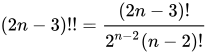
The number of possible trees for a given number of leaf nodes depends on the specific type of tree, but there are always more labeled than unlabeled trees, more multifurcating than bifurcating trees, and more rooted than unrooted trees. The last distinction is the most biologically relevant; it arises because there are many places on an unrooted tree to put the root. For bifurcating labeled trees, the total number of rooted trees is:

for , represents the number of leaf nodes.

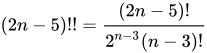
For bifurcating labeled trees, the total number of unrooted trees is:

for .

Among labeled bifurcating trees, the number of unrooted trees with leaves is equal to the number of rooted trees with leaves.

The number of rooted trees grows quickly as a function of the number of tips. For 10 tips, there are more than possible bifurcating trees, and the number of multifurcating trees rises faster, with ca. 7 times as many of the latter as of the former.

Counting trees.
Labeled
leaves
Binary
unrooted trees
Binary
rooted trees
Multifurcating
rooted trees
All possible
rooted trees
1 1 1 0 1
2 1 1 0 1
3 1 3 1 4
4 3 15 11 26
5 15 105 131 236
6 105 945 1,807 2,752
7 945 10,395 28,813 39,208
8 10,395 135,135 524,897 660,032
9 135,135 2,027,025 10,791,887 12,818,912
10 2,027,025 34,459,425 247,678,399 282,137,824

Special tree types

Dendrogram

A dendrogram is a general name for a tree, whether phylogenetic or not, and hence also for the diagrammatic representation of a phylogenetic tree.

Dendrogram of the phylogeny of some dog breeds

Cladogram

A cladogram only represents a branching pattern; i.e., its branch lengths do not represent time or relative amount of character change, and its internal nodes do not represent ancestors.

Phylogram

A phylogram is a phylogenetic tree that has branch lengths proportional to the amount of character change.

Chronogram

A chronogram is a phylogenetic tree that explicitly represents time through its branch lengths.

A chronogram of Lepidoptera. In this phylogenetic tree type, branch lengths are proportional to geological time.

Dahlgrenogram

A Dahlgrenogram is a diagram representing a cross section of a phylogenetic tree.

Phylogenetic network

A phylogenetic network is not strictly speaking a tree, but rather a more general graph, or a directed acyclic graph in the case of rooted networks. They are used to overcome some of the limitations inherent to trees.

Spindle diagram

A spindle diagram, showing the evolution of the vertebrates at class level, width of spindles indicating number of families. Spindle diagrams are often used in evolutionary taxonomy.

A spindle diagram, or bubble diagram, is often called a romerogram, after its popularisation by the American palaeontologist Alfred Romer. It represents taxonomic diversity (horizontal width) against geological time (vertical axis) in order to reflect the variation of abundance of various taxa through time. A spindle diagram is not an evolutionary tree: the taxonomic spindles obscure the actual relationships of the parent taxon to the daughter taxon and have the disadvantage of involving the paraphyly of the parental group. This type of diagram is no longer used in the form originally proposed.

Coral of life

The Coral of Life

Darwin also mentioned that the coral may be a more suitable metaphor than the tree. Indeed, phylogenetic corals are useful for portraying past and present life, and they have some advantages over trees (anastomoses allowed, etc.).

Construction

Phylogenetic trees composed with a nontrivial number of input sequences are constructed using computational phylogenetics methods. Distance-matrix methods such as neighbor-joining or UPGMA, which calculate genetic distance from multiple sequence alignments, are simplest to implement, but do not invoke an evolutionary model. Many sequence alignment methods such as ClustalW also create trees by using the simpler algorithms (i.e. those based on distance) of tree construction. Maximum parsimony is another simple method of estimating phylogenetic trees, but implies an implicit model of evolution (i.e. parsimony). More advanced methods use the optimality criterion of maximum likelihood, often within a Bayesian framework, and apply an explicit model of evolution to phylogenetic tree estimation. Identifying the optimal tree using many of these techniques is NP-hard, so heuristic search and optimization methods are used in combination with tree-scoring functions to identify a reasonably good tree that fits the data.

Tree-building methods can be assessed on the basis of several criteria:

  • efficiency (how long does it take to compute the answer, how much memory does it need?)
  • power (does it make good use of the data, or is information being wasted?)
  • consistency (will it converge on the same answer repeatedly, if each time given different data for the same model problem?)
  • robustness (does it cope well with violations of the assumptions of the underlying model?)
  • falsifiability (does it alert us when it is not good to use, i.e. when assumptions are violated?)

Tree-building techniques have also gained the attention of mathematicians. Trees can also be built using T-theory.

File formats

Trees can be encoded in a number of different formats, all of which must represent the nested structure of a tree. They may or may not encode branch lengths and other features. Standardized formats are critical for distributing and sharing trees without relying on graphics output that is hard to import into existing software. Commonly used formats are

Limitations of phylogenetic analysis

Although phylogenetic trees produced on the basis of sequenced genes or genomic data in different species can provide evolutionary insight, these analyses have important limitations. Most importantly, the trees that they generate are not necessarily correct – they do not necessarily accurately represent the evolutionary history of the included taxa. As with any scientific result, they are subject to falsification by further study (e.g., gathering of additional data, analyzing the existing data with improved methods). The data on which they are based may be noisy; the analysis can be confounded by genetic recombinationhorizontal gene transferhybridisation between species that were not nearest neighbors on the tree before hybridisation takes place, and conserved sequences.

Also, there are problems in basing an analysis on a single type of character, such as a single gene or protein or only on morphological analysis, because such trees constructed from another unrelated data source often differ from the first, and therefore great care is needed in inferring phylogenetic relationships among species. This is most true of genetic material that is subject to lateral gene transfer and recombination, where different haplotype blocks can have different histories. In these types of analysis, the output tree of a phylogenetic analysis of a single gene is an estimate of the gene's phylogeny (i.e. a gene tree) and not the phylogeny of the taxa (i.e. species tree) from which these characters were sampled, though ideally, both should be very close. For this reason, serious phylogenetic studies generally use a combination of genes that come from different genomic sources (e.g., from mitochondrial or plastid vs. nuclear genomes), or genes that would be expected to evolve under different selective regimes, so that homoplasy (false homology) would be unlikely to result from natural selection.

When extinct species are included as terminal nodes in an analysis (rather than, for example, to constrain internal nodes), they are considered not to represent direct ancestors of any extant species. Extinct species do not typically contain high-quality DNA.

The range of useful DNA materials has expanded with advances in extraction and sequencing technologies. Development of technologies able to infer sequences from smaller fragments, or from spatial patterns of DNA degradation products, would further expand the range of DNA considered useful.

Phylogenetic trees can also be inferred from a range of other data types, including morphology, the presence or absence of particular types of genes, insertion and deletion events – and any other observation thought to contain an evolutionary signal.

Phylogenetic networks are used when bifurcating trees are not suitable, due to these complications which suggest a more reticulate evolutionary history of the organisms sampled.

Symbiogenesis

From Wikipedia, the free encyclopedia
https://en.wikipedia.org/wiki/Symbiogenesis
In the theory of symbiogenesis, a merger of an archaean and an aerobic bacterium created the eukaryotes, with aerobic mitochondria; a second merger added chloroplasts, creating the green plants. The original theory by Lynn Margulis proposed an additional preliminary merger, but this is poorly supported and not now generally believed.

Symbiogenesis (endosymbiotic theory, or serial endosymbiotic theory) is the leading evolutionary theory of the origin of eukaryotic cells from prokaryotic organisms. The theory holds that mitochondria, plastids such as chloroplasts, and possibly other organelles of eukaryotic cells are descended from formerly free-living prokaryotes (more closely related to the Bacteria than to the Archaea) taken one inside the other in endosymbiosis. Mitochondria appear to be phylogenetically related to Rickettsiales bacteria, while chloroplasts are thought to be related to cyanobacteria.

The idea that chloroplasts were originally independent organisms that merged into a symbiotic relationship with other one-celled organisms dates back to the 19th century, when it was espoused by researchers such as Andreas Schimper. The endosymbiotic theory was articulated in 1905 and 1910 by the Russian botanist Konstantin Mereschkowski, and advanced and substantiated with microbiological evidence by Lynn Margulis in 1967.

Among the many lines of evidence supporting symbiogenesis are that mitochondria and plastids contain their own chromosomes and reproduce by splitting in two, parallel but separate from the sexual reproduction of the rest of the cell; that the chromosomes of some mitochondria and plastids are single circular DNA molecules similar to the circular chromosomes of bacteria; that the transport proteins called porins are found in the outer membranes of mitochondria and chloroplasts, and also bacterial cell membranes; and that cardiolipin is found only in the inner mitochondrial membrane and bacterial cell membranes.

History

Konstantin Mereschkowski's 1905 tree-of-life diagram, showing the origin of complex life-forms by two episodes of symbiogenesis, the incorporation of symbiotic bacteria to form successively nuclei and chloroplasts

The Russian botanist Konstantin Mereschkowski first outlined the theory of symbiogenesis (from Greek: σύν syn "together", βίος bios "life", and γένεσις genesis "origin, birth") in his 1905 work, The nature and origins of chromatophores in the plant kingdom, and then elaborated it in his 1910 The Theory of Two Plasms as the Basis of Symbiogenesis, a New Study of the Origins of Organisms.Mereschkowski proposed that complex life-forms had originated by two episodes of symbiogenesis, the incorporation of symbiotic bacteria to form successively nuclei and chloroplasts. Mereschkowski knew of the work of botanist Andreas Schimper. In 1883, Schimper had observed that the division of chloroplasts in green plants closely resembled that of free-living cyanobacteria. Schimper had tentatively proposed (in a footnote) that green plants had arisen from a symbiotic union of two organisms. In 1918 the French scientist Paul Jules Portier published Les Symbiotes, in which he claimed that the mitochondria originated from a symbiosis process. Ivan Wallin advocated the idea of an endosymbiotic origin of mitochondria in the 1920s. The Russian botanist Boris Kozo-Polyansky became the first to explain the theory in terms of Darwinian evolution. In his 1924 book A New Principle of Biology. Essay on the Theory of Symbiogenesis, he wrote, "The theory of symbiogenesis is a theory of selection relying on the phenomenon of symbiosis."

These theories did not gain traction until more detailed electron-microscopic comparisons between cyanobacteria and chloroplasts were made, such as by Hans Ris in 1961 and 1962. These, combined with the discovery that plastids and mitochondria contain their own DNA, led to a resurrection of the idea of symbiogenesis in the 1960s. Lynn Margulis advanced and substantiated the theory with microbiological evidence in a 1967 paper, On the origin of mitosing cells. In her 1981 work Symbiosis in Cell Evolution she argued that eukaryotic cells originated as communities of interacting entities, including endosymbiotic spirochaetes that developed into eukaryotic flagella and cilia. This last idea has not received much acceptance, because flagella lack DNA and do not show ultrastructural similarities to bacteria or to archaea (see also: Evolution of flagella and Prokaryotic cytoskeleton). According to Margulis and Dorion Sagan, "Life did not take over the globe by combat, but by networking" (i.e., by cooperation). Christian de Duve proposed that the peroxisomes may have been the first endosymbionts, allowing cells to withstand growing amounts of free molecular oxygen in the Earth's atmosphere. However, it now appears that peroxisomes may be formed de novo, contradicting the idea that they have a symbiotic origin. The fundamental theory of symbiogenesis as the origin of mitochondria and chloroplasts is now widely accepted.

Symbiogenesis revolutionized the history of evolution by proposing a mechanism for evolutionary development not encompassed in the original Darwininan vision. Symbiogenesis demonstrated that major evolutionary advancements, particularly the origin of eukaryotic cells, may have resulted from symbiotic mergers rather than from gradual mutations and individual competition, i.e., classical natural selection. Accordingly, symbiogenic theory suggests that endosymbiosis may be a powerful force in generating evolutionary novelty, beyond that which can be explained by natural selection alone.

From endosymbionts to organelles

An autogenous model of the origin of eukaryotic cells. Evidence now shows that a mitochondrion-less eukaryote has never existed, i.e. the nucleus was acquired at the same time as the mitochondria.

Biologists usually distinguish organelles from endosymbionts – whole organisms living inside other organisms – by their reduced genome sizes. As an endosymbiont evolves into an organelle, most of its genes are transferred to the host cell genome. The host cell and organelle therefore need to develop a transport mechanism that enables the return of the protein products needed by the organelle but now manufactured by the cell.

Free-living ancestors

Alphaproteobacteria were formerly thought to be the free-living organisms most closely related to mitochondria. Later research indicates that mitochondria are most closely related to Pelagibacterales bacteria, in particular, those in the SAR11 clade.

Nitrogen-fixing filamentous cyanobacteria are the free-living organisms most closely related to plastids.

Both cyanobacteria and alphaproteobacteria maintain a large (>6 Mb) genome encoding thousands of proteins. Plastids and mitochondria exhibit a dramatic reduction in genome size when compared with their bacterial relatives. Chloroplast genomes in photosynthetic organisms are normally 120–200 kb encoding 20–200 proteins and mitochondrial genomes in humans are approximately 16 kb and encode 37 genes, 13 of which are proteins. Using the example of the freshwater amoeboid, however, Paulinella chromatophora, which contains chromatophores found to be evolved from cyanobacteria, Keeling and Archibald argue that this is not the only possible criterion; another is that the host cell has assumed control of the regulation of the former endosymbiont's division, thereby synchronizing it with the cell's own division. Nowack and her colleagues gene sequenced the chromatophore (1.02 Mb) and found that only 867 proteins were encoded by these photosynthetic cells. Comparisons with their closest free living cyanobacteria of the genus Synechococcus (having a genome size 3 Mb, with 3300 genes) revealed that chromatophores had undergone a drastic genome shrinkage. Chromatophores contained genes that were accountable for photosynthesis but were deficient in genes that could carry out other biosynthetic functions; this observation suggests that these endosymbiotic cells are highly dependent on their hosts for their survival and growth mechanisms. Thus, these chromatophores were found to be non-functional for organelle-specific purposes when compared with mitochondria and plastids. This distinction could have promoted the early evolution of photosynthetic organelles.

The loss of genetic autonomy, that is, the loss of many genes from endosymbionts, occurred very early in evolutionary time. Taking into account the entire original endosymbiont genome, there are three main possible fates for genes over evolutionary time. The first is the loss of functionally redundant genes,[34] in which genes that are already represented in the nucleus are eventually lost. The second is the transfer of genes to the nucleus, while the third is that genes remain in the organelle that was once an organism. The loss of autonomy and integration of the endosymbiont with its host can be primarily attributed to nuclear gene transfer. As organelle genomes have been greatly reduced over evolutionary time, nuclear genes have expanded and become more complex. As a result, many plastid and mitochondrial processes are driven by nuclear encoded gene products. In addition, many nuclear genes originating from endosymbionts have acquired novel functions unrelated to their organelles.

Gene transfer mechanisms

The mechanisms of gene transfer are not fully known; however, multiple hypotheses exist to explain this phenomenon. The possible mechanisms include the Complementary DNA (cDNA) hypothesis and the bulk flow hypothesis.

The cDNA hypothesis involves the use of messenger RNA (mRNAs) to transport genes from organelles to the nucleus where they are converted to cDNA and incorporated into the genome. The cDNA hypothesis is based on studies of the genomes of flowering plants. Protein coding RNAs in mitochondria are spliced and edited using organelle-specific splice and editing sites. Nuclear copies of some mitochondrial genes, however, do not contain organelle-specific splice sites, suggesting a processed mRNA intermediate. The cDNA hypothesis has since been revised as edited mitochondrial cDNAs are unlikely to recombine with the nuclear genome and are more likely to recombine with their native mitochondrial genome. If the edited mitochondrial sequence recombines with the mitochondrial genome, mitochondrial splice sites would no longer exist in the mitochondrial genome. Any subsequent nuclear gene transfer would therefore also lack mitochondrial splice sites.

The bulk flow hypothesis is the alternative to the cDNA hypothesis, stating that escaped DNA, rather than mRNA, is the mechanism of gene transfer. According to this hypothesis, disturbances to organelles, including autophagy (normal cell destruction), gametogenesis (the formation of gametes), and cell stress release DNA which is imported into the nucleus and incorporated into the nuclear DNA using non-homologous end joining (repair of double stranded breaks). For example, in the initial stages of endosymbiosis, due to a lack of major gene transfer, the host cell had little to no control over the endosymbiont. The endosymbiont underwent cell division independently of the host cell, resulting in many "copies" of the endosymbiont within the host cell. Some of the endosymbionts lysed (burst), and high levels of DNA were incorporated into the nucleus. A similar mechanism is thought to occur in tobacco plants, which show a high rate of gene transfer and whose cells contain multiple chloroplasts. In addition, the bulk flow hypothesis is also supported by the presence of non-random clusters of organelle genes, suggesting the simultaneous movement of multiple genes.

Ford Doolittle proposed that (whatever the mechanism) gene transfer behaves like a ratchet, resulting in unidirectional transfer of genes from the organelle to the nuclear genome. When genetic material from an organelle is incorporated into the nuclear genome, either the organelle or nuclear copy of the gene may be lost from the population. If the organelle copy is lost and this is fixed, or lost through genetic drift, a gene is successfully transferred to the nucleus. If the nuclear copy is lost, horizontal gene transfer can occur again, and the cell can 'try again' to have successful transfer of genes to the nucleus. In this ratchet-like way, genes from an organelle would be expected to accumulate in the nuclear genome over evolutionary time.

Endosymbiosis of protomitochondria

Endosymbiotic theory for the origin of mitochondria suggests that the proto-eukaryote engulfed a protomitochondrion, and this endosymbiont became an organelle, a major step in eukaryogenesis, the creation of the eukaryotes.

Mitochondria

Internal symbiont: mitochondrion has a matrix and membranes, like a free-living alphaproteobacterial cell, from which it may derive.

Mitochondria are organelles that synthesize the energy-carrying molecule ATP for the cell by metabolizing carbon-based macromolecules. The presence of DNA in mitochondria and proteins, derived from mtDNA, suggest that this organelle may have been a prokaryote prior to its integration into the proto-eukaryote. Mitochondria are regarded as organelles rather than endosymbionts because mitochondria and the host cells share some parts of their genome, undergo division simultaneously, and provide each other with means to produce energy. The endomembrane system and nuclear membrane were hypothesized to have derived from the protomitochondria.

Nuclear membrane

The presence of a nucleus is one major difference between eukaryotes and prokaryotes. Some conserved nuclear proteins between eukaryotes and prokaryotes suggest that these two types had a common ancestor. Another theory behind nucleation is that early nuclear membrane proteins caused the cell membrane to fold and form a sphere with pores like the nuclear envelope. As a way of forming a nuclear membrane, endosymbiosis could be expected to use less energy than if the cell was to develop a metabolic process to fold the cell membrane for the purpose. Digesting engulfed cells without energy-producing mitochondria would have been challenging for the host cell. On this view, membrane-bound bubbles or vesicles leaving the protomitochondria may have formed the nuclear envelope.

The process of symbiogenesis by which the early eukaryotic cell integrated the proto-mitochondrion likely included protection of the archaeal host genome from the release of reactive oxygen species. These would have been formed during oxidative phosphorylation and ATP production by the proto-mitochondrion. The nuclear membrane may have evolved as an adaptive innovation for protecting against nuclear genome DNA damage caused by reactive oxygen species. Substantial transfer of genes from the ancestral proto-mitochondrial genome to the nuclear genome likely occurred during early eukaryotic evolution. The greater protection of the nuclear genome against reactive oxygen species afforded by the nuclear membrane may explain the adaptive benefit of this gene transfer.

Endomembrane system

Diagram of endomembrane system in eukaryotic cell

Modern eukaryotic cells use the endomembrane system to transport products and wastes in, within, and out of cells. The membrane of nuclear envelope and endomembrane vesicles are composed of similar membrane proteins. These vesicles also share similar membrane proteins with the organelle they originated from or are traveling towards. This suggests that what formed the nuclear membrane also formed the endomembrane system. Prokaryotes do not have a complex internal membrane network like eukaryotes, but they could produce extracellular vesicles from their outer membrane. After the early prokaryote was consumed by a proto-eukaryote, the prokaryote would have continued to produce vesicles that accumulated within the cell. Interaction of internal components of vesicles may have led to the endoplasmic reticulum and the Golgi apparatus, both being parts of the endomembrane system.

Cytoplasm

The syntrophy hypothesis, proposed by López-García and Moreira in 1998, suggested that eukaryotes arose by combining the metabolic capabilities of an archaean, a fermenting deltaproteobacterium, and a methanotrophic alphaproteobacterium which became the mitochondrion. In 2020, the same team updated their syntrophy proposal to cover an promethearchaeon that produced hydrogen with deltaproteobacterium that oxidised sulphur. A third organism, an alphaproteobacterium able to respire both aerobically and anaerobically, and to oxidise sulphur, developed into the mitochondrion; it may possibly also have been able to photosynthesise.

Date

The question of when the transition from prokaryotic to eukaryotic form occurred and when the first crown group eukaryotes appeared on earth is unresolved. The oldest known body fossils that can be positively assigned to the Eukaryota are acanthomorphic acritarchs from the 1.631 Gya Deonar Formation of India. These fossils can still be identified as derived post-nuclear eukaryotes with a sophisticated, morphology-generating cytoskeleton sustained by mitochondria. This fossil evidence indicates that endosymbiotic acquisition of alphaproteobacteria must have occurred before 1.6 Gya. Molecular clocks have also been used to estimate the last eukaryotic common ancestor, however these methods have large inherent uncertainty and give a wide range of dates. Reasonable results include the estimate of c. 1.8 Gya. A 2.3 Gya estimate also seems reasonable, and has the added attraction of coinciding with one of the most pronounced biogeochemical perturbations in Earth history, the early Palaeoproterozoic Great Oxygenation Event. The marked increase in atmospheric oxygen concentrations at that time has been suggested as a contributing cause of eukaryogenesis, inducing the evolution of oxygen-detoxifying mitochondria. Alternatively, the Great Oxidation Event might be a consequence of eukaryogenesis, and its impact on the export and burial of organic carbon.

Organellar genomes

Plastomes and mitogenomes

The human mitochondrial genome has retained genes encoding 2 rRNAs (blue), 22 tRNAs (white), and 13 redox proteins (yellow, orange, red).

Some endosymbiont genes remain in the organelles. Plastids and mitochondria retain genes encoding rRNAs, tRNAs, proteins involved in redox reactions, and proteins required for transcription, translation, and replication. There are many hypotheses to explain why organelles retain a small portion of their genome; however no one hypothesis will apply to all organisms, and the topic is still quite controversial. The hydrophobicity hypothesis states that highly hydrophobic (water hating) proteins (such as the membrane bound proteins involved in redox reactions) are not easily transported through the cytosol and therefore these proteins must be encoded in their respective organelles. The code disparity hypothesis states that the limit on transfer is due to differing genetic codes and RNA editing between the organelle and the nucleus. The redox control hypothesis states that genes encoding redox reaction proteins are retained in order to effectively couple the need for repair and the synthesis of these proteins. For example, if one of the photosystems is lost from the plastid, the intermediate electron carriers may lose or gain too many electrons, signalling the need for repair of a photosystem. The time delay involved in signalling the nucleus and transporting a cytosolic protein to the organelle results in the production of damaging reactive oxygen species. The final hypothesis states that the assembly of membrane proteins, particularly those involved in redox reactions, requires coordinated synthesis and assembly of subunits; however, translation and protein transport coordination is more difficult to control in the cytoplasm.

Non-photosynthetic plastid genomes

The majority of the genes in the mitochondria and plastids are related to the expression (transcription, translation and replication) of genes encoding proteins involved in either photosynthesis (in plastids) or cellular respiration (in mitochondria). One might predict that the loss of photosynthesis or cellular respiration would allow for the complete loss of the plastid genome or the mitochondrial genome respectively. While there are numerous examples of mitochondrial descendants (mitosomes and hydrogenosomes) that have lost their entire organellar genome, non-photosynthetic plastids tend to retain a small genome. There are two main hypotheses to explain this occurrence:

The essential tRNA hypothesis notes that there have been no documented functional plastid-to-nucleus gene transfers of genes encoding RNA products (tRNAs and rRNAs). As a result, plastids must make their own functional RNAs or import nuclear counterparts. The genes encoding tRNA-Glu and tRNA-fmet, however, appear to be indispensable. The plastid is responsible for haem biosynthesis, which requires plastid encoded tRNA-Glu (from the gene trnE) as a precursor molecule. Like other genes encoding RNAs, trnE cannot be transferred to the nucleus. In addition, it is unlikely trnE could be replaced by a cytosolic tRNA-Glu as trnE is highly conserved; single base changes in trnE have resulted in the loss of haem synthesis. The gene for tRNA-formylmethionine (tRNA-fmet) is also encoded in the plastid genome and is required for translation initiation in both plastids and mitochondria. A plastid is required to continue expressing the gene for tRNA-fmet so long as the mitochondrion is translating proteins.

The limited window hypothesis offers a more general explanation for the retention of genes in non-photosynthetic plastids. According to this hypothesis, genes are transferred to the nucleus following the disturbance of organelles. Disturbance was common in the early stages of endosymbiosis, however, once the host cell gained control of organelle division, eukaryotes could evolve to have only one plastid per cell. Having only one plastid severely limits gene transfer as the lysis of the single plastid would likely result in cell death. Consistent with this hypothesis, organisms with multiple plastids show an 80-fold increase in plastid-to-nucleus gene transfer compared with organisms with single plastids.

Evidence

There are many lines of evidence that mitochondria and plastids including chloroplasts arose from bacteria.

  • New mitochondria and plastids are formed only through binary fission, the form of cell division used by bacteria and archaea.
  • If a cell's mitochondria or chloroplasts are removed, the cell does not have the means to create new ones. In some algae, such as Euglena, the plastids can be destroyed by certain chemicals or prolonged absence of light without otherwise affecting the cell: the plastids do not regenerate.
  • Transport proteins called porins are found in the outer membranes of mitochondria and chloroplasts and are also found in bacterial cell membranes.
  • A membrane lipid cardiolipin is exclusively found in the inner mitochondrial membrane and bacterial cell membranes.
  • Some mitochondria and some plastids contain single circular DNA molecules that are similar to the DNA of bacteria both in size and structure.
  • Genome comparisons suggest a close relationship between mitochondria and Alphaproteobacteria.
  • Genome comparisons suggest a close relationship between plastids and cyanobacteria.
  • Many genes in the genomes of mitochondria and chloroplasts have been lost or transferred to the nucleus of the host cell. Consequently, the chromosomes of many eukaryotes contain genes that originated from the genomes of mitochondria and plastids.
  • Mitochondria and plastids contain their own ribosomes; these are more similar to those of bacteria (70S) than those of eukaryotes.
  • Proteins created by mitochondria and chloroplasts use N-formylmethionine as the initiating amino acid, as do proteins created by bacteria but not proteins created by eukaryotic nuclear genes or archaea.
Comparison of chloroplasts and cyanobacteria showing their similarities. Both chloroplasts and cyanobacteria have a double membrane, DNA, ribosomes, and chlorophyll-containing thylakoids.

Secondary endosymbiosis

Primary endosymbiosis involves the engulfment of a cell by another free living organism. Secondary endosymbiosis occurs when the product of primary endosymbiosis is itself engulfed and retained by another free living eukaryote. Secondary endosymbiosis has occurred several times and has given rise to extremely diverse groups of algae and other eukaryotes. Some organisms can take opportunistic advantage of a similar process, where they engulf an alga and use the products of its photosynthesis, but once the prey item dies (or is lost) the host returns to a free living state. Obligate secondary endosymbionts become dependent on their organelles and are unable to survive in their absence. A secondary endosymbiosis event involving an ancestral red alga and a heterotrophic eukaryote resulted in the evolution and diversification of several other photosynthetic lineages including Cryptophyta, Haptophyta, Stramenopiles (or Heterokontophyta), and Alveolata.

A possible secondary endosymbiosis has been observed in process in the heterotrophic protist Hatena. This organism behaves like a predator until it ingests a green alga, which loses its flagella and cytoskeleton but continues to live as a symbiont. Hatena meanwhile, now a host, switches to photosynthetic nutrition, gains the ability to move towards light, and loses its feeding apparatus.

Despite the diversity of organisms containing plastids, the morphology, biochemistry, genomic organisation, and molecular phylogeny of plastid RNAs and proteins suggest a single origin of all extant plastids – although this theory was still being debated in 2008.

Nitroplasts

A unicellular marine alga, Braarudosphaera bigelowii (a coccolithophore, which is a eukaryote), has been found with a cyanobacterium as an endosymbiont. The cyanobacterium forms a nitrogen-fixing structure, dubbed the nitroplast. It divides evenly when the host cell undergoes mitosis, and many of its proteins derive from the host alga, implying that the endosymbiont has proceeded far along the path towards becoming an organelle. The cyanobacterium is named Candidatus Atelocyanobacterium thalassa, and is abbreviated UCYN-A. The alga is the first eukaryote known to have the ability to fix nitrogen.

Human extinction

From Wikipedia, the free encyclopedia https://en.wikipedia.org/wiki/Human_ext...