The relative magnitude of the top 6 climate change feedbacks and what they influence. Positive feedbacks amplify the global warming response to greenhouse gas emissions and negative feedbacks reduce it. In this chart, the horizontal lengths of the red and blue bars indicate the strength of respective feedbacks.
While the overall sum of feedbacks is negative, it is becoming less negative as greenhouse gas emissions
continue. This means that warming is slower than it would be in the
absence of feedbacks, but that warming will accelerate if emissions
continue at current levels. Net feedbacks will stay negative largely because of increased thermal radiation as the planet warms, which is an effect that is several times larger than any other singular feedback. Accordingly, anthropogenic climate change alone cannot cause a runaway greenhouse effect.
Feedbacks can be divided into physical feedbacks and partially biological feedbacks. Physical feedbacks include decreased surface reflectivity (from diminished snow and ice cover) and increased water vapor in the atmosphere. Water vapor is not only a powerful greenhouse gas, it also influences feedbacks in the distribution of clouds and temperatures in the atmosphere. Biological feedbacks are mostly associated with changes to the rate at which plant matter accumulates CO2 as part of the carbon cycle. The carbon cycle absorbs more than half of CO2 emissions every year into plants and into the ocean. Over the long term the percentage will be reduced as carbon sinks become saturated and higher temperatures lead to effects like drought and wildfires.
Feedback strengths and relationships are estimated through global climate models, with their estimates calibrated against observational data whenever possible. Some feedbacks rapidly impact climate sensitivity, while the feedback response from ice sheets is drawn out over several centuries.Feedbacks can also result in localized differences, such as polar amplification
resulting from feedbacks that include reduced snow and ice cover. While
basic relationships are well understood, feedback uncertainty exists in
certain areas, particularly regarding cloud feedbacks. Carbon cycle uncertainty is driven by the large rates at which CO2 is both absorbed into plants and released when biomass burns or decays. For instance, permafrost thaw produces both CO2 and methane emissions in ways that are difficult to model.Climate change scenarios
use models to estimate how Earth will respond to greenhouse gas
emissions over time, including how feedbacks will change as the planet
warms.
The Planck response is the additional thermal radiation objects emit as they get warmer. Whether Planck response is a climate change feedback depends on the context. In climate science the Planck response can be treated as an intrinsic part of warming that is separate from radiative feedbacks and carbon cycle feedbacks. However, the Planck response is included when calculating climate sensitivity.
A feedback that amplifies an initial change is called a positive feedback while a feedback that reduces an initial change is called a negative feedback. Climate change feedbacks are in the context of global warming, so
positive feedbacks enhance warming and negative feedbacks diminish it.
Naming a feedback positive or negative does not imply that the feedback is good or bad.
The initial change that triggers a feedback may be externally forced, or may arise through the climate system's internal variability. External forcing refers to "a forcing agent outside the climate system causing a change in the climate system" that may push the climate system in the direction of warming or cooling.External forcings may be human-caused (for example, greenhouse gas emissions or land use change) or natural (for example, volcanic eruptions).
Physical feedbacks
Planck response (negative)
Climate change occurs because the amount of thermal radiation absorbed by different parts of the Earth's environment currently exceeds the amount radiated away to space. As the warming increases, outgoing radiation to space increases quickly
due to the Planck response, which eventually helps to stabilize the
Earth at some higher temperature level
Planck response is "the most fundamental feedback in the climate system". As the temperature of a black body increases, the emission of infrared radiation increases with the fourth power of its absolute temperature according to the Stefan–Boltzmann law. This increases the amount of outgoing radiation back into space as the Earth warms. It is a strong stabilizing response and has sometimes been called the "no-feedback response" because it is an intensive property of a thermodynamic system when considered to be purely a function of temperature. Although Earth has an effective emissivity
less than unity, the ideal black body radiation emerges as a separable
quantity when investigating perturbations to the planet's outgoing
radiation.
The Planck "feedback" or Planck response is the comparable radiative response obtained from analysis of practical observations or global climate models (GCMs). Its expected strength has been most simply estimated from the derivative of the Stefan-Boltzmann equation as −4σT3 = −3.8 W/m2·K (watts per square meter per degree of warming).Accounting from GCM applications has sometimes yielded a reduced strength, as caused by extensive properties of the stratosphere and similar residual artifacts subsequently identified as being absent from such models.
Most extensive "grey body" properties of Earth that influence the
outgoing radiation are usually postulated to be encompassed by the
other GCM feedback components, and to be distributed in accordance with a
particular forcing-feedback framework. Ideally the Planck response strength obtained from GCMs, indirect
measurements, and black body estimates will further converge as analysis
methods continue to mature.
Water vapor feedback (positive)
Atmospheric
gases only absorb some wavelengths of energy but are transparent to
others. The absorption patterns of water vapor (blue peaks) and carbon
dioxide (pink peaks) overlap in some wavelengths.
According to Clausius–Clapeyron relation, saturation vapor pressure
is higher in a warmer atmosphere, and so the absolute amount of water
vapor will increase as the atmosphere warms. It is sometimes also called
the specific humidity feedback, because relative humidity (RH) stays practically constant over the oceans, but it decreases over land. This occurs because land experiences faster warming than the ocean, and a decline in RH has been observed after the year 2000.
Since water vapor is a greenhouse gas,
the increase in water vapor content makes the atmosphere warm further,
which allows the atmosphere to hold still more water vapor. Thus, a
positive feedback loop is formed, which continues until the negative
feedbacks bring the system to equilibrium. Increases in atmospheric water vapor have been detected from satellites, and calculations based on these observations place this feedback strength at 1.85 ± 0.32 W/m2·K. This is very similar to model estimates, which are at 1.77 ± 0.20 W/m2·KEither value effectively doubles the warming that would otherwise occur from CO2 increases alone. Like with the other physical feedbacks, this is already accounted for in the warming projections under climate change scenarios.
Lapse rate (green) is a negative feedback everywhere on Earth besides the polar latitudes. The net climate feedback (black) becomes less negative if it were excluded (orange)
The lapse rate is the rate at which an atmospheric variable, normally temperature in Earth's atmosphere, falls with altitude. It is therefore a quantification of temperature, related to radiation,
as a function of altitude, and is not a separate phenomenon in this
context. The lapse rate feedback is generally a negative feedback.
However, it is in fact a positive feedback in polar regions where it
strongly contributed to polar amplified warming, one of the biggest
consequences of climate change. This is because in regions with strong inversions,
such as the polar regions, the lapse rate feedback can be positive
because the surface warms faster than higher altitudes, resulting in
inefficient longwave cooling.
The atmosphere's temperature decreases with height in the troposphere. Since emission of infrared radiation varies with temperature, longwave radiation
escaping to space from the relatively cold upper atmosphere is less
than that emitted toward the ground from the lower atmosphere. Thus, the
strength of the greenhouse effect depends on the atmosphere's rate of
temperature decrease with height. Both theory and climate models
indicate that global warming will reduce the rate of temperature
decrease with height, producing a negative lapse rate feedback that weakens the greenhouse effect.
Average decadal extent and area of the Arctic Ocean sea ice since the start of satellite observations.
Annual trend in the Arctic sea ice extent and area for the 2011-2022 time period.
Albedo
is the measure of how strongly the planetary surface can reflect solar
radiation, which prevents its absorption and thus has a cooling effect.
Brighter and more reflective surfaces have a high albedo and darker
surfaces have a low albedo, so they heat up more. The most reflective
surfaces are ice and snow,
so surface albedo changes are overwhelmingly associated with what is
known as the ice-albedo feedback. A minority of the effect is also
associated with changes in physical oceanography, soil moisture and vegetation cover.
The presence of ice cover and sea ice makes the North Pole and the South Pole colder than they would have been without it. During glacial periods, additional ice increases the reflectivity and thus lowers absorption of solar radiation, cooling the planet. But when warming occurs and the ice melts, darker land or open water
takes its place and this causes more warming, which in turn causes more
melting. In both cases, a self-reinforcing cycle continues until an
equilibrium is found. Consequently, recent Arctic sea ice decline
is a key reason behind the Arctic warming nearly four times faster than
the global average since 1979 (the start of continuous satellite
readings), in a phenomenon known as Arctic amplification. Conversely, the high stability of ice cover in Antarctica, where the East Antarctic ice sheet rises nearly 4 km above the sea level, means that it has experienced very little net warming over the past seven decades.
Aerial photograph showing a section of sea ice. The lighter blue areas are melt ponds
and the darkest areas are open water; both have a lower albedo than the
white sea ice, so their presence increases local and global
temperatures, which helps to spur more melting
As of 2021, the total surface feedback strength is estimated at 0.35 [0.10 to 0.60] W/m2·K. On its own, Arctic sea ice decline between 1979 and 2011 was responsible for 0.21 (W/m2) of radiative forcing. This is equivalent to a quarter of impact from CO2 emissions over the same period. The combined change in all sea ice cover between 1992 and 2018 is equivalent to 10% of all the anthropogenic greenhouse gas emissions. Ice-albedo feedback strength is not constant and depends on the rate of
ice loss - models project that under high warming, its strength peaks
around 2100 and declines afterwards, as most easily melted ice would
already be lost by then.
When CMIP5
models estimate a total loss of Arctic sea ice cover from June to
September (a plausible outcome under higher levels of warming), it
increases the global temperatures by 0.19 °C (0.34 °F), with a range of
0.16–0.21 °C, while the regional temperatures would increase by over
1.5 °C (2.7 °F). These calculations include second-order effects such as
the impact from ice loss on regional lapse rate, water vapor and cloud
feedbacks, and do not cause "additional" warming on top of the existing model projections.
Cloud feedback (positive)
Details of how clouds interact with shortwave and longwave radiation at different atmospheric heights
Seen from below, clouds emit infrared radiation back to the surface,
which has a warming effect; seen from above, clouds reflect sunlight and
emit infrared radiation to space, leading to a cooling effect. Low
clouds are bright and very reflective, so they lead to strong cooling,
while high clouds are too thin and transparent to effectively reflect
sunlight, so they cause overall warming. As a whole, clouds have a substantial cooling effect. However, climate change is expected to alter the distribution of cloud types in a way which collectively reduces their cooling and thus accelerates overall warming.While changes to clouds act as a negative feedback in some latitudes, they represent a clear positive feedback on a global scale.
As of 2021, cloud feedback strength is estimated at 0.42 [–0.10 to 0.94] W/m2·K. This is the largest confidence interval
of any climate feedback, and it occurs because some cloud types (most
of which are present over the oceans) have been very difficult to
observe, so climate models don't have as much data to go on with when
they attempt to simulate their behaviour. Additionally, clouds have been strongly affected by aerosol particles, mainly from the unfiltered burning of sulfur-rich fossil fuels such as coal and bunker fuel. Any estimate of cloud feedback needs to disentangle the effects of so-called global dimming caused by these particles as well.
Thus, estimates of cloud feedback differ sharply between climate
models. Models with the strongest cloud feedback have the highest climate sensitivity, which means that they simulate much stronger warming in response to a doubling of CO2 (or equivalent greenhouse gas) concentrations than the rest. Around 2020, a small fraction of models was found to simulate so much warming as the result that they had contradicted paleoclimate evidence from fossils, and their output was effectively excluded from the climate sensitivity estimate of the IPCC Sixth Assessment Report.
This diagram of the fast carbon cycle
shows the movement of carbon between land, atmosphere, soil and oceans
in billions of tons of carbon per year. Yellow numbers are natural
fluxes, red are human contributions in billions of tons of carbon per
year. White numbers indicate stored carbon.
There are positive and negative climate feedbacks from Earth's carbon
cycle. Negative feedbacks are large, and play a great role in the
studies of climate inertia or of dynamic (time-dependent) climate change. Because they are considered relatively
insensitive to temperature changes, they are sometimes considered
separately or disregarded in studies which aim to quantify climate
sensitivity. Global warming projections have included carbon cycle feedbacks since the IPCC Fourth Assessment Report (AR4) in 2007. While the scientific understanding of these feedbacks was limited at the time, it had improved since then. These positive feedbacks include an increase in wildfire frequency and severity, substantial losses from tropical rainforests due to fires and drying and tree losses elsewhere.
The Amazon rainforest
is a well-known example due to its enormous size and importance, and
because the damage it experiences from climate change is exacerbated by
the ongoing deforestation. The combination of two threats can potentially transform much or all of the rainforest to a savannah-like state, although this would most likely require relatively high warming of 3.5 °C (6.3 °F).
Altogether, carbon sinks
in the land and ocean absorb around half of the current emissions.
Their future absorption is dynamic. In the future, if the emissions
decrease, the fraction they absorb will increase, and they will absorb up to three-quarters of the remaining emissions - yet, the raw amount
absorbed will decrease from the present. On the contrary, if the
emissions will increase, then the raw amount absorbed will increase from
now, yet the fraction could decline to one-third by the end of the 21st
century.
If the emissions remain very high after the 21st century, carbon sinks
would eventually be completely overwhelmed, with the ocean sink
diminished further and land ecosystems outright becoming a net source. Hypothetically, very strong carbon dioxide removal could also result in land and ocean carbon sinks becoming net sources for several decades.
Role of oceans
The impulse response following a 100 GtC injection of CO2 into Earth's atmosphere. The majority of excess carbon is removed by ocean and land sinks in less than a few centuries, while a substantial portion persists.
Following Le Chatelier's principle, the chemical equilibrium of the Earth's carbon cycle will shift in response to anthropogenic CO2 emissions. The primary driver of this is the ocean, which absorbs anthropogenic CO2 via the so-called solubility pump. At present this accounts for only about one third of the current emissions, but ultimately most (~75%) of the CO2
emitted by human activities will dissolve in the ocean over a period of
centuries: "A better approximation of the lifetime of fossil fuel CO2 for public discussion might be 300 years, plus 25% that lasts forever". However, the rate at which the ocean will take it up in the future is less certain, and will be affected by stratification induced by warming and, potentially, changes in the ocean's thermohaline circulation. It is believed that the single largest factor in determining the total strength of the global carbon sink is the state of the Southern Ocean - particularly of the Southern Ocean overturning circulation.
Chemical weathering
Chemical weathering over the geological long term acts to remove CO2 from the atmosphere. With current global warming, weathering is increasing, demonstrating significant feedbacks between climate and Earth surface. Biosequestration also captures and stores CO2 by biological processes. The formation of shells by organisms in the ocean, over a very long time, removes CO2 from the oceans. The complete conversion of CO2 to limestone takes thousands to hundreds of thousands of years.
Primary production through photosynthesis
Increase in global leaf area between 1982 and 2015, which was primarily caused by the CO2 fertilization effect
Net primary productivity of plants' and phytoplankton grows as the increased CO2 fuels their photosynthesis in what is known as the CO2 fertilization effect. Additionally, plants require less water as the atmospheric CO2 concentrations increase, because they lose less moisture to evapotranspiration through open stomata (the pores in leaves through which CO2
is absorbed). However, increased droughts in certain regions can still
limit plant growth, and the warming beyond optimum conditions has a
consistently negative impact. Thus, estimates for the 21st century show
that plants would become a lot more abundant at high latitudes near the
poles but grow much less near the tropics - there is only medium confidence that tropical ecosystems would gain more carbon relative to now. However, there is high confidence that the total land carbon sink will remain positive.
Non-CO2 climate-relevant gases (unclear)
Methane climate feedbacks in natural ecosystems.
Release of gases of biological origin would be affected by global warming, and this includes climate-relevant gases such as methane, nitrous oxide or dimethyl sulfide.Others, such as dimethyl sulfide released from oceans, have indirect effects. Emissions of methane from land (particularly from wetlands) and of nitrous oxide from land and oceans are a known positive feedback. I.e. long-term warming changes the balance in the methane-related
microbial community within freshwater ecosystems so they produce more
methane while proportionately less is oxidised to carbon dioxide. There would also be biogeophysical changes which affect the albedo. For instance, larch in some sub-arctic forests are being replaced by spruce
trees. This has a limited contribution to warming, because larch trees
shed their needles in winter and so they end up more extensively covered
in snow than the spruce trees which retain their dark needles all year.
On the other hand, changes in emissions of compounds such sea
salt, dimethyl sulphide, dust, ozone and a range of biogenic volatile
organic compounds are expected to be negative overall. As of 2021, all
of these non-CO2
feedbacks are believed to practically cancel each other out, but there
is only low confidence, and the combined feedbacks could be up to 0.25
W/m2·K in either direction.
Permafrost (positive)
Permafrost is not included in the estimates above, as it is difficult
to model, and the estimates of its role is strongly time-dependent as
its carbon pools are depleted at different rates under different warming
levels. Instead, it is treated as a separate process that will contribute to near-term warming, with the best estimates shown below.
Nine probable scenarios of greenhouse gas emissions from permafrost thaw during the 21st century, which show a limited, moderate and intense CO2 and CH4 emission response to low, medium and high-emission Representative Concentration Pathways.
The vertical bar uses emissions of selected large countries as a
comparison: the right-hand side of the scale shows their cumulative
emissions since the start of the Industrial Revolution,
while the left-hand side shows each country's cumulative emissions for
the rest of the 21st century if they remained unchanged from their 2019
levels.
Altogether, it is expected that cumulative greenhouse gas emissions
from permafrost thaw will be smaller than the cumulative anthropogenic
emissions, yet still substantial on a global scale, with some experts
comparing them to emissions caused by deforestation. The IPCC Sixth Assessment Report
estimates that carbon dioxide and methane released from permafrost
could amount to the equivalent of 14–175 billion tonnes of carbon
dioxide per 1 °C (1.8 °F) of warming. For comparison, by 2019, annual anthropogenic emissions of carbon dioxide alone stood around 40 billion tonnes.
A major review published in the year 2022 concluded that if the goal of
preventing 2 °C (3.6 °F) of warming was realized, then the average
annual permafrost emissions throughout the 21st century would be
equivalent to the year 2019 annual emissions of Russia. Under RCP4.5, a
scenario considered close to the current trajectory and where the
warming stays slightly below 3 °C (5.4 °F), annual permafrost emissions
would be comparable to year 2019 emissions of Western Europe or the
United States, while under the scenario of high global warming and
worst-case permafrost feedback response, they would approach year 2019
emissions of China.
Fewer studies have attempted to describe the impact directly in
terms of warming. A 2018 paper estimated that if global warming was
limited to 2 °C (3.6 °F), gradual permafrost thaw would add around
0.09 °C (0.16 °F) to global temperatures by 2100, while a 2022 review concluded that every 1 °C (1.8 °F) of global
warming would cause 0.04 °C (0.072 °F) and 0.11 °C (0.20 °F) from abrupt
thaw by the year 2100 and 2300. Around 4 °C (7.2 °F) of global warming,
abrupt (around 50 years) and widespread collapse of permafrost areas
could occur, resulting in an additional warming of 0.2–0.4 °C
(0.36–0.72 °F).
A study published in 2024 in Nature Climate Change
found that coastal erosion in the Arctic, driven by permafrost thaw,
reduces the ocean's capacity to absorb carbon dioxide, thereby
triggering additional carbon–climate feedbacks in the region.
Long-term feedbacks
Ice sheets
The
loss of albedo from major ice areas on Earth adds to warming: the
values shown are for the initial warming of 1.5 °C (2.7 °F). Total ice sheet loss requires multiple millennia: the others can be lost in a century or two
The Earth's two remaining ice sheets, the Greenland ice sheet and the Antarctic ice sheet, cover the world's largest island and an entire continent, and both of them are also around 2 km (1 mi) thick on average. Due to this immense size, their response to warming is measured in thousands of years and is believed to occur in two stages.
The first stage would be the effect from ice melt on thermohaline circulation. Because meltwater
is completely fresh, it makes it harder for the surface layer of water
to sink beneath the lower layers, and this disrupts the exchange of
oxygen, nutrients and heat between the layers. This would act as a
negative feedback - sometimes estimated as a cooling effect of 0.2 °C
(0.36 °F) over a 1000-year average, though the research on these
timescales has been limited. An even longer-term effect is the ice-albedo feedback from ice sheets
reaching their ultimate state in response to whatever the long-term
temperature change would be. Unless the warming is reversed entirely,
this feedback would be positive.
The total loss of the Greenland Ice Sheet is estimated to add
0.13 °C (0.23 °F) to global warming (with a range of 0.04–0.06 °C),
while the loss of the West Antarctic Ice Sheet adds 0.05 °C (0.090 °F)
(0.04–0.06 °C), and East Antarctic ice sheet 0.6 °C (1.1 °F) Total loss of the Greenland ice sheet would also increase regional
temperatures in the Arctic by between 0.5 °C (0.90 °F) and 3 °C
(5.4 °F), while the regional temperature in Antarctica is likely to go
up by 1 °C (1.8 °F) after the loss of the West Antarctic ice sheet and
2 °C (3.6 °F) after the loss of the East Antarctic ice sheet.
These estimates assume that global warming stays at an average of 1.5 °C (2.7 °F). Because of the logarithmic growth of the greenhouse effect,
the impact from ice loss would be larger at the slightly lower warming
level of 2020s, but it would become lower if the warming proceeds
towards higher levels. While Greenland and the West Antarctic ice sheet are likely committed
to melting entirely if the long-term warming is around 1.5 °C (2.7 °F),
the East Antarctic ice sheet would not be at risk of complete
disappearance until the very high global warming of 5–10 °C
(9.0–18.0 °F)
Methane hydrates or methane clathrates are frozen compounds where a large amount of methane is trapped within a crystal structure of water, forming a solid similar to ice. On Earth, they generally lie beneath sediments on the ocean floors, (approximately 1,100 m (3,600 ft) below the sea level). Around 2008, there was a serious concern that a large amount of
hydrates from relatively shallow deposits in the Arctic, particularly
around the East Siberian Arctic Shelf, could quickly break down and release large amounts of methane, potentially leading to 6 °C (11 °F) within 80 years. Current research shows that hydrates react very slowly to warming, and
that it's very difficult for methane to reach the atmosphere after
dissociation on the seafloor. Thus, no "detectable" impact on the global temperatures is expected to occur in this century due to methane hydrates. Some research suggests hydrate dissociation can still cause a warming of 0.4–0.5 °C (0.72–0.90 °F) over several millennia.
Forcing-feedback formulation of climate sensitivity
where ASR is the absorbed solar radiation and OLR is the outgoing longwave radiation at top of atmosphere. When EEI
is positive the system is warming, when it is negative they system is
cooling, and when it is approximately zero then there is neither warming
or cooling. The ASR and OLR terms in this expression encompass many temperature-dependent properties and complex interactions that govern system behavior.
In order to diagnose that behavior around a relatively stable equilibrium state, one may consider a perturbation to EEI as indicated by the symbol Δ. Such a perturbation is typically induced by a radiative forcing (ΔF)
which can be natural or man-made. Responses within the system to either
return towards the stable state, or to move further away from the
stable state are called feedbacks λΔT:
Collectively the feedbacks may be approximated by the linearized parameter λ and the perturbed temperature ΔT
because all components of λ (assumed to be first-order to act
independently and additively) are also functions of temperature, albeit
to varying extents, by definition for a thermodynamic system:
.
Some feedback components having significant influence on EEI are:
= water vapor,
= clouds,
= surface albedo,
= carbon cycle,
= Planck response, and
= lapse rate. All quantities are understood to be global averages, while T is usually translated to temperature at the surface because of its direct relevance to humans and much other life.
The negative Planck response, being an especially strong function
of temperature, is sometimes factored out to give an expression in
terms of the relative feedback gains gi from other components:
.
For example for the water vapor feedback.
Within the context of modern numerical climate modelling and
analysis, the linearized formulation has limited use. One such use is to
diagnose the relative strengths of different feedback mechanisms. An
estimate of climate sensitivity
to a forcing is then obtained for the case where the net feedback
remains negative and the system reaches a new equilibrium state (ΔEEI=0) after some time has passed:
Historical
estimates of climate sensitivity from the IPCC assessments. The first
three reports gave a qualitative likely range, and the next three had
formally quantified it, by adding >66% likely range (dark blue). This uncertainty primarily depends on feedbacks.
Uncertainty over climate change feedbacks has implications for
climate policy. For instance, uncertainty over carbon cycle feedbacks
may affect targets for reducing greenhouse gas emissions (climate change mitigation). Emissions targets are often based on a target stabilization level of
atmospheric greenhouse gas concentrations, or on a target for limiting
global warming to a particular magnitude. Both of these targets
(concentrations or temperatures) require an understanding of future
changes in the carbon cycle.
If models incorrectly project future changes in the carbon cycle,
then concentration or temperature targets could be missed. For example,
if models underestimate the amount of carbon released into the
atmosphere due to positive feedbacks (e.g., due to thawing permafrost),
then they may also underestimate the extent of emissions reductions
necessary to meet a concentration or temperature target.
Earth's average surface air temperature has increased almost 1.5°C (about2.5 °F) since the Industrial Revolution. Natural forces cause some variability, but the 20-year average shows the progressive influence of human activity.
Many climate change impacts have been observed in the first decades
of the 21st century, with 2024 the warmest on record at +1.60 °C
(2.88 °F) since regular tracking began in 1850. Additional warming will increase these impacts and can trigger tipping points, such as melting all of the Greenland ice sheet. Under the 2015 Paris Agreement, nations collectively agreed to keep warming "well under 2 °C". However, with pledges made under the Agreement, global warming would still reach about 2.8 °C (5.0 °F) by the end of the century.
Before the 1980s, it was unclear whether the warming effect of increased greenhouse gases was stronger than the cooling effect of airborne particulates in air pollution. Scientists used the term inadvertent climate modification to refer to human impacts on the climate at this time. In the 1980s, the terms global warming and climate change became more common, often being used interchangeably.Scientifically, global warming refers only to increased global average surface temperature, while climate change describes both global warming and its effects on Earth's climate system, such as precipitation changes.
Climate change can also be used more broadly to include changes to the climate that have happened throughout Earth's history as result of natural processes. The term anthropogenic climate change is sometimes used to describe climate change resulting from human activities.
Global warming—used as early as 1975—became the more popular term after NASA climate scientist James Hansen used it in his 1988 testimony in the U.S. Senate. Since the 2000s, usage of climate change has increased. Various scientists, politicians and media may use the terms climate crisis or climate emergency to talk about climate change, and may use the term global heating instead of global warming.
Global surface temperature reconstruction over the past 2000 years using proxy data from tree rings, corals, and ice cores in blue. Directly observed data is in red.
Over the last few million years the climate cycled through ice ages. One of the hotter periods was the Last Interglacial, around 125,000 years ago, where temperatures were between 0.5 °C and 1.5 °C warmer than before the start of global warming. This period saw sea levels 5 to 10 metres higher than today. The most recent glacial maximum 20,000 years ago was some 5–7 °C colder. This period has sea levels that were over 125 metres (410 ft) lower than today.
Temperatures stabilized in the current interglacial period beginning 11,700 years ago. This period also saw the start of agriculture. Historical patterns of warming and cooling, like the Medieval Warm Period and the Little Ice Age,
did not occur at the same time across different regions. Temperatures
may have reached as high as those of the late 20th century in a limited
set of regions. Climate information for that period comes from climate proxies, such as trees and ice cores.
Warming since the Industrial Revolution
In recent decades, new high temperature records have substantially
outpaced new low temperature records on a growing portion of Earth's
surface.There has been an increase in ocean heat content during recent decades as the oceans absorb over 90% of the heat from global warming.
Around 1850 thermometer records began to provide global coverage. Between the 18th century and 1970 there was little net warming, as the
warming impact of greenhouse gas emissions was offset by cooling from sulfur dioxide emissions. Sulfur dioxide causes acid rain, but it also produces sulfate aerosols in the atmosphere, which reflect sunlight and cause global dimming.
After 1970, the increasing accumulation of greenhouse gases and
controls on sulfur pollution led to a marked increase in temperature.
Ongoing changes in climate have had no precedent for several thousand years. Multiple datasets all show worldwide increases in surface temperature, at a rate of around 0.2 °C per decade. The 2014–2023 decade warmed to an average 1.19 °C [1.06–1.30 °C] compared to the pre-industrial baseline (1850–1900). Not every single year was warmer than the last: internal climate variability processes can make any year 0.2 °C warmer or colder than the average. From 1998 to 2013, negative phases of two such processes, Pacific Decadal Oscillation (PDO) and Atlantic Multidecadal Oscillation (AMO) caused a short slower period of warming called the "global warming hiatus". After the "hiatus", the opposite occurred, with 2024 well above the recent average at more than +1.5 °C. This is why the temperature change is defined in terms of a 20-year
average, which reduces the noise of hot and cold years and decadal
climate patterns, and detects the long-term signal.
A wide range of other observations reinforce the evidence of warming. The upper atmosphere is cooling, because greenhouse gases are trapping heat near the Earth's surface, and so less heat is radiating into space. Warming reduces average snow cover and forces the retreat of glaciers. At the same time, warming also causes greater evaporation from the oceans, leading to more atmospheric humidity, more and heavier precipitation. Plants are flowering earlier in spring, and thousands of animal species have been permanently moving to cooler areas.
Differences by region
Different regions of the world warm at different rates.
The pattern is independent of where greenhouse gases are emitted,
because the gases persist long enough to diffuse across the planet.
Since the pre-industrial period, the average surface temperature over
land regions has increased almost twice as fast as the global average
surface temperature. This is because oceans lose more heat by evaporation and oceans can store a lot of heat. The thermal energy in the global climate system has grown with only
brief pauses since at least 1970, and over 90% of this extra energy has
been stored in the ocean.The rest has heated the atmosphere, melted ice, and warmed the continents.
The Northern Hemisphere
and the North Pole have warmed much faster than the South Pole and
Southern Hemisphere. The Northern Hemisphere not only has much more
land, but also more seasonal snow cover and sea ice. As these surfaces flip from reflecting a lot of light to being dark after the ice has melted, they start absorbing more heat. Local black carbon deposits on snow and ice also contribute to Arctic warming. Arctic surface temperatures are increasing between three and four times faster than in the rest of the world. Melting of ice sheets near the poles weakens both the Atlantic and the Antarctic limb of thermohaline circulation, which further changes the distribution of heat and precipitation around the globe.
Future global temperatures
CMIP6 multi-model projections of global surface temperature
changes for the year 2090 relative to the 1850–1900 average. The
current trajectory for warming by the end of the century is roughly
halfway between these two extremes.
The World Meteorological Organization estimates there is almost a 50% chance of the five-year average global temperature exceeding +1.5 °C between 2024 and 2028. The IPCC expects the 20-year average to exceed +1.5 °C in the early 2030s.
The remaining carbon budget for staying beneath certain temperature increases is determined by modelling the carbon cycle and climate sensitivity to greenhouse gases. According to UNEP, global warming can be kept below 2.0 °C with a 50% chance if emissions after 2023 do not exceed 900 gigatonnes of CO2. This carbon budget corresponds to around 16 years of current emissions.
Physical drivers of global warming that has happened so far. Future global warming potential for long lived drivers like carbon dioxide emissions is not represented. Whiskers on each bar show the possible error range.
The climate system experiences various cycles on its own which can last for years, decades or even centuries. For example, El Niño events cause short-term spikes in surface temperature while La Niña events cause short term cooling. Their relative frequency can affect global temperature trends on a decadal timescale. Other changes are caused by an imbalance of energy from external forcings. Examples of these include changes in the concentrations of greenhouse gases, solar luminosity, volcanic eruptions, and variations in the Earth's orbit around the Sun.
To determine the human contribution to climate change, unique
"fingerprints" for all potential causes are developed and compared with
both observed patterns and known internal climate variability. For example, solar forcing—whose fingerprint involves warming the
entire atmosphere—is ruled out because only the lower atmosphere has
warmed. Atmospheric aerosols produce a smaller, cooling effect. Other drivers, such as changes in albedo, are less impactful.
CO2 concentrations over the last 800,000 years as measured from ice cores (blue/green) and directly (black)
Greenhouse gases are transparent to sunlight, and thus allow it to pass through the atmosphere to heat the Earth's surface. The Earth radiates it as heat,
and greenhouse gases absorb a portion of it. This absorption slows the
rate at which heat escapes into space, trapping heat near the Earth's
surface and warming it over time.
While water vapour
(≈50%) and clouds (≈25%) are the biggest contributors to the greenhouse
effect, they primarily change as a function of temperature and are
therefore mostly considered to be feedbacks that change climate sensitivity. On the other hand, concentrations of gases such as CO2 (≈20%), tropospheric ozone, CFCs and nitrous oxide are added or removed independently from temperature, and are therefore considered to be external forcings that change global temperatures.
Before the Industrial Revolution, naturally occurring amounts of
greenhouse gases caused the air near the surface to be about 33 °C
warmer than it would have been in their absence.Human activity since the Industrial Revolution, mainly extracting and burning fossil fuels (coal, oil, and natural gas), has increased the amount of greenhouse gases in the atmosphere. In 2022, the concentrations of CO2 and methane had increased by about 50% and 164%, respectively, since 1750. These CO2 levels are higher than they have been at any time during the last 14 million years. Concentrations of methane are far higher than they were over the last 800,000 years.
The Global Carbon Project shows how additions to CO2 since 1880 have been caused by different sources ramping up one after another.
While methane only lasts in the atmosphere for an average of 12 years, CO2 lasts much longer. The Earth's surface absorbs CO2 as part of the carbon cycle. While plants on land and in the ocean absorb most excess emissions of CO2 every year, that CO2 is returned to the atmosphere when biological matter is digested, burns, or decays. Land-surface carbon sink processes, such as carbon fixation in the soil and photosynthesis, remove about 29% of annual global CO2 emissions. The ocean has absorbed 20 to 30% of emitted CO2 over the last two decades. CO2
is only removed from the atmosphere for the long term when it is stored
in the Earth's crust, which is a process that can take millions of
years to complete.
Land surface changes
The
rate of global tree cover loss has approximately doubled since 2001, to
an annual loss approaching an area the size of Italy.
Around 30% of Earth's land area is largely unusable for humans (glaciers, deserts, etc.), 26% is forests, 10% is shrubland and 34% is agricultural land. Deforestation is the main land use change contributor to global warming, as the destroyed trees release CO2, and are not replaced by new trees, removing that carbon sink. Between 2001 and 2018, 27% of deforestation was from permanent clearing to enable agricultural expansion for crops and livestock. Another 24% has been lost to temporary clearing under the shifting cultivation agricultural systems. 26% was due to logging for wood and derived products, and wildfires have accounted for the remaining 23%. Some forests have not been fully cleared, but were already degraded by
these impacts. Restoring these forests also recovers their potential as a
carbon sink.
Local vegetation cover impacts how much of the sunlight gets reflected back into space (albedo), and how much heat is lost by evaporation.
For instance, the change from a dark forest to grassland makes the
surface lighter, causing it to reflect more sunlight. Deforestation can
also modify the release of chemical compounds that influence clouds, and
by changing wind patterns. In tropic and temperate areas the net effect is to produce significant
warming, and forest restoration can make local temperatures cooler. At latitudes closer to the poles, there is a cooling effect as forest is replaced by snow-covered (and more reflective) plains. Globally, these increases in surface albedo have been the dominant
direct influence on temperature from land use change. Thus, land use
change to date is estimated to have a slight cooling effect.
Other factors
Aerosols and clouds
Air pollution, in the form of aerosols, affects the climate on a large scale. Aerosols scatter and absorb solar radiation. From 1961 to 1990, a gradual reduction in the amount of sunlight reaching the Earth's surface was observed. This phenomenon is popularly known as global dimming, and is primarily attributed to sulfate aerosols produced by the combustion of fossil fuels with heavy sulfur concentrations like coal and bunker fuel. Smaller contributions come from black carbon (from combustion of fossil fuels and biomass), and from dust. Globally, aerosols have been declining since 1990 due to pollution
controls, meaning that they no longer mask greenhouse gas warming as
much.
Aerosols also have indirect effects on the Earth's energy budget. Sulfate aerosols act as cloud condensation nuclei
and lead to clouds that have more and smaller cloud droplets. These
clouds reflect solar radiation more efficiently than clouds with fewer
and larger droplets. They also reduce the growth of raindrops, which makes clouds more reflective to incoming sunlight. Indirect effects of aerosols are the largest uncertainty in radiative forcing.
While aerosols typically limit global warming by reflecting sunlight, black carbon in soot
that falls on snow or ice can contribute to global warming. Not only
does this increase the absorption of sunlight, it also increases melting
and sea-level rise. Limiting new black carbon deposits in the Arctic could reduce global warming by 0.2 °C by 2050. The effect of decreasing sulfur content of fuel oil for ships since 2020 is estimated to cause an additional 0.05 °C increase in global mean temperature by 2050.
The Fourth National Climate Assessment ("NCA4", USGCRP, 2017) includes charts illustrating that neither solar nor volcanic activity can explain the observed warming.
As the Sun is the Earth's primary energy source, changes in incoming sunlight directly affect the climate system. Solar irradiance has been measured directly by satellites, and indirect measurements are available from the early 1600s onwards. Since 1880, there has been no upward trend in the amount of the Sun's
energy reaching the Earth, in contrast to the warming of the lower
atmosphere (the troposphere). The upper atmosphere (the stratosphere) would also be warming if the Sun was sending more energy to Earth, but instead, it has been cooling. This is consistent with greenhouse gases preventing heat from leaving the Earth's atmosphere.
Explosive volcanic eruptions
can release gases, dust and ash that partially block sunlight and
reduce temperatures, or they can send water vapour into the atmosphere,
which adds to greenhouse gases and increases temperatures. These impacts on temperature only last for several years, because both
water vapour and volcanic material have low persistence in the
atmosphere. volcanic CO2 emissions are more persistent, but they are equivalent to less than 1% of current human-caused CO2 emissions. Volcanic activity still represents the single largest natural impact
(forcing) on temperature in the industrial era. Yet, like the other
natural forcings, it has had negligible impacts on global temperature
trends since the Industrial Revolution.
Sea
ice reflects 50% to 70% of incoming sunlight, while the ocean, being
darker, reflects only 6%. As an area of sea ice melts and exposes more
ocean, more heat is absorbed by the ocean, raising temperatures that
melt still more ice. This is a positive feedback process.
The climate system's response to an initial forcing is shaped by feedbacks, which either amplify or dampen the change. Self-reinforcing or positive feedbacks increase the response, while balancing or negative feedbacks reduce it. The main reinforcing feedbacks are the water-vapour feedback, the ice–albedo feedback, and the net cloud feedback. The primary balancing mechanism is radiative cooling, as Earth's surface gives off more heat to space in response to rising temperature. In addition to temperature feedbacks, there are feedbacks in the carbon cycle, such as the fertilizing effect of CO2 on plant growth. Feedbacks are expected to trend in a positive direction as greenhouse gas emissions continue, raising climate sensitivity.
These feedback processes alter the pace of global warming. For instance, warmer air can hold more moisture in the form of water vapour, which is itself a potent greenhouse gas. Warmer air can also make clouds higher and thinner, and therefore more insulating, increasing climate warming. The reduction of snow cover and sea ice in the Arctic is another major
feedback, this reduces the reflectivity of the Earth's surface in the
region and accelerates Arctic warming. This additional warming also contributes to permafrost thawing, which releases methane and CO2 into the atmosphere.
Around half of human-caused CO2 emissions have been absorbed by land plants and by the oceans. This fraction is not static and if future CO2
emissions decrease, the Earth will be able to absorb up to around 70%.
If they increase substantially, it'll still absorb more carbon than now,
but the overall fraction will decrease to below 40%. This is because climate change increases droughts and heat waves that
eventually inhibit plant growth on land, and soils will release more
carbon from dead plants when they are warmer. The rate at which oceans absorb atmospheric carbon will be lowered as they become more acidic and experience changes in thermohaline circulation and phytoplankton distribution. Uncertainty over feedbacks, particularly cloud cover, is the major reason why different climate models project different magnitudes of warming for a given amount of emissions.
Energy
flows between space, the atmosphere, and Earth's surface. Most sunlight
passes through the atmosphere to heat the Earth's surface, then
greenhouse gases absorb most of the heat the Earth radiates in response.
Adding to greenhouse gases increases this insulating effect, causing an
energy imbalance that heats the planet up.
A climate model is a representation of the physical, chemical and biological processes that affect the climate system. Models include natural processes like changes in the Earth's orbit,
historical changes in the Sun's activity, and volcanic forcing. Models are used to estimate the degree of warming future emissions will cause when accounting for the strength of climate feedbacks. Models also predict the circulation of the oceans, the annual cycle of
the seasons, and the flows of carbon between the land surface and the
atmosphere.
The physical realism of models is tested by examining their ability to simulate current or past climates. Past models have underestimated the rate of Arctic shrinkage and underestimated the rate of precipitation increase. Sea level rise since 1990 was underestimated in older models, but more recent models agree well with observations. The 2017 United States-published National Climate Assessment notes that "climate models may still be underestimating or missing relevant feedback processes". Additionally, climate models may be unable to adequately predict short-term regional climatic shifts.
A subset of climate models
add societal factors to a physical climate model. These models simulate
how population, economic growth, and energy use affect—and interact
with—the physical climate. With this information, these models can
produce scenarios of future greenhouse gas emissions. This is then used
as input for physical climate models and carbon cycle models to predict
how atmospheric concentrations of greenhouse gases might change. Depending on the socioeconomic scenario and the mitigation scenario, models produce atmospheric CO2 concentrations that range widely between 380 and 1400 ppm.
In virtually all countries and territories around the world, scientists in the field of extreme event attribution have concluded that human-caused global warming has increased the number of days of extreme heat events over long-term norms.
The environmental effects of climate change are broad and far-reaching, affecting oceans,
ice, and weather. Changes may occur gradually or rapidly. Evidence for
these effects comes from studying climate change in the past, from
modelling, and from modern observations. Since the 1950s, droughts and heat waves have appeared simultaneously with increasing frequency. Extremely wet or dry events within the monsoon period have increased in India and East Asia. Monsoonal precipitation over the Northern Hemisphere has increased since 1980. The rainfall rate and intensity of hurricanes and typhoons is likely increasing, and the geographic range likely expanding poleward in response to climate warming. The frequency of tropical cyclones has not increased as a result of climate change.
Historical sea level reconstruction and projections up to 2100 published in 2017 by the U.S. Global Change Research Program
Global sea level is rising as a consequence of thermal expansion and the melting of glaciers and ice sheets. Sea level rise has increased over time, reaching 4.8 cm per decade between 2014 and 2023. Over the 21st century, the IPCC projects 32–62 cm of sea level rise
under a low emission scenario, 44–76 cm under an intermediate one and
65–101 cm under a very high emission scenario. Marine ice sheet instability processes in Antarctica may add substantially to these values, including the possibility of a 2-meter sea level rise by 2100 under high emissions.
Climate change has led to decades of shrinking and thinning of the Arctic sea ice. While ice-free summers are expected to be rare at 1.5 °C degrees of
warming, they are set to occur once every three to ten years at a
warming level of 2 °C. Higher atmospheric CO2 concentrations cause more CO2 to dissolve in the oceans, which is making them more acidic. Because oxygen is less soluble in warmer water, its concentrations in the ocean are decreasing, and dead zones are expanding.
Different
levels of global warming may cause different parts of Earth's climate
system to reach tipping points that cause transitions to different
states.
Greater degrees of global warming increase the risk of passing through 'tipping points'—thresholds beyond which certain major impacts can no longer be avoided even if temperatures return to their previous state. For instance, the Greenland ice sheet
is already melting, but if global warming reaches levels between 1.7 °C
and 2.3 °C, its melting will continue until it fully disappears. If the
warming is later reduced to 1.5 °C or less, it will still lose a lot
more ice than if the warming was never allowed to reach the threshold in
the first place. While the ice sheets would melt over millennia, other tipping points
would occur faster and give societies less time to respond. The collapse
of major ocean currents like the Atlantic meridional overturning circulation (AMOC), and irreversible damage to key ecosystems like the Amazon rainforest and coral reefs can unfold in a matter of decades. The collapse of the AMOC would be a severe climate catastrophe, resulting in a cooling of the Northern Hemisphere.
The long-term effects of climate change on oceans include further ice melt, ocean warming, sea level rise, ocean acidification and ocean deoxygenation. The timescale of long-term impacts are centuries to millennia due to CO2's long atmospheric lifetime. The result is an estimated total sea level rise of 2.3 metres per degree Celsius (4.2 ft/°F) after 2000 years. Oceanic CO2 uptake is slow enough that ocean acidification will also continue for hundreds to thousands of years. Deep oceans (below 2,000 metres (6,600 ft)) are also already committed
to losing over 10% of their dissolved oxygen by the warming which
occurred to date. Further, the West Antarctic ice sheet
appears committed to practically irreversible melting, which would
increase the sea levels by at least 3.3 m (10 ft 10 in) over
approximately 2000 years.
Recent warming has driven many terrestrial and freshwater species poleward and towards higher altitudes. For instance, the range of hundreds of North American birds has shifted
northward at an average rate of 1.5 km/year over the past 55 years. Higher atmospheric CO2 levels and an extended growing season have resulted in global greening. However, heatwaves and drought have reduced ecosystem productivity in some regions. The future balance of these opposing effects is unclear. A related phenomenon driven by climate change is woody plant encroachment, affecting up to 500 million hectares globally. Climate change has contributed to the expansion of drier climate zones, such as the expansion of deserts in the subtropics. The size and speed of global warming is making abrupt changes in ecosystems more likely. Overall, it is expected that climate change will result in the extinction of many species.
The oceans have heated more slowly than the land, but plants and
animals in the ocean have migrated towards the colder poles faster than
species on land. Just as on land, heat waves in the ocean occur more frequently due to climate change, harming a wide range of organisms such as corals, kelp, and seabirds. Ocean acidification makes it harder for marine calcifying organisms such as mussels, barnacles and corals to produce shells and skeletons; and heatwaves have bleached coral reefs. Harmful algal blooms enhanced by climate change and eutrophication lower oxygen levels, disrupt food webs and cause great loss of marine life. Coastal ecosystems are under particular stress. Almost half of global
wetlands have disappeared due to climate change and other human impacts. Plants have come under increased stress from damage by insects.
Extreme weather will be progressively more common as the Earth warms.
The effects of climate change are impacting humans everywhere in the world. Impacts can be observed on all continents and ocean regions, with low-latitude, less developed areas facing the greatest risk. Continued warming has potentially "severe, pervasive and irreversible impacts" for people and ecosystems. The risks are unevenly distributed, but are generally greater for disadvantaged people in developing and developed countries.
The World Health Organization calls climate change one of the biggest threats to global health in the 21st century. Scientists have warned about the irreversible harms it poses. Extreme weather events affect public health, and food and water security. Temperature extremes lead to increased illness and death. Climate change increases the intensity and frequency of extreme weather events. It can affect transmission of infectious diseases, such as dengue fever and malaria. According to the World Economic Forum, 14.5 million more deaths are expected due to climate change by 2050. 30% of the global population currently live in areas where extreme heat and humidity are already associated with excess deaths. By 2100, 50% to 75% of the global population would live in such areas.
While total crop yields have been increasing in the past 50 years due to agricultural improvements, climate change has already decreased the rate of yield growth. Fisheries have been negatively affected in multiple regions. While agricultural productivity has been positively affected in some high latitude areas, mid- and low-latitude areas have been negatively affected. According to the World Economic Forum, an increase in drought in certain regions could cause 3.2 million deaths from malnutrition by 2050 and stunting in children. With 2 °C warming, global livestock headcounts could decline by 7–10% by 2050, as less animal feed will be available. If the emissions continue to increase for the rest of century, then
over 9 million climate-related deaths would occur annually by 2100.
Economic damages due to climate change may be severe and there is a chance of disastrous consequences. Severe impacts are expected in South-East Asia and sub-Saharan Africa, where most of the local inhabitants are dependent upon natural and agricultural resources. Heat stress
can prevent outdoor labourers from working. If warming reaches 4 °C
then labour capacity in those regions could be reduced by 30 to 50%. The World Bank
estimates that between 2016 and 2030, climate change could drive over
120 million people into extreme poverty without adaptation.
Inequalities based on wealth and social status have worsened due to climate change. Major difficulties in mitigating, adapting to, and recovering from
climate shocks are faced by marginalized people who have less control
over resources. Indigenous people,
who are subsistent on their land and ecosystems, will face endangerment
to their wellness and lifestyles due to climate change. An expert elicitation concluded that the role of climate change in armed conflict has been small compared to factors such as socio-economic inequality and state capabilities.
While women are not inherently more at risk from climate change
and shocks, limits on women's resources and discriminatory gender norms
constrain their adaptive capacity and resilience. For example, women's work burdens, including hours worked in
agriculture, tend to decline less than men's during climate shocks such
as heat stress.
Low-lying islands and coastal communities are threatened by sea level rise, which makes urban flooding more common. Sometimes, land is permanently lost to the sea. This could lead to statelessness for people in island nations, such as the Maldives and Tuvalu. In some regions, the rise in temperature and humidity may be too severe for humans to adapt to. With worst-case climate change, models project that areas almost
one-third of humanity live in might become Sahara-like uninhabitable and
extremely hot climates.
These factors can drive climate or environmental migration, within and between countries. More people are expected to be displaced because of sea level rise,
extreme weather and conflict from increased competition over natural
resources. Climate change may also increase vulnerability, leading to
"trapped populations" who are not able to move due to a lack of
resources.
Climate change impacts on people
Environmental migration. Sparser rainfall leads to desertification that harms agriculture and can displace populations. Shown: Telly, Mali (2008).
Agricultural changes. Droughts, rising temperatures, and extreme weather negatively impact agriculture. Shown: Texas, US (2013).
Global greenhouse gas emission scenarios, based on policies and pledges as of November 2021
Climate change can be mitigated by reducing the rate at which
greenhouse gases are emitted into the atmosphere, and by increasing the
rate at which carbon dioxide is removed from the atmosphere. To limit global warming to less than 2 °C global greenhouse gas emissions need to be net-zero by 2070. This requires far-reaching, systemic changes on an unprecedented scale
in energy, land, cities, transport, buildings, and industry.
The United Nations Environment Programme estimates that countries need to triple their pledges under the Paris Agreement within the next decade to limit global warming to 2 °C. With pledges made under the Paris Agreement as of 2024, there would be a
66% chance that global warming is kept under 2.8 °C by the end of the
century (range: 1.9–3.7 °C, depending on exact implementation and
technological progress). When only considering current policies, this
raises to 3.1 °C. Globally, limiting warming to 2 °C may result in higher economic benefits than economic costs.
Although there is no single pathway to limit global warming to 2 °C, most scenarios and strategies see a major increase in the use of
renewable energy in combination with increased energy efficiency
measures to generate the needed greenhouse gas reductions. To reduce pressures on ecosystems and enhance their carbon
sequestration capabilities, changes would also be necessary in
agriculture and forestry, such as preventing deforestation and restoring natural ecosystems by reforestation.
Other approaches to mitigating climate change have a higher level
of risk. Scenarios that limit global warming to 1.5 °C typically
project the large-scale use of carbon dioxide removal methods over the 21st century. There are concerns, though, about over-reliance on these technologies, and environmental impacts.
Solar radiation modification
(SRM) is a proposal for reducing global warming by reflecting some
sunlight away from Earth and back into space. Because it does not reduce
greenhouse gas concentrations, it would not address ocean acidification and is not considered mitigation. SRM should be considered only as a supplement to mitigation, not a replacement for it, due to risks such as rapid warming if it were abruptly stopped and not restarted. The most-studied approach is stratospheric aerosol injection. SRM could reduce global warming and some of its impacts, though imperfectly. It poses environmental risks, such as changes to rainfall patterns, as well as political challenges, such as who would decide whether to use it.
Coal, oil, and natural gas remain the primary global energy sources even as renewables have begun rapidly increasing.Wind and solar power, Germany
Renewable energy is key to limiting climate change. For decades, fossil fuels have accounted for roughly 80% of the world's energy use. The remaining share has been split between nuclear power and renewables (including hydropower, bioenergy, wind and solar power and geothermal energy). Fossil fuel use is expected to peak in absolute terms prior to 2030 and
then to decline, with coal use experiencing the sharpest reductions. Renewables represented 86% of all new electricity generation installed in 2023. Other forms of clean energy, such as nuclear and hydropower, currently
have a larger share of the energy supply. However, their future growth
forecasts appear limited in comparison.
While solar panels and onshore wind are now among the cheapest forms of adding new power generation capacity in many locations, green energy policies are needed to achieve a rapid transition from fossil fuels to renewables. To achieve carbon neutrality by 2050, renewable energy would become the
dominant form of electricity generation, rising to 85% or more by 2050
in some scenarios. Investment in coal would be eliminated and coal use
nearly phased out by 2050.
Electricity generated from renewable sources would also need to become the main energy source for heating and transport. Transport can switch away from internal combustion engine vehicles and towards electric vehicles, public transit, and active transport (cycling and walking). For shipping and flying, low-carbon fuels would reduce emissions. Heating could be increasingly decarbonized with technologies like heat pumps.
There are obstacles to the continued rapid growth of clean energy, including renewables. Wind and solar produce energy intermittently and with seasonal variability. Traditionally, hydro dams with reservoirs and fossil fuel power plants have been used when variable energy production is low. Going forward, battery storage can be expanded, energy demand and supply can be matched, and long-distance transmission can smooth variability of renewable outputs. Bioenergy is often not carbon-neutral and may have negative consequences for food security. The growth of nuclear power is constrained by controversy around radioactive waste, nuclear weapon proliferation, and accidents.Hydropower growth is limited by the fact that the best sites have been
developed, and new projects are confronting increased social and
environmental concerns.
Low-carbon energy improves human health by minimizing climate change as well as reducing air pollution deaths, which were estimated at 7 million annually in 2016. Meeting the Paris Agreement goals that limit warming to a 2 °C increase
could save about a million of those lives per year by 2050, whereas
limiting global warming to 1.5 °C could save millions and simultaneously
increase energy security and reduce poverty. Improving air quality also has economic benefits which may be larger than mitigation costs.
Reducing energy demand is another major aspect of reducing emissions. If less energy is needed, there is more flexibility for clean energy
development. It also makes it easier to manage the electricity grid, and
minimizes carbon-intensive infrastructure development. Major increases in energy efficiency investment will be required to
achieve climate goals, comparable to the level of investment in
renewable energy. Several COVID-19
related changes in energy use patterns, energy efficiency investments,
and funding have made forecasts for this decade more difficult and
uncertain.
Strategies to reduce energy demand vary by sector. In the
transport sector, passengers and freight can switch to more efficient
travel modes, such as buses and trains, or use electric vehicles. Industrial strategies to reduce energy demand include improving heating
systems and motors, designing less energy-intensive products, and
increasing product lifetimes. In the building sector the focus is on better design of new buildings, and higher levels of energy efficiency in retrofitting. The use of technologies like heat pumps can also increase building energy efficiency.
Taking
into account direct and indirect emissions, industry is the sector with
the highest share of global emissions. Data as of 2019 from the IPCC.
Agriculture and forestry face a triple challenge of limiting greenhouse
gas emissions, preventing the further conversion of forests to
agricultural land, and meeting increases in world food demand. A set of actions could reduce agriculture and forestry-based emissions
by two-thirds from 2010 levels. These include reducing growth in demand
for food and other agricultural products, increasing land productivity,
protecting and restoring forests, and reducing greenhouse gas emissions
from agricultural production.
On the demand side, a key component of reducing emissions is shifting people towards plant-based diets. Eliminating the production of livestock for meat and dairy would eliminate about 3/4ths of all emissions from agriculture and other land use. Livestock also occupy 37% of ice-free land area on Earth and consume
feed from the 12% of land area used for crops, driving deforestation and
land degradation.
Steel and cement production are responsible for about 13% of industrial CO2
emissions. In these industries, carbon-intensive materials such as coke
and lime play an integral role in the production, so that reducing CO2 emissions requires research into alternative chemistries. Where energy production or CO2-intensive heavy industries continue to produce waste CO2, technology can sometimes be used to capture and store most of the gas instead of releasing it to the atmosphere. This technology, carbon capture and storage (CCS), could have a critical but limited role in reducing emissions. It is relatively expensive and has been deployed only to an extent that removes around 0.1% of annual greenhouse gas emissions.
Natural carbon sinks can be enhanced to sequester significantly larger amounts of CO2 beyond naturally occurring levels. Reforestation and afforestation
(planting forests where there were none before) are among the most
mature sequestration techniques, although the latter raises food
security concerns. Farmers can promote sequestration of carbon in soils through practices such as use of winter cover crops, reducing the intensity and frequency of tillage, and using compost and manure as soil amendments. Forest and landscape restoration yields many benefits for the climate,
including greenhouse gas emissions sequestration and reduction. Restoration/recreation of coastal wetlands, prairie plots and seagrass meadows increases the uptake of carbon into organic matter. When carbon is sequestered in soils and in organic matter such as
trees, there is a risk of the carbon being re-released into the
atmosphere later through changes in land use, fire, or other changes in
ecosystems.
The use of bioenergy in conjunction with carbon capture and storage (BECCS) can result in net negative emissions as CO2 is drawn from the atmosphere. It remains highly uncertain whether carbon dioxide removal techniques
will be able to play a large role in limiting warming to 1.5 °C. Policy
decisions that rely on carbon dioxide removal increase the risk of
global warming rising beyond international goals.
Adaptation is "the process of adjustment to current or expected changes in climate and its effects". Without additional mitigation, adaptation cannot avert the risk of "severe, widespread and irreversible" impacts. More severe climate change requires more transformative adaptation, which can be prohibitively expensive. The capacity and potential for humans to adapt is unevenly distributed across different regions and populations, and developing countries generally have less. The first two decades of the 21st century saw an increase in adaptive
capacity in most low- and middle-income countries with improved access
to basic sanitation
and electricity, but progress is slow. Many countries have implemented
adaptation policies. However, there is a considerable gap between
necessary and available finance.
Adaptation to sea level rise consists of avoiding at-risk areas, learning to live with increased flooding, and building flood controls. If that fails, managed retreat may be needed. There are economic barriers for tackling dangerous heat impact. Avoiding strenuous work or having air conditioning is not possible for everybody. In agriculture, adaptation options include a switch to more sustainable
diets, diversification, erosion control, and genetic improvements for
increased tolerance to a changing climate. Insurance allows for risk-sharing, but is often difficult to get for people on lower incomes. Education, migration and early warning systems can reduce climate vulnerability. Planting mangroves or encouraging other coastal vegetation can buffer storms.
Ecosystems adapt to climate change, a process that can be
supported by human intervention. By increasing connectivity between
ecosystems, species can migrate to more favourable climate conditions.
Species can also be introduced to areas acquiring a favourable climate.
Protection and restoration of natural and semi-natural areas helps
build resilience, making it easier for ecosystems to adapt. Many of the
actions that promote adaptation in ecosystems, also help humans adapt
via ecosystem-based adaptation. For instance, restoration of natural fire regimes
makes catastrophic fires less likely, and reduces human exposure.
Giving rivers more space allows for more water storage in the natural
system, reducing flood risk. Restored forest acts as a carbon sink, but
planting trees in unsuitable regions can exacerbate climate impacts.
There are synergies but also trade-offs between adaptation and mitigation. An example for synergy is increased food productivity, which has large benefits for both adaptation and mitigation. An example of a trade-off is that increased use of air conditioning allows people to better cope with heat, but increases energy demand. Another trade-off example is that more compact urban development may reduce emissions from transport and construction, but may also increase the urban heat island effect, exposing people to heat-related health risks.
The Climate Change Performance Index
ranks countries by greenhouse gas emissions (40% of score), renewable
energy (20%), energy use (20%), and climate policy (20%).
High
Medium
Low
Very low
No data
Countries that are most vulnerable to climate change have typically been responsible for a small share of global emissions. This raises questions about justice and fairness. Limiting global warming makes it much easier to achieve the UN's Sustainable Development Goals, such as eradicating poverty and reducing inequalities. The connection is recognized in Sustainable Development Goal 13 which is to "take urgent action to combat climate change and its impacts". The goals on food, clean water and ecosystem protection have synergies with climate mitigation.
The geopolitics of climate change is complex. It has often been framed as a free-rider problem,
in which all countries benefit from mitigation done by other countries,
but individual countries would lose from switching to a low-carbon economy themselves. Sometimes mitigation also has localized benefits though. For instance, the benefits of a coal phase-out to public health and local environments exceed the costs in almost all regions. Furthermore, net importers of fossil fuels win economically from switching to clean energy, causing net exporters to face stranded assets: fossil fuels they cannot sell.
A wide range of policies, regulations, and laws are being used to reduce emissions. As of 2019, carbon pricing covers about 20% of global greenhouse gas emissions. Carbon can be priced with carbon taxes and emissions trading systems. Direct global fossil fuel subsidies reached $319 billion in 2017, and $5.2 trillion when indirect costs such as air pollution are priced in. Ending these can cause a 28% reduction in global carbon emissions and a 46% reduction in air pollution deaths. Money saved on fossil subsidies could be used to support the transition to clean energy instead. More direct methods to reduce greenhouse gases include vehicle
efficiency standards, renewable fuel standards, and air pollution
regulations on heavy industry. Several countries require utilities to increase the share of renewables in power production. An Open Coalition on Compliance Carbon Markets
with the aim of creating a global cap and trade system was established
at COP30 (2025). According to some calculations it can increase
emissions reduction seven-fold over current policies, deliver $200
billion per year for clean-energy and social programs and even close the
gap between current emissions trajectory and the goals of the Paris
agreement.
Climate justice
Policy designed through the lens of climate justice
tries to address human rights issues and social inequality. According
to proponents of climate justice, the costs of climate adaptation should
be paid by those most responsible for climate change, while the
beneficiaries of payments should be those suffering impacts. One way
this can be addressed in practice is to have wealthy nations pay poorer
countries to adapt.
Oxfam found that in 2023 the wealthiest 10% of people were
responsible for 50% of global emissions, while the bottom 50% were
responsible for just 8%. Production of emissions is another way to look at responsibility: under
that approach, the top 21 fossil fuel companies would owe cumulative climate reparations of $5.4 trillion over the period 2025–2050. To achieve a just transition, people working in the fossil fuel sector would also need other jobs, and their communities would need investments.
Since 2000, rising CO2 emissions in China and the rest of world have surpassed the output of the United States and Europe.Per person, the United States generates CO2 at a far faster rate than other primary regions.
Nearly all countries in the world are parties to the 1994 United Nations Framework Convention on Climate Change (UNFCCC). The goal of the UNFCCC is to prevent dangerous human interference with the climate system. As stated in the convention, this requires that greenhouse gas
concentrations are stabilized in the atmosphere at a level where
ecosystems can adapt naturally to climate change, food production is not
threatened, and economic development can be sustained. The UNFCCC does not itself restrict emissions but rather provides a
framework for protocols that do. Global emissions have risen since the
UNFCCC was signed. Its yearly conferences are the stage of global negotiations.
The 1997 Kyoto Protocol extended the UNFCCC and included legally binding commitments for most developed countries to limit their emissions. During the negotiations, the G77 (representing developing countries) pushed for a mandate requiring developed countries to "[take] the lead" in reducing their emissions, since developed countries contributed most to the accumulation of greenhouse gases
in the atmosphere. Per-capita emissions were also still relatively low
in developing countries and developing countries would need to emit more
to meet their development needs.
The 2009 Copenhagen Accord has been widely portrayed as disappointing because of its low goals, and was rejected by poorer nations including the G77. Associated parties aimed to limit the global temperature rise to below 2 °C. The accord set the goal of sending $100 billion per year to developing
countries for mitigation and adaptation by 2020, and proposed the
founding of the Green Climate Fund. As of 2020, only 83.3 billion were delivered. Only in 2023 the target is expected to be achieved.
In 2015 all UN countries negotiated the Paris Agreement, which aims to keep global warming well below 2.0 °C and contains an aspirational goal of keeping warming under 1.5 °C. The agreement replaced the Kyoto Protocol. Unlike Kyoto, no binding
emission targets were set in the Paris Agreement. Instead, a set of
procedures was made binding. Countries have to regularly set ever more
ambitious goals and reevaluate these goals every five years. The Paris Agreement restated that developing countries must be financially supported. As of March 2025, 194 states and the European Union have acceded to or ratified the agreement.
The 1987 Montreal Protocol, an international agreement to phase out production of ozone-depleting gases, has had benefits for climate change mitigation. Several ozone-depleting gases like chlorofluorocarbons are powerful greenhouse gases, so banning their production and usage may have avoided a temperature rise of 0.5 °C–1.0 °C, as well as additional warming by preventing damage to vegetation from ultraviolet radiation. It is estimated that the agreement has been more effective at curbing
greenhouse gas emissions than the Kyoto Protocol specifically designed
to do so. The most recent amendment to the Montreal Protocol, the 2016 Kigali Amendment, committed to reducing the emissions of hydrofluorocarbons, which served as a replacement for banned ozone-depleting gases and are also potent greenhouse gases. Should countries comply with the amendment, a warming of 0.3 °C–0.5 °C is estimated to be avoided.
In 2019, the United Kingdom parliament became the first national government to declare a climate emergency. Other countries and jurisdictions followed suit. That same year, the European Parliament declared a "climate and environmental emergency". The European Commission presented its European Green Deal with the goal of making the EU carbon-neutral by 2050. In 2021, the European Commission released its "Fit for 55" legislation package, which contains guidelines for the car industry; all new cars on the European market must be zero-emission vehicles from 2035.
Major countries in Asia have made similar pledges: South Korea
and Japan have committed to become carbon-neutral by 2050, and China by
2060. While India has strong incentives for renewables, it also plans a significant expansion of coal in the country. Vietnam is among very few coal-dependent, fast-developing countries
that pledged to phase out unabated coal power by the 2040s or as soon as
possible thereafter.
As of 2021, based on information from 48 national climate plans,
which represent 40% of the parties to the Paris Agreement, estimated
total greenhouse gas emissions will be 0.5% lower compared to 2010
levels, below the 45% or 25% reduction goals to limit global warming to
1.5 °C or 2 °C, respectively.
Data has been cherry picked
from short periods to falsely assert that global temperatures are not
rising. Blue trendlines show short periods that mask longer-term warming
trends (red trendlines). Blue rectangle with blue dots shows the
so-called global warming hiatus.
Public debate about climate change has been strongly affected by climate change denial and misinformation,
which first emerged in the United States and has since spread to other
countries, particularly Canada and Australia. It originated from fossil
fuel companies, industry groups, conservative think tanks, and contrarian scientists. Like the tobacco industry, the main strategy of these groups has been to manufacture doubt about climate-change related scientific data and results. People who hold unwarranted doubt about climate change are sometimes
called climate change "skeptics", although "contrarians" or "deniers"
are more appropriate terms.
There are different variants of climate denial: some deny that
warming takes place at all, some acknowledge warming but attribute it to
natural influences, and some minimize the negative impacts of climate
change. Manufacturing uncertainty about the science later developed into a manufactured controversy:
creating the belief that there is significant uncertainty about climate
change within the scientific community to delay policy changes. Strategies to promote these ideas include criticism of scientific institutions, and questioning the motives of individual scientists. An echo chamber of climate-denying blogs and media has further fomented misunderstanding of climate change.
The public substantially underestimates the degree of scientific consensus that humans are causing climate change (2022 data). Studies from 2019 to 2021 found scientific consensus to range from 98.7 to 100%.
Climate change came to international public attention in the late 1980s. Due to media coverage in the early 1990s, people often confused climate
change with other environmental issues like ozone depletion. In popular culture, the climate fiction movie The Day After Tomorrow (2004) and the Al Gore documentary An Inconvenient Truth (2006) focused on climate change.
Significant regional, gender, age and political differences exist
in both public concern for, and understanding of, climate change. More
highly educated people, and in some countries, women and younger people,
were more likely to see climate change as a serious threat. College biology textbooks from the 2010s featured less content on
climate change compared to those from the preceding decade, with
decreasing emphasis on solutions. Partisan gaps also exist in many countries, and countries with high CO2 emissions tend to be less concerned. Views on causes of climate change vary widely between countries. Media coverage linked to protests has had impacts on public sentiment
as well as on which aspects of climate change are focused upon. Higher levels of worry are associated with stronger public support for policies that address climate change. Concern has increased over time, and in 2021 a majority of citizens in 30 countries expressed a high
level of worry about climate change, or view it as a global emergency. A 2024 survey across 125 countries found that 89% of the global
population demanded intensified political action, but systematically underestimated other peoples' willingness to act.
Climate protests demand that political leaders take action to prevent
climate change. They can take the form of public demonstrations, fossil fuel divestment, lawsuits and other activities.Prominent demonstrations include the School Strike for Climate.
In this initiative, young people across the globe have been protesting
since 2018 by skipping school on Fridays, inspired by Swedish activist
and then-teenager Greta Thunberg. Mass civil disobedience actions by groups like Extinction Rebellion have protested by disrupting roads and public transport.
Litigation is increasingly used as a tool to strengthen climate action
from public institutions and companies. Activists also initiate
lawsuits which target governments and demand that they take ambitious
action or enforce existing laws on climate change. Lawsuits against fossil-fuel companies generally seek compensation for loss and damage. On 23 July 2025, the UN's International Court of Justice
issued its advisory opinion, saying explicitly that states must act to
stop climate change, and if they fail to accomplish that duty, other
states can sue them. This obligation includes implementing their
commitments in international agreements they are parties to, such as the
2015 Paris Climate Accord.
Eunice Newton Foote showed carbon dioxide's heat-capturing effect in 1856, foreseeing its implications for the planet. (Carbon dioxide was called "carbonic acid gas".)
Scientists in the 19th century such as Alexander von Humboldt began to foresee the effects of climate change. In the 1820s, Joseph Fourier
proposed the greenhouse effect to explain why Earth's temperature was
higher than the Sun's energy alone could explain. Earth's atmosphere is
transparent to sunlight, so sunlight reaches the surface where it is
converted to heat. However, the atmosphere is not transparent to heat
radiating from the surface, and captures some of that heat, which in
turn warms the planet. In 1856 Eunice Newton Foote
demonstrated that the warming effect of the Sun is greater for air with
water vapour than for dry air, and that the effect is even greater with
carbon dioxide (CO2).
In "Circumstances Affecting the Heat of the Sun's Rays" she concluded
that "[a]n atmosphere of that gas would give to our earth a high
temperature".
This
1912 article succinctly describes the greenhouse effect, how burning
coal creates carbon dioxide to cause global warming and climate change.
Starting in 1859, John Tyndall
established that nitrogen and oxygen—together totalling 99% of dry
air—are transparent to radiated heat. However, water vapour and gases
such as methane and carbon dioxide absorb radiated heat and re-radiate
that heat into the atmosphere. Tyndall proposed that changes in the
concentrations of these gases may have caused climatic changes in the
past, including ice ages.
Svante Arrhenius noted that water vapour in air continuously varied, but the CO2 concentration in air was influenced by long-term geological processes. Warming from increased CO2
levels would increase the amount of water vapour, amplifying warming in
a positive feedback loop. In 1896, he published the first climate model of its kind, projecting that halving CO2
levels could have produced a drop in temperature initiating an ice age.
Arrhenius calculated the temperature increase expected from doubling CO2 to be around 5–6 °C. Other scientists were initially sceptical and believed that the greenhouse effect was saturated so that adding more CO2 would make no difference, and that the climate would be self-regulating. Beginning in 1938, Guy Stewart Callendar published evidence that climate was warming and CO2 levels were rising, but his calculations met the same objections.
Scientific consensus on causation:
Academic studies of scientific agreement on human-caused global warming
among climate experts (2010–2015) reflect that the level of consensus
correlates with expertise in climate science. A 2019 study found scientific consensus to be at 100%, and a 2021 study concluded that consensus exceeded 99%. Another 2021 study found that 98.7% of climate experts indicated that
the Earth is getting warmer mostly because of human activity.
In the 1950s, Gilbert Plass
created a detailed computer model that included different atmospheric
layers and the infrared spectrum. This model predicted that increasing
CO2 levels would cause warming. Around the same time, Hans Suess found evidence that CO2 levels had been rising, and Roger Revelle showed that the oceans would not absorb the increase. The two scientists subsequently helped Charles Keeling to begin a record of continued increase—the "Keeling Curve"—which was part of continued scientific investigation through the 1960s into possible human causation of global warming. Studies such as the National Research Council's 1979 Charney Report supported the accuracy of climate models that forecast significant warming. Human causation of observed global warming and dangers of unmitigated warming were publicly presented in James Hansen's 1988 testimony before a US Senate committee. The Intergovernmental Panel on Climate Change (IPCC), set up in 1988 to provide formal advice to the world's governments, spurred interdisciplinary research. As part of the IPCC reports, scientists assess the scientific discussion that takes place in peer-reviewedjournal articles.
There is a nearly unanimous scientific consensus that the climate is warming and that this is caused by human activities. No scientific body of national or international standing disagrees with this view. As of 2019, agreement in recent literature reached over 99%. The 2021 IPCC Assessment Report stated that it is "unequivocal" that climate change is caused by humans. Consensus has further developed that action should be taken to protect
people against the impacts of climate change. National science academies
have called on world leaders to cut global emissions.
Recent developments
Extreme event attribution (EEA), also known as attribution science, was developed in the early decades of the 21st century. EEA uses climate models
to identify and quantify the role that human-caused climate change
plays in the frequency, intensity, duration, and impacts of specific
individual extreme weather events. Results of attribution studies allow scientists and journalists to make
statements such as, "this weather event was made at least n times more likely by human-caused climate change" or "this heatwave was made m
degrees hotter than it would have been in a world without global
warming" or "this event was effectively impossible without climate
change". Greater computing power in the 2000s and conceptual breakthroughs in the early to mid 2010s enabled attribution science to detect the effects of climate change on some events with high confidence. Scientists use attribution methods and climate simulations that have already been peer reviewed, allowing "rapid attribution studies" to be published within a "news cycle" time frame after weather events.

_at_the_top_of_the_atmosphere_(TOA).png)






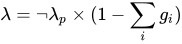

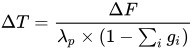


![A dry lakebed in California, which is experiencing its worst megadrought in 1,200 years.[19]](https://en.wikipedia.org/wiki/File:California_Drought_Dry_Lakebed_2009.jpg)


.jpg)
.svg)


.jpg)
.jpg)


![Environmental migration. Sparser rainfall leads to desertification that harms agriculture and can displace populations. Shown: Telly, Mali (2008).[271]](https://en.wikipedia.org/wiki/File:Village_Telly_in_Mali.jpg)
![Agricultural changes. Droughts, rising temperatures, and extreme weather negatively impact agriculture. Shown: Texas, US (2013).[272]](https://en.wikipedia.org/wiki/File:Corn_shows_the_affect_of_drought.jpg)
![Tidal flooding. Sea-level rise increases flooding in low-lying coastal regions. Shown: Venice, Italy (2004).[273]](https://en.wikipedia.org/wiki/File:Acqua_alta_in_Piazza_San_Marco-original.jpg)
![Storm intensification. Bangladesh after Cyclone Sidr (2007) is an example of catastrophic flooding from increased rainfall.[274]](https://en.wikipedia.org/wiki/File:US_Navy_071120-M-8966H-005_An_aerial_view_over_southern_Bangladesh_reveals_extensive_flooding_as_a_result_of_Cyclone_Sidr.jpg)
![Heat wave intensification. Events like the 2022 Southern Cone heat wave are becoming more common.[275]](https://en.wikipedia.org/wiki/File:Argentina_geos5_202211.jpg)


.jpg)


,IN_wed20feb2013.jpg)
.svg)


