In quantum mechanics, a Slater determinant is an expression that describes the wave function of a multi-fermionic system. It satisfies anti-symmetry requirements, and consequently the Pauli principle, by changing sign upon exchange of two fermions. Only a small subset of all possible many-body fermionic wave functions
can be written as a single Slater determinant, but those form an
important and useful subset because of their simplicity.
The Slater determinant arises from the consideration of a wave
function for a collection of electrons, each with a wave function known
as the spin-orbital, where
denotes the position and spin of a single electron. A Slater
determinant containing two electrons with the same spin orbital would
correspond to a wave function that is zero everywhere.
The Slater determinant is named for John C. Slater, who introduced the determinant in 1929 as a means of ensuring the antisymmetry of a many-electron wave function, although the wave function in the determinant form first appeared independently in Heisenberg's and Dirac's articles three years earlier.
Definition
Two-particle case
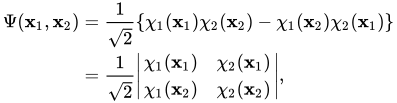
The simplest way to approximate the wave function of a many-particle system is to take the product of properly chosen orthogonal wave functions of the individual particles. For the two-particle case with coordinates and , we have
This expression is used in the Hartree method as an ansatz for the many-particle wave function and is known as a Hartree product. However, it is not satisfactory for fermions because the wave function above is not antisymmetric under exchange of any two of the fermions, as it must be according to the Pauli exclusion principle. An antisymmetric wave function can be mathematically described as follows:
This does not hold for the Hartree product, which therefore does not
satisfy the Pauli principle. This problem can be overcome by taking a linear combination of both Hartree products:
where the coefficient is the normalization factor.
This wave function is now antisymmetric and no longer distinguishes
between fermions (that is, one cannot indicate an ordinal number to a
specific particle, and the indices given are interchangeable). Moreover,
it also goes to zero if any two spin orbitals of two fermions are the
same. This is equivalent to satisfying the Pauli exclusion principle.
Multi-particle case
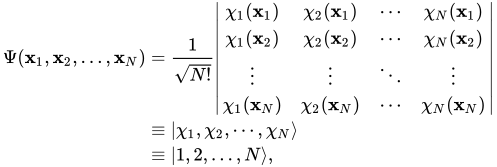
The expression can be generalised to any number of fermions by writing it as a determinant. For an N-electron system, the Slater determinant is defined as
where the last two expressions use a shorthand for Slater
determinants: The normalization constant is implied by noting the number
N, and only the one-particle wavefunctions (first shorthand) or the
indices for the fermion coordinates (second shorthand) are written down.
All skipped labels are implied to behave in ascending sequence. The
linear combination of Hartree products for the two-particle case is
identical with the Slater determinant for N = 2. The use of
Slater determinants ensures an antisymmetrized function at the outset.
In the same way, the use of Slater determinants ensures conformity to
the Pauli principle. Indeed, the Slater determinant vanishes if the set is linearly dependent.
In particular, this is the case when two (or more) spin orbitals are
the same. In chemistry one expresses this fact by stating that no two
electrons with the same spin can occupy the same spatial orbital.
Example: Matrix elements in a many electron problem
Many properties of the Slater determinant come to life with an example in a non-relativistic many electron problem.
The one particle terms of the Hamiltonian will contribute in
the same manner as for the simple Hartree product, namely the energy is
summed and the states are independent
The multi-particle terms of the Hamiltonian will introduce
exchange term to lower of the energy for the anti-symmetrized wave
function
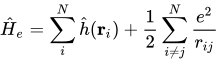
Starting from a molecular Hamiltonian:
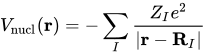
where are the electrons and are the nuclei and
For simplicity we freeze the nuclei at equilibrium in one position and we remain with a simplified Hamiltonian
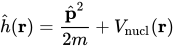
where
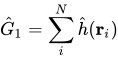
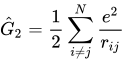
and where we will distinguish in the Hamiltonian between the first set of terms as (the "1" particle terms)
and the last term (the "2" particle term) which contains exchange term for a Slater determinant.
The two parts will behave differently when they have to interact with
a Slater determinant wave function. We start to compute the expectation
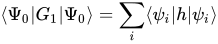
values of one-particle terms
In the above expression, we can just select the identical permutation
in the determinant in the left part, since all the other N! − 1
permutations would give the same result as the selected one. We can thus
cancel N! at the denominator
Because of the orthonormality of spin-orbitals it is also evident
that only the identical permutation survives in the determinant on the
right part of the above matrix element
This result shows that the anti-symmetrization of the product does
not have any effect for the one particle terms and it behaves as it
would do in the case of the simple Hartree product.
And finally we remain with the trace over the one-particle Hamiltonians
Which tells us that to the extent of the one-particle terms the wave
functions of the electrons are independent of each other and the
expectation value of total system is given by the sum of expectation
value of the single particles.
For the two-particle terms instead
If we focus on the action of one term of , it will produce only the two terms
And finally
which instead is a mixing term. The first contribution is called
the "coulomb" term or "coulomb" integral and the second is the
"exchange" term or exchange integral. Sometimes different range of index
in the summation is used since the Coulomb and exchange contributions exactly cancel each other for .
It is important to notice explicitly that the exchange term, which is always positive for local spin-orbitals, is absent in the simple Hartree product. Hence the electron-electron repulsive energy
on the antisymmetrized product of spin-orbitals is always lower than
the electron-electron repulsive energy on the simple Hartree product of
the same spin-orbitals. Since exchange bielectronic integrals are
different from zero only for spin-orbitals with parallel spins, we link
the decrease in energy with the physical fact that electrons with
parallel spin are kept apart in real space in Slater determinant states.
As an approximation
Most
fermionic wavefunctions cannot be represented as a Slater determinant.
The best Slater approximation to a given fermionic wave function can be
defined to be the one that maximizes the overlap between the Slater determinant and the target wave function. The maximal overlap is a geometric measure of entanglement between the fermions.
A single Slater determinant is used as an approximation to the electronic wavefunction in Hartree–Fock theory. In more accurate theories (such as configuration interaction and MCSCF), a linear combination of Slater determinants is needed.
Discussion
The word "detor" was proposed by S. F. Boys to refer to a Slater determinant of orthonormal orbitals, but this term is rarely used.
Unlike fermions that are subject to the Pauli exclusion principle, two or more bosons can occupy the same single-particle quantum state. Wavefunctions describing systems of identical bosons are symmetric under the exchange of particles and can be expanded in terms of permanents.
Parallel evolution is the similar development of a trait in
distinct species that are not closely related, but share a similar
original trait in response to similar evolutionary pressure.
Parallel vs. convergent evolution
Evolution at an amino acid
position. In each case, the left-hand species changes from
incorporating alanine (A) at a specific position within a protein in a
hypothetical common ancestor deduced from comparison of sequences of
several species, and now incorporates serine (S) in its present-day
form. The right-hand species may undergo divergent evolution (alanine replaced with threonine instead), parallel evolution (alanine also replaced with serine), or convergent evolution (threonine replaced with serine) at this amino acid position relative to that of the first species.
Given a trait that occurs in each of two lineages descended from a
specified ancestor, it is possible in theory to define parallel and
convergent evolutionary trends strictly, and distinguish them clearly
from one another. However, the criteria for defining convergent as opposed to parallel
evolution are unclear in practice, so that arbitrary diagnosis is
common. When two species share a trait, evolution is defined as parallel
if the ancestors are known to have shared that similarity; if not, it
is defined as convergent. However, the stated conditions are a matter of
degree; all organisms share common ancestors. Scientists differ on
whether the distinction is useful.
Parallel evolution between marsupials and placentals
A number of examples of parallel evolution are provided by the two main branches of the mammals, the placentals and marsupials, which have followed independent evolutionary pathways following the break-up of land-masses such as Gondwanaland roughly 100 million years ago. In South America, marsupials and placentals shared the ecosystem (before the Great American Interchange); in Australia, marsupials prevailed; and in the Old World and North America
the placentals won out. However, in all these localities mammals were
small and filled only limited places in the ecosystem until the mass extinction of dinosaurs
sixty-five million years ago. At this time, mammals on all three
landmasses began to take on a much wider variety of forms and roles.
While some forms were unique to each environment, surprisingly similar
animals have often emerged in two or three of the separated continents.
Examples of these include the placental sabre-toothed cats (Machairodontinae) and the South American marsupial sabre-tooth (Thylacosmilus); the Tasmanian wolf and the European wolf; likewise marsupial and placental moles, flying squirrels, and (arguably) mice.
Parallel coevolution of traits between hummingbirds and sunbirds contributing to ecological guilds
Hummingbirds and sunbirds, two nectarivorous bird lineages in the New and Old Worlds have parallelly evolved a suite of specialized behavioral and anatomical traits. These traits (bill shape, digestive enzymes, and flight) allow the birds to optimally fit the flower-feeding-and-pollination ecological niche
they occupy, which is shaped by the birds' suites of parallel traits.
Thus, a parallel coevolved behavioral syndrome within the birds creates
an emergentguild
of highly specialized birds and highly adapted plants, each exploiting
the other's involvement in the flowers' pollination in the Old World and
New World alike.
The bill shape of nectarivores, being long and needle-like, allows them to reach down a flower's pistil/stamen and get at the nectar within. Nectarivores may also use their specialized bills to engage in nectar robbing, a practice seen in both hummingbirds and sunbirds in which the bird gets nectar by making a hole in the base of the flower's corolla tube
instead of inserting its bill through the tube as is standard, thus
"robbing" the flower of nectar since it is not pollinated it in return.
Nectarivores and ornithophilous
flowers often exist in mutualistic guild relationships facilitated by
the bird's bill shape, food source, and digestive ability acting in
concert with the flower's tube shape and adaptation to pollination by
hovering or perching birds. The birds eat nectar using their long, thin
bills and, in so doing, collect pollen on their bills; this pollen is
then transferred to the next flower they feed on. This mutualism
coevolved in parallel between the Old World and New World birds and
their respective flowers. Moreover, the digestive enzyme activity in nectarivores matching the
nectar composition in their respective flowers appears to have coevolved
in parallel between plants and pollinators across continents, as the
nectarivorous lineages independently evolved the ability to digest the
nectar specific to their flowers, resulting in distinct guilds.
The capacity of nectarivores to digest sucrose is far greater than that of other avian taxa. This difference is due to an analogous high concentration of sucrase-isomaltase, an enzyme that hydrolyzes
sucrose. Sucrase activity per unit intestinal surface area appears to
be higher in nectarivores than in other birds, meaning these
nectarivorous avians can digest more sucrose more rapidly than other
taxa. Moreover, the Adaptive Modulation Hypothesis does not apply for
nectarivores and sugar-digesting enzymes, meaning that two lineages of
nectarivores should not necessarily both have high sucrase-isomaltase
concentrations even though they both eat nectar. Thus, parallel
acquisition of analogous sucrose digestive capability is a reasonable
conclusion because there is no apparent cause for the two lineages to
share this high enzyme concentration.
Global Human Rights Defence (GHRD) is an international Non-Governmental Organization
(NGO) based in The Hague, Netherlands. GHRD focuses specifically on
promoting and protecting human rights worldwide. GHRD places emphasis on
those areas and populations of the world where severe and extensive
human rights violations of ethnic, linguistic and religious minorities
have continued unabated over long periods of time, and where structural
help and global attention of Governments and international institutions
have failed to reach.
GHRD concentrates on the human rights of minority groups:
that are dominated by social, economical and political power;
that have been deprived of effective protection against gross and systematic violations;
that have been deprived of access to resources simply because of their identity and beliefs.
GHRD's work is based on the UN Declaration on Rights of Minorities (1992), and therefore it works with linguistic, religious and ethnic minorities.
"Basic aims of the United Nations, as proclaimed in the Charter,
is to promote and encourage respect for human rights and for fundamental
freedoms for all, without distinction as to race, sex, language or
religion,[...] emphasizing that the constant promotion and realization
of the rights of persons belonging to national or ethnic, religious and
linguistic minorities, as an integral part of the development of society
as a whole and within a democratic framework based on the rule of law,
would contribute to the strengthening of friendship and cooperation
among peoples and States" General Assembly Resolution 47/135, 18
December 1992.
Identity
GHRD
is integrally distinctive from other organisations in various ways. For
one, it focuses on those issues and areas where people have been
deprived of their rights without their cases being properly addressed by both governments and authorities. GHRD is the first organisation in The Hague (The Netherlands)
to address specifically the human rights of minorities. Outside The
Hague, GHRD is distinctive because of its permanent presence of local
observers, who produce genuine information and reports of distinctive
quality, due to their profound knowledge of the local humanitarian
situation.
Objective
GHRD has formulated the following objectives in order to fulfil its mission:
To fight against the violation of human rights of minority
groups, particularly in those areas and populations where structural
help or global attention of the world has not been given;
To provide refugee centre assistance and humanitarian aid to those
who lack elementary basic needs such as food, clothing, shelter and
proper sanitary conditions;
To develop, stimulate and enhance human rights awareness in a
national and international perspective, through means of education.
History
GHRD was officially founded after The Hague 2003 International Conference on Human Rights, which was sub-themed Human Rights of Refugees and Victims of Ethnic and Religious Violence.
At the end of the conference a gap in the human rights work was
spotted: human rights of minorities. The establishment of GHRD was
supported by a broad spectrum of over a 150 selected participants of
national and international human rights organisations from all over the
world. The memorandum of association, which was agreed upon unanimously
and signed by all participating parties, provides the structure of this
international organisation.
At the time of its establishment, the Board was led by Sradhanand
Sital who still is the chairman of the organisation. When it was first
established, GHRD had no official office and worked solely on a
voluntary basis. Meetings were held at the founders’ living-rooms and
activities were conducted by a small group of dedicated people.
In September 2005, the organisation opened its head-office in The Hague
at Javastraat and employed the first paid staff. In the building, GHRD
was neighbour of United Network of Young Peacebuilders (UNOY) and United Nations High Commissioner for Refugees
(UNHCR). Also in 2005, GHRD promoted a four-day congress at the City
Hall of the Hague. The congress was titled GHRD reaches for the future
and brought together some 120 experts in the field of human rights.
Amongst the speakers were Dutch Human Rights Ambassador Mr. P. de Klerk,
and the Mayor of The Hague Mr. W. Deetman.
In 2006 the founders had already some contacts in South-Asia and it was easier to start acting in the region. Moreover, the South-Asia
region fulfilled the mission/vision of GHRD, as the violations of human
rights of minorities did not hit the headlines nor were they on top of
the political agenda.
Headquarters
GHRD head-office is based in Alexanderveld in the peace capital The Hague, South Holland,
where all operations from the region are coordinated. At the time of
its establishment, GHRD initially opened its offices in India, and Bangladesh. Nepal and Sri Lanka followed in 2004. Except Sri Lanka, all the offices are still active. The Sri Lanka's office had to be closed after the Tsunami in December 2004.
After the disaster, a great number of NGOs started working in the
country and employing local human rights experts. As a small
organisation, GHRD was not able to top the salaries being paid to the
locals and had to abandon the country.
In 2006, GHRD opened officially the Bhutan Chapter. GHRD had been working with the Bhutanese refugees
in Nepal from the start. The observer based in Kathmandu worked closely
with the seven refugee camps sponsored by the United Nations High
Commission for Refugees (UNHCR).
In the same year, in India the Women's Wing was launched. However, due
to a lack of human resources, the division was never fully activated.
GHRD has also contacts spread around Malaysia and Indonesia and is currently studying the possibility of opening an office in Pakistan. In July 2007, GHRD signed a letter of intent for exchange of information with the African foundation Bajito Onda Africa.
European Seminars
In
2006, GHRD decided to become more active in Europe and initiated a
cycle of seminars on migrants in Europe and human rights. The European
Seminars programme has as a basic principle the promotion of equality,
unity and understanding among diverse cultures, ethnicities and
religions of the world, and it seeks to create opportunities regarding
peace and prosperity for mankind. Consequently, the topics tackle
contemporary challenges, which cause racial enmity, social unrest and
overt conflicts in all levels of society.
Seminars:
In 2006
The Hague: Human Rights Education and Social Engagement.
Berlin: Human Rights Education and Social Engagement—under the All Equal—All Different Campaign of the Council of Europe.
In 2007
Turin:
Intercultural Forum on Rights of Migration and Asylum
(IN.F.O.R.M.A.)—under the All Different—All Equal Campaign of the
Council of Europe.
In 2008
Spain
United Kingdom
Advocacy
Reply to Dutch Human Rights Report (2017)
In 2017, the GHRD wrote to the Dutch Ministry of Foreign affairs
to criticize its recent Human Rights report. They wrote as a
representative of Global Hindu Foundation (GHF) to express their
objections to the report. They noted:
"We recognize that Christians are persecuted in Pakistan, as
mentioned in the report, however, undue emphasis on one religion while
ignoring the suffering faced by the other religious minorities could
have catastrophic consequences. Religious minorities in Pakistan
comprise of the Hindu, Sikh, Ahmadi communities, it is unfortunate that
the Human Rights report of the Dutch Ministry of Foreign Affairs
altogether disregards these minorities. The ongoing human rights
violations need to cease immediately in order to ensure that religious
minorities are not completely wiped out from Pakistan.
The report sadly shows the duplicity of the Dutch government in
predominantly funding and supporting those organizations which work for
the Christian community. The other religious minorities in Pakistan are
also in dire need of international attention.
The report is built on the underlying theme that the Christian
minority is the only community which faces human rights violations all
over the globe. Accordingly, the Human Rights report exclusively focuses
on the issues faced by members of the Christian community."
Asia Bibi Case (2018)
GHRD staff at Mr. Malook's press briefing
On
5 November 2018, Global Human Rights Defence's (GHRD) attended the
press briefing held by Mr. Saif-ul-Malook. Mr. Malook represented Asia
Bibi before the Pakistan Supreme Court and has currently sought refuge
in The Netherlands.
The Pakistan Supreme Court
acquitted Asia Bibi of blasphemy charges citing lack of evidence on 31
October 2018. Since the judgement, Pakistan has been rocked by protests
from fundamentalist groups who have made open calls for violence against
the religious minorities in Pakistan. The protestors demanded that the
Pakistan government must include Asia Bibi's name on the Exit Control
List, in the hope that it would prevent her from flying out of the
country.
Mr. Vivek, GHRD's Human Rights Officer asked him about Asia Bibi's name
being put on Pakistan's Exit Control List, he replied that under the
legislation, a person's name can be put onto the Exit control list only
if there is a criminal case or a case of criminal fraud pending against
the person. Asia Bibi does not have any pending cases against her, so
her name cannot be placed on the Exit Control List. Moreover, in so far
as the agreement between the government and the protesters was
concerned, the agreement has no constitutional or legal validity
Mr. Malook at Asia Bibi's press conference
Kashmiri Pandits (2018)
On 1 October 2018, the GHRD sent a letter to Mr. Antonio Guterres, United Nations Secretary General, to raise the issue of the Kashmiri Pandits. They warned:
"Kashmiri Pandits, a religious minority group in the state of
Jammu and Kashmir, have been systematically persecuted by the majority
community since 1989. Kashmiri Pandits were forced to flee their homes
and move to other parts of the country in order to save their lives,
those who remained were mercilessly killed or subjected to other
inhumane acts. Moreover, their religious places have been desecrated and
vandalized. A brutal campaign of terror, murder, rape and arson and has
been unleashed by the majority community which will stop at nothing to
make sure that Kashmiri Pandits are completely wiped out from the
region. There is an intentional attempt to bring about the physical
destruction of the entire group."
The GHRD called for a need for the United Nations to address the situation of Kashmiri Pandits, before they are completely wiped out from the region.
They asked for the United Nations to meet with the Global
Kashmiri Pandit Diaspora (GKPD), a collective organization with members
in India, USA, Australia, Canada, Singapore and Europe. It consists of
volunteers who have pledged to work towards the betterment of the
Kashmiri Pandit community at all levels be it political or
socio-economic and cultural.
Cases
GHRD verdict on the Pabna rape case (2015)
On
13 March 2015, a 20-year-old woman belonging to the minority Hindu
community was gang-raped in Pabna, Bangladesh. The victim was abducted
and taken to a nearby jungle, where she was threatened with a knife and
raped by the perpetrators. The perpetrators had warned her that they
would kill her and her parents in case she approached the police.
The incident generated widespread attention and the case was
investigated by GHRD and its local partner Research and Empowerment
Organization (REO). The organizations constantly monitored the
developments in the case and also provided aid to the victim and her
family.
GHRD and REO identified that the authorities are not
investigating the case and held protests to raise awareness about the
problem. A protest was held wherein a human chain was created along with
student volunteers. This pressurized the authorities to initiate
action. GHRD and REO also began lobbying and advocacy efforts in
Bangladesh to seek responsibility from the authorities.
After a series of protests, the police authorities finally
registered the First Investigation Report (FIR) and arrested the
perpetrators, Mohammed Farid Hossain (27 years) and Mohammed Hafizul (24
years). On 28 October 2018, the trial court sentenced the accused to
life imprisonment. The verdict was delivered by Justice Owarul Islam.
GHRD has been also been involved in rehabilitation activities on
the ground so that the victims can continue living a dignified life in
society. The victim in the Pabna case has been successfully
rehabilitated and is currently working with GHRD's local partner in
Bangladesh, REO.
Women's Rights March in the Hague
Women's Rights March (2019)
Global
Human Rights Defence (GHRD) organized an event on 7 March 2019 to
highlight the persecution of religious minorities in Pakistan.
The march sought to focus international attention on the plight
of minorities in Pakistan. The percentage of religious minorities in
Pakistan has reduced from 23% to a mere 3.7% of the total population.
Minorities are increasingly vulnerable to intimidation and attacks in
Pakistan and often little is done to protect minority communities in the
country.
Human Rights for Nirmala (2018)
Sukomal Bhattarai at the Nirmala event in Nepal
The GHRD helped organize a programme in Nepal for the advocacy of
rights for women. Ms. Sukomal Bhattarai delivered a speech on the case
of Nirmala, a 13-year-old girl who was raped and murdered. She used this
case to spread a message that highlighted the prevalence of gender and
religion based violence. In total 8 speeches were delivered and a panel
of notables and 80 guests were present at the event.
Protest: Religious Minorities in Pakistan (2018)
GHRD organized a protest on 22 September 2018 before the United Nations in Geneva to focus international attention on the persecution of religious minorities in Pakistan.
A group of over 100 protesters participated in a march through
the center of Geneva city. The protesters assembled in the city center,
wearing black shirts which proclaimed “Protect Pakistani Christians”.
The march began in the city center, moved past the train station and
through the central business district of Geneva. The protesters then
briefly halted by Lake Geneva.
The protesters helped raise awareness about the plight of
Christians in Pakistan. Curious onlookers and citizens were informed
about the serious violations against religious minorities in Pakistan.
Specific references were made to the unjust Blasphemy laws and the Asia
Bibi case. Individuals were educated about the gross violations of
freedom of religion and belief, and the need for the international
community to take action.
The gathering was joined by the dignitaries, Dr. Mario Silva, executive chairman of IFRAS, Mr. Henri Malosse, former president of the European Economic and Social Committee, Mr. Tomas Zdechovsky,
Member of European parliament, Mr. Benjamin Blanchar, Director of SOS
Chrétiens d’Orient and Mr. Gyorgy Holvenyi, Member of European
Parliament.
Press Release: International Day for the Elimination of Violence against Women (2018)
GHRD protest in Geneva
On
24 November 2018, Human Rights Focus Pakistan (HRFP) in collaboration
with Global Human Rights Defense (GHRD) organized an event on
International Women's Day 2018 for the Elimination of Violence Against
Women. The representatives of civil society organizations, women
activists, political workers, social activists, HRD's, lawyers,
teachers, youth and students participated to end violations against
women.
The screening of the Video Documentary, “The Trapping Faiths” was
also arranged during event and the all participants endorsed the
recommendations jointly including to end-up the abductions, forced
conversions and forced marriages of minority girls which was raised in
video documentary through 4 case studies of Hindu and Christian girls,
as the numbering are growing day by day. The speakers urged that state
must ensure victims and their families are kept safe and all violence
against women is eliminated.
Campaigns and Involvement
Stop the Gang Rapes Campaign (2007)
In 2007 GHRD started its first campaign. The initiative focused on the gang rapes that victimised Bangladeshi
women and young girls. The main objective of the campaign was to raise
awareness to the issue. The campaign was based in the Netherlands and it
spread naturally via the internet to other European countries and even reached the United States. The campaigners used social utilities such as MySpace and Facebook to promote the message.
The campaign was also promoted via its ambassadors: Scottish band Brand New Deja Vu, DJ Paul Jay and Bangladeshi writer Taslima Nasrin.
GHRD made available petitions in several languages asking the Bangladeshi government to take necessary actions.
The campaign was launched on 16 June 2007 with a Beach Benefit Concert at Scheveningen (Netherlands). Performances were made by Brand New Deja Vu, DJ Paul Jay, Valerius and Little Things That Kill.
Fight Modern Slavery (2011)
In
2011, GHRD campaigned against modern slavery—existing today in forms
from trafficking for the sex trade, to bonded labour, child labour,
caste discrimination, and sexual exploitation. A series of activism
events included: rallies, door to door campaigns, information sessions,
street dramas, and screenings of the GHRD documentary. The documentary focuses specially on trafficking of girls from Nepal.
In mass spectrometry, matrix-assisted laser desorption/ionization (MALDI) is an ionization technique that uses a laser energy-absorbing matrix to create ions from large molecules with minimal fragmentation. It has been applied to the analysis of biomolecules (biopolymers such as DNA, proteins, peptides and carbohydrates) and various organic molecules (such as polymers, dendrimers and other macromolecules), which tend to be fragile and fragment when ionized by more conventional ionization methods. It is similar in character to electrospray ionization
(ESI) in that both techniques are relatively soft (low fragmentation)
ways of obtaining ions of large molecules in the gas phase, though MALDI
typically produces far fewer multi-charged ions.
MALDI methodology is a three-step process. First, the sample is
mixed with a suitable matrix material and applied to a metal plate.
Second, a pulsed laser irradiates the sample, triggering ablation and desorption of the sample and matrix material. Finally, the analyte molecules are ionized by being protonated or deprotonated in the hot plume of ablated gases, and then they can be accelerated into whichever mass spectrometer is used to analyse them.
The term matrix-assisted laser desorption ionization (MALDI) was coined in 1985 by Franz Hillenkamp, Michael Karas and their colleagues. These researchers found that the amino acidalanine could be ionized more easily if it was mixed with the amino acid tryptophan
and irradiated with a pulsed 266 nm laser. The tryptophan was absorbing
the laser energy and helping to ionize the non-absorbing alanine.
Peptides up to the 2843 Da peptide melittin could be ionized when mixed with this kind of "matrix". The breakthrough for large molecule laser desorption ionization came in 1987 when Koichi Tanaka
of Shimadzu Corporation and his co-workers used what they called the
"ultra fine metal plus liquid matrix method" that combined 30 nm cobalt particles in glycerol with a 337 nm nitrogen laser for ionization. Using this laser and matrix combination, Tanaka was able to ionize
biomolecules as large as the 34,472 Da protein carboxypeptidase-A.
Tanaka received one-quarter of the 2002 Nobel Prize in Chemistry for demonstrating that, with the proper combination of laser wavelength and matrix, a protein can be ionized. Karas and Hillenkamp were subsequently able to ionize the 67 kDa
protein albumin using a nicotinic acid matrix and a 266 nm laser. Further improvements were realized through the use of a 355 nm laser and the cinnamic acid derivatives ferulic acid, caffeic acid and sinapinic acid as the matrix. The availability of small and relatively inexpensive nitrogen lasers
operating at 337 nm wavelength and the first commercial instruments
introduced in the early 1990s brought MALDI to an increasing number of
researchers. Today, mostly organic matrices are used for MALDI mass spectrometry.
The matrix consists of crystallized molecules, of which the three most commonly used are sinapinic acid, α-cyano-4-hydroxycinnamic acid (α-CHCA, alpha-cyano or alpha-matrix) and 2,5-dihydroxybenzoic acid (DHB).[16] A solution of one of these molecules is made, often in a mixture of highly purified water and an organic solvent such as acetonitrile (ACN) or ethanol. A counter ion source such as trifluoroacetic acid
(TFA) is usually added to generate the [M+H] ions. A good example of a
matrix-solution would be 20 mg/mL sinapinic acid in ACN:water:TFA
(50:50:0.1).
Notation for cinnamic acid substitutions
The identification of suitable matrix compounds is determined to some
extent by trial and error, but they are based on some specific
molecular design considerations. They are of a fairly low molecular
weight (to allow easy vaporization), but are large enough (with a low
enough vapor pressure) not to evaporate during sample preparation or
while standing in the mass spectrometer. They are often acidic,
therefore act as a proton source to encourage ionization of the analyte.
Basic matrices have also been reported. They have a strong optical absorption in either the UV or IR range, so that they rapidly and efficiently absorb the laser irradiation. This
efficiency is commonly associated with chemical structures
incorporating several conjugated double bonds, as seen in the structure of cinnamic acid. They are functionalized with polar groups, allowing their use in aqueous solutions. They typically contain a chromophore.
The matrix solution is mixed with the analyte (e.g. protein-sample). A mixture of water and organic solvent allows both hydrophobic and water-soluble (hydrophilic)
molecules to dissolve into the solution. This solution is spotted onto a
MALDI plate (usually a metal plate designed for this purpose). The
solvents vaporize, leaving only the recrystallized matrix, but now with
analyte molecules embedded into MALDI crystals. The matrix and the
analyte are said to be co-crystallized. Co-crystallization is a key
issue in selecting a proper matrix to obtain a good quality mass
spectrum of the analyte of interest.
In analysis of biological systems, inorganic salts, which are
also part of protein extracts, interfere with the ionization process.
The salts can be removed by solid phase extraction or by washing the
dried-droplet MALDI spots with cold water. Both methods can also remove other substances from the sample. The
matrix-protein mixture is not homogeneous because the polarity
difference leads to a separation of the two substances during
co-crystallization. The spot diameter of the target is much larger than
that of the laser, which makes it necessary to make many laser shots at
different places of the target, to get the statistical average of the
substance concentration within the target spot.
Naphthalene and naphthalene-like compounds can also be used as a matrix to ionize a sample.
The matrix can be used to tune the instrument to ionize the sample in
different ways. As mentioned above, acid-base like reactions are often
utilized to ionize the sample, however, molecules with conjugated pi systems, such as naphthalene like compounds, can also serve as an electron acceptor and thus a matrix for MALDI/TOF. This is particularly useful in studying molecules that also possess conjugated pi systems. The most widely used application for these matrices is studying porphyrin-like compounds such as chlorophyll.
These matrices have been shown to have better ionization patterns that
do not result in odd fragmentation patterns or complete loss of side
chains. It has also been suggested that conjugated porphyrin like molecules can
serve as a matrix and cleave themselves eliminating the need for a
separate matrix compound.
Instrumentation
Diagram of a MALDI TOF instrument. Sample matrix ionized by radiant energy is ejected from surface. Sample travels into mass analyzer and is substantially detected.
There are several variations of the MALDI technology and comparable
instruments are today produced for very different purposes, from more
academic and analytical, to more industrial and high throughput. The
mass spectrometry field has expanded into requiring ultrahigh resolution
mass spectrometry such as the FT-ICR instruments as well as more high-throughput instruments. As many MALDI MS instruments can be bought with an interchangeable ionization source (electrospray ionization, MALDI, atmospheric pressure ionization,
etc.) the technologies often overlap and many times any soft ionization
method could potentially be used. For more variations of soft
ionization methods see: Soft laser desorption or Ion source.
Laser
MALDI techniques typically employ the use of UV lasers such as nitrogen lasers (337 nm) and frequency-tripled and quadrupled Nd:YAG lasers (355 nm and 266 nm respectively).
Infrared laser wavelengths used for infrared MALDI include the 2.94 μm Er:YAG laser, mid-IR optical parametric oscillator, and 10.6 μm carbon dioxide laser. Although not as common, infrared lasers are used due to their softer mode of ionization. IR-MALDI also has the advantage of greater material removal (useful for
biological samples), less low-mass interference, and compatibility with
other matrix-free laser desorption mass spectrometry methods.
Time of flight
Sample target for a MALDI mass spectrometer
The type of a mass spectrometer most widely used with MALDI is the time-of-flight mass spectrometer
(TOF), mainly due to its large mass range. The TOF measurement
procedure is also ideally suited to the MALDI ionization process since
the pulsed laser takes individual 'shots' rather than working in
continuous operation. MALDI-TOF instruments are often equipped with a reflectron
(an "ion mirror") that reflects ions using an electric field. This
increases the ion flight path, thereby increasing time of flight between
ions of different m/z and increasing resolution. Modern commercial
reflectron TOF instruments reach a resolving power m/Δm of 50,000 FWHM
(full-width half-maximum, Δm defined as the peak width at 50% of peak
height) or more.
MALDI has been coupled with IMS-TOF MS to identify phosphorylated and non-phosphorylated peptides.
MALDI-FT-ICR MS has been demonstrated to be a useful technique where high resolution MALDI-MS measurements are desired.
Atmospheric pressure
Atmospheric pressure
(AP) matrix-assisted laser desorption/ionization (MALDI) is an
ionization technique (ion source) that in contrast to vacuum MALDI
operates at normal atmospheric environment. The main difference between vacuum MALDI and AP-MALDI is the pressure
in which the ions are created. In vacuum MALDI, ions are typically
produced at 10 mTorr or less while in AP-MALDI ions are formed in
atmospheric pressure. In the past, the main disadvantage of the AP-MALDI
technique compared to the conventional vacuum MALDI has been its
limited sensitivity; however, ions can be transferred into the mass
spectrometer with high efficiency and attomole detection limits have
been reported. AP-MALDI is used in mass spectrometry (MS) in a variety of applications
ranging from proteomics to drug discovery. Popular topics that are
addressed by AP-MALDI mass spectrometry include: proteomics; mass
analysis of DNA, RNA, PNA, lipids, oligosaccharides, phosphopeptides,
bacteria, small molecules and synthetic polymers, similar applications
as available also for vacuum MALDI instruments. The AP-MALDI ion source
is easily coupled to an ion trap mass spectrometer or any other MS system equipped with electrospray ionization (ESI) or nanoESI source.
MALDI with ionization at reduced pressure is known to produce
mainly singly-charged ions (see "Ionization mechanism" below). In
contrast, ionization at atmospheric pressure can generate highly-charged
analytes as was first shown for infrared and later also for nitrogen lasers. Multiple charging of analytes is of great importance, because it allows
to measure high-molecular-weight compounds like proteins in
instruments, which provide only smaller m/z detection ranges such as quadrupoles. Besides the pressure, the composition of the matrix is important to achieve this effect.
The laser
is fired at the matrix crystals in the dried-droplet spot. The matrix
absorbs the laser energy and it is thought that primarily the matrix is
desorbed and ionized (by addition of a proton)
by this event. The hot plume produced during ablation contains many
species: neutral and ionized matrix molecules, protonated and
deprotonated matrix molecules, matrix clusters and nanodroplets.
Ablated species may participate in the ionization of analyte, though
the mechanism of MALDI is still debated. The matrix is then thought to
transfer protons to the analyte molecules (e.g., protein molecules),
thus charging the analyte. An ion observed after this process will consist of the initial neutral
molecule [M] with ions added or removed. This is called a quasimolecular
ion, for example [M+H]+ in the case of an added proton, [M+Na]+ in the case of an added sodium ion, or [M-H]− in the case of a removed proton. MALDI is capable of creating singly charged ions or multiply charged ions ([M+nH]n+)
depending on the nature of the matrix, the laser intensity, and/or the
voltage used. Note that these are all even-electron species. Ion signals
of radical cations (photoionized molecules) can be observed, e.g., in
the case of matrix molecules and other organic molecules.
The gas phase proton transfer model, implemented as the coupled physical and chemical dynamics (CPCD) model, of UV laser MALDI postulates primary and secondary processes leading to ionization. Primary processes involve initial charge separation through absorption
of photons by the matrix and pooling of the energy to form matrix ion
pairs. Primary ion formation occurs through absorption of a UV photon to
create excited state molecules by
S0 + hν → S1
S1 + S1 → S0 + Sn
S1 + Sn → M+ + M−
where S0 is the ground electronic state, S1 the first electronic excited state, and Sn is a higher electronic excited state. The product ions can be proton transfer or electron transfer ion pairs, indicated by M+ and M− above. Secondary processes involve ion-molecule reactions to form analyte ions.
In
the lucky survivor model, positive ions can be formed from highly
charged clusters produced during break-up of the matrix- and
analyte-containing solid.
The lucky survivor model (cluster ionization mechanism) postulates that analyte molecules are incorporated in the matrix maintaining the charge state from solution. Ion formation occurs through charge separation upon fragmentation of laser ablated clusters. Ions that are not neutralized by recombination with photoelectrons or counter ions are the so-called lucky survivors.
The thermal model postulates that the high temperature
facilitates the proton transfer between matrix and analyte in melted
matrix liquid. Ion-to-neutral ratio is an important parameter to justify the
theoretical model, and the mistaken citation of ion-to-neutral ratio
could result in an erroneous determination of the ionization mechanism. The model quantitatively predicts the increase in total ion intensity
as a function of the concentration and proton affinity of the analytes,
and the ion-to-neutral ratio as a function of the laser fluences. This model also suggests that metal ion adducts (e.g., [M+Na]+ or [M+K]+) are mainly generated from the thermally induced dissolution of salt.
The matrix-assisted ionization
(MAI) method uses matrix preparation similar to MALDI but does not
require laser ablation to produce analyte ions of volatile or
nonvolatile compounds. Simply exposing the matrix with analyte to the vacuum of the mass
spectrometer creates ions with nearly identical charge states to
electrospray ionization. It is suggested that there are likely mechanistic commonality between this process and MALDI.
Ion yield is typically estimated to range from 10−4 to 10−7, with some experiments hinting to even lower yields of 10−9. The issue of low ion yields had been addressed, already shortly after
introduction of MALDI by various attempts, including post-ionization
utilizing a second laser. Most of these attempts showed only limited success, with low signal
increases. This might be attributed to the fact that axial
time-of-flight instruments were used, which operate at pressures in the
source region of 10−5 to 10−6, which results in rapid plume expansion with particle velocities of up to 1000 m/s. In 2015, successful laser post-ionization was reported, using a
modified MALDI source operated at an elevated pressure of ~3 mbar
coupled to an orthogonal time-of-flight mass analyzer, and employing a
wavelength-tunable post-ionization laser, operated at wavelength from
260 nm to 280 nm, below the two-photon ionization threshold of the
matrices used, which elevated ion yields of several lipids and small
molecules by up to three orders of magnitude. This approach, called MALDI-2, due to the second laser, and the second
MALDI-like ionization process, was afterwards adopted for other mass
spectrometers, all equipped with sources operating in the low mbar
range.
MALDI-TOF have been used to characterise post-translational modifications. For example, it has been widely applied to study protein methylation and demethylation. However, care must be taken when studying post-translational
modifications by MALDI-TOF. For example, it has been reported that loss
of sialic acid has been identified in papers when dihydroxybenzoic acid
(DHB) has been used as a matrix for MALDI MS analysis of glycosylated
peptides. Using sinapinic acid, 4-HCCA and DHB as matrices, S. Martin
studied loss of sialic acid in glycosylated peptides by metastable decay
in MALDI/TOF in linear mode and reflector mode. A group at Shimadzu Corporation derivatized the sialic acid by an amidation reaction as a way to improve detection sensitivity and also demonstrated that ionic liquid matrix reduces a loss of sialic
acid during MALDI/TOF MS analysis of sialylated oligosaccharides. THAP, DHAP, and a mixture of 2-aza-2-thiothymine and phenylhydrazine have been identified as matrices that could be used to minimize loss of
sialic acid during MALDI MS analysis of glycosylated peptides. It has
been reported that a reduction in loss of some post-translational
modifications can be accomplished if IR MALDI is used instead of UV
MALDI.
Besides proteins, MALDI-TOF has also been applied to study lipids. For example, it has been applied to study the catalytic reactions of phospholipases. In addition to lipids, oligonucleotides have also been characterised by MALDI-TOF. For example, in molecular biology, a mixture of 5-methoxysalicylic acid and spermine can be used as a matrix for oligonucleotides analysis in MALDI mass spectrometry, for instance after oligonucleotide synthesis.
Organic chemistry
Some synthetic macromolecules, such as catenanes and rotaxanes, dendrimers and hyperbranched polymers,
and other assemblies, have molecular weights extending into the
thousands or tens of thousands, where most ionization techniques have
difficulty producing molecular ions. MALDI is a simple and fast
analytical method that can allow chemists to rapidly analyze the results
of such syntheses and verify their results.
Polymers
In polymer chemistry, MALDI can be used to determine the molar mass distribution. Polymers with polydispersity
greater than 1.2 are difficult to characterize with MALDI due to the
signal intensity discrimination against higher mass oligomers.
A good matrix for polymers is dithranol or AgTFA. The sample must first be mixed with dithranol and the AgTFA added
afterwards; otherwise the sample will precipitate out of solution.
Microbiology
Example
of a workup algorithm of possible bacterial infection in cases with no
specifically requested targets (non-bacteria, mycobacteria etc.), with
most common situations and agents seen in a New England community
hospital setting. MALDI-TOF is seen in multiple situations in the "same
day tests" row at center-bottom.
MALDI-TOF spectra are often used for the identification of
microorganisms such as bacteria or fungi. A portion of a colony of the
microbe in question is placed onto the sample target and overlaid with
matrix. The mass spectra of expressed proteins generated are analyzed by
dedicated software and compared with stored profiles for species
determination in what is known as biotyping. It offers benefits to other
immunological or biochemical procedures and has become a common method
for species identification in clinical microbiological laboratories. Benefits of high resolution MALDI-MS performed on a Fourier transform ion cyclotron resonance mass spectrometry
(also known as FT-MS) have been demonstrated for typing and subtyping
viruses though single ion detection known as proteotyping, with a
particular focus on influenza viruses.
One main advantage over other microbiological identification
methods is its ability to rapidly and reliably identify, at low cost, a
wide variety of microorganisms directly from the selective medium used
to isolate them. The absence of the need to purify the suspect or
"presumptive" colony allows for a much faster turn-around times. For example, it has been
demonstrated that MALDI-TOF can be used to detect bacteria directly from
blood cultures.
Another advantage is the potential to predict antibiotic susceptibility of bacteria. A single mass spectral peak can predict methicillin resistance of Staphylococcus aureus. MALDI can also detect carbapenemase of carbapenem-resistant enterobacteriaceae, including Acinetobacter baumannii and Klebsiella pneumoniae. However, most proteins that mediate antibiotic resistance are larger
than MALDI-TOF's 2000–20,000 Da range for protein peak interpretation
and only occasionally, as in the 2011 Klebsiella pneumoniae carbapenemase (KPC) outbreak at the NIH, a correlation between a peak and resistance conferring protein can be made.
Parasitology
MALDI-TOF spectra have been used for the detection and identification of various parasites such as trypanosomatids, Leishmania and Plasmodium. In addition to these unicellular parasites, MALDI/TOF can be used for the identification of parasitic insects such as lice or cercariae, the free-swimming stage of trematodes.
Medicine
MALDI-TOF
spectra are often utilized in tandem with other analysis and
spectroscopy techniques in the diagnosis of diseases. MALDI/TOF is a
diagnostic tool with much potential because it allows for the rapid
identification of proteins and changes to proteins without the cost or
computing power of sequencing nor the skill or time needed to solve a crystal structure in X-ray crystallography.
One example of this is necrotizing enterocolitis
(NEC), which is a devastating disease that affects the bowels of
premature infants. The symptoms of NEC are very similar to those of sepsis,
and many infants die awaiting diagnosis and treatment. MALDI/TOF was
used to identify bacteria present in the fecal matter of NEC positive
infants. This study focused on characterization of the fecal microbiota
associated with NEC and did not address the mechanism of disease. There
is hope that a similar technique could be used as a quick, diagnostic
tool that would not require sequencing.
Another example of the diagnostic power of MALDI/TOF is in the area of cancer. Pancreatic cancer remains one of the most deadly and difficult to diagnose cancers. Impaired cellular signaling due to mutations in membrane proteins has been long suspected to contribute to pancreatic cancer. MALDI/TOF has been used to identify a membrane protein associated with pancreatic cancer and at one point may even serve as an early detection technique.
MALDI/TOF can also potentially be used to dictate treatment as
well as diagnosis. MALDI/TOF serves as a method for determining the drug resistance of bacteria, especially to β-lactams
(Penicillin family). The MALDI/TOF detects the presence of
carbapenemases, which indicates drug resistance to standard antibiotics.
It is predicted that this could serve as a method for identifying a
bacterium as drug resistant in as little as three hours. This technique
could help physicians decide whether to prescribe more aggressive
antibiotics initially.
Detection of protein complexes
Following initial observations that some peptide-peptide complexes could survive MALDI deposition and ionization, studies of large protein complexes using MALDI-MS have been reported.
Small molecules
While
MALDI is a common technique for large macro-molecules, it is often
possible to also analyze small molecules with mass below 1000 Da. The
problem with small molecules is that of matrix effects, where signal
interference, detector saturation, or suppression of the analyte signal
is possible since the matrices often consists of small molecules
themselves. The choice of matrix is highly dependent on what molecules
are to be analyzed.
MALDI-imaging mass spectrometry
Due
to MALDI being a soft ionization source, it is used on a wide variety
of biomolecules. This has led to it being used in new ways such as
MALDI-imaging mass spectrometry. This technique allows for the imaging
of the spatial distribution of biomolecules.
















![{\displaystyle \langle \Psi _{0}|G_{2}|\Psi _{0}\rangle ={\frac {1}{2}}\sum _{i\neq j}\left[\langle \psi _{i}\psi _{j}|{\frac {e^{2}}{r_{ij}}}|\psi _{i}\psi _{j}\rangle -\langle \psi _{i}\psi _{j}|{\frac {e^{2}}{r_{ij}}}|\psi _{j}\psi _{i}\rangle \right]}](https://wikimedia.org/api/rest_v1/media/math/render/svg/37ac3e92b7411746dbe5372d59ae63ae4eb22428)


