Vibronic spectroscopy is a branch of molecular spectroscopy concerned with vibronic transitions: the simultaneous changes in electronic and vibrational energy levels of a molecule due to the absorption or emission of a photon of the appropriate energy. In the gas phase, vibronic transitions are also accompanied by changes in rotational energy.
Electronic transitions are typically observed in the visible and ultraviolet regions, in the wavelength range approximately 200–700 nm (50,000–14,000 cm−1), whereas fundamental vibrations are observed below about 4000 cm−1. When the electronic and vibrational energy changes are so different, vibronic coupling (mixing of electronic and vibrational wave functions) can be neglected and the energy of a vibronic level can be taken as the sum of the electronic and vibrational (and rotational) energies; that is, the Born–Oppenheimer approximation applies. The overall molecular energy depends not only on the electronic state
but also on vibrational and rotational quantum numbers, denoted v and J
respectively for diatomic molecules. It is conventional to add a double
prime (v″, J″) for levels of the electronic ground state and a single prime (v′, J′) for electronically excited states.
Each electronic transition may show vibrational coarse structure,
and for molecules in the gas phase, rotational fine structure. This is
true even when the molecule has a zero dipole moment and therefore has
no vibration-rotation infrared spectrum or pure rotational microwave
spectrum.
It is necessary to distinguish between absorption and emission
spectra. With absorption the molecule starts in the ground electronic
state, and usually also in the vibrational ground state v″ = 0
because at ordinary temperatures the energy necessary for vibrational
excitation is large compared to the average thermal energy. The molecule
is excited to another electronic state and to many possible vibrational
states v' = 0, 1, 2, 3, .... With
emission, the molecule can start in various populated vibrational
states, and finishes in the electronic ground state in one of many
populated vibrational levels. The emission spectrum is more complicated
than the absorption spectrum of the same molecule because there are more
changes in vibrational energy level.
The Morse potential
(blue) and harmonic oscillator potential (green). The potential at
infinite internuclear distance is the dissociation energy for pure
vibrational spectra. For vibronic spectra there are two potential curves
(see Figure at right), and the dissociation limit is the upper state energy at infinite distance.Energy level diagram illustrating the Franck–Condon principle. Transitions between v″ = 0 and v′ = 2 are favored.
For absorption spectra, the vibrational coarse structure for a given electronic transition forms a single progression, or series of transitions with a common level, here the lower level v″ = 0. There are no selection rules for vibrational quantum numbers, which are
zero in the ground vibrational level of the initial electronic ground
state, but can take any integer values in the final electronic excited
state. The term values G(v) for a harmonic oscillator are given by
where v is a vibrational quantum number, and ωe is the harmonic wavenumber. In the next approximation the term values are given by
where χe is an anharmonicity constant. This is, in effect, a better approximation to the Morse potential near the potential minimum. The spacing between adjacent vibrational lines
decreases with increasing quantum number because of anharmonicity in
the vibration. Eventually the separation decreases to zero when the
molecule photo-dissociates
into a continuum of states. The second formula is adequate for small
values of the vibrational quantum number. For higher values further
anharmonicity terms are needed as the molecule approaches the
dissociation limit, at the energy corresponding to the upper (final
state) potential curve at infinite internuclear distance.
The intensity of allowed vibronic transitions is governed by the Franck–Condon principle. The intensity distribution within a progression is governed by the
difference in the equilibrium bond lengths of the initial electronic
ground state and the final electronic excited state of the molecule. In
accordance with the Born-Oppenheimer approximation, where electronic
motion is near instantaneous compared to nuclear motion, transitions
between vibrational levels happen with essentially no change in nuclear
coordinates between the ground and excited electronic states. These
nuclear coordinates are referred to as classical "turning points", where
the equilibrium bond lengths of the initial and final electronic states
are equal. These transitions can be represented as vertical lines between the
various vibrational levels within electronic states on an energy level
diagram.
It is generally true that the greater the changes to the bond
length of a molecule upon excitation, the greater the contribution of
vibrational states to a progression. The width of this progression
itself is dependent on the range of transition energies available for
internuclear distances close to the turning points of the initial
vibration state. As the "well" of the potential energy curve of the
final electronic state grows steeper, there are more final vibrational
states available for transitions, and thus more energy levels to yield a
wider spectrum.
Emission spectra are complicated due to the variety of processes through which electronically excited molecules can spontaneously return to lower energy states. There is a tendency for molecules to undergo vibrational energy relaxation,
where energy is lost non-radiatively from the Franck–Condon state (the
vibrational state achieved after a vertical transition) to surroundings
or to internal processes. The molecules can settle in the ground
vibrational level of the excited electronic state, where they can
continue to decay to various vibrational levels in the ground electronic
state, before ultimately returning to the lowest vibrational level of
the ground state.
Image of fluorimeter used to obtain emission spectra, courtesy of NYU.
If emission occurs before vibrational relaxation can occur, then the resulting fluorescence is referred to as resonance fluorescence.
In this case, the emission spectrum is identical to the absorbance
spectrum. Resonance fluorescence, however, is not very common and is
mainly observed in small molecules (such as diatomics) in the gas phase.
This lack of prevalence is due to short radiative lifetimes of the
excited state, during which energy can be lost. Emission from the ground vibrational level of the excited state after
vibrational relaxation is much more prevalent, referred to as relaxed
fluorescence. Emission peaks for a molecule exhibiting relaxed
fluorescence are found at longer wavelengths than the corresponding
absorption spectra, with the difference being the Stokes shift of the molecule.
Vibronic spectra of diatomic molecules in the gas phase have been analyzed in detail. Vibrational coarse structure can sometimes be observed in the spectra
of molecules in liquid or solid phases and of molecules in solution.
Related phenomena including photoelectron spectroscopy, resonance Raman spectroscopy, luminescence, and fluorescence are not discussed in this article, though they also involve vibronic transitions.
Diatomic molecules
The
vibronic spectra of diatomic molecules in the gas phase also show
rotational fine structure. Each line in a vibrational progression will
show P- and R-branches.
For some electronic transitions there will also be a Q-branch. The
transition energies, expressed in wavenumbers, of the lines for a
particular vibronic transition are given, in the rigid rotor approximation, that is, ignoring centrifugal distortion, by
Here B are rotational constants and J are rotational quantum numbers.
(For B also, a double prime indicates the ground state and a single
prime an electronically excited state.) The values of the rotational
constants may differ appreciably because the bond length in the
electronic excited state may be quite different from the bond length in
the ground state, because of the operation of the Franck-Condon
principle. The rotational constant is inversely proportional to the
square of the bond length. Usually B′ < B″ as is true when an electron is promoted from a bonding orbital to an antibonding orbital,
causing bond lengthening. But this is not always the case; if an
electron is promoted from a non-bonding or antibonding orbital to a
bonding orbital, there will be bond-shortening and B′ > B″.
Fortrat diagram created with B′ = 0.8, B″ = 1, showing displacement of rotational lines from the vibrational line position (at 0 cm−1). Centrifugal distortion is ignored in this diagram.
The treatment of rotational fine structure of vibronic transitions is similar to the treatment of rotation-vibration
transitions and differs principally in the fact that the ground and
excited states correspond to two different electronic states as well as
to two different vibrational levels. For the P-branch J′ = J″ – 1, so that
Similarly for the R-branch J″ = J′ – 1, and
Thus, the wavenumbers of transitions in both P- and R-branches are given, to a first approximation, by the single formula
Here positive m values refer to the R-branch (with m = +J′ = J″ + 1) and negative values refer to the P-branch (with m = –J″). The wavenumbers of the lines in the P-branch, on the low wavenumber side of the band origin at increase with m. In the R-branch, for the usual case that B′ < B″, as J
increases the wavenumbers at first lie increasingly on the high
wavenumber side of the band origin but then start to decrease,
eventually lying on the low wavenumber side. The Fortrat diagram
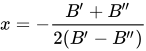
illustrates this effect. In the rigid rotor approximation the line wavenumbers lie on a parabola which has a maximum at
The line of highest wavenumber in the R-branch is known as the band head. It occurs at the value of m which is equal to the integer part of x, or of (x + 1).
When a Q-branch is allowed for a particular electronic transition, the lines of the Q-branch correspond to the case ∆J = 0, J′ = J″ and wavenumbers are given by
The Q-branch then consists of a series of lines with increasing separation between adjacent lines as J increases. When B′ < B″ the Q-branch lies to lower wavenumbers relative to the vibrational line.
Predissociation
The
phenomenon of predissociation occurs when an electronic transition
results in dissociation of the molecule at an excitation energy less
than the normal dissociation limit of the upper state. This can occur
when the potential energy curve of the upper state crosses the curve for a repulsive state,
so that the two states have equal energy at some internuclear distance.
This allows the possibility of a radiationless transition to the
repulsive state whose energy levels form a continuum, so that there is
blurring of the particular vibrational band in the vibrational
progression.
Applications
Spectrum of the blue flame from a butane torch showing excited molecular radical band emission and Swan bands due to C2.
The analysis of vibronic spectra of diatomic molecules provides
information concerning both the ground electronic state and the excited
electronic state. Data for the ground state can also be obtained by
vibrational or pure rotational spectroscopy, but data for the excited
state can only be obtained from the analysis of vibronic spectra. For
example, the bond length in the excited state may be derived from the
value of the rotational constant B′.
In addition to stable diatomic molecules, vibronic spectroscopy has been used to study unstable species, including CH, NH, hydroxyl radical, OH, and cyano radical, CN. The Swan bands in hydrocarbon flame spectra are a progression in the C–C stretching vibration of the dicarbon radical, C2 for the electronic transition. Vibronic bands for 9 other electronic transitions of C2 have been observed in the infrared and ultraviolet regions.
Polyatomic molecules and ions
Formaldehyde
For polyatomic molecules, progressions are most often observed when
the change in bond lengths upon electronic excitation coincides with the
change due to a ″totally symmetric″ vibration. This is the same process that occurs in resonance Raman spectroscopy. For example, in formaldehyde (methanal), H2CO, the n → π* transition
involves excitation of an electron from a non-bonding orbital to an
antibonding pi orbital which weakens and lengthens the C–O bond. This
produces a long progression in the C–O stretching vibration. Another example is furnished by benzene, C6H6. In both gas and liquid phase the band around 250 nm shows a progression in the symmetric ring-breathing vibration.
As an example from inorganic chemistry the permanganate ion, MnO− 4, in aqueous solution has an intense purple colour due to an O → Mn ligand-to-metal charge transfer band (LMCT) in much of the visible region. This band shows a progression in the symmetric Mn–O stretching vibration. The individual lines overlap each other extensively, giving rise to a broad overall profile with some coarse structure.
Progressions in vibrations which are not totally symmetric may also be observed.
d–d electronic transitions in atoms in a centrosymmetric environment are electric-dipole forbidden by the Laporte rule. This will apply to octahedralcoordination compounds of the transition metals. The spectra of many of these complexes have some vibronic character. The same rule also applies to f–f transitions in centrosymmetric complexes of lanthanides and actinides. In the case of the octahedral actinide chloro-complex of uranium(IV), UCl62−
the observed electronic spectrum is entirely vibronic. At the
temperature of liquid helium, 4 K, the vibronic structure was completely
resolved, with zero intensity for the purely electronic transition, and
three side-lines corresponding to the asymmetric U–Cl stretching
vibration and two asymmetric Cl–U–Cl bending modes. Later studies on the same anion were also able to account for vibronic transitions involving low-frequency lattice vibrations.
Animal consciousness, or animal awareness, is the quality or state of self-awareness within an animal, or of being aware of an external object or of something within itself. In humans, consciousness has been defined as: sentience, awareness, subjectivity, qualia, the ability to experience or to feel, wakefulness, having a sense of selfhood, and the executive control system of the mind. Despite the difficulty in definition, many philosophers believe there
is a broadly shared underlying intuition about what consciousness is.
The topic of animal consciousness is beset with a number of difficulties. It poses the problem of other minds in an especially severe form because animals, lacking the ability to use human language, cannot communicate their experiences. It is also difficult to reason objectively about the question because a
denial that an animal is conscious is often taken to imply that they do
not feel, their life has no value, and that harming them is not morally
wrong. For example, the 17th-century French philosopher René Descartes is sometimes criticised for enabling animal mistreatment through his animal machine view, which claimed that only humans are conscious.
Philosophers who consider subjective experience the essence of
consciousness also generally believe, as a correlate, that the existence
and nature of animal consciousness can never rigorously be known. The
American philosopher Thomas Nagel spelled out this point of view in an influential essay titled What Is it Like to Be a Bat?
He said that an organism is conscious "if and only if there is
something that it is like to be that organism—something it is like for
the organism"; and he argued that no matter how much we know about an
animal's brain and behavior, we can never really put ourselves into the
mind of the animal and experience their world in the way they do
themselves. Other thinkers, such as the cognitive scientist Douglas Hofstadter, dismiss this argument as incoherent. Several psychologists and ethologists have argued for the existence of
animal consciousness by describing a range of behaviors that appear to
show animals holding beliefs about things they cannot directly
perceive—Walter Veit's 2023 book A Philosophy for the Science of Animal Consciousness reviews a substantial portion of the evidence.
Animal consciousness has been actively researched for over one hundred years. In 1927, the American functional psychologist Harvey Carr
argued that any valid measure or understanding of awareness in animals
depends on "an accurate and complete knowledge of its essential
conditions in man". A more recent review concluded in 1985 that "the best approach is to use experiment (especially psychophysics)
and observation to trace the dawning and ontogeny of
self-consciousness, perception, communication, intention, beliefs, and
reflection in normal human fetuses, infants, and children". In 2012, a group of neuroscientists signed the Cambridge Declaration on Consciousness,
which "unequivocally" asserted that "humans are not unique in
possessing the neurological substrates that generate consciousness.
Non-human animals, including all mammals and birds, and many other
creatures, including octopuses, also possess these neural substrates." In 2024, more than 500 academics and scientists signed the New York Declaration on Animal Consciousness.
The declaration states that there is strong scientific support for
consciousness in mammals and birds and that it is a realistic
possibility in other vertebrates and many invertebrates. It calls for
these considerations to be taken into account in decisions affecting
animals.
The mind–body problem in philosophy examines the relationship between mind and matter, and in particular the relationship between consciousness and the brain. A variety of approaches have been proposed. Most are either dualist or monist.
Dualism maintains a rigid distinction between the realms of mind and
matter. Monism maintains that there is only one kind of stuff, and that
mind and matter are both aspects of it. The problem was addressed by
pre-Aristotelian philosophers, and was famously addressed by René Descartes in the 17th century, resulting in Cartesian dualism. Descartes believed that humans alone possess a non-physical mind, interpreting animal behaviour through a mechanistic model that denied animal consciousness.
The rejection of the mind–body dichotomy is found in French Structuralism, and is a position that generally characterized post-war French philosophy. The absence of an empirically identifiable meeting point between the
non-physical mind and its physical extension has proven problematic to
dualism and many modern philosophers of mind maintain that the mind is
not something separate from the body. These approaches have been particularly influential in the sciences, particularly in the fields of sociobiology, computer science, evolutionary psychology, and the neurosciences.
Epiphenomenalism is the theory in philosophy of mind
that mental phenomena are caused by physical processes in the brain or
that both are effects of a common cause, as opposed to mental phenomena
driving the physical mechanics of the brain. The impression that
thoughts, feelings, or sensations cause physical effects, is therefore
to be understood as illusory to some extent. For example, it is not the
feeling of fear that produces an increase in heart beat, both are
symptomatic of a common physiological origin, possibly in response to a
legitimate external threat.
The history of epiphenomenalism goes back to the post-Cartesian attempt to solve the riddle of Cartesian dualism, i.e., of how mind and body could interact. La Mettrie, Leibniz and Spinoza
all in their own way began this way of thinking. The idea that even if
the animal were conscious nothing would be added to the production of
behavior, even in animals of the human type, was first voiced by La
Mettrie (1745), and then by Cabanis (1802), and was further explicated by Hodgson (1870) and Huxley (1874). Huxley (1874) likened mental phenomena to the whistle on a steam
locomotive. However, epiphenomenalism flourished primarily as it found a
niche among methodological or scientific behaviorism. In the early
1900s scientific behaviorists such as Ivan Pavlov, John B. Watson, and B. F. Skinner
began the attempt to uncover laws describing the relationship between
stimuli and responses, without reference to inner mental phenomena.
Instead of adopting a form of eliminativism or mental fictionalism,
positions that deny that inner mental phenomena exist, a behaviorist
was able to adopt epiphenomenalism in order to allow for the existence
of mind. However, by the 1960s, scientific behaviourism met substantial
difficulties and eventually gave way to the cognitive revolution. Participants in that revolution, such as Jerry Fodor,
reject epiphenomenalism and insist upon the efficacy of the mind. Fodor
even speaks of "epiphobia"—fear that one is becoming an
epiphenomenalist.
Thomas Henry Huxley defends in an essay titled On the Hypothesis that Animals are Automata, and its History
an epiphenomenalist theory of consciousness according to which
consciousness is a causally inert effect of neural activity—"as the
steam-whistle which accompanies the work of a locomotive engine is
without influence upon its machinery". To this William James objects in his essay Are We Automata?
by stating an evolutionary argument for mind-brain interaction implying
that if the preservation and development of consciousness in the
biological evolution is a result of natural selection,
it is plausible that consciousness has not only been influenced by
neural processes, but has had a survival value itself; and it could only
have had this if it had been efficacious. Karl Popper develops in the book The Self and Its Brain a similar evolutionary argument.
Bernard Rollin
of Colorado State University, the principal author of two U.S. federal
laws regulating pain relief for animals, writes that researchers
remained unsure into the 1980s as to whether animals experience pain,
and veterinarians trained in the U.S. before 1989 were simply taught to
ignore animal pain. In his interactions with scientists and other
veterinarians, Rollin asserts that he was regularly asked to prove
animals are conscious and provide scientifically acceptable grounds for
claiming they feel pain. The denial of animal consciousness by scientists has been labelled as mentophobia by Donald Griffin. Academic reviews of the topic are equivocal, noting that the argument
that animals have at least simple conscious thoughts and feelings has
strong support, but some critics continue to question how reliably animal mental states can be determined. A refereed journal Animal Sentience launched in 2016 by the Institute of Science and Policy of The Humane Society of the United States is devoted to research on this and related topics.
Defining consciousness
About forty meanings attributed to the term consciousness can be identified and categorized based on functions and experiences. The prospects for reaching any single, agreed-upon, theory-independent definition of consciousness appear remote.
Consciousness is an elusive concept that presents many difficulties when attempts are made to define it. Its study has progressively become an interdisciplinary challenge for
numerous researchers, including ethologists, neurologists, cognitive
neuroscientists, philosophers, psychologists and psychiatrists.
In 1976, Richard Dawkins
wrote, "The evolution of the capacity to simulate seems to have
culminated in subjective consciousness. Why this should have happened
is, to me, the most profound mystery facing modern biology." In 2004, eight neuroscientists felt it was still too soon for a
definition. They wrote an apology in "Human Brain Function", in which
they stated:
We have no idea how consciousness emerges from the
physical activity of the brain and we do not know whether consciousness
can emerge from non-biological systems, such as computers... At this
point the reader will expect to find a careful and precise definition of
consciousness. You will be disappointed. Consciousness has not yet
become a scientific term that can be defined in this way. Currently we
all use the term consciousness in many different and often
ambiguous ways. Precise definitions of different aspects of
consciousness will emerge ... but to make precise definitions at this
stage is premature.
Consciousness is sometimes defined as the quality or state of being aware of an external object or something within oneself. It has been defined somewhat vaguely as: subjectivity, awareness, sentience, the ability to experience or to feel, wakefulness, having a sense of selfhood, and the executive control system of the mind. Despite the difficulty in definition, many philosophers believe that
there is a broadly shared underlying intuition about what consciousness
is. Max Velmans and Susan Schneider wrote in The Blackwell Companion to Consciousness:
"Anything that we are aware of at a given moment forms part of our
consciousness, making conscious experience at once the most familiar and
most mysterious aspect of our lives."
Related terms, also often used in vague or ambiguous ways, are:
Awareness: the state or ability to perceive, to feel, or to be conscious of events, objects, or sensory patterns. In this level of consciousness, sense data can be confirmed by an observer without necessarily implying understanding. More broadly, it is the state or quality of being aware of something. In biological psychology, awareness is defined as a human's or an animal's perception and cognitive reaction to a condition or event.
Self-awareness: the capacity for introspection and the ability to reconcile oneself as an individual separate from the environment and other individuals.
Self-consciousness: an acute sense of self-awareness. It is a preoccupation with oneself, as opposed to the philosophical state of self-awareness,
which is the awareness that one exists as an individual being; although
some writers use both terms interchangeably or synonymously.
Sentience: the ability to be aware (feel, perceive, or be conscious)
of one's surroundings or to have subjective experiences. Sentience is a
minimalistic way of defining consciousness, which is otherwise commonly
used to collectively describe sentience plus other characteristics of
the mind.
Sapience: often defined as wisdom, or the ability of an organism or entity to act with appropriate judgment, a mental faculty which is a component of intelligence or alternatively may be considered an additional faculty, apart from intelligence, with its own properties.
Sentience (the ability to feel, perceive, or to experience
subjectivity) is not the same as self-awareness (being aware of oneself
as an individual). The mirror test
is sometimes considered to be an operational test for self-awareness,
and the handful of animals that have passed it are often considered to
be self-aware. It remains debatable whether recognition of one's mirror image can be properly construed to imply full self-awareness, particularly given that robots are being constructed which appear to pass the test.
Much has been learned in neuroscience about correlations between
brain activity and subjective, conscious experiences, and many suggest
that neuroscience will ultimately explain consciousness;
"...consciousness is a biological process that will eventually be
explained in terms of molecular signaling pathways used by interacting
populations of nerve cells...". However, this view has been criticized because consciousness has yet to be shown to be a process, and the so-called "hard problem" of relating consciousness directly to brain activity remains elusive.
Scientific approaches
Since Descartes's proposal of dualism, it became general consensus that the mind had become a matter of philosophy
and that science was not able to penetrate the issue of consciousness –
that consciousness was outside of space and time. However, in recent
decades many scholars have begun to move toward a science of
consciousness. Antonio Damasio and Gerald Edelman
are two neuroscientists who have led the move to neural correlates of
the self and of consciousness. Damasio has demonstrated that emotions
and their biological foundation play a critical role in high level
cognition, and Edelman has created a framework for analyzing consciousness through
a scientific outlook. The current problem consciousness researchers
face involves explaining how and why consciousness arises from neural computation. In his research on this problem, Edelman has developed a theory of consciousness, in which he has coined the terms primary consciousness and secondary consciousness.
Eugene Linden, author of The Parrot's Lament
suggests there are many examples of animal behavior and intelligence
that surpass what people would suppose to be the boundary of animal
consciousness. Linden contends that in many of these documented
examples, a variety of animal species exhibit behavior that can only be
attributed to emotion, and to a level of consciousness that we would
normally ascribe only to our own species.
Consciousness requires a certain
kind of informational organization that does not seem to be 'hard-wired'
in humans, but is instilled by human culture. Moreover, consciousness
is not a black-or-white, all-or-nothing type of phenomenon, as is often
assumed. The differences between humans and other species are so great
that speculations about animal consciousness seem ungrounded. Many
authors simply assume that an animal like a bat has a point of view, but
there seems to be little interest in exploring the details involved.
Consciousness in mammals (including humans) is an aspect of the mind generally thought to comprise qualities such as subjectivity, sentience, and the ability to perceive the relationship between oneself and one's environment. It is a subject of much research in philosophy of mind, psychology, neuroscience, and cognitive science. Some philosophers divide consciousness into phenomenal
consciousness, which is subjective experience itself, and access
consciousness, which refers to the global availability of information to
processing systems in the brain. Phenomenal consciousness has many different experienced qualities, often referred to as qualia. Phenomenal consciousness is usually consciousness of something or about something, a property known as intentionality in philosophy of mind.
In humans, there are three common methods of studying
consciousness: verbal reporting, behavioural demonstrations, and neural
correlation with conscious activity, though these can only be
generalized to non-human taxa with varying degrees of difficulty. In a new study conducted in rhesus monkeys,
Ben-Haim and his team used a process dissociation approach that
predicted opposite behavioral outcomes for the two modes of perception.
They found that monkeys displayed exactly the same opposite behavioral
outcomes as humans when they were aware or unaware of the stimuli
presented.
The sense in which animals (or human infants) can be said to have consciousness or a self-concept
has been hotly debated; it is often referred to as the debate over
animal minds. The best known research technique in this area is the mirror test devised by Gordon G. Gallup,
in which the skin of an animal (or human infant) is marked, while they
are asleep or sedated, with a mark that cannot be seen directly but is
visible in a mirror. The animals are then allowed to see their
reflection in a mirror; if the animal spontaneously directs grooming
behaviour towards the mark, that is taken as an indication that they are
aware of themselves. Over the past 30 years, many studies have found evidence that animals
recognise themselves in mirrors. Self-awareness by this criterion has
been reported for:
Birds: magpies andpigeons (can pass the mirror test after training in the prerequisite behaviors).
Until recently, it was thought that self-recognition was absent in animals without a neocortex,
and was restricted to mammals with large brains and well-developed
social cognition. However, in 2008, a study of self-recognition in corvids reported significant results for magpies. Mammals and birds inherited the same brain components from their last common ancestor
nearly 300 million years ago, and have since independently evolved and
formed significantly different brain types. The results of the mirror
and mark tests showed that neocortex-less magpies
are capable of understanding that a mirror image belongs to their own
body. The findings show that magpies respond in the mirror and mark
tests in a manner similar to apes, dolphins and elephants. The magpies
were chosen to study based on their empathy and lifestyle, a possible
precursor to their ability to develop self-awareness. For chimpanzees, the occurrence is about 75% in young adults and considerably less in young and old individuals. For monkeys, non-primate mammals, and a number of bird species,
exploration of the mirror and social displays were observed. Hints at
mirror-induced self-directed behavior have been obtained.
According to a 2019 study, cleaner wrasses have become the first fish ever observed to pass the mirror test. However, the test's inventor Gordon Gallup has said that the fish were
most likely trying to scrape off a perceived parasite on another fish
and that they did not demonstrate self-recognition. The authors of the
study responded that because the fish checked themselves in the mirror
before and after the scraping, this meant that the fish had
self-awareness and recognized that their reflections belonged to their
own bodies.
The mirror test has attracted controversy among some researchers
because it is entirely focused on vision, the primary sense in humans,
while other species rely more heavily on other senses such as the olfactory sense in dogs. A study in 2015 showed that the "sniff test of self-recognition (STSR)" provides evidence of self-awareness in dogs.
Another approach to determine whether a non-human animal is conscious derives from passive speech research with a macaw (see Arielle).
Some researchers propose that by passively listening to an animal's
voluntary speech, it is possible to learn about the thoughts of another
creature and to determine that the speaker is conscious. This type of
research was originally used to investigate a child's crib speech by Weir (1962) and in investigations of early speech in children by Greenfield and others (1976).
Zipf's law
might be able to be used to indicate if a given dataset of animal
communication indicate an intelligent natural language. Some researchers
have used this algorithm to study bottlenose dolphin language.
Further arguments revolve around the ability of animals to feel pain or suffering, which implies consciousness. If animals can be shown to suffer in ways comparable to humans, ethical
arguments against human suffering may be extended to animals. Some
scholars argue that pain can be inferred from non-purposeful or
maladaptive reactions to negative stimuli. One such reaction is transmarginal inhibition, a phenomenon observed in both humans and some animals that resembles mental breakdown.
Cosmologist Carl Sagan
argues that humans often deny animal suffering to justify practices
such as enslavement, experimentation, and consumption. He contends that
behavioral similarities between humans and other animals challenge such
denials.
John Webster,
professor of animal husbandry, argues that suffering is not dependent
on intelligence or brain size. He states that sentient animals actively
seek pleasure and display behaviors indicating enjoyment, such as
basking in the sun.
However, there is no consensus about which organisms are capable of experiencing pain. Philosopher Justin Leiber discusses varying views: Michel de Montaigne attributes consciousness to insects and even plants, while Peter Singer and Samuel Clarke
deny it in simpler organisms like sponges. Singer places the boundary
somewhere between shrimp and oysters, while others speculate about
insects, spiders, or tapeworms.
Some critics draw comparisons to plants, questioning whether a
focus on animal suffering is entirely distinct. Science writer Carol
Kaesuk Yoon describes how plants, when damaged, initiate chemical
defenses and repair processes, though these do not necessarily imply
consciousness.
Cognitive bias in animals is a pattern of deviation in judgment,
whereby inferences about other animals and situations may be drawn in an
illogical fashion. Individuals create their own "subjective social reality" from their perception of the input. It refers to the question "Is the glass half empty or half full?",
used as an indicator of optimism or pessimism. Cognitive biases have
been shown in a wide range of species including rats, dogs, rhesus
macaques, sheep, chicks, starlings and honeybees.
The neuroscientist Joseph LeDoux advocates avoiding terms derived from human subjective experience when discussing brain functions in animals. For example, the common practice of calling brain circuits
that detect and respond to threats "fear circuits" implies that these
circuits are responsible for feelings of fear. LeDoux argues that
Pavlovian fear conditioning should be renamed Pavlovian threat
conditioning to avoid the implication that "fear" is being acquired in
rats or humans. Key to his theoretical change is the notion of survival functions
mediated by survival circuits, the purpose of which is to keep organisms
alive rather than to make emotions. For example, defensive survival
circuits exist to detect and respond to threats. While all organisms can
do this, only organisms that can be conscious of their own brain's
activities can feel fear. Fear is a conscious experience and occurs the
same way as any other kind of conscious experience: via cortical
circuits that allow attention to certain forms of brain activity. LeDoux
argues the only differences between an emotional and non-emotion state
of consciousness are the underlying neural ingredients that contribute
to the state.
Neuroscience is the scientific study of the nervous system. It is a highly active interdisciplinary science that collaborates with many other fields. The scope of neuroscience has broadened recently to include molecular, cellular, developmental, structural, functional, evolutionary, computational, and medical aspects of the nervous system. Theoretical studies of neural networks are being complemented with techniques for imaging sensory and motor tasks in the brain.
According to a 2008 paper, neuroscience explanations of psychological
phenomena currently have a "seductive allure", and "seem to generate
more public interest" than explanations which do not contain
neuroscientific information. They found that subjects who were not neuroscience experts "judged that
explanations with logically irrelevant neuroscience information were
more satisfying than explanations without.
The neural correlates of consciousness constitute the minimal set of neuronal events and mechanisms sufficient for a specific conscious percept. Neuroscientists use empirical approaches to discover neural correlates of subjective phenomena. The set should be minimal
because, if the brain is sufficient to give rise to any given conscious
experience, the question is which of its components is necessary to
produce it.
Visual sense and representation was reviewed in 1998 by Francis Crick and Christof Koch. They concluded sensory neuroscience
can be used as a bottom-up approach to studying consciousness, and
suggested experiments to test various hypotheses in this research
stream.
A feature that distinguishes humans from most animals is that we
are not born with an extensive repertoire of behavioral programs that
would enable us to survive on our own ("physiological prematurity").
To compensate for this, we have an unmatched ability to learn, i.e., to
consciously acquire such programs by imitation or exploration. Once
consciously acquired and sufficiently exercised, these programs can
become automated to the extent that their execution happens beyond the
realms of our awareness. Take, as an example, the incredible fine motor
skills exerted in playing a Beethoven piano sonata or the sensorimotor
coordination required to ride a motorcycle along a curvy mountain road.
Such complex behaviors are possible only because a sufficient number of
the subprograms involved can be executed with minimal or even suspended
conscious control. In fact, the conscious system may actually interfere
somewhat with these automated programs.
The growing ability of neuroscientists to manipulate neurons
using methods from molecular biology in combination with optical tools
depends on the simultaneous development of appropriate behavioural
assays and model organisms amenable to large-scale genomic analysis and
manipulation. A combination of such fine-grained neuronal analysis in animals with
ever more sensitive psychophysical and brain imaging techniques in
humans, complemented by the development of a robust theoretical
predictive framework, will hopefully lead to a rational understanding of
consciousness.
Neocortex and equivalents
Previously researchers had thought that patterns of neural sleep exhibited by zebra finches needed a mammalian neocortex.
The neocortex is a part of the brain of mammals. It consists of the grey matter, or neuronal cell bodies and unmyelinated fibers, surrounding the deeper white matter (myelinatedaxons) in the cerebrum. The neocortex is smooth in rodents and other small mammals, whereas in primates
and other larger mammals it has deep grooves and wrinkles. These folds
increase the surface area of the neocortex considerably without taking
up too much more volume. Also, neurons within the same wrinkle have more
opportunity for connectivity, while neurons in different wrinkles have
less opportunity for connectivity, leading to compartmentalization of
the cortex. The neocortex is divided into frontal, parietal, occipital, and temporal lobes, which perform different functions. For example, the occipital lobe contains the primary visual cortex, and the temporal lobe contains the primary auditory cortex.
Further subdivisions or areas of neocortex are responsible for more
specific cognitive processes. The neocortex is the newest part of the cerebral cortex to evolve (hence the prefix "neo"); the other parts of the cerebral cortex are the paleocortex and archicortex, collectively known as the allocortex. In humans, 90% of the cerebral cortex is neocortex.
Researchers have argued that consciousness in mammals arises in
the neocortex, and therefore by extension used to argue that
consciousness cannot arise in animals which lack a neocortex. For
example, Rose argued in 2002 that the "fishes have nervous systems that
mediate effective escape and avoidance responses to noxious stimuli,
but, these responses must occur without a concurrent, human-like
awareness of pain, suffering or distress, which depend on separately
evolved neocortex." Recently that view has been challenged, and many researchers now believe that animal consciousness can arise from homologoussubcortical brain networks. For instance, evidence suggests the pallium in bird brains to be functionally equivalent to the mammalian cerebral cortex as a basis of consciousness.
Attention
Attention is the cognitive process
of selectively concentrating on one aspect of the environment while
ignoring other things. Attention has also been referred to as the
allocation of processing resources. Attention also has variations amongst cultures. Voluntary attention
develops in specific cultural and institutional contexts through
engagement in cultural activities with more competent community members.
Most experiments show that one neural correlate
of attention is enhanced firing. If a neuron has a certain response to a
stimulus when the animal is not attending to the stimulus, then when
the animal does attend to the stimulus, the neuron's response will be
enhanced even if the physical characteristics of the stimulus remain the
same. In many cases attention produces changes in the EEG. Many animals, including humans, produce gamma waves (40–60 Hz) when focusing attention on a particular object or activity.
Extended consciousness
Extended consciousness
is an animal's autobiographical self-perception. It is thought to arise
in the brains of animals which have a substantial capacity for memory
and reason. It does not necessarily require language. The perception of a
historic and future self arises from a stream of information from the
immediate environment and from neural structures related to memory. The
concept was popularised by Antonio Damasio and is used in biological psychology. Extended consciousness is said to arise in structures in the human brain described as image spaces and dispositional spaces. Image spaces imply areas where sensory impressions of all types are processed, including the focused awareness of the core consciousness.
Dispositional spaces include convergence zones, which are networks in
the brain where memories are processed and recalled, and where knowledge
is merged with immediate experience.
Metacognition
Metacognition is defined as "cognition about cognition", or "knowing about knowing." It can take many forms; it includes knowledge about when and how to use
particular strategies for learning or for problem solving. It has been suggested that metacognition in some animals provides evidence for cognitive self-awareness. There are generally two components of metacognition: knowledge about cognition, and regulation of cognition. Writings on metacognition can be traced back at least as far as De Anima and the Parva Naturalia of the Greek philosopher Aristotle. Metacognologists believe that the ability to consciously think about thinking is unique to sapient species and indeed is one of the definitions of sapience. There is evidence that rhesus monkeys and apes can make accurate judgments about the strengths of their memories of fact and monitor their own uncertainty, while attempts to demonstrate metacognition in birds have been inconclusive. A 2007 study provided some evidence for metacognition in rats, but further analysis suggested that they may have been following simple operant conditioning principles, or a behavioral economic model.
Mirror neurons
Mirror neurons are neurons that fire both when an animal acts and when the animal observes the same action performed by another. Thus, the neuron "mirrors" the behavior of the other, as though the
observer were themselves acting. Such neurons have been directly
observed in primate and other species including birds.
The function of the mirror system is a subject of much speculation.
Many researchers in cognitive neuroscience and cognitive psychology
consider that this system provides the physiological mechanism for the
perception action coupling (see the common coding theory). They argue that mirror neurons may be important for understanding the
actions of other people, and for learning new skills by imitation. Some
researchers also speculate that mirror systems may simulate observed
actions, and thus contribute to theory of mind skills, while others relate mirror neurons to language abilities. Neuroscientists such as Marco Iacoboni (UCLA) have argued that mirror
neuron systems in the human brain help us understand the actions and
intentions of other people. In a study published in March 2005, Iacoboni
and his colleagues reported that mirror neurons could discern if
another person who was picking up a cup of tea planned to drink from it
or clear it from the table. In addition, Iacoboni and a number of other
researchers have argued that mirror neurons are the neural basis of the
human capacity for emotions such as empathy. Vilayanur S. Ramachandran has speculated that mirror neurons may provide the neurological basis of self-awareness.
Consciousness is likely an evolved adaptation since it meets George Williams' criteria of species universality, complexity, and functionality, and it is a trait that apparently increases fitness. Opinions are divided as to where in biological evolution
consciousness emerged and about whether or not consciousness has
survival value. It has been argued that consciousness emerged (i)
exclusively with the first humans, (ii) exclusively with the first mammals, (iii) independently in mammals and birds, or (iv) with the first reptiles. Donald Griffin suggests in his book Animal Minds a gradual evolution of consciousness. Each of these scenarios raises the question of the possible survival value of consciousness.
In his paper "Evolution of consciousness," John Eccles argues that special anatomical and physical adaptations of the mammalian cerebral cortex gave rise to consciousness. In contrast, others have argued that the recursive circuitry
underwriting consciousness is much more primitive, having evolved
initially in pre-mammalian species because it improves the capacity for
interaction with both social and natural environments by providing an energy-saving "neutral" gear in an otherwise energy-expensive motor output machine. Once in place, this recursive circuitry may well have provided a basis
for the subsequent development of many of the functions that
consciousness facilitates in higher organisms, as outlined by Bernard J. Baars. Richard Dawkins suggested that humans evolved consciousness in order to make themselves the subjects of thought. Daniel Povinelli suggests that large, tree-climbing apes evolved
consciousness to take into account one's own mass when moving safely
among tree branches. Consistent with this hypothesis, Gordon Gallup found that chimpanzees and orangutans, but not little monkeys or terrestrial gorillas, demonstrated self-awareness in mirror tests.
The concept of consciousness can refer to voluntary action,
awareness, or wakefulness. However, even voluntary behaviour involves
unconscious mechanisms. Many cognitive processes take place in the
cognitive unconscious, unavailable to conscious awareness. Some
behaviours are conscious when learned but then become unconscious,
seemingly automatic. Learning, especially implicitly learning a skill,
can take place outside of consciousness. For example, plenty of people
know how to turn right when they ride a bike, but very few can
accurately explain how they actually do so.
Neural Darwinism is a large scale theory of brain function initially proposed in 1978 by the American biologist Gerald Edelman. Edelman distinguishes between what he calls primary and secondary consciousness:
Primary consciousness: is the ability, found in humans and some animals, to integrate observed events with memory to create an awareness
of the present and immediate past of the world around them. This form
of consciousness is also sometimes called "sensory consciousness". Put
another way, primary consciousness is the presence of various subjective sensory contents of consciousness such as sensations, perceptions,
and mental images. For example, primary consciousness includes a
person's experience of the blueness of the ocean, a bird's song, and the
feeling of pain. Thus, primary consciousness refers to being mentally
aware of things in the world in the present without any sense of past
and future; it is composed of mental images bound to a time around the
measurable present.
Secondary consciousness:
is an individual's accessibility to their history and plans. The
concept is also loosely and commonly associated with having awareness of
one's own consciousness. The ability allows its possessors to go beyond the limits of the remembered present of primary consciousness.
Primary consciousness can be defined as simple awareness that includes perception and emotion.
As such, it is ascribed to most animals. By contrast, secondary
consciousness depends on and includes such features as self-reflective
awareness, abstract thinking, volition and metacognition.
Edelman's theory focuses on two nervous system organizations: the brainstem and limbic systems on one side and the thalamus and cerebral cortex
on the other side. The brain stem and limbic system take care of
essential body functioning and survival, while the thalamocortical
system receives signals from sensory receptors and sends out signals to
voluntary muscles such as those of the arms and legs. The theory asserts
that the connection of these two systems during evolution helped
animals learn adaptive behaviors.
Other scientists have argued against Edelman's theory, instead
suggesting that primary consciousness might have emerged with the basic
vegetative systems of the brain. That is, the evolutionary origin might
have come from sensations and primal emotions arising from sensors and receptors,
both internal and surface, signaling that the well-being of the
creature was immediately threatened—for example, hunger for air, thirst,
hunger, pain, and extreme temperature change. This is based on
neurological data showing the thalamic, hippocampal, orbitofrontal, insula, and midbrain sites are the key to consciousness of thirst. These scientists also point out that the cortex might not be as
important to primary consciousness as some neuroscientists have
believed. Some researchers argue that systematic disruption of cortical regions
in nonhuman animals does not prevent consciousness, and that reports of
consciousness in children born without a cortex are consistent with this
view. On this account, brainstem mechanisms are proposed to play a
primary role in consciousness. Still, these scientists concede that higher order consciousness does
involve the cortex and complex communication between different areas of
the brain.
While animals with primary consciousness
have long-term memory, they lack explicit narrative, and, at best, can
only deal with the immediate scene in the remembered present. While they
still have an advantage over animals lacking such ability, evolution
has brought forth a growing complexity in consciousness, particularly in
mammals. Animals with this complexity are said to have secondary
consciousness. Secondary consciousness is seen in animals with semantic capabilities, such as the four great apes. It is present in its richest form in the human species, which is unique in possessing complex language made up of syntax
and semantics. In considering how the neural mechanisms underlying
primary consciousness arose and were maintained during evolution, it is
proposed that at some time around the divergence of reptiles into mammals and then into birds, the embryological development of large numbers of new reciprocal connections allowed rich re-entrant
activity to take place between the more posterior brain systems
carrying out perceptual categorization and the more frontally located
systems responsible for value-category memory. The ability of an animal to relate a present complex scene to their own
previous history of learning conferred an adaptive evolutionary
advantage. At much later evolutionary epochs, further re-entrant
circuits appeared that linked semantic and linguistic performance to
categorical and conceptual memory systems. This development enabled the emergence of secondary consciousness.
Ursula Voss of the Universität Bonn believes that the theory of protoconsciousness may serve as adequate explanation for self-recognition found in birds,
as they would develop secondary consciousness during REM sleep. She added that many types of birds have very sophisticated language
systems. Don Kuiken of the University of Alberta finds such research
interesting as well as if we continue to study consciousness with animal
models (with differing types of consciousness), we would be able to
separate the different forms of reflectiveness found in today's world.
For the advocates of the idea of a secondary consciousness, self-recognition
serves as a critical component and a key defining measure. What is most
interesting then, is the evolutionary appeal that arises with the
concept of self-recognition. In non-human species and in children, the mirror test (see above) has been used as an indicator of self-awareness.
Multidimensional framework
A 2020 paper by Jonathan Birch,
Alexandra K. Schnell, and Nicola S. Clayton outlined a multidimensional
approach to animal consciousness, intended to account for variation in
conscious experience across species. The authors propose that
consciousness may not be meaningfully represented along a single
continuum, and instead suggest five distinct dimensions for constructing
species-specific profiles.
The proposed dimensions are:
Perceptual richness (p-richness): the level of sensory
detail present in conscious perception, which may vary across different
sensory modalities such as vision, olfaction, or touch.
Evaluative richness (e-richness): the complexity of affective states, including positive and negative valence, and their role in guiding behaviour.
Unity: the degree to which conscious experience is integrated into a single perspective at a given moment.
Temporality: the integration of experience over time, including continuity, memory, and anticipation of future events.
Selfhood: the extent to which an animal exhibits self-related
processing, from distinguishing between self and environment to more
complex capacities such as mirror self-recognition.
The authors suggest that this framework could facilitate comparative
studies of consciousness in different taxa, including mammals, birds,
and cephalopods.
Declarations on animal consciousness
Cambridge Declaration on Consciousness
Cambridge Declaration on Consciousness
The absence of a neocortex
does not appear to preclude an organism from experiencing affective
states. Convergent evidence indicates that non-human animals have the
neuroanatomical, neurochemical, and neurophysiological substrates of
conscious states along with the capacity to exhibit intentional behaviors. Consequently, the weight of evidence indicates that humans are not unique in possessing the neurological substrates
that generate consciousness. Non-human animals, including all mammals
and birds, and many other creatures, including octopuses, also possess
these neurological substrates.
In 2012, a group of neuroscientists attending a conference on "Consciousness in Human and non-Human Animals" at the University of Cambridge in the UK, signed the Cambridge Declaration on Consciousness (see box on the right).
This declaration "unequivocally" asserts:
"The field of Consciousness research is rapidly
evolving. Abundant new techniques and strategies for human and non-human
animal research have been developed. Consequently, more data is
becoming readily available, and this calls for a periodic reevaluation
of previously held preconceptions in this field. Studies of non-human
animals have shown that homologousbrain circuits
correlated with conscious experience and perception can be selectively
facilitated and disrupted to assess whether they are in fact necessary
for those experiences. Moreover, in humans, new non-invasive techniques
are readily available to survey the correlates of consciousness."
"The neural substrates of emotions do not appear to be confined to cortical structures. In fact, subcortical
neural networks aroused during affective states in humans are also
critically important for generating emotional behaviors in animals.
Artificial arousal of the same brain regions generates corresponding
behavior and feeling states in both humans and non-human animals.
Wherever in the brain one evokes instinctual emotional behaviors in
non-human animals, many of the ensuing behaviors are consistent with
experienced feeling states, including those internal states that are
rewarding and punishing. Deep brain stimulation of these systems in
humans can also generate similar affective states. Systems associated
with affect are concentrated in subcortical regions where neural homologies abound. Young human and non-human animals without neocortices retain these brain-mind functions. Furthermore, neural circuits supporting behavioral/electrophysiological
states of attentiveness, sleep and decision making appear to have
arisen in evolution as early as the invertebrate radiation, being
evident in insects and cephalopod mollusks (e.g., octopus)."
"Birds appear to offer, in their behavior, neurophysiology, and neuroanatomy a striking case of parallel evolution of consciousness. Evidence of near human-like levels of consciousness has been most dramatically observed in grey parrots.
Mammalian and avian emotional networks and cognitive microcircuitries
appear to be far more homologous than previously thought. Moreover,
certain species of birds have been found to exhibit neural sleep patterns similar to those of mammals, including REM sleep and, as was demonstrated in zebra finches, neurophysiological patterns previously thought to require a mammalian neocortex. Magpies in particular have been shown to exhibit striking similarities to humans, great apes, dolphins, and elephants in studies of mirror self-recognition."
"In humans, the effect of certain hallucinogens
appears to be associated with a disruption in cortical feedforward and
feedback processing. Pharmacological interventions in non-human animals
with compounds known to affect conscious behavior in humans can lead to
similar perturbations in behavior in non-human animals. In humans, there
is evidence to suggest that awareness is correlated with cortical
activity, which does not exclude possible contributions by subcortical
or early cortical processing, as in visual awareness. Evidence that
human and non-human animal emotional feelings arise from homologous
subcortical brain networks provide compelling evidence for
evolutionarily shared primal affective qualia."
New York Declaration on Animal Consciousness
In 2024, a conference on "The Emerging Science of Animal Consciousness" at New York University produced The New York Declaration on Animal Consciousness. This brief declaration, signed by over 500 scientists and academics,
asserts that, in addition to the strong scientific support for
consciousness in mammals and birds agreed on by Cambridge, there is also
empirical evidence which "indicates at least a realistic possibility of
conscious experience in all vertebrates (including reptiles,
amphibians, and fishes) and many invertebrates (including, at minimum,
cephalopod mollusks, decapod crustaceans, and insects)." The declaration further asserts that "when there is a realistic
possibility of conscious experience in an animal, it is irresponsible to
ignore that possibility in decisions affecting that animal".
Examples
Theories of brain evolution in animals. The old scala naturae model versus the modern approach.
A common image is the scala naturae, the ladder of nature on which animals of different species occupy successively higher rungs, with humans typically at the top. A more useful approach has been to recognize that different animals may
have different kinds of cognitive processes, which are better
understood in terms of the ways in which they are cognitively adapted to
their different ecological niches, than by positing any kind of
hierarchy.
Dogs were previously listed as non-self-aware animals. Traditionally, self-consciousness was evaluated via the mirror test. But dogs, and many other animals, are not (as) visually oriented. A 2015 study by biologist Roberto Cazzolla Gatti argues that the "sniff
test of self-recognition" (STSR) provides evidence of self-awareness in
dogs and that apparent species differences may reflect the methods used
to assess it, rather than a capacity confined to great apes, humans,
and a few other animals. The study further suggests adopting a
species-specific, rather than anthropocentric, approach to research on
animal consciousness. This study has been confirmed by another study.
Research with captive grey parrots, especially Irene Pepperberg's work with an individual named Alex,
has demonstrated they possess the ability to associate simple human
words with meanings, and to intelligently apply the abstract concepts of
shape, colour, number, zero-sense, etc. According to Pepperberg and
other scientists, they perform many cognitive tasks at the level of
dolphins, chimpanzees, and even human toddlers. Another notable African grey is N'kisi, which in 2004 was said to have a vocabulary of over 950 words which she used in creative ways. For example, when Jane Goodall
visited N'kisi in his New York home, he greeted her with "Got a chimp?"
because he had seen pictures of her with chimpanzees in Africa.
In 2011, research led by Dalila Bovet of Paris West University Nanterre La Défense,
demonstrated grey parrots were able to coordinate and collaborate with
each other to an extent. They were able to solve problems such as two
birds having to pull strings at the same time to obtain food. In another
example, one bird stood on a perch to release a food-laden tray, while
the other pulled the tray out from the test apparatus. Both would then
feed. The birds were observed waiting for their partners to perform the
necessary actions so their behaviour could be synchronized. The parrots
appeared to express individual preferences as to which of the other test
birds they would work with.
It was thought that self-recognition was restricted to mammals with
large brains and highly evolved social cognition, but absent from
animals without a neocortex. However, in 2008, an investigation of self-recognition in corvids
was conducted to determine the ability of self-recognition in the
magpie. Mammals and birds inherited the same brain components from their
last common ancestor
nearly 300 million years ago, and have since independently evolved and
formed significantly different brain types. The results of the mirror
test showed that although magpies
do not have a neocortex, they are capable of understanding that a
mirror image belongs to their own body. The findings show that magpies
respond to the mirror test in a manner similar to that of apes,
dolphins, killer whales, pigs and elephants.
A 2020 study found that carrion crows show a neuronal response that correlates with their perception
of a stimulus, which they argue to be an empirical marker of (avian)
sensory consciousness – the conscious perception of sensory input – in
the crows which do not have a cerebral cortex.
The study thereby substantiates the theory that conscious perception
does not require a cerebral cortex and that the basic foundations for it
– and possibly for human-type consciousness – may have evolved before
the last common ancestor >320 Mya or independently in birds. A related study showed that the birds' pallium's neuroarchitecture is reminiscent of the mammalian cortex.
A 2025 review applied a five-dimensional framework of
consciousness to corvids, examining sensory, evaluative, temporal, and
self-related aspects of their experience. Drawing on behavioural and
neurological evidence, the authors argue that corvids exhibit
sophisticated cognitive capacities across all dimensions, including high
perceptual acuity, emotional evaluation, episodic-like memory, future
planning, and possible forms of self-awareness and theory of mind. While
not claiming definitive proof of consciousness, the review supports the
growing consensus that corvids are plausible sentient beings and
proposes they serve as a model group for the comparative study of
non-mammalian consciousness.
Invertebrates
Octopus travelling with shells collected for protection
Octopuses are highly intelligent, possibly more so than any other order of invertebrates. The level of their intelligence and learning capability are debated, but maze and problem-solving studies show they have both short- and long-term memory. Octopus have a highly complex nervous system, only part of which is localized in their brain. Two-thirds of an octopus's neurons are found in the nerve cords of their arms. Octopus arms show a variety of complex reflex actions that persist even when they have no input from the brain. Unlike vertebrates, the complex motor skills of octopuses are not organized in their brain using an internal somatotopic map of their body, instead using a non-somatotopic system unique to large-brained invertebrates. Some octopuses, such as the mimic octopus, move their arms in ways that emulate the shape and movements of other sea creatures.
In laboratory studies, octopuses can easily be trained to
distinguish between different shapes and patterns. They reportedly use observational learning, although the validity of these findings is contested. Octopuses have also been observed to play: repeatedly releasing bottles or toys into a circular current in their aquariums and then catching them. Octopuses often escape from their aquarium and sometimes enter others. They have boarded fishing boats and opened holds to eat crabs. At least four specimens of the veined octopus (Amphioctopus marginatus) have been witnessed retrieving discarded coconut shells, manipulating them, and then reassembling them to use as shelter.
Shamanistic and religious views
Shamanistic and other traditional cultures and folk tales speak of animal spirits and the consciousness of animals.In India, Jains consider all the jivas (living organisms, including plants, animals and insects) to be conscious.












.jpg)

_87b.jpg)


