Search This Blog

Thursday, November 6, 2025

Second

From Wikipedia, the free encyclopedia
 
A pendulum-governed escapement of a clock, ticking every second
General information
Unit systemSI
Unit oftime
Symbols

The second (symbol: s) is a unit of time derived from the division of the day first into 24 hours, then to 60 minutes, and lastly to 60 seconds each, for a total of 24 × 60 × 60 = 86,400 seconds per day. The current and formal definition in the International System of Units (SI) is more precise:

The second [...] is defined by taking the fixed numerical value of the caesium frequency, ΔνCs, the unperturbed ground-state hyperfine transition frequency of the caesium 133 atom, to be 9192631770 when expressed in the unit Hz, which is equal to s−1.

This current definition was adopted in 1967 when it became feasible to define the second based on fundamental properties of nature with caesium clocks. As the speed of Earth's rotation varies and is slowing ever so slightly, a leap second is added at irregular intervals to civil time to keep clocks in sync with Earth's rotation.

The definition that is based on 186400 of a rotation of the earth is still used by the Universal Time 1 (UT1) system.

Etymology

"Minute" comes from the Latin pars minuta prima, meaning "first small part" i.e. first division of the hour – dividing into sixty, and "second" comes from the pars minuta secunda, "second small part", dividing again into sixty.

Uses

Analog clocks and watches often have sixty tick marks on their faces, representing seconds (and minutes), and a "second hand" to mark the passage of time in seconds. Digital clocks and watches often have a two-digit seconds counter.

SI prefixes are frequently combined with the word second to denote subdivisions of the second: milliseconds (thousandths), microseconds (millionths), nanoseconds (billionths), and sometimes smaller units of a second. Multiples of seconds are usually counted in hours and minutes. Though SI prefixes may also be used to form multiples of the second such as kiloseconds (thousands of seconds), such units are rarely used in practice. An everyday experience with small fractions of a second is a 1-gigahertz microprocessor that has a cycle time of 1 nanosecond. Camera shutter speeds are often expressed in fractions of a second, such as 130 second or 11000 second.

Sexagesimal divisions of the day from a calendar based on astronomical observation have existed since the third millennium BC, though they were not seconds as we know them today. Small divisions of time could not be measured back then, so such divisions were mathematically derived. The first timekeepers that could count seconds accurately were pendulum clocks invented in the 17th century. Starting in the 1950s, atomic clocks became better timekeepers than Earth's rotation, and they continue to set the standard today.

Clocks and solar time

A mechanical clock, which does not depend on measuring the relative rotational position of the Earth, keeps uniform time called mean time, within whatever accuracy is intrinsic to it. That means that every second, minute and every other division of time counted by the clock has the same duration as any other identical division of time. A sundial, which measures the relative position of the Sun in the sky called apparent time, does not keep uniform time. The time kept by a sundial varies by time of year, meaning that seconds, minutes and every other division of time is a different duration at different times of the year. The time of day measured with mean time versus apparent time may differ by as much as 15 minutes, but a single day differs from the next by only a small amount; 15 minutes is a cumulative difference over a part of the year. The effect is due chiefly to the obliqueness of Earth's axis with respect to its orbit around the Sun.

The difference between apparent solar time and mean time was recognized by astronomers since antiquity, but prior to the invention of accurate mechanical clocks in the mid-17th century, sundials were the only reliable timepieces, and apparent solar time was the only generally accepted standard.

Events and units of time in seconds

Fractions of a second are usually denoted in decimal notation, for example 2.01 seconds, or two and one hundredth seconds. Multiples of seconds are usually expressed as minutes and seconds, or hours, minutes and seconds of clock time, separated by colons, such as 11:23:24, or 45:23 (the latter notation can give rise to ambiguity, because the same notation is used to denote hours and minutes). It rarely makes sense to express longer periods of time like hours or days in seconds, because they are awkwardly large numbers. For the metric unit of second, there are decimal prefixes representing 10−30 to 1030 seconds.

Some common units of time in seconds are: a minute is 60 seconds; an hour is 3,600 seconds; a day is 86,400 seconds; a week is 604,800 seconds; a year (other than leap years) is 31,536,000 seconds; and a (Gregorian) century averages 3,155,695,200 seconds; with all of the above excluding any possible leap seconds. In astronomy, a Julian year is precisely 31,557,600 seconds.

Some common events in seconds are: a stone falls about 4.9 meters from rest in one second; a pendulum of length about one meter has a swing of one second, so pendulum clocks have pendulums about a meter long; the fastest human sprinters run 10 meters in a second; an ocean wave in deep water travels about 23 meters in one second; sound travels about 343 meters in one second in air; light takes 1.3 seconds to reach Earth from the surface of the Moon, a distance of 384,400 kilometers.

Other units incorporating seconds

A second is directly part of other units, such as frequency measured in hertz (inverse seconds or s−1), speed in meters per second, and acceleration in meters per second squared. The metric system unit becquerel, a measure of radioactive decay, is measured in inverse seconds and higher powers of second are involved in derivatives of acceleration such as jerk. Though many derivative units for everyday things are reported in terms of larger units of time, not seconds, they are ultimately defined in terms of the SI second; this includes time expressed in hours and minutes, velocity of a car in kilometers per hour or miles per hour, kilowatt hours of electricity usage, and speed of a turntable in rotations per minute.

Moreover, most other SI base units are defined by their relationship to the second: the meter is defined by setting the speed of light (in vacuum) to be 299 792 458 m/s, exactly; definitions of the SI base units kilogram, ampere, kelvin, and candela also depend on the second. The only base unit whose definition does not depend on the second is the mole, and only two of the 22 named derived units, radian and steradian, do not depend on the second either.

Timekeeping standards

A set of atomic clocks throughout the world keeps time by consensus: the clocks "vote" on the correct time, and all voting clocks are steered to agree with the consensus, which is called International Atomic Time (TAI). TAI "ticks" atomic seconds.

Civil time is defined to agree with the rotation of the Earth. The international standard for timekeeping is Coordinated Universal Time (UTC). This time scale "ticks" the same atomic seconds as TAI, but inserts or omits leap seconds as necessary to correct for variations in the rate of rotation of the Earth.

A time scale in which the seconds are not exactly equal to atomic seconds is UT1, a form of universal time. UT1 is defined by the rotation of the Earth with respect to the Sun, and does not contain any leap seconds. UT1 always differs from UTC by less than a second.

Optical lattice clock

While they are not yet part of any timekeeping standard, optical lattice clocks with frequencies in the visible light spectrum now exist and are the most accurate timekeepers of all. A strontium clock with frequency 430 THz, in the red range of visible light, during the 2010s held the accuracy record: it gains or loses less than a second in 15 billion years, which is longer than the estimated age of the universe. Such a clock can measure a change in its elevation of as little as 2 cm by the change in its rate due to gravitational time dilation.

History of definition

There have only ever been three definitions of the second: as a fraction of the day, as a fraction of an extrapolated year, and as the microwave frequency of a caesium atomic clock, which have each realized a sexagesimal division of the day from ancient astronomical calendars.

Sexagesimal divisions of calendar time and day

Civilizations in the classic period and earlier created divisions of the calendar as well as arcs using a sexagesimal system of counting, so at that time the second was a sexagesimal subdivision of the day (ancient second = day/60×60), not of the hour like the modern second (= hour/60×60). Sundials and water clocks were among the earliest timekeeping devices, and units of time were measured in degrees of arc. Conceptual units of time smaller than realisable on sundials were also used.

There are references to "second" as part of a lunar month in the writings of natural philosophers of the Middle Ages, which were mathematical subdivisions that could not be measured mechanically.

Fraction of solar day

The earliest mechanical clocks, which appeared starting in the 14th century, had displays that divided the hour into halves, thirds, quarters and sometimes even 12 parts, but never by 60. In fact, the hour was not commonly divided in 60 minutes as it was not uniform in duration. It was not practical for timekeepers to consider minutes until the first mechanical clocks that displayed minutes appeared near the end of the 16th century. Mechanical clocks kept the mean time, as opposed to the apparent time displayed by sundials. By that time, sexagesimal divisions of time were well established in Europe.

The earliest clocks to display seconds appeared during the last half of the 16th century. The second became accurately measurable with the development of mechanical clocks. The earliest spring-driven timepiece with a second hand that marked seconds is an unsigned clock depicting Orpheus in the Fremersdorf collection, dated between 1560 and 1570. During the third quarter of the 16th century, Taqi al-Din built a clock with marks every 15 minute. In 1579, Jost Bürgi built a clock for William of Hesse that marked seconds. In 1581, Tycho Brahe redesigned clocks that had displayed only minutes at his observatory so they also displayed seconds, even though those seconds were not accurate. In 1587, Tycho complained that his four clocks disagreed by plus or minus four seconds.

In 1656, Dutch scientist Christiaan Huygens invented the first pendulum clock. It had a pendulum length of just under a meter, giving it a swing of one second, and an escapement that ticked every second. It was the first clock that could accurately keep time in seconds. By the 1730s, 80 years later, John Harrison's maritime chronometers could keep time accurate to within one second in 100 days.

In 1832, Gauss proposed using the second as the base unit of time in his millimeter–milligram–second system of units. The British Association for the Advancement of Science (BAAS) in 1862 stated that "All men of science are agreed to use the second of mean solar time as the unit of time." BAAS formally proposed the CGS system in 1874, although this system was gradually replaced over the next 70 years by MKS units. Both the CGS and MKS systems used the same second as their base unit of time. MKS was adopted internationally during the 1940s, defining the second as 186,400 of a mean solar day.

Fraction of an ephemeris year

Sometime in the late 1940s, quartz crystal oscillator clocks with an operating frequency of ~100 kHz advanced to keep time with accuracy better than 1 part in 108 over an operating period of a day. It became apparent that a consensus of such clocks kept better time than the rotation of the Earth. Metrologists also knew that Earth's orbit around the Sun (a year) was much more stable than Earth's rotation. This led to proposals as early as 1950 to define the second as a fraction of a year.

The Earth's motion was described in Newcomb's Tables of the Sun (1895), which provided a formula for estimating the motion of the Sun relative to the epoch 1900 based on astronomical observations made between 1750 and 1892. This resulted in adoption of an ephemeris time scale expressed in units of the sidereal year at that epoch by the IAU in 1952. This extrapolated timescale brings the observed positions of the celestial bodies into accord with Newtonian dynamical theories of their motion. In 1955, the tropical year, considered more fundamental than the sidereal year, was chosen by the IAU as the unit of time. The tropical year in the definition was not measured but calculated from a formula describing a mean tropical year that decreased linearly over time.

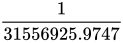
In 1956, the second was redefined in terms of a year relative to that epoch. The second was thus defined as "the fraction 131,556,925.9747 of the tropical year for 1900 January 0 at 12 hours ephemeris time". This definition was adopted as part of the International System of Units in 1960.

Atomic definition

Even the best mechanical, electric motorized and quartz crystal-based clocks develop discrepancies from environmental conditions; far better for timekeeping is the natural and exact "vibration" in an energized atom. The frequency of vibration (i.e., radiation) is very specific depending on the type of atom and how it is excited. Since 1967, the second has been defined as exactly "the duration of 9,192,631,770 periods of the radiation corresponding to the transition between the two hyperfine levels of the ground state of the caesium-133 atom". This length of a second was selected to correspond exactly to the length of the ephemeris second previously defined. Atomic clocks use such a frequency to measure seconds by counting cycles per second at that frequency. Radiation of this kind is one of the most stable and reproducible phenomena of nature. The current generation of atomic clocks is accurate to within one second in a few hundred million years. Since 1967, atomic clocks based on atoms other than caesium-133 have been developed with increased precision by a factor of 100. Therefore a new definition of the second is planned.

Atomic clocks now set the length of a second and the time standard for the world.

Table

Evolution of the Second
Decisions of the CIPM Resolution of the CGPM Information
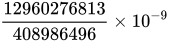
That according to the decisions of the 8th General Assembly of the International Astronomical Union (Rome, 1952), the second of ephemeris time (ET) is the fraction

of the tropical year for 1900 January 0 at 12 h ET.

The second is the fraction of the tropical year for 1900 January 0 at 12 hours ephemeris time. 1956 CIPM

11th CGPM 1960 Resolution 9

The standard to be employed is the transition between the hyperfine levels F=4, M=0 and F=3, M=0 of the ground state of the caesium 133 atom, unperturbed by external fields, and that the frequency of this transition is assigned the value 9192631770 hertz. The second is the duration of 9 192 631 770 periods of the radiation corresponding to the transition between the two hyperfine levels of the ground state of the caesium 133 atom 13th CGPM Resolution 1

CIPM 1967

This definition implies that the caesium atom is at rest and unperturbed. In consequence, in its practical realization, measurements must be corrected for velocity of the atoms with respect to the clock reference frame, for magnetic and electric fields including ambient black-body radiation, for spin-exchange effects and for other possible perturbations. At its 1997 meeting, the CIPM affirmed that: This definition refers to a caesium atom at rest at a temperature of 0 K. This note was intended to make it clear that the definition of the SI second is based on a Cs atom unperturbed by black-body radiation, that is, in an environment whose temperature is 0 K, and that the frequencies of primary frequency standards should therefore be corrected for the shift due to ambient radiation, as stated at the meeting of the CCTF in 1999. footnote added by the 14th meeting of the Consultative Committee for Time and Frequency in 1999

the footnote was added at the 86th (1997) meeting of the CIPM GCPM 1998 7th Edition SI Brochure

The definition of a unit refers to an idealized situation that can be reached in the practical realization with some uncertainty only. In this spirit, the definition of the second has to be understood as referring to atoms free of any perturbation, at rest and in the absence of electric and magnetic fields.

A future re-definition of the second would be justified if these idealized conditions can be achieved much easier than with the current definition.

The definition of the second should be understood as the definition of the unit of proper time: it applies in a small spatial domain that shares the motion of the caesium atom used to realize the definition.

In a laboratory sufficiently small to allow the effects of the non-uniformity of the gravitational field to be neglected when compared to the uncertainties of the realization of the second, the proper second is obtained after application of the special relativistic correction for the velocity of the atom in the laboratory. It is wrong to correct for the local gravitational field.

The second, symbol s, is the SI unit of time. It is defined by taking the fixed numerical value of the caesium frequency, ΔνCs, the unperturbed ground-state hyperfine transition frequency of the caesium 133 atom, to be 9 192 631 770 when expressed in the unit Hz, which is equal to s−1.

The reference to an unperturbed atom is intended to make it clear that the definition of the SI second is based on an isolated caesium atom that is unperturbed by any external field, such as ambient black-body radiation.

The second, so defined, is the unit of proper time in the sense of the general theory of relativity. To allow the provision of a coordinated time scale, the signals of different primary clocks in different locations are combined, which have to be corrected for relativistic caesium frequency shifts (see section 2.3.6).

The CIPM has adopted various secondary representations of the second, based on a selected number of spectral lines of atoms, ions or molecules. The unperturbed frequencies of these lines can be determined with a relative uncertainty not lower than that of the realization of the second based on the 133Cs hyperfine transition frequency, but some can be reproduced with superior stability.

Current Definition resolved in 2018 effective after the 26th GCPM approved the redefinition May 20, 2019.

SI Brochure 9

Future redefinition

In 2022, the best realisation of the second is done with caesium primary standard clocks such as IT-CsF2, NIST-F2, NPL-CsF2, PTB-CSF2, SU–CsFO2 or SYRTE-FO2. These clocks work by laser-cooling a cloud of Cs atoms to a microkelvin in a magneto-optic trap. These cold atoms are then launched vertically by laser light. The atoms then undergo Ramsey excitation in a microwave cavity. The fraction of excited atoms is then detected by laser beams. These clocks have 5×10⁻¹⁶ systematic uncertainty, which is equivalent to 50 picoseconds per day. A system of several fountains worldwide contribute to International Atomic Time. These caesium clocks also underpin optical frequency measurements.

Optical clocks are based on forbidden optical transitions in ions or atoms. They have frequencies around 1015 Hz, with a natural linewidth of typically 1 Hz, so the Q-factor is about 1015, or even higher. They have better stabilities than microwave clocks, which means that they can facilitate evaluation of lower uncertainties. They also have better time resolution, which means the clock "ticks" faster. Optical clocks use either a single ion, or an optical lattice with 104106 atoms.

Rydberg constant

A definition based on the Rydberg constant would involve fixing the value to a certain value: . The Rydberg constant describes the energy levels in a hydrogen atom with the nonrelativistic approximation .
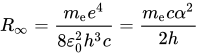
The only viable way to fix the Rydberg constant involves trapping and cooling hydrogen. This is difficult because it is very light and the atoms move very fast, causing Doppler shifts. The radiation needed to cool the hydrogen – 121.5 nm – is also difficult. Another hurdle involves improving the uncertainty in QED calculations, specifically the Lamb shift in the 1s-2s transition of the hydrogen atom.

Requirements

A redefinition must include improved optical clock reliability. TAI must be contributed to by optical clocks before the BIPM affirms a redefinition. A consistent method of sending signals must be developed before the second is redefined, such as fiber-optics.

SI multiples

SI prefixes are commonly used for times shorter than one second, but rarely for multiples of a second. Instead, certain non-SI units are permitted for use with SI: minutes, hours, days, and in astronomy Julian years.

SI multiples for second (s)
Submultiples
Multiples
Value SI symbol Name Value SI symbol Name Equivalent to
10−1 s ds decisecond 101 s das decasecond 10 seconds
10−2 s cs centisecond 102 s hs hectosecond 1 minute, 40 seconds
10−3 s ms millisecond 103 s ks kilosecond 16 minutes, 40 seconds
10−6 s μs microsecond 106 s Ms megasecond 1 week, 4 days, 13 hours, 46 minutes, 40 seconds
10−9 s ns nanosecond 109 s Gs gigasecond 31.7 years
10−12 s ps picosecond 1012 s Ts terasecond 31,700 years
10−15 s fs femtosecond 1015 s Ps petasecond 31.7 million years
10−18 s as attosecond 1018 s Es exasecond 31.7 billion years
10−21 s zs zeptosecond 1021 s Zs zettasecond 31.7 trillion years
10−24 s ys yoctosecond 1024 s Ys yottasecond 31.7 quadrillion years
10−27 s rs rontosecond 1027 s Rs ronnasecond 31.7 quintillion years
10−30 s qs quectosecond 1030 s Qs quettasecond 31.7 sextillion years

Crown group

From Wikipedia, the free encyclopedia
Clade T is a total group or pan-group, its extant species organized into crown groups C1 and C2. Within clade T are sister clades T1 and C2. Clade T1 comprises crown group C1 and the stem group S1 which is the set of extinct species that are closer to C1 than any other crown group of extant species.

In phylogenetics, the crown group or crown assemblage is a collection of species composed of the living representatives of the collection, the most recent common ancestor of the collection, and all descendants of the most recent common ancestor. It is thus a way of defining a clade, a group consisting of a species and all its extant or extinct descendants. For example, Neornithes (birds) can be defined as a crown group, which includes the most recent common ancestor of all modern birds, and all of its extant or extinct descendants.

The concept was developed by Willi Hennig, the formulator of phylogenetic systematics, as a way of classifying living organisms relative to their extinct relatives in his "Die Stammesgeschichte der Insekten", and the "crown" and "stem" group terminology was coined by R. P. S. Jefferies in 1979. Though formulated in the 1970s, the term was not commonly used until its reintroduction in 2000 by Graham Budd and Sören Jensen

Contents of the crown group

It is not necessary for a species to have living descendants in order for it to be included in the crown group. Extinct side branches on the family tree that are descended from the most recent common ancestor of living members will still be part of a crown group. For example, if we consider the crown-birds (i.e. all extant birds and the rest of the family tree back to their most recent common ancestor), extinct side branches like the dodo or great auk are still descended from the most recent common ancestor of all living birds, so fall within the bird crown group. One very simplified cladogram for birds is shown below:

Aves

Archaeopteryx


other extinct groups


Neornithes (modern birds, some recently extinct)


In this diagram, the clade labelled "Neornithes" is the crown group of birds: it includes the most recent common ancestor of all living birds and its descendants, living or not. Although considered to be birds (i.e. members of the clade Aves), Archaeopteryx and other extinct groups are not included in the crown group, as they fall outside the Neornithes clade, being descended from an earlier ancestor.

An alternative definition does not require any members of a crown group to be extant, only to have resulted from a "major cladogenesis event". The first definition forms the basis of this article.

Often, the crown group is given the designation "crown-", to separate it from the group as commonly defined. Both birds and mammals are traditionally defined by their traits, and contain fossil members that lived before the last common ancestors of the living groups or, like the mammal Haldanodon, were not descended from that ancestor although they lived later. Crown-Aves and Crown-Mammalia therefore differ slightly in content from the common definition of Aves and Mammalia. This has caused some confusion in the literature.

Other groups under the crown group concept

The cladistic idea of strictly using the topology of the phylogenetic tree to define groups necessitates other definitions than crown groups to adequately define commonly discussed fossil groups. Thus, a host of prefixes have been defined to describe various branches of the phylogenetic tree relative to extant organisms.

Pan-group

A pan-group or total group is the crown group and all organisms more closely related to it than to any other extant organisms. In a tree analogy, it is the crown group and all branches back to (but not including) the split with the closest branch to have living members. The Pan-Aves thus contain the living birds and all (fossil) organisms more closely related to birds than to crocodilians (their closest living relatives). The phylogenetic lineage leading back from Neornithes to the point where it merges with the crocodilian lineage, along with all side branches, constitutes pan-birds. In addition to non-crown group primitive birds like Archaeopteryx, Hesperornis and Confuciusornis, therefore, pan-group birds would include all dinosaurs and pterosaurs as well as an assortment of non-crocodilian animals like Marasuchus.

Pan-Mammalia consists of all mammals and their fossil ancestors back to the phylogenetic split from the remaining amniotes (the Sauropsida). Pan-Mammalia is thus an alternative name for Synapsida.

Stem groups

A stem group is a paraphyletic assemblage composed of the members of a pan-group or total group, above, minus the crown group itself (and therefore minus all living members of the pan-group). This leaves primitive relatives of the crown groups, back along the phylogenetic line to (but not including) the last common ancestor of the crown group and their closest living relatives. It follows from the definition that all members of a stem group are extinct. The "stem group" is the most used and most important of the concepts linked to crown groups, as it offers a means to reify and name paraphyletic assemblages of fossils that otherwise do not fit into systematics based on living organisms.

While often attributed to Jefferies (1979), Willmann (2003) traced the origin of the stem group concept to Austrian systematist Othenio Abel (1914), and it was discussed and diagrammed in English as early as 1933 by A. S. Romer.

Alternatively, the term "stem group" is sometimes used in a narrower sense to cover any members of the traditional taxon falling outside the crown group, such as the first cynodonts in the late Triassic being the first stem mammals. Permian synapsids like Dimetrodon or Anteosaurus are stem mammals in the wider sense but not in the narrower one.

Often, an (extinct) grouping is identified as belonging together. Later, it may be realized other (extant) groupings actually emerged within such grouping, rendering them a stem grouping. Cladistically, the new groups should then be added to the group, as paraphyletic groupings are not natural. In any case, stem groupings with living descendants should not be viewed as a cohesive group, but their tree should be further resolved to reveal the full bifurcating phylogeny.

Examples of stem groups (in the wider sense)

Stem birds perhaps constitute the most cited example of a stem group, as the phylogeny of this group is fairly well known. The following cladogram, based on Benton (2005), illustrates the concept († denotes extinct taxa).

The crown group here is Neornithes, all modern bird lineages back to their last common ancestor. The closest living relatives of birds are crocodilians. If we follow the phylogenetic lineage leading to Neornithes to the left, the line itself and all side branches belong to the stem birds until the lineage merges with that of the crocodilians. In addition to non-crown group primitive birds like Archaeopteryx, Hesperornis and Confuciusornis, stem group birds include the dinosaurs and the pterosaurs. The last common ancestor of birds and crocodilians—the first crown group archosaur—was neither bird nor crocodilian and possessed none of the features unique to either. As the bird stem group evolved, distinctive bird features such as feathers and hollow bones appeared. Finally, at the base of the crown group, all traits common to extant birds were present.

Under the widely used total-group perspective, the Crocodylomorpha would become synonymous with the Crocodilia, and the Avemetatarsalia would become synonymous with the birds, and the above tree could be summarized.

An advantage of this approach is that declaring Theropoda to be birds (or Pan-aves) is more specific than declaring it to be a member of the Archosauria, which would not exclude it from the Crocodilia branch. Basal branch names such as Avemetatarsalia are usually more obscure. However, not so advantageous are the facts that "Pan-Aves" and "Aves" are not the same group, the circumscription of the concept of "Pan-Aves" (synonymous with Avemetatarsalia) is only evident by examination of the above tree, and calling both groups "birds" is ambiguous.

Stem mammals are those in the lineage leading to living mammals, together with side branches, from the divergence of the lineage from the Sauropsida to the last common ancestor of the living mammals. This group includes the synapsids as well as mammaliaforms like the morganucodonts and the docodonts; the latter groups have traditionally and anatomically been considered mammals even though they fall outside the crown group mammals.

Stem tetrapods are the animals belonging to the lineage leading to tetrapods from their divergence from the lungfish, our nearest relatives among the fishes. In addition to a series of lobe-finned fishes, they also include some of the early labyrinthodonts. Exactly what labyrinthodonts are in the stem group tetrapods rather than the corresponding crown group is uncertain, as the phylogeny of early tetrapods is not well understood. This example shows that crown and stem group definitions are of limited value when there is no consensus phylogeny.

Stem arthropods constitute a group that has seen attention in connection with the Burgess Shale fauna. Several of the finds, including the enigmatic Opabinia and Anomalocaris have some, though not all, features associated with arthropods, and are thus considered stem arthropods. The sorting of the Burgess Shale fauna into various stem groups finally enabled phylogenetic sorting of this enigmatic assemblage and also allowed for identifying velvet worms as the closest living relatives of arthropods.

Stem priapulids are other early Cambrian to middle Cambrian faunas, appearing in Chengjiang to Burgess Shale. The genus Ottoia has more or less the same build as modern priapulids, but phylogenetic analysis indicates that it falls outside the crown group, making it a stem priapulid.

Plesion-group

The name plesion has a long history in biological systematics, and plesion group has acquired several meanings over the years. One use is as "nearby group" (plesion means close to in Greek), i.e. sister group to a given taxon, whether that group is a crown group or not. The term may also mean a group, possibly paraphyletic, defined by primitive traits (i.e. symplesiomorphies). It is generally taken to mean a side branch splitting off earlier on the phylogenetic tree than the group in question.

Palaeontological significance of stem and crown groups

Placing fossils in their right order in a stem group allows the order of these acquisitions to be established, and thus the ecological and functional setting of the evolution of the major features of the group in question. Stem groups thus offer a route to integrate unique palaeontological data into questions of the evolution of living organisms. Furthermore, they show that fossils that were considered to lie in their own separate group because they did not show all the diagnostic features of a living clade, can nevertheless be related to it by lying in its stem group. Such fossils have been of particular importance in considering the origins of the tetrapods, mammals, and animals.

The application of the stem group concept also influenced the interpretation of the organisms of the Burgess Shale. Their classification in stem groups to extant phyla, rather than in phyla of their own, is thought by some to make the Cambrian explosion easier to understand without invoking unusual evolutionary mechanisms; however, application of the stem group concept does nothing to ameliorate the difficulties that phylogenetic telescoping poses to evolutionary theorists attempting to understand both macroevolutionary change and the abrupt character of the Cambrian explosion. Overemphasis on the stem group concept threatens to delay or obscure proper recognition of new higher taxa.

Stem groups in systematics

As originally proposed by Karl-Ernst Lauterbach, stem groups should be given the prefix "stem" (i.e. Stem-Aves, Stem-Arthropoda), however the crown group should have no prefix. The latter has not been universally accepted for known groups. A number of paleontologists have opted to apply this approach anyway.

Pleistocene rewilding

From Wikipedia, the free encyclopedia

Pleistocene rewilding is the advocacy of the reintroduction of extant Pleistocene megafauna, or the close ecological equivalents of extinct megafauna. It is an extension of the conservation practice of rewilding, which aims to restore functioning, self-sustaining ecosystems through practices that may include species reintroductions.

Background

Megafauna of the Pleistocene mammoth steppe.

Towards the end of the Pleistocene era (roughly 13,000 to 10,000 years ago), nearly all megafauna of Eurasia, Australia, and South/North America, dwindled towards extinction, in what has been referred to as the Quaternary extinction event. With the loss of large herbivores and predator species, niches important for ecosystem functioning were left unoccupied. In the words of the biologist Tim Flannery, "ever since the extinction of the megafauna 13,000 years ago, the continent has had a seriously unbalanced fauna". This means, for example, that the managers of national parks in North America have to resort to culling to keep the population of ungulates under control.

Paul S. Martin (originator of the Pleistocene overkill hypothesis) states that present ecological communities in North America do not function appropriately in the absence of megafauna, because much of the native flora and fauna evolved under the influence of large mammals.

Ecological and evolutionary implications

Research shows that species interactions play a pivotal role in conservation efforts. Communities where species evolved in response to Pleistocene megafauna (but now lack large mammals) may be in danger of collapse. Most living megafauna are threatened or endangered; extant megafauna have a significant impact on the communities they occupy, which supports the idea that communities evolved in response to large mammals. Pleistocene rewilding could "serve as additional refugia to help preserve that evolutionary potential" of megafauna. Reintroducing megafauna to North America could preserve current megafauna, while filling ecological niches that have been vacant since the Pleistocene.

Climate implications

Saiga antelope are one of the animals proposed to be reintroduced in Pleistocene Park. Once ranging from Alaska to France, Saigas are now extinct in Europe and North America, and a near threatened species globally.

By restoring large herbivores, greenhouse gas levels may be lowered. Grazers may also reduce fire frequency by eating flammable brush, which would, in turn, lower greenhouse gas emissions, lower aerosol levels in the atmosphere, and alter the planet's albedo. Browsing and grazing also accelerates nutrient cycling, which may increase local plant productivity, and maintain ecosystem productivity specifically in grassy biomes. Megafauna also aid with carbon storage. The loss of megafauna that eat fruits may be responsible for up to a 10% reduction in carbon storage in tropical forests.

Sergey Zimov, a Russian scientist and proponent of Pleistocene rewilding, argues that it could restore the mammoth steppe ecosystem and thus slow the melting of the Arctic permafrost and give the world more time to respond to climate change. He holds that the mammoth steppe collapsed because of overhunting by humans rather than natural climate change, and has established Pleistocene Park in Siberia and Wild Field in European Russia to test grassland restoration through reintroducing mammoth steppe animals and proxies for them.

Yakutian horses, reindeer, European bison, plains bison, Domestic yak, moose, and Bactrian camels were reintroduced, and reintroduction is also planned for saigas, wood bison, and Siberian tigers. This project remains controversial — a letter published in Conservation Biology accused the Pleistocene camp of promoting "Frankenstein ecosystems", stating that 'the biggest problem is not the possibility of failing to restore lost interactions, but rather the risk of getting new, unwanted interactions instead.'

Extinct species with domestic descendants and relatives

A number of primitive horse races including Konik, Heck horse, Dülmener, Norwegian Fjord Horse, Exmoor pony, Pottoka, Losino horse, Sorraia, Marismeño, as a proxy for the tarpan. Przewalski horse, a subspecies native of Mongolia and the only remaining wild horse in the world, has also been introduced in Ukraine, Hungary and France.

Robust cattle breeds or a combination of them as a proxy for the extinct aurochs. The Dutch-based TaurOs Project aims to reconstitute the aurochs by crossbreeding Sayaguesa, Maremmana primitivo, Pajuna, Limia, Maronesa, Podolica, Tudanca and Highland cattle, while Heck cattle and Galloway cattle have already been used in grazing projects.

Extant wild camelidae contain only three species, the Guanaco, the Vicuna, and the Wild Bactrian camel. However both New World and Old World had a diversity of camelids until the Late-Pleistocene and the early Holocene. Along with the extant wild species, domesticated members especially the Dromedary and the Bactrian camel may serve as proxies to replace their extinct ancestors and relatives among their natural ranges, including North and Central America, Siberia, from East Asia to Europe, Indian Subcontinent, Middle East, and Northern Africa.

Introduced species as alternative proxy for extinct fauna

Feral camels roaming in the Australian outback.

There have been discussions that introduced exotic faunas, most notably the Dromedary camel as proxy for Diprotodon and Palorchestes, may fill empty niches of extinct faunas hence some promote conservation of these animals rather than eradication. However, an argument against the introduction of these animals is that they are very distantly related to the large, extinct marsupials of the Australian megafauna. There is an experimental yet controversial management of feral donkeys in Western Australia which may be counted as a form or megafaunal rewilding.

The same can be said for South America which has also lost most of its native megafaunas and instead hosts introduced ones, while feral horses may serve as direct proxy for Hippidion.

In contrast, the "moa vs. deer" concept for New Zealand has been a topic of discussions and is more challengeable as the country naturally lacked terrestrial mammalian megafaunas.

Criticism

The main criticism of the Pleistocene rewilding is that it is unrealistic to assume that communities today are functionally similar to their state 10,000 years ago. Opponents argue that there has been more than enough time for communities to evolve in the absence of megafauna, and thus the reintroduction of large mammals could thwart ecosystem dynamics and possibly cause collapse. Under this argument, the prospective taxa for reintroduction are considered exotic and could potentially harm natives of North America through invasion, disease, or other factors.

Opponents of Pleistocene rewilding present an alternative conservation program, in which more recent North American natives will be reintroduced into parts of their native ranges where they became extinct during historical times.[1] Another method of Pleistocene rewilding is by using de-extinction, bringing extinct species back to life through cloning.

Pleistocene rewilding on continents

Europe

This plan was considered by Josh Donlan and Jens-C. Svenning, and involves (as in rewilding North America) creating a Pleistocene habitat in portions of Europe. Svenning claims that "Pleistocene Rewilding can be taken for consideration outside of North America".  Incidentally, an independent "Rewilding Europe" initiative was established in the Netherlands in 2011, with the western Iberian Peninsula, Velebit, the Danube delta and the eastern and southern Carpathians as particular targets.

The proxies which may be used for this project(s) are:

Animals already introduced

European Bison

Animals with existing populations that are expanding

Species still extant outside Europe

Northern Siberia

Wood bison reintroduction program in the Sakha Republic.

The aim of Siberian Pleistocene rewilding is to recreate the ancient mammoth steppe by reintroducing megafauna. The first step was the successful reintroduction of musk oxen on the Taymyr Peninsula and Wrangel island. In 1988, researcher Sergey Zimov created Pleistocene Park – a nature reserve in northeastern Siberia for full-scale megafauna rewilding. Reindeer, Siberian roe deer and moose were already present; Yakutian horses, muskox, Altai wapiti and wisent were reintroduced. Reintroduction is also planned for yak, Bactrian camels, snow sheep, Saiga antelope, and Siberian tigers.

The wood bison, the closest relative of the ancient bison which became extinct in Siberia 1,000 to 2,000 years ago, is an important species for the ecology of Siberia. In 2006, 30 bison calves were flown from Edmonton, Alberta to Yakutsk. Now they live in the government-run Ust'-Buotama reserve.

Animals already introduced

Considered for reintroduction

Asia

Animals already introduced

Considered for reintroduction

North America

A controversial 2005 editorial in Nature, signed by a number of conservation biologists, took up the argument, urging that elephants, lions, and cheetahs could be reintroduced in protected areas in the Great Plains. The Bolson tortoise, discovered in 1959 in Durango, Mexico, was the first species proposed for this restoration effort, and in 2006 the species was reintroduced to two ranches in New Mexico owned by media mogul Ted Turner. Other proposed species include various camelids such as the Wild Bactrian camel, and various equids such as the Prezwalski's horse.

Possible animals for reintroduction

The Bolson tortoise, the first proposed candidate for Pleistocene rewilding.

Pleistocene rewilding aims at the promotion of extant fauna and the reintroduction of extinct genera in the southwestern and central United States. Native fauna are the first genera proposed for reintroduction. The Bolson tortoise was widespread during the Pleistocene epoch, and continued to be common during the Holocene epoch until recent times. Its reintroduction from northern Mexico would be a necessary step to recreate the soil humidity present in the Pleistocene, which would support grassland and extant shrub-land and provide the habitat required for the herbivores set for reintroduction. Other large tortoise species might later be introduced to fill the role of various species of Hesperotestudo. However, to be successful, ecologists must first support fauna already present in the region.

The plains bison and the wood bison numbered in the millions during the Pleistocene and most of the Holocene, until European settlers drove them to near-extinction in the late 19th century. The plains bison has made a recovery in many regions of its former range, and is involved in several local rewilding projects across the Midwestern United States.

The pronghorn, which is extant in most of the west after almost becoming extinct, is crucial to the revival of the ancient ecosystem. Pronghorns are native to the region, which once supported large numbers of the species and extinct relatives of the same family. It would occupy the Great Plains and other arid regions of the west and southwest.

Distributions of some of today's arctic species and their relatives were much broader during the late Pleistocene and the Holocene; reindeer reached as far as southern United States, and close relatives of muskox (Bootherium and Euceratherium and Praeovibos) extended to southern United States and Mexico. Hence reindeer and muskox might be able to inhabit northern portions of central North America.

Bighorn sheep and mountain goat are already present in the surrounding mountainous areas and therefore should not pose a problem in rewilding more mountainous areas. Mountain goats are already being introduced to areas formerly occupied by Oreamnos haringtoni, a more southern relative that went extinct at the end of the Pleistocene. Reintroducing extant species of deer to the more forested areas of the region would be beneficial for the ecosystems they occupy, providing rich nutrients for the forested regions and helping to maintain them. These species include elk, white-tailed and mule deer.

Omnivorous species considered beneficial for the regional ecosystems include the collared peccary, a species of pig-like ungulate that was abundant in the Pleistocene. Although this species (along with the flat-headed and long-nosed peccaries) is extinct in many regions of North America, their relatives survive in Central and South America and the collared peccary can still be found in southern Arizona, New Mexico, and Texas. The Chacoan peccary, which is morphologically very similar to the flat-headed peccary, might be able to replace it in areas of the Great Plains and the South.

Horses originated in North America and spread to Asia via the Ice Age land bridge, but became extinct in their evolutionary homeland alongside the mammoth and ground sloth. The Pleistocene grasslands of North America were the birthplace of the modern horse, and by extension the wild horse. North America already has feral populations of Mustang and Burro. Animals that would serve as predators of these equine species would include lions and wolves.

Alongside the wild horse, camels evolved in the drier regions of North America. Although camelids are extinct in North America, they have survived in South America until today: the guanaco and vicuña, and domesticated llama and alpaca. North America links the South American camelids with those of the Old World (the Dromedary, Bactrian camel and wild Bactrian camel). Pleistocene rewilding suggests that the closest relatives of the North American species of camelid be reintroduced. The candidates would be Old World camels as a proxy for Camelops, and New World camelids as a proxies for smaller species of both Hemiauchenia and Palaeolama. These species would live in the arid regions and grasslands of North America. Although small in numbers, there are feral or semi-feral camelids in North America such as Dromedary in Texas and its vicinity and llamas among Hoh Rainforest on the Olympic Peninsula. Free-ranging camels face predators typical of their regional distribution, which include wolves and lions. The main predator of guanacos and vicuñas is the cougar.

During the Pleistocene, a species of tapir (Tapirus californicus) existed in North America with many ecotypes. They became extinct at the end of the Pleistocene epoch, but their relatives survive in Asia and South America. The mountain tapir would be an excellent choice for rewilding humid areas, such as those near lakes and rivers. The mountain tapir is the only extant non-tropical species of tapir. Predators of mountain tapirs include cougars, bears, and, less commonly, jaguars. Good introduction areas might include forested ecosystems of the west and east coasts, and the more scrub-like or wetland ecosystem of the south.

During the Pleistocene, large populations of Proboscideans lived in North America, such as the Woolly, Columbian and Pygmy mammoths, and the American mastodon. The mastodons all became extinct at the end of the Pleistocene epoch, as did the mammoths of North America. However, an extant relative of the mammoth is the Asian elephant. It now resides only in tropical southeastern Asia, but the fossil record shows that it was much more widespread, living in temperate northern China as well as the Middle East (an area bearing an ecological similarity to the southern and central United States). The Asian elephant is possibly a good candidate for Pleistocene rewilding in North America. Asian elephants would do well in the environments previously occupied by the Columbian mammoth.

Several species of capybaras, such as Hydrochoerus hesperotiganites and Neochoerus aesopi and Neochoerus pinckneyi, were present in North America until the late Pleistocene. Today, feral population(s) of capybara inhabit Florida while breeding has not been confirmed yet. These feral animals potentially fill ecological niches of extinct capybaras, and further surveys are recommended.

Pleistocene America boasted a wide variety of carnivores (most of which are extinct today), such as the short-faced bear, saber-toothed cats (e.g. Homotherium and Smilodon), the American lion, dire wolf, and the American cheetah. Some carnivores and omnivores survived the end of the Pleistocene era and were widespread in North America until Europeans arrived, such as grizzly bears, cougars, jaguars, grey and red wolves, bobcats, and coyotesJaguars could be reintroduced back to areas of North America to control populations of prey animals. Genetic evidence suggests that the closest living relative of the American lion (Panthera atrox) is the modern lion (Panthera leo). Modern lion could act as a proxy for the Pleistocene American lion, they could be introduced to keep the numbers of American bison, equids, and camelids in check.

Central and South Americas

Pleistocene rewilding of parts of Brazil and other parts of the Americas was proposed by Brazilian ecologist Mauro Galetti in 2004. He suggested the introduction of elephants (and other analogues for extinct megafauna) to private lands in the Brazilian Cerrado and other parts of the Americas. Paul S. Martin made a similar argument in favour of taxon reaplacement, suggesting that the megafauna of North America which became extinct after the arrival of humans (e.g., mastodons, mammoths, ground sloths, and smilodons) could be replaced with species which have similar ecological roles. The elephant sanctuary in Brazil, which was also established upon the same objective (animal welfare) with the The Elephant Sanctuary in Tennessee in North America, may serve as an experimental case to examine potentials for rewilding prospects to recreate ecological niche of native proboscidea, Cuvieronius and Notiomastodon.

North, Central, and South Americas once had a variety of tortoises including giant ones, such as Hesperotestudo and Chelonoidis. Among extant species, the Red-footed and the Yellow-footed tortoises (along with the aforementioned Bolson tortoise) are candidates with higher precedence for rewilding objectives to restore seed dispersers of these continents most specifically for the Atlantic Forest regions.

Camelidae is among particular cases. Late-Pleistocene - Holocene South America has (had) native camelids (extant Guanaco and Vicuna, extinct Eulamaops and Hemiauchenia and Palaeolama), however the last North American camel Camelops, which can be a subject for Pleistocene Rewilding in North America, has not been found from South America while the southern continent had its own similarly built Litopterna family Macraucheniidae, such as Macrauchenia and Xenorhinotherium.

Akin to Australia, prospects for counting introduced species (such as water buffalo, antelope, the "cocaine hippos") as potential proxies for extinct native megafauna may be applicable for South America, which had also lost most of its native megafaunas. Hippidion was a native Quaternary equid, and the continent currently hosts feral horse populations notably the Criollo horse.

Australia

Animals already introduced

Expanding populations

Extant outside Australia

Considered for reintroduction

Pleistocene rewilding on island landmasses

Megafauna that arose on insular landmasses were especially vulnerable to human influence because they evolved in isolation from other landmasses, and thus were not subjected to the same selection pressures that surviving fauna were subject to, and many forms of insular megafauna were wiped out after the arrival of humans. Therefore, scientists have suggested introducing closely related taxa to replace the extinct taxa. This is being done on several islands, with replacing closely related or ecologically functional giant tortoises to replace extinct giant tortoises.

For example, the Aldabra giant tortoise has been suggested as a replacement for the extinct Malagasy giant tortoise, and Malagasy radiated tortoises have been introduced to Mauritius to replace the tortoises that were present there. However, the usage of tortoises in rewilding experiments have not been limited to replacing extinct tortoises. At the Makauwahi Cave Reserve in Hawaii, exotic tortoises are being used as a replacement for the extinct moa-nalo, a large flightless duck hunted to extinction by the first Polynesians to reach Hawaii. The grazing habits of these tortoises control and reduce the spread of invasive plants, and promote the growth of native flora.

British Isles

Animals already introduced (including semi-wild animals)

Considered for reintroduction

Japan

Animals already introduced

Considered for reintroduction

Madagascar

Animals already introduced

Maritime Southeast Asia

Considered for reintroduction

Sri Lanka

Considered for reintroduction

Wrangel Island

Animals already introduced

Molecular machine

From Wikipedia, the free encyclopedia https://en.wikipedia.org/wiki/Mol...