Search This Blog

Friday, December 19, 2025

Eigenvalue perturbation

From Wikipedia, the free encyclopedia

In mathematics, an eigenvalue perturbation problem is that of finding the eigenvectors and eigenvalues of a system that is perturbed from one with known eigenvectors and eigenvalues . This is useful for studying how sensitive the original system's eigenvectors and eigenvalues are to changes in the system. This type of analysis was popularized by Lord Rayleigh, in his investigation of harmonic vibrations of a string perturbed by small inhomogeneities.


The derivations in this article are essentially self-contained and can be found in many texts on numerical linear algebra or numerical functional analysis. This article is focused on the case of the perturbation of a simple eigenvalue, as opposed to a multiplicity of eigenvalues.

Motivation for generalized eigenvalues

Many scientific fields use eigenvalues to obtain solutions. Generalized eigenvalue problems are less widespread but are key in the study of vibrations. They are useful when the Galerkin or Rayleigh-Ritz methods are used to find approximate solutions of partial differential equations modeling vibrations of structures such as strings and plates - Courant (1943) is fundamental. The finite element method is a widespread particular case.

In classical mechanics, generalized eigenvalues may crop up when inspecting vibrations of multiple degrees of freedom systems close to equilibrium. I'm this case the kinetic energy provides the mass matrix , the potential strain energy provides the rigidity matrix .

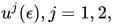
With both methods, the following system of differential equations or matrix differential equation is derived: with the mass matrix , the damping matrix and the rigidity matrix . If the damping effect is neglected, , and a solution of the form is assumed, and are obtained as solutions to the generalized eigenvalue problem .

Setting of perturbation for a generalized eigenvalue problem

Suppose the solutions to the generalized eigenvalue problem are known to be

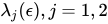
where and are matrices. That is, we know the eigenvalues λ0i and eigenvectors x0i for i = 1, ..., N. An important note is that the eigenvalues are required to be distinct.

In order to perturb the matrices, one must find the eigenvalues and eigenvectors of

where
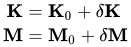
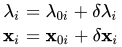
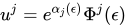
with the perturbations and much smaller than and respectively. Then the new eigenvalues and eigenvectors are expected to be similar to the original, plus small perturbations:

Steps

Under the assumption that the matrices are symmetric, positive definite, and assume the eigenvectors are scaled such that

where δij is the Kronecker delta. Now the equation to be solved is

In this article, the study is restricted to first order perturbation.

First order expansion of the equation

Substituting in (1) results in

which expands to

Canceling from (0) () leaves

Removing the higher-order terms, this simplifies to

In other words, no longer denotes the exact variation of the eigenvalue but its first order approximation.

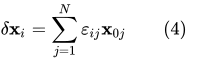
As the matrix is symmetric, the unperturbed eigenvectors are orthogonal and so can be used as a basis for the perturbed eigenvectors. This is the same as

with ,

where εij are small constants that are to be determined.

In the same way, substituting in (2), and removing higher order terms,

The derivation is then split into two paths.

First path: get first eigenvalue perturbation

Eigenvalue perturbation
Starting with (3)which is then left multiplied with along with using (2) as well as its first order variation (5); one gets

or

This is the first order perturbation of the generalized Rayleigh quotient with fixed :

Moreover, for , the formula should be compared with Bauer-Fike theorem which provides a bound for eigenvalue perturbation.

Eigenvector perturbation

One then left multiplies (3) with for and get

Recalling that for , one may substitute for

or

As the eigenvalues are assumed to be simple, for

Moreover (5) (the first order variation of (2) ) yields All of the components of have now been obtained.

Second path: Straightforward manipulations

Substituting (4) into (3) and rearranging gives

Because the eigenvectors are M0-orthogonal when M0 is positive definite, one can remove the summations by left-multiplying by :

By use of equation (1) again:

The two terms containing εii are equal because left-multiplying (1) by gives

Canceling those terms in (6) leaves

Rearranging gives

But by (2), this denominator is equal to 1. Thus

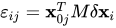
Then, as for (this is the assumption of simple eigenvalues) by left-multiplying equation (5) by :

Or by changing the name of the indices:

To find εii, using the fact that

implies:

Summary of the first order perturbation result

In the case where all the matrices are Hermitian positive definite and all the eigenvalues are distinct,

for infinitesimal and (the higher order terms in (3) being neglected).

A proof that higher order terms may be neglect may be derived using the implicit function theorem.

Theoretical derivation

Perturbation of an implicit function.

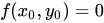
In the next paragraph, we shall use the Implicit function theorem (Statement of the theorem ); we notice that for a continuously differentiable function , with an invertible Jacobian matrix , from a point solution of , we get solutions of with close to in the form where is a continuously differentiable function ; moreover the Jacobian marix of is provided by the linear system

.

As soon as the hypothesis of the theorem is satisfied, the Jacobian matrix of may be computed with a first order expansion of , we get

; as , it is equivalent to equation .

Eigenvalue perturbation: a theoretical basis.

We use the previous paragraph (Perturbation of an implicit function) with somewhat different notations suited to eigenvalue perturbation; we introduce , with

  • with

. In order to use the Implicit function theorem, we study the invertibility of the Jacobian with

. Indeed, the solution of

may be derived with computations similar to the derivation of the expansion.

When is a simple eigenvalue, as the eigenvectors form an orthonormal basis, for any right-hand side, we have obtained one solution therefore, the Jacobian is invertible.

The implicit function theorem provides a continuously differentiable function hence the expansion with little o notation: . with

This is the first order expansion of the perturbed eigenvalues and eigenvectors. which is proved.

Results of sensitivity analysis with respect to the entries of the matrices

The results

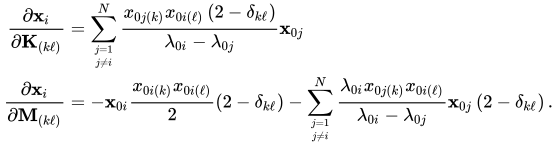
This means it is possible to efficiently do a sensitivity analysis on λi as a function of changes in the entries of the matrices. (Recall that the matrices are symmetric and so changing Kk will also change Kk, hence the (2 − δk) term

Why generalized eigenvalues?

In the entry applications of eigenvalues and eigenvectors we find numerous scientific fields in which eigenvalues are used to obtain solutions. Generalized eigenvalue problems are less widespread but are a key in the study of vibrations. They are useful when we use the Galerkin method or Rayleigh-Ritz method to find approximate solutions of partial differential equations modeling vibrations of structures such as strings and plates; the paper of Courant (1943)  is fundamental. The Finite element method is a widespread particular case.

In classical mechanics, generalized eigenvalues may crop up when we look for vibrations of multiple degrees of freedom systems close to equilibrium; the kinetic energy provides the mass matrix , the potential strain energy provides the rigidity matrix . For further details, see the first section of this article of Weinstein (1941, in French)

With both methods, we obtain a system of differential equations or Matrix differential equation with the mass matrix , the damping matrix and the rigidity matrix . If we neglect the damping effect, we use , we can look for a solution of the following form ; we obtain that and are solution of the generalized eigenvalue problem

Setting of perturbation for a generalized eigenvalue problem

Suppose we have solutions to the generalized eigenvalue problem,

where and are matrices. That is, we know the eigenvalues λ0i and eigenvectors x0i for i = 1, ..., N. It is also required that the eigenvalues are distinct.

Now suppose we want to change the matrices by a small amount. That is, we want to find the eigenvalues and eigenvectors of

where

with the perturbations and much smaller than and respectively. Then we expect the new eigenvalues and eigenvectors to be similar to the original, plus small perturbations:

Steps

We assume that the matrices are symmetric and positive definite, and assume we have scaled the eigenvectors such that

where δij is the Kronecker delta. Now we want to solve the equation

In this article we restrict the study to first order perturbation.

First order expansion of the equation

Substituting in (1), we get

which expands to

Canceling from (0) () leaves

Removing the higher-order terms, this simplifies to

In other words, no longer denotes the exact variation of the eigenvalue but its first order approximation.

As the matrix is symmetric, the unperturbed eigenvectors are orthogonal and so we use them as a basis for the perturbed eigenvectors. That is, we want to construct

with ,

where the εij are small constants that are to be determined.

In the same way, substituting in (2), and removing higher order terms, we get

The derivation can go on with two forks.

First fork: get first eigenvalue perturbation

Eigenvalue perturbation
We start with (3)

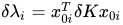
we left multiply with and use (2) as well as its first order variation (5); we get

or

We notice that it is the first order perturbation of the generalized Rayleigh quotient with fixed :

Moreover, for , the formula should be compared with Bauer-Fike theorem which provides a bound for eigenvalue perturbation.

Eigenvector perturbation

We left multiply (3) with for and get

We use for .

or

As the eigenvalues are assumed to be simple, for

Moreover (5) (the first order variation of (2) ) yields We have obtained all the components of .

Second fork: Straightforward manipulations

Substituting (4) into (3) and rearranging gives
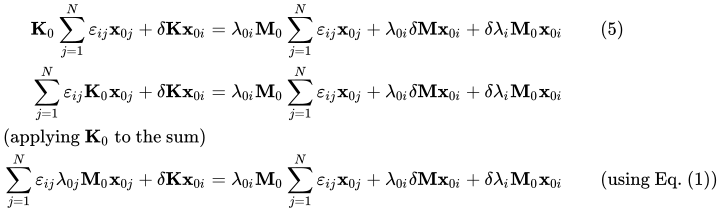
Because the eigenvectors are M0-orthogonal when M0 is positive definite, we can remove the summations by left-multiplying by :

By use of equation (1) again:

The two terms containing εii are equal because left-multiplying (1) by gives

Canceling those terms in (6) leaves

Rearranging gives
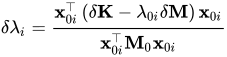
But by (2), this denominator is equal to 1. Thus

Then, as for (assumption simple eigenvalues) by left-multiplying equation (5) by :

Or by changing the name of the indices:

To find εii, use the fact that:

implies:

Summary of the first order perturbation result

In the case where all the matrices are Hermitian positive definite and all the eigenvalues are distinct,
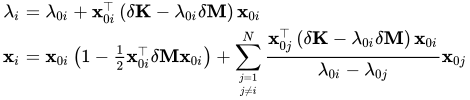
for infinitesimal and (the higher order terms in (3) being neglected).

So far, we have not proved that these higher order terms may be neglected. This point may be derived using the implicit function theorem; in next section, we summarize the use of this theorem in order to obtain a first order expansion.

Theoretical derivation

Perturbation of an implicit function.

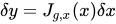
In the next paragraph, we shall use the Implicit function theorem (Statement of the theorem ); we notice that for a continuously differentiable function , with an invertible Jacobian matrix , from a point solution of , we get solutions of with close to in the form where is a continuously differentiable function ; moreover the Jacobian marix of is provided by the linear system

.

As soon as the hypothesis of the theorem is satisfied, the Jacobian matrix of may be computed with a first order expansion of , we get

; as , it is equivalent to equation .

Eigenvalue perturbation: a theoretical basis.

We use the previous paragraph (Perturbation of an implicit function) with somewhat different notations suited to eigenvalue perturbation; we introduce , with

  • with

. In order to use the Implicit function theorem, we study the invertibility of the Jacobian with


. Indeed, the solution of

may be derived with computations similar to the derivation of the expansion.

When is a simple eigenvalue, as the eigenvectors form an orthonormal basis, for any right-hand side, we have obtained one solution therefore, the Jacobian is invertible.


The implicit function theorem provides a continuously differentiable function hence the expansion with little o notation: . with


This is the first order expansion of the perturbed eigenvalues and eigenvectors. which is proved.


Results of sensitivity analysis with respect to the entries of the matrices

The results

This means it is possible to efficiently do a sensitivity analysis on λi as a function of changes in the entries of the matrices. (Recall that the matrices are symmetric and so changing Kk will also change Kk, hence the (2 − δk) term.)

Similarly

Eigenvalue sensitivity, a small example

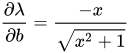
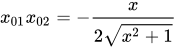
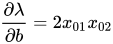
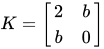
A simple case is ; however you can compute eigenvalues and eigenvectors with the help of online tools such as (see introduction in Wikipedia WIMS) or using Sage SageMath. You get the smallest eigenvalue and an explicit computation ; more over, an associated eigenvector is ; it is not an unitary vector; so ; we get and  ; hence ; for this example , we have checked that or .
Existence of eigenvectors

Note that in the above example we assumed that both the unperturbed and the perturbed systems involved symmetric matrices, which guaranteed the existence of linearly independent eigenvectors. An eigenvalue problem involving non-symmetric matrices is not guaranteed to have linearly independent eigenvectors, though a sufficient condition is that and be simultaneously diagonalizable.

The case of repeated eigenvalues

A technical report of Rellich  for perturbation of eigenvalue problems provides several examples. The elementary examples are in chapter 2. The report may be downloaded from archive.org. We draw an example in which the eigenvectors have a nasty behavior.

Example 1

Consider the following matrix and For , the matrix has eigenvectors belonging to eigenvalues . Since for if are any normalized eigenvectors belonging to respectively then where are real for It is obviously impossible to define , say, in such a way that tends to a limit as because has no limit as


Note in this example that is not only continuous but also has continuous derivatives of all orders. Rellich draws the following important consequence. << Since in general the individual eigenvectors do not depend continuously on the perturbation parameter even though the operator does, it is necessary to work, not with an eigenvector, but rather with the space spanned by all the eigenvectors belonging to the same eigenvalue. >>

Example 2

This example is less nasty that the previous one. Suppose is the 2x2 identity matrix, any vector is an eigenvector; then is one possible eigenvector. But if one makes a small perturbation, such as

Then the eigenvectors are and ; they are constant with respect to so that is constant and does not go to zero.

Near-death studies

From Wikipedia, the free encyclopedia

Near-death studies is a field of research that studies the near-death experience (NDE). The field was originally associated with a distinct group of North American researchers that followed up on the initial work of Raymond Moody, and who later established the International Association for Near-Death Studies (IANDS) and the Journal of Near-Death Studies. Since then the field has expanded, and now includes contributions from a wide range of researchers and commentators worldwide. Research on near-death experiences is mainly limited to the disciplines of medicine, psychology and psychiatry.

Research – history and background

Precursors

According to the Handbook of Near-Death Experiences, traces of the Near-death experience can be located in ancient texts, such as Plato's Dialogues. During the 1880s and 1890s, near-death phenomena were part of the investigation of paranormal phenomena. Precursors to the field of near-death studies include the work of paranormal investigators, such as William Crookes and Frederick W.H. Myers, and the work of parapsychological societies, such as the Society for Psychical Research (SPR) in England, and its American counterpart. The work attracted skepticism from contemporary branches of science.[2] Also in the 1800s, two efforts moved beyond studying individual cases—one privately done by Mormons and one in Switzerland. According to sources  the first academic note on a near-death experience was reported by Albert von St. Gallen Heim in 1892.

The early 1900s was a period of disinterest in the topic, only marked by occasional contributions, including the commentaries of Gardner Murphy and the research of Donald West. In 1948 West investigated the occurrence of psi-phenomena in a small sample of the British population. He found that "14 percent of his sample had undergone a hallucinatory experience and 9 percent had reported seeing apparitions of the dead". During the 1970s the work of Elisabeth Kübler-Ross attracted attention and she addressed the topic publicly. Interest in the topic was also spurred by autobiographical accounts, such as the books of George Ritchie.

Formative period – early profiles

Commentators note that the launch of the field of near-death studies started with work of Raymond Moody. Moody got interested in the subject of near-death experiences at the start of his career. In the mid-seventies, while doing his medical residency as a psychiatrist at the University of Virginia, he conducted interviews with near-death experiencers. He later published these findings in the book Life After Life (1976). In the book Moody outlines the different elements of the NDE. These features were picked up by later researchers, and the book brought public attention to the topic of NDEs. Early contributions to the field of near-death studies also include the work of Russell Noyes, who collected NDE stories from personal accounts and medical records. According to commentators his work signalled the first big shift in perspective within the field, pulling the methodology away from parapsychology and towards the principles of medicine. In the 1970s Noyes and Kletti reported on the phenomenon of depersonalization related to life-threatening danger. According to literature, Noyes and Kletti's 1977-article, "Depersonalization in Response to Life-threatening Danger", is the most cited article in the field of Near-death studies, as of 2011.

In 1977 a group researchers met in Charlottesville, Virginia, in order to prepare further investigations of the NDE-phenomenon. The late seventies saw the establishment of the Association for the Scientific Study of Near-Death Phenomena, an initial group of academic researchers, including John Audette, Raymond Moody, Bruce Greyson, Kenneth Ring and Michael Sabom, who laid the foundations for the field of near-death studies, and carried out some of the first NDE research in the wake of Moody's work. The Association was a forerunner to the International Association for Near-death Studies (IANDS), which was founded in the early eighties and which established its headquarters at the University of Connecticut, Storrs. One of the first publications associated with this group of researchers was a treatment of several NDE case-reports originally collected by Fred Schoonmaker. The treatment was carried out and published by John Audette in 1979. This group of researchers, but especially Ring, was responsible for launching Anabiosis, the first peer-reviewed journal within the field. The journal later became Journal of Near-Death Studies.

Even though NDEs were introduced to the academic setting, the subject was often met with academic disbelief, or regarded as taboo. The medical community has been reluctant to address the phenomenon of NDEs, and funding for research has been limited. However, both Ring and Sabom made contributions that were influential for the newly established field. Ring published a book in 1980 called Life at Death: A Scientific Investigation of the Near-Death Experience. In the book Ring identified the core near-death experience, with its corresponding stages. This early research was followed in 1984 by Ring's book Heading Toward Omega: In Search of the Meaning of the Near-Death Experience, where he described the mystical and transcendent features of the NDE, and the futuristic visions described by near-death experiencers. The early work of Michael Sabom also brought attention within the academic community. Besides contributing material to academic journals, he wrote a book called Recollections of Death (1982) which is considered to be a significant publication in the launching of the field.

Some of the early retrospective work was being carried out by Greyson and Stevenson who published their findings in the American Journal of Psychiatry in 1980. The authors used questionnaires, interviews, and medical records in order to study the phenomenology of NDEs and suggested that social and psychological factors explained some, but not all, components of the NDE. Greyson has also addressed different aspects of the NDE, such as the psychodynamics of the experience, the typology of NDEs, the varieties of NDEs, and the biology of NDEs. In addition, he brought attention to the NDE as a focus of clinical attention, suggesting that the aftermath of the NDE, in some cases, can lead to psychological problems. As research in the field progressed, both Greyson and Ring developed measurement tools that can be used in a clinical setting. According to Kinsella, no other researcher, besides Moody, has done more to "influence public opinion on the subject of NDEs" than Kenneth Ring.

The 1980s also introduced the research of Melvin Morse, who profiled near-death studies. Morse and colleagues investigated NDEs in a pediatric population. They found that children reported NDEs that were similar to those described by adults. Morse later published two books, co-authored with Paul Perry, that were aimed at a general audience: Closer to the light: learning from children's near-death experiences (1990) and Transformed by the light: the powerful effect of near-death experiences on people's lives (1992). British neuropsychiatrist Peter Fenwick started to collect NDE stories in the 1980s, following their appearances in television programs. The responses from near-death experiencers later served as the basis for his book published in 1997, The Truth in the light, co-authored with his wife Elizabeth Fenwick. In the book the authors investigated more than 300 NDEs and concluded that the "subjective experience" is the key to understanding the phenomenon of NDEs. Co-operating with other researchers, such as Sam Parnia, Fenwick has reviewed and researched the potential relationship between near-death experiences and cardiac arrest  Early investigations into the topic of near-death experiences were also conducted at the University of Virginia, where Ian Stevenson founded the Division of Perceptual Studies in the late sixties. The division went on to produce research on a number of phenomena that were not considered to be mainstream. In addition to near-death experiences this included: reincarnation and past lives, out-of-body experiences, apparitions and after-death communications, and deathbed visions. Stevenson, whose main academic interest was the topic of reincarnation and past lives, also made contributions to the field of near-death studies. In a 1990 study, co-authored with Owens and Cook, the researchers studied the medical records of 58 people who were thought to have been near death. The authors judged 28 candidates to actually have been close to dying, while 30 candidates, who merely thought they were about to die, were judged to not have been in any medical danger. Both groups reported similar experiences, but the first group reported more features of the core NDE than the other group.

According to Loseu and colleagues, who published an analysis of the published literature in the field of near-death studies, there was a peak in the output of articles in the 15-year period between 1980 and 1995, followed by a decreasing trend.

Later period – new profiles, prospective studies

The first decades of near-death research were characterized by retrospective studies. From 1975 to 2005, some 2500 self reported individuals in the US had been reviewed in retrospective studies of the phenomena with an additional 600 outside the US in the West, and 70 in Asia. However, the late 1980s marked the beginning of prospective studies in the field. Prospective studies (which are more expensive) review groups of individuals and find who had an NDE. They had identified 270 individuals by 2005. Kovoor and colleagues performed a scoping review of research on NDE's in Cardiac Arrest situations. They identified a total of 60 prospective studies, 11 of which were included in their review (Table 1).

Pim van Lommel (cardiologist) was one of the first researchers to bring the study of NDEs into the area of Hospital Medicine. In 1988 he launched a prospective study that spanned 10 Dutch hospitals. 344 survivors of cardiac arrest were included in the study. 62 patients (18%) reported NDE. 41 of these patients (12%) described a core experience. The aim of the study was to investigate the cause of the experience, and assess variables connected to frequency, depth, and content. Prospective studies were also taking place in the U.S. Schwaninger and colleagues collaborated with Barnes-Jewish Hospital, where they studied cardiac arrest patients over a three-year period (April 1991 – February 1994). Only a minority of the patients survived, and from this group 30 patients were interviewable. Of these 30 patients 23% reported an NDE, while 13% reported an NDE during "a prior life-threatening illness".

In a prospective study from 2001, conducted at Southampton General Hospital, Parnia and colleagues found that 11.1% of 63 cardiac-arrest survivors reported memories of their unconscious period. Several of these memories included NDE features. Greyson conducted a 30-month survey of patients admitted to the cardiac inpatient service of the University of Virginia Hospital. He found that NDEs were reported by 10% of patients with cardiac arrest and 1% of other cardiac patients. Up to 2005, 95% of world cultures have been documented making some mention of NDEs. In all, close to 3500 individual cases between 1975 and 2005 had been reviewed by some 55 researchers or teams of researchers.

During the next decade, prospective studies were also starting to emerge from other parts of the world. In a study from 2010 Klemenc-Ketis and colleagues reported on out-of-hospital cardiac arrest survivors, later admitted to intensive care units, at medical centers in Slovenia. 21.2% of the patients in the study reported NDEs. The researchers also found that "NDE occur more often in patients with higher petCO2 and pCO2"; "higher serum levels of potassium correlate with higher score on Greyson's NDE scale"; and "NDEs occur more often in patients with previous NDEs".

Based on the results from an analysis of scholarly NDE-related periodical literature, the decade between 2001 and 2011 signaled an expansion of the field of near-death studies by including new authors and new publication venues. Research has also entered into other fields of interest, such as the mental health of military veterans. Goza, Holden & Kinsey studied NDEs among combat veterans. They found, among other things, that combat soldiers reported "less intense" near-death experiences, compared to NDErs in the civilian population. The work of Goza and others is now known as Combat-related NDEs.

The first clinical paper from The AWARE-project (AWAreness during REsuscitation), another prospective study, was published in 2014. The research was a multicenter observational study including US, UK and Austrian medical sites. In the study Parnia and colleagues found that 9% of patients who completed stage 2 interviews reported experiences compatible with NDEs. A follow-up study, AWARE II, was completed in November 2022 and published in 2023. The study reported that 28 participants completed interviews, with 11 reporting experiences suggestive of consciousness during cardiac arrest.

As of 2011 Bruce Greyson has the greatest output of material and remains the leading scholar in the field of near-death studies. Other researchers with a large output of material includes P. M. H. Atwater and neuropsychiatrist Peter Fenwick

Explanatory models

Explanatory models for the phenomenology and the elements of the NDE can, according to sources, be divided into three broad categories: psychological, physiological, and transcendental. In a study published in 1990, Owens, Cook and Stevenson presented results that took all three interpretations into consideration. Christian Agrillo notes that literature reports two main theoretical frameworks: (1) "biological/psychological" (in-brain theories), or (2) "survivalist" (out-of-brain theories).

Several researchers in the field have expressed reservations towards explanations that are purely psychological or physiological, Van Lommel and colleagues have argued for the inclusion of transcendental categories as part of the explanatory framework. Other researchers, such as Parnia, Fenwick, and Greyson, have argued for an expanded discussion about the mind-brain relationship as well as the possibilities of human consciousness.

Psychometrics

Several psychometric instruments have been adapted to near-death research. Early contributions included the instruments developed by Kenneth Ring and Bruce Greyson  In 1980, Ring developed the Weighted Core Experience Index in order to measure the depth of NDEs, and this index has been used by other researchers for this purpose. The index has also been used to measure the impact of near-death experiences on dialysis patients. According to some commentators the index has improved the consistency in the field. However, Greyson notes that although the index is a "pioneering effort", it is not based on statistical analysis, and has not been tested for internal coherence or reliability. In 1984 Ring developed an instrument called the Life Changes Inventory (LCI) in order to quantify value changes following an NDE. The instrument was later revised and standardized and a new version, the LCI-R, was published in 2004.

Greyson developed The Near-Death Experience Scale. This 16-item scale was found to have high internal consistency, split-half reliability, and test-retest reliability and was correlated with Ring's Weighted Core Experience Index. Questions formulated by the scale address such dimensions as: cognition (feelings of accelerated thought, or "life-review"), affect (feelings of peace and joy), paranormal experience (feelings of being outside of the body, or a perception of future events) and transcendence (experience of encountering deceased relatives, or experiencing an unearthly realm). A score of 7 or higher out of a possible 32 was used as the standard criterion for a near-death experience. The scale is, according to the author, clinically useful in differentiating NDEs from organic brain syndromes and nonspecific stress responses. The NDE-scale was later found to fit the Rasch rating scale model. The instrument has been used to measure NDEs among cardiac arrest survivors, coma survivors, out-of-hospital cardiac arrest patients/survivors, substance misusers, and dialysis patients.

In the late 1980s Thornburg developed the Near-Death Phenomena Knowledge and Attitudes Questionnaire. The questionnaire consists of 23 true/false/undecided response items assessing knowledge, 23 Likert scale items assessing general attitudes toward near-death phenomena, and 20 Likert scale items assessing attitude toward caring for a client who has had an NDE. Content validity was established by using a panel of experts selected from nursing, sociology, and psychology. The instrument was also found to satisfy the criteria for internal consistency. The instrument has been used to measure attitudes toward, and knowledge of, near-death experiences in a college population, among clergy, among registered psychologists, and among hospice nurses.

Martial and colleagues  developed the Near-Death Experience Content (NDE-C) scale, a 20-item scale constructed in order to reassess the Greyson NDE-scale and to validate the new NDE-C scale. The authors found weaknesses in the original NDE-scale, but good psychometric properties for the new NDE-C scale.

Greyson has also used mainstream psychological measurements in his research, for example: The Dissociative Experiences Scale, a measure of dissociative symptoms; and The Threat Index, a measure of the threat implied by one's personal death.

Near death studies community

Research organizations and academic locations

The field of near-death studies includes several communities that study the phenomenology of NDEs. One of the most influential is IANDS, an international organization based in Durham, North Carolina, US, that promotes research and education on the phenomenon of near-death experiences. Among its publications is the peer-reviewed Journal of Near-Death Studies.

Another research organization, the Louisiana-based Near Death Experience Research Foundation, was established by radiation oncologist Jeffrey Long in 1998. The foundation established a website that same year.

A few universities have been associated with near-death studies: the University of Connecticut (US), Southampton University (UK), University of North Texas (US) and the Division of Perceptual Studies at the University of Virginia (US).

Conferences

IANDS holds conferences on the topic of near-death experiences. In 2006 the University of Texas MD Anderson Cancer Center became the first medical institution to host the annual IANDS conference.

The first international medical conference on near-death experiences was held in 2006. Approximately 1,500 delegates, including people who claim to have had NDEs, attended the one-day conference in Martigues, France. Among the researchers at the conference were Moody and anesthetist and intensive care doctor Jean-Jacques Charbonnier.

Relevant publications

IANDS publishes the quarterly Journal of Near-Death Studies, the only scholarly journal in the field.

One of the first introductions to the field of near-death studies was A Collection of Near-Death Research Readings: Scientific Inquiries Into the Experiences of Persons Near Physical Death, edited by Craig R. Lundahl and released in 1982. An early general reader was The Near-Death Experience: Problems, Prospects, Perspectives, published in 1984. In 2009, the Handbook of Near-Death Experiences: thirty years of investigation was published. It was an overview of the field based on papers presented at the IANDS conference in 2006. Making Sense of Near-Death Experiences: A Handbook for Clinicians was published in 2011. The book had many contributors and described how the NDE could be handled in psychiatric and clinical practice. In 2017 the University of Missouri Press published The Science Of Near-death Experiences, a compilation of articles that were originally published in the medical journal Missouri Medicine between 2013 and 2015.

Recognition and criticism

According to literature the field of near-death studies is associated with discovery, challenges, and controversy. Cant and colleagues note that "curiosity about the origin and prevalence of NDEs has escalated as technology and resuscitation techniques have improved". The topic attracts a lot of interest, which is reflected in search engine results, medical literature, opinion pieces and commentary. Kopel and Webb note the large output of material from the field of near-death studies since the mid 1970's, which has attracted the perspectives of both believers and skeptics, and reflected both the naturalistic perspectives of neurology and physiology, as well as perspectives that are not naturalistic. Kinsella noted that the field of Near-death studies have facilitated the emergence of an "afterlife movement" and that "growing scholarly interest has followed popular interest in the subject" of NDE's. According to literature[5] "psychiatrists have played a role in the recognition of the "near-death" phenomenon as well as popularization of the subject and subsequent research".

While there is not yet any academic consensus as to what the philosophical implications of NDE studies might be, the question of whatever the true and fundamental nature of human consciousness might be yet remains both unanswered, and highly contentious. Still, NDE researchers are in general agreement that NDE research is now a legitimate academic field of scientific research, and many recent discoveries in this field give rise to the hopes by some researchers that a "breakthrough" in the modern day understanding of the dying process may be imminent.

However, skepticism towards the findings of near-death studies, and the validity of the near-death experience as a subject for scientific study, has been widespread. According to Knapton, in The Daily Telegraph, the subject was, until recently, controversial. Both scientists and medical professionals have, in general, tended to be skeptical. According to commentators in the field the early study of near-death experiences was met with "academic disbelief". Acceptance of NDEs as a legitimate topic for scientific study has improved, but the process has been slow.

Skeptics have remarked that it is difficult to verify many of the anecdotal reports that are being used as background material in order to outline the features of the NDE. Psychologist Christopher French has reviewed several of the theories that have originated from the field of near-death studies. This includes theories that present a challenge to modern neuroscience by suggesting a new understanding of the mind-brain relationship in the direction of transcendental, or paranormal, elements. In reply to this French considers the conventional scientific understanding, and introduces several non-paranormal factors, as well as psychological theory, that might explain those near-death experiences that defy conventional scientific explanations. However, he does not rule out a future revision of modern neuroscience, awaiting new and improved research procedures.

As for prospective studies in the field of Near-death research; Kovoor and colleagues noted that there are some "methodological concerns within many of the prospective studies" mapped by their scoping review. They note that: "Longer-term outcomes may have been biased by clinical characteristics and comorbidities, rather than near-death experiences, and this should remain a pertinent consideration". Engmann, who discussed the AWARE-study from 2014, points out that NDE research does not fulfil quality criteria of medical studies, namely objectivity.

Evrard and colleagues, commenting upon the current state of Near-death research and terminology, expressed less confidence in the core phenomenology of NDEs, and the NDE-model proposed by Moody, in contrast to other NDE-models. They also noted that it is difficult to come up with a precise definition of the NDE-phenomenon within this field of research.

But criticism of the field has also come from commentators within its own ranks. In an open letter to the NDE community, Ring pointed to the "issue of possible religious bias in near-death studies". According to Ring, the field of near-death studies, as well as the larger NDE-movement, seemed to attract a number of religious ideologies and controversies in the years leading up to the turn of the century. This was a development that Ring thought was unfortunate and that, in his view, had compromised the integrity of research and discussion.

Biological naturalism

From Wikipedia, the free encyclopedia

Biological naturalism is a theory about, among other things, the relationship between consciousness and body (i.e., brain), and hence an approach to the mind–body problem. It was first proposed by the philosopher John Searle in 1980 and is defined by two main theses: 1) all mental phenomena, ranging from pains, tickles, and itches to the most abstruse thoughts, are caused by lower-level neurobiological processes in the brain; and 2) mental phenomena are higher-level features of the brain.

This entails that the brain has the right causal powers to produce intentionality. However, Searle's biological naturalism does not entail that brains and only brains can cause consciousness. Searle is careful to point out that while it appears to be the case that certain brain functions are sufficient for producing conscious states, our current state of neurobiological knowledge prevents us from concluding that they are necessary for producing consciousness. In his own words:

"The fact that brain processes cause consciousness does not imply that only brains can be conscious. The brain is a biological machine, and we might build an artificial machine that was conscious; just as the heart is a machine, and we have built artificial hearts. Because we do not know exactly how the brain does it we are not yet in a position to know how to do it artificially." ("Biological Naturalism", 2004)

Overview

John Searle

Searle denies Cartesian dualism, the idea that the mind is a separate kind of substance to the body, as this contradicts our entire understanding of physics, and unlike Descartes, he does not bring God into the problem. Indeed, Searle denies any kind of dualism, the traditional alternative to monism, claiming the distinction is a mistake. He rejects the idea that because the mind is not objectively viewable, it does not fall under the rubric of physics.

Searle believes that consciousness "is a real part of the real world and it cannot be eliminated in favor of, or reduced to, something else" whether that something else is a neurological state of the brain or a computer program. He contends, for example, that the software known as Deep Blue knows nothing about chess. He also believes that consciousness is both a cause of events in the body and a response to events in the body.

On the other hand, Searle doesn't treat consciousness as a ghost in the machine. He treats it, rather, as a state of the brain. The causal interaction of mind and brain can be described thus in naturalistic terms: Events at the micro-level (perhaps at that of individual neurons) cause consciousness. Changes at the macro-level (the whole brain) constitute consciousness. Micro-changes cause and then are impacted by holistic changes, in much the same way that individual football players cause a team (as a whole) to win games, causing the individuals to gain confidence from the knowledge that they are part of a winning team.

He articulates this distinction by pointing out that the common philosophical term 'reducible' is ambiguous. Searle contends that consciousness is "causally reducible" to brain processes without being "ontologically reducible". He hopes that making this distinction will allow him to escape the traditional dilemma between reductive materialism and substance dualism; he affirms the essentially physical nature of the universe by asserting that consciousness is completely caused by and realized in the brain, but also doesn't deny what he takes to be the obvious facts that humans really are conscious, and that conscious states have an essentially first-person nature.

It can be tempting to see the theory as a kind of property dualism, since, in Searle's view, a person's mental properties are categorically different from his or her micro-physical properties. The latter have "third-person ontology" whereas the former have "first-person ontology." Micro-structure is accessible objectively by any number of people, as when several brain surgeons inspect a patient's cerebral hemispheres. But pain or desire or belief are accessible subjectively by the person who has the pain or desire or belief, and no one else has that mode of access. However, Searle holds mental properties to be a species of physical property—ones with first-person ontology. So this sets his view apart from a dualism of physical and non-physical properties. His mental properties are putatively physical. (see "Property dualism" under the "Criticism" section below.)

Criticism

There have been several criticisms of Searle's idea of biological naturalism.

Jerry Fodor suggests that Searle gives us no account at all of exactly why he believes that a biochemistry like, or similar to, that of the human brain is indispensable for intentionality. Fodor thinks that it seems much more plausible to suppose that it is the way in which an organism (or any other system for that matter) is connected to its environment that is indispensable in the explanation of intentionality. It is easier to see "how the fact that my thought is causally connected to a tree might bear on its being a thought about a tree. But it's hard to imagine how the fact that (to put it crudely) my thought is made out of hydrocarbons could matter, except on the unlikely hypothesis that only hydrocarbons can be causally connected to trees in the way that brains are."

John Haugeland takes on the central notion of some set of special "right causal powers" that Searle attributes to the biochemistry of the human brain. He asks us to imagine a concrete situation in which the "right" causal powers are those that our neurons have to reciprocally stimulate one another. In this case, silicon-based alien life forms can be intelligent just in case they have these "right" causal powers; i.e. they possess neurons with synaptics connections that have the power to reciprocally stimulate each other. Then we can take any speaker of the Chinese language and cover his neurons in some sort of wrapper which prevents them from being influenced by neurotransmitters and, hence, from having the right causal powers. At this point, "Searle's demon" (an English speaking nanobot, perhaps) sees what is happening and intervenes: he sees through the covering and determines which neurons would have been stimulated and which not and proceeds to stimulate the appropriate neurons and shut down the others himself. The experimental subject's behavior is unaffected. He continues to speak perfect Chinese as before the operation but now the causal powers of his neurotransmitters have been replaced by someone who does not understand the Chinese language. The point is generalizable: for any causal powers, it will always be possible to hypothetically replace them with some sort of Searlian demon which will carry out the operations mechanically. His conclusion is that Searle's is necessarily a dualistic view of the nature of causal powers, "not intrinsically connected with the actual powers of physical objects."

Searle himself does not rule out the possibility for alternate arrangements of matter bringing forth consciousness other than biological brains.

Property dualism

Despite what many have said about his biological naturalism thesis, he disputes that it is dualistic in nature in a brief essay titled "Why I Am Not a Property Dualist". Firstly, he rejects the idea that the mental and physical are primary ontological categories, instead claiming that the act of categorisation is simply a way of speaking about our one world, so whether something is mental or physical is a matter of the vocabulary that one employs. He believes that a more useful distinction can be made between the biological and non-biological, in which case consciousness is a biological process. Secondly, he accepts that the mental is ontologically irreducible to the physical for the simple reason that the former has a first-person ontology and the latter a third-person ontology, but he rejects the property dualist notion of "over and above"; in other words, he believes that, causally speaking, consciousness is entirely reducible to and is nothing more than the neurobiology of the brain (again, because both are biological processes).

Thus, for Searle, the dilemma between epiphenomenalism and causal overdetermination that plagues the property dualist simply does not arise because, causally speaking, there is nothing there except the neurobiology of the brain, but because of the different ontologies of the mental and physical, the former is irreducible to the latter:

I say consciousness is a feature of the brain. The property dualist says consciousness is a feature of the brain. This creates the illusion that we are saying the same thing. But we are not, […]. The property dualist means that in addition to all the neurobiological features of the brain, there is an extra, distinct, non-physical feature of the brain, whereas I mean that consciousness is a state the brain can be in, in the way that liquidity and solidity are states that water can be in.

Medical diagnosis

From Wikipedia, the free encyclopedia
 
Radiography is an important tool in diagnosis of certain disorders.

Medical diagnosis (abbreviated DxDx, or Ds) is the process of determining which disease or condition explains a person's symptoms and signs. It is most often referred to as a diagnosis with the medical context being implicit. The information required for a diagnosis is typically collected from a history and physical examination of the person seeking medical care. Often, one or more diagnostic procedures, such as medical tests, are also done during the process. Sometimes the posthumous diagnosis is considered a kind of medical diagnosis.

Diagnosis is often challenging because many signs and symptoms are nonspecific. For example, redness of the skin (erythema), by itself, is a sign of many disorders and thus does not tell the healthcare professional what is wrong. Thus differential diagnosis, in which several possible explanations are compared and contrasted, must be performed. This involves the correlation of various pieces of information followed by the recognition and differentiation of patterns. Occasionally the process is made easy by a sign or symptom (or a group of several) that is pathognomonic.[citation needed]

Diagnosis is a major component of the procedure of a doctor's visit. From the point of view of statistics, the diagnostic procedure involves classification tests.

Medical uses

A diagnosis, in the sense of diagnostic procedure, can be regarded as an attempt at classification of an individual's condition into separate and distinct categories that allow medical decisions about treatment and prognosis to be made. Subsequently, a diagnostic opinion is often described in terms of a disease or other condition. (In the case of a wrong diagnosis, however, the individual's actual disease or condition is not the same as the individual's diagnosis.) A total evaluation of a condition is often termed a diagnostic workup.[2]

A diagnostic procedure may be performed by various healthcare professionals such as a physician, physiotherapist, dentist, podiatrist, optometrist, nurse practitioner, healthcare scientist or physician assistant. This article uses diagnostician as any of these person categories.[citation needed]

A diagnostic procedure (as well as the opinion reached thereby) does not necessarily involve elucidation of the etiology of the diseases or conditions of interest, that is, what caused the disease or condition. Such elucidation can be useful to optimize treatment, further specify the prognosis or prevent recurrence of the disease or condition in the future.

The initial task is to detect a medical indication to perform a diagnostic procedure. Indications include:

  • Detection of any deviation from what is known to be normal, such as can be described in terms of, for example, anatomy (the structure of the human body), physiology (how the body works), pathology (what can go wrong with the anatomy and physiology), psychology (thought and behavior) and human homeostasis (regarding mechanisms to keep body systems in balance). Knowledge of what is normal and measuring of the patient's current condition against those norms can assist in determining the patient's particular departure from homeostasis and the degree of departure, which in turn can assist in quantifying the indication for further diagnostic processing.
  • A complaint expressed by a patient.
  • The fact that a patient has sought a diagnostician can itself be an indication to perform a diagnostic procedure. For example, in a doctor's visit, the physician may already start performing a diagnostic procedure by watching the gait of the patient from the waiting room to the doctor's office even before she or he has started to present any complaints.

Even during an already ongoing diagnostic procedure, there can be an indication to perform another, separate, diagnostic procedure for another, potentially concomitant, disease or condition. This may occur as a result of an incidental finding of a sign unrelated to the parameter of interest, such as can occur in comprehensive tests such as radiological studies like magnetic resonance imaging or blood test panels that also include blood tests that are not relevant for the ongoing diagnosis.

Procedure

General components which are present in a diagnostic procedure in most of the various available methods include:

  • Complementing the already given information with further data gathering, which may include questions of the medical history (potentially from other people close to the patient as well), physical examination and various diagnostic tests.
    A diagnostic test is any kind of medical test performed to aid in the diagnosis or detection of disease. Diagnostic tests can also be used to provide prognostic information on people with established disease.
  • Processing of the answers, findings or other results. Consultations with other providers and specialists in the field may be sought.

There are a number of methods or techniques that can be used in a diagnostic procedure, including performing a differential diagnosis or following medical algorithms. In reality, a diagnostic procedure may involve components of multiple methods.

Differential diagnosis

The method of differential diagnosis is based on finding as many candidate diseases or conditions as possible that can possibly cause the signs or symptoms, followed by a process of elimination or at least of rendering the entries more or less probable by further medical tests and other processing, aiming to reach the point where only one candidate disease or condition remains as probable. The result may also remain a list of possible conditions, ranked in order of probability or severity. Such a list is often generated by computer-aided diagnosis systems.

The resultant diagnostic opinion by this method can be regarded more or less as a diagnosis of exclusion. Even if it does not result in a single probable disease or condition, it can at least rule out any imminently life-threatening conditions.

Unless the provider is certain of the condition present, further medical tests, such as medical imaging, are performed or scheduled in part to confirm or disprove the diagnosis but also to document the patient's status and keep the patient's medical history up to date.

If unexpected findings are made during this process, the initial hypothesis may be ruled out and the provider must then consider other hypotheses.

Pattern recognition

In a pattern recognition method the provider uses experience to recognize a pattern of clinical characteristics. It is mainly based on certain symptoms or signs being associated with certain diseases or conditions, not necessarily involving the more cognitive processing involved in a differential diagnosis.

This may be the primary method used in cases where diseases are "obvious", or the provider's experience may enable him or her to recognize the condition quickly. Theoretically, a certain pattern of signs or symptoms can be directly associated with a certain therapy, even without a definite decision regarding what is the actual disease, but such a compromise carries a substantial risk of missing a diagnosis which actually has a different therapy so it may be limited to cases where no diagnosis can be made.

Diagnostic criteria

The term diagnostic criteria designates the specific combination of signs and symptoms, and test results that the clinician uses to attempt to determine the correct diagnosis.

Some examples of diagnostic criteria, also known as clinical case definitions, are:

Clinical decision support system

Clinical decision support systems are interactive computer programs designed to assist health professionals with decision-making tasks. The clinician interacts with the software utilizing both the clinician's knowledge and the software to make a better analysis of the patients data than either human or software could make on their own. Typically the system makes suggestions for the clinician to look through and the clinician picks useful information and removes erroneous suggestions. Some programs attempt to do this by replacing the clinician, such as reading the output of a heart monitor. Such automated processes are usually deemed a "device" by the FDA and require regulatory approval. In contrast, clinical decision support systems that "support" but do not replace the clinician are deemed to be "Augmented Intelligence" if it meets the FDA criteria that (1) it reveals the underlying data, (2) reveals the underlying logic, and (3) leaves the clinician in charge to shape and make the decision.

Other diagnostic procedure methods

Other methods that can be used in performing a diagnostic procedure include:

An example of a medical algorithm for assessment and treatment of overweight and obesity
  • Usage of medical algorithms
  • An "exhaustive method", in which every possible question is asked and all possible data is collected.

Adverse effects

Diagnosis problems are the dominant cause of medical malpractice payments, accounting for 35% of total payments in a study of 25 years of data and 350,000 claims.

Overdiagnosis

Overdiagnosis is the diagnosis of "disease" that will never cause symptoms or death during a patient's lifetime. It is a problem because it turns people into patients unnecessarily and because it can lead to economic waste (overutilization) and treatments that may cause harm. Overdiagnosis occurs when a disease is diagnosed correctly, but the diagnosis is irrelevant. A correct diagnosis may be irrelevant because treatment for the disease is not available, not needed, or not wanted.

Errors

Most people will experience at least one diagnostic error in their lifetime, according to a 2015 report by the National Academies of Sciences, Engineering, and Medicine.

Causes and factors of error in diagnosis are:

  • the manifestation of disease are not sufficiently noticeable
  • a disease is omitted from consideration
  • too much significance is given to some aspect of the diagnosis
  • the condition is a rare disease with symptoms suggestive of many other conditions
  • the condition has a rare presentation

Lag time

When making a medical diagnosis, a lag time is a delay in time until a step towards diagnosis of a disease or condition is made. Types of lag times are mainly:

  • Onset-to-medical encounter lag time, the time from onset of symptoms until visiting a health care provider
  • Encounter-to-diagnosis lag time, the time from first medical encounter to diagnosis
    • Lag time due to delays in reading x-rays have been cited as a major challenge in care delivery. The Department of Health and Human Services has reportedly found that interpretation of x-rays is rarely available to emergency room physicians prior to patient discharge.

Long lag times are often called "diagnostic odyssey".

History

The first recorded examples of medical diagnosis are found in the writings of Imhotep (2630–2611 BC) in ancient Egypt (the Edwin Smith Papyrus). A Babylonian medical textbook, the Diagnostic Handbook written by Esagil-kin-apli (fl.1069–1046 BC), introduced the use of empiricism, logic and rationality in the diagnosis of an illness or diseaseTraditional Chinese Medicine, as described in the Yellow Emperor's Inner Canon or Huangdi Neijing, specified four diagnostic methods: inspection, auscultation-olfaction, inquiry and palpationHippocrates was known to make diagnoses by tasting his patients' urine and smelling their sweat.

Word

Medical diagnosis or the actual process of making a diagnosis is a cognitive process. A clinician uses several sources of data and puts the pieces of the puzzle together to make a diagnostic impression. The initial diagnostic impression can be a broad term describing a category of diseases instead of a specific disease or condition. After the initial diagnostic impression, the clinician obtains follow up tests and procedures to get more data to support or reject the original diagnosis and will attempt to narrow it down to a more specific level. Diagnostic procedures are the specific tools that the clinicians use to narrow the diagnostic possibilities.

The plural of diagnosis is diagnoses. The verb is to diagnose, and a person who diagnoses is called a diagnostician.

Etymology

The word diagnosis /d.əɡˈnsɪs/ is derived through Latin from the Greek word διάγνωσις (diágnōsis) from διαγιγνώσκειν (diagignṓskein), meaning "to discern, distinguish".

Society and culture

Social context

Diagnosis can take many forms. It might be a matter of naming the disease, lesion, dysfunction or disability. It might be a management-naming or prognosis-naming exercise. It may indicate either degree of abnormality on a continuum or kind of abnormality in a classification. It is influenced by non-medical factors such as power, ethics and financial incentives for patient or doctor. It can be a brief summation or an extensive formulation, even taking the form of a story or metaphor. It might be a means of communication such as a computer code through which it triggers payment, prescription, notification, information or advice. It might be pathogenic or salutogenic. It is generally uncertain and provisional.

Once a diagnostic opinion has been reached, the provider is able to propose a management plan, which will include treatment as well as plans for follow-up. From this point on, in addition to treating the patient's condition, the provider can educate the patient about the etiology, progression, prognosis, other outcomes, and possible treatments of her or his ailments, as well as providing advice for maintaining health.

A treatment plan is proposed which may include therapy and follow-up consultations and tests to monitor the condition and the progress of the treatment, if needed, usually according to the medical guidelines provided by the medical field on the treatment of the particular illness.

Relevant information should be added to the medical record of the patient.

A failure to respond to treatments that would normally work may indicate a need for review of the diagnosis.

Nancy McWilliams identifies five reasons that determine the necessity for diagnosis:

  • diagnosis for treatment planning;
  • information contained in it related to prognosis;
  • protecting interests of patients;
  • a diagnosis might help the therapist to empathize with his patient;
  • might reduce the likelihood that some fearful patients will go-by the treatment.

Types

Sub-types of diagnoses include:

Clinical diagnosis
A diagnosis made on the basis of medical signs and reported symptoms, rather than diagnostic tests
Laboratory diagnosis
A diagnosis based significantly on laboratory reports or test results, rather than the physical examination of the patient. For instance, a proper diagnosis of infectious diseases usually requires both an examination of signs and symptoms, as well as laboratory test results and characteristics of the pathogen involved.
Radiology diagnosis
A diagnosis based primarily on the results from medical imaging studies. Greenstick fractures are common radiological diagnoses.
Electrography diagnosis
A diagnosis based on measurement and recording of electrophysiologic activity.
Endoscopy diagnosis

A diagnosis based on endoscopic inspection and observation of the interior of a hollow organ or cavity of the body.
Tissue diagnosis
A diagnosis based on the macroscopic, microscopic, and molecular examination of tissues such as biopsies or whole organs. For example, a definitive diagnosis of cancer is made via tissue examination by a pathologist.
Principal diagnosis
The single medical diagnosis that is most relevant to the patient's chief complaint or need for treatment. Many patients have additional diagnoses.
Admitting diagnosis
The diagnosis given as the reason why the patient was admitted to the hospital; it may differ from the actual problem or from the discharge diagnoses, which are the diagnoses recorded when the patient is discharged from the hospital.
Differential diagnosis
A process of identifying all of the possible diagnoses that could be connected to the signs, symptoms, and lab findings, and then ruling out diagnoses until a final determination can be made.
Diagnostic criteria
Designates the combination of signs, symptoms, and test results that the clinician uses to attempt to determine the correct diagnosis. They are standards, normally published by international committees, and they are designed to offer the best sensitivity and specificity possible, respect the presence of a condition, with the state-of-the-art technology.
Prenatal diagnosis
Diagnosis work done before birth
Diagnosis of exclusion
A medical condition whose presence cannot be established with complete confidence from history, examination or testing. Diagnosis is therefore by elimination of all other reasonable possibilities.
Dual diagnosis
The diagnosis of two related, but separate, medical conditions or comorbidities. The term almost always referred to a diagnosis of a serious mental illness and a substance use disorder, however, the increasing prevalence of genetic testing has revealed many cases of patients with multiple concomitant genetic disorders.
Self-diagnosis
The diagnosis or identification of a medical conditions in oneself. Self-diagnosis is very common.
Remote diagnosis
A type of telemedicine that diagnoses a patient without being physically in the same room as the patient.
Nursing diagnosis
Rather than focusing on biological processes, a nursing diagnosis identifies people's responses to situations in their lives, such as a readiness to change or a willingness to accept assistance.
Computer-aided diagnosis
Providing symptoms allows the computer to identify the problem and diagnose the user to the best of its ability. Health screening begins by identifying the part of the body where the symptoms are located; the computer cross-references a database for the corresponding disease and presents a diagnosis.
Overdiagnosis
The diagnosis of "disease" that will never cause symptoms, distress, or death during a patient's lifetime
Wastebasket diagnosis
A vague, or even completely fake, medical or psychiatric label given to the patient or to the medical records department for essentially non-medical reasons, such as to reassure the patient by providing an official-sounding label, to make the provider look effective, or to obtain approval for treatment. This term is also used as a derogatory label for disputed, poorly described, overused, or questionably classified diagnoses, such as pouchitis and senility, or to dismiss diagnoses that amount to overmedicalization, such as the labeling of normal responses to physical hunger as reactive hypoglycemia.
Retrospective diagnosis
The labeling of an illness in a historical figure or specific historical event using modern knowledge, methods and disease classifications.

Technological singularity

From Wikipedia, the free encyclopedia https://en.wikipedia.org/wiki/Technological_singularity The technol...