Atmospheric escape is the loss of planetaryatmospheric gases to outer space.
A number of different mechanisms can be responsible for atmospheric
escape; these processes can be divided into thermal escape, non-thermal
(or suprathermal) escape, and impact erosion. The relative importance of
each loss process depends on the planet's escape velocity, its atmosphere composition, and its distance from its star. Escape occurs when molecular kinetic energy overcomes gravitational energy; in other words, a molecule can escape when it is moving faster than the escape velocity of its planet. Categorizing the rate of atmospheric escape in exoplanets is necessary to determining whether an atmosphere persists, and so the exoplanet's habitability and likelihood of life.
Thermal escape mechanisms
Thermal escape occurs if the molecular velocity due to thermal energy
is sufficiently high. Thermal escape happens at all scales, from the
molecular level (Jeans escape) to bulk atmospheric outflow (hydrodynamic
escape).
A
visualization of Jeans escape. Temperature defines a range of molecular
energy. Above the exobase, molecules with enough energy escape, while
in the lower atmosphere, molecules are trapped by collisions with other
molecules.
Jeans escape
One classical thermal escape mechanism is Jeans escape, named after British astronomer Sir James Jeans, who first described this process of atmospheric loss. In a quantity of gas, the average velocity of any one molecule is measured by the gas's temperature,
but the velocities of individual molecules change as they collide with
one another, gaining and losing kinetic energy. The variation in kinetic
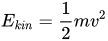
energy among the molecules is described by the Maxwell distribution. The kinetic energy (), mass (), and velocity () of a molecule are related by . Individual molecules in the high tail of the distribution (where a few particles have much higher speeds than the average) may reach escape velocity and leave the atmosphere, provided they can escape before undergoing another collision; this happens predominantly in the exosphere, where the mean free path is comparable in length to the pressure scale height. The number of particles able to escape depends on the molecular concentration at the exobase, which is limited by diffusion through the thermosphere.
Three factors strongly contribute to the relative importance of
Jeans escape: mass of the molecule, escape velocity of the planet, and
heating of the upper atmosphere by radiation from the parent star.
Heavier molecules are less likely to escape because they move slower
than lighter molecules at the same temperature. This is why hydrogen escapes from an atmosphere more easily than carbon dioxide.
Second, a planet with a larger mass tends to have more gravity, so the
escape velocity tends to be greater, and fewer particles will gain the
energy required to escape. This is why the gas giant planets still retain significant amounts of hydrogen, which escape more readily from Earth's atmosphere.
Finally, the distance a planet orbits from a star also plays a part; a
close planet has a hotter atmosphere, with higher velocities and hence, a
greater likelihood of escape. A distant body has a cooler atmosphere,
with lower velocities, and less chance of escape.
A
visualization of hydrodynamic escape. At some level in the atmosphere,
the bulk gas will be heated and begin to expand. As the gas expands, it
accelerates and escapes the atmosphere. In this process, lighter, faster
molecules drag heavier, slower molecules out of the atmosphere.
An atmosphere with high pressure and temperature can also undergo
hydrodynamic escape. In this case, a large amount of thermal energy,
usually through extreme ultraviolet
radiation, is absorbed by the atmosphere. As molecules are heated, they
expand upwards and are further accelerated until they reach escape
velocity. In this process, lighter molecules can drag heavier molecules
with them through collisions as a larger quantity of gas escapes. Hydrodynamic escape has been observed for exoplanets close to their host star, including the hot JupiterHD 209458 b.[4]
Non-thermal (suprathermal) escape
Escape can also occur due to non-thermal interactions. Most of these processes occur due to photochemistry or charged particle (ion) interactions.
Photochemical escape
In the upper atmosphere, high energy ultravioletphotons can react more readily with molecules. Photodissociation can break a molecule into smaller components and provide enough energy for those components to escape. Photoionization produces ions, which can get trapped in the planet's magnetosphere or undergo dissociative recombination.
In the first case, these ions may undergo escape mechanisms described
below. In the second case, the ion recombines with an electron, releases
energy, and can escape.
Sputtering escape
Excess kinetic energy from the solar wind can impart sufficient energy to eject atmospheric particles, similar to sputtering
from a solid surface. This type of interaction is more pronounced in
the absence of a planetary magnetosphere, as the electrically charged
solar wind is deflected by magnetic fields, which mitigates the loss of atmosphere.
The
fast ion captures an electron from a slow neutral in a charge exchange
collision. The new, fast neutral can escape the atmosphere, and the new,
slow ion is trapped on magnetic field lines.
Charge exchange escape
Ions in the solar wind or magnetosphere can charge exchange with
molecules in the upper atmosphere. A fast-moving ion can capture the
electron from a slow atmospheric neutral, creating a fast neutral and a
slow ion. The slow ion is trapped on the magnetic field lines, but the
fast neutral can escape.
Atmospheric molecules can also escape from the polar regions on a planet with a magnetosphere, due to the polar wind.
Near the poles of a magnetosphere, the magnetic field lines are open,
allowing a pathway for ions in the atmosphere to exhaust into space. The
ambipolar electric field accelerates any ions in the ionosphere,
launching along these lines.
Impact erosion
Atmospheric
escape from impact erosion is concentrated in a cone (red dash-dotted
line) centered at the impact site. The angle of this cone increases with
impact energy to eject a maximum of all the atmosphere above a tangent
plane (orange dotted line).
The impact of a large meteoroid
can lead to the loss of atmosphere. If a collision is sufficiently
energetic, it is possible for ejecta, including atmospheric molecules,
to reach escape velocity.
In order to have a significant effect on atmospheric escape, the radius of the impacting body must be larger than the scale height.
The projectile can impart momentum, and thereby facilitate escape of
the atmosphere, in three main ways: (a) the meteoroid heats and
accelerates the gas it encounters as it travels through the atmosphere,
(b) solid ejecta from the impact crater heat atmospheric particles
through drag as they are ejected, and (c) the impact creates vapor which
expands away from the surface. In the first case, the heated gas can
escape in a manner similar to hydrodynamic escape, albeit on a more
localized scale. Most of the escape from impact erosion occurs due to
the third case. The maximum atmosphere that can be ejected is above a plane tangent to the impact site.
Dominant atmospheric escape and loss processes in the Solar System
Earth
Atmospheric escape of hydrogen on Earth is due to charge exchange
escape (~60–90%), Jeans escape (~10–40%), and polar wind escape
(~10–15%), currently losing about 3 kg/s of hydrogen. The Earth additionally loses approximately 50 g/s of helium primarily
through polar wind escape. Escape of other atmospheric constituents is
much smaller. A Japanese research team in 2017 found evidence of a small number of oxygen ions on the moon that came from the Earth.
In 1 billion years, the Sun will be 10% brighter, making it hot
enough on Earth to dramatically increase the water vapor in the
atmosphere where solar ultraviolet light will dissociate H2O, allowing it to gradually escape into space until the oceans dry up.
Venus
Recent models indicate that hydrogen escape on Venus
is almost entirely due to suprathermal mechanisms, primarily
photochemical reactions and charge exchange with the solar wind. Oxygen
escape is dominated by charge exchange and sputtering escape. Venus Express measured the effect of coronal mass ejections
on the rate of atmospheric escape of Venus, and researchers found a
factor of 1.9 increase in escape rate during periods of increased
coronal mass ejections compared with calmer space weather.
Mars
Primordial Mars also suffered from the cumulative effects of multiple small impact erosion events, and recent observations with MAVEN suggest that 66% of the 36Ar in the Martian atmosphere has been lost over the last 4 billion years due to suprathermal escape, and the amount of CO2 lost over the same time period is around 0.5 bar or more.
The MAVEN mission has also explored the current rate of
atmospheric escape of Mars. Jeans escape plays an important role in the
continued escape of hydrogen on Mars, contributing to a loss rate that
varies between 160–1800 g/s. The Jeans escape of hydrogen can be significantly modulated by lower
atmospheric processes, such as gravity waves, convection, and dust
storms. Oxygen loss is dominated by suprathermal methods: photochemical
(~1300 g/s), charge exchange (~130 g/s), and sputtering (~80 g/s) escape
combine for a total loss rate of ~1500 g/s. Other heavy atoms, such as
carbon and nitrogen, are primarily lost due to photochemical reactions
and interactions with the solar wind.
Titan and Io
Saturn's moon Titan and Jupiter's moon Io
have atmospheres and are subject to atmospheric loss processes. They
have no magnetic fields of their own, but orbit planets with powerful
magnetic fields, which protects a given moon from the solar wind when
its orbit is within the bow shock. However Titan spends roughly half of its orbital period outside of the bow-shock, subjected to unimpeded solar winds. The kinetic energy
gained from pick-up and sputtering associated with the solar winds
increases thermal escape throughout the orbit of Titan, causing neutral
hydrogen to escape. The escaped hydrogen maintains an orbit following in the wake of Titan, creating a neutral hydrogen torus around Saturn. Io, in its orbit around Jupiter, encounters a plasma cloud. Interaction with the plasma cloud induces sputtering, kicking off sodium particles. The interaction produces a stationary banana-shaped charged sodium cloud along a part of the orbit of Io.
Observations of exoplanet atmospheric escape
Studies of exoplanets have measured atmospheric escape as a means of
determining atmospheric composition and habitability. The most common
method is Lyman-alpha line absorption. Much as exoplanets are discovered using the dimming of a distant star's brightness (transit), looking specifically at wavelengths corresponding to hydrogen absorption describes the amount of hydrogen present in a sphere around the exoplanet. This method indicates that the hot JupitersHD 209458 b and HD 189733 b and hot NeptuneGliese 436 b are experiencing significant atmospheric escape.
In 2018 it was discovered with the Hubble Space Telescope that atmospheric escape can also be measured with the 1083 nm Helium triplet. This wavelength is much more accessible from ground-based high-resolution spectrographs, when compared to the ultraviolet Lyman-alpha lines. The wavelength around the helium triplet has also the advantage that it is not severely affected by interstellar absorption,
which is an issue for Lyman-alpha. Helium has on the other hand the
disadvantage that it requires knowledge about the hydrogen-helium ratio
to model the mass-loss of the atmosphere. Helium escape was measured
around many giant exoplanets, including WASP-107b, WASP-69b, and HD 189733 b. It has also been detected around some mini-Neptunes, such as TOI-560 b, TOI-1430b, TOI-1683b, and TOI-2076b.
Sequestration
is not a form of escape from the planet, but a loss of molecules from
the atmosphere and into the planet. It occurs on Earth when water vapor condenses to form rain or glacial ice, when carbon dioxide is sequestered in sediments or cycled through the oceans or when rocks are oxidized (for example, by increasing the oxidation states of ferric rocks from Fe2+ to Fe3+). Gases can also be sequestered by adsorption, where fine particles in the regolith capture gas which adheres to the surface particles.
There are four geographic modes of speciation in nature, based on the extent to which speciating populations are isolated from one another: allopatric, peripatric, parapatric, and sympatric. Whether genetic drift is a minor or major contributor to speciation is the subject of much ongoing discussion.
Rapid sympatric speciation can take place through polyploidy, such as by doubling of chromosome number; the result is progeny which are immediately reproductively isolated from the parent population. New species can also be created through hybridization, followed by reproductive isolation, if the hybrid is favoured by natural selection.
In addressing the origin of species, there are two key issues:
the evolutionary mechanisms of speciation
how the separateness and individuality of species is maintained
Since Charles Darwin's time, efforts to understand the nature of
species have primarily focused on the first aspect, and it is now widely
agreed that the critical factor behind the origin of new species is
reproductive isolation.
Darwin's dilemma: why do species exist?
In On the Origin of Species
(1859), Darwin interpreted biological evolution in terms of natural
selection, but was perplexed by the clustering of organisms into
species. Chapter 6 of Darwin's book is entitled "Difficulties of the Theory". In discussing these "difficulties" he noted
Firstly, why, if species have
descended from other species by insensibly fine gradations, do we not
everywhere see innumerable transitional forms? Why is not all nature in
confusion instead of the species being, as we see them, well defined?
This dilemma can be described as the absence or rarity of transitional varieties in habitat space.
Another dilemma, related to the first one, is the absence or rarity of transitional
varieties in time. Darwin pointed out that by the theory of natural
selection "innumerable transitional forms must have existed", and
wondered "why do we not find them embedded in countless numbers in the
crust of the earth". That clearly defined species actually do exist in
nature in both space and time implies that some fundamental feature of
natural selection operates to generate and maintain species.
Effect of sexual reproduction on species formation
It has been argued that the resolution of Darwin's first dilemma lies in the fact that out-crossingsexual reproduction has an intrinsic cost of rarity. The cost of rarity arises as follows. If, on a resource gradient, a
large number of separate species evolve, each exquisitely adapted to a
very narrow band on that gradient, each species will, of necessity,
consist of very few members. Finding a mate under these circumstances
may present difficulties when many of the individuals in the
neighborhood belong to other species. Under these circumstances, if any
species' population size happens, by chance, to increase (at the expense
of one or other of its neighboring species, if the environment is
saturated), this will immediately make it easier for its members to find
sexual partners. The members of the neighboring species, whose
population sizes have decreased, experience greater difficulty in
finding mates, and therefore form pairs less frequently than the larger
species. This has a snowball effect, with large species growing at the
expense of the smaller, rarer species, eventually driving them to extinction. Eventually, only a few species remain, each distinctly different from the other. Rarity not only imposes the risk of failure to find a mate, but it may
also incur indirect costs, such as the resources expended or risks taken
to seek out a partner at low population densities.
African pygmy kingfisher, showing coloration shared by all adults of that species to a high degree of fidelity.
Rarity brings with it other costs. Rare and unusual features are very seldom advantageous. In most instances, they indicate a (non-silent) mutation,
which is almost certain to be deleterious. It therefore behooves sexual
creatures to avoid mates sporting rare or unusual features (koinophilia). Sexual populations therefore rapidly shed rare or peripheral phenotypic
features, thus canalizing the entire external appearance, as
illustrated in the accompanying image of the African pygmy kingfisher, Ispidina picta. This uniformity of all the adult members of a sexual species has stimulated the proliferation of field guides on birds, mammals, reptiles, insects, and many other taxa, in which a species can be described with a single illustration (or two, in the case of sexual dimorphism).
Once a population has become as homogeneous in appearance as is typical
of most species (and is illustrated in the photograph of the African
pygmy kingfisher), its members will avoid mating with members of other
populations that look different from themselves. Thus, the avoidance of mates displaying rare and unusual phenotypic
features inevitably leads to reproductive isolation, one of the
hallmarks of speciation.
In the contrasting case of organisms that reproduce asexually,
there is no cost of rarity; consequently, there are only benefits to
fine-scale adaptation. Thus, asexual organisms very frequently show the
continuous variation in form (often in many different directions) that
Darwin expected evolution to produce, making their classification into
"species" (more correctly, morphospecies) very difficult.
All forms of natural speciation have taken place over the course of evolution; however, debate persists as to the relative importance of each mechanism in driving biodiversity.
One example of natural speciation is the diversity of the three-spined stickleback, a marine fish that, after the last glacial period, has undergone speciation into new freshwater
colonies in isolated lakes and streams. Over an estimated 10,000
generations, the sticklebacks show structural differences that are
greater than those seen between different genera
of fish including variations in fins, changes in the number or size of
their bony plates, variable jaw structure, and color differences.
During allopatric (from the ancient Greek allos, "other" + patrā, "fatherland") speciation, a population splits into two geographically isolated populations (for example, by habitat fragmentation due to geographical change such as mountain formation). The isolated populations then undergo genotypic or phenotypic divergence as: (a) they become subjected to dissimilar selective pressures; (b) different mutations
arise in the two populations. When the populations come back into
contact, they have evolved such that they are reproductively isolated
and are no longer capable of exchanging genes. Island genetics is the term associated with the tendency of small, isolated genetic pools to produce unusual traits. Examples include insular dwarfism and the radical changes among certain famous island chains, for example on Komodo. The Galápagos Islands are particularly famous for their influence on Charles Darwin. During his five weeks there he heard that Galápagos tortoises could be identified by island, and noticed that finches
differed from one island to another, but it was only nine months later
that he speculated that such facts could show that species were
changeable. When he returned to England,
his speculation on evolution deepened after experts informed him that
these were separate species, not just varieties, and famously that other
differing Galápagos birds were all species of finches. Though the
finches were less important for Darwin, more recent research has shown
the birds now known as Darwin's finches to be a classic case of adaptive evolutionary radiation.
In peripatric speciation, a subform of allopatric speciation, new
species are formed in isolated, smaller peripheral populations that are
prevented from exchanging genes with the main population. It is related
to the concept of a founder effect, since small populations often undergo bottlenecks. Genetic drift is often proposed to play a significant role in peripatric speciation.
Case studies include Ernst Mayr's investigation of bird fauna; the Australian bird Petroica multicolor; and reproductive isolation in populations of Drosophila subject to population bottlenecking.
In parapatric speciation, there is only partial separation of the
zones of two diverging populations afforded by geography; individuals of
each species may come in contact or cross habitats from time to time,
but reduced fitness of the heterozygote leads to selection for behaviours or mechanisms that prevent their interbreeding.
Parapatric speciation is modelled on continuous variation within a
"single", connected habitat acting as a source of natural selection
rather than the effects of isolation of habitats produced in peripatric
and allopatric speciation.
Parapatric speciation may be associated with differential landscape-dependent selection. Even if there is a gene flow between two populations, strong differential selection may impede assimilation and different species may eventually develop. Habitat differences may be more important in the development of
reproductive isolation than the isolation time. Caucasian rock lizards Darevskia rudis, D. valentini and D. portschinskii all hybridize with each other in their hybrid zone; however, hybridization is stronger between D. portschinskii and D. rudis, which separated earlier but live in similar habitats than between D. valentini and two other species, which separated later but live in climatically different habitats.
Ecologists refer to parapatric and peripatric speciation in terms of ecological niches. A niche must be available in order for a new species to be successful. Ring species such as Larus gulls have been claimed to illustrate speciation in progress, though the situation may be more complex. The grass Anthoxanthum odoratum may be starting parapatric speciation in areas of mine contamination.
Sympatric speciation is the formation of two or more descendant
species from a single ancestral species all occupying the same
geographic location.
Often-cited examples of sympatric speciation are found in insects that become dependent on different host plants in the same area.
The best known example of sympatric speciation is that of the cichlids of East Africa inhabiting the Rift Valley lakes, particularly Lake Victoria, Lake Malawi and Lake Tanganyika.
There are over 800 described species, and according to estimates, there
could be well over 1,600 species in the region. Their evolution is
cited as an example of both natural and sexual selection. A 2008 study suggests that sympatric speciation has occurred in Tennessee cave salamanders. Sympatric speciation driven by ecological factors may also account for
the extraordinary diversity of crustaceans living in the depths of
Siberia's Lake Baikal.
Budding speciation has been proposed as a particular form of
sympatric speciation, whereby small groups of individuals become
progressively more isolated from the ancestral stock by breeding
preferentially with one another. This type of speciation would be driven
by the conjunction of various advantages of inbreeding such as the
expression of advantageous recessive phenotypes, reducing the
recombination load, and reducing the cost of sex.
Rhagoletis pomonella, the hawthorn fly, appears to be in the process of sympatric speciation.
The hawthorn fly (Rhagoletis pomonella), also known as the apple maggot fly, appears to be undergoing sympatric speciation. Different populations of hawthorn fly feed on different fruits. A
distinct population emerged in North America in the 19th century some
time after apples,
a non-native species, were introduced. This apple-feeding population
normally feeds only on apples and not on the historically preferred
fruit of hawthorns. The current hawthorn feeding population does not normally feed on apples. Some evidence, such as that six out of thirteen allozyme
loci are different, that hawthorn flies mature later in the season and
take longer to mature than apple flies; and that there is little
evidence of interbreeding (researchers have documented a 4–6%
hybridization rate) suggests that sympatric speciation is occurring.
Reinforcement, also called the Wallace effect, is the process by which natural selection increases reproductive isolation. It may occur after two populations of the same species are separated
and then come back into contact. If their reproductive isolation was
complete, then they will have already developed into two separate
incompatible species. If their reproductive isolation is incomplete,
then further mating between the populations will produce hybrids, which
may or may not be fertile. If the hybrids are infertile, or fertile but
less fit than their ancestors, then there will be further reproductive
isolation and speciation has essentially occurred, as in horses and donkeys.
One reasoning behind this is that if the parents of the hybrid
offspring each have naturally selected traits for their own certain
environments, the hybrid offspring will bear traits from both, therefore
would not fit either ecological niche as well as either parent
(ecological speciation). The low fitness of the hybrids would cause
selection to favor assortative mating, which would control hybridization. This is sometimes called the Wallace effect after the evolutionary biologist Alfred Russel Wallace who suggested in the late 19th century that it might be an important factor in speciation. Conversely, if the hybrid offspring are more fit than their ancestors,
then the populations will merge back into the same species within the
area they are in contact.
Another important theoretical mechanism is the arise of intrinsic genetic incompatibilities, addressed in the Bateson-Dobzhansky-Muller model. Genes from allopatric populations will have different evolutionary
backgrounds and are never tested together until hybridization at
secondary contact, when negative epistatic interactions will be exposed.
In other words, new alleles will emerge in a population and only pass
through selection if they work well together with other genes in the
same population, but it may not be compatible with genes in an
allopatric population, be those other newly derived alleles or retained
ancestral alleles. This is only revealed through new hybridization. Such incompatibilities cause lower fitness in hybrids regardless of the
ecological environment, and are thus intrinsic, although they can
originate from the adaptation to different environments. The accumulation of such incompatibilities increases faster and faster with time, creating a "snowball" effect. There is a large amount of evidence supporting this theory, primarily from laboratory populations such as Drosophila and Mus, and some genes involved in incompatibilities have been identified.
Reinforcement favoring reproductive isolation is required for
both parapatric and sympatric speciation. Without reinforcement, the
geographic area of contact between different forms of the same species,
called their "hybrid zone", will not develop into a boundary between the
different species. Hybrid zones are regions where diverged populations
meet and interbreed. Hybrid offspring are common in these regions, which
are usually created by diverged species coming into secondary contact. Without reinforcement, the two species would have uncontrollable inbreeding. Reinforcement may be induced in artificial selection experiments as described below.
Ecological selection is "the interaction of individuals with their environment during resource acquisition". Natural selection is inherently involved in the process of speciation,
whereby, "under ecological speciation, populations in different
environments, or populations exploiting different resources, experience
contrasting natural selection pressures on the traits that directly or
indirectly bring about the evolution of reproductive isolation". Evidence for the role ecology plays in the process of speciation
exists. Studies of stickleback populations support ecologically linked
speciation arising as a by-product, alongside numerous studies of parallel speciation, where isolation
evolves between independent populations of species adapting to
contrasting environments than between independent populations adapting
to similar environments. Ecological speciation occurs with much of the evidence, "...accumulated
from top-down studies of adaptation and reproductive isolation".
Sexual selection
Sexual selection can drive speciation in a clade, independently of natural selection. However the term "speciation", in this context, tends to be used in two
different, but not mutually exclusive senses. The first and most
commonly used sense refers to the "birth" of new species. That is, the
splitting of an existing species into two separate species, or the
budding off of a new species from a parent species, both driven by a
biological "fashion fad" (a preference for a feature, or features, in
one or both sexes, that do not necessarily have any adaptive qualities). In the second sense, "speciation" refers to the wide-spread tendency of
sexual creatures to be grouped into clearly defined species, rather than forming a continuum of phenotypes
both in time and space – which would be the more obvious or logical
consequence of natural selection. This was indeed recognized by Darwin as problematic, and included in his On the Origin of Species (1859), under the heading "Difficulties with the Theory". There are several suggestions as to how mate choice might play a significant role in resolving Darwin's dilemma. If speciation takes place in the absence of natural selection, it might be referred to as nonecological speciation.
New species have been created by animal husbandry,
but the dates and methods of the initiation of such species are not
clear. Often, the domestic counterpart can still interbreed and produce
fertile offspring with its wild ancestor. This is the case with domestic
cattle, which can be considered the same species as several varieties of wild ox, gaur, and yak; and with domestic sheep that can interbreed with the mouflon.
The best-documented creations of new species in the laboratory
were performed in the late 1980s. William R. Rice and George W. Salt
bred Drosophila melanogasterfruit flies
using a maze with three different choices of habitat such as light/dark
and wet/dry. Each generation was placed into the maze, and the groups
of flies that came out of two of the eight exits were set apart to breed
with each other in their respective groups. After thirty-five
generations, the two groups and their offspring were isolated
reproductively because of their strong habitat preferences: they mated
only within the areas they preferred, and so did not mate with flies
that preferred the other areas. The history of such attempts is described by Rice and Elen E. Hostert (1993). Diane Dodd used a laboratory experiment to show how reproductive isolation can develop in Drosophila pseudoobscura fruit flies after several generations by placing them in different media, starch- and maltose-based media.
Dodd's experiment has been replicated many times, including with other kinds of fruit flies and foods. Such rapid evolution of reproductive isolation may sometimes be a relic of infection by Wolbachia bacteria.
An alternative explanation is that these observations are
consistent with sexually-reproducing animals being inherently reluctant
to mate with individuals whose appearance or behavior is different from
the norm. The risk that such deviations are due to heritable maladaptations
is high. Thus, if an animal, unable to predict natural selection's
future direction, is conditioned to produce the fittest offspring
possible, it will avoid mates with unusual habits or features. Sexual creatures then inevitably group themselves into reproductively isolated species.
Genetics
Species barriers
In evolutionary biology, a species barrier is any genetic
difference that reduces gene flow between diverging lineages. In
Darwin's framework, natural selection acting in heterogeneous
environments drives phenotypic divergence; hybrids with intermediate
phenotypes may suffer reduced fitness where parental populations are
locally adapted. The genetic basis of such barriers was first mapped using crosses
between closely related species; for example, Dobzhansky showed in Drosophila
that some chromosomal regions contribute disproportionately to hybrid
sterility, establishing that reproductive isolation has a genomic basis
rather than a single-locus cause.
These findings motivated the Dobzhansky–Muller model: hybrid
dysfunction arises from negative epistasis between derived alleles that
evolved separately in each lineage, without either lineage having to
cross a low-fitness state. Subsequent theory formalized how selected loci impede introgression at
nearby neutral loci, quantifying the "barrier to gene flow" and showing
that many loci are typically required to strongly reduce exchange across
most of the genome. In parallel, the "genic view" of speciation argued that differentiation
and isolation often begin at a subset of loci under divergent or sexual
selection, while the remainder of the genome can remain permeable for
long periods.
Accumulation of species barriers
Experimental crosses across clades show that overall postzygotic
isolation increases with genetic divergence, but the architecture is
typically polygenic, asymmetric, and often involves complex (≥3-locus)
Dobzhansky–Muller incompatibilities. Theory predicts different accumulation dynamics: under the classic
"snowball" model, the number of pairwise incompatibilities grows roughly
with the square of substitutions, whereas alternative models (e.g.
Fisher's geometric model) can yield more linear behavior depending on
trait architecture and selection.
Because barrier loci impede nearby introgression, genomes of
diverging lineages often become mosaics with semipermeable regions
during "semi-isolated" stages; linkage disequilibria and parallel clines
in hybrid zones provide estimates of selection and dispersal
maintaining such barriers. Population-genomic inference now makes it possible to quantify how gene
flow declines with molecular divergence and to identify when genomic
heterogeneity of introgression arises, thereby enabling cross-taxon
comparisons along the speciation continuum to uncover the factors
driving the accumulation of species barriers.
Few speciation genes have been found. They usually involve the
reinforcement process of late stages of speciation. In 2008, a
speciation gene causing reproductive isolation was reported. It causes hybrid sterility between related subspecies. The order of
speciation of three groups from a common ancestor may be unclear or
unknown; a collection of three such species is referred to as a
"trichotomy".
Speciation via polyploidy
Speciation via polyploidy: A diploid cell undergoes failed meiosis, producing diploid gametes, which self-fertilize to produce a tetraploid zygote. In plants, this can effectively be a new species, reproductively isolated from its parents, and able to reproduce.
Polyploidy is a mechanism that has caused many rapid speciation events in sympatry because offspring of, for example, tetraploid x diploid matings often result in triploid sterile progeny. However, among plants, not all polyploids are reproductively isolated
from their parents, and gene flow may still occur, such as through
triploid hybrid x diploid matings that produce tetraploids, or matings
between meiotically unreduced gametes from diploids and gametes from tetraploids (see also hybrid speciation).
It has been suggested that many of the existing plant and most
animal species have undergone an event of polyploidization in their
evolutionary history. Reproduction of successful polyploid species is sometimes asexual, by parthenogenesis or apomixis,
as for unknown reasons many asexual organisms are polyploid. Rare
instances of polyploid mammals are known, but most often result in
prenatal death.
Hybridization between two different species sometimes leads to a distinct phenotype.
This phenotype can also be fitter than the parental lineage and as such
natural selection may then favor these individuals. Eventually, if
reproductive isolation is achieved, it may lead to a separate species.
However, reproductive isolation between hybrids and their parents is
particularly difficult to achieve and thus hybrid speciation is
considered an extremely rare event. The Mariana mallard is thought to have arisen from hybrid speciation.
Hybridization is an important means of speciation in plants, since polyploidy (having more than two copies of each chromosome) is tolerated in plants more readily than in animals. Polyploidy is important in hybrids as it allows reproduction, with the
two different sets of chromosomes each being able to pair with an
identical partner during meiosis. Polyploids also have more genetic diversity, which allows them to avoid inbreeding depression in small populations.
Hybridization without change in chromosome number is called
homoploid hybrid speciation. It is considered very rare but has been
shown in Heliconiusbutterflies and sunflowers. Polyploid speciation, which involves changes in chromosome number, is a more common phenomenon in plant species.
Theodosius Dobzhansky,
who studied fruit flies in the early days of genetic research in 1930s,
speculated that parts of chromosomes that switch from one location to
another might cause a species to split into two different species. He
mapped out how it might be possible for sections of chromosomes to
relocate themselves in a genome. Those mobile sections can cause
sterility in inter-species hybrids, which can act as a speciation
pressure. In theory, his idea was sound, but scientists long debated
whether it actually happened in nature. Eventually a competing theory
involving the gradual accumulation of mutations was shown to occur in
nature so often that geneticists largely dismissed the moving gene
hypothesis. However, 2006 research shows that jumping of a gene from one chromosome to another can contribute to the birth of new species. This validates the reproductive isolation mechanism, a key component of speciation.
There is debate as to the rate at which speciation events occur over
geologic time. While some evolutionary biologists claim that speciation
events have remained relatively constant and gradual over time (known as
"Phyletic gradualism" – see diagram), some palaeontologists such as Niles Eldredge and Stephen Jay Gould have argued that species usually remain unchanged over long stretches
of time, and that speciation occurs only over relatively brief
intervals, a view known as punctuated equilibrium. (See diagram, and Darwin's dilemma.)
Evolution can be extremely rapid, as shown in the creation of
domesticated animals and plants in a very short geological space of
time, spanning only a few tens of thousands of years. Maize (Zea mays), for instance, was created in Mexico in only a few thousand years, starting about 7,000 to 12,000 years ago. This raises the question of why the long term rate of evolution is far slower than is theoretically possible.
Evolution is imposed on species or groups. It is not planned or striven for in some Lamarckist way. The mutations on which the process depends are random events, and, except for the "silent mutations"
which do not affect the functionality or appearance of the carrier, are
thus usually disadvantageous, and their chance of proving to be useful
in the future is vanishingly small. Therefore, while a species or group
might benefit from being able to adapt to a new environment by
accumulating a wide range of genetic variation, this is to the detriment
of the individuals who have to carry these mutations until a
small, unpredictable minority of them ultimately contributes to such an
adaptation. Thus, the capability to evolve would require group selection, a concept discredited by (for example) George C. Williams, John Maynard Smith and Richard Dawkins as selectively disadvantageous to the individual.
The resolution to Darwin's second dilemma might thus come about as follows:
If sexual individuals are disadvantaged by passing mutations on
to their offspring, they will avoid mutant mates with strange or unusual
characteristics. Mutations that affect the external appearance of their carriers will
then rarely be passed on to the next and subsequent generations. They
would therefore seldom be tested by natural selection. Evolution is,
therefore, effectively halted or slowed down considerably. The only
mutations that can accumulate in a population, on this punctuated
equilibrium view, are ones that have no noticeable effect on the outward
appearance and functionality of their bearers (i.e., they are "silent"
or "neutral mutations", which can be, and are, used to trace the relatedness and age of populations and species.)
This argument implies that evolution can only occur if mutant
mates cannot be avoided, as a result of a severe scarcity of potential
mates. This is most likely to occur in small, isolated communities. These occur most commonly on small islands, in remote valleys, lakes, river systems, or caves, or during the aftermath of a mass extinction. Under these circumstances, not only is the choice of mates severely
restricted but population bottlenecks, founder effects, genetic drift
and inbreeding cause rapid, random changes in the isolated population's
genetic composition. Furthermore, hybridization with a related species trapped in the same
isolate might introduce additional genetic changes. If an isolated
population such as this survives its genetic upheavals,
and subsequently expands into an unoccupied niche, or into a niche in
which it has an advantage over its competitors, a new species, or
subspecies, will have come into being. In geological terms, this will be
an abrupt event. A resumption of avoiding mutant mates will thereafter
result, once again, in evolutionary stagnation.
In apparent confirmation of this punctuated equilibrium view of evolution, the fossil record
of an evolutionary progression typically consists of species that
suddenly appear, and ultimately disappear, hundreds of thousands or
millions of years later, without any change in external appearance. Graphically, these fossil species are represented by lines parallel
with the time axis, whose lengths depict how long each of them existed.
The fact that the lines remain parallel with the time axis illustrates
the unchanging appearance of each of the fossil species depicted on the
graph. During each species' existence new species appear at random
intervals, each also lasting many hundreds of thousands of years before
disappearing without a change in appearance. The exact relatedness of
these concurrent species is generally impossible to determine. This is
illustrated in the diagram depicting the distribution of hominin species through time since the hominins separated from the line that led to the evolution of their closest living primate relatives, the chimpanzees.
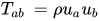
The Einstein field equations relate the Einstein tensor to the
stress–energy tensor, which represents the distribution of energy,
momentum and stress in the spacetime manifold. The Einstein tensor is
built up from the metric tensor and its partial derivatives; thus, given
the stress–energy tensor, the Einstein field equations are a system of
ten partial differential equations in which the metric tensor can be solved for.
Solving the equations
It is important to realize that the Einstein field equations alone
are not enough to determine the evolution of a gravitational system in
many cases. They depend on the stress–energy tensor,
which depends on the dynamics of matter and energy (such as
trajectories of moving particles), which in turn depends on the
gravitational field. If one is only interested in the weak field limit
of the theory, the dynamics of matter can be computed using special
relativity methods and/or Newtonian laws of gravity and the resulting
stress–energy tensor can then be plugged into the Einstein field
equations. But if one requires an exact solution or a solution
describing strong fields, the evolution of both the metric and the
stress–energy tensor must be solved for at once.
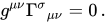
To obtain solutions, the relevant equations are the above quoted EFE (in either form) plus the continuity equation (to determine the evolution of the stress–energy tensor):
These amount to only 14 equations (10 from the field equations and 4
from the continuity equation) and are by themselves insufficient for
determining the 20 unknowns (10 metric components and 10 stress–energy
tensor components). The equations of state
are missing. In the most general case, it's easy to see that at least 6
more equations are required, possibly more if there are internal
degrees of freedom (such as temperature) which may vary throughout
spacetime.
In practice, it is usually possible to simplify the problem by
replacing the full set of equations of state with a simple
approximation. Some common approximations are:
For a perfect fluid, another equation of state relating density and pressure
must be added. This equation will often depend on temperature, so a
heat transfer equation is required or the postulate that heat transfer
can be neglected.
Next, notice that only 10 of the original 14 equations are independent, because the continuity equation is a consequence of Einstein's equations. This reflects the fact that the system is gauge invariant
(in general, absent some symmetry, any choice of a curvilinear
coordinate net on the same system would correspond to a numerically
different solution.) A "gauge fixing" is needed, i.e. we need to impose 4
(arbitrary) constraints on the coordinate system in order to obtain
unequivocal results. These constraints are known as coordinate conditions.
A popular choice of gauge is the so-called "De Donder gauge", also known as the harmoniccondition or harmonic gauge
In numerical relativity, the preferred gauge is the so-called "3+1 decomposition", based on the ADM formalism. In this decomposition, metric is written in the form
, where
and
are functions of spacetime coordinates and can be chosen arbitrarily in
each point. The remaining physical degrees of freedom are contained in , which represents the Riemannian metric on 3-hypersurfaces with constant . For example, a naive choice of , , would correspond to a so-called synchronous
coordinate system: one where t-coordinate coincides with proper time
for any comoving observer (particle that moves along a fixed trajectory.)
Once equations of state are chosen and the gauge is fixed, the
complete set of equations can be solved. Unfortunately, even in the
simplest case of gravitational field in the vacuum (vanishing
stress–energy tensor), the problem is too complex to be exactly
solvable. To get physical results, we can either turn to numerical methods, try to find exact solutions by imposing symmetries, or try middle-ground approaches such as perturbation methods or linear approximations of the Einstein tensor.
An illustration of the Schwarzschild metric, which describes spacetime around a spherical, uncharged, and nonrotating object with mass
A major area of research is the discovery of exact solutions
to the Einstein field equations. Solving these equations amounts to
calculating a precise value for the metric tensor (which defines the
curvature and geometry of spacetime) under certain physical conditions.
There is no formal definition for what constitutes such solutions, but
most scientists agree that they should be expressable using elementary functions or linear differential equations. Some of the most notable solutions of the equations include:
The Schwarzschild solution, which describes spacetime surrounding a spherically symmetric non-rotating uncharged massive object. For compact enough objects, this solution generated a black hole with a central singularity. At points far away from the central mass, the accelerations predicted
by the Schwarzschild solution are nearly identical to those predicted by
Newton's theory of gravity.
The Reissner–Nordström solution,
which analyzes a non-rotating spherically symmetric object with charge
and was independently discovered by several different researchers
between 1916 and 1921. In some cases, this solution can predict the existence of black holes with double event horizons.
The Kerr solution,
which generalizes the Schwarzchild solution to rotating massive
objects. Because of the difficulty of factoring in the effects of
rotation into the Einstein field equations, this solution was not
discovered until 1963.
The Kerr–Newman solution
for charged, rotating massive objects. This solution was derived in
1964, using the same technique of complex coordinate transformation that
was used for the Kerr solution.
Today, there remain many important situations in which the Einstein
field equations have not been solved. Chief among these is the two-body problem,
which concerns the geometry of spacetime around two mutually
interacting massive objects, such as the Sun and the Earth, or the two
stars in a binary star system. The situation gets even more complicated when considering the interactions of three or more massive bodies (the "n-body problem". However, it is still possible to construct an approximate solution to the field equations in the n-body problem by using the technique of post-Newtonian expansion. In general, the extreme nonlinearity of the Einstein field equations
makes it difficult to solve them in all but the most specific cases.
The solutions that are not exact are called non-exact solutions.
Such solutions mainly arise due to the difficulty of solving the EFE in
closed form and often take the form of approximations to ideal system.
For most physical scenarios, it is impossible to find an exact solution,
so approximations are made. In such cases, non-exact solutions can
still be used for modeling realistic cosmological systems. Additionally,
many non-exact solutions may be devoid of physical content, but serve
as useful counterexamples to theoretical conjectures.
Non-exact solutions are often found using numerical methods or perturbation theory. Common perturbative approaches include taking a Post-Newtonian expansion, which begins with a Newtonian baseline and add corrections to account for relativistic effects. Numerical methods for solving the coupled differential equations include spectral methods
in which the functions are expanded in sets of orthogonal polynomials
or functions, finite-difference methods, and finite element methods. Computer simulations are also often used to find non-exact solutions,
especially in strong field scenarios such as massive stars or black holes, and can help detect critical behaviors and unexpected phenomena. Using computer simulations to find these solutions is a technique called numerical relativity.
Applications
There are practical as well as theoretical reasons for studying solutions of the Einstein field equations.
From a purely mathematical viewpoint, it is interesting to know
the set of solutions of the Einstein field equations. Some of these
solutions are parametrised by one or more parameters. From a physical
standpoint, knowing the solutions of the Einstein Field Equations allows
highly-precise modelling of astrophysical phenomena, including black
holes, neutron stars, and stellar systems. Predictions can be made
analytically about the system analyzed; such predictions include the perihelion precession of Mercury, the existence of a co-rotating region inside spinning black holes, and the orbits of objects around massive bodies.




.jpg)

_nyererei_male.jpg)


_1_by_N._A._Naseer.jpg)