The tips of a phylogenetic tree can be living taxa or fossils,
which represent the present time or "end" of an evolutionary lineage,
respectively. A phylogenetic diagram can be rooted or unrooted. A rooted
tree diagram indicates the hypothetical common ancestor
of the tree. An unrooted tree diagram (a network) makes no assumption
about the ancestral line, and does not show the origin or "root" of the
taxa in question or the direction of inferred evolutionary
transformations.
In addition to their use for inferring phylogenetic patterns
among taxa, phylogenetic analyses are often employed to represent
relationships among genes or individual organisms. Such uses have become
central to understanding biodiversity, evolution, ecology, and genomes.
Phylogenetics is a component of systematics
that uses similarities and differences of the characteristics of
species to interpret their evolutionary relationships and origins.
Phylogenetics focuses on whether the characteristics of a species
reinforce a phylogenetic inference that it diverged from the most recent
common ancestor of a taxonomic group.
In the field of cancer research, phylogenetics can be used to study the clonal evolution of tumors and molecular chronology, predicting and showing how cell populations vary throughout the progression of the disease and during treatment, using whole genome sequencing techniques.
The evolutionary processes behind cancer progression are quite
different from those in most species and are important to phylogenetic
inference; these differences manifest in several areas: the types of
aberrations that occur, the rates of mutation, the high heterogeneity (variability) of tumor cell subclones, and the absence of genetic recombination.
Phylogenetics can also aid in drug design
and discovery. Phylogenetics allows scientists to organize species and
can show which species are likely to have inherited particular traits
that are medically useful, such as producing biologically active
compounds - those that have effects on the human body. For example, in
drug discovery, venom-producing animals are particularly useful. Venoms from these animals produce several important drugs, e.g., ACE inhibitors and Prialt (Ziconotide).
To find new venoms, scientists turn to phylogenetics to screen for
closely related species that may have the same useful traits. The
phylogenetic tree shows which species of fish
have an origin of venom, and related fish they may contain the trait.
Using this approach in studying venomous fish, biologists are able to
identify the fish species that may be venomous. Biologist have used this
approach in many species such as snakes and lizards.
In forensic science,
phylogenetic tools are useful to assess DNA evidence for court cases.
The simple phylogenetic tree of viruses A-E shows the relationships
between viruses e.g., all viruses are descendants of Virus A.
HIV
forensics uses phylogenetic analysis to track the differences in HIV
genes and determine the relatedness of two samples. Phylogenetic
analysis has been used in criminal trials to exonerate or hold
individuals. HIV forensics does have its limitations, i.e., it cannot be
the sole proof of transmission between individuals and phylogenetic
analysis which shows transmission relatedness does not indicate
direction of transmission.
One small clade of fish, showing how venom has evolved multiple times.
Taxonomy is the identification, naming, and classification of organisms. Compared to systemization, classification emphasizes whether a species has characteristics of a taxonomic group. The Linnaean classification system developed in the 1700s by Carolus Linnaeus
is the foundation for modern classification methods. Linnaean
classification relies on an organism's phenotype or physical
characteristics to group and organize species. With the emergence of biochemistry, organism classifications are now usually based on phylogenetic data, and many systematists contend that only monophyletic taxa should be recognized as named groups. The degree to which classification depends on inferred evolutionary history differs depending on the school of taxonomy: phenetics ignores phylogenetic speculation altogether, trying to represent the similarity between organisms instead; cladistics
(phylogenetic systematics) tries to reflect phylogeny in its
classifications by only recognizing groups based on shared, derived
characters (synapomorphies); evolutionary taxonomy tries to take into account both the branching pattern and "degree of difference" to find a compromise between them.
Phenetics, popular in the mid-20th century but now largely obsolete, used distance matrix-based methods to construct trees based on overall similarity in morphology or similar observable traits (i.e. in the phenotype or the overall similarity of DNA, not the DNA sequence), which was often assumed to approximate phylogenetic relationships.
Prior to 1950, phylogenetic inferences were generally presented as narrative scenarios. Such methods are often ambiguous and lack explicit criteria for evaluating alternative hypotheses.
Impacts of taxon sampling
In
phylogenetic analysis, taxon sampling selects a small group of taxa to
represent the evolutionary history of its broader population. This process is also known as stratified sampling or clade-based sampling. The practice occurs given limited resources to compare and analyze every species within a target population.
Based on the representative group selected, the construction and
accuracy of phylogenetic trees vary, which impacts derived phylogenetic
inferences.
Unavailable datasets, such as an organism's incomplete DNA and protein amino acid sequences in genomic databases, directly restrict taxonomic sampling. Consequently, a significant source of error
within phylogenetic analysis occurs due to inadequate taxon samples.
Accuracy may be improved by increasing the number of genetic samples
within its monophyletic group. Conversely, increasing sampling from
outgroups extraneous to the target stratified population may decrease
accuracy. Long branch attraction
is an attributed theory for this occurrence, where nonrelated branches
are incorrectly classified together, insinuating a shared evolutionary
history.
Percentage
of inter-ordinal branches reconstructed with a constant number of bases
and four phylogenetic tree construction models; neighbor-joining (NJ),
minimum evolution (ME), unweighted maximum parsimony (MP), and maximum
likelihood (ML). Demonstrates phylogenetic analysis with fewer taxa and
more genes per taxon matches more often with the replicable consensus
tree. The dotted line demonstrates an equal accuracy increase between
the two taxon sampling methods. Figure is property of Michael S.
Rosenberg and Sudhir Kumar as presented in the journal article Taxon Sampling, Bioinformatics, and Phylogenomics.
There are debates if increasing the number of taxa sampled improves
phylogenetic accuracy more than increasing the number of genes sampled
per taxon. Differences in each method's sampling impact the number of
nucleotide sites utilized in a sequence alignment, which may contribute
to disagreements. For example, phylogenetic trees constructed utilizing a
more significant number of total nucleotides are generally more
accurate, as supported by phylogenetic trees' bootstrapping
replicability from random sampling.
The graphic presented in Taxon Sampling, Bioinformatics, and Phylogenomics,
compares the correctness of phylogenetic trees generated using fewer
taxa and more sites per taxon on the x-axis to more taxa and fewer sites
per taxon on the y-axis. With fewer taxa, more genes are sampled
amongst the taxonomic group; in comparison, with more taxa added to the
taxonomic sampling group, fewer genes are sampled. Each method has the
same total number of nucleotide sites sampled. Furthermore, the dotted
line represents a 1:1 accuracy between the two sampling methods. As seen
in the graphic, most of the plotted points are located below the dotted
line, which indicates gravitation toward increased accuracy when
sampling fewer taxa with more sites per taxon. The research performed
utilizes four different phylogenetic tree construction models to verify
the theory; neighbor-joining (NJ), minimum evolution (ME), unweighted
maximum parsimony (MP), and maximum likelihood (ML). In the majority of
models, sampling fewer taxon with more sites per taxon demonstrated
higher accuracy.
Generally, with the alignment of a relatively equal number of
total nucleotide sites, sampling more genes per taxon has higher
bootstrapping replicability than sampling more taxa. However, unbalanced
datasets within genomic databases make increasing the gene comparison
per taxon in uncommonly sampled organisms increasingly difficult.
History
Overview
The term "phylogeny" derives from the German Phylogenie, introduced by Haeckel in 1866, and the Darwinian approach to classification became known as the "phyletic" approach. It can be traced back to Aristotle, who wrote in his Posterior Analytics,
"We may assume the superiority ceteris paribus [other things being
equal] of the demonstration which derives from fewer postulates or
hypotheses."
Ernst Haeckel's recapitulation theory
The
modern concept of phylogenetics evolved primarily as a disproof of a
previously widely accepted theory. During the late 19th century, Ernst Haeckel's recapitulation theory, or "biogenetic fundamental law", was widely popular. It was often expressed as "ontogeny
recapitulates phylogeny", i.e. the development of a single organism
during its lifetime, from germ to adult, successively mirrors the adult
stages of successive ancestors of the species to which it belongs. But
this theory has long been rejected. Instead, ontogeny evolves –
the phylogenetic history of a species cannot be read directly from its
ontogeny, as Haeckel thought would be possible, but characters from
ontogeny can be (and have been) used as data for phylogenetic analyses;
the more closely related two species are, the more apomorphies their embryos share.
Timeline of key points
Branching tree diagram from Heinrich Georg Bronn's work (1858)Phylogenetic tree suggested by Haeckel (1866)
14th century, lex parsimoniae (parsimony principle), William of Ockam, English philosopher, theologian, and Franciscan friar, but the idea actually goes back to Aristotle, as a precursor concept. He introduced the concept of Occam's razor,
which is the problem solving principle that recommends searching for
explanations constructed with the smallest possible set of elements.
Though he did not use these exact words, the principle can be summarized
as "Entities must not be multiplied beyond necessity." The principle
advocates that when presented with competing hypotheses about the same
prediction, one should prefer the one that requires fewest assumptions.
1763, Bayesian probability, Rev. Thomas Bayes,
a precursor concept. Bayesian probability began a resurgence in the
1950s, allowing scientists in the computing field to pair traditional
Bayesian statistics with other more modern techniques. It is now used as
a blanket term for several related interpretations of probability as an
amount of epistemic confidence.
18th century, Pierre Simon (Marquis de Laplace), perhaps first to
use ML (maximum likelihood), precursor concept. His work gave way to the
Laplace distribution, which can be directly linked to least absolute deviations.
1809, evolutionary theory, Philosophie Zoologique,Jean-Baptiste de Lamarck,
precursor concept, foreshadowed in the 17th century and 18th century by
Voltaire, Descartes, and Leibniz, with Leibniz even proposing
evolutionary changes to account for observed gaps suggesting that many
species had become extinct, others transformed, and different species
that share common traits may have at one time been a single race, also foreshadowed by some early Greek philosophers such as Anaximander in the 6th century BC and the atomists of the 5th century BC, who proposed rudimentary theories of evolution
1837, Darwin's notebooks show an evolutionary tree
1840, American Geologist Edward Hitchcock published what is
considered to be the first paleontological "Tree of Life". Many
critiques, modifications, and explanations would follow.This
chart displays one of the first published attempts at a paleontological
"Tree of Life" by Geologist Edward Hitchcock. (1840)
1843, distinction between homology and analogy (the latter now referred to as homoplasy),
Richard Owen, precursor concept. Homology is the term used to
characterize the similarity of features that can be parsimoniously
explained by common ancestry. Homoplasy is the term used to describe a
feature that has been gained or lost independently in separate lineages
over the course of evolution.
1858, Paleontologist Heinrich Georg Bronn (1800–1862) published a
hypothetical tree to illustrating the paleontological "arrival" of new,
similar species. following the extinction of an older species. Bronn did
not propose a mechanism responsible for such phenomena, precursor
concept.
1858, elaboration of evolutionary theory, Darwin and Wallace, also in Origin of Species by Darwin the following year, precursor concept.
1866, Ernst Haeckel,
first publishes his phylogeny-based evolutionary tree, precursor
concept. Haeckel introduces the now-disproved recapitulation theory. He
introduced the term "Cladus" as a taxonomic category just below
subphylum.
1893, Dollo's Law of Character State Irreversibility,
precursor concept. Dollo's Law of Irreversibility states that "an
organism never comes back exactly to its previous state due to the
indestructible nature of the past, it always retains some trace of the
transitional stages through which it has passed."
1912, ML (maximum likelihood recommended, analyzed, and popularized by Ronald Fisher,
precursor concept. Fisher is one of the main contributors to the early
20th-century revival of Darwinism, and has been called the "greatest of
Darwin's successors" for his contributions to the revision of the theory
of evolution and his use of mathematics to combine Mendelian genetics and natural selection in the 20th century "modern synthesis".
1921, Tillyard uses term "phylogenetic" and distinguishes between
archaic and specialized characters in his classification system.
1940, Lucien Cuénot coined the term "clade" in 1940: "terme nouveau de clade (du grec κλάδοςç, branche) [A new term clade (from the Greek word klados, meaning branch)]". He used it for evolutionary branching.
1947, Bernhard Rensch introduced the term Kladogenesis in his German book Neuere Probleme der Abstammungslehre Die transspezifische Evolution, translated into English in 1959 as Evolution Above the Species Level (still using the same spelling).
1949, Jackknife resampling, Maurice Quenouille (foreshadowed in '46 by Mahalanobis and extended in '58 by Tukey), precursor concept.
1950, Willi Hennig's classic formalization.
Hennig is considered the founder of phylogenetic systematics, and
published his first works in German of this year. He also asserted a
version of the parsimony principle, stating that the presence of
amorphous characters in different species 'is always reason for
suspecting kinship, and that their origin by convergence should not be
presumed a priori'. This has been considered a foundational view of phylogenetic inference.
1952, William Wagner's ground plan divergence method.
1957, Julian Huxley adopted Rensch's terminology as "cladogenesis" with a full definition: "Cladogenesis
I have taken over directly from Rensch, to denote all splitting, from
subspeciation through adaptive radiation to the divergence of phyla and
kingdoms." With it he introduced the word "clades", defining it as:
"Cladogenesis results in the formation of delimitable monophyletic
units, which may be called clades."
1963, first attempt to use ML (maximum likelihood) for phylogenetics, Edwards and Cavalli-Sforza.
1965
Camin-Sokal parsimony, first parsimony (optimization) criterion
and first computer program/algorithm for cladistic analysis both by
Camin and Sokal.
Character compatibility method, also called clique analysis, introduced independently by Camin and Sokal (loc. cit.) and E. O. Wilson.
1966
English translation of Hennig.
"Cladistics" and "cladogram" coined (Webster's, loc. cit.)
1969
Dynamic and successive weighting, James Farris.
Wagner parsimony, Kluge and Farris.
CI (consistency index), Kluge and Farris.
Introduction of pairwise compatibility for clique analysis, Le Quesne.
1970, Wagner parsimony generalized by Farris.
1971
First successful application of ML (maximum likelihood) to phylogenetics (for protein sequences), Neyman.
Fitch parsimony, Walter M. Fitch. These gave way to the most basic ideas of maximum parsimony. Fitch is known for his work on reconstructing phylogenetic trees from protein and DNA sequences. His definition of orthologous sequences has been referenced in many research publications.
NNI (nearest neighbour interchange), first branch-swapping search strategy, developed independently by Robinson and Moore et al.
ME (minimum evolution), Kidd and Sgaramella-Zonta
(it is unclear if this is the pairwise distance method or related to ML
as Edwards and Cavalli-Sforza call ML "minimum evolution").
1980, PHYLIP, first software package for phylogenetic analysis, Joseph Felsenstein. A free computational phylogenetics package of programs for inferring evolutionary trees (phylogenies).
One such example tree created by PHYLIP, called a "drawgram", generates
rooted trees. This image shown in the figure below shows the evolution
of phylogenetic trees over time.
1981
Majority consensus, Margush and MacMorris.
Strict consensus, Sokal and RohlfThis
image depicts a PHYLIP generated drawgram. This drawgram is an example
of one of the possible trees the software is capable of generating.first computationally efficient ML (maximum likelihood) algorithm.
Felsenstein created the Felsenstein Maximum Likelihood method, used for
the inference of phylogeny which evaluates a hypothesis about
evolutionary history in terms of the probability that the proposed model
and the hypothesized history would give rise to the observed data set.
1982
PHYSIS, Mikevich and Farris
Branch and bound, Hendy and Penny
1985
First cladistic analysis of eukaryotes based on combined phenotypic and genotypic evidence Diana Lipscomb.
First issue of Cladistics.
First phylogenetic application of bootstrap, Felsenstein.
First phylogenetic application of jackknife, Scott Lanyon.
1986, MacClade, Maddison and Maddison.
1987, neighbor-joining method Saitou and Nei
1988, Hennig86 (version 1.5), Farris
Bremer support (decay index), Bremer.
1989
RI (retention index), RCI (rescaled consistency index), Farris.
1996, first working methods for BI (Bayesian Inference) independently developed by Li, Mau, and Rannala and Yang and all using MCMC (Markov chain-Monte Carlo).
1998, TNT (Tree Analysis Using New Technology), Goloboff, Farris, and Nixon.
1999, Winclada, Nixon.
2003, symmetrical resampling, Goloboff.
2004, 2005, similarity metric (using an approximation to Kolmogorov
complexity) or NCD (normalized compression distance), Li et al., Cilibrasi and Vitanyi.
Uses of phylogenetic analysis
Pharmacology
One use of phylogenetic analysis involves the pharmacological examination of closely related groups of organisms. Advances in cladistics
analysis through faster computer programs and improved molecular
techniques have increased the precision of phylogenetic determination,
allowing for the identification of species with pharmacological
potential.
Historically, phylogenetic screens for pharmacological purposes were used in a basic manner, such as studying the Apocynaceae family of plants, which includes alkaloid-producing species like Catharanthus, known for producing vincristine,
an antileukemia drug. Modern techniques now enable researchers to study
close relatives of a species to uncover either a higher abundance of
important bioactive compounds (e.g., species of Taxus for taxol) or natural variants of known pharmaceuticals (e.g., species of Catharanthus for different forms of vincristine or vinblastine).
Biodiversity
Phylogenetic
analysis has also been applied to biodiversity studies within the fungi
family. Phylogenetic analysis helps understand the evolutionary history
of various groups of organisms, identify relationships between
different species, and predict future evolutionary changes. Emerging
imagery systems and new analysis techniques allow for the discovery of
more genetic relationships in biodiverse fields, which can aid in
conservation efforts by identifying rare species that could benefit
ecosystems globally.
Phylogenetic Subtree of fungi containing different biodiverse sections of the fungi group.
Infectious disease epidemiology
Whole-genome sequence
data from outbreaks or epidemics of infectious diseases can provide
important insights into transmission dynamics and inform public health
strategies. Traditionally, studies have combined genomic and
epidemiological data to reconstruct transmission events. However, recent
research has explored deducing transmission patterns solely from
genomic data using phylodynamics,
which involves analyzing the properties of pathogen phylogenies.
Phylodynamics uses theoretical models to compare predicted branch
lengths with actual branch lengths in phylogenies to infer transmission
patterns. Additionally, coalescent theory,
which describes probability distributions on trees based on population
size, has been adapted for epidemiological purposes. Another source of
information within phylogenies that has been explored is "tree shape."
These approaches, while computationally intensive, have the potential to
provide valuable insights into pathogen transmission dynamics.
Pathogen Transmission Trees
The structure of the host contact network significantly impacts the
dynamics of outbreaks, and management strategies rely on understanding
these transmission patterns. Pathogen genomes spreading through
different contact network structures, such as chains, homogeneous
networks, or networks with super-spreaders, accumulate mutations in
distinct patterns, resulting in noticeable differences in the shape of
phylogenetic trees, as illustrated in Fig. 1. Researchers have analyzed
the structural characteristics of phylogenetic trees generated from
simulated bacterial genome evolution across multiple types of contact
networks. By examining simple topological properties of these trees,
researchers can classify them into chain-like, homogeneous, or
super-spreading dynamics, revealing transmission patterns. These
properties form the basis of a computational classifier used to analyze
real-world outbreaks. Computational predictions of transmission dynamics
for each outbreak often align with known epidemiological data.
Graphical Representation of Phylogenetic Tree analysis
Different transmission networks result in quantitatively different
tree shapes. To determine whether tree shapes captured information about
underlying disease transmission patterns, researchers simulated the
evolution of a bacterial genome over three types of outbreak contact
networks—homogeneous, super-spreading, and chain-like. They summarized
the resulting phylogenies with five metrics describing tree shape.
Figures 2 and 3 illustrate the distributions of these metrics across the
three types of outbreaks, revealing clear differences in tree topology
depending on the underlying host contact network.
Super-spreader networks give rise to phylogenies with higher
Colless imbalance, longer ladder patterns, lower Δw, and deeper trees
than those from homogeneous contact networks. Trees from chain-like
networks are less variable, deeper, more imbalanced, and narrower than
those from other networks.
Scatter plots can be used to visualize the relationship between
two variables in pathogen transmission analysis, such as the number of
infected individuals and the time since infection. These plots can help
identify trends and patterns, such as whether the spread of the pathogen
is increasing or decreasing over time, and can highlight potential
transmission routes or super-spreader events. Box plots
displaying the range, median, quartiles, and potential outliers
datasets can also be valuable for analyzing pathogen transmission data,
helping to identify important features in the data distribution. They
may be used to quickly identify differences or similarities in the
transmission data.
Disciplines other than biology
Phylogeny of Indo-European languages
Phylogenetic tools and representations (trees and networks) can also be applied to philology, the study of the evolution of oral languages and written text and manuscripts, such as in the field of quantitative comparative linguistics.
Computational phylogenetics can be used to investigate a language
as an evolutionary system. The evolution of human language closely
corresponds with human's biological evolution which allows phylogenetic
methods to be applied. The concept of a "tree" serves as an efficient
way to represent relationships between languages and language splits. It
also serves as a way of testing hypotheses about the connections and
ages of language families. For example, relationships among languages
can be shown by using cognates as characters.
The phylogenetic tree of Indo-European languages shows the
relationships between several of the languages in a timeline, as well as
the similarity between words and word order.
There are three types of criticisms about using phylogenetics in
philology, the first arguing that languages and species are different
entities, therefore you can not use the same methods to study both. The
second being how phylogenetic methods are being applied to linguistic
data. And the third, discusses the types of data that is being used to
construct the trees.
Bayesian phylogenetic
methods, which are sensitive to how treelike the data is, allow for the
reconstruction of relationships among languages, locally and globally.
The main two reasons for the use of Bayesian phylogenetics are that (1)
diverse scenarios can be included in calculations and (2) the output is a
sample of trees and not a single tree with true claim.
The same process can be applied to texts and manuscripts. In Paleography,
the study of historical writings and manuscripts, texts were replicated
by scribes who copied from their source and alterations - i.e.,
'mutations' - occurred when the scribe did not precisely copy the
source.
Phylogenetics has been applied to archaeological artefacts such as the early hominin hand-axes, late Palaeolithic figurines, Neolithic stone arrowheads, Bronze Age ceramics, and historical-period houses.
Bayesian methods have also been employed by archaeologists in an
attempt to quantify uncertainty in the tree topology and divergence
times of stone projectile point shapes in the European Final
Palaeolithic and earliest Mesolithic.
Idealised bilaterianbody plan. With a cylindrical body (in the main clade, the nephrozoa) and a direction of travel, the animal has head and tail ends, favouring cephalization by natural selection. Sense organs, brain, and mouth form the basis of the head.
Cephalization is both a characteristic feature of any animal that
habitually moves in one direction, thereby gaining a front end, and an evolutionary trend which created the head of these animals. In practice, this primarily means the bilaterians, a large group containing the majority of animal phyla. These have the ability to move, using muscles, and a body plan
with a front end that encounters stimuli first as the animal moves
forwards, and accordingly has evolved to contain many of the body's
sense organs, able to detect light, chemicals, and gravity. There is
often a collection of nerve cells able to process the information from
these sense organs, forming a brain in several phyla and one or more ganglia (clusters of nerve cells) in others.
Complex active bodies
The
philosopher Michael Trestman noted that three bilaterian phyla, namely
the arthropods, the molluscs in the shape of the cephalopods, and the
chordates, were distinctive in having "complex active bodies", something
that the acoels and flatworms did not have. Any such animal, whether
predator or prey, has to be aware of its environment—to catch its prey,
or to evade its predators. These groups are exactly those that are most
highly cephalized.
These groups, however, are not closely related: in fact, they represent
widely separated branches of the Bilateria, as shown on the phylogenetic tree; their lineages split hundreds of millions of years ago. Other (less cephalized) phyla are omitted for clarity.
In arthropods,
cephalization progressed with the gradual incorporation of trunk
segments into the head region. This was advantageous because it allowed
for the evolution of more effective mouth-parts for capturing and processing food. Insects are strongly cephalized, their brain made of three fused ganglia attached to the ventral nerve cord, which in turn has a pair of ganglia in each segment of the thorax and abdomen, the parts of the trunk behind the head. The insect head is an elaborate structure made of several segments fused rigidly together, and equipped with both simple and compound eyes, and multiple appendages including sensory antennae and complex mouthparts (maxillae and mandibles).
Cephalization in vertebrates, the group that includes mammals, birds, reptiles, amphibians and fishes, has been studied extensively. The heads of vertebrates are complex structures, with distinct sense organs for sight, olfaction, and hearing, and a large, multi-lobed brain protected by a skull of bone or cartilage. Cephalochordates like the lancelet (Amphioxus), a small fishlike animal with very little cephalization, are closely related to vertebrates but do not have these structures. In the 1980s, the new head hypothesis proposed that the vertebrate head is an evolutionary novelty resulting from the emergence of neural crest and cranial placodes (thickened areas of the embryonic ectoderm layer), which result in the formation of all sense organs outside the brain. However, in 2014, a transient larva tissue of the lancelet was found to be virtually indistinguishable from the neural crest-derived cartilage (which becomes bone in jawed animals) which forms the vertebrate skull,
suggesting that persistence of this tissue and expansion into the
entire head space could be a viable evolutionary route to forming the
vertebrate head. Advanced vertebrates have increasingly elaborate brains.
Idealised vertebrate body plan, showing brain and sense organs at the head end
Anterior Hox genes
Bilaterians have many more Hox genescontrolling the development,
including of the front of the body than do the less cephalized Cnidaria
(two Hox clusters) and the Acoelomorpha (three Hox clusters). In the
vertebrates, duplication resulted in the four Hox clusters (HoxA to HoxD) of mammals and birds, while another duplication gave teleost
fishes eight Hox clusters. Some of these genes, those responsible for
the front (anterior) of the body, helped to create the heads of both
arthropods and vertebrates. However, the Hox1-5 genes were
already present in ancestral arthropods and vertebrates that did not
have complex head structures. The Hox genes therefore most likely
assisted in cephalization of these two bilaterian groups independently
by convergent evolution, resulting in similar gene networks.
Partly cephalized phyla
The gold-speckled flatworm, Thysanozoon nigropapillosum, is somewhat cephalized, with a distinct head end (at right) which has pseudotentacles and an photoreceptive eyespot.
The Acoela are basal bilaterians, part of the Xenacoelomorpha.
They are small and simple animals with flat bodies. They have slightly
more nerve cells at the head end than elsewhere, not forming a distinct
and compact brain. This represents an early stage in cephalization.
Also among the bilaterians, Platyhelminthes
(flatworms) have a more complex nervous system than the Acoela, and are
lightly cephalized, for instance having an eyespot above the brain,
near the front end.
Among animals without bilateral symmetry, the Cnidaria, such as the radially symmetrical (roughly cylindrical) Hydrozoa, show some degree of cephalization. The Anthomedusae have a head end with their mouth, photoreceptor cells, and a concentration of nerve cells.
Memory is the faculty of the mind by which data or information is encoded, stored, and retrieved when needed. It is the retention of information over time for the purpose of influencing future action. If past events could not be remembered, it would be impossible for language, relationships, or personal identity to develop. Memory loss is usually described as forgetfulness or amnesia.
Memory is often understood as an informational processing system with explicit and implicit functioning that is made up of a sensory processor, short-term (or working) memory, and long-term memory. This can be related to the neuron.
The sensory processor allows information from the outside world to be
sensed in the form of chemical and physical stimuli and attended to
various levels of focus and intent. Working memory serves as an encoding
and retrieval processor. Information in the form of stimuli is encoded
in accordance with explicit or implicit functions by the working memory
processor. The working memory also retrieves information from previously
stored material. Finally, the function of long-term memory is to store
through various categorical models or systems.
Declarative, or explicit memory, is the conscious storage and recollection of data. Under declarative memory resides semantic and episodic memory. Semantic memory refers to memory that is encoded with specific meaning. Meanwhile, episodic memory refers to information that is encoded along a spatial and temporal plane. Declarative memory is usually the primary process thought of when referencing memory. Non-declarative, or implicit, memory is the unconscious storage and recollection of information. An example of a non-declarative process would be the unconscious learning or retrieval of information by way of procedural memory, or a priming phenomenon. Priming is the process of subliminally arousing specific responses from memory and shows that not all memory is consciously activated, whereas procedural memory is the slow and gradual learning of skills that often occurs without conscious attention to learning.
Memory is not a perfect processor and is affected by many
factors. The ways by which information is encoded, stored, and retrieved
can all be corrupted. Pain, for example, has been identified as a
physical condition that impairs memory, and has been noted in animal
models as well as chronic pain patients. The amount of attention given new stimuli can diminish the amount of information that becomes encoded for storage.
Also, the storage process can become corrupted by physical damage to
areas of the brain that are associated with memory storage, such as the
hippocampus. Finally, the retrieval of information from long-term memory can be disrupted because of decay within long-term memory. Normal functioning, decay over time, and brain damage all affect the accuracy and capacity of the memory.
Sensory memory holds information, derived from the senses, less than
one second after an item is perceived. The ability to look at an item
and remember what it looked like with just a split second of
observation, or memorization, is an example of sensory memory. It is out
of cognitive control and is an automatic response. With very short
presentations, participants often report that they seem to "see" more
than they can actually report. The first precise experiments exploring
this form of sensory memory were conducted by George Sperling (1963)
using the "partial report paradigm." Subjects were presented with a
grid of 12 letters, arranged into three rows of four. After a brief
presentation, subjects were then played either a high, medium or low
tone, cuing them which of the rows to report. Based on these partial
report experiments, Sperling was able to show that the capacity of
sensory memory was approximately 12 items, but that it degraded very
quickly (within a few hundred milliseconds). Because this form of memory
degrades so quickly, participants would see the display but be unable
to report all of the items (12 in the "whole report" procedure) before
they decayed. This type of memory cannot be prolonged via rehearsal.
Three types of sensory memories exist. Iconic memory
is a fast decaying store of visual information, a type of sensory
memory that briefly stores an image that has been perceived for a small
duration. Echoic memory
is a fast decaying store of auditory information, also a sensory memory
that briefly stores sounds that have been perceived for short
durations. Haptic memory is a type of sensory memory that represents a database for touch stimuli.
Short-term memory, not to be confused with working memory, allows
recall for a period of several seconds to a minute without rehearsal.
Its capacity, however, is very limited. In 1956, George A. Miller (1920–2012), when working at Bell Laboratories, conducted experiments showing that the store of short-term memory was 7±2 items. (Hence, the title of his famous paper, "The Magical Number 7±2.") Modern perspectives estimate the capacity of short-term memory to be lower, typically on the order of 4–5 items, or argue for a more flexible limit based on information instead of items. Memory capacity can be increased through a process called chunking. For example, in recalling a ten-digit telephone number,
a person could chunk the digits into three groups: first, the area code
(such as 123), then a three-digit chunk (456), and, last, a four-digit
chunk (7890). This method of remembering telephone numbers is far more
effective than attempting to remember a string of 10 digits; this is
because we are able to chunk the information into meaningful groups of
numbers. This is reflected in some countries' tendencies to display
telephone numbers as several chunks of two to four numbers.
Short-term memory is believed to rely mostly on an acoustic code
for storing information, and to a lesser extent on a visual code. Conrad
(1964)
found that test subjects had more difficulty recalling collections of
letters that were acoustically similar, e.g., E, P, D. Confusion with
recalling acoustically similar letters rather than visually similar
letters implies that the letters were encoded acoustically. Conrad's
(1964) study, however, deals with the encoding of written text. Thus,
while the memory of written language may rely on acoustic components,
generalizations to all forms of memory cannot be made.
The storage in sensory memory and short-term memory generally has a
strictly limited capacity and duration. This means that information is
not retained indefinitely. By contrast, while the total capacity of
long-term memory has yet to be established, it can store much larger
quantities of information. Furthermore, it can store this information
for a much longer duration, potentially for a whole life span. For
example, given a random seven-digit number, one may remember it for only
a few seconds before forgetting, suggesting it was stored in short-term
memory. On the other hand, one can remember telephone numbers for many
years through repetition; this information is said to be stored in
long-term memory.
While short-term memory encodes information acoustically, long-term memory encodes it semantically: Baddeley (1966)
discovered that, after 20 minutes, test subjects had the most
difficulty recalling a collection of words that had similar meanings
(e.g. big, large, great, huge) long-term. Another part of long-term
memory is episodic memory, "which attempts to capture information such
as 'what', 'when' and 'where'". With episodic memory, individuals are able to recall specific events such as birthday parties and weddings.
Short-term memory is supported by transient patterns of neuronal communication, dependent on regions of the frontal lobe (especially dorsolateral prefrontal cortex) and the parietal lobe.
Long-term memory, on the other hand, is maintained by more stable and
permanent changes in neural connections widely spread throughout the
brain. The hippocampus
is essential (for learning new information) to the consolidation of
information from short-term to long-term memory, although it does not
seem to store information itself. It was thought that without the
hippocampus new memories were unable to be stored into long-term memory
and that there would be a very short attention span, as first gleaned from patient Henry Molaison
after what was thought to be the full removal of both his hippocampi.
More recent examination of his brain, post-mortem, shows that the
hippocampus was more intact than first thought, throwing theories drawn
from the initial data into question. The hippocampus may be involved in
changing neural connections for a period of three months or more after
the initial learning.
Research has suggested that long-term memory storage in humans may be maintained by DNA methylation, and the 'prion' gene.
Further research investigated the molecular basis for long-term memory. By 2015 it had become clear that long-term memory requires gene transcription activation and de novo protein synthesis.
Long-term memory formation depends on both the activation of memory
promoting genes and the inhibition of memory suppressor genes, and DNA methylation/DNA demethylation was found to be a major mechanism for achieving this dual regulation.
Rats with a new, strong long-term memory due to contextual fear conditioning
have reduced expression of about 1,000 genes and increased expression
of about 500 genes in the hippocampus 24 hours after training, thus
exhibiting modified expression of 9.17% of the rat hippocampal genome.
Reduced gene expressions were associated with methylations of those
genes.
Considerable further research into long-term memory has
illuminated the molecular mechanisms by which methylations are
established or removed, as reviewed in 2022. These mechanisms include, for instance, signal-responsive TOP2B-induced double-strand breaks in immediate early genes. Also the messenger RNAs of many genes that had been subjected to methylation-controlled increases or decreases are transported by neural granules (messenger RNP) to the dendritic spines. At these locations the messenger RNAs can be translated into the proteins that control signaling at neuronalsynapses.
The transition of a memory from short term to long term is called memory consolidation. Little is known about the physiological processes involved. Two propositions of how the brain achieves this task are backpropagation or backprop and positive feedback
from the endocrine system. Backprop has been proposed as a mechanism
the brain uses to achieve memory consolidation and has been used, for
example by Geoffrey E. Hinton,
Nobel Prize laureate for Physics in 2024, to build AI software. It
implies a feedback to neurons consolidating a given memory to erase that
information when the brain learns that that information is misleading
or wrong. However, empirical evidence of its existence is not
available.
On the contrary, positive feedback for consolidating a certain
short term memory registered in neurons, and considered by the
neuro-endocrine systems to be useful, will make that short term memory
to consolidate into a permanent one. This has been shown to be true
experimentally first in insects,
which use arginine and nitric oxide levels in their brains and
endorphin receptors for this task. The involvement of arginine and
nitric oxide in memory consolidation has been confirmed in birds,
mammals and other creatures, including humans.
Glial cells have also an important role in memory formation, although how they do their work remains to be unveiled.
Other mechanisms for memory consolidation can not be discarded.
The multi-store model has been criticised for being too
simplistic. For instance, long-term memory is believed to be actually
made up of multiple subcomponents, such as episodic and procedural memory.
It also proposes that rehearsal is the only mechanism by which
information eventually reaches long-term storage, but evidence shows us
capable of remembering things without rehearsal.
The model also shows all the memory stores as being a single unit
whereas research into this shows differently. For example, short-term
memory can be broken up into different units such as visual information
and acoustic information. In a study by Zlonoga and Gerber (1986),
patient 'KF' demonstrated certain deviations from the Atkinson–Shiffrin
model. Patient KF was brain damaged,
displaying difficulties regarding short-term memory. Recognition of
sounds such as spoken numbers, letters, words, and easily identifiable
noises (such as doorbells and cats meowing) were all impacted. Visual
short-term memory was unaffected, suggesting a dichotomy between visual
and audial memory.
In 1974 Baddeley and Hitch proposed a "working memory model" that
replaced the general concept of short-term memory with active
maintenance of information in short-term storage. In this model, working
memory consists of three basic stores: the central executive, the
phonological loop, and the visuo-spatial sketchpad. In 2000 this model
was expanded with the multimodal episodic buffer (Baddeley's model of working memory).
The central executive essentially acts as an attention sensory
store. It channels information to the three component processes: the
phonological loop, the visuospatial sketchpad, and the episodic buffer.
The phonological loop stores auditory information by silently
rehearsing sounds or words in a continuous loop: the articulatory
process (for example the repetition of a telephone number over and over
again). A short list of data is easier to remember. The phonological
loop is occasionally disrupted. Irrelevant speech or background noise can impede the phonological loop. Articulatory suppression
can also confuse encoding and words that sound similar can be switched
or misremembered through the phonological similarity effect. the
phonological loop also has a limit to how much it can hold at once which
means that it is easier to remember a lot of short words rather than a
lot of long words, according to the word length effect.
The visuospatial sketchpad
stores visual and spatial information. It is engaged when performing
spatial tasks (such as judging distances) or visual ones (such as
counting the windows on a house or imagining images). Those with aphantasia will not be able to engage the visuospatial sketchpad.
The episodic buffer is dedicated to linking information across
domains to form integrated units of visual, spatial, and verbal
information and chronological ordering (e.g., the memory of a story or a
movie scene). The episodic buffer is also assumed to have links to
long-term memory and semantic meaning.
The working memory model explains many practical observations,
such as why it is easier to do two different tasks, one verbal and one
visual, than two similar tasks, and the aforementioned word-length
effect. Working memory is also the premise for what allows us to do
everyday activities involving thought. It is the section of memory where
we carry out thought processes and use them to learn and reason about
topics.
Types
Researchers distinguish between recognition and recall
memory. Recognition memory tasks require individuals to indicate
whether they have encountered a stimulus (such as a picture or a word)
before. Recall memory tasks require participants to retrieve previously
learned information. For example, individuals might be asked to produce a
series of actions they have seen before or to say a list of words they
have heard before.
By information type
Topographical memory involves the ability to orient oneself in space, to recognize and follow an itinerary, or to recognize familiar places. Getting lost when traveling alone is an example of the failure of topographic memory.
Declarative memory requires conscious recall, in that some conscious process must call back the information. It is sometimes called explicit memory, since it consists of information that is explicitly stored and retrieved. Declarative memory can be further sub-divided into semantic memory, concerning principles and facts taken independent of context; and episodic memory,
concerning information specific to a particular context, such as a time
and place. Semantic memory allows the encoding of abstract knowledge
about the world, such as "Paris is the capital of France". Episodic
memory, on the other hand, is used for more personal memories, such as
the sensations, emotions, and personal associations
of a particular place or time. Episodic memories often reflect the
"firsts" in life such as a first kiss, first day of school or first time
winning a championship. These are key events in one's life that can be
remembered clearly.
Research suggests that declarative memory is supported by several
functions of the medial temporal lobe system which includes the
hippocampus. Autobiographical memory
– memory for particular events within one's own life – is generally
viewed as either equivalent to, or a subset of, episodic memory. Visual memory
is part of memory preserving some characteristics of our senses
pertaining to visual experience. One is able to place in memory
information that resembles objects, places, animals or people in sort of
a mental image. Visual memory can result in priming and it is assumed some kind of perceptual representational system underlies this phenomenon.
Procedural
In contrast, procedural memory (or implicit memory) is not based on the conscious recall of information, but on implicit learning. It can best be summarized as remembering how to do something. Procedural memory is primarily used in learning motor skills
and can be considered a subset of implicit memory. It is revealed when
one does better in a given task due only to repetition – no new explicit
memories have been formed, but one is unconsciously accessing aspects of those previous experiences. Procedural memory involved in motor learning depends on the cerebellum and basal ganglia.
A characteristic of procedural memory is that the things
remembered are automatically translated into actions, and thus sometimes
difficult to describe. Some examples of procedural memory include the
ability to ride a bike or tie shoelaces.
By temporal direction
Another major way to distinguish different memory functions is whether the content to be remembered is in the past, retrospective memory, or in the future, prospective memory. John Meacham introduced this distinction in a paper presented at the 1975 American Psychological Association annual meeting and subsequently included by Ulric Neisser in his 1982 edited volume, Memory Observed: Remembering in Natural Contexts. Thus, retrospective memory as a category includes semantic, episodic
and autobiographical memory. In contrast, prospective memory is memory
for future intentions, or remembering to remember (Winograd,
1988). Prospective memory can be further broken down into event- and
time-based prospective remembering. Time-based prospective memories are
triggered by a time-cue, such as going to the doctor (action) at 4pm
(cue). Event-based prospective memories are intentions triggered by
cues, such as remembering to post a letter (action) after seeing a
mailbox (cue). Cues do not need to be related to the action (as the
mailbox/letter example), and lists, sticky-notes, knotted handkerchiefs,
or string around the finger all exemplify cues that people use as
strategies to enhance prospective memory.
Study techniques
To assess infants
Infants
do not have the language ability to report on their memories and so
verbal reports cannot be used to assess very young children's memory.
Throughout the years, however, researchers have adapted and developed a
number of measures for assessing both infants' recognition memory and
their recall memory. Habituation and operant conditioning
techniques have been used to assess infants' recognition memory and the
deferred and elicited imitation techniques have been used to assess
infants' recall memory.
Techniques used to assess infants' recognition memory include the following:
Visual paired comparison procedure (relies on habituation):
infants are first presented with pairs of visual stimuli, such as two
black-and-white photos of human faces, for a fixed amount of time; then,
after being familiarized with the two photos, they are presented with
the "familiar" photo and a new photo. The time spent looking at each
photo is recorded. Looking longer at the new photo indicates that they
remember the "familiar" one. Studies using this procedure have found
that 5- to 6-month-olds can retain information for as long as fourteen
days.
Operant conditioning technique: infants are placed in a crib
and a ribbon that is connected to a mobile overhead is tied to one of
their feet. Infants notice that when they kick their foot the mobile
moves – the rate of kicking increases dramatically within minutes.
Studies using this technique have revealed that infants' memory
substantially improves over the first 18-months. Whereas 2- to
3-month-olds can retain an operant response (such as activating the
mobile by kicking their foot) for a week, 6-month-olds can retain it for
two weeks, and 18-month-olds can retain a similar operant response for
as long as 13 weeks.
Techniques used to assess infants' recall memory include the following:
Deferred imitation technique: an experimenter shows
infants a unique sequence of actions (such as using a stick to push a
button on a box) and then, after a delay, asks the infants to imitate
the actions. Studies using deferred imitation have shown that
14-month-olds' memories for the sequence of actions can last for as long
as four months.
Elicited imitation technique: is very similar to the deferred
imitation technique; the difference is that infants are allowed to
imitate the actions before the delay. Studies using the elicited
imitation technique have shown that 20-month-olds can recall the action
sequences twelve months later.
To assess children and older adults
Researchers use a variety of tasks to assess older children and adults' memory. Some examples are:
Paired associate learning – when one learns to associate
one specific word with another. For example, when given a word such as
"safe" one must learn to say another specific word, such as "green".
This is stimulus and response.
Free recall – during this task a subject would be asked to
study a list of words and then later they will be asked to recall or
write down as many words that they can remember, similar to free
response questions.
Earlier items are affected by retroactive interference (RI), which
means the longer the list, the greater the interference, and the less
likelihood that they are recalled. On the other hand, items that have
been presented lastly suffer little RI, but suffer a great deal from
proactive interference (PI), which means the longer the delay in recall,
the more likely that the items will be lost.
Cued recall – one is given a significant hints to help
retrieve information that has been previously encoded into the person's
memory; typically this can involve a word relating to the information
being asked to remember. This is similar to fill in the blank assessments used in classrooms.
Recognition – subjects are asked to remember a list of words
or pictures, after which point they are asked to identify the previously
presented words or pictures from among a list of alternatives that were
not presented in the original list. This is similar to multiple choice assessments.
Detection paradigm – individuals are shown a number of
objects and color samples during a certain period of time. They are then
tested on their visual ability to remember as much as they can by
looking at testers and pointing out whether the testers are similar to
the sample, or if any change is present.
Savings method – compares the speed of originally learning to the speed of relearning it. The amount of time saved measures memory.
Implicit-memory tasks – information is drawn from memory without conscious realization.
Transience – memories degrade with the passing of time.
This occurs in the storage stage of memory, after the information has
been stored and before it is retrieved. This can happen in sensory,
short-term, and long-term storage. It follows a general pattern where
the information is rapidly forgotten during the first couple of days or
years, followed by small losses in later days or years.
Absent-mindedness – Memory failure due to the lack of attention.
Attention plays a key role in storing information into long-term
memory; without proper attention, the information might not be stored,
making it impossible to be retrieved later.
Damage to certain areas in patients and animal models and
subsequent memory deficits is a primary source of information. However,
rather than implicating a specific area, it could be that damage to
adjacent areas, or to a pathway traveling through the area is
actually responsible for the observed deficit. Further, it is not
sufficient to describe memory, and its counterpart, learning, as solely dependent on specific brain regions. Learning and memory are usually attributed to changes in neuronal synapses, thought to be mediated by long-term potentiation and long-term depression.
In general, the more emotionally charged an event or experience
is, the better it is remembered; this phenomenon is known as the memory enhancement effect. Patients with amygdala damage, however, do not show a memory enhancement effect.
Hebb
distinguished between short-term and long-term memory. He postulated
that any memory that stayed in short-term storage for a long enough time
would be consolidated into a long-term memory. Later research showed
this to be false. Research has shown that direct injections of cortisol or epinephrine
help the storage of recent experiences. This is also true for
stimulation of the amygdala. This proves that excitement enhances memory
by the stimulation of hormones that affect the amygdala. Excessive or
prolonged stress (with prolonged cortisol) may hurt memory storage.
Patients with amygdalar damage are no more likely to remember
emotionally charged words than nonemotionally charged ones. The
hippocampus is important for explicit memory. The hippocampus is also
important for memory consolidation. The hippocampus receives input from
different parts of the cortex and sends its output out to different
parts of the brain also. The input comes from secondary and tertiary
sensory areas that have processed the information a lot already.
Hippocampal damage may also cause memory loss and problems with memory storage. This memory loss includes retrograde amnesia which is the loss of memory for events that occurred shortly before the time of brain damage.
Cognitive neuroscientists consider memory as the retention,
reactivation, and reconstruction of the experience-independent internal
representation. The term of internal representation
implies that such a definition of memory contains two components: the
expression of memory at the behavioral or conscious level, and the
underpinning physical neural changes (Dudai 2007). The latter component
is also called engram
or memory traces (Semon 1904). Some neuroscientists and psychologists
mistakenly equate the concept of engram and memory, broadly conceiving
all persisting after-effects of experiences as memory; others argue
against this notion that memory does not exist until it is revealed in
behavior or thought (Moscovitch 2007).
One question that is crucial in cognitive neuroscience
is how information and mental experiences are coded and represented in
the brain. Scientists have gained much knowledge about the neuronal
codes from the studies of plasticity, but most of such research has been
focused on simple learning in simple neuronal circuits; it is
considerably less clear about the neuronal changes involved in more
complex examples of memory, particularly declarative memory that
requires the storage of facts and events (Byrne 2007). Convergence-divergence zones
might be the neural networks where memories are stored and retrieved.
Considering that there are several kinds of memory, depending on types
of represented knowledge, underlying mechanisms, processes functions and
modes of acquisition, it is likely that different brain areas support
different memory systems and that they are in mutual relationships in
neuronal networks: "components of memory representation are distributed
widely across different parts of the brain as mediated by multiple
neocortical circuits".
Encoding. Encoding of working memory
involves the spiking of individual neurons induced by sensory input,
which persists even after the sensory input disappears (Jensen and
Lisman 2005; Fransen et al. 2002). Encoding of episodic memory involves persistent changes in molecular structures that alter synaptic transmission between neurons. Examples of such structural changes include long-term potentiation (LTP) or spike-timing-dependent plasticity
(STDP). The persistent spiking in working memory can enhance the
synaptic and cellular changes in the encoding of episodic memory (Jensen
and Lisman 2005).
Working memory. Recent functional imaging studies detected working memory signals in both medial temporal lobe (MTL), a brain area strongly associated with long-term memory, and prefrontal cortex
(Ranganath et al. 2005), suggesting a strong relationship between
working memory and long-term memory. However, the substantially more
working memory signals seen in the prefrontal lobe suggest that this
area plays a more important role in working memory than MTL (Suzuki
2007).
Consolidation and reconsolidation. Short-term memory
(STM) is temporary and subject to disruption, while long-term memory
(LTM), once consolidated, is persistent and stable. Consolidation of STM
into LTM at the molecular level presumably involves two processes:
synaptic consolidation and system consolidation. The former involves a
protein synthesis process in the medial temporal lobe (MTL), whereas the
latter transforms the MTL-dependent memory into an MTL-independent
memory over months to years (Ledoux 2007). In recent years, such
traditional consolidation dogma has been re-evaluated as a result of the
studies on reconsolidation. These studies showed that prevention after retrieval
affects subsequent retrieval of the memory (Sara 2000). New studies
have shown that post-retrieval treatment with protein synthesis
inhibitors and many other compounds can lead to an amnestic state (Nadel
et al. 2000b; Alberini 2005; Dudai 2006). These findings on
reconsolidation fit with the behavioral evidence that retrieved memory
is not a carbon copy of the initial experiences, and memories are
updated during retrieval.
Study of the genetics of human memory is in its infancy though many
genes have been investigated for their association to memory in humans
and non-human animals. A notable initial success was the association of APOE with memory dysfunction in Alzheimer's disease.
The search for genes associated with normally varying memory continues.
One of the first candidates for normal variation in memory is the
protein KIBRA,
which appears to be associated with the rate at which material is
forgotten over a delay period. There has been some evidence that
memories are stored in the nucleus of neurons.
Genetic underpinnings
Several genes,
proteins and enzymes have been extensively researched for their
association with memory. Long-term memory, unlike short-term memory, is
dependent upon the synthesis of new proteins.
This occurs within the cellular body, and concerns the particular
transmitters, receptors, and new synapse pathways that reinforce the
communicative strength between neurons. The production of new proteins
devoted to synapse reinforcement is triggered after the release of
certain signaling substances (such as calcium within hippocampal
neurons) in the cell. In the case of hippocampal cells, this release is
dependent upon the expulsion of magnesium (a binding molecule) that is
expelled after significant and repetitive synaptic signaling. The
temporary expulsion of magnesium frees NMDA receptors to release calcium
in the cell, a signal that leads to gene transcription and the
construction of reinforcing proteins. For more information, see long-term potentiation (LTP).
One of the newly synthesized proteins in LTP is also critical for
maintaining long-term memory. This protein is an autonomously active
form of the enzyme protein kinase C (PKC), known as PKMζ.
PKMζ maintains the activity-dependent enhancement of synaptic strength
and inhibiting PKMζ erases established long-term memories, without
affecting short-term memory or, once the inhibitor is eliminated, the
ability to encode and store new long-term memories is restored. Also, BDNF is important for the persistence of long-term memories.
The long-term stabilization of synaptic changes is also
determined by a parallel increase of pre- and postsynaptic structures
such as axonal bouton, dendritic spine and postsynaptic density.
On the molecular level, an increase of the postsynaptic scaffolding proteins PSD-95 and HOMER1c has been shown to correlate with the stabilization of synaptic enlargement. The cAMP response element-binding protein (CREB) is a transcription factor
which is believed to be important in consolidating short-term to
long-term memories, and which is believed to be downregulated in
Alzheimer's disease.
DNA methylation and demethylation
Rats exposed to an intense learning
event may retain a life-long memory of the event, even after a single
training session. The long-term memory of such an event appears to be
initially stored in the hippocampus, but this storage is transient. Much of the long-term storage of the memory seems to take place in the anterior cingulate cortex.
When such an exposure was experimentally applied, more than 5,000
differently methylated DNA regions appeared in the hippocampus neuronal genome of the rats at one and at 24 hours after training. These alterations in methylation pattern occurred at many genes that were downregulated, often due to the formation of new 5-methylcytosine
sites in CpG rich regions of the genome. Furthermore, many other genes
were upregulated, likely often due to hypomethylation. Hypomethylation
often results from the removal of methyl groups from previously existing
5-methylcytosines in DNA. Demethylation is carried out by several
proteins acting in concert, including the TET enzymes as well as enzymes of the DNA base excision repair pathway (see Epigenetics in learning and memory).
The pattern of induced and repressed genes in brain neurons subsequent
to an intense learning event likely provides the molecular basis for a
long-term memory of the event.
Studies of the molecular basis for memory formation indicate that epigenetic mechanisms operating in neurons in the brain play a central role in determining this capability. Key epigenetic mechanisms involved in memory include the methylation and demethylation of neuronal DNA, as well as modifications of histone proteins including methylations, acetylations and deacetylations.
Stimulation of brain activity in memory formation is often accompanied by the generation of damage in neuronal DNA that is followed by repair associated with persistent epigenetic alterations. In particular the DNA repair processes of non-homologous end joining and base excision repair are employed in memory formation.
DNA topoisomerase 2-beta in learning and memory
During a new learning experience, a set of genes is rapidly expressed in the brain. This induced gene expression is considered to be essential for processing the information being learned. Such genes are referred to as immediate early genes (IEGs). DNA topoisomerase 2-beta (TOP2B) activity is essential for the expression of IEGs in a type of learning experience in mice termed associative fear memory. Such a learning experience appears to rapidly trigger TOP2B to induce double-strand breaks in the promoter DNA of IEG genes that function in neuroplasticity. Repair
of these induced breaks is associated with DNA demethylation of IEG
gene promoters allowing immediate expression of these IEG genes.
Regulatory
sequence in a promoter at a transcription start site with a paused RNA
polymerase and a TOP2B-induced double-strand break
The double-strand breaks that are induced during a learning
experience are not immediately repaired. About 600 regulatory sequences
in promoters and about 800 regulatory sequences in enhancers appear to depend on double strand breaks initiated by topoisomerase 2-beta (TOP2B) for activation.
The induction of particular double-strand breaks are specific with
respect to their inducing signal. When neurons are activated in vitro, just 22 of TOP2B-induced double-strand breaks occur in their genomes.
Such TOP2B-induced double-strand breaks are accompanied by at least four enzymes of the non-homologous end joining (NHEJ) DNA repair pathway
(DNA-PKcs, KU70, KU80, and DNA LIGASE IV) (see Figure). These enzymes
repair the double-strand breaks within about 15 minutes to two hours.
The double-strand breaks in the promoter are thus associated with TOP2B
and at least these four repair enzymes. These proteins are present
simultaneously on a single promoter nucleosome
(there are about 147 nucleotides in the DNA sequence wrapped around a
single nucleosome) located near the transcription start site of their
target gene.
Brain regions involved in memory formation including medial prefrontal cortex (mPFC)
The double-strand break introduced by TOP2B apparently frees the part of the promoter at an RNA polymerase-bound transcription start site to physically move to its associated enhancer (see regulatory sequence). This allows the enhancer, with its bound transcription factors and mediator proteins, to directly interact with the RNA polymerase paused at the transcription start site to start transcription.
Contextual fear conditioning
in the mouse causes the mouse to have a long-term memory and fear of
the location in which it occurred. Contextual fear conditioning causes
hundreds of DSBs in mouse brain medial prefrontal cortex (mPFC) and
hippocampus neurons (see Figure: Brain regions involved in memory
formation). These DSBs predominately activate genes involved in synaptic
processes, that are important for learning and memory.
For the inability of adults to retrieve early memories, see Childhood amnesia.
Up until the mid-1980s it was assumed that infants could not encode, retain, and retrieve information. A growing body of research now indicates that infants as young as 6-months can recall information after a 24-hour delay.
Furthermore, research has revealed that as infants grow older they can
store information for longer periods of time; 6-month-olds can recall
information after a 24-hour period, 9-month-olds after up to five weeks,
and 20-month-olds after as long as twelve months.
In addition, studies have shown that with age, infants can store
information faster. Whereas 14-month-olds can recall a three-step
sequence after being exposed to it once, 6-month-olds need approximately
six exposures in order to be able to remember it.
Although 6-month-olds can recall information over the short-term,
they have difficulty recalling the temporal order of information. It is
only by 9 months of age that infants can recall the actions of a
two-step sequence in the correct temporal order – that is, recalling
step 1 and then step 2.
In other words, when asked to imitate a two-step action sequence (such
as putting a toy car in the base and pushing in the plunger to make the
toy roll to the other end), 9-month-olds tend to imitate the actions of
the sequence in the correct order (step 1 and then step 2). Younger
infants (6-month-olds) can only recall one step of a two-step sequence. Researchers have suggested that these age differences are probably due to the fact that the dentate gyrus of the hippocampus and the frontal components of the neural network are not fully developed at the age of 6-months.
In fact, the term 'infantile amnesia' refers to the phenomenon of
accelerated forgetting during infancy. Importantly, infantile amnesia
is not unique to humans, and preclinical research (using rodent models)
provides insight into the precise neurobiology of this phenomenon. A
review of the literature from behavioral neuroscientist Jee Hyun Kim suggests that accelerated forgetting during early life is at least partly due to rapid growth of the brain during this period.
One of the key concerns of older adults is the experience of memory loss, especially as it is one of the hallmark symptoms of Alzheimer's disease. However, memory loss is qualitatively different in normal aging
from the kind of memory loss associated with a diagnosis of Alzheimer's
(Budson & Price, 2005). Research has revealed that individuals'
performance on memory tasks that rely on frontal regions declines with
age. Older adults tend to exhibit deficits on tasks that involve knowing
the temporal order in which they learned information, source memory tasks that require them to remember the specific circumstances or context in which they learned information,
and prospective memory tasks that involve remembering to perform an act
at a future time. Older adults can manage their problems with
prospective memory by using appointment books, for example.
Gene transcription profiles were determined for the human frontal cortex
of individuals from age 26 to 106 years. Numerous genes were identified
with reduced expression after age 40, and especially after age 70. Genes that play central roles in memory and learning were among those showing the most significant reduction with age. There was also a marked increase in DNA damage, likely oxidative damage, in the promoters
of those genes with reduced expression. It was suggested that DNA
damage may reduce the expression of selectively vulnerable genes
involved in memory and learning.
Much of the current knowledge of memory has come from studying memory disorders, particularly loss of memory, known as amnesia.
Amnesia can result from extensive damage to: (a) the regions of the
medial temporal lobe, such as the hippocampus, dentate gyrus, subiculum,
amygdala, the parahippocampal, entorhinal, and perirhinal cortices
or the (b) midline diencephalic region, specifically the dorsomedial
nucleus of the thalamus and the mammillary bodies of the hypothalamus.
There are many sorts of amnesia, and by studying their different forms,
it has become possible to observe apparent defects in individual
sub-systems of the brain's memory systems, and thus hypothesize their
function in the normally working brain. Other neurological disorders such as Alzheimer's disease and Parkinson's disease can also affect memory and cognition.
Hyperthymesia,
or hyperthymesic syndrome, is a disorder that affects an individual's
autobiographical memory, essentially meaning that they cannot forget
small details that otherwise would not be stored. Korsakoff's syndrome,
also known as Korsakoff's psychosis, amnesic-confabulatory syndrome, is
an organic brain disease that adversely affects memory by widespread
loss or shrinkage of neurons within the prefrontal cortex.
While not a disorder, a common temporary failure of word retrieval from memory is the tip-of-the-tongue phenomenon. Those with anomic aphasia
(also called nominal aphasia or Anomia), however, do experience the
tip-of-the-tongue phenomenon on an ongoing basis due to damage to the
frontal and parietal lobes of the brain.
Interference can hamper memorization and retrieval. There is retroactive interference, when learning new information makes it harder to recall old information and proactive interference,
where prior learning disrupts recall of new information. Although
interference can lead to forgetting, it is important to keep in mind
that there are situations when old information can facilitate learning
of new information. Knowing Latin, for instance, can help an individual
learn a related language such as French – this phenomenon is known as
positive transfer.
Stress has a significant effect on memory formation and learning. In
response to stressful situations, the brain releases hormones and
neurotransmitters (ex. glucocorticoids and catecholamines) which affect
memory encoding processes in the hippocampus. Behavioural research on
animals shows that chronic stress produces adrenal hormones which impact
the hippocampal structure in the brains of rats.
An experimental study by German cognitive psychologists L. Schwabe and
O. Wolf demonstrates how learning under stress also decreases memory
recall in humans.
In this study, 48 healthy female and male university students
participated in either a stress test or a control group. Those randomly
assigned to the stress test group had a hand immersed in ice cold water
(the reputable SECPT or 'Socially Evaluated Cold Pressor Test') for up
to three minutes, while being monitored and videotaped. Both the stress
and control groups were then presented with 32 words to memorize.
Twenty-four hours later, both groups were tested to see how many words
they could remember (free recall) as well as how many they could
recognize from a larger list of words (recognition performance). The
results showed a clear impairment of memory performance in the stress
test group, who recalled 30% fewer words than the control group. The
researchers suggest that stress experienced during learning distracts
people by diverting their attention during the memory encoding process.
However, memory performance can be enhanced when material is
linked to the learning context, even when learning occurs under stress. A
separate study by cognitive psychologists Schwabe and Wolf shows that
when retention testing is done in a context similar to or congruent with
the original learning task (i.e., in the same room), memory impairment
and the detrimental effects of stress on learning can be attenuated. Seventy-two healthy female and male university students, randomly assigned to the SECPT stress test
or to a control group, were asked to remember the locations of 15 pairs
of picture cards – a computerized version of the card game
"Concentration" or "Memory". The room in which the experiment took place
was infused with the scent of vanilla, as odour is a strong cue for
memory. Retention testing took place the following day, either in the
same room with the vanilla scent again present, or in a different room
without the fragrance. The memory performance of subjects who
experienced stress during the object-location task decreased
significantly when they were tested in an unfamiliar room without the
vanilla scent (an incongruent context); however, the memory performance
of stressed subjects showed no impairment when they were tested in the
original room with the vanilla scent (a congruent context). All
participants in the experiment, both stressed and unstressed, performed
faster when the learning and retrieval contexts were similar.
This research on the effects of stress on memory may have practical implications for education, for eyewitness testimony
and for psychotherapy: students may perform better when tested in their
regular classroom rather than an exam room, eyewitnesses may recall
details better at the scene of an event than in a courtroom, and persons
with post-traumatic stress may improve when helped to situate their memories of a traumatic event in an appropriate context.
Stressful life experiences may be a cause of memory loss as a person ages. Glucocorticoids that are released during stress cause damage to neurons that are located in the hippocampal
region of the brain. Therefore, the more stressful situations that
someone encounters, the more susceptible they are to memory loss later
on. The CA1 neurons found in the hippocampus are destroyed due to glucocorticoids decreasing the release of glucose and the reuptake of glutamate. This high level of extracellular glutamate allows calcium to enter NMDA receptors
which in return kills neurons. Stressful life experiences can also
cause repression of memories where a person moves an unbearable memory
to the unconscious mind. This directly relates to traumatic events in one's past such as kidnappings, being prisoners of war or sexual abuse as a child.
The more long term the exposure to stress is, the more impact it
may have. However, short term exposure to stress also causes impairment
in memory by interfering with the function of the hippocampus. Research
shows that subjects placed in a stressful situation for a short amount
of time still have blood glucocorticoid levels that have increased
drastically when measured after the exposure is completed. When subjects
are asked to complete a learning task after short term exposure they
often have difficulties. Prenatal stress also hinders the ability to
learn and memorize by disrupting the development of the hippocampus and
can lead to unestablished long term potentiation in the offspring of
severely stressed parents. Although the stress is applied prenatally,
the offspring show increased levels of glucocorticoids when they are
subjected to stress later on in life.
One explanation for why children from lower socioeconomic backgrounds
tend to display poorer memory performance than their higher-income peers
is the effects of stress accumulated over the course of the lifetime.
The effects of low income on the developing hippocampus is also thought
be mediated by chronic stress responses which may explain why children
from lower and higher-income backgrounds differ in terms of memory
performance.
Sleep affects memory consolidation. During sleep, the neural
connections in the brain are strengthened. This enhances the brain's
abilities to stabilize and retain memories. There have been several
studies which show that sleep improves the retention of memory, as
memories are enhanced through active consolidation. System consolidation
takes place during slow-wave sleep (SWS).
This process implicates that memories are reactivated during sleep, but
that the process does not enhance every memory. It also implicates that
qualitative changes are made to the memories when they are transferred
to long-term store during sleep. During sleep, the hippocampus replays
the events of the day for the neocortex. The neocortex then reviews and
processes memories, which moves them into long-term memory. When one
does not get enough sleep it makes it more difficult to learn as these
neural connections are not as strong, resulting in a lower retention
rate of memories. Sleep deprivation makes it harder to focus, resulting
in inefficient learning. Furthermore, some studies have shown that sleep deprivation can lead to false memories
as the memories are not properly transferred to long-term memory.
One of the primary functions of sleep is thought to be the improvement
of the consolidation of information, as several studies have
demonstrated that memory depends on getting sufficient sleep between
training and test.
Additionally, data obtained from neuroimaging studies have shown
activation patterns in the sleeping brain that mirror those recorded
during the learning of tasks from the previous day, suggesting that new memories may be solidified through such rehearsal.
Construction for general manipulation
Although
people often think that memory operates like recording equipment, this
is not the case. The molecular mechanisms underlying the induction and
maintenance of memory are very dynamic and comprise distinct phases
covering a time window from seconds to even a lifetime.
In fact, research has revealed that our memories are constructed:
"current hypotheses suggest that constructive processes allow
individuals to simulate and imagine future episodes,
happenings, and scenarios. Since the future is not an exact repetition
of the past, simulation of future episodes requires a complex system
that can draw on the past in a manner that flexibly extracts and
recombines elements of previous experiences – a constructive rather than
a reproductive system."
People can construct their memories when they encode them and/or when
they recall them. To illustrate, consider a classic study conducted by Elizabeth Loftus and John Palmer (1974)
in which people were instructed to watch a film of a traffic accident
and then asked about what they saw. The researchers found that the
people who were asked, "How fast were the cars going when they smashed into each other?" gave higher estimates than those who were asked, "How fast were the cars going when they hit
each other?" Furthermore, when asked a week later whether they had seen
broken glass in the film, those who had been asked the question with smashed were twice more likely to report that they had seen broken glass than those who had been asked the question with hit
(there was no broken glass depicted in the film). Thus, the wording of
the questions distorted viewers' memories of the event. Importantly, the
wording of the question led people to construct different memories of
the event – those who were asked the question with smashed
recalled a more serious car accident than they had actually seen. The
findings of this experiment were replicated around the world, and
researchers consistently demonstrated that when people were provided
with misleading information they tended to misremember, a phenomenon
known as the misinformation effect.
Research has revealed that asking individuals to repeatedly
imagine actions that they have never performed or events that they have
never experienced could result in false memories. For instance, Goff and
Roediger
(1998) asked participants to imagine that they performed an act (e.g.,
break a toothpick) and then later asked them whether they had done such a
thing. Findings revealed that those participants who repeatedly
imagined performing such an act were more likely to think that they had
actually performed that act during the first session of the experiment.
Similarly, Garry and her colleagues (1996)
asked college students to report how certain they were that they
experienced a number of events as children (e.g., broke a window with
their hand) and then two weeks later asked them to imagine four of those
events. The researchers found that one-fourth of the students asked to
imagine the four events reported that they had actually experienced such
events as children. That is, when asked to imagine the events they were
more confident that they experienced the events.
Research reported in 2013 revealed that it is possible to
artificially stimulate prior memories and artificially implant false
memories in mice. Using optogenetics, a team of RIKEN-MIT
scientists caused the mice to incorrectly associate a benign
environment with a prior unpleasant experience from different
surroundings. Some scientists believe that the study may have
implications in studying false memory formation in humans, and in
treating PTSD and schizophrenia.
Memory reconsolidation is when previously consolidated memories
are recalled or retrieved from long-term memory to your active
consciousness. During this process, memories can be further strengthened
and added to but there is also risk of manipulation involved. We like
to think of our memories as something stable and constant when they are
stored in long-term memory but this is not the case. There are a large
number of studies that found that consolidation of memories is not a
singular event but are put through the process again, known as
reconsolidation.
This is when a memory is recalled or retrieved and placed back into
your working memory. The memory is now open to manipulation from outside
sources and the misinformation effect which could be due to
misattributing the source of the inconsistent information, with or
without an intact original memory trace. One thing that can be sure is that memory is malleable.
This new research into the concept of reconsolidation has opened
the door to methods to help those with unpleasant memories or those that
struggle with memories. An example of this is if you had a truly
frightening experience and recall that memory in a less arousing
environment, the memory will be weaken the next time it is retrieved.
"Some studies suggest that over-trained or strongly reinforced memories
do not undergo reconsolidation if reactivated the first few days after
training, but do become sensitive to reconsolidation interference with
time."
This, however does not mean that all memory is susceptible to
reconsolidation. There is evidence to suggest that memory that has
undergone strong training and whether or not is it intentional is less
likely to undergo reconsolidation.
There was further testing done with rats and mazes that showed that
reactivated memories were more susceptible to manipulation, in both good
and bad ways, than newly formed memories.
It is still not known whether or not these are new memories formed and
it is an inability to retrieve the proper one for the situation or if it
is a reconsolidated memory. Because the study of reconsolidation is
still a newer concept, there is still debate on whether it should be
considered scientifically sound.
A UCLA research study published in the June 2008 issue of the American Journal of Geriatric Psychiatry found that people can improve cognitive function and brain efficiency through simple lifestyle changes such as incorporating memory exercises, healthy eating, physical fitness and stress reduction
into their daily lives. This study examined 17 subjects, (average age
53) with normal memory performance.
Eight subjects were asked to follow a "brain healthy" diet, relaxation,
physical, and mental exercise (brain teasers and verbal memory training
techniques). After 14 days, they showed greater word fluency (not
memory) compared to their baseline performance. No long-term follow-up
was conducted; it is therefore unclear if this intervention has lasting
effects on memory.
Exercise, even at light intensity, significantly improves memory
across all age groups, with the greatest benefits observed in children
and adolescents. Even low- to moderate-intensity exercise and shorter
interventions (1–3 months) can produce meaningful cognitive
improvements.
There are a loosely associated group of mnemonic principles and
techniques that can be used to vastly improve memory known as the art of memory.
The International Longevity Center released in 2001 a report
which includes in pages 14–16 recommendations for keeping the mind in
good functionality until advanced age. Some of the recommendations are:
to stay intellectually active through learning, training or reading
to keep physically active so to promote blood circulation to the brain
to socialize
to reduce stress
to keep sleep time regular
to avoid depression or emotional instability
to observe good nutrition.
Memorization is a method of learning that allows an individual to recall information verbatim. Rote learning
is the method most often used. Methods of memorizing things have been
the subject of much discussion over the years with some writers, such as
Cosmos Rossellius using visual alphabets. The spacing effect
shows that an individual is more likely to remember a list of items
when rehearsal is spaced over an extended period of time. In contrast to
this is cramming: an intensive memorization in a short period of time. The spacing effect is exploited to improve memory in spaced repetition flashcard training. Also relevant is the Zeigarnik effect, which states that people remember uncompleted or interrupted tasks better than completed ones. The so-called Method of loci uses spatial memory to memorize non-spatial information.
In plants
Plants
lack a specialized organ devoted to memory retention, so plant memory
has been a controversial topic in recent years. New advances in the
field have identified the presence of neurotransmitters in plants, adding to the hypothesis that plants are capable of remembering. Action potentials, a physiological response characteristic of neurons, have been shown to have an influence on plants as well, including in wound responses and photosynthesis.
In addition to these homologous features of memory systems in both
plants and animals, plants have also been observed to encode, store and
retrieve basic short-term memories.
One of the most well-studied plants to show rudimentary memory is the Venus flytrap. Native to the subtropicalwetlands of the eastern United States, Venus flytraps have evolved the ability to obtain meat for sustenance, likely due to the lack of nitrogen in the soil.
This is done by two trap-forming leaf tips that snap shut once
triggered by a potential prey. On each lobe, three trigger hairs await
stimulation. In order to maximize the benefit-to-cost ratio, the plant
enables a rudimentary form of memory in which two trigger hairs must be
stimulated within thirty seconds in order to result in trap closure. This system ensures that the trap only closes when potential prey is within grasp.
The time lapse between trigger hair stimulations suggests that
the plant can remember an initial stimulus long enough for a second
stimulus to initiate trap closure. This memory is not encoded in a
brain, as plants lack this specialized organ. Rather, information is
stored in the form of cytoplasmic calcium levels. The first trigger causes a subthreshold cytoplasmic calcium influx.
This initial trigger is not enough to activate trap closure, so a
subsequent stimulus allows for a secondary influx of calcium. The latter
calcium rise superimposes on the initial one, creating an action
potential that passes threshold, resulting in trap closure.
Researchers, to prove that an electrical threshold must be met to
stimulate trap closure, excited a single trigger hair with a constant
mechanical stimulus using Ag/AgCl electrodes.
The trap closed after only a few seconds. This experiment demonstrated
that the electrical threshold, not necessarily the number of trigger
hair stimulations, was the contributing factor in Venus flytrap memory.
It has been shown that trap closure can be blocked using uncouplers and inhibitors of voltage-gated channels. After trap closure, these electrical signals stimulate glandular production of jasmonic acid and hydrolases, allowing for digestion of prey.
Many other plants exhibit the capacity to remember, including Mimosa pudica.
An experimental apparatus was designed to drop potted mimosa plants
repeatedly from the same distance and at the same speed. It was observed
that the plants' defensive response of curling up their leaves
decreased over the sixty times the experiment was repeated. To confirm
that this was a mechanism of memory rather than exhaustion,
some of the plants were shaken post experiment and displayed normal
defensive responses of leaf curling. This experiment demonstrated
long-term memory in the plants, as it was repeated a month later, and
the plants were observed to remain unfazed by the dropping.


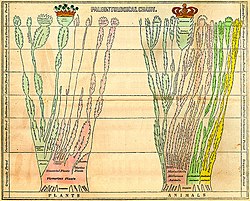


_(cropped)_(cropped).jpg)


.jpg)


