Search This Blog

Sunday, May 25, 2025

Thermophotovoltaic energy conversion

From Wikipedia, the free encyclopedia

Thermophotovoltaic (TPV) energy conversion is a direct conversion process from heat to electricity via photons. A basic thermophotovoltaic system consists of a hot object emitting thermal radiation and a photovoltaic cell similar to a solar cell but tuned to the spectrum being emitted from the hot object.

As TPV systems generally work at lower temperatures than solar cells, their efficiencies tend to be low. Offsetting this through the use of multi-junction cells based on non-silicon materials is common, but generally very expensive. This currently limits TPV to niche roles like spacecraft power and waste heat collection from larger systems like steam turbines.

General concept

PV

Typical photovoltaics work by creating a p–n junction near the front surface of a thin semiconductor material. When photons above the bandgap energy of the material hit atoms within the bulk lower layer, below the junction, an electron is photoexcited and becomes free of its atom. The junction creates an electric field that accelerates the electron forward within the cell until it passes the junction and is free to move to the thin electrodes patterned on the surface. Connecting a wire from the front to the rear allows the electrons to flow back into the bulk and complete the circuit.

Photons with less energy than the bandgap do not eject electrons. Photons with energy above the bandgap will eject higher-energy electrons which tend to thermalize within the material and lose their extra energy as heat. If the cell's bandgap is raised, the electrons that are emitted will have higher energy when they reach the junction and thus result in a higher voltage, but this will reduce the number of electrons emitted as more photons will be below the bandgap energy and thus generate a lower current. As electrical power is the product of voltage and current, there is a sweet spot where the total output is maximized.

Terrestrial solar radiation is typically characterized by a standard known as Air Mass 1.5, or AM1.5. This is very close to 1,000 W of energy per square meter at an apparent temperature of 5780 K. At this temperature, about half of all the energy reaching the surface is in the infrared. Based on this temperature, energy production is maximized when the bandgap is about 1.4 eV, in the near infrared. This just happens to be very close to the bandgap in doped silicon, at 1.1 eV, which makes solar PV inexpensive to produce.

This means that all of the energy in the infrared and lower, about half of AM1.5, goes to waste. There has been continuing research into cells that are made of several different layers, each with a different bandgap, and thus tuned to a different part of the solar spectrum. As of 2022, cells with overall efficiencies in the range of 40% are commercially available, although they are extremely expensive and have not seen widespread use outside of specific roles like powering spacecraft, where cost is not a significant consideration.

TPV

Higher temperature spectrums not only have more energy in total, but also have that energy in a more concentrated peak. Low-temperature sources, the lower line being close to that of a welding torch, spread out their energy much more widely. Efficiently collecting this energy demands multi-layer cells.

The same process of photoemission can be used to produce electricity from any spectrum, although the number of semiconductor materials that will have just the right bandgap for an arbitrary hot object is limited. Instead, semiconductors that have tuneable bandgaps are needed. It is also difficult to produce solar-like thermal output; an oxyacetylene torch is about 3400 K (~3126 °C), and more common commercial heat sources like coal and natural gas burn at much lower temperatures around 900 °C to about 1300 °C. This further limits the suitable materials. In the case of TPV most research has focused on gallium antimonide (GaSb), although germanium (Ge) is also suitable.

Another problem with lower-temperature sources is that their energy is more spread out, according to Wien's displacement law. While one can make a practical solar cell with a single bandgap tuned to the peak of the spectrum and just ignore the losses in the IR region, doing the same with a lower temperature source will lose much more of the potential energy and result in very low overall efficiency. This means TPV systems almost always use multi-junction cells in order to reach reasonable double-digit efficiencies. Current research in the area aims at increasing system efficiencies while keeping the system cost low, but even then their roles tend to be niches similar to those of multi-junction solar cells.

Actual designs

TPV systems generally consist of a heat source, an emitter, and a waste heat rejection system. The TPV cells are placed between the emitter, often a block of metal or similar, and the cooling system, often a passive radiator. PV systems in general operate at lower efficiency as the temperature increases, and in TPV systems, keeping the photovoltaic cool is a significant challenge.

This contrasts with a somewhat related concept, the "thermoradiative" or "negative emission" cells, in which the photodiode is on the hot side of the heat engine. Systems have also been proposed that use a thermoradiative device as an emitter in a TPV system, theoretically allowing power to be extracted from both a hot photodiode and a cold photodiode.

Applications

RTGs

Conventional radioisotope thermoelectric generators (RTGs) used to power spacecraft use a radioactive material whose radiation is used to heat a block of material and then converted to electricity using a thermocouple. Thermocouples are very inefficient and their replacement with TPV could offer significant improvements in efficiency and thus require a smaller and lighter RTG for any given mission. Experimental systems developed by Emcore (a multi-junction solar cell provider), Creare, Oak Ridge and NASA's Glenn Research Center demonstrated 15 to 20% efficiency. A similar concept was developed by the University of Houston which reached 30% efficiency, a 3 to 4-fold improvement over existing systems.

Thermoelectric storage

Another area of active research is using TPV as the basis of a thermal storage system. In this concept, electricity being generated in off-peak times is used to heat a large block of material, typically carbon or a phase-change material. The material is surrounded by TPV cells which are in turn backed by a reflector and insulation. During storage, the TPV cells are turned off and the photons pass through them and reflect back into the high-temperature source. When power is needed, the TPV is connected to a load.

Waste heat collection

TPV cells have been proposed as auxiliary power conversion devices for capture of otherwise lost heat in other power generation systems, such as steam turbine systems or solar cells.

History

Henry Kolm constructed an elementary TPV system at MIT in 1956. However, Pierre Aigrain is widely cited as the inventor based on lectures he gave at MIT between 1960–1961 which, unlike Kolm's system, led to research and development.

In the 1980s, efficiency reached close to 30%.

In 1997 a prototype TPV hybrid car was built, the "Viking 29" (TPV) powered automobile, designed and built by the Vehicle Research Institute (VRI) at Western Washington University.

In 2022, MIT/NREL announced a device with 41% efficiency. The absorber employed multiple III-V semiconductor layers tuned to absorb variously, ultraviolet, visible, and infrared photons. A gold reflector recycled unabsorbed photons. The device operated at 2400 °C, at which temperature the tungsten emitter reaches maximum brightness.

In May 2024, researchers announced a device that achieved 44% efficiency when using silicon-carbide (SiC) as the heat storage material (emitter). At 1,435 °C (2,615 °F) the device radiates thermal photons at various energy levels. The semiconductor captures 20 to 30% of the photons. Additional layers include air and a gold reflector layer.

Details

Efficiency

The upper limit for efficiency in TPVs (and all systems that convert heat energy to work) is the Carnot efficiency, that of an ideal heat engine. This efficiency is given by:
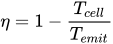
where Tcell is the temperature of the PV converter. Practical systems can achieve Tcell= ~300 K and Temit= ~1800 K, giving a maximum possible efficiency of ~83%. This assumes the PV converts the radiation into electrical energy without losses, such as thermalization or Joule heating, though in reality the photovoltaic inefficiency is quite significant. In real devices, as of 2021, the maximum demonstrated efficiency in the laboratory was 35% with an emitter temperature of 1,773 K. This is the efficiency in terms of heat input being converted to electrical power. In complete TPV systems, a necessarily lower total system efficiency may be cited including the source of heat, so for example, fuel-based TPV systems may report efficiencies in terms of fuel-energy to electrical energy, in which case 5% is considered a "world record" level of efficiency. Real-world efficiencies are reduced by such effects as heat transfer losses, electrical conversion efficiency (TPV voltage outputs are often quite low), and losses due to active cooling of the PV cell.

Emitters

Deviations from perfect absorption and perfect black body behavior lead to light losses. For selective emitters, any light emitted at wavelengths not matched to the bandgap energy of the photovoltaic may not be efficiently converted, reducing efficiency. In particular, emissions associated with phonon resonances are difficult to avoid for wavelengths in the deep infrared, which cannot be practically converted. An ideal emitter would emit no light at wavelengths other than at the bandgap energy, and much TPV research is devoted to developing emitters that better approximate this narrow emission spectrum.

Filters

For black body emitters or imperfect selective emitters, filters reflect non-ideal wavelengths back to the emitter. These filters are imperfect. Any light that is absorbed or scattered and not redirected to the emitter or the converter is lost, generally as heat. Conversely, practical filters often reflect a small percentage of light in desired wavelength ranges. Both are inefficiencies. The absorption of suboptimal wavelengths by the photovoltaic device also contributes inefficiency and has the added effect of heating it, which also decreases efficiency.

Converters

Even for systems where only light of optimal wavelengths is passed to the photovoltaic converter, inefficiencies associated with non-radiative recombination and Ohmic losses exist. There are also losses from Fresnel reflections at the PV surface, optimal-wavelength light that passes through the cell unabsorbed, and the energy difference between higher-energy photons and the bandgap energy (though this tends to be less significant than with solar PVs). Non-radiative recombination losses tend to become less significant as the light intensity increases, while they increase with increasing temperature, so real systems must consider the intensity produced by a given design and operating temperature.

Geometry

In an ideal system, the emitter is surrounded by converters so no light is lost. Realistically, geometries must accommodate the input energy (fuel injection or input light) used to heat the emitter. Additionally, costs have prohibited surrounding the filter with converters. When the emitter reemits light, anything that does not travel to the converters is lost. Mirrors can be used to redirect some of this light back to the emitter; however, the mirrors may have their own losses.

Black body radiation

For black body emitters where photon recirculation is achieved via filters, Planck's law states that a black body emits light with a spectrum given by:
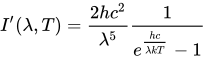
where I′ is the light flux of a specific wavelength, λ, given in units of 1 m–3⋅s–1. h is the Planck constant, k is the Boltzmann constant, c is the speed of light, and Temit is the emitter temperature. Thus, the light flux with wavelengths in a specific range can be found by integrating over the range. The peak wavelength is determined by the temperature, Temit based on Wien's displacement law:

where b is Wien's displacement constant. For most materials, the maximum temperature an emitter can stably operate at is about 1800 °C. This corresponds to an intensity that peaks at λ ≅ 1600 nm or an energy of ~0.75 eV. For more reasonable operating temperatures of 1200 °C, this drops to ~0.5 eV. These energies dictate the range of bandgaps that are needed for practical TPV converters (though the peak spectral power is slightly higher). Traditional PV materials such as Si (1.1 eV) and GaAs (1.4 eV) are substantially less practical for TPV systems, as the intensity of the black body spectrum is low at these energies for emitters at realistic temperatures.

Active components and materials selection

Emitters

Efficiency, temperature resistance and cost are the three major factors for choosing a TPV emitter. Efficiency is determined by energy absorbed relative to incoming radiation. High temperature operation is crucial because efficiency increases with operating temperature. As emitter temperature increases, black-body radiation shifts to shorter wavelengths, allowing for more efficient absorption by photovoltaic cells.

Polycrystalline silicon carbide

Polycrystalline silicon carbide (SiC) is the most commonly used emitter for burner TPVs. SiC is thermally stable to ~1700 °C. However, SiC radiates much of its energy in the long wavelength regime, far lower in energy than even the narrowest bandgap photovoltaic. Such radiation is not converted into electrical energy. However, non-absorbing selective filters in front of the PV, or mirrors deposited on the back side of the PV can be used to reflect the long wavelengths back to the emitter, thereby recycling the unconverted energy. In addition, polycrystalline SiC is inexpensive.

Tungsten

Tungsten is the most common refractory metal that can be used as a selective emitter. It has higher emissivity in the visible and near-IR range of 0.45 to 0.47 and a low emissivity of 0.1 to 0.2 in the IR region. The emitter is usually in the shape of a cylinder with a sealed bottom, which can be considered a cavity. The emitter is attached to the back of a thermal absorber such as SiC and maintains the same temperature. Emission occurs in the visible and near IR range, which can be readily converted by the PV to electrical energy. However, compared to other metals, tungsten oxidizes more easily.

Rare-earth oxides

Rare-earth oxides such as ytterbium oxide (Yb2O3) and erbium oxide (Er2O3) are the most commonly used selective emitters. These oxides emit a narrow band of wavelengths in the near-infrared region, allowing the emission spectra to be tailored to better fit the absorbance characteristics of a particular PV material. The peak of the emission spectrum occurs at 1.29 eV for Yb2O3 and 0.827 eV for Er2O3. As a result, Yb2O3 can be used a selective emitter for silicon cells and Er2O3, for GaSb or InGaAs. However, the slight mismatch between the emission peaks and band gap of the absorber costs significant efficiency. Selective emission only becomes significant at 1100 °C and increases with temperature. Below 1700 °C, selective emission of rare-earth oxides is fairly low, further decreasing efficiency. Currently, 13% efficiency has been achieved with Yb2O3 and silicon PV cells. In general selective emitters have had limited success. More often filters are used with black body emitters to pass wavelengths matched to the bandgap of the PV and reflect mismatched wavelengths back to the emitter.

Photonic crystals

Photonic crystals allow precise control of electromagnetic wave properties. These materials give rise to the photonic bandgap (PBG). In the spectral range of the PBG, electromagnetic waves cannot propagate. Engineering these materials allows some ability to tailor their emission and absorption properties, allowing for more effective emitter design. Selective emitters with peaks at higher energy than the black body peak (for practical TPV temperatures) allow for wider bandgap converters. These converters are traditionally cheaper to manufacture and less temperature sensitive. Researchers at Sandia Labs predicted a high-efficiency (34% of light emitted converted to electricity) based on TPV emitter demonstrated using tungsten photonic crystals. However, manufacturing of these devices is difficult and not commercially feasible.

Photovoltaic cells

Silicon

Early TPV work focused on the use of silicon. Silicon's commercial availability, low cost, scalability and ease of manufacture makes this material an appealing candidate. However, the relatively wide bandgap of Si (1.1eV) is not ideal for use with a black body emitter at lower operating temperatures. Calculations indicate that Si PVs are only feasible at temperatures much higher than 2000 K. No emitter has been demonstrated that can operate at these temperatures. These engineering difficulties led to the pursuit of lower-bandgap semiconductor PVs.

Using selective radiators with Si PVs is still a possibility. Selective radiators would eliminate high and low energy photons, reducing heat generated. Ideally, selective radiators would emit no radiation beyond the band edge of the PV converter, increasing conversion efficiency significantly. No efficient TPVs have been realized using Si PVs.

Germanium

Early investigations into low bandgap semiconductors focused on germanium (Ge). Ge has a bandgap of 0.66 eV, allowing for conversion of a much higher fraction of incoming radiation. However, poor performance was observed due to the high effective electron mass of Ge. Compared to III-V semiconductors, Ge's high electron effective mass leads to a high density of states in the conduction band and therefore a high intrinsic carrier concentration. As a result, Ge diodes have fast decaying "dark" current and therefore, a low open-circuit voltage. In addition, surface passivation of germanium has proven difficult.

Gallium antimonide

The gallium antimonide (GaSb) PV cell, invented in 1989, is the basis of most PV cells in modern TPV systems. GaSb is a III-V semiconductor with the zinc blende crystal structure. The GaSb cell is a key development owing to its narrow bandgap of 0.72 eV. This allows GaSb to respond to light at longer wavelengths than silicon solar cell, enabling higher power densities in conjunction with manmade emission sources. A solar cell with 35% efficiency was demonstrated using a bilayer PV with GaAs and GaSb, setting the solar cell efficiency record.

Manufacturing a GaSb PV cell is quite simple. Czochralski tellurium-doped n-type GaSb wafers are commercially available. Vapor-based zinc diffusion is carried out at elevated temperatures (~450 °C) to allow for p-type doping. Front and back electrical contacts are patterned using traditional photolithography techniques and an anti-reflective coating is deposited. Efficiencies are estimated at ~20% using a 1000 °C black body spectrum. The radiative limit for efficiency of the GaSb cell in this setup is 52%.

Indium gallium arsenide antimonide

Indium gallium arsenide antimonide (InGaAsSb) is a compound III-V semiconductor. (InxGa1−xAsySb1−y) The addition of GaAs allows for a narrower bandgap (0.5 to 0.6 eV), and therefore better absorption of long wavelengths. Specifically, the bandgap was engineered to 0.55 eV. With this bandgap, the compound achieved a photon-weighted internal quantum efficiency of 79% with a fill factor of 65% for a black body at 1100 °C. This was for a device grown on a GaSb substrate by organometallic vapour phase epitaxy (OMVPE). Devices have been grown by molecular beam epitaxy (MBE) and liquid phase epitaxy (LPE). The internal quantum efficiencies (IQE) of these devices approach 90%, while devices grown by the other two techniques exceed 95%. The largest problem with InGaAsSb cells is phase separation. Compositional inconsistencies throughout the device degrade its performance. When phase separation can be avoided, the IQE and fill factor of InGaAsSb approach theoretical limits in wavelength ranges near the bandgap energy. However, the Voc/Eg ratio is far from the ideal. Current methods to manufacture InGaAsSb PVs are expensive and not commercially viable.

Indium gallium arsenide

Indium gallium arsenide (InGaAs) is a compound III-V semiconductor. It can be applied in two ways for use in TPVs. When lattice-matched to an InP substrate, InGaAs has a bandgap of 0.74 eV, no better than GaSb. Devices of this configuration have been produced with a fill factor of 69% and an efficiency of 15%. However, to absorb higher wavelength photons, the bandgap may be engineered by changing the ratio of In to Ga. The range of bandgaps for this system is from about 0.4 to 1.4 eV. However, these different structures cause strain with the InP substrate. This can be controlled with graded layers of InGaAs with different compositions. This was done to develop of device with a quantum efficiency of 68% and a fill factor of 68%, grown by MBE. This device had a bandgap of 0.55 eV, achieved in the compound In0.68Ga0.33As. It is a well-developed material. InGaAs can be made to lattice match perfectly with Ge resulting in low defect densities. Ge as a substrate is a significant advantage over more expensive or harder-to-produce substrates.

Indium phosphide arsenide antimonide

The InPAsSb quaternary alloy has been grown by both OMVPE and LPE. When lattice-matched to InAs, it has a bandgap in the range 0.3–0.55 eV. The benefits of such a low band gap have not been studied in depth. Therefore, cells incorporating InPAsSb have not been optimized and do not yet have competitive performance. The longest spectral response from an InPAsSb cell studied was 4.3 μm with a maximum response at 3 μm. For this and other low-bandgap materials, high IQE for long wavelengths is hard to achieve due to an increase in Auger recombination.

Lead tin selenide/Lead strontium selenide quantum wells

PbSnSe/PbSrSe quantum well materials, which can be grown by MBE on silicon substrates, have been proposed for low cost TPV device fabrication. These IV-VI semiconductor materials can have bandgaps between 0.3 and 0.6 eV. Their symmetric band structure and lack of valence band degeneracy result in low Auger recombination rates, typically more than an order of magnitude smaller than those of comparable bandgap III-V semiconductor materials.

Applications

TPVs promise efficient and economically viable power systems for both military and commercial applications. Compared to traditional nonrenewable energy sources, burner TPVs have little NOx emissions and are virtually silent. Solar TPVs are a source of emission-free renewable energy. TPVs can be more efficient than PV systems owing to recycling of unabsorbed photons. However, losses at each energy conversion step lower efficiency. When TPVs are used with a burner source, they provide on-demand energy. As a result, energy storage may not be needed. In addition, owing to the PV's proximity to the radiative source, TPVs can generate current densities 300 times that of conventional PVs.

Energy storage

Man-portable power

Battlefield dynamics require portable power. Conventional diesel generators are too heavy for use in the field. Scalability allows TPVs to be smaller and lighter than conventional generators. Also, TPVs have few emissions and are silent. Multifuel operation is another potential benefit.

Investigations in the 1970s failed due to PV limitations. However, the GaSb photocell led to a renewed effort in the 1990s with improved results. In early 2001, JX Crystals delivered a TPV based battery charger to the US Army that produced 230 W fueled by propane. This prototype utilized an SiC emitter operating at 1250 °C and GaSb photocells and was approximately 0.5 m tall. The power source had an efficiency of 2.5%, calculated as the ratio of the power generated to the thermal energy of the fuel burned. This is too low for practical battlefield use. No portable TPV power sources have reached troop testing.

Grid storage

Converting spare electricity into heat for high-volume, long-term storage is under research at various companies, who claim that costs could be much lower than lithium-ion batteries. Graphite may be used as a storage medium, with molten tin as heat transfer, at temperatures around 2000°. See LaPotin, A., Schulte, K.L., Steiner, M.A. et al. Thermophotovoltaic efficiency of 40%. Nature 604, 287–291 (2022).

Spacecraft

Space power generation systems must provide consistent and reliable power without large amounts of fuel. As a result, solar and radioisotope fuels (extremely high power density and long lifetime) are ideal. TPVs have been proposed for each. In the case of solar energy, orbital spacecraft may be better locations for the large and potentially cumbersome concentrators required for practical TPVs. However, weight considerations and inefficiencies associated with the more complicated design of TPVs, protected conventional PVs continue to dominate.

The output of isotopes is thermal energy. In the past thermoelectricity (direct thermal to electrical conversion with no moving parts) has been used because TPV efficiency is less than the ~10% of thermoelectric converters. Stirling engines have been deemed too unreliable, despite conversion efficiencies >20%. However, with the recent advances in small-bandgap PVs, TPVs are becoming more promising. A TPV radioisotope converter with 20% efficiency was demonstrated that uses a tungsten emitter heated to 1350 K, with tandem filters and a 0.6 eV bandgap InGaAs PV converter (cooled to room temperature). About 30% of the lost energy was due to the optical cavity and filters. The remainder was due to the efficiency of the PV converter.

Low-temperature operation of the converter is critical to the efficiency of TPV. Heating PV converters increases their dark current, thereby reducing efficiency. The converter is heated by the radiation from the emitter. In terrestrial systems it is reasonable to dissipate this heat without using additional energy with a heat sink. However, space is an isolated system, where heat sinks are impractical. Therefore, it is critical to develop innovative solutions to efficiently remove that heat. Both represent substantial challenges.

Commercial applications

Off-grid generators

TPVs can provide continuous power to off-grid homes. Traditional PVs do not provide power during winter months and nighttime, while TPVs can utilize alternative fuels to augment solar-only production.

The greatest advantage for TPV generators is cogeneration of heat and power. In cold climates, it can function as both a heater/stove and a power generator. JX Crystals developed a prototype TPV heating stove/generator that burns natural gas and uses a SiC source emitter operating at 1250 °C and GaSb photocell to output 25,000 BTU/hr (7.3kW of heat) simultaneously generating 100W (1.4% efficiency). However, costs render it impractical.

Combining a heater and a generator is called combined heat and power (CHP). Many TPV CHP scenarios have been theorized, but a study found that generator using boiling coolant was most cost efficient. The proposed CHP would utilize a SiC IR emitter operating at 1425 °C and GaSb photocells cooled by boiling coolant. The TPV CHP would output 85,000 BTU/hr (25kW of heat) and generate 1.5 kW. The estimated efficiency would be 12.3% (?)(1.5kW/25kW = 0.06 = 6%) requiring investment or 0.08 €/kWh assuming a 20 year lifetime. The estimated cost of other non-TPV CHPs are 0.12 €/kWh for gas engine CHP and 0.16 €/kWh for fuel cell CHP. This furnace was not commercialized because the market was not thought to be large enough.

Recreational vehicles

TPVs have been proposed for use in recreational vehicles. Their ability to use multiple fuel sources makes them interesting as more sustainable fuels emerge. TPVs silent operation allows them to replace noisy conventional generators (i.e. during "quiet hours" in national park campgrounds). However, the emitter temperatures required for practical efficiencies make TPVs on this scale unlikely.

Thermocouple

From Wikipedia, the free encyclopedia
en.wikipedia.org/wiki/Thermocouple
Thermocouple connected to a multimeter displaying room temperature in °C

A thermocouple, also known as a "thermoelectrical thermometer", is an electrical device consisting of two dissimilar electrical conductors forming an electrical junction. A thermocouple produces a temperature-dependent voltage as a result of the Seebeck effect, and this voltage can be interpreted to measure temperature. Thermocouples are widely used as temperature sensors.

Commercial thermocouples are inexpensive, interchangeable, are supplied with standard connectors, and can measure a wide range of temperatures. In contrast to most other methods of temperature measurement, thermocouples are self-powered and require no external form of excitation. The main limitation with thermocouples is accuracy; system errors of less than one degree Celsius (°C) can be difficult to achieve.

Thermocouples are widely used in science and industry. Applications include temperature measurement for kilns, gas turbine exhaust, diesel engines, and other industrial processes. Thermocouples are also used in homes, offices and businesses as the temperature sensors in thermostats, and also as flame sensors in safety devices for gas-powered appliances.

Principle of operation

In 1821, the German physicist Thomas Johann Seebeck discovered that a magnetic needle held near a circuit made up of two dissimilar metals got deflected when one of the dissimilar metal junctions was heated. At the time, Seebeck referred to this consequence as thermo-magnetism. The magnetic field he observed was later shown to be due to thermo-electric current. In practical use, the voltage generated at a single junction of two different types of wire is what is of interest as this can be used to measure temperature at very high and low temperatures. The magnitude of the voltage depends on the types of wire being used. Generally, the voltage is in the microvolt range and care must be taken to obtain a usable measurement. Although very little current flows, power can be generated by a single thermocouple junction. Power generation using multiple thermocouples, as in a thermopile, is common.

Type K thermocouple (chromelalumel) in the standard thermocouple measurement configuration. The measured voltage can be used to calculate temperature , provided that temperature is known.

The standard configuration of a thermocouple is shown in the figure. The dissimilar conductors contact at the measuring (aka hot) junction and at the reference (aka cold) junction. The thermocouple is connected to the electrical system at its reference junction. The figure shows the measuring junction on the left, the reference junction in the middle and represents the rest of the electrical system as a voltage meter on the right.

The temperature Tsense is obtained via a characteristic function E(T) for the type of thermocouple which requires inputs: measured voltage V and reference junction temperature Tref. The solution to the equation E(Tsense) = V + E(Tref) yields Tsense. Sometimes these details are hidden inside a device that packages the reference junction block (with Tref thermometer), voltmeter, and equation solver.

Seebeck effect

The Seebeck effect refers to the development of an electromotive force across two points of an electrically conducting material when there is a temperature difference between those two points. Under open-circuit conditions where there is no internal current flow, the gradient of voltage () is directly proportional to the gradient in temperature ():

where is a temperature-dependent material property known as the Seebeck coefficient.

The standard measurement configuration shown in the figure shows four temperature regions and thus four voltage contributions:

  1. Change from to , in the lower copper wire.
  2. Change from to , in the alumel wire.
  3. Change from to , in the chromel wire.
  4. Change from to , in the upper copper wire.

The first and fourth contributions cancel out exactly, because these regions involve the same temperature change and an identical material. As a result, does not influence the measured voltage. The second and third contributions do not cancel, as they involve different materials.

The measured voltage turns out to be

where and are the Seebeck coefficients of the conductors attached to the positive and negative terminals of the voltmeter, respectively (chromel and alumel in the figure).

Characteristic function

The thermocouple's behaviour is captured by a characteristic function , which needs only to be consulted at two arguments:

In terms of the Seebeck coefficients, the characteristic function is defined by

The constant of integration in this indefinite integral has no significance, but is conventionally chosen such that .

Thermocouple manufacturers and metrology standards organizations such as NIST provide tables of the function that have been measured and interpolated over a range of temperatures, for particular thermocouple types (see External links section for access to these tables).

Reference junction

Reference junction block inside a Fluke CNX t3000 temperature meter. Two white wires connect to a thermistor (embedded in white thermal compound) to measure the reference junctions' temperature.

To obtain the desired measurement of , it is not sufficient to just measure . The temperature at the reference junctions must also be known. Two strategies are often used here:

  • "Ice bath": The reference junction block is maintained at a known temperature as it is immersed in a semi-frozen bath of distilled water at atmospheric pressure. The precise temperature of the melting point phase transition acts as a natural thermostat, fixing to 0 °C.
  • Reference junction sensor (known as "cold junction compensation"): The reference junction block is allowed to vary in temperature, but the temperature is measured at this block using a separate temperature sensor. This secondary measurement is used to compensate for temperature variation at the junction block. The thermocouple junction is often exposed to extreme environments, while the reference junction is often mounted near the instrument's location. Semiconductor thermometer devices are often used in modern thermocouple instruments.

In both cases the value is calculated, then the function is searched for a matching value. The argument where this match occurs is the value of :

.

Practical concerns

Thermocouples ideally should be very simple measurement devices, with each type being characterized by a precise curve, independent of any other details. In reality, thermocouples are affected by issues such as alloy manufacturing uncertainties, aging effects, and circuit design mistakes/misunderstandings.

Circuit construction

A common error in thermocouple construction is related to cold junction compensation. If an error is made on the estimation of , an error will appear in the temperature measurement. For the simplest measurements, thermocouple wires are connected to copper far away from the hot or cold point whose temperature is measured; this reference junction is then assumed to be at room temperature, but that temperature can vary. Because of the nonlinearity in the thermocouple voltage curve, the errors in and are generally unequal values. Some thermocouples, such as Type B, have a relatively flat voltage curve near room temperature, meaning that a large uncertainty in a room-temperature translates to only a small error in .

Junctions should be made in a reliable manner, but there are many possible approaches to accomplish this. For low temperatures, junctions can be brazed or soldered; however, it may be difficult to find a suitable flux and this may not be suitable at the sensing junction due to the solder's low melting point. Reference and extension junctions are therefore usually made with screw terminal blocks. For high temperatures, the most common approach is the spot weld or crimp using a durable material.

One common myth regarding thermocouples is that junctions must be made cleanly without involving a third metal, to avoid unwanted added EMFs. This may result from another common misunderstanding that the voltage is generated at the junction. In fact, the junctions should in principle have uniform internal temperature; therefore, no voltage is generated at the junction. The voltage is generated in the thermal gradient, along the wire.

A thermocouple produces small signals, often microvolts in magnitude. Precise measurements of this signal require an amplifier with low input offset voltage and with care taken to avoid thermal EMFs from self-heating within the voltmeter itself. If the thermocouple wire has a high resistance for some reason (poor contact at junctions, or very thin wires used for fast thermal response), the measuring instrument should have high input impedance to prevent an offset in the measured voltage. A useful feature in thermocouple instrumentation will simultaneously measure resistance and detect faulty connections in the wiring or at thermocouple junctions.

Metallurgical grades

While a thermocouple wire type is often described by its chemical composition, the actual aim is to produce a pair of wires that follow a standardized curve.

Impurities affect each batch of metal differently, producing variable Seebeck coefficients. To match the standard behaviour, thermocouple wire manufacturers will deliberately mix in additional impurities to "dope" the alloy, compensating for uncontrolled variations in source material. As a result, there are standard and specialized grades of thermocouple wire, depending on the level of precision demanded in the thermocouple behaviour. Precision grades may only be available in matched pairs, where one wire is modified to compensate for deficiencies in the other wire.

A special case of thermocouple wire is known as "extension grade", designed to carry the thermoelectric circuit over a longer distance. Extension wires follow the stated curve but for various reasons they are not designed to be used in extreme environments and so they cannot be used at the sensing junction in some applications. For example, an extension wire may be in a different form, such as highly flexible with stranded construction and plastic insulation, or be part of a multi-wire cable for carrying many thermocouple circuits. With expensive noble metal thermocouples, the extension wires may even be made of a completely different, cheaper material that mimics the standard type over a reduced temperature range.

Aging

Thermocouples are often used at high temperatures and in reactive furnace atmospheres. In this case, the practical lifetime is limited by thermocouple aging. The thermoelectric coefficients of the wires in a thermocouple that is used to measure very high temperatures may change with time, and the measurement voltage accordingly drops. The simple relationship between the temperature difference of the junctions and the measurement voltage is only correct if each wire is homogeneous (uniform in composition). As thermocouples age in a process, their conductors can lose homogeneity due to chemical and metallurgical changes caused by extreme or prolonged exposure to high temperatures. If the aged section of the thermocouple circuit is exposed to a temperature gradient, the measured voltage will differ, resulting in error.

Aged thermocouples are only partly modified; for example, being unaffected in the parts outside the furnace. For this reason, aged thermocouples cannot be taken out of their installed location and recalibrated in a bath or test furnace to determine error. This also explains why error can sometimes be observed when an aged thermocouple is pulled partly out of a furnace—as the sensor is pulled back, aged sections may see exposure to increased temperature gradients from hot to cold as the aged section now passes through the cooler refractory area, contributing significant error to the measurement. Likewise, an aged thermocouple that is pushed deeper into the furnace might sometimes provide a more accurate reading if being pushed further into the furnace causes the temperature gradient to occur only in a fresh section.

Types

Certain combinations of alloys have become popular as industry standards. Selection of the combination is driven by cost, availability, convenience, melting point, chemical properties, stability, and output. Different types are best suited for different applications. They are usually selected on the basis of the temperature range and sensitivity needed. Thermocouples with low sensitivities (B, R, and S types) have correspondingly lower resolutions. Other selection criteria include the chemical inertness of the thermocouple material and whether it is magnetic or not. Standard thermocouple types are listed below with the positive electrode (assuming ) first, followed by the negative electrode.

Nickel-alloy thermocouples

Characteristic functions for thermocouples that reach intermediate temperatures, as covered by nickel-alloy thermocouple types E, J, K, M, N, T. Also shown are the noble-metal alloy type P and the pure noble-metal combinations gold–platinum and platinum–palladium.

Type E

Type E (chromelconstantan) has a high output (68 μV/°C), which makes it well suited to cryogenic use. Additionally, it is non-magnetic. Wide range is −270 °C to +740 °C and narrow range is −110 °C to +140 °C.

Type J

Type J (ironconstantan) has a more restricted range (−40 °C to +1200 °C) than type K but higher sensitivity of about 50 μV/°C. The Curie point of the iron (770 °C) causes a smooth change in the characteristic, which determines the upper-temperature limit. Note, the European/German Type L is a variant of the type J, with a different specification for the EMF output (reference DIN 43712:1985-01).

The positive wire is made of hard iron, while the negative wire consists of softer copper-nickel. Due to its iron content, the J-type is slightly heavier and the positive wire is magnetic. It is highly vulnerable to corrosion in reducing atmospheres, which can lead to significant degradation of the thermocouple's performance.

Type K

Type K (chromelalumel) is the most common general-purpose thermocouple with a sensitivity of approximately 41 μV/°C. It is inexpensive, and a wide variety of probes are available in its −200 °C to +1350 °C (−330 °F to +2460 °F) range. Type K was specified at a time when metallurgy was less advanced than it is today, and consequently characteristics may vary considerably between samples. One of the constituent metals, nickel, is magnetic; a characteristic of thermocouples made with magnetic material is that they undergo a deviation in output when the material reaches its Curie point, which occurs for type K thermocouples at around 150 °C. 

They operate very well in oxidizing atmospheres. If, however, a mostly reducing atmosphere (such as hydrogen with a small amount of oxygen) comes into contact with the wires, the chromium in the chromel alloy oxidizes. This reduces the emf output, and the thermocouple reads low. This phenomenon is known as green rot, due to the color of the affected alloy. Although not always distinctively green, the chromel wire will develop a mottled silvery skin and become magnetic. An easy way to check for this problem is to see whether the two wires are magnetic (normally, chromel is non-magnetic).

Hydrogen in the atmosphere is the usual cause of green rot. At high temperatures, it can diffuse through solid metals or an intact metal thermowell. Even a sheath of magnesium oxide insulating the thermocouple will not keep the hydrogen out.

Green rot does not occur in atmospheres sufficiently rich in oxygen, or oxygen-free. A sealed thermowell can be filled with inert gas, or an oxygen scavenger (e.g. a sacrificial titanium wire) can be added. Alternatively, additional oxygen can be introduced into the thermowell. Another option is using a different thermocouple type for the low-oxygen atmospheres where green rot can occur; a type N thermocouple is a suitable alternative.

Type M

Type M (82%Ni/18%Mo–99.2%Ni/0.8%Co, by weight) are used in vacuum furnaces for the same reasons as with type C (described below). Upper temperature is limited to 1400 °C. It is less commonly used than other types.

Type N

Type N (NicrosilNisil) thermocouples are suitable for use between −270 °C and +1300 °C, owing to its stability and oxidation resistance. Sensitivity is about 39 μV/°C at 900 °C, slightly lower compared to type K.

Designed at the Defence Science and Technology Organisation (DSTO) of Australia, by Noel A. Burley, type-N thermocouples overcome the three principal characteristic types and causes of thermoelectric instability in the standard base-metal thermoelement materials:

  1. A gradual and generally cumulative drift in thermal EMF on long exposure at elevated temperatures. This is observed in all base-metal thermoelement materials and is mainly due to compositional changes caused by oxidation, carburization, or neutron irradiation that can produce transmutation in nuclear reactor environments. In the case of type-K thermocouples, manganese and aluminium atoms from the KN (negative) wire migrate to the KP (positive) wire, resulting in a down-scale drift due to chemical contamination. This effect is cumulative and irreversible.
  2. A short-term cyclic change in thermal EMF on heating in the temperature range about 250–650 °C, which occurs in thermocouples of types K, J, T, and E. This kind of EMF instability is associated with structural changes such as magnetic short-range order in the metallurgical composition.
  3. A time-independent perturbation in thermal EMF in specific temperature ranges. This is due to composition-dependent magnetic transformations that perturb the thermal EMFs in type-K thermocouples in the range about 25–225 °C, and in type J above 730 °C.

The Nicrosil and Nisil thermocouple alloys show greatly enhanced thermoelectric stability relative to the other standard base-metal thermocouple alloys because their compositions substantially reduce the thermoelectric instabilities described above. This is achieved primarily by increasing component solute concentrations (chromium and silicon) in a base of nickel above those required to cause a transition from internal to external modes of oxidation, and by selecting solutes (silicon and magnesium) that preferentially oxidize to form a diffusion-barrier, and hence oxidation-inhibiting films.

Type N thermocouples are suitable alternative to type K for low-oxygen conditions where type K is prone to green rot. They are suitable for use in vacuum, inert atmospheres, oxidizing atmospheres, or dry reducing atmospheres. They do not tolerate the presence of sulfur.

Type T

Type T (copperconstantan) thermocouples are suited for measurements in the −200 to 350 °C range. Often used as a differential measurement, since only copper wire touches the probes. Since both conductors are non-magnetic, there is no Curie point and thus no abrupt change in characteristics. Type-T thermocouples have a sensitivity of about 43 μV/°C. Note that copper has a much higher thermal conductivity than the alloys generally used in thermocouple constructions, and so it is necessary to exercise extra care with thermally anchoring type-T thermocouples. A similar composition is found in the obsolete Type U in the German specification DIN 43712:1985-01.

Platinum/rhodium-alloy thermocouples

Characteristic functions for high-temperature thermocouple types, showing Pt/Rh, W/Re, Pt/Mo, and Ir/Rh-alloy thermocouples. Also shown is the Pt–Pd pure-metal thermocouple.

Types B, R, and S thermocouples use platinum or a platinum/rhodium alloy for each conductor. These are among the most stable thermocouples, but have lower sensitivity than other types, approximately 10 μV/°C. Type B, R, and S thermocouples are usually used only for high-temperature measurements due to their high cost and low sensitivity. For type R and S thermocouples, HTX platinum wire can be used in place of the pure platinum leg to strengthen the thermocouple and prevent failures from grain growth that can occur in high temperature and harsh conditions.

Type B

Type B (70%Pt/30%Rh–94%Pt/6%Rh, by weight) thermocouples are suited for use at up to 1800 °C. Type-B thermocouples produce the same output at 0 °C and 42 °C, limiting their use below about 50 °C. The emf function has a minimum around 21 °C (for 21.020262 °C emf=-2.584972 μV), meaning that cold-junction compensation is easily performed, since the compensation voltage is essentially a constant for a reference at typical room temperatures.

Type R

Type R (87%Pt/13%Rh–Pt, by weight) thermocouples are used 0 to 1600 °C. Type R Thermocouples are quite stable and capable of long operating life when used in clean, favorable conditions. When used above 1100 °C ( 2000 °F), these thermocouples must be protected from exposure to metallic and non-metallic vapors. Type R is not suitable for direct insertion into metallic protecting tubes. Long term high temperature exposure causes grain growth which can lead to mechanical failure and a negative calibration drift caused by Rhodium diffusion to pure platinum leg as well as from Rhodium volatilization. This type has the same uses as type S, but is not interchangeable with it.

Type S

Type S (90%Pt/10%Rh–Pt, by weight) thermocouples, similar to type R, are used up to 1600 °C. Before the introduction of the International Temperature Scale of 1990 (ITS-90), precision type-S thermocouples were used as the practical standard thermometers for the range of 630 °C to 1064 °C, based on an interpolation between the freezing points of antimony, silver, and gold. Starting with ITS-90, platinum resistance thermometers have taken over this range as standard thermometers.

Tungsten/rhenium-alloy thermocouples

These thermocouples are well-suited for measuring extremely high temperatures. Typical uses are hydrogen and inert atmospheres, as well as vacuum furnaces. They are not used in oxidizing environments at high temperatures because of embrittlement. A typical range is 0 to 2315 °C, which can be extended to 2760 °C in inert atmosphere and to 3000 °C for brief measurements.

Pure tungsten at high temperatures undergoes recrystallization and becomes brittle. Therefore, types C and D are preferred over type G in some applications.

In presence of water vapor at high temperature, tungsten reacts to form tungsten(VI) oxide, which volatilizes away, and hydrogen. Hydrogen then reacts with tungsten oxide, after which water is formed again. Such a "water cycle" can lead to erosion of the thermocouple and eventual failure. In high temperature vacuum applications, it is therefore desirable to avoid the presence of traces of water.

An alternative to tungsten/rhenium is tungsten/molybdenum, but the voltage–temperature response is weaker and has minimum at around 1000 K.

The thermocouple temperature is limited also by other materials used. For example beryllium oxide, a popular material for high temperature applications, tends to gain conductivity with temperature; a particular configuration of sensor had the insulation resistance dropping from a megaohm at 1000 K to 200 ohms at 2200 K. At high temperatures, the materials undergo chemical reaction. At 2700 K beryllium oxide slightly reacts with tungsten, tungsten-rhenium alloy, and tantalum; at 2600 K molybdenum reacts with BeO, tungsten does not react. BeO begins melting at about 2820 K, magnesium oxide at about 3020 K.

Type C

(95%W/5%Re–74%W/26%Re, by weight) maximum temperature will be measured by type-c thermocouple is 2329 °C.

Type D

(97%W/3%Re–75%W/25%Re, by weight)

Type G

(W–74%W/26%Re, by weight)

Others

Chromel–gold/iron-alloy thermocouples

Thermocouple characteristics at low temperatures. The AuFe-based thermocouple shows a steady sensitivity down to low temperatures, whereas conventional types soon flatten out and lose sensitivity at low temperature.

In these thermocouples (chromelgold/iron alloy), the negative wire is gold with a small fraction (0.03–0.15 atom percent) of iron. The impure gold wire gives the thermocouple a high sensitivity at low temperatures (compared to other thermocouples at that temperature), whereas the chromel wire maintains the sensitivity near room temperature. It can be used for cryogenic applications (1.2–300 K and even up to 600 K). Both the sensitivity and the temperature range depend on the iron concentration. The sensitivity is typically around 15 μV/K at low temperatures, and the lowest usable temperature varies between 1.2 and 4.2 K.

Type P (noble-metal alloy) or "Platinel II"

Type P (55%Pd/31%Pt/14%Au–65%Au/35%Pd, by weight) thermocouples give a thermoelectric voltage that mimics the type K over the range 500 °C to 1400 °C, however they are constructed purely of noble metals and so shows enhanced corrosion resistance. This combination is also known as Platinel II.

Platinum/molybdenum-alloy thermocouples

Thermocouples of platinum/molybdenum-alloy (95%Pt/5%Mo–99.9%Pt/0.1%Mo, by weight) are sometimes used in nuclear reactors, since they show a low drift from nuclear transmutation induced by neutron irradiation, compared to the platinum/rhodium-alloy types.

Iridium/rhodium alloy thermocouples

The use of two wires of iridium/rhodium alloys can provide a thermocouple that can be used up to about 2000 °C in inert atmospheres.

Pure noble-metal thermocouples Au–Pt, Pt–Pd

Thermocouples made from two different, high-purity noble metals can show high accuracy even when uncalibrated, as well as low levels of drift. Two combinations in use are gold–platinum and platinum–palladium. Their main limitations are the low melting points of the metals involved (1064 °C for gold and 1555 °C for palladium). These thermocouples tend to be more accurate than type S, and due to their economy and simplicity are even regarded as competitive alternatives to the platinum resistance thermometers that are normally used as standard thermometers.

HTIR-TC (High Temperature Irradiation Resistant) thermocouples

HTIR-TC offers a breakthrough in measuring high-temperature processes. Its characteristics are: durable and reliable at high temperatures, up to at least 1700 °C; resistant to irradiation; moderately priced; available in a variety of configurations - adaptable to each application; easily installed. Originally developed for use in nuclear test reactors, HTIR-TC may enhance the safety of operations in future reactors. This thermocouple was developed by researchers at the Idaho National Laboratory (INL).

Comparison of types

The table below describes properties of several different thermocouple types. Within the tolerance columns, T represents the temperature of the hot junction, in degrees Celsius. For example, a thermocouple with a tolerance of ±0.0025×T would have a tolerance of ±2.5 °C at 1000 °C. Each cell in the Color Code columns depicts the end of a thermocouple cable, showing the jacket color and the color of the individual leads. The background color represents the color of the connector body.

Type Temperature range (°C) Tolerance class (°C) Color code
Continuous Short-term One Two IEC
BS ANSI
Low High Low High
K 0 +1100 −180 +1370 −40 – 375: ±1.5
375 – 1000: ±0.004×T
−40 – 333: ±2.5
333 – 1200: ±0.0075×T
J 0 +750 −180 +800 −40 – 375: ±1.5
375 – 750: ±0.004×T
−40 – 333: ±2.5
333 – 750: ±0.0075×T
N 0 +1100 −270 +1300 −40 – 375: ±1.5
375 – 1000: ±0.004×T
−40 – 333: ±2.5
333 – 1200: ±0.0075×T
R 0 +1600 −50 +1700 0 – 1100: ±1.0
1100 – 1600: ±0.003×(T − 767)
0 – 600: ±1.5
600 – 1600: ±0.0025×T
Not defined
S 0 +1600 −50 +1750 0 – 1100: ±1.0
1100 – 1600: ±0.003×(T − 767)
0 – 600: ±1.5
600 – 1600: ±0.0025×T

Not defined
B +200 +1700 0 +1820 Not available 600 – 1700: ±0.0025×T No standard No standard Not defined
T −185 +300 −250 +400 −40 – 125: ±0.5
125 – 350: ±0.004×T
−40 – 133: ±1.0
133 – 350: ±0.0075×T
E 0 +800 −40 +900 −40 – 375: ±1.5
375 – 800: ±0.004×T
−40 – 333: ±2.5
333 – 900: ±0.0075×T
Chromel/AuFe −272 +300 Reproducibility 0.2% of the voltage.
Each sensor needs individual calibration.


Thermocouple insulation

Typical low cost type K thermocouple (with standard type K connector). While the wires can survive and function at high temperatures, the plastic insulation will start to break down at 300 °C.

Wires insulation

The wires that make up the thermocouple must be insulated from each other everywhere, except at the sensing junction. Any additional electrical contact between the wires, or contact of a wire to other conductive objects, can modify the voltage and give a false reading of temperature.

Plastics are suitable insulators for low temperatures parts of a thermocouple, whereas ceramic insulation can be used up to around 1000 °C. Other concerns (abrasion and chemical resistance) also affect the suitability of materials.

When wire insulation disintegrates, it can result in an unintended electrical contact at a different location from the desired sensing point. If such a damaged thermocouple is used in the closed loop control of a thermostat or other temperature controller, this can lead to a runaway overheating event and possibly severe damage, as the false temperature reading will typically be lower than the sensing junction temperature. Failed insulation will also typically outgas, which can lead to process contamination. For parts of thermocouples used at very high temperatures or in contamination-sensitive applications, the only suitable insulation may be vacuum or inert gas; the mechanical rigidity of the thermocouple wires is used to keep them separated.

Table of insulation materials

Type of Insulation Max. continuous temperature Max. single reading Abrasion resistance Moisture resistance Chemical resistance
Mica–glass tape 649 °C/1200 °F 705 °C/1300 °F Good Fair Good
TFE tape, TFE–glass tape 649 °C/1200 °F 705 °C/1300 °F Good Fair Good
Vitreous-silica braid 871 °C/1600 °F 1093 °C/2000 °F Fair Poor Poor
Double glass braid 482 °C/900 °F 538 °C/1000 °F Good Good Good
Enamel–glass braid 482 °C /900 °F 538 °C/1000 °F Fair Good Good
Double glass wrap 482 °C/900 °F 427 °C/800 °F Fair Good Good
Non-impregnated glass braid 482 °C/900 °F 427 °C/800 °F Poor Poor Fair
Skive TFE tape, TFE–glass braid 482 °C/900 °F 538 °C/1000 °F Good Excellent Excellent
Double cotton braid 88 °C/190 °F 120 °C/248 °F Good Good Poor
"S" glass with binder 704 °C/1300 °F 871 °C/1600 °F Fair Fair Good
Nextel ceramic fiber 1204 °C/2200 °F 1427 °C/2600 °F Fair Fair Fair
Polyvinyl/nylon 105 °C/221 °F 120 °C/248 °F Excellent Excellent Good
Polyvinyl 105 °C/221 °F 105 °C/221 °F Good Excellent Good
Nylon 150 °C/302 °F 130 °C/266 °F Excellent Good Good
PVC 105 °C/221 °F 105 °C/221 °F Good Excellent Good
FEP 204 °C/400 °F 260 °C/500 °F Excellent Excellent Excellent
Wrapped and fused TFE 260 °C/500 °F 316 °C/600 °F Good Excellent Excellent
Kapton 316 °C/600 °F 427 °C/800 °F Excellent Excellent Excellent
Tefzel 150 °C/302 °F 200 °C/392 °F Excellent Excellent Excellent
PFA 260 °C/500 °F 290 °C/550 °F Excellent Excellent Excellent
T300* 300 °C Good Excellent Excellent

Temperature ratings for insulations may vary based on what the overall thermocouple construction cable consists of.

Note: T300 is a new high-temperature material that was recently approved by UL for 300 °C operating temperatures.

Applications

Thermocouples are suitable for measuring over a large temperature range, from −270 up to 3000 °C (for a short time, in inert atmosphere). Applications include temperature measurement for kilns, gas turbine exhaust, diesel engines, other industrial processes and fog machines. They are less suitable for applications where smaller temperature differences need to be measured with high accuracy, for example the range 0–100 °C with 0.1 °C accuracy. For such applications thermistors, silicon bandgap temperature sensors and resistance thermometers are more suitable.

Steel industry

Type B, S, R and K thermocouples are used extensively in the steel and iron industries to monitor temperatures and chemistry throughout the steel making process. Disposable, immersible, type S thermocouples are regularly used in the electric arc furnace process to accurately measure the temperature of steel before tapping. The cooling curve of a small steel sample can be analyzed and used to estimate the carbon content of molten steel.

Gas appliance safety

A thermocouple (the right most tube) inside the burner assembly of a water heater
Thermocouple connection in gas appliances. The end ball (contact) on the left is insulated from the fitting by an insulating washer. The thermocouple line consists of copper wire, insulator and outer metal (usually copper) sheath which is also used as ground.

Many gas-fed heating appliances such as ovens and water heaters make use of a pilot flame to ignite the main gas burner when required. If the pilot flame goes out, unburned gas may be released, which is an explosion risk and a health hazard. To prevent this, some appliances use a thermocouple in a fail-safe circuit to sense when the pilot light is burning. The tip of the thermocouple is placed in the pilot flame, generating a voltage which operates the supply valve which feeds gas to the pilot. So long as the pilot flame remains lit, the thermocouple remains hot, and the pilot gas valve is held open. If the pilot light goes out, the thermocouple temperature falls, causing the voltage across the thermocouple to drop and the valve to close.

Where the probe may be easily placed above the flame, a rectifying sensor may often be used instead. With part ceramic construction, they may also be known as flame rods, flame sensors or flame detection electrodes.

Flame-igniter(top)-and-flame-sensor

Some combined main burner and pilot gas valves (mainly by Honeywell) reduce the power demand to within the range of a single universal thermocouple heated by a pilot (25 mV open circuit falling by half with the coil connected to a 10–12 mV, 0.2–0.25 A source, typically) by sizing the coil to be able to hold the valve open against a light spring, but only after the initial turning-on force is provided by the user pressing and holding a knob to compress the spring during lighting of the pilot. These systems are identifiable by the "press and hold for x minutes" in the pilot lighting instructions. (The holding current requirement of such a valve is much less than a bigger solenoid designed for pulling the valve in from a closed position would require.) Special test sets are made to confirm the valve let-go and holding currents, because an ordinary milliammeter cannot be used as it introduces more resistance than the gas valve coil. Apart from testing the open circuit voltage of the thermocouple, and the near short-circuit DC continuity through the thermocouple gas valve coil, the easiest non-specialist test is substitution of a known good gas valve.

Some systems, known as millivolt control systems, extend the thermocouple concept to both open and close the main gas valve as well. Not only does the voltage created by the pilot thermocouple activate the pilot gas valve, it is also routed through a thermostat to power the main gas valve as well. Here, a larger voltage is needed than in a pilot flame safety system described above, and a thermopile is used rather than a single thermocouple. Such a system requires no external source of electricity for its operation and thus can operate during a power failure, provided that all the other related system components allow for this. This excludes common forced air furnaces because external electrical power is required to operate the blower motor, but this feature is especially useful for un-powered convection heaters. A similar gas shut-off safety mechanism using a thermocouple is sometimes employed to ensure that the main burner ignites within a certain time period, shutting off the main burner gas supply valve should that not happen.

Out of concern about energy wasted by the standing pilot flame, designers of many newer appliances have switched to an electronically controlled pilot-less ignition, also called intermittent ignition. With no standing pilot flame, there is no risk of gas buildup should the flame go out, so these appliances do not need thermocouple-based pilot safety switches. As these designs lose the benefit of operation without a continuous source of electricity, standing pilots are still used in some appliances. The exception is later model instantaneous (aka "tankless") water heaters that use the flow of water to generate the current required to ignite the gas burner; these designs also use a thermocouple as a safety cut-off device in the event the gas fails to ignite, or if the flame is extinguished.

Thermopile radiation sensors

Thermopiles are used for measuring the intensity of incident radiation, typically visible or infrared light, which heats the hot junctions, while the cold junctions are on a heat sink. It is possible to measure radiative intensities of only a few μW/cm2 with commercially available thermopile sensors. For example, some laser power meters are based on such sensors; these are specifically known as thermopile laser sensor.

The principle of operation of a thermopile sensor is distinct from that of a bolometer, as the latter relies on a change in resistance.

Manufacturing

Thermocouples can generally be used in the testing of prototype electrical and mechanical apparatus. For example, switchgear under test for its current carrying capacity may have thermocouples installed and monitored during a heat run test, to confirm that the temperature rise at rated current does not exceed designed limits.

Power production

A thermocouple can produce current to drive some processes directly, without the need for extra circuitry and power sources. For example, the power from a thermocouple can activate a valve when a temperature difference arises. The electrical energy generated by a thermocouple is converted from the heat which must be supplied to the hot side to maintain the electric potential. A continuous transfer of heat is necessary because the current flowing through the thermocouple tends to cause the hot side to cool down and the cold side to heat up (the Peltier effect).

Thermocouples can be connected in series to form a thermopile, where all the hot junctions are exposed to a higher temperature and all the cold junctions to a lower temperature. The output is the sum of the voltages across the individual junctions, giving larger voltage and power output. In a radioisotope thermoelectric generator, the radioactive decay of transuranic elements as a heat source has been used to power spacecraft on missions too far from the Sun to use solar power.

Thermopiles heated by kerosene lamps were used to run batteryless radio receivers in isolated areas. There are commercially produced lanterns that use the heat from a candle to run several light-emitting diodes, and thermoelectrically powered fans to improve air circulation and heat distribution in wood stoves.

Process plants

Chemical production and petroleum refineries will usually employ computers for logging and for limit testing the many temperatures associated with a process, typically numbering in the hundreds. For such cases, a number of thermocouple leads will be brought to a common reference block (a large block of copper) containing the second thermocouple of each circuit. The temperature of the block is in turn measured by a thermistor. Simple computations are used to determine the temperature at each measured location.

Thermocouple as vacuum gauge

A thermocouple can be used as a vacuum gauge over the range of approximately 0.001 to 1 torr absolute pressure. In this pressure range, the mean free path of the gas is comparable to the dimensions of the vacuum chamber, and the flow regime is neither purely viscous nor purely molecular. In this configuration, the thermocouple junction is attached to the centre of a short heating wire, which is usually energised by a constant current of about 5 mA, and the heat is removed at a rate related to the thermal conductivity of the gas.

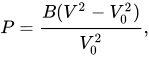
The temperature detected at the thermocouple junction depends on the thermal conductivity of the surrounding gas, which depends on the pressure of the gas. The potential difference measured by a thermocouple is proportional to the square of pressure over the low- to medium-vacuum range. At higher (viscous flow) and lower (molecular flow) pressures, the thermal conductivity of air or any other gas is essentially independent of pressure. The thermocouple was first used as a vacuum gauge by Voege in 1906. The mathematical model for the thermocouple as a vacuum gauge is quite complicated, as explained in detail by Van Atta, but can be simplified to:

where P is the gas pressure, B is a constant that depends on the thermocouple temperature, the gas composition and the vacuum-chamber geometry, V0 is the thermocouple voltage at zero pressure (absolute), and V is the voltage indicated by the thermocouple.

The alternative is the Pirani gauge, which operates in a similar way, over approximately the same pressure range, but is only a 2-terminal device, sensing the change in resistance with temperature of a thin electrically heated wire, rather than using a thermocouple.

Human extinction

From Wikipedia, the free encyclopedia https://en.wikipedia.org/wiki/Human_ext...