Search This Blog

Tuesday, July 9, 2024

Emotion in animals

From Wikipedia, the free encyclopedia
https://en.wikipedia.org/wiki/Emotion_in_animals
A drawing of a cat by T. W. Wood in Charles Darwin's book The Expression of the Emotions in Man and Animals, described as acting "in an affectionate frame of mind".

Emotion is defined as any mental experience with high intensity and high hedonic content. The existence and nature of emotions in non-human animals are believed to be correlated with those of humans and to have evolved from the same mechanisms. Charles Darwin was one of the first scientists to write about the subject, and his observational (and sometimes anecdotal) approach has since developed into a more robust, hypothesis-driven, scientific approach. Cognitive bias tests and learned helplessness models have shown feelings of optimism and pessimism in a wide range of species, including rats, dogs, cats, rhesus macaques, sheep, chicks, starlings, pigs, and honeybees. Jaak Panksepp played a large role in the study of animal emotion, basing his research on the neurological aspect. Mentioning seven core emotional feelings reflected through a variety of neuro-dynamic limbic emotional action systems, including seeking, fear, rage, lust, care, panic and play. Through brain stimulation and pharmacological challenges, such emotional responses can be effectively monitored.

Emotion has been observed and further researched through multiple different approaches including that of behaviourism, comparative, anecdotal, specifically Darwin's approach and what is most widely used today the scientific approach which has a number of subfields including functional, mechanistic, cognitive bias tests, self-medicating, spindle neurons, vocalizations and neurology.

While emotions in nonhuman animals is still quite a controversial topic, it has been studied in an extensive array of species both large and small including primates, rodents, elephants, horses, birds, dogs, cats, honeybees and crayfish.

Etymology, definitions, and differentiation

The word "emotion" dates back to 1579, when it was adapted from the French word émouvoir, which means "to stir up". However, the earliest precursors of the word likely date back to the very origins of language.

Emotions have been described as discrete and consistent responses to internal or external events which have a particular significance for the organism. Emotions are brief in duration and consist of a coordinated set of responses, which may include physiological, behavioural, and neural mechanisms. Emotions have also been described as the result of evolution because they provided good solutions to ancient and recurring problems that faced ancestors.

Laterality

It has been proposed that negative, withdrawal-associated emotions are processed predominantly by the right hemisphere, whereas the left hemisphere is largely responsible for processing positive, approach-related emotions. This has been called the "laterality-valence hypothesis".

Basic and complex human emotions

In humans, a distinction is sometimes made between "basic" and "complex" emotions. Six emotions have been classified as basic: anger, disgust, fear, happiness, sadness and surprise. Complex emotions would include contempt, jealousy and sympathy. However, this distinction is difficult to maintain, and animals are often said to express even the complex emotions.

Background

Behaviourist approach

A squirrel communicating with its pup

Prior to the development of animal sciences such as comparative psychology and ethology, interpretation of animal behaviour tended to favour a minimalistic approach known as behaviourism. This approach refuses to ascribe to an animal a capability beyond the least demanding that would explain a behaviour; anything more than this is seen as unwarranted anthropomorphism. The behaviourist argument is, why should humans postulate consciousness and all its near-human implications in animals to explain some behaviour, if mere stimulus-response is a sufficient explanation to produce the same effects?

Some behaviourists, such as John B. Watson, claim that stimulus–response models provide a sufficient explanation for animal behaviours that have been described as emotional, and that all behaviour, no matter how complex, can be reduced to a simple stimulus-response association. Watson described that the purpose of psychology was "to predict, given the stimulus, what reaction will take place; or given the reaction, state what the situation or stimulus is that has caused the reaction".

The cautious wording of Dixon exemplifies this viewpoint:

Recent work in the area of ethics and animals suggests that it is philosophically legitimate to ascribe emotions to animals. Furthermore, it is sometimes argued that emotionality is a morally relevant psychological state shared by humans and non-humans. What is missing from the philosophical literature that makes reference to emotions in animals is an attempt to clarify and defend some particular account of the nature of emotion, and the role that emotions play in a characterization of human nature. I argue in this paper that some analyses of emotion are more credible than others. Because this is so, the thesis that humans and nonhumans share emotions may well be a more difficult case to make than has been recognized thus far.

Moussaieff Masson and McCarthy describe a similar view (with which they disagree):

While the study of emotion is a respectable field, those who work in it are usually academic psychologists who confine their studies to human emotions. The standard reference work, The Oxford Companion to Animal Behaviour, advises animal behaviourists that "One is well advised to study the behaviour, rather than attempting to get at any underlying emotion. There is considerable uncertainty and difficulty related to the interpretation and ambiguity of emotion: an animal may make certain movements and sounds, and show certain brain and chemical signals when its body is damaged in a particular way. But does this mean an animal feels—is aware of—pain as we are, or does it merely mean it is programmed to act a certain way with certain stimuli? Similar questions can be asked of any activity an animal (including a human) might undertake, in principle. Many scientists regard all emotion and cognition (in humans and animals) as having a purely mechanistic basis.

Because of the philosophical questions of consciousness and mind that are involved, many scientists have stayed away from examining animal and human emotion, and have instead studied measurable brain functions through neuroscience.

Comparative approach

In 1903, C. Lloyd Morgan published Morgan's Canon, a specialised form of Occam's razor used in ethology, in which he stated:

In no case is an animal activity to be interpreted in terms of higher psychological processes,
if it can be fairly interpreted in terms of processes which stand lower in the scale of psychological evolution and development.

Darwin's approach

Charles Darwin initially planned to include a chapter on emotion in The Descent of Man but as his ideas progressed they expanded into a book, The Expression of the Emotions in Man and Animals. Darwin proposed that emotions are adaptive and serve a communicative and motivational function, and he stated three principles that are useful in understanding emotional expression: First, The Principle of Serviceable Habits takes a Lamarckian stance by suggesting that emotional expressions that are useful will be passed on to the offspring. Second, The Principle of Antithesis suggests that some expressions exist merely because they oppose an expression that is useful. Third, The Principle of the Direct Action of the Excited Nervous System on the Body suggests that emotional expression occurs when nervous energy has passed a threshold and needs to be released.

Darwin saw emotional expression as an outward communication of an inner state, and the form of that expression often carries beyond its original adaptive use. For example, Darwin remarks that humans often present their canine teeth when sneering in rage, and he suggests that this means that a human ancestor probably utilized their teeth in aggressive action. A domestic dog's simple tail wag may be used in subtly different ways to convey many meanings as illustrated in Darwin's The Expression of the Emotions in Man and Animals published in 1872.

Anecdotal approach

Evidence for emotions in animals has been primarily anecdotal, from individuals who interact with pets or captive animals on a regular basis. However, critics of animals having emotions often suggest that anthropomorphism is a motivating factor in the interpretation of the observed behaviours. Much of the debate is caused by the difficulty in defining emotions and the cognitive requirements thought necessary for animals to experience emotions in a similar way to humans. The problem is made more problematic by the difficulties in testing for emotions in animals. What is known about human emotion is almost all related or in relation to human communication.

Scientific approach

In recent years, the scientific community has become increasingly supportive of the idea of emotions in animals. Scientific research has provided insight into similarities of physiological changes between humans and animals when experiencing emotion.

Much support for animal emotion and its expression results from the notion that feeling emotions does not require significant cognitive processes, rather, they could be motivated by the processes to act in an adaptive way, as suggested by Darwin. Recent attempts in studying emotions in animals have led to new constructions in experimental and information gathering. Professor Marian Dawkins suggested that emotions could be studied on a functional or a mechanistic basis. Dawkins suggests that merely mechanistic or functional research will provide the answer on its own, but suggests that a mixture of the two would yield the most significant results.

Functional

Functional approaches rely on understanding what roles emotions play in humans and examining that role in animals. A widely used framework for viewing emotions in a functional context is that described by Oatley and Jenkins who see emotions as having three stages: (i) appraisal in which there is a conscious or unconscious evaluation of an event as relevant to a particular goal. An emotion is positive when that goal is advanced and negative when it is impeded (ii) action readiness where the emotion gives priority to one or a few kinds of action and may give urgency to one so that it can interrupt or compete with others and (iii) physiological changes, facial expression and then behavioural action. The structure, however, may be too broad and could be used to include all the animal kingdom as well as some plants.

Mechanistic

The second approach, mechanistic, requires an examination of the mechanisms that drive emotions and search for similarities in animals.

The mechanistic approach is utilized extensively by Paul, Harding and Mendl. Recognizing the difficulty in studying emotion in non-verbal animals, Paul et al. demonstrate possible ways to better examine this. Observing the mechanisms that function in human emotion expression, Paul et al. suggest that concentration on similar mechanisms in animals can provide clear insights into the animal experience. They noted that in humans, cognitive biases vary according to emotional state and suggested this as a possible starting point to examine animal emotion. They propose that researchers may be able to use controlled stimuli which have a particular meaning to trained animals to induce particular emotions in these animals and assess which types of basic emotions animals can experience.

Cognitive bias test

Is the glass half empty or half full?

A cognitive bias is a pattern of deviation in judgment, whereby inferences about other animals and situations may be drawn in an illogical fashion. Individuals create their own "subjective social reality" from their perception of the input. It refers to the question "Is the glass half empty or half full?", used as an indicator of optimism or pessimism. To test this in animals, an individual is trained to anticipate that stimulus A, e.g. a 20 Hz tone, precedes a positive event, e.g. highly desired food is delivered when a lever is pressed by the animal. The same individual is trained to anticipate that stimulus B, e.g. a 10 Hz tone, precedes a negative event, e.g. bland food is delivered when the animal presses a lever. The animal is then tested by being played an intermediate stimulus C, e.g. a 15 Hz tone, and observing whether the animal presses the lever associated with the positive or negative reward, thereby indicating whether the animal is in a positive or negative mood. This might be influenced by, for example, the type of housing the animal is kept in.

Using this approach, it has been found that rats which are subjected to either handling or tickling showed different responses to the intermediate stimulus: rats exposed to tickling were more optimistic. The authors stated that they had demonstrated "for the first time a link between the directly measured positive affective state and decision making under uncertainty in an animal model".

Cognitive biases have been shown in a wide range of species including rats, dogs, rhesus macaques, sheep, chicks, starlings and honeybees.

Self-medication with psychoactive drugs

Humans can have a range of emotional or mood disorders such as depression, anxiety, fear and panic. To treat these disorders, scientists have developed a range of psychoactive drugs such as anxiolytics. Many of these drugs are developed and tested by using a range of laboratory species. It is inconsistent to argue that these drugs are effective in treating human emotions whilst denying the experience of these emotions in the laboratory animals on which they have been developed and tested.

Standard laboratory cages prevent mice from performing several natural behaviours for which they are highly motivated. As a consequence, laboratory mice sometimes develop abnormal behaviours indicative of emotional disorders such as depression and anxiety. To improve welfare, these cages are sometimes enriched with items such as nesting material, shelters and running wheels. Sherwin and Ollson tested whether such enrichment influenced the consumption of Midazolam, a drug widely used to treat anxiety in humans. Mice in standard cages, standard cages but with unpredictable husbandry, or enriched cages, were given a choice of drinking either non-drugged water or a solution of the Midazolam. Mice in the standard and unpredictable cages drank a greater proportion of the anxiolytic solution than mice from enriched cages, indicating that mice from the standard and unpredictable laboratory caging may have been experiencing greater anxiety than mice from the enriched cages.

Spindle neurons

Spindle neurons are specialised cells found in three very restricted regions of the human brain – the anterior cingulate cortex, the frontoinsular cortex and the dorsolateral prefrontal cortex. The first two of these areas regulate emotional functions such as empathy, speech, intuition, rapid "gut reactions" and social organization in humans. Spindle neurons are also found in the brains of humpback whales, fin whales, killer whales, sperm whales, bottlenose dolphin, Risso's dolphin, beluga whales, and the African and Asian elephants.

Whales have spindle cells in greater numbers and are maintained for twice as long as humans. The exact function of spindle cells in whale brains is still not understood, but Hof and Van Der Gucht believe that they act as some sort of "high-speed connections that fast-track information to and from other parts of the cortex". They compared them to express trains that bypass unnecessary connections, enabling organisms to instantly process and act on emotional cues during complex social interactions. However, Hof and Van Der Gucht clarify that they do not know the nature of such feelings in these animals and that we cannot just apply what we see in great apes or ourselves to whales. They believe that more work is needed to know whether emotions are the same for humans and whales.

Vocalizations

Though non-human animals cannot provide useful verbal feedback about the experiential and cognitive details of their feelings, various emotional vocalizations of other animals may be indicators of potential affective states. Beginning with Darwin and his research, it has been known that chimpanzees and other great apes perform laugh-like vocalizations, providing scientists with more symbolic self-reports of their emotional experiences.

Research with rats has revealed that under particular conditions, they emit 50-kHz ultrasonic vocalisations (USV) which have been postulated to reflect a positive affective state (emotion) analogous to primitive human joy; these calls have been termed "laughter". The 50 kHz USVs in rats are uniquely elevated by hedonic stimuli—such as tickling, rewarding electrical brain stimulation, amphetamine injections, mating, play, and aggression—and are suppressed by aversive stimuli. Of all manipulations that elicit 50 kHz chirps in rats, tickling by humans elicits the highest rate of these calls.

Some vocalizations of domestic cats, such as purring, are well known to be produced in situations of positive valence, such as mother kitten interactions, contacts with familiar partner, or during tactile stimulation with inanimate objects as when rolling and rubbing. Therefore, purring can be generally considered as an indicator of "pleasure" in cats.

Low pitched bleating in sheep has been associated with some positive-valence situations, as they are produced by males as an estrus female is approaching or by lactating mothers while licking and nursing their lambs.

Neurological

Neuroscientific studies based on the instinctual, emotional action tendencies of non-human animals accompanied by the brains neurochemical and electrical changes are deemed to best monitor relative primary process emotional/affective states. Predictions based on the research conducted on animals is what leads analysis of the neural infrastructure relevant in humans. Psycho-neuro-ethological triangulation with both humans and animals allows for further experimentation into animal emotions. Utilizing specific animals that exhibit indicators of emotional states to decode underlying neural systems aids in the discovery of critical brain variables that regulate animal emotional expressions. Comparing the results of the animals converse experiments occur predicting the affective changes that should result in humans. Specific studies where there is an increase or decrease of playfulness or separation distress vocalizations in animals, comparing humans that exhibit the predicted increases or decreases in feelings of joy or sadness, the weight of evidence constructs a concrete neural hypothesis concerning the nature of affect supporting all relevant species.

Criticism

The argument that animals experience emotions is sometimes rejected due to a lack of higher quality evidence, and those who do not believe in the idea of animal intelligence often argue that anthropomorphism plays a role in individuals' perspectives. Those who reject that animals have the capacity to experience emotion do so mainly by referring to inconsistencies in studies that have endorsed the belief emotions exist. Having no linguistic means to communicate emotion beyond behavioral response interpretation, the difficulty of providing an account of emotion in animals relies heavily on interpretive experimentation, that relies on results from human subjects.

Some people oppose the concept of animal emotions and suggest that emotions are not universal, including in humans. If emotions are not universal, this indicates that there is not a phylogenetic relationship between human and non-human emotion. The relationship drawn by proponents of animal emotion, then, would be merely a suggestion of mechanistic features that promote adaptivity, but lack the complexity of human emotional constructs. Thus, a social life-style may play a role in the process of basic emotions developing into more complex emotions.

Darwin concluded, through a survey, that humans share universal emotive expressions and suggested that animals likely share in these to some degree. Social constructionists disregard the concept that emotions are universal. Others hold an intermediate stance, suggesting that basic emotional expressions and emotion are universal but the intricacies are developed culturally. A study by Elfenbein and Ambady indicated that individuals within a particular culture are better at recognising other cultural members' emotions.

Examples

Primates

Primates, in particular non-human great apes, are candidates for being able to experience empathy and theory of mind. Great apes have complex social systems; young apes and their mothers have strong bonds of attachment and when a baby chimpanzee or gorilla dies, the mother will commonly carry the body around for several days. Jane Goodall has described chimpanzees as exhibiting mournful behavior. Koko, a gorilla trained to use sign language, was reported to have expressed vocalizations indicating sadness after the death of her pet cat, All Ball.

Beyond such anecdotal evidence, support for empathetic reactions has come from experimental studies of rhesus macaques. Macaques refused to pull a chain that delivered food to themselves if doing so also caused a companion to receive an electric shock. This inhibition of hurting another conspecific was more pronounced between familiar than unfamiliar macaques, a finding similar to that of empathy in humans.

Furthermore, there has been research on consolation behavior in chimpanzees. De Waal and Aureli found that third-party contacts attempt to relieve the distress of contact participants by consoling (e.g. making contact, embracing, grooming) recipients of aggression, especially those that have experienced more intense aggression. Researchers were unable to replicate these results using the same observation protocol in studies of monkeys, demonstrating a possible difference in empathy between apes and other monkeys.

Other studies have examined emotional processing in the great apes. Specifically, chimpanzees were shown video clips of emotionally charged scenes, such as a detested veterinary procedure or a favorite food, and then were required to match these scenes with one of two species-specific facial expressions: "happy" (a play-face) or "sad" (a teeth-baring expression seen in frustration or after defeat). The chimpanzees correctly matched the clips to the facial expressions that shared their meaning, demonstrating that they understand the emotional significance of their facial expressions. Measures of peripheral skin temperature also indicated that the video clips emotionally affected the chimpanzees.

Rodents

In 1998, Jaak Panksepp proposed that all mammalian species are equipped with brains capable of generating emotional experiences. Subsequent work examined studies on rodents to provide foundational support for this claim. One of these studies examined whether rats would work to alleviate the distress of a conspecific. Rats were trained to press a lever to avoid the delivery of an electric shock, signaled by a visual cue, to a conspecific. They were then tested in a situation in which either a conspecific or a Styrofoam block was hoisted into the air and could be lowered by pressing a lever. Rats that had previous experience with conspecific distress demonstrated greater than ten-fold more responses to lower a distressed conspecific compared to rats in the control group, while those who had never experienced conspecific distress expressed greater than three-fold more responses to lower a distressed conspecific relative to the control group. This suggests that rats will actively work to reduce the distress of a conspecific, a phenomenon related to empathy. Comparable results have also been found in similar experiments designed for monkeys.

Langford et al. examined empathy in rodents using an approach based in neuroscience. They reported that (1) if two mice experienced pain together, they expressed greater levels of pain-related behavior than if pain was experienced individually, (2) if experiencing different levels of pain together, the behavior of each mouse was modulated by the level of pain experienced by its social partner, and (3) sensitivity to a noxious stimulus was experienced to the same degree by the mouse observing a conspecific in pain as it was by the mouse directly experiencing the painful stimulus. The authors suggest this responsiveness to the pain of others demonstrated by mice is indicative of emotional contagion, a phenomenon associated with empathy, which has also been reported in pigs. One behaviour associated with fear in rats is freezing. If female rats experience electric shocks to the feet and then witness another rat experiencing similar footshocks, they freeze more than females without any experience of the shocks. This suggests empathy in experienced rats witnessing another individual being shocked. Furthermore, the demonstrator's behaviour was changed by the behaviour of the witness; demonstrators froze more following footshocks if their witness froze more creating an empathy loop.

Several studies have also shown rodents can respond to a conditioned stimulus that has been associated with the distress of a conspecific, as if it were paired with the direct experience of an unconditioned stimulus. These studies suggest that rodents are capable of shared affect, a concept critical to empathy.

Horses

Although not direct evidence that horses experience emotions, a 2016 study showed that domestic horses react differently to seeing photographs of positive (happy) or negative (angry) human facial expressions. When viewing angry faces, horses look more with their left eye which is associated with perceiving negative stimuli. Their heart rate also increases more quickly and they show more stress-related behaviours. One rider wrote, 'Experienced riders and trainers can learn to read the subtle moods of individual horses according to wisdom passed down from one horseman to the next, but also from years of trial-and-error. I suffered many bruised toes and nipped fingers before I could detect a curious swivel of the ears, irritated flick of the tail, or concerned crinkle above a long-lashed eye.' This suggests that horses have emotions and display them physically but is not concrete evidence.

Birds

Marc Bekoff reported accounts of animal behaviour which he believed was evidence of animals being able to experience emotions in his book The Emotional Lives of Animals.[63] The following is an excerpt from his book:

A few years ago my friend Rod and I were riding our bicycles around Boulder, Colorado, when we witnessed a very interesting encounter among five magpies. Magpies are corvids, a very intelligent family of birds. One magpie had obviously been hit by a car and was laying dead on the side of the road. The four other magpies were standing around him. One approached the corpse, gently pecked at it-just as an elephant noses the carcass of another elephant- and stepped back. Another magpie did the same thing. Next, one of the magpies flew off, brought back some grass, and laid it by the corpse. Another magpie did the same. Then, all four magpies stood vigil for a few seconds and one by one flew off.

Bystander affiliation is believed to represent an expression of empathy in which the bystander tries to console a conflict victim and alleviate their distress. There is evidence for bystander affiliation in ravens (e.g. contact sitting, preening, or beak-to-beak or beak-to-body touching) and also for solicited bystander affiliation, in which there is post-conflict affiliation from the victim to the bystander. This indicates that ravens may be sensitive to the emotions of others, however, relationship value plays an important role in the prevalence and function of these post-conflict interactions.

The capacity of domestic hens to experience empathy has been studied. Mother hens show one of the essential underpinning attributes of empathy: the ability to be affected by, and share, the emotional state of their distressed chicks. However, evidence for empathy between familiar adult hens has not yet been found.

Dogs

A drawing by Konrad Lorenz showing facial expressions of a dog

Some research indicates that domestic dogs may experience negative emotions in a similar manner to humans, including the equivalent of certain chronic and acute psychological conditions. Much of this is from studies by Martin Seligman on the theory of learned helplessness as an extension of his interest in depression:

A dog that had earlier been repeatedly conditioned to associate an audible stimulus with inescapable electric shocks did not subsequently try to escape the electric shocks after the warning was presented, even though all the dog would have had to do is jump over a low divider within ten seconds. The dog didn't even try to avoid the "aversive stimulus"; it had previously "learned" that nothing it did would reduce the probability of it receiving a shock. A follow-up experiment involved three dogs affixed in harnesses, including one that received shocks of identical intensity and duration to the others, but the lever which would otherwise have allowed the dog a degree of control was left disconnected and didn't do anything. The first two dogs quickly recovered from the experience, but the third dog suffered chronic symptoms of clinical depression as a result of this perceived helplessness.

A further series of experiments showed that, similar to humans, under conditions of long-term intense psychological stress, around one third of dogs do not develop learned helplessness or long-term depression. Instead these animals somehow managed to find a way to handle the unpleasant situation in spite of their past experience. The corresponding characteristic in humans has been found to correlate highly with an explanatory style and optimistic attitude that views the situation as other than personal, pervasive, or permanent.

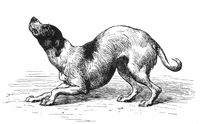
Since these studies, symptoms analogous to clinical depression, neurosis, and other psychological conditions have also been accepted as being within the scope of emotion in domestic dogs. The postures of dogs may indicate their emotional state.

Psychology research has shown that when humans gaze at the face of another human, the gaze is not symmetrical; the gaze instinctively moves to the right side of the face to obtain information about their emotions and state. Research at the University of Lincoln shows that dogs share this instinct when meeting a human, and only when meeting a human (i.e. not other animals or other dogs). They are the only non-primate species known to share this instinct.

The existence and nature of personality traits in dogs have been studied (15,329 dogs of 164 different breeds). Five consistent and stable "narrow traits" were identified, described as playfulness, curiosity/fearlessness, chase-proneness, sociability and aggressiveness. A further higher order axis for shyness–boldness was also identified.

Dogs presented with images of either human or dog faces with different emotional states (happy/playful or angry/aggressive) paired with a single vocalization (voices or barks) from the same individual with either a positive or negative emotional state or brown noise. Dogs look longer at the face whose expression is congruent to the emotional state of the vocalization, for both other dogs and humans. This is an ability previously known only in humans. The behavior of a dog can not always be an indication of its friendliness. This is because when a dog wags its tail, most people interpret this as the dog expressing happiness and friendliness. Though indeed tail wagging can express these positive emotions, tail wagging is also an indication of fear, insecurity, challenging of dominance, establishing social relationships or a warning that the dog may bite.

Some researchers are beginning to investigate the question of whether dogs have emotions with the help of magnetic resonance imaging.

Elephants

Elephants are known for their empathy towards members of the same species as well as their cognitive memory. While this is true scientists continuously debate the extent to which elephants feel emotion. Observations show that elephants, like humans, are concerned with distressed or deceased individuals, and render assistance to the ailing and show a special interest in dead bodies of their own kind, however this view is interpreted by some as being anthropomorphic.

Elephants have recently been suggested to pass mirror self-recognition tests, and such tests have been linked to the capacity for empathy. However, the experiment showing such actions did not follow the accepted protocol for tests of self-recognition, and earlier attempts to show mirror self-recognition in elephants have failed, so this remains a contentious claim.

Elephants are also deemed to show emotion through vocal expression, specifically the rumble vocalization. Rumbles are frequency modulated, harmonically rich calls with fundamental frequencies in the infrasonic range, with clear formant structure. Elephants exhibit negative emotion and/or increased emotional intensity through their rumbles, based on specific periods of social interaction and agitation.

Cats

Cat's response to a fear inducing stimulus.

It has been postulated that domestic cats can learn to manipulate their owners through vocalizations that are similar to the cries of human babies. Some cats learn to add a purr to the vocalization, which makes it less harmonious and more dissonant to humans, and therefore harder to ignore. Individual cats learn to make these vocalizations through trial-and-error; when a particular vocalization elicits a positive response from a human, the probability increases that the cat will use that vocalization in the future.

Growling can be an expression of annoyance or fear, similar to humans. When annoyed or angry, a cat wriggles and thumps its tail much more vigorously than when in a contented state. In larger felids such as lions, what appears to be irritating to them varies between individuals. A male lion may let his cubs play with his mane or tail, or he may hiss and hit them with his paws. Domestic male cats also have variable attitudes towards their family members, for example, older male siblings tend not to go near younger or new siblings and may even show hostility toward them.

Hissing is also a vocalization associated with either offensive or defensive aggression. They are usually accompanied by a postural display intended to have a visual effect on the perceived threat. Cats hiss when they are startled, scared, angry, or in pain, and also to scare off intruders into their territory. If the hiss and growl warning does not remove the threat, an attack by the cat may follow. Kittens as young as two to three weeks will potentially hiss when first picked up by a human.

Honeybees

Honeybees become pessimistic after being shaken

Honeybees ("Apis mellifera carnica") were trained to extend their proboscis to a two-component odour mixture (CS+) predicting a reward (e.g., 1.00 or 2.00 M sucrose) and to withhold their proboscis from another mixture (CS−) predicting either punishment or a less valuable reward (e.g., 0.01 M quinine solution or 0.3 M sucrose). Immediately after training, half of the honeybees were subjected to vigorous shaking for 60 s to simulate the state produced by a predatory attack on a concealed colony. This shaking reduced levels of octopamine, dopamine, and serotonin in the hemolymph of a separate group of honeybees at a time point corresponding to when the cognitive bias tests were performed. In honeybees, octopamine is the local neurotransmitter that functions during reward learning, whereas dopamine mediates the ability to learn to associate odours with quinine punishment. If flies are fed serotonin, they are more aggressive; flies depleted of serotonin still exhibit aggression, but they do so much less frequently.

Within 5 minutes of the shaking, all the trained bees began a sequence of unreinforced test trials with five odour stimuli presented in a random order for each bee: the CS+, the CS−, and three novel odours composed of ratios intermediate between the two learned mixtures. Shaken honeybees were more likely to withhold their mouthparts from the CS− and from the most similar novel odour. Therefore, agitated honeybees display an increased expectation of bad outcomes similar to a vertebrate-like emotional state. The researchers of the study stated that, "Although our results do not allow us to make any claims about the presence of negative subjective feelings in honeybees, they call into question how we identify emotions in any non-human animal. It is logically inconsistent to claim that the presence of pessimistic cognitive biases should be taken as confirmation that dogs or rats are anxious but to deny the same conclusion in the case of honeybees."

Crayfish

The freshwater crayfish Procambarus clarkii

Crayfish naturally explore new environments but display a general preference for dark places. A 2014 study on the freshwater crayfish Procambarus clarkii tested their responses in a fear paradigm, the elevated plus maze in which animals choose to walk on an elevated cross which offers both aversive and preferable conditions (in this case, two arms were lit and two were dark). Crayfish which experienced an electric shock displayed enhanced fearfulness or anxiety as demonstrated by their preference for the dark arms more than the light. Furthermore, shocked crayfish had relatively higher brain serotonin concentrations coupled with elevated blood glucose, which indicates a stress response. Moreover, the crayfish calmed down when they were injected with the benzodiazepine anxiolytic, chlordiazepoxide, used to treat anxiety in humans, and they entered the dark as normal. The authors of the study concluded "[...] stress-induced avoidance behavior in crayfish exhibits striking homologies with vertebrate anxiety."

A follow-up study using the same species confirmed the anxiolytic effect of chlordiazepoxide, but moreover, the intensity of the anxiety-like behaviour was dependent on the intensity of the electric shock until reaching a plateau. Such a quantitative relationship between stress and anxiety is also a very common feature of human and vertebrate anxiety.

Numeracy

From Wikipedia, the free encyclopedia
https://en.wikipedia.org/wiki/Numeracy
Children in Laos have fun as they improve numeracy with "Number Bingo". They roll three dice, construct an equation from the numbers to produce a new number, then cover that number on the board, trying to get four in a row.
Number bingo improves math skills. LPB Laos.

Numeracy is the ability to understand, reason with, and apply simple numerical concepts. The charity National Numeracy states: "Numeracy means understanding how mathematics is used in the real world and being able to apply it to make the best possible decisions...It's as much about thinking and reasoning as about 'doing sums'". Basic numeracy skills consist of comprehending fundamental arithmetical operations like addition, subtraction, multiplication, and division. For example, if one can understand simple mathematical equations such as 2 + 2 = 4, then one would be considered to possess at least basic numeric knowledge. Substantial aspects of numeracy also include number sense, operation sense, computation, measurement, geometry, probability and statistics. A numerically literate person can manage and respond to the mathematical demands of life.

By contrast, innumeracy (the lack of numeracy) can have a negative impact. Numeracy has an influence on healthy behaviors, financial literacy, and career decisions. Therefore, innumeracy may negatively affect economic choices, financial outcomes, health outcomes, and life satisfaction. It also may distort risk perception in health decisions. Greater numeracy has been associated with reduced susceptibility to framing effects, less influence of nonnumerical information such as mood states, and greater sensitivity to different levels of numerical risk. Ellen Peters and her colleagues argue that achieving the benefits of numeric literacy, however, may depend on one's numeric self-efficacy or confidence in one's skills.

Representation of numbers

Humans have evolved to mentally represent numbers in two major ways from observation (not formal math). These representations are often thought to be innate (see Numerical cognition), to be shared across human cultures, to be common to multiple species, and not to be the result of individual learning or cultural transmission. They are:

  1. Approximate representation of numerical magnitude, and
  2. Precise representation of the quantity of individual items.

Approximate representations of numerical magnitude imply that one can relatively estimate and comprehend an amount if the number is large (see Approximate number system). For example, one experiment showed children and adults arrays of many dots. After briefly observing them, both groups could accurately estimate the approximate number of dots. However, distinguishing differences between large numbers of dots proved to be more challenging.

Precise representations of distinct items demonstrate that people are more accurate in estimating amounts and distinguishing differences when the numbers are relatively small (see Subitizing). For example, in one experiment, an experimenter presented an infant with two piles of crackers, one with two crackers the other with three. The experimenter then covered each pile with a cup. When allowed to choose a cup, the infant always chose the cup with more crackers because the infant could distinguish the difference.

Both systems—approximate representation of magnitude and precise representation quantity of individual items—have limited power. For example, neither allows representations of fractions or negative numbers. More complex representations require education. However, achievement in school mathematics correlates with an individual's unlearned approximate number sense.

Definitions and assessment

Fundamental (or rudimentary) numeracy skills include understanding of the real number line, time, measurement, and estimation. Fundamental skills include basic skills (the ability to identify and understand numbers) and computational skills (the ability to perform simple arithmetical operations and compare numerical magnitudes).

More sophisticated numeracy skills include understanding of ratio concepts (notably fractions, proportions, percentages, and probabilities), and knowing when and how to perform multistep operations. Two categories of skills are included at the higher levels: the analytical skills (the ability to understand numerical information, such as required to interpret graphs and charts) and the statistical skills (the ability to apply higher probabilistic and statistical computation, such as conditional probabilities).

A variety of tests have been developed for assessing numeracy and health numeracy. Different tests have been developed to evaluate health numeracy. Two of these tests that have been found to be "reliable and valid" are the GHNT-21 and GHNT-6.

Childhood influences

The first couple of years of childhood are considered to be a vital part of life for the development of numeracy and literacy. There are many components that play key roles in the development of numeracy at a young age, such as Socioeconomic Status (SES), parenting, Home Learning Environment (HLE), and age.

Socioeconomic status

Children who are brought up in families with high SES tend to be more engaged in developmentally enhancing activities. These children are more likely to develop the necessary abilities to learn and to become more motivated to learn. More specifically, a mother's education level is considered to have an effect on the child's ability to achieve in numeracy. That is, mothers with a high level of education will tend to have children who succeed more in numeracy.

A number of studies have, moreover, proved that the education level of the mother is strongly correlated with the average age of getting married. More precisely, females who entered the marriage later, tend to have greater autonomy, chances for skills premium and level of education (i.e. numeracy). Hence, they were more likely to share this experience with children.

Parenting

Parents are advised to collaborate with their child in simple learning exercises, such as reading a book, painting, drawing, and playing with numbers. On a more expressive note, the act of using complex language, being more responsive towards the child, and establishing warm interactions are recommended to parents with the confirmation of positive numeracy outcomes. When discussing beneficial parenting behaviors, a feedback loop is formed because pleased parents are more willing to interact with their child, which in essence promotes better development in the child.

Home-learning environment

Along with parenting and SES, a strong home-learning environment increases the likelihood of the child being prepared for comprehending complex mathematical schooling. For example, if a child is influenced by many learning activities in the household, such as puzzles, coloring books, mazes, or books with picture riddles, then they will be more prepared to face school activities.

Age

Age is accounted for when discussing the development of numeracy in children. Children under the age of 5 have the best opportunity to absorb basic numeracy skills. After the age of seven, achievement of basic numeracy skills become less influential. For example, a study was conducted to compare the reading and mathematical abilities between children of ages five and seven, each in three different mental capacity groups (underachieving, average, and overachieving). The differences in the amount of knowledge retained were greater between the three different groups aged five than between the groups aged seven. This reveals that those of younger ages have an opportunity to retain more information, like numeracy. According to Gelman and Gallistel in The Child's Understanding of Number, 'children as young as 2 years can accurately judge numerosity provided that the numerosity is not larger than two or three'. Children as young as three have been found to understand elementary mathematical concepts. Kilpatrick and his colleagues state 'most preschoolers show that they can understand and perform simple addition and subtraction by at least 3 years of age'. Lastly, it has been observed that pre-school children benefit from their basic understanding of 'counting, reading and writing of numbers, understanding of simple addition and subtraction, numerical reasoning, classifying of objects and shapes, estimating, measuring, [and the] reproduction of number patterns'.

Literacy

There seems to be a relationship between literacy and numeracy, which can be seen in young children. Depending on the level of literacy or numeracy at a young age, one can predict the growth of literacy and/ or numeracy skills in future development. There is some evidence that humans may have an inborn sense of number. In one study for example, five-month-old infants were shown two dolls, which were then hidden with a screen. The babies saw the experimenter pull one doll from behind the screen. Without the child's knowledge, a second experimenter could remove, or add dolls, unseen behind the screen. When the screen was removed, the infants showed more surprise at an unexpected number (for example, if there were still two dolls). Some researchers have concluded that the babies were able to count, although others doubt this and claim the infants noticed surface area rather than number.

Employment

Numeracy has a huge impact on employment. In a work environment, numeracy can be a controlling factor affecting career achievements and failures. Many professions require individuals to have well-developed numerical skills: for example, mathematician, physicist, accountant, actuary, Risk Analyst, financial analyst, engineer, and architect. This is why a major target of the Sustainable Development Goal 4 is to substantially increase the number of youths who have relevant skills for decent work and employment because, even outside these specialized areas, the lack of numeracy skills can reduce employment opportunities and promotions, resulting in unskilled manual careers, low-paying jobs, and even unemployment. For example, carpenters and interior designers need to be able to measure, use fractions, and handle budgets. Another example of numeracy influencing employment was demonstrated at the Poynter Institute. The Poynter Institute has recently included numeracy as one of the skills required by competent journalists. Max Frankel, former executive editor of The New York Times, argues that "deploying numbers skillfully is as important to communication as deploying verbs". Unfortunately, it is evident that journalists often show poor numeracy skills. In a study by the Society of Professional Journalists, 58% of job applicants interviewed by broadcast news directors lacked an adequate understanding of statistical materials.

To assess job applicants, psychometric numerical reasoning tests have been created by occupational psychologists, who are involved in the study of numeracy. These tests are used to assess ability to comprehend and apply numbers. They are sometimes administered with a time limit, so that the test-taker must think quickly and concisely. Research has shown that these tests are very useful in evaluating potential applicants because they do not allow the applicants to prepare for the test, unlike interview questions. This suggests that an applicant's results are reliable and accurate

These tests first became prevalent during the 1980s, following the pioneering work of psychologists, such as P. Kline, who published a book in 1986 entitled A handbook of test construction: Introduction to psychometric design, which explained that psychometric testing could provide reliable and objective results, which could be used to assess a candidate's numerical abilities.

Innumeracy and dyscalculia

The term innumeracy is a neologism, coined by analogy with illiteracy. Innumeracy refers to a lack of ability to reason with numbers. The term was coined by cognitive scientist Douglas Hofstadter; however, it was popularized in 1989 by mathematician John Allen Paulos in his book Innumeracy: Mathematical Illiteracy and its Consequences.

Developmental dyscalculia refers to a persistent and specific impairment of basic numerical-arithmetical skills learning in the context of normal intelligence.

Patterns and differences

The root causes of innumeracy vary. Innumeracy has been seen in those suffering from poor education and childhood deprivation of numeracy. Innumeracy is apparent in children during the transition between numerical skills obtained before schooling and the new skills taught in the education departments because of their memory capacity to comprehend the material. Patterns of innumeracy have also been observed depending on age, gender, and race. Older adults have been associated with lower numeracy skills than younger adults. Men have been identified to have higher numeracy skills than women. Some studies seem to indicate young people of African heritage tend to have lower numeracy skills. The Trends in International Mathematics and Science Study (TIMSS) in which children at fourth-grade (average 10 to 11 years) and eighth-grade (average 14 to 15 years) from 49 countries were tested on mathematical comprehension. The assessment included tests for number, algebra (also called patterns and relationships at fourth grade), measurement, geometry, and data. The latest study, in 2003, found that children from Singapore at both grade levels had the highest performance. Countries like Hong Kong SAR, Japan, and Taiwan also shared high levels of numeracy. The lowest scores were found in countries like South Africa, Ghana, and Saudi Arabia. Another finding showed a noticeable difference between boys and girls, with some exceptions. For example, girls performed significantly better in Singapore, and boys performed significantly better in the United States.

Theory

There is a theory that innumeracy is more common than illiteracy when dividing cognitive abilities into two separate categories. David C. Geary, a notable cognitive developmental and evolutionary psychologist from the University of Missouri, created the terms "biological primary abilities" and "biological secondary abilities". Biological primary abilities evolve over time and are necessary for survival. Such abilities include speaking a common language or knowledge of simple mathematics. Biological secondary abilities are attained through personal experiences and cultural customs, such as reading or high level mathematics learned through schooling. Literacy and numeracy are similar in the sense that they are both important skills used in life. However, they differ in the sorts of mental demands each makes. Literacy consists of acquiring vocabulary and grammatical sophistication, which seem to be more closely related to memorization, whereas numeracy involves manipulating concepts, such as in calculus or geometry, and builds from basic numeracy skills. This could be a potential explanation of the challenge of being numerate.

Innumeracy and risk perception in health decision-making

Health numeracy has been defined as "the degree to which individuals have the capacity to access, process, interpret, communicate, and act on numerical, quantitative, graphical, biostatistical, and probabilistic health information needed to make effective health decisions". The concept of health numeracy is a component of the concept of health literacy. Health numeracy and health literacy can be thought of as the combination of skills needed for understanding risk and making good choices in health-related behavior.

Health numeracy requires basic numeracy but also more advanced analytical and statistical skills. For instance, health numeracy also requires the ability to understand probabilities or relative frequencies in various numerical and graphical formats, and to engage in Bayesian inference, while avoiding errors sometimes associated with Bayesian reasoning (see Base rate fallacy, Conservatism (Bayesian)). Health numeracy also requires understanding terms with definitions that are specific to the medical context. For instance, although 'survival' and 'mortality' are complementary in common usage, these terms are not complementary in medicine (see five-year survival rate). Innumeracy is also a very common problem when dealing with risk perception in health-related behavior; it is associated with patients, physicians, journalists and policymakers. Those who lack or have limited health numeracy skills run the risk of making poor health-related decisions because of an inaccurate perception of information. For example, if a patient has been diagnosed with breast cancer, being innumerate may hinder her ability to comprehend her physician's recommendations, or even the severity of the health concern or even the likelihood of treatment benefits. One study found that people tended to overestimate their chances of survival or even to choose lower-quality hospitals. Innumeracy also makes it difficult or impossible for some patients to read medical graphs correctly. Some authors have distinguished graph literacy from numeracy. Indeed, many doctors exhibit innumeracy when attempting to explain a graph or statistics to a patient. A misunderstanding between a doctor and patient, due to either the doctor, patient, or both being unable to comprehend numbers effectively, could result in serious harm to health.

Different presentation formats of numerical information, for instance natural frequency icon arrays, have been evaluated to assist both low-numeracy and high-numeracy individuals. Other data formats provide more assistance to low-numeracy people.

Evolution of numeracy

In the field of economic history, numeracy is often used to assess human capital at times when there was no data on schooling or other educational measures. Using a method called age-heaping, researchers like Professor Jörg Baten study the development and inequalities of numeracy over time and throughout regions. For example, Baten and Hippe find a numeracy gap between regions in western and central Europe and the rest of Europe for the period 1790–1880. At the same time, their data analysis reveals that these differences as well as within country inequality decreased over time. Taking a similar approach, Baten and Fourie find overall high levels of numeracy for people in the Cape Colony (late 17th to early 19th century).

In contrast to these studies comparing numeracy over countries or regions, it is also possible to analyze numeracy within countries. For example, Baten, Crayen and Voth look at the effects of war on numeracy in England, and Baten and Priwitzer find a "military bias" in what is today western Hungary: people opting for a military career had - on average - better numeracy indicators (1 BCE to 3CE).

Cognitive bias

From Wikipedia, the free encyclopedia
https://en.wikipedia.org/wiki/Cognitive_bias

The Cognitive Bias Codex

A cognitive bias is a systematic pattern of deviation from norm or rationality in judgment. Individuals create their own "subjective reality" from their perception of the input. An individual's construction of reality, not the objective input, may dictate their behavior in the world. Thus, cognitive biases may sometimes lead to perceptual distortion, inaccurate judgment, illogical interpretation, and irrationality.

While cognitive biases may initially appear to be negative, some are adaptive. They may lead to more effective actions in a given context. Furthermore, allowing cognitive biases enables faster decisions which can be desirable when timeliness is more valuable than accuracy, as illustrated in heuristics. Other cognitive biases are a "by-product" of human processing limitations, resulting from a lack of appropriate mental mechanisms (bounded rationality), the impact of an individual's constitution and biological state (see embodied cognition), or simply from a limited capacity for information processing. Research suggests that cognitive biases can make individuals more inclined to endorsing pseudoscientific beliefs by requiring less evidence for claims that confirm their preconceptions. This can potentially distort their perceptions and lead to inaccurate judgments.

A continually evolving list of cognitive biases has been identified over the last six decades of research on human judgment and decision-making in cognitive science, social psychology, and behavioral economics. The study of cognitive biases has practical implications for areas including clinical judgment, entrepreneurship, finance, and management.

Overview

The notion of cognitive biases was introduced by Amos Tversky and Daniel Kahneman in 1972 and grew out of their experience of people's innumeracy, or inability to reason intuitively with the greater orders of magnitude. Tversky, Kahneman, and colleagues demonstrated several replicable ways in which human judgments and decisions differ from rational choice theory. Tversky and Kahneman explained human differences in judgment and decision-making in terms of heuristics. Heuristics involve mental shortcuts which provide swift estimates about the possibility of uncertain occurrences. Heuristics are simple for the brain to compute but sometimes introduce "severe and systematic errors." For example, the representativeness heuristic is defined as "The tendency to judge the frequency or likelihood" of an occurrence by the extent of which the event "resembles the typical case."

The "Linda Problem" illustrates the representativeness heuristic (Tversky & Kahneman, 1983). Participants were given a description of "Linda" that suggests Linda might well be a feminist (e.g., she is said to be concerned about discrimination and social justice issues). They were then asked whether they thought Linda was more likely to be (a) a "bank teller" or (b) a "bank teller and active in the feminist movement." A majority chose answer (b). Independent of the information given about Linda, though, the more restrictive answer (b) is under any circumstance statistically less likely than answer (a). This is an example of the "conjunction fallacy". Tversky and Kahneman argued that respondents chose (b) because it seemed more "representative" or typical of persons who might fit the description of Linda. The representativeness heuristic may lead to errors such as activating stereotypes and inaccurate judgments of others (Haselton et al., 2005, p. 726).

Critics of Kahneman and Tversky, such as Gerd Gigerenzer, alternatively argued that heuristics should not lead us to conceive of human thinking as riddled with irrational cognitive biases. They should rather conceive rationality as an adaptive tool, not identical to the rules of formal logic or the probability calculus. Nevertheless, experiments such as the "Linda problem" grew into heuristics and biases research programs, which spread beyond academic psychology into other disciplines including medicine and political science.


Types

Biases can be distinguished on a number of dimensions. Examples of cognitive biases include -

  • Biases specific to groups (such as the risky shift) versus biases at the individual level.
  • Biases that affect decision-making, where the desirability of options has to be considered (e.g., sunk costs fallacy).
  • Biases, such as illusory correlation, that affect judgment of how likely something is or whether one thing is the cause of another.
  • Biases that affect memory, such as consistency bias (remembering one's past attitudes and behavior as more similar to one's present attitudes).
  • Biases that reflect a subject's motivation, for example, the desire for a positive self-image leading to egocentric bias and the avoidance of unpleasant cognitive dissonance.

Other biases are due to the particular way the brain perceives, forms memories and makes judgments. This distinction is sometimes described as "hot cognition" versus "cold cognition", as motivated reasoning can involve a state of arousal. Among the "cold" biases,

  • some are due to ignoring relevant information (e.g., neglect of probability),
  • some involve a decision or judgment being affected by irrelevant information (for example the framing effect where the same problem receives different responses depending on how it is described; or the distinction bias where choices presented together have different outcomes than those presented separately), and
  • others give excessive weight to an unimportant but salient feature of the problem (e.g., anchoring).

As some biases reflect motivation specifically the motivation to have positive attitudes to oneself. It accounts for the fact that many biases are self-motivated or self-directed (e.g., illusion of asymmetric insight, self-serving bias). There are also biases in how subjects evaluate in-groups or out-groups; evaluating in-groups as more diverse and "better" in many respects, even when those groups are arbitrarily defined (ingroup bias, outgroup homogeneity bias).

Some cognitive biases belong to the subgroup of attentional biases, which refers to paying increased attention to certain stimuli. It has been shown, for example, that people addicted to alcohol and other drugs pay more attention to drug-related stimuli. Common psychological tests to measure those biases are the Stroop task and the dot probe task.

Individuals' susceptibility to some types of cognitive biases can be measured by the Cognitive Reflection Test (CRT) developed by Shane Frederick (2005).

List of biases

The following is a list of the more commonly studied cognitive biases:

Name Description
Fundamental attribution error (FAE, aka correspondence bias) Tendency to overemphasize personality-based explanations for behaviors observed in others. At the same time, individuals under-emphasize the role and power of situational influences on the same behavior. Edward E. Jones and Victor A. Harris' (1967) classic study illustrates the FAE. Despite being made aware that the target's speech direction (pro-Castro/anti-Castro) was assigned to the writer, participants ignored the situational pressures and attributed pro-Castro attitudes to the writer when the speech represented such attitudes.
Implicit bias (aka implicit stereotype, unconscious bias) Tendency to attribute positive or negative qualities to a group of individuals. It can be fully non-factual or be an abusive generalization of a frequent trait in a group to all individuals of that group.
Priming bias Tendency to be influenced by the first presentation of an issue to create our preconceived idea of it, which we then can adjust with later information.
Confirmation bias Tendency to search for or interpret information in a way that confirms one's preconceptions, and discredit information that does not support the initial opinion. Related to the concept of cognitive dissonance, in that individuals may reduce inconsistency by searching for information which reconfirms their views (Jermias, 2001, p. 146).
Affinity bias Tendency to be favorably biased toward people most like ourselves.
Self-serving bias Tendency to claim more responsibility for successes than for failures. It may also manifest itself as a tendency for people to evaluate ambiguous information in a way beneficial to their interests.
Belief bias Tendency to evaluate the logical strength of an argument based on current belief and perceived plausibility of the statement's conclusion.
Framing Tendency to narrow the description of a situation in order to guide to a selected conclusion. The same primer can be framed differently and therefore lead to different conclusions.
Hindsight bias Tendency to view past events as being predictable. Also called the "I-knew-it-all-along" effect.
Embodied cognition Tendency to have selectivity in perception, attention, decision making, and motivation based on the biological state of the body.
Anchoring bias The inability of people to make appropriate adjustments from a starting point in response to a final answer. It can lead people to make sub-optimal decisions. Anchoring affects decision making in negotiations, medical diagnoses, and judicial sentencing.
Status quo bias Tendency to hold to the current situation rather than an alternative situation, to avoid risk and loss (loss aversion). In status quo bias, a decision-maker has the increased propensity to choose an option because it is the default option or status quo. Has been shown to affect various important economic decisions, for example, a choice of car insurance or electrical service.
Overconfidence effect Tendency to overly trust one's own capability to make correct decisions. People tended to overrate their abilities and skills as decision makers. See also the Dunning–Kruger effect.
Physical attractiveness stereotype The tendency to assume people who are physically attractive also possess other desirable personality traits.

Practical significance

Many social institutions rely on individuals to make rational judgments.

The securities regulation regime largely assumes that all investors act as perfectly rational persons. In truth, actual investors face cognitive limitations from biases, heuristics, and framing effects.

A fair jury trial, for example, requires that the jury ignore irrelevant features of the case, weigh the relevant features appropriately, consider different possibilities open-mindedly and resist fallacies such as appeal to emotion. The various biases demonstrated in these psychological experiments suggest that people will frequently fail to do all these things. However, they fail to do so in systematic, directional ways that are predictable.

In some academic disciplines, the study of bias is very popular. For instance, bias is a wide spread and well studied phenomenon because most decisions that concern the minds and hearts of entrepreneurs are computationally intractable.

Cognitive biases can create other issues that arise in everyday life. One study showed the connection between cognitive bias, specifically approach bias, and inhibitory control on how much unhealthy snack food a person would eat. They found that the participants who ate more of the unhealthy snack food, tended to have less inhibitory control and more reliance on approach bias. Others have also hypothesized that cognitive biases could be linked to various eating disorders and how people view their bodies and their body image.

It has also been argued that cognitive biases can be used in destructive ways. Some believe that there are people in authority who use cognitive biases and heuristics in order to manipulate others so that they can reach their end goals. Some medications and other health care treatments rely on cognitive biases in order to persuade others who are susceptible to cognitive biases to use their products. Many see this as taking advantage of one's natural struggle of judgement and decision-making. They also believe that it is the government's responsibility to regulate these misleading ads.

Cognitive biases also seem to play a role in property sale price and value. Participants in the experiment were shown a residential property. Afterwards, they were shown another property that was completely unrelated to the first property. They were asked to say what they believed the value and the sale price of the second property would be. They found that showing the participants an unrelated property did have an effect on how they valued the second property.

Cognitive biases can be used in non-destructive ways. In team science and collective problem-solving, the superiority bias can be beneficial. It leads to a diversity of solutions within a group, especially in complex problems, by preventing premature consensus on suboptimal solutions. This example demonstrates how a cognitive bias, typically seen as a hindrance, can enhance collective decision-making by encouraging a wider exploration of possibilities.

Reducing

Because they cause systematic errors, cognitive biases cannot be compensated for using a wisdom of the crowd technique of averaging answers from several people. Debiasing is the reduction of biases in judgment and decision-making through incentives, nudges, and training. Cognitive bias mitigation and cognitive bias modification are forms of debiasing specifically applicable to cognitive biases and their effects. Reference class forecasting is a method for systematically debiasing estimates and decisions, based on what Daniel Kahneman has dubbed the outside view.

Similar to Gigerenzer (1996), Haselton et al. (2005) state the content and direction of cognitive biases are not "arbitrary" (p. 730). Moreover, cognitive biases can be controlled. One debiasing technique aims to decrease biases by encouraging individuals to use controlled processing compared to automatic processing. In relation to reducing the FAE, monetary incentives and informing participants they will be held accountable for their attributions have been linked to the increase of accurate attributions. Training has also shown to reduce cognitive bias. Carey K. Morewedge and colleagues (2015) found that research participants exposed to one-shot training interventions, such as educational videos and debiasing games that taught mitigating strategies, exhibited significant reductions in their commission of six cognitive biases immediately and up to 3 months later.

Cognitive bias modification refers to the process of modifying cognitive biases in healthy people and also refers to a growing area of psychological (non-pharmaceutical) therapies for anxiety, depression and addiction called cognitive bias modification therapy (CBMT). CBMT is sub-group of therapies within a growing area of psychological therapies based on modifying cognitive processes with or without accompanying medication and talk therapy, sometimes referred to as applied cognitive processing therapies (ACPT). Although cognitive bias modification can refer to modifying cognitive processes in healthy individuals, CBMT is a growing area of evidence-based psychological therapy, in which cognitive processes are modified to relieve suffering from serious depression, anxiety, and addiction. CBMT techniques are technology-assisted therapies that are delivered via a computer with or without clinician support. CBM combines evidence and theory from the cognitive model of anxiety, cognitive neuroscience, and attentional models.

Cognitive bias modification has also been used to help those with obsessive-compulsive beliefs and obsessive-compulsive disorder. This therapy has shown that it decreases the obsessive-compulsive beliefs and behaviors.

Common theoretical causes of some cognitive biases

Bias arises from various processes that are sometimes difficult to distinguish. These include:

Individual differences in cognitive biases

Bias habit convention
The relation between cognitive bias, habit and social convention is still an important issue.

People do appear to have stable individual differences in their susceptibility to decision biases such as overconfidence, temporal discounting, and bias blind spot. That said, these stable levels of bias within individuals are possible to change. Participants in experiments who watched training videos and played debiasing games showed medium to large reductions both immediately and up to three months later in the extent to which they exhibited susceptibility to six cognitive biases: anchoring, bias blind spot, confirmation bias, fundamental attribution error, projection bias, and representativeness.

Individual differences in cognitive bias have also been linked to varying levels of cognitive abilities and functions. The Cognitive Reflection Test (CRT) has been used to help understand the connection between cognitive biases and cognitive ability. There have been inconclusive results when using the Cognitive Reflection Test to understand ability. However, there does seem to be a correlation; those who gain a higher score on the Cognitive Reflection Test, have higher cognitive ability and rational-thinking skills. This in turn helps predict the performance on cognitive bias and heuristic tests. Those with higher CRT scores tend to be able to answer more correctly on different heuristic and cognitive bias tests and tasks.

Age is another individual difference that has an effect on one's ability to be susceptible to cognitive bias. Older individuals tend to be more susceptible to cognitive biases and have less cognitive flexibility. However, older individuals were able to decrease their susceptibility to cognitive biases throughout ongoing trials. These experiments had both young and older adults complete a framing task. Younger adults had more cognitive flexibility than older adults. Cognitive flexibility is linked to helping overcome pre-existing biases.

Criticism

Cognitive bias theory loses the sight of any distinction between reason and bias. If every bias can be seen as a reason, and every reason can be seen as a bias, then the distinction is lost.

Criticism against theories of cognitive biases is usually founded in the fact that both sides of a debate often claim the other's thoughts to be subject to human nature and the result of cognitive bias, while claiming their own point of view to be above the cognitive bias and the correct way to "overcome" the issue. This rift ties to a more fundamental issue that stems from a lack of consensus in the field, thereby creating arguments that can be non-falsifiably used to validate any contradicting viewpoint.

Gerd Gigerenzer is one of the main opponents to cognitive biases and heuristics. Gigerenzer believes that cognitive biases are not biases, but rules of thumb, or as he would put it "gut feelings" that can actually help us make accurate decisions in our lives. His view shines a much more positive light on cognitive biases than many other researchers. Many view cognitive biases and heuristics as irrational ways of making decisions and judgements.

Biotechnology risk

From Wikipedia, the free encyclopedia

Biotechnology risk is a form of existential risk from biological sources, such as genetically engineered biological agents. The release of such high-consequence pathogens could be

A chapter on biotechnology and biosecurity was included in Nick Bostrom's 2008 anthology Global Catastrophic Risks, which covered risks including viral agents. Since then, new technologies like CRISPR and gene drives have been introduced.

While the ability to deliberately engineer pathogens has been constrained to high-end labs run by top researchers, the technology to achieve this is rapidly becoming cheaper and more widespread. For example, the diminishing cost of sequencing the human genome (from $10 million to $1,000), the accumulation of large datasets of genetic information, the discovery of gene drives, and the discovery of CRISPR. Biotechnology risk is therefore a credible explanation for the Fermi paradox.

Genetically modified organisms (GMO)

There are several advantages and disadvantages of genetically modified organisms. The disadvantages include many risks, which have been classified into six classes: 1. Health risks, 2. Environmental risks, 3. Threat to biodiversity, 4. Increase in social differences, 5. Scientific concerns, 6. Potential threat to the autonomy and welfare of farmers who wish to produce non-GM products.

1. Health risks

The following are potential health risks related to the consumption of GMOs.

Unexpected gene interactions

The expected outcomes of the transferred gene construct may differ due to gene interactions. It has been hypothesized that genetic modification can potentially cause changes in metabolism, though results are conflicting in animal studies.

Cancer risks

GM crops require lower amounts of pesticide compared to non-GM crops. Because some pesticides' main component is glyphosate, the lower amounts of pesticides needed on GM crops may reduce the risk of non-Hodgkin's lymphoma in workers who handle raw GM products.

Allergenic potential

Allergenic potential is the potential to elicit an allergic reaction in already sensitized consumers. A particular gene that has been added to a GM crop possibly can create new allergens, and constant exposure to a particular protein allergen may have resulted in developing new allergies. This is not related directly to the use of GM technology; but since no test can predict allergenicity, it is highly possible that the new proteins or their interactions with usual proteins could produce new allergies.

Horizontal gene transfer (HGT)

Horizontal gene transfer is any process by which an organism acquires genetic material from a second organism without descending from it. In contrast, the vertical transfer is when an organism acquires genetic material from its ancestors (i.e., its parents). HGT is the transfer of DNA between cells of the same generation. Humans and animals have been in contact with "foreign DNA". In humans, DNA has absorbed through food daily through fragments of plant and animal genes and bacterial DNA.

Antibiotic resistance

Theoretically, antibiotic resistance can occur by consuming genetically modified plants. Genes can be transferred to bacteria in the human gastrointestinal tract and develop resistance to that specific antibiotic. Considering this risk factor, more research is needed.

Gain-of-function mutations

Research

Pathogens may be intentionally or unintentionally genetically modified to change their characteristics, including virulence or toxicity. When intentional, these mutations can serve to adapt the pathogen to a laboratory setting, understand the mechanism of transmission or pathogenesis, or in the development of therapeutics. Such mutations have also been used in the development of biological weapons, and dual-use risk continues to be a concern in the research of pathogens. The greatest concern is frequently associated with gain-of-function mutations, which confer novel or increased functionality, and the risk of their release. Gain-of-function research on viruses has been occurring since the 1970s, and came to notoriety after influenza vaccines were serially passed through animal hosts.

Mousepox

A group of Australian researchers unintentionally changed characteristics of the mousepox virus while trying to develop a virus to sterilize rodents as a means of biological pest control. The modified virus became highly lethal even in vaccinated and naturally resistant mice.

Influenza

In 2011, two laboratories published reports of mutational screens of avian influenza viruses, identifying variants which become transmissible through the air between ferrets. These viruses seem to overcome an obstacle which limits the global impact of natural H5N1. In 2012, scientists further screened point mutations of the H5N1 virus genome to identify mutations which allowed airborne spread. While the stated goal of this research was to improve surveillance and prepare for influenza viruses which are of particular risk in causing a pandemic, there was significant concern that the laboratory strains themselves could escape. Marc Lipsitch and Alison P. Galvani coauthored a paper in PLoS Medicine arguing that experiments in which scientists manipulate bird influenza viruses to make them transmissible in mammals deserve more intense scrutiny as to whether or not their risks outweigh their benefits. Lipsitch also described influenza as the most frightening "potential pandemic pathogen".

Regulation

In 2014, the United States instituted a moratorium on gain-of-function research into influenza, MERS, and SARS. This was in response to the particular risks these airborne pathogens pose. However, many scientists opposed the moratorium, arguing that this limited their ability to develop antiviral therapies. The scientists argued gain-of-function mutations were necessary, such as adapting MERS to laboratory mice so it could be studied.

The National Science Advisory Board for Biosecurity also has instituted rules for research proposals using gain-of-function research of concern. The rules outline how experiments are to be evaluated for risks, safety measures, and potential benefits; prior to funding.

In order to limit access to minimize the risk of easy access to genetic material from pathogens, including viruses, the members of the International Gene Synthesis Consortium screen orders for regulated pathogen and other dangerous sequences. Orders for pathogenic or dangerous DNA are verified for customer identity, barring customers on governmental watch lists, and only to institutions "demonstrably engaged in legitimate research".

CRISPR

Following surprisingly fast advances in CRISPR editing, an international summit proclaimed in December 2015 that it was "irresponsible" to proceed with human gene editing until issues in safety and efficacy were addressed. One way in which CRISPR editing can cause existential risk is through gene drives, which are said to have potential to "revolutionize" ecosystem management. Gene drives are a novel technology that have potential to make genes spread through wild populations extremely quickly. They have the potential to rapidly spread resistance genes against malaria in order to rebuff the malaria parasite Plasmodium falciparum. These gene drives were originally engineered in January 2015 by Ethan Bier and Valentino Gantz; this editing was spurred by the discovery of CRISPR-Cas9. In late 2015, DARPA started to study approaches that could halt gene drives if they went out of control and threatened biological species.

Modal realism

From Wikipedia, the free encyclopedia https://en.wikipedia.org/wiki/Modal_realism   ...