Search This Blog

Wednesday, February 1, 2023

Dark skin

From Wikipedia, the free encyclopedia
 
A woman with dark skin

Dark skin is a type of human skin color that is rich in melanin pigments. People with very dark skin are often referred to as "black people", although this usage can be ambiguous in some countries where it is also used to specifically refer to different ethnic groups or populations.

The evolution of dark skin is believed to have begun around 1.2 million years ago, in light-skinned early hominid species after they moved from the equatorial rainforest to the sunny savannas. In the heat of the savannas, better cooling mechanisms were required, which were achieved through the loss of body hair and development of more efficient perspiration. The loss of body hair led to the development of dark skin pigmentation, which acted as a mechanism of natural selection against folate (vitamin B9) depletion, and to a lesser extent, DNA damage. The primary factor contributing to the evolution of dark skin pigmentation was the breakdown of folate in reaction to ultraviolet radiation; the relationship between folate breakdown induced by ultraviolet radiation and reduced fitness as a failure of normal embryogenesis and spermatogenesis led to the selection of dark skin pigmentation. By the time modern Homo sapiens evolved, all humans were dark-skinned.

Humans with dark skin pigmentation have skin naturally rich in melanin (especially eumelanin), and have more melanosomes which provide superior protection against the deleterious effects of ultraviolet radiation. This helps the body to retain its folate reserves and protects against damage to DNA.

Dark-skinned people who live in high latitudes with mild sunlight are at an increased risk—especially in the winter—of vitamin D deficiency. As a consequence of vitamin D deficiency, they are at a higher risk of developing rickets, numerous types of cancers, and possibly cardiovascular disease and low immune system activity. However, some recent studies have questioned if the thresholds indicating vitamin D deficiency in light-skinned individuals are relevant for dark-skinned individuals, as they found that, on average, dark-skinned individuals have higher bone density and lower risk of fractures than lighter-skinned individuals with the same levels of vitamin D. This is possibly attributed to lower presence of vitamin D binding agents (and thus its higher bioavailability) in dark-skinned individuals.

The global distribution of generally dark-skinned populations is strongly correlated with the high ultraviolet radiation levels of the regions inhabited by them. These populations, with the exception of indigenous Tasmanians almost exclusively live near the equator, in tropical areas with intense sunlight: Australia, Melanesia, New Guinea, South Asia, Southeast Asia, West Asia, and Africa. Studies into these populations indicates dark skin is not necessarily a retention of the pre-existing high UVR-adapted state of modern humans before the out of Africa migration, but may in fact be a later evolutionary adaptation to tropical rainforest regions. Due to mass migration and increased mobility of people between geographical regions in the recent past, dark-skinned populations today are found all over the world.

Evolution

Due to natural selection, people who lived in areas of intense sunlight developed dark skin colouration to protect against ultraviolet (UV) light, mainly to protect their body from folate depletion. Evolutionary pigmentation of the skin was caused by ultraviolet radiation of the sun. As hominids gradually lost their fur between 1.2 and 4 million years ago, to allow for better cooling through sweating, their naked and lightly-pigmented skin was exposed to sunlight. In the tropics, natural selection favoured dark-skinned human populations as high levels of skin pigmentation protected against the harmful effects of sunlight. Indigenous populations' skin reflectance (the amount of sunlight the skin reflects) and the actual UV radiation in a particular geographic area is highly correlated, which supports this idea. Genetic evidence also supports this notion, demonstrating that around 1.2 million years ago there was a strong evolutionary pressure which acted on the development of dark skin pigmentation in early members of the genus Homo. The effect of sunlight on folic acid levels has been crucial in the development of dark skin.

Savannas in East Africa, where most of the hominid evolution of dark skin may have taken place

The earliest primate ancestors of modern humans most likely had light skin, like our closest modern relative—the chimpanzee. About 7 million years ago human and chimpanzee lineages diverged, and between 4.5 and 2 million years ago early humans moved out of rainforests to the savannas of East Africa. They not only had to cope with more intense sunlight but had to develop a better cooling system. It was harder to get food in the hot savannas and as mammalian brains are prone to overheating—5 or 6 °C rise in temperature can lead to heatstroke—there was a need for the development of better heat regulation. The solution was sweating and loss of body hair.

Sweating dissipated heat through evaporation. Early humans, like chimpanzees now, had few sweat glands, and most of them were located in the palms of the hand and the soles of the feet. At times, individuals with more sweat glands were born. These humans could search for food and hunt for longer periods before being forced back to the shades. The more they could forage, the more and healthier offspring they could produce, and the higher the chance they had to pass on their genes for abundant sweat glands. With less hair, sweat could evaporate more easily and cool the bodies of humans faster. A few million years of evolution later, early humans had sparse body hair and more than 2 million sweat glands in their body.

Hairless skin, however, is particularly vulnerable to be damaged by ultraviolet light and this proved to be a problem for humans living in areas of intense UV radiation, and the evolutionary result was the development of dark-coloured skin as a protection. Scientists have long assumed that humans evolved melanin in order to absorb or scatter harmful sun radiation. Some researchers assumed that melanin protects against skin cancer. While high UV radiation can cause skin cancer, the development of cancer usually occurs after child-bearing age. As natural selection favours individuals with traits of reproductive success, skin cancer had little effect on the evolution of dark skin. Previous hypotheses suggested that sunburned nipples impeded breastfeeding, but a slight tan is enough to protect mothers against this issue.

A 1978 study examined the effect of sunlight on folate—a vitamin B complex—levels. The study found that even short periods of intense sunlight are able to halve folate levels if someone has light skin. Low folate levels are correlated with neural tube defects, such as anencephaly and spina bifida. UV rays can strip away folate, which is important to the development of healthy foetuses. In these abnormalities children are born with an incomplete brain or spinal cord. Nina Jablonski, a professor of anthropology and expert on evolution of human skin coloration, found several cases in which mothers' visits to tanning studios were connected to neural tube defects in early pregnancy. She also found that folate was crucial to sperm development; some male contraception drugs are based on folate inhibition. It has been found that folate may have been the driving force behind the evolution of dark skin.

As humans dispersed from equatorial Africa to low UVR areas and higher latitudes sometime between 120,000 and 65,000 years ago, dark skin posed a disadvantage. Populations with light skin pigmentation evolved in climates of little sunlight. Light skin pigmentation protects against vitamin D deficiency. It is known that dark-skinned people who have moved to climates of limited sunlight can develop vitamin D-related conditions such as rickets, and different forms of cancer.

A 2022 study revealed that traits such as dark skin show strong signals for Convergent evolution and selective pressure (positive Selection).

Other hypotheses

The main other hypotheses that have been put forward through history to explain the evolution of dark skin coloration relate to increased mortality due to skin cancers, enhanced fitness as a result of protection against sunburns, and increasing benefits due to antibacterial properties of eumelanin.

Darkly pigmented, eumelanin-rich skin protects against DNA damage caused by the sunlight. This is associated with lower skin cancer rates among dark-skinned populations. The presence of pheomelanin in light skin increases the oxidative stress in melanocytes, and this combined with the limited ability of pheomelanin to absorb UVR contributes to higher skin cancer rates among light-skinned individuals. The damaging effect of UVR on DNA structure and the entailing elevated skin cancer risk is widely recognized. However, these cancer types usually affect people at the end or after their reproductive career and could have not been the evolutionary reason behind the development of dark skin pigmentation. Of all the major skin cancer types, only malignant melanoma have a major effect in a person's reproductive age. The mortality rates of melanoma have been very low (less than 5 per 100,000) before the mid-20th century. It has been argued that the low melanoma mortality rates during reproductive age cannot be the principal reason behind the development of dark skin pigmentation.

Studies have found that even serious sunburns could not affect sweat gland function and thermoregulation. There are no data or studies that support that sunburn can cause damage so seriously it can affect reproductive success.

Another group of hypotheses contended that dark skin pigmentation developed as antibacterial protection against tropical infectious diseases and parasites. Although it is true that eumelanin has antibacterial properties, its importance is secondary to 'physical adsorption' (physisorption) to protect against UVR-induced damage. This hypothesis is not consistent with the evidence that most of the hominid evolution took place in savanna environments and not in tropical rainforests. Humans living in hot and sunny environments have darker skin than humans who live in wet and cloudy environments. The antimicrobial hypothesis also does not explain why some populations (like the Inuit or Tibetans) who live far from the tropics and are exposed to high UVR have darker skin pigmentation than their surrounding populations.

Biochemistry and genetics

Darkly pigmented skin

Dark-skinned humans have high amounts of melanin found in their skin. Melanin is derivative of the amino acid tyrosine. Eumelanin is the dominant form of melanin found in human skin. Eumelanin protects tissues and DNA from the radiation damage of UV light. Melanin is produced in specialized cells called melanocytes, which are found at the lowest level of the epidermis. Melanin is produced inside small membrane-bound packages called melanosomes. People with naturally-occurring dark skin have melanosomes which are clumped, large and full of eumelanin. A four-fold difference in naturally-occurring dark skin gives seven- to eight-fold protection against DNA damage, but even the darkest skin colour cannot protect against all damage to DNA.

Dark skin offers great protection against UVR because of its eumelanin content, the UVR-absorbing capabilities of large melanosomes, and because eumelanin can be mobilized faster and brought to the surface of the skin from the depths of the epidermis. For the same body region, light- and dark-skinned individuals have similar numbers of melanocytes (there is considerable variation between different body regions), but pigment-containing organelles, called melanosomes, are larger and more numerous in dark-skinned individuals. Keratocytes from dark skin cocultured with melanocytes give rise to a melanosome distribution pattern characteristic of dark skin. Melanosomes are not in aggregated state in darkly pigmented skin compared to lightly pigmented skin. Due to the heavily melanised melanosomes in darkly-pigmented skin, it can absorb more energy from UVR and thus offers better protection against sunburns and by absorption and dispersion UV rays.

Darkly-pigmented skin protects against direct and indirect DNA damage. Photodegration occurs when melanin absorbs photons. Recent research suggest that the photoprotective effect of dark skin is increased by the fact that melanin can capture free radicals, such as hydrogen peroxide, which are created by the interaction of UVR and layers of the skin. Heavily pigmented melanocytes have greater capacity to divide after ultraviolet irradiation, which suggests that they receive less damage to their DNA. Despite this, medium-wave ultraviolet radiation (UVB) damages the immune system even in darker skinned individuals due to its effect on Langerhans cells. The stratum corneum of people with dark or heavily tanned skin is more condensed and contains more cornified cell layers than in lightly-pigmented humans. These qualities of dark skin enhance the barrier protection function of the skin.

Although darkly-pigmented skin absorbs about 30 to 40% more sunlight than lightly-pigmented skin, dark skin does not increase the body's internal heat intake in conditions of intense solar radiation. Solar radiation heats up the body's surface and not the interior. Furthermore, this amount of heat is negligible compared to the heat produced when muscles are actively used during exercise. Regardless of skin colour, humans have excellent capabilities to dissipate heat through sweating. Half of the solar radiation reaching the Earth's surface is in the form of infrared light and is absorbed similarly regardless of skin coloration.

In people with naturally occurring dark skin, the tanning occurs with the dramatic mobilization of melanin upward in the epidermis and continues with the increased production of melanin. This accounts for the fact that dark-skinned people get visibly darker after one or two weeks of sun exposure, and then lose their colour after months when they stay out of the sun. Darkly-pigmented people tend to exhibit fewer signs of aging in their skin than the lightly-pigmented because their dark skin protects them from most photoaging.

Skin colour is a polygenic trait, which means that several different genes are involved in determining a specific phenotype. Many genes work together in complex, additive, and non-additive combinations to determine the skin colour of an individual. The skin colour variations are normally distributed from light to dark, as it is usual for polygenic traits.

Data collected from studies on MC1R gene has shown that there is a lack of diversity in dark-skinned African samples in the allele of the gene compared to non-African populations. This is remarkable given that the number of polymorphisms for almost all genes in the human gene pool is greater in African samples than in any other geographic region. So, while the MC1Rf gene does not significantly contribute to variation in skin colour around the world, the allele found in high levels in African populations probably protects against UV radiation and was probably important in the evolution of dark skin.

Skin colour seems to vary mostly due to variations in a number of genes of large effect as well as several other genes of small effect (TYR, TYRP1, OCA2, SLC45A2, SLC24A5, MC1R, KITLG and SLC24A4). This does not take into account the effects of epistasis, which would probably increase the number of related genes. Variations in the SLC24A5 gene account for 20–25% of the variation between dark- and light-skinned populations of Africa, and appear to have arisen as recently as within the last 10,000 years. The Ala111Thr or rs1426654 polymorphism in the coding region of the SLC24A5 gene reaches fixation in Europe, and is also common among populations in North Africa, the Horn of Africa, West Asia, Central Asia and South Asia.

Health implications

Skin pigmentation is an evolutionary adaptation to various UVR levels around the world. As a consequence there are many health implications that are the product of population movements of humans of certain skin pigmentation to new environments with different levels of UVR. Modern humans are often ignorant of their evolutionary history at their peril. Cultural practices that increase problems of conditions among dark-skinned populations are traditional clothing and vitamin D-poor diet.

Advantages in high sunlight

Dark-pigmented people living in high sunlight environments are at an advantage due to the high amounts of melanin produced in their skin. The dark pigmentation protects from DNA damage and absorbs the right amounts of UV radiation needed by the body, as well as protects against folate depletion. Folate is a water-soluble vitamin B complex which naturally occurs in green, leafy vegetables, whole grains, and citrus fruits. Women need folate to maintain healthy eggs, for proper implantation of eggs, and for the normal development of placenta after fertilization. Folate is needed for normal sperm production in men. Furthermore, folate is essential for fetal growth, organ development, and neural tube development. Folate breaks down in high intensity UVR. Dark-skinned women suffer the lowest level of neural tube defects. Folate plays an important role in DNA production and gene expression. It is essential for maintaining proper levels of amino acids which make up proteins. Folate is used in the formation of myelin, the sheath that covers nerve cells and makes it possible to send electrical signals quickly. Folate also plays an important role in the development of many neurotransmitters, e.g. serotonin which regulates appetite, sleep, and mood. Serum folate is broken down by UV radiation or alcohol consumption. Because the skin is protected by the melanin, dark-pigmented people have a lower chance of developing skin cancer and conditions related to folate deficiency, such as neural tube defects.

Disadvantages in low sunlight

Rickets is a condition associated with dark skin.

Dark-skinned people living in low sunlight environments have been recorded to be very susceptible to vitamin D deficiency due to reduced vitamin D synthesis. A dark-skinned person requires about six times as much UVB than lightly-pigmented persons. This is not a problem near the equator; however, it can be a problem at higher latitudes. For humans with dark skin in climates of low UVR, it can take about two hours to produce the same amount of vitamin D as humans with light skin produce in 15 minutes. Dark-skinned people having a high body-mass index and not taking vitamin D supplements were associated with vitamin D deficiency. Vitamin D plays an important role in regulating the human immune system and chronic deficiencies in vitamin D can make humans susceptible to specific types of cancers and many kinds of infectious diseases. Vitamin D deficiency increases the risk of developing tuberculosis five-fold and also contributes to the development of breast, prostate, and colorectal cancer.

The most prevalent disease to follow vitamin D deficiency is rickets, the softening of bones in children potentially leading to fractures and deformity. Rickets is caused by reduced vitamin D synthesis that causes an absence of vitamin D, which then causes the dietary calcium to not be properly absorbed. This disease in the past was commonly found among dark-skinned Americans of the southern part of the United States who migrated north into low sunlight environments. The popularity of sugary drinks and decreased time spent outside have contributed to significant rise of developing rickets. Deformities of the female pelvis related to severe rickets impair normal childbirth, which leads to higher mortality of the infant, mother, or both.

Vitamin D deficiency is most common in regions with low sunlight, especially in the winter. Chronic deficiencies in vitamin D may also be linked with breast, prostate, colon, ovarian, and possibly other types of cancers. The relationship between cardiovascular disease and vitamin D deficiency also suggest a link between health of cardiac and smooth muscle. Low vitamin D levels have also been linked to impaired immune system and brain functions. In addition, recent studies have linked vitamin D deficiency to autoimmune diseases, hypertension, multiple sclerosis, diabetes and incidence of memory loss.

Outside the tropics UVR has to penetrate through a thicker layer of atmosphere, which results in most of the intermediate wavelength UVB reflected or destroyed en route; because of this there is less potential for vitamin D biosynthesis in regions far from the equator. Higher amount of vitamin D intake for dark-skinned people living in regions with low levels of sunlight are advised by doctors to follow a vitamin D-rich diet or take vitamin D supplements, although there is recent evidence that dark-skinned individuals are able to process vitamin D more efficiently than lighter-skinned individuals so may have a lower threshold of sufficiency.

Geographic distribution

There is a correlation between the geographic distribution of UV radiation (UVR) and the distribution of skin pigmentation around the world. Areas that have higher amounts of UVR have darker-skinned populations, generally located nearer the equator. Areas that are further away from the equator and generally closer to the poles have a lower concentration of UVR and contain lighter-skinned populations. This is the result of human evolution which contributed to variable melanin content in the skin to adapt to certain environments. A larger percentage of dark-skinned people are found in the Southern Hemisphere because latitudinal land mass distribution is disproportionate. The present distribution of skin colour variation does not completely reflect the correlation of intense UVR and dark skin pigmentation due to mass migration and movement of peoples across continents in the recent past. Dark-skinned populations inhabiting Africa, Australia, Melanesia, Papua New Guinea and South Asia all live in some of the areas with the highest UV radiation in the world, and have evolved very dark skin pigmentations as protection from the sun's harmful rays. Evolution has restricted humans with darker skin in tropical latitudes, especially in non-forested regions, where ultraviolet radiation from the sun is usually the most intense. Different dark-skinned populations are not necessarily closely related genetically. Before the modern mass migration, it has been argued that the majority of dark-pigmented people lived within 20° of the equator.

Natives of Buka and Bougainville at the northern Solomon Islands in Melanesia and the Chopi people of Mozambique in the southeast coast of Africa have darker skin than other surrounding populations. (The native people of Bougainville, Papua New Guinea, have some of the darkest skin pigmentation in the world.) Although these people are widely separated they share similar physical environments. In both regions, they experience very high UVR exposure from cloudless skies near the equator which is reflected from water or sand. Water reflects, depending on colour, about 10 to 30% of UVR that falls on it. People in these populations spend long hours fishing on the sea. Because it is impractical to wear extensive clothing in a watery environment, culture and technology does little to buffer UVR exposure. The skin takes a very large amount of ultraviolet radiation. These populations are probably near or at the maximum darkness that human skin can achieve.

More recent research has found that human populations over the past 50,000 years have changed from dark-skinned to light-skinned and vice versa. Only 100–200 generations ago, the ancestors of most people living today likely also resided in a different place and had a different skin color. According to Nina Jablonski, darkly-pigmented modern populations in South India and Sri Lanka are an example of this, having re-darkened after their ancestors migrated down from areas much farther north. Scientists originally believed that such shifts in pigmentation occurred relatively slowly. However, researchers have since observed that changes in skin coloration can happen in as little as 100 generations (~2,500 years), with no intermarriage required. The speed of change is also affected by clothing, which tends to slow it down.

Australia

An Aboriginal Australian man with dark skin

The Aborigines of Australia, as with all humans, are descendants of the Out-of-Africa wave, and their ancestors may have been among the first major groups to leave Africa around 50,000 years ago. Despite early migrations, genetic evidence has pointed out that the indigenous peoples of Australia are genetically very dissimilar to the dark-skinned populations of Africa and that they are more closely related to Eurasian populations.

The term black initially has been applied as a reference to the skin pigmentation of the aborigines of Australia; today it has been embraced by aboriginal activists as a term for shared culture and identity, regardless of skin colour.

Melanesia

Dark-skinned blond boy from Vanuatu, Melanesia

Melanesia, a subregion of Oceania, whose name means "black islands", have several islands that are inhabited by people with dark skin pigmentation. The islands of Melanesia are located immediately north and northeast of Australia as well as east coast of Papua New Guinea. The western end of Melanesia from New Guinea through the Solomon Islands were first colonized by humans about 40,000 to 29,000 years ago.

In the world, blond hair is exceptionally rare outside Europe and West Asia, especially among dark-skinned populations. However, Melanesians are one of the dark-skinned human populations known to have naturally-occurring blond hair.

New Guinea

Buka boys from Bougainville Island, Papua New Guinea. People from Bougainville have some of the darkest skin tones among humans.

The indigenous Papuan people of New Guinea have dark skin pigmentation and have inhabited the island for at least 40,000 years. Due to their similar phenotype and the location of New Guinea being in the migration route taken by Indigenous Australians, it was generally believed that Papuans and Aboriginal Australians shared a common origin. However, a 1999 study failed to find clear indications of a single shared genetic origin between the two populations, suggesting multiple waves of migration into Sahul with distinct ancestries.

Sub-Saharan Africa

Women from South Sudan

Sub-Saharan Africa is the region in Africa situated south of the Sahara where a large number of dark-skinned populations live. Dark-skinned groups on the continent have the same receptor protein as Homo ergaster and Homo erectus had. According to scientific studies, populations in Africa also have the highest skin color diversity. High levels of skin color variation exists between different populations in Sub-Saharan Africa. These differences depend in part on general distance from the equator, illustrating the complex interactions of evolutionary forces which have contributed to the geographic distribution of skin color at any point of time.

Due to frequently differing ancestry among dark-skinned populations, the presence of dark skin in general is not a reliable genetic marker, including among groups in Africa. For example, Wilson et al. (2001) found that most of their Ethiopian samples showed closer genetic affinities with lighter-skinned Armenians than with darker-skinned Bantu populations. Mohamoud (2006) likewise observed that their Somali samples were genetically more similar to Arab populations than to other African populations.

South Asia

Fisherman from Chennai, Tamil Nadu in southern India.

South Asia has some of the greatest skin color diversity outside of Africa. Skin color among South Indians is on average darker than North Indians. This is mainly because of the weather conditions in South Asia—higher UV indices are in the south. Several genetic surveys of South Asian populations in different regions have found a weak negative correlation between social status and skin darkness, represented by the melanin index. A study of caste populations in the Gangetic Plain found an association between the proportion of dark skin and ranking in the caste hierarchy. Dalits had, on average, the darkest skin. A pan-India study of Telugu and North Indian castes found a similar correlation between skin color and caste association, linked to the absence of the rs1426654-A variant of the SLC245-A gene, but are also linked to mutations overriding these variants.

Americas

A dark-skinned Wayuu couple from Colombia. Many other Indigenous peoples of tropical or subtropical areas of the Americas have dark skin.

Relatively dark skin remains among the Inuit and other Arctic populations. A combination of protein-heavy diets and summer snow reflection have been speculated as favouring the retention of pigmented skin.

Earliest European colonial descriptions of North American populations include terms such as "brown", "tawny" or "olive", though some populations were also described as "light-skinned". Most North American indigenous populations rank similar to African and Oceanian populations in regards to the presence of the allele Ala111.

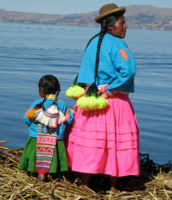
Native South Americans and Mesoamericans are also typically considered dark-skinned. High ultraviolet radiation levels occur throughout the Andes region of Peru, Bolivia, Chile, and Argentina.
Culture

The preference or disfavour for darker skin has varied depending on geographical area and time. Today, darker skin is viewed as fashionable and as a sign of well-being in some societies. This resulted in the development of tanning industry in several countries. However, in some countries, dark skin is not seen as highly desirable or indicative of higher class, especially among women.

Incitement to genocide

From Wikipedia, the free encyclopedia
https://en.wikipedia.org/wiki/Incitement_to_genocide
 
Audience makes a Nazi salute during Adolf Hitler's speech of 30 January 1939, in which he threatened "the annihilation of the Jewish race in Europe!"

Incitement to genocide is a crime under international law which prohibits inciting (encouraging) the commission of genocide. An extreme form of hate speech, incitement to genocide is considered an inchoate offense and is theoretically subject to prosecution even if genocide does not occur, although charges have never been brought in an international court without mass violence having occurred. "Direct and public incitement to commit genocide" was forbidden by the Genocide Convention in 1948. Incitement to genocide is often cloaked in metaphor and euphemism and may take many forms beyond direct advocacy, including dehumanization and "accusation in a mirror". Historically, incitement to genocide has played a significant role in the commission of genocide, including the Armenian genocide, the Holocaust and the Rwandan genocide.

Definitions

"Direct and public incitement to commit genocide" is forbidden by the Genocide Convention (1948), Article 3(c). If genocide were to be committed, then incitement could also be prosecuted as complicity in genocide, prohibited in Article 3(e), without the incitement necessarily being direct or public.

Incitement

Incitement means encouraging someone else to commit a crime, in this case genocide. The Genocide Convention is generally interpreted as requiring intent to cause genocide for incitement prosecutions.

"Direct"

"Direct" means that the speech must be both intended and understood as a call to take action against the targeted group, which may be difficult to prove for prosecutors due to cultural and individual differences. Wilson notes that "direct" does not inherently exclude euphemisms (see below), "if the prosecution can show that the overwhelming majority of listeners understood a euphemistic form of speech as a direct (rather than circuitous, oblique or veiled) call to commit genocide". American genocide scholar Gregory Gordon, noting that most incitement does not take the form of imperative command to kill the target group (see below), recommends that a "glossary of incitement techniques should be woven into judicial pronouncements".

The International Criminal Tribunal for Rwanda and International Criminal Tribunal for the former Yugoslavia came to different conclusions on the prosecution of incitement. According to ICTR, incitement did not require an explicit call for violence against the targeted group or causally connected subsequent violence. ICTY came to the opposite conclusion in Prosecutor v. Kordić, because "hate speech not directly calling for violence... did not rise to the same level of gravity" as crimes against humanity.

"Public"

Incitement is considered "public" "if it is communicated to a number of individuals in a public place or to members of a population at large by such means as the mass media". However, the Genocide Convention never defines the term "public" and it is unclear how the criterion would apply to new technologies, such as Internet-enabled social media. Jean-Bosco Barayagwiza was convicted by the International Criminal Tribunal for Rwanda for speeches made at a roadblock, but on appeal it was ruled that these speeches were not considered public.

Causation

Incitement to genocide is an inchoate crime as it is technically prosecutable even if genocide is never committed. However, Gordon writes that "no international court has ever brought an incitement prosecution in the absence of a subsequent genocide or other directly-related large-scale atrocity". Wilson noted that the judgement against Jean-Paul Akayesu "seemingly elevated causation to a legal requirement to prove incitement" as it stated "there must be proof of a possible causal link" between the alleged incitement and murders. Tribunals asserted that the incitement led to violence, even when this was not conclusively proven by the prosecution.

Davies details four benefits of an inchoate and separate approach to prosecuting incitement, instead of prosecuting incitement as part of the crime of genocide:

  1. obviating the difficult task of proving a causal connection between incitement and violence,
  2. allowing people to be charged with aiding and abetting incitement,
  3. allowing incitement to genocide to be prosecuted even when the resulting violence cannot be proven to have been genocidal (e.g. rather than war crimes or crimes against humanity), and
  4. enabling the prevention of genocide by prosecuting incitement thus acting as a deterrent to genocide.

Free speech issues

Defining incitement to genocide is important because it can be in tension with the protection of freedom of expression. In the Léon Mugesera case, a Canadian federal appeals court found that his 1992 speech claiming that Hutus were about to be "exterminated by inyenzi or cockroaches" was protected free speech and that the speech's themes were "elections, courage and love". Subsequently, the Canadian Supreme Court ruled that "reasonable grounds exist to believe that Mr. Mugesera committed a crime against humanity". Some dictators and authoritarian leaders have used overly broad interpretations of "incitement" or speech crimes in order to jail journalists and political opponents.

Gordon argued that the benefits of free speech do not apply in situations where mass violence is occurring because "the 'marketplace of ideas' has been likely shut down or is not functioning properly." Therefore, it is justified to restrict speech that would not ordinarily be punishable. Susan Benesch, a free speech advocate, concedes that free speech provisions are intended to protect private speech while most or all genocide is state-sponsored. Therefore, in her opinion, prosecution of incitement to genocide should take into account the authority of the speaker and whether they are likely to persuade the audience. Richard Ashby Wilson observed that those prosecuted for incitement to genocide and related international crimes "have gone beyond mere insult, libel and slander to incite others to commit mass atrocities. Moreover, their utterances usually occur in a context of an armed conflict, genocide and a widespread or systematic attack on a civilian population."

Alternate definitions

Alternate definitions and interpretations have been proposed by various authors. In Benesch's six-pronged "reasonably probable consequences" test, a finding of incitement to genocide would require violence as a possible consequence of the speech, which is compatible with existing jurisprudence. Carol Pauli's "Communications Research Framework" is intended to define situations where freedom of speech can be justifiably infringed by broadcast interference and other non-judicial measures to prevent genocide. Gordon has argued for "fixing the existing framework" by reinterpreting or changing incitement, direct, public, and causation elements. Gordon favors removing the requirement to be public, because "[p]rivate incitement can be just as lethal, if not more, than public."

Types

Susan Benesch noted that "Inciters have used strikingly similar techniques before genocide, even in times and places as different as Nazi Germany in the 1930s and Rwanda in the 1990s." The following types have been classified by Gordon.

Direct advocacy

Gordon notes that "direct calls for destruction are relatively rare". In May 1939, Nazi propagandist Julius Streicher wrote "A punitive expedition must come against the Jews in Russia. A punitive expedition which will provide the same fate for them that every murderer and criminal must expect. Death sentence and execution. The Jews in Russia must be killed. They must be exterminated root and branch." On 4 June 1994, Kantano Habimana broadcast from RTLM: "we will kill the Inkotanyi and exterminate them" based on their alleged ethnic characteristics: "Just look at his small nose and then break it". Gordon considers Iranian president Mahmoud Ahmadinejad's 2005 comments that Israel "must be wiped off the map" an example of direct advocacy.

Predictions

In the Rwandan Media Case, some broadcasts of the Radio Télévision Libre des Mille Collines (RTLM) that "foretold elimination of the inyenzi or cockroaches" were found to constitute incitement to genocide. An example is the following statement by Ananie Nkurunziza on RTLM on 5 June 1994: "I think we are fast approaching what I would call dawn ... dawn, because—for the young people who may not know— dawn is when the day breaks. Thus when day breaks, when that day comes, we will be heading for a brighter future, for the day when we will be able to say “There isn't a single Inyenzi left in the country.” The term Inyenzi will then be forever forgotten, and disappear for good."

Dehumanization

Jews killed during the Warsaw Ghetto uprising, described in the Stroop Report as "bandits destroyed in battle"

According to Gordon, "verminization, pathologization, demonization, and other forms of dehumanization" can be considered incitement to genocide. Verminization classifies the target as something "whose extermination would be considered normal and desirable", which is why Hutu leaders frequently described Tutsis as inyenzi (cockroaches). RTLM propagandist Georges Ruggiu pled guilty to incitement to genocide, admitting that calling Tutsis "inyenzi" meant designating them "persons to be killed". Gordon writes that like dehumanization, demonization is "sinister figurative speech but is more phantasmagorical and/ or anthropocentric in nature... [centering] on devils, malefactors, and other nefarious personages." Pathologization means designating the target as a disease. According to genocide scholar Gregory Stanton, this "expropriates pseudo-medical terminology to justify massacre [and it] dehumanizes the victims as sources of filth and disease, [propagating] the reversed social ethics of the perpetrators". Stanton identified dehumanization as third in the eight stages of genocide, noting that "Dehumanization overcomes the normal human revulsion against murder." While Stanton and others have contended that dehumanization is a necessary condition for genocide, Johannes Lang has argued that its role is overstated and that forms of humiliation and torture which occur during genocide occur precisely because the victims' humanity is recognized.

"Accusation in a mirror"

"Accusation in a mirror" is a false claim that accuses the target of something that the perpetrator is doing or intends to do. The name was coined by an anonymous Rwandan propagandist in Note Relative à la Propagande d’Expansion et de Recrutement. Drawing on the ideas of Joseph Goebbels and Vladimir Lenin, he instructed colleagues to "impute to enemies exactly what they and their own party are planning to do". By invoking collective self-defense, propaganda justifies genocide, just as self-defense is a defense for individual homicide. Susan Benesch remarked that while dehumanization "makes genocide seem acceptable", accusation in a mirror makes it seem necessary.

Kenneth L. Marcus writes that the tactic is "similar to a false anticipatory tu quoque" (a logical fallacy which charges the opponent with hypocrisy). The tactic does not rely on what misdeeds the enemy could plausibly be charged with, based on actual culpability or stereotypes, and does not involve any exaggeration but instead is an exact mirror of the perpetrator's own intentions. The weakness of the strategy is that it reveals the perpetrator's intentions, perhaps before he is able to carry it out. This could enable intervention to prevent genocide, or alternatively be "an indispensable tool for identifying and prosecuting incitement". According to Marcus, despite its weaknesses the tactic is frequently used by genocide perpetrators (including Nazis, Serbs, and Hutus) because it is effective. He recommends that courts should consider a false accusation of genocide by an opposing group to satisfy the "direct" requirement, because that is an "almost invariable harbinger of genocide".

Euphemism and metaphor

Perpetrators often rely on euphemisms or metaphors to conceal their actions. During the Rwandan genocide, calls to "go to work" referred to the murder of Tutsis. In Prosecutor v. Nyiramasuhuko, et al. (2015), two defendants had asked others to "sweep the dirt outside". The Trial Chamber of the International Criminal Tribunal for Rwanda (ICTR) held that this was incitement to genocide, because listeners "understood the words ... 'sweeping dirt', to mean they needed to kill Tutsis". Similarly, in Nazi Germany euphemisms such as Final Solution, special treatment, and "resettlement to the East" were used to refer to mass murder. According to William Schabas, "The history of genocide shows that those who incite the crime speak in euphemisms."

Justification

Justifying ongoing atrocities may be considered incitement to genocide. For example, Nazi propagandists repeatedly emphasized to potential perpetrators that "massacres, torture, death marches, slavery, and other atrocities" were carried out in a "humane" way. According to W. Michael Reisman, "in many of the most hideous international crimes, many of the individuals who are directly responsible operate within a cultural universe that inverts our morality and elevates their actions to the highest form of group, tribe, or national defense".

Praising past violence

Praising the perpetrators of completed atrocities can be a form of incitement. RTLM announcer Georges Ruggiu thanked the "valiant combatants" supposedly fighting a "battle" against Tutsi civilians. Eliézer Niyitegeka, transport minister, thanked militias for their "good work".

Asking questions

In the Rwandan genocide, Simon Bikindi's loudspeaker broadcasts to militia asking "have you killed the Tutsis here?" were held to contribute to a finding of incitement to genocide.

Conditional advocacy

In January 1994, Hassan Ngeze wrote an article stating that if Tutsi militias attacked, there would be "none of them left in Rwanda, not even a single accomplice. All the Hutu are united". The ICTR found that this was incitement to genocide, even though it was conditional.

Target–sympathizer conflation

During genocide, members of the majority group who help or sympathize with the targeted group are also persecuted. For example, during the Holocaust, non-Jews who hid Jews or simply opposed the genocide were murdered. In Rwanda, Hutus who opposed the genocide were labeled "traitors" and murdered. Mahmoud Ahmadinejad also threatened sympathizers with Israel, stating "Anybody who recognizes Israel will burn in the fire of the Islamic nation's fury".

Causing genocide

According to Susan Benesch, the strongest evidence for a causal connection between incitement and genocide is found in cases where there is widespread civilian participation in killings (as in Rwanda or the Nazi Holocaust) and where the target group lives alongside a majority group, requiring the acquiescence of that group for genocide to occur. Frank Chalk and Kurt Jonassohn wrote that "in order to perform a genocide the perpetrator has always had to first organize a campaign that redefined the victim group as worthless, outside the web of mutual obligations, a threat to the people, immoral sinners, and/or subhuman."

Larry May argues that incitement to genocide is proof of genocidal intent, and that inciters (along with planners) are more responsible for the resulting genocide than mere participants in the killing. He believes that incitement should be prosecuted more harshly than non-leadership participation for this reason, and because "the crime in question is not merely the individual act of killing or harming, but rather the mass crime of intending to destroy a protected group."

History

Armenian genocide

During the Armenian genocide, Ottoman propaganda described Armenians as "traitors, saboteurs, spies, conspirators, vermin, and infidels". At a meeting of the Committee of Union and Progress in February 1915, a speaker argued that "It is absolutely necessary to eliminate the Armenian people in its entirety, so that there is no further Armenian on this earth and the very concept of Armenia is extinguished." The party "envisioned the Armenian as an invasive infection in Muslim Turkish society", and CUP propagandist Ziya Gökalp promoted the idea that "Turkey could only be revitalized if it rid itself of its non-Muslim elements". This propaganda led directly to the murder of over a million Armenians.

The Holocaust

Wochenspruch der NSDAP, displayed 7–13 September 1941, quotes Hitler's prophecy speech on 30 January 1939: "If international finance Jewry inside and outside Europe should succeed in plunging the nations once more into a world war, the result will be not the Bolshevization of the earth and thereby the victory of Jewry, but the annihilation of the Jewish race in Europe."

Gordon identifies three strategies that the Nazi leadership employed in order to spread hate propaganda about Jews: statements by Nazi leaders, the Ministry of Propaganda, and destruction of the independent press. American historian Jeffrey Herf has argued that the role of euphemisms in Nazi propaganda has been exaggerated, and in fact Nazi leaders often made direct threats against Jews. The German dictator Adolf Hitler was the most important Nazi propagandist. His speeches and statements against the Jews were broadcast on the radio and reprinted on the front pages of the party newspaper Völkischer Beobachter, as well as other major newspapers. Goebbels' Ministry of Propaganda achieved "wholesale control of the mass media", and from 4 October 1933, all independent media was required to report to Otto Dietrich's Reich League of the German Press, which fined or censored newspaper editors who failed to follow Nazi ideology.

According to Nazi propaganda, an international Jewish conspiracy controlled the Allies and started World War II to "Bolshevize" the world; Germany fought back with a "war against the Jews". Nazi propagandists repeatedly accused "international Jewry" of plotting the extermination (Ausrottung) or annihilation (Vernichtung) of the German people and threatened to do the same to the Jews. As evidence, the obscure self-published American book Germany Must Perish!, which advocated the compulsory sterilization of all Germans, was repeatedly emphasized in Nazi propaganda. Hitler's prophecy, found in a 1939 speech which blamed Jews for the war and predicted their annihilation in that event, was frequently quoted during the killings of Jews and was another means of arguing for genocide. Jews inside Europe were presented as a fifth column and saboteurs who posed a serious threat to the German war effort, even as mass deportations to extermination camps were ongoing.

Another tactic used to incite genocide against Jews was to portray them as subhumans (Untermenschen). According to Nazi propaganda, Jews were "parasites, plague, cancer, tumour, bacillus, bloodsucker, blood poisoner, lice, vermin, bedbugs, fleas and racial tuberculosis" on the German national community, which was allegedly threatened by "Jewish disease". Goebbels described Jews as "the lice of civilized humanity". Nazi jurist Walter Buch wrote in the legal journal Deutsche Justiz: "the National Socialist has recognized...[that] the Jew is not a human being". By excluding Jews from humanity, it became justified to kill them.

The Grand Mufti of Jerusalem and Nazi collaborator Amin al-Husseini has also been described as inciting genocide, stating in a 1944 radio address for Bosnian Muslims, "Kill the Jews wherever you find them. This pleases God, history, and religion."

Bosnian genocide

In 1991, the state of Yugoslavia (which had consisted of Serbs, Croats, Bosniaks, Slovenes, Albanians, Slavic Macedonians, and Montenegrins) broke apart and fell into ethnic violence, which began with the secession of Croatia and Slovenia from the Serbian-led government in Belgrade. Bosnia-Herzegovina, an ethnically divided region with a plurality of Bosniaks as well as large Serbian and Croatian minorities, declared independence in March 1992. Serbs in Bosnia were represented by Serb Democratic Party (SDS), whose leader, Radovan Karadžić, had already threatened Bosniaks with genocide: supporting independence "might lead Bosnia into a hell and [cause] one people to disappear". Serbs did not recognize Bosnian independence and instead started the Bosnian War. Serbian forces committed many war crimes during the conflict, which included ethnic cleansing of non-Serbs, mass rapes, imprisonment in internment camps and the Srebrenica massacre.

Alongside the Serb military campaign, there was also a Serb propaganda campaign which aimed to instill "mutual fear and hatred and particularly inciting the Bosnian Serb population against the other ethnicities", according to the judgement in Prosecutor v. Brđanin. Because of the propaganda, people who had lived peacefully together turned against each other and became murderers. In 1991, Wolves of Vučjak and other Serb militia groups helped the SDS seize control of the TV stations, which were subsequently used for pro-Serb propaganda. According to this propaganda, which became more virulent as the war continued, Bosniaks and Croats would commit genocide against the Serbs unless they were eliminated first. The most extreme broadcasts, according to Brđanin, "openly incited people to kill non-Serbs".

Rwandan genocide

Human skulls at the Nyamata Genocide Memorial

Incitement to genocide attracted attention due to its occurrence prior to and during the Rwandan genocide in 1994. The pro-genocide media, especially RTLM, was referred to as "radio genocide", "death by radio" and "the soundtrack to genocide", and its causative role was recognized by international commentators. Rwanda, a former Belgian colony, included Hutu (84%) and Tutsi (15%) populations. Under colonial rule, Tutsi were favored to the exclusion of Hutus, leading to a buildup of ethnic resentment. After majority rule began in 1962, Hutus unleashed violence against Tutsis which led many of the latter to flee to neighboring countries. In 1987, these exiles created Rwandan Patriotic Front (RPF), which invaded Rwanda in 1990. In 1993, international pressure caused the Hutu government under Juvénal Habyarimana to sign the Arusha Accords with the RPF, but Hutu hardliners took to the media to denounce the agreement, Belgium, and Tutsis.

The state-controlled Radio Rwanda was taken over by Hutu extremists for broadcasting hate propaganda. A tabloid newspaper, Kangura, was also responsible for incitement, juxtaposing a picture of a machete with the question "What shall we do to complete the social revolution of 1959?" At Ferdinand Nahimana's behest, in 1992 Radio Rwanda broadcast a fabricated "hit list" supposedly drawn up by Tutsis as Hutu militias were being bussed to the target area. The militiamen killed hundreds of Tutsi civilians in the Bugesera massacres, which proved to be a "dress rehearsal" for the 100 days of murder that began in April 1994. Also in 1992, Léon Mugesera called for Tutsi to be sent "back to Ethiopia" via the non-navigable Nyabarongo River, which had been previously used to dispose of the bodies of Tutsis murdered in ethnic violence. The Rwandan Minister of Justice soon filed incitement charges against him, causing Mugesera to flee to Canada. After Nahimana was sacked from Radio Rwanda due to his role in the Bugesera massacres, he and others set up a private radio station, RTLM, which played the key role in inciting the genocide. Gordon describes four categories of RTLM broadcasts before the genocide. The first type criticized Tutsis based on alleged characteristics (such as wealth, similar to antisemitism, or physical traits). Another type of broadcast generalized all Tutsis as "inyenzi" (cockroaches) and Inkotanyi, a dangerous feudal warrior. The RTLM also acknowledged its reputation for inciting racial hatred, and denounced specific Tutsis (on 3 April, a doctor in Cyangugu was mentioned in a broadcast; he was murdered on 6 April.)

The genocide began on 6 April 1994 with the assassination of Habyarimana, whose plane was shot down over Kigali. Hutu extremists organized death squads which assassinated Tutsi and moderate Hutu politicians. A unit of Belgian peacekeepers were also murdered, in order to encourage the UN to withdraw its peacekeeping mission.

Hamas

Hamas, an Islamist Palestinian militant group that has controlled the Gaza Strip since 2007, has fired thousands of rockets indiscriminately into Israeli civilian areas and orchestrated a suicide bombing campaign aimed at Israeli civilians. Several statements by Hamas officials have been described as incitement to genocide.

Iran

Iranian men wear headbands which read "Death to Israel".

Since the 1979 Islamic Revolution, Iran is controlled by an Islamic government. Iran has attempted to develop nuclear weapons and uses proxy terrorism (via Hamas, Hezbollah, and Islamic Jihad) to attack and threaten Israeli civilians. Incendiary statements calling for the destruction of Israel are common in Iranian politics. President Mahmoud Ahmadinejad has called for Israel to be "wiped Israel off the map". Gregory Gordon and some other legal scholars contend that Ahmadinejad is guilty of incitement to genocide, although Benesch disagrees. In December 2006, the Conference of Presidents of Major American Jewish Organizations and the Jerusalem Center for Public Affairs hosted a symposium "Bring Ahmadinejad to Justice For Incitement to Genocide". The resulting petition, authored by Irwin Colter, has been signed by Elie Wiesel, Former UN High Commissioner for Human Rights Louise Arbour, and the former Swedish Deputy Prime Minister Per Ahlmark, and historian Yehuda Bauer. In 2007, the United States House of Representatives passed a resolution calling on Ahmadinejad to be investigated for inciting genocide.

Islamic State

The Islamic State (IS) has incited genocide against Yazidi people by dehumanizing them as "Satanists" and "devil worshippers" and issuing fatwas which recommend the sexual slavery of Yazidi women. According to IS propaganda, Yazidis' "continual existence to this day is a matter that Muslims should question as they will be asked about it on Judgement Day." Mohamed Elewa Badar argues IS has incited genocide, not just against Yazidis but against all those deemed kafir (infidels) in their extremist interpretation of Islam. IS advocates the "partial or total eradication of non-Muslim groups", and has committed genocide against the Yazidis.

International treaties

Based on the precedent of Nazi propagandist Julius Streicher, who was convicted of crimes against humanity by the International Military Tribunal in 1946, "[d]irect and public incitement to commit genocide" was forbidden by the Genocide Convention (1948), Article 3. During the debate on the convention, the Soviet delegate argued that "[i]t was impossible that hundreds of thousands of people should commit so many crimes unless they had been incited to do so" and that inciters, "the ones really responsible for the atrocities committed", ought to face justice. Several delegates supported a provision that would criminalize hate propaganda even if it did not directly call for violence. The Secretariat Draft called for the criminalization of "[a]ll forms of public propaganda tending by their systematic and hateful character to provoke genocide, or tending to make it appear as a necessary, legitimate or excusable act". However, the United States was reluctant to criminalize genocide incitement due to concerns over freedom of the press, and opposed any provisions that were seen as overly broad and likely to infringe on freedom of speech.

The International Convention on the Elimination of All Forms of Racial Discrimination (1965) prohibits "all dissemination of ideas based on racial superiority or hatred, incitement to racial discrimination, as well as all acts of violence or incitement to such acts against any race or group of persons of another colour or ethnic origin". One of the most widely ratified treaties, International Covenant on Civil and Political Rights (1966) also prohibits "propaganda for war" and "advocacy of national, racial or religious hatred that constitutes incitement to discrimination, hostility or violence" (which arguably conflicts with a separate article calling for freedom of speech). However, according to Wilson, many countries signed these treaties to maintain a façade of respect for human rights while violating their provisions and there is little effective international enforcement of human rights outside of the European Court of Human Rights. No more trials for incitement to genocide were held until nearly fifty years after the ratification of the Genocide Convention.

Since 1998, incitement to genocide is also forbidden by Article 25(3)(e) of the Rome Statute of the International Criminal Court. According to the Rome Statue, incitement is not "a crime in its own right" and an inchoate offense, as it was considered in previous prosecutions, but simply one possible "mode of criminal participation in genocide". Thomas Davies contends that this change makes it less likely that a perpetrator will be held accountable for incitement.

Case law

Nuremberg trials

Streicher at the 1938 Nuremberg rally before the destruction of Hans-Sachs-Platz synagogue

Julius Streicher, the founder, editor, and publisher of Der Stürmer, was found responsible for antisemitic articles referring to Jews as "a parasite, an enemy, and an evil-doer, a disseminator of diseases" or "swarms of locusts which must be exterminated completely". He continued to publish antisemitic articles even after learning of the mass murder of Jews in the occupied Soviet Union. The prosecution argued that "Streicher helped to create, through his propaganda, the psychological basis necessary for carrying through a program of persecution which culminated in the murder of six million men, women, and children." Because Streicher's articles "incited the German people to active persecution" and "murder and extermination", he was convicted of crimes against humanity by the IMT in 1946.

Hans Fritzsche was the Chief of the German Press Division of Joseph Goebbels' Reich Ministry of Public Enlightenment and Propaganda from 1938; in this position he issued instructions to German newspapers telling them what to report. According to the IMT prosecution, he "incited and encouraged the commission of War Crimes by deliberately falsifying news to arouse in the German People those passions which led them to the commission of atrocities". Fritzsche was acquitted because the court was "not prepared to hold that [his broadcasts] were intended to incite the German people to commit atrocities on conquered peoples". Nuremberg prosecutor Alexander Hardy later said that evidence not available to the prosecution at the time proved Fritzsche not only knew of the extermination of European Jews but also "played an important part in bringing [Nazi crimes] about", and would have resulted in his conviction. Fritzsche was later classified as Group I (Major Offenders) by a denazification court which gave him the maximum penalty, eight years' imprisonment.

Otto Dietrich was not tried at the main Nuremberg trial, but was convicted of crimes against humanity at the Ministries Trial, one of the subsequent Nuremberg trials. According to Hardy, Dietrich "more than anyone else, was responsible for presenting to the German people the justification for liquidating the Jews". Hardy noted that Dietrich not only controlled Der Stürmer but another 3,000 newspapers and 4,000 periodicals with a combined circulation over 30 million. The judgement against him noted that he conducted "a well thought-out, oft-repeated, persistent campaign to arouse the hatred of the German people against Jews" despite the lack of direct calls for violence made by him.

International Criminal Tribunal for Rwanda

The ICTR indicted three people for incitement to genocide in the so-called Rwanda Media Case: Hassan Ngeze, Ferdinand Nahimana, and Jean-Bosco Barayagwiza. All were convicted. The judges asserted that "The power of the media to create and destroy fundamental human values comes with great responsibility. Those who control such media are accountable for its consequences". They noted that "Without a firearm, machete or any physical weapon, you caused the deaths of thousands of innocent civilians". Prosecutors were able to prove that "direct" calls to genocide were made despite the use of euphemisms such as "go to work" for murdering Tutsi. After an appeal, the conviction of Barayagwiza was vacated because he had not been in control of the media while the genocide was occurring. However, Barayagwiza was still guilty of "instigating the perpetration of acts of genocide" and crimes against humanity.

International Criminal Tribunal for the former Yugoslavia

The ICTY has focused on prosecuting crimes other than genocide, because it is believed that the hate speech that occurred during the Bosnian genocide did not meet the legal standard of incitement to genocide. Serb politician Vojislav Šešelj was indicted for crimes against humanity, including "war propaganda and incitement of hatred towards non-Serb people". Serbian politician Radovan Karadžić was convicted of "participating in a joint criminal enterprise to commit crimes against humanity on the basis of his public speeches and broadcasts". Dario Kordić and Radoslav Brđanin were also convicted of crimes based on instigating violence in public speeches.

National case law

In 2016, Léon Mugesera was convicted of incitement to genocide and inciting ethnic hatred by a Rwandan court based on his 1992 speech.

Countering incitement

Inclusion of incitement in the Genocide Convention was intended to prevent genocide. As the judgement of Prosecutor v. Kalimanzira stated, "The inchoate nature of the crime allows intervention at an earlier stage, with the goal of preventing the occurrence of genocidal acts." Irwin Cotler stated that efforts to enforce the Genocide Convention in inchoate incitement cases "have proven manifestly inadequate". Alternately, prosecution for incitement after the genocide had concluded could have deterrent effect on those planning to commit the crime, but the effectiveness of international criminal trials as a deterrent is disputed. However, deterrence is less effective when the definition of the crime is contested and undefined.

Besides prosecutions, non-judicial interventions (called "information intervention") is possible against incitement, such as jamming broadcasting frequencies used to disseminate incitement or broadcasting counterspeech advocating against genocide. Genocide-inciting social media accounts and websites (such as those used by Islamic State to spread propaganda) can be shut down and taken offline. However, propagandists can circumvent these methods by creating new accounts or moving to a different hosting service. As an alternative to outright censorship, Google developed a "Redirect Method" which identifies individuals searching for IS-related material and redirects them to content which challenges IS narratives.

Mathematical universe hypothesis

From Wikipedia, the free encyclopedia https://en.wikipedia.org/wiki/Mathematical_universe_hypothesis   ...