From Wikipedia, the free encyclopedia
A privateer is a private person or ship that engages in maritime warfare under a commission of war.
Since robbery under arms was a common aspect of seaborne trade, until
the early 19th century all merchant ships carried arms. A sovereign or
delegated authority issued commissions, also referred to as a letter of marque,
during wartime. The commission empowered the holder to carry on all
forms of hostility permissible at sea by the usages of war. This
included attacking foreign vessels and taking them as prizes, and taking
prize crews as prisoners for exchange. Captured ships were subject to
condemnation and sale under prize law,
with the proceeds divided by percentage between the privateer's
sponsors, shipowners, captains and crew. A percentage share usually went
to the issuer of the commission (i.e. the sovereign).
Privateering allowed sovereigns to raise revenue for war by
mobilizing privately owned armed ships and sailors to supplement state
power. For participants, privateering provided the potential for a
greater income and profit than obtainable as a merchant seafarer or
fisher. However, this incentive increased the risk of privateers turning
to piracy when war ended.
The commission usually protected privateers from accusations of
piracy, but in practice the historical legality and status of privateers
could be vague. Depending on the specific sovereign and the time
period, commissions might be issued hastily; privateers might take
actions beyond what was authorized in the commission, including after
its expiry. A privateer who continued raiding after the expiration of a
commission or the signing of a peace treaty could face accusations of
piracy. The risk of piracy and the emergence of the modern state system
of centralised military control caused the decline of privateering by
the end of the 19th century.
Legal framework and relation to piracy
The commission was the proof the privateer was not a pirate.
It usually limited activity to one particular ship, and specified
officers, for a specified period of time. Typically, the owners or
captain would be required to post a performance bond.
The commission also dictated the expected nationality of potential
prize ships under the terms of the war. At sea, the privateer captain
was obliged to produce the commission to a potential prize ship's
captain as evidence of the legitimacy of their prize claim. If the
nationality of a prize was not the enemy of the commissioning sovereign,
the privateer could not claim the ship as a prize. Doing so would be an
act of piracy.
In British law, under the Offences at Sea Act 1536, piracy, or raiding a ship without a valid commission, was an act of treason. By the late 17th century, the prosecution of privateers loyal to the usurped King James II for piracy began to shift the legal framework of piracy away from treason towards crime against property. As a result, privateering commissions became a matter of national discretion. By the passing of the Piracy Act 1717,
a privateer's allegiance to Britain overrode any allegiance to a
sovereign providing the commission. This helped bring privateers under
the legal jurisdiction of their home country in the event the privateer
turned pirate. Other European countries followed suit. The shift from
treason to property also justified the criminalisation of traditional
sea-raiding activities of people Europeans wished to colonise.
The legal framework around authorised sea-raiding was
considerably murkier outside of Europe. Unfamiliarity with local forms
of authority created difficulty determining who was legitimately
sovereign on land and at sea, whether to accept their authority, or
whether the opposing parties were, in fact, pirates. Mediterranean corsairs
operated with a style of patriotic-religious authority that Europeans,
and later Americans, found difficult to understand and accept. It did not help that many European privateers happily accepted commissions from the deys of Algiers, Tangiers and Tunis. The sultans of the Sulu archipelago (now present-day Philippines) held only a tenuous authority over the local Iranun
communities of slave-raiders. The sultans created a carefully spun web
of marital and political alliances in an attempt to control unauthorised
raiding that would provoke war against them.
In Malay political systems, the legitimacy and strength of their
Sultan's management of trade determined the extent he exerted control
over the sea-raiding of his coastal people.
Privateers were implicated in piracy for a number of complex
reasons. For colonial authorities, successful privateers were skilled
seafarers who brought in much-needed revenue, especially in newly
settled colonial outposts.
These skills and benefits often caused local authorities to overlook a
privateer's shift into piracy when a war ended. The French Governor of Petit-Goave gave buccaneer Francois Grogniet blank privateering commissions, which Grogniet traded to Edward Davis for a spare ship so the two could continue raiding Spanish cities under a guise of legitimacy. New York Governors Jacob Leisler and Benjamin Fletcher were removed from office in part for their dealings with pirates such as Thomas Tew, to whom Fletcher had granted commissions to sail against the French, but who ignored his commission to raid Mughal shipping in the Red Sea instead.
Some privateers faced prosecution for piracy. William Kidd accepted a commission from King William III of England to hunt pirates but was later hanged for piracy. He had been unable to produce the papers of the prizes he had captured to prove his innocence.
Privateering commissions were easy to obtain during wartime but
when the war ended and sovereigns recalled the privateers, many refused
to give up the lucrative business and turned to piracy.[9]
Boston minister Cotton Mather lamented after the execution of pirate John Quelch:
"Yea, since the privateering stroke so easily degenerates into the
piratical and the privateering trade is usually carried on with so
un-Christian a temper and proves an inlet unto so much debauchery and
iniquity and confusion, I believe I shall have good men concur with me
in wishing that privateering may no more be practised except there may
appear more hopeful circumstances to encourage it."
Noted privateers
Privateers who were considered legitimate by their governments include:
Ships
Entrepreneurs
converted many different types of vessels into privateers, including
obsolete warships and refitted merchant ships. The investors would arm
the vessels and recruit large crews, much larger than a merchantman or a
naval vessel would carry, in order to crew the prizes they captured.
Privateers generally cruised independently, but it was not unknown for
them to form squadrons, or to co-operate with the regular navy. A number
of privateers were part of the English fleet that opposed the Spanish Armada
in 1588. Privateers generally avoided encounters with warships, as such
encounters would be at best unprofitable. Still, such encounters did
occur. For instance, in 1815 Chasseur encountered HMS St Lawrence,
herself a former American privateer, mistaking her for a merchantman
until too late; in this instance, however, the privateer prevailed.
The United States used mixed squadrons of frigates and privateers in the American Revolutionary War. Following the French Revolution,
French privateers became a menace to British and American shipping in
the western Atlantic and the Caribbean, resulting in the Quasi-War, a brief conflict between France and the United States, fought largely at sea, and to the Royal Navy's procuring Bermuda sloops to combat the French privateers.
Overall history
In Europe, the practice of authorising sea-raiding dated to at least
the 13th century but the word 'privateer' was coined sometime in the
mid-17th century.
A seaman who shipped on a naval vessel was paid a wage and provided
with victuals but the mariner on a merchantman or privateer received a
share of the takings.
Privateering thus offered otherwise working-class enterprises
(merchant ships) with the chance at substantial wealth (prize money from
captures). The opportunity mobilized local seamen as auxiliaries in an era when state capacity limited the ability of a nation to fund a professional navy via taxation.
Privateers were a large part of the total military force at sea during the 17th and 18th centuries. In the first Anglo-Dutch War,
English privateers attacked the trade on which the United Provinces
entirely depended, capturing over 1,000 Dutch merchant ships. During the
subsequent war with Spain, Spanish and Flemish privateers in the service of the Spanish Crown, including the Dunkirkers, captured 1,500 English merchant ships, helping to restore Dutch international trade.
British trade, whether coastal, Atlantic, or Mediterranean, was also
attacked by Dutch privateers and others in the Second and Third
Anglo-Dutch wars. Piet Pieterszoon Hein was a brilliantly successful Dutch privateer who captured a Spanish treasure fleet. Magnus Heinason
was another privateer who served the Dutch against the Spanish. While
their and others' attacks brought home a great deal of money, they
hardly dented the flow of gold and silver from Mexico to Spain.
As the industrial revolution proceeded, privateering became increasingly incompatible with modern states' monopoly on violence. Modern warships could easily outrace merchantmen, and tight controls on naval armaments led to fewer private-purchase naval weapons. Privateering continued until the 1856 Declaration of Paris,
in which all major European powers stated that "Privateering is and
remains abolished". The United States did not sign the Declaration over
stronger language that protects all private property from capture at
sea, but has not issued letters of marque in any subsequent conflicts.
In the 19th century, many nations passed laws forbidding their nationals
from accepting commissions as privateers for other nations. The last
major power to flirt with privateering was Prussia in the 1870 Franco-Prussian War,
when Prussia announced the creation of a 'volunteer navy' of ships
privately-owned and -manned, but eligible for prize money. (Prussia
argued that the Declaration did not forbid such a force, because the
ships were subject to naval discipline.)
England/Britain
In England, and later the United Kingdom,
the ubiquity of wars and the island nation's reliance on maritime trade
enabled the use of privateers to great effect. England also suffered
much from other nations' privateering. During the 15th century, the
country "lacked an institutional structure and coordinated finance".
When piracy became an increasing problem, merchant communities such as
Bristol began to resort to self-help, arming and equipping ships at
their own expense to protect commerce.
The licensing of these privately owned merchant ships by the Crown
enabled them to legitimately capture vessels that were deemed pirates.
This constituted a "revolution in naval strategy" and helped fill the
need for protection that the Crown was unable to provide.
During the reign of Queen Elizabeth (1558–1603), she "encouraged the development of this supplementary navy". Over the course of her rule, the increase of Spanish prosperity through their explorations in the New World and the discovery of gold contributed to the deterioration of Anglo-Spanish relations. Elizabeth's authorisation of sea-raiders (known as Sea Dogs) such as Francis Drake and Walter Raleigh
allowed her to officially distance herself from their raiding
activities while enjoying the gold gained from these raids. English
ships cruised in the Caribbean and off the coast of Spain, trying to
intercept treasure fleets from the Spanish Main.
Elizabeth was succeeded by the first Stuart monarchs, James I and Charles I, who did not permit privateering. Desperate to fund the expensive War of Spanish Succession, Queen Anne restarted privateering and even removed the need for a sovereign's percentage as an incentive.
Sovereigns continued to license British privateers throughout the
century, although there were a number of unilateral and bilateral
declarations limiting privateering between 1785 and 1823. This helped
establish the privateer's persona as heroic patriots. British privateers
last appeared en masse in the Napoleonic Wars.
England and Scotland practiced privateering both separately and together after they united to create the Kingdom of Great Britain in 1707. It was a way to gain for themselves some of the wealth the Spanish and Portuguese were taking from the New World before beginning their own trans-Atlantic settlement, and a way to assert naval power before a strong Royal Navy emerged.
Sir Andrew Barton, Lord High Admiral of Scotland, followed the example of his father, who had been issued with letters of marque by James III of Scotland
to prey upon English and Portuguese shipping in 1485; the letters in
due course were reissued to the son. Barton was killed following an
encounter with the English in 1511.
Sir Francis Drake,
who had close contact with the sovereign, was responsible for some
damage to Spanish shipping, as well as attacks on Spanish settlements in
the Americas in the 16th century. He participated in the successful
English defence against the Spanish Armada in 1588, though he was also partly responsible for the failure of the English Armada against Spain in 1589.
Sir George Clifford, 3rd Earl of Cumberland, was a successful privateer against Spanish shipping in the Caribbean. He is also famous for his short-lived 1598 capture of Fort San Felipe del Morro, the citadel protecting San Juan, Puerto Rico.
He arrived in Puerto Rico on June 15, 1598, but by November of that
year, Clifford and his men had fled the island due to fierce civilian
resistance. He gained sufficient prestige from his naval exploits to be
named the official Champion
of Queen Elizabeth I. Clifford became extremely wealthy through his
buccaneering but lost most of his money gambling on horse races.
Captain Christopher Newport led more attacks on Spanish shipping and settlements than any other English privateer. As a young man, Newport sailed with Sir Francis Drake
in the attack on the Spanish fleet at Cadiz and participated in
England's defeat of the Spanish Armada. During the war with Spain,
Newport seized fortunes of Spanish and Portuguese treasure in fierce sea
battles in the West Indies as a privateer for Queen Elizabeth I. He lost an arm whilst capturing a Spanish ship during an expedition in 1590, but despite this, he continued on privateering, successfully blockading Western Cuba the following year. In 1592, Newport captured the Portuguese carrack Madre de Deus (Mother of God), valued at £500,000.
Sir Henry Morgan
was a successful privateer. Operating out of Jamaica, he carried on a
war against Spanish interests in the region, often using cunning
tactics. His operation was prone to cruelty against those he captured,
including torture to gain information about booty, and in one case using
priests as human shields. Despite reproaches for some of his excesses, he was generally protected by Sir Thomas Modyford,
the governor of Jamaica. He took an enormous amount of booty, as well
as landing his privateers ashore and attacking land fortifications,
including the sack of the city of Panama with only 1,400 crew.
Other British privateers of note include Fortunatus Wright, Edward Collier, Sir John Hawkins, his son Sir Richard Hawkins, Michael Geare, and Sir Christopher Myngs. Notable British colonial privateers in Nova Scotia include Alexander Godfrey of the brig Rover and Joseph Barss of the schooner Liverpool Packet. The latter schooner captured over 50 American vessels during the War of 1812.
Bermudians
The English colony of Bermuda (or the Somers Isles),
settled accidentally in 1609, was used as a base for English privateers
from the time it officially became part of the territory of the Virginia Company in 1612, especially by ships belonging to the Earl of Warwick, for whom Bermuda's Warwick Parish is named (the Warwick name had long been associated with commerce raiding, as exampled by the Newport Ship, thought to have been taken from the Spanish by Warwick the Kingmaker
in the 15th Century). Many Bermudians were employed as crew aboard
privateers throughout the century, although the colony was primarily
devoted to farming cash crops until turning from its failed agricultural
economy to the sea after the 1684 dissolution of the Somers Isles Company
(a spin-off of the Virginia Company which had overseen the colony since
1615). With a total area of 54 square kilometres (21 sq mi) and lacking
any natural resources other than the Bermuda cedar, the colonists applied themselves fully to the maritime trades, developing the speedy Bermuda sloop,
which was well suited both to commerce and to commerce raiding.
Bermudian merchant vessels turned to privateering at every opportunity
in the 18th century, preying on the shipping of Spain, France, and other
nations during a series of wars, including the 1688 to 1697 Nine Years' War (King William's War); the 1702 to 1713 Queen Anne's War; the 1739 to 1748 War of Jenkins' Ear; the 1740 to 1748 War of the Austrian Succession (King George's War); the 1754 to 1763 Seven Years' War (known in the United States as the French and Indian War),
this conflict was devastating for the colony's merchant fleet. Fifteen
privateers operated from Bermuda during the war, but losses exceeded
captures; the 1775 to 1783 American War of Independence; and the 1796 to 1808 Anglo-Spanish War.
By the middle of the 18th century, Bermuda was sending twice as many
privateers to sea as any of the continental colonies. They typically
left Bermuda with very large crews. This advantage in manpower was vital
in overpowering the crews of larger vessels, which themselves often
lacked sufficient crewmembers to put up a strong defence. The extra
crewmen were also useful as prize crews for returning captured vessels.
The Bahamas, which had been depopulated of its indigenous
inhabitants by the Spanish, had been settled by England, beginning with
the Eleutheran Adventurers, dissident Puritans driven out of Bermuda during the English Civil War. Spanish and French attacks destroyed New Providence in 1703, creating a stronghold for pirates, and it became a thorn in the side of British merchant trade through the area. In 1718, Britain appointed Woodes Rogers as Governor of the Bahamas,
and sent him at the head of a force to reclaim the settlement. Before
his arrival, however, the pirates had been forced to surrender by a
force of Bermudian privateers who had been issued letters of marque by
the Governor of Bermuda.
Bermuda Gazette of 12 November 1796, calling for privateering against Spain and its allies during the 1796 to 1808
Anglo-Spanish War, and with advertisements for crew for two privateer vessels.
Bermuda was in de facto control of the Turks Islands,
with their lucrative salt industry, from the late 17th century to the
early 19th. The Bahamas made perpetual attempts to claim the Turks for
itself. On several occasions, this involved seizing the vessels of
Bermudian salt traders. A virtual state of war was said to exist between
Bermudian and Bahamian vessels for much of the 18th century. When the
Bermudian sloop Seaflower was seized by the Bahamians in 1701, the response of the Governor of Bermuda, Captain Benjamin Bennett,
was to issue letters of marque to Bermudian vessels. In 1706, Spanish
and French forces ousted the Bermudians but were driven out themselves
three years later by the Bermudian privateer Captain Lewis Middleton. His ship, the Rose, attacked a Spanish and a French privateer holding a captive English vessel. Defeating the two enemy vessels, the Rose then cleared out the thirty-man garrison left by the Spanish and French.
Despite strong sentiments in support of the rebels, especially in
the early stages, Bermudian privateers turned as aggressively on
American shipping during the American War of Independence.
The importance of privateering to the Bermudian economy had been
increased not only by the loss of most of Bermuda's continental trade
but also by the Palliser Act, which forbade Bermudian vessels from fishing the Grand Banks.
Bermudian trade with the rebellious American colonies actually carried
on throughout the war. Some historians credit the large number of
Bermuda sloops (reckoned at over a thousand) built-in Bermuda as
privateers and sold illegally to the Americans as enabling the
rebellious colonies to win their independence.
Also, the Americans were dependent on Turks salt, and one hundred
barrels of gunpowder were stolen from a Bermudian magazine and supplied
to the rebels as orchestrated by Colonel Henry Tucker and Benjamin Franklin, and as requested by George Washington, in exchange for which the Continental Congress
authorised the sale of supplies to Bermuda, which was dependent on
American produce. The realities of this interdependence did nothing to
dampen the enthusiasm with which Bermudian privateers turned on their
erstwhile countrymen.
An American naval captain, ordered to take his ship out of Boston Harbor
to eliminate a pair of Bermudian privateering vessels that had been
picking off vessels missed by the Royal Navy, returned frustrated,
saying, "the Bermudians sailed their ships two feet for every one of
ours".
Around 10,000 Bermudians emigrated in the years prior to American
independence, mostly to the American colonies. Many Bermudians occupied
prominent positions in American seaports, from where they continued
their maritime trades (Bermudian merchants controlled much of the trade
through ports like Charleston, South Carolina, and Bermudian shipbuilders influenced the development of American vessels, like the Chesapeake Bay schooner),
and in the Revolution they used their knowledge of Bermudians and of
Bermuda, as well as their vessels, for the rebels' cause. In the 1777
Battle of Wreck Hill, brothers Charles and Francis Morgan, members of a
large Bermudian enclave that had dominated Charleston, South Carolina
and its environs since settlement, captaining two sloops (the Fair American and the Experiment,
respectively), carried out the only attack on Bermuda during the war.
The target was a fort that guarded a little used passage through the
encompassing reef line. After the soldiers manning the fort were forced
to abandon it, they spiked its guns and fled themselves before
reinforcements could arrive.
When the Americans captured the Bermudian privateer Regulator,
they discovered that virtually all of her crew were black slaves.
Authorities in Boston offered these men their freedom, but all 70
elected to be treated as prisoners of war. Sent as such to New York on the sloop Duxbury, they seized the vessel and sailed it back to Bermuda.
A List of Prizes Captured and brought into the Port of Bermuda between
the 4th day of April 1782 and the 4th day of April 1783|One-hundred and
thirty prizes were brought to Bermuda in the year between 4th day of
April 1782 and the 4th day of April 1783 alone, including three by Royal
Naval vessels and the remainder by privateers.
The War of 1812 saw an encore of Bermudian privateering, which
had died out after the 1790s. The decline of Bermudian privateering was
due partly to the buildup of the naval base in Bermuda,
which reduced the Admiralty's reliance on privateers in the western
Atlantic, and partly to successful American legal suits and claims for
damages pressed against British privateers, a large portion of which
were aimed squarely at the Bermudians.
During the course of the War of 1812, Bermudian privateers captured 298
ships, some 19% of the 1,593 vessels captured by British naval and
privateering vessels between the Great Lakes and the West Indies.
Among the better known (native-born and immigrant) Bermudian privateers were Hezekiah Frith, Bridger Goodrich, Henry Jennings, Thomas Hewetson, and Thomas Tew.
Providence Island colony
Bermudians were also involved in privateering from the short-lived English colony on Isla de Providencia,
off the coast of Nicaragua. This colony was initially settled largely
via Bermuda, with about eighty Bermudians moved to Providence in 1631.
Although it was intended that the colony be used to grow cash crops, its
location in the heart of the Spanish controlled territory ensured that
it quickly became a base for privateering.
Bermuda-based privateer Daniel Elfrith, while on a privateering expedition with Captain Sussex Camock of the bark Somer Ilands (a rendering of " Somers Isles",
the alternate name of the Islands of Bermuda) in 1625, discovered two
islands off the coast of Nicaragua, 80 kilometres (50 mi) apart from
each other. Camock stayed with 30 of his men to explore one of the
islands, San Andrés, while Elfrith took the Warwicke back to Bermuda
bringing news of Providence Island. Bermuda Governor Bell wrote on
behalf of Elfrith to Sir Nathaniel Rich, a businessman and cousin of the
Earl of Warwick (the namesake of Warwick Parish),
who presented a proposal for colonizing the island noting its strategic
location "lying in the heart of the Indies & the mouth of the
Spaniards". Elfrith was appointed admiral of the colony's military
forces in 1631, remaining the overall military commander for over seven
years. During this time, Elfrith served as a guide to other privateers
and sea captains arriving in the Caribbean. Elfrith invited the
well-known privateer Diego el Mulato to the island. Samuel Axe, one of
the military leaders, also accepted letters of marque from the Dutch
authorizing privateering.
The Spanish did not hear of the Providence Island colony until 1635 when they captured some Englishmen in Portobelo, on the Isthmus of Panama. Francisco de Murga, Governor and Captain-General of Cartagena, dispatched Captain Gregorio de Castellar y Mantilla and engineer Juan de Somovilla Texada to destroy the colony. The Spanish were repelled and forced to retreat "in haste and disorder". After the attack, King Charles I of England issued letters of marque to the Providence Island Company on 21 December 1635 authorizing raids on the Spanish in retaliation for a raid that had destroyed the English colony on Tortuga earlier in 1635 (Tortuga
had come under the protection of the Providence Island Company. In 1635
a Spanish fleet raided Tortuga. 195 colonists were hung and 39
prisoners and 30 slaves were captured). The company could in turn issue
letters of marque to subcontracting privateers who used the island as a
base, for a fee. This soon became an important source of profit. Thus
the company made an agreement with the merchant Maurice Thompson under
which Thompson could use the island as a base in return for 20% of the
booty.
In March 1636 the Company dispatched Captain Robert Hunt on the Blessing to assume the governorship of what was now viewed as a base for privateering. Depredations continued, leading to growing tension between England and Spain, which were still technically at peace.
On 11 July 1640, the Spanish Ambassador in London complained again, saying he
understands that there is lately brought in at the Isle of Wight by one, Captain James Reskinner [James Reiskimmer],
a ship very richly laden with silver, gold, diamonds, pearls, jewels,
and many other precious commodities taken by him in virtue of a
commission of the said Earl [of Warwick] from the subjects of his
Catholic Majesty ... to the infinite wrong and dishonour of his Catholic
Majesty, to find himself thus injured and violated, and his subjects
thus spoiled, robbed, impoverished and murdered in the highest time of
peace, league and amity with your Majesty.
Nathaniel Butler,
formerly Governor of Bermuda, was the last full governor of Providence
Island, replacing Robert Hunt in 1638. Butler returned to England in
1640, satisfied that the fortifications were adequate, deputizing the
governorship to Captain Andrew Carter.
In 1640, don Melchor de Aguilera,
Governor and Captain-General of Cartagena, resolved to remove the
intolerable infestation of pirates on the island. Taking advantage of
having infantry from Castile and Portugal wintering in his port, he
dispatched six hundred armed Spaniards from the fleet and the presidio,
and two hundred black and mulatto militiamen under the leadership of don
Antonio Maldonado y Tejada, his Sergeant Major, in six small frigates and a galleon.
The troops were landed on the island, and a fierce fight ensued. The
Spanish were forced to withdraw when a gale blew up and threatened their
ships. Carter had the Spanish prisoners executed. When the Puritan
leaders protested against this brutality, Carter sent four of them home
in chains.
The Spanish acted decisively to avenge their defeat. General Francisco Díaz Pimienta was given orders by King Philip IV of Spain, and sailed from Cartagena to Providence with seven large ships, four pinnaces,
1,400 soldiers and 600 seamen, arriving on 19 May 1641. At first,
Pimienta planned to attack the poorly defended east side, and the
English rushed there to improvise defenses. With the winds against him,
Pimienta changed plans and made for the main New Westminster harbor and
launched his attack on 24 May. He held back his large ships to avoid
damage, and used the pinnaces to attack the forts. The Spanish troops
quickly gained control, and once the forts saw the Spanish flag flying
over the governor's house, they began negotiations for surrender.
On 25 May 1641, Pimienta formally took possession and celebrated
mass in the church. The Spanish took sixty guns, and captured the 350
settlers who remained on the island – others had escaped to the Mosquito
Coast. They took the prisoners to Cartagena.
The women and children were given a passage back to England. The
Spanish found gold, indigo, cochineal and six hundred black slaves on
the island, worth a total of 500,000 ducats, some of the accumulated
booty from the raids on Spanish ships.
Rather than destroy the defenses, as instructed, Pimienta left a small
garrison of 150 men to hold the island and prevent occupation by the
Dutch. Later that year, Captain John Humphrey,
who had been chosen to succeed Captain Butler as governor, arrived with
a large group of dissatisfied settlers from New England. He found the
Spanish occupying the islands, and sailed away. Pimienta's decision to occupy the island was approved in 1643 and he was made a knight of the Order of Santiago.
Spain and its colonies
When Spain issued a decree blocking foreign countries from trading,
selling or buying merchandise in its Caribbean colonies, the entire
region became engulfed in a power struggle among the naval superpowers. The newly independent United States later became involved in this scenario, complicating the conflict. As a consequence, Spain increased the issuing of privateering contracts.
These contracts allowed an income option to the inhabitants of these
colonies that were not related to the Spanish conquistadores. The most
well-known privateer corsairs of the eighteenth century in the Spanish
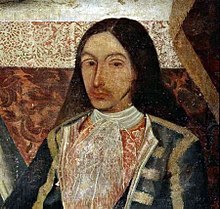
colonies were Miguel Enríquez of Puerto Rico and José Campuzano-Polanco of Santo Domingo. Miguel Enríquez was a Puerto Rican mulatto
who abandoned his work as a shoemaker to work as a privateer. Such was
the success of Enríquez, that he became one of the wealthiest men in the
New World. His fleet was composed of approx. 300 different ships during
a career that spanned 35 years, becoming a military asset and
reportedly outperforming the efficiency of the Armada de Barlovento. Enríquez was knighted and received the title of Don from Philip V, something unheard of due to his ethnic and social background. One of the most famous privateers from Spain was Amaro Pargo.
France
Advertising for the auction of the prize Chelmers of London, brig captured by the French privateer Junon in 1810.
Corsairs (French: corsaire) were privateers, authorized to
conduct raids on shipping of a nation at war with France, on behalf of
the French Crown. Seized vessels and cargo were sold at auction, with
the corsair captain entitled to a portion of the proceeds. Although not French Navy
personnel, corsairs were considered legitimate combatants in France
(and allied nations), provided the commanding officer of the vessel was
in possession of a valid Letter of Marque (fr. Lettre de Marque or Lettre de Course), and the officers and crew conducted themselves according to contemporary admiralty law. By acting on behalf of the French Crown, if captured by the enemy, they could claim treatment as prisoners of war, instead of being considered pirates. Because corsairs gained a swashbuckling
reputation, the word "corsair" is also used generically as a more
romantic or flamboyant way of referring to privateers, or even to
pirates. The Barbary pirates of North Africa as well as Ottomans were sometimes called "Turkish corsairs".
Malta
Corsairing (Italian: corso) was an important aspect of Malta's economy when the island was ruled by the Order of St. John, although the practice had begun earlier. Corsairs sailed on privately owned ships on behalf of the Grand Master of the Order, and were authorized to attack Muslim ships, usually merchant ships from the Ottoman Empire.
The corsairs included knights of the Order, native Maltese people, as
well as foreigners. When they captured a ship, the goods were sold and
the crew and passengers were ransomed or enslaved, and the Order took a
percentage of the value of the booty. Corsairing remained common until the end of the 18th century.
United States
British Colonial period
During King George's War, approximately 36,000 Americans served aboard privateers at one time or another. During the Nine Years War, the French adopted a policy of strongly encouraging privateers, including the famous Jean Bart, to attack English and Dutch shipping. England lost roughly 4,000 merchant ships during the war. In the following War of Spanish Succession, privateer attacks continued, Britain losing 3,250 merchant ships.
In the subsequent conflict, the War of Austrian Succession,
the Royal Navy was able to concentrate more on defending British ships.
Britain lost 3,238 merchantmen, a smaller fraction of her merchant
marine than the enemy losses of 3,434.
While French losses were proportionally severe, the smaller but better
protected Spanish trade suffered the least and it was Spanish privateers
who enjoyed much of the best-allied plunder of British trade,
particularly in the West Indies.
American Revolutionary War
During the American Revolutionary War, the Continental Congress,
and some state governments (on their own initiative), issued
privateering licenses, authorizing "legal piracy", to merchant captains
in an effort to take prizes from the British Navy and Tory
(Loyalist) privateers. This was done due to the relatively small number
of commissioned American naval vessels and the pressing need for prisoner exchange.
About 55,000 American seamen served aboard the privateers. They quickly sold their prizes, dividing their profits with the financier (persons or company) and the state (colony). Long Island Sound became a hornets' nest of privateering activity during the American Revolution (1775–1783), as most transports to and from New York went through the Sound. New London, Connecticut
was a chief privateering port for the American colonies, leading to the
British Navy blockading it in 1778–1779. Chief financiers of
privateering included Thomas & Nathaniel Shaw of New London and John
McCurdy of Lyme. In the months before the British raid on New London and Groton, a New London privateer took Hannah
in what is regarded as the largest prize taken by any American
privateer during the war. Retribution was likely part of Gov. Clinton's
(NY) motivation for Arnold's Raid, as the Hannah had carried many of his most cherished items.
American privateers are thought to have seized up to 300 British ships during the war. The British ship Jack was captured and turned into an American privateer, only to be captured again by the British in the naval battle off Halifax, Nova Scotia. American privateers not only fought naval battles but also raided numerous communities in British colonies, such as the Raid on Lunenburg, Nova Scotia (1782).
The United States Constitution authorized the U.S. Congress
to grant letters of marque and reprisal. Between the end of the
Revolutionary War and the War of 1812, less than 30 years, Britain,
France, Naples, the Barbary States, Spain, and the Netherlands seized approximately 2,500 American ships. Payments in ransom and tribute to the Barbary states amounted to 20% of United States government annual revenues in 1800 and would lead the United States to fight the Barbary states in the First Barbary War and Second Barbary Wars.
War of 1812
During the War of 1812, both the British and the American governments used privateers, and the established system was very similar. U.S. Congress declared
that
war be and the same is hereby declared to exist between the United
Kingdom of Great Britain and Ireland and the dependencies thereof, and
the United States of America and their Territories; and that the
President of the United States is herby authorized to use the whole land
and naval force of the United States to carry the same into effect, and
to issue to private armed vessels of the United States commissions of
marque and general reprisal, in such forms as he shall think proper, and
under the seal of the United States, against the vessels, goods, and
effects of the Government of the said United Kingdom of Great Britain
and Ireland, and the subjects thereof.
President Madison issued 500 letters of marque
authorizing privateers. Overall some 200 of the ships took prizes. The
cost of buying and fitting of a large privateer was about $40,000 and
prizes could net $100,000.
Captain Thomas Boyle was one of the famous and successful American privateers. He commanded the Baltimore schooner Comet and then later in the war the Baltimore clipper Chasseur. He captured over 50 British merchant ships during the war. One source estimated a total damage to the Royal Navy from Chasseur's
1813-1815 activities at one and a half million dollars. In total, the
Baltimore privateer fleet of 122 ships sunk or seized 500 British ships
with an estimated value of $16 million, which accounts about one-third
of all the value of all prizes taken over the course of the whole war.
On April 8, 1814, the British attacked Essex, Connecticut, and burned the ships in the harbor,
due to the construction there of a number of privateers. This was the
greatest financial loss of the entire War of 1812 suffered by the
Americans. However, the private fleet of James De Wolf,
which sailed under the flag of the American government in 1812, was
most likely a key factor in the naval campaign of the war. De Wolf's
ship, the Yankee, was possibly the most financially successful
ship of the war. Privateers proved to be far more successful than their
US Navy counterparts, claiming three-quarters of the 1600 British
merchant ships taken during the war (although a third of these were
recaptured prior to making landfall). One of the more successful of
these ships was the Prince de Neufchatel, which once captured nine British prizes in swift succession in the English Channel.
Jean Lafitte and his privateers aided US General Andrew Jackson in the defeat of the British in the Battle of New Orleans in order to receive full pardons for their previous crimes. Jackson formally requested clemency for Lafitte and the men who had
served under him, and the US government granted them all a full pardon
on February 6, 1815.
However, many of the ships captured by the Americans were
recaptured by the Royal Navy. British convoy systems honed during the
Napoleonic Wars limited losses to singleton ships, and the effective
blockade of American and continental ports prevented captured ships
being taken in for sale. This ultimately led to orders forbidding US
privateers from attempting to bring their prizes in to port, with
captured ships instead having to be burnt. Over 200 American privateer
ships were captured by the Royal Navy, many of which were turned on
their former owners and used by the British blockading forces.
Nonetheless, during the War of 1812 the privateers "swept out from
America's coasts, capturing and sinking as many as 2,500 British ships
and doing approximately $40 million worth of damage to the British
economy."
1856 Declaration of Paris
The US was not one of the initial signatories of the 1856 Declaration of Paris which outlawed privateering, and the Confederate Constitution authorized use of privateers. However, the US did offer to adopt the terms of the Declaration during the American Civil War, when the Confederates sent several privateers to sea before putting their main effort in the more effective commissioned raiders.
American Civil War
During the American Civil War privateering took on several forms, including blockade running while privateering, in general, occurred in the interests of both the North and the South. Letters of marque
would often be issued to private shipping companies and other private
owners of ships, authorizing them to engage vessels deemed to be
unfriendly to the issuing government. Crews of ships were awarded the
cargo and other prizes aboard any captured vessel as an incentive to
search far and wide for ships attempting to supply the Confederacy, or
aid the Union, as the case may be.
During the Civil War Confederate President Jefferson Davis
issued letters of marque to anyone who would employ their ship to
either attack Union shipping or bring badly needed supplies through the
Union blockade into southern ports.
Most of the supplies brought into the Confederacy were carried
aboard privately owned vessels. When word came about that the
Confederacy was willing to pay almost any price for military supplies,
various interested parties designed and built specially designed
lightweight seagoing steamers, blockade runners specifically designed and built to outrun Union ships on blockade patrol.
Neither the United States nor Spain authorized privateers in their war in 1898.
Latin America
Warships were recruited by the insurgent governments during Spanish American wars of independence
to destroy Spanish trade, and capture Spanish Merchant vessels. The
private armed vessels came largely from the United States. Seamen from
Britain, the United States, and France often manned these ships.
Computer hackers
Modern-day computer hackers have been compared to the privateers of by-gone days.
These criminals hold computer systems hostage, demanding large
payments from victims to restore access to their own computer systems
and data. Furthermore, recent ransomware attacks on industries, including energy, food, and transportation, have been blamed on criminal organizations based in or near a state actor – possibly with the country's knowledge and approval. Cyber theft and ransomware attacks are now the fastest-growing crimes in the United States. Bitcoin and other cryptocurrencies facilitate the extortion of huge ransoms from large companies, hospitals and city governments with little or no chance of being caught.


