Search This Blog

Monday, April 21, 2025

Resonance

From Wikipedia, the free encyclopedia
https://en.wikipedia.org/wiki/Resonance
Increase of amplitude as damping decreases and frequency approaches resonant frequency of a driven damped simple harmonic oscillator.

Resonance is a phenomenon that occurs when an object or system is subjected to an external force or vibration that matches its resonant frequency (or resonance frequency), defined as the frequency that generates the maximum amplitude response in the system. When this happens, the object or system absorbs energy from the external force and starts vibrating with a larger amplitude. Resonance can occur in various systems, such as mechanical, electrical, or acoustic systems, and it is often desirable in certain applications, such as musical instruments or radio receivers. However, resonance can also be detrimental, leading to excessive vibrations or even structural failure in some cases.

All systems, including molecular systems and particles, tend to vibrate at a natural frequency depending upon their structure; when there is very little damping this frequency is approximately equal to, but slightly above, the resonant frequency. When an oscillating force, an external vibration, is applied at a resonant frequency of a dynamic system, object, or particle, the outside vibration will cause the system to oscillate at a higher amplitude (with more force) than when the same force is applied at other, non-resonant frequencies.

The resonant frequencies of a system can be identified when the response to an external vibration creates an amplitude that is a relative maximum within the system. Small periodic forces that are near a resonant frequency of the system have the ability to produce large amplitude oscillations in the system due to the storage of vibrational energy.

Resonance phenomena occur with all types of vibrations or waves: there is mechanical resonance, orbital resonance, acoustic resonance, electromagnetic resonance, nuclear magnetic resonance (NMR), electron spin resonance (ESR) and resonance of quantum wave functions. Resonant systems can be used to generate vibrations of a specific frequency (e.g., musical instruments), or pick out specific frequencies from a complex vibration containing many frequencies (e.g., filters).

The term resonance (from Latin resonantia, 'echo', from resonare, 'resound') originated from the field of acoustics, particularly the sympathetic resonance observed in musical instruments, e.g., when one string starts to vibrate and produce sound after a different one is struck.

Overview

Resonance occurs when a system is able to store and easily transfer energy between two or more different storage modes (such as kinetic energy and potential energy in the case of a simple pendulum). However, there are some losses from cycle to cycle, called damping. When damping is small, the resonant frequency is approximately equal to the natural frequency of the system, which is a frequency of unforced vibrations. Some systems have multiple and distinct resonant frequencies.

Examples

Pushing a person in a swing is a common example of resonance. The loaded swing, a pendulum, has a natural frequency of oscillation, its resonant frequency, and resists being pushed at a faster or slower rate.

A familiar example is a playground swing, which acts as a pendulum. Pushing a person in a swing in time with the natural interval of the swing (its resonant frequency) makes the swing go higher and higher (maximum amplitude), while attempts to push the swing at a faster or slower tempo produce smaller arcs. This is because the energy the swing absorbs is maximized when the pushes match the swing's natural oscillations.

Resonance occurs widely in nature, and is exploited in many devices. It is the mechanism by which virtually all sinusoidal waves and vibrations are generated. For example, when hard objects like metal, glass, or wood are struck, there are brief resonant vibrations in the object. Light and other short wavelength electromagnetic radiation is produced by resonance on an atomic scale, such as electrons in atoms. Other examples of resonance include:

Linear systems

Resonance manifests itself in many linear and nonlinear systems as oscillations around an equilibrium point. When the system is driven by a sinusoidal external input, a measured output of the system may oscillate in response. The ratio of the amplitude of the output's steady-state oscillations to the input's oscillations is called the gain, and the gain can be a function of the frequency of the sinusoidal external input. Peaks in the gain at certain frequencies correspond to resonances, where the amplitude of the measured output's oscillations are disproportionately large.

Since many linear and nonlinear systems that oscillate are modeled as harmonic oscillators near their equilibria, a derivation of the resonant frequency for a driven, damped harmonic oscillator is shown. An RLC circuit is used to illustrate connections between resonance and a system's transfer function, frequency response, poles, and zeroes. Building off the RLC circuit example, these connections for higher-order linear systems with multiple inputs and outputs are generalized.

The driven, damped harmonic oscillator

Consider a damped mass on a spring driven by a sinusoidal, externally applied force. Newton's second law takes the form

where m is the mass, x is the displacement of the mass from the equilibrium point, F0 is the driving amplitude, ω is the driving angular frequency, k is the spring constant, and c is the viscous damping coefficient. This can be rewritten in the form

where

  • is called the undamped angular frequency of the oscillator or the natural frequency,
  • is called the damping ratio.

Many sources also refer to ω0 as the resonant frequency. However, as shown below, when analyzing oscillations of the displacement x(t), the resonant frequency is close to but not the same as ω0. In general the resonant frequency is close to but not necessarily the same as the natural frequency. The RLC circuit example in the next section gives examples of different resonant frequencies for the same system.

The general solution of Equation (2) is the sum of a transient solution that depends on initial conditions and a steady state solution that is independent of initial conditions and depends only on the driving amplitude F0, driving frequency ω, undamped angular frequency ω0, and the damping ratio ζ. The transient solution decays in a relatively short amount of time, so to study resonance it is sufficient to consider the steady state solution.

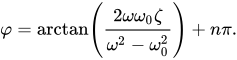
It is possible to write the steady-state solution for x(t) as a function proportional to the driving force with an induced phase change φ,

where

The phase value is usually taken to be between −180° and 0 so it represents a phase lag for both positive and negative values of the arctan argument.

Steady-state variation of amplitude with relative frequency and damping of a driven simple harmonic oscillator

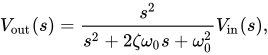
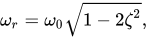
Resonance occurs when, at certain driving frequencies, the steady-state amplitude of x(t) is large compared to its amplitude at other driving frequencies. For the mass on a spring, resonance corresponds physically to the mass's oscillations having large displacements from the spring's equilibrium position at certain driving frequencies. Looking at the amplitude of x(t) as a function of the driving frequency ω, the amplitude is maximal at the driving frequency
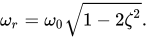
ωr is the resonant frequency for this system. Again, the resonant frequency does not equal the undamped angular frequency ω0 of the oscillator. They are proportional, and if the damping ratio goes to zero they are the same, but for non-zero damping they are not the same frequency. As shown in the figure, resonance may also occur at other frequencies near the resonant frequency, including ω0, but the maximum response is at the resonant frequency.

Also, ωr is only real and non-zero if , so this system can only resonate when the harmonic oscillator is significantly underdamped. For systems with a very small damping ratio and a driving frequency near the resonant frequency, the steady state oscillations can become very large.

The pendulum

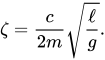
For other driven, damped harmonic oscillators whose equations of motion do not look exactly like the mass on a spring example, the resonant frequency remains but the definitions of ω0 and ζ change based on the physics of the system. For a pendulum of length and small displacement angle θ, Equation (1) becomes
and therefore

RLC series circuits

An RLC series circuit

Consider a circuit consisting of a resistor with resistance R, an inductor with inductance L, and a capacitor with capacitance C connected in series with current i(t) and driven by a voltage source with voltage vin(t). The voltage drop around the circuit is

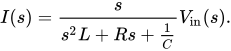
Rather than analyzing a candidate solution to this equation like in the mass on a spring example above, this section will analyze the frequency response of this circuit. Taking the Laplace transform of Equation (4), where I(s) and Vin(s) are the Laplace transform of the current and input voltage, respectively, and s is a complex frequency parameter in the Laplace domain. Rearranging terms,

Voltage across the capacitor

An RLC circuit in series presents several options for where to measure an output voltage. Suppose the output voltage of interest is the voltage drop across the capacitor. As shown above, in the Laplace domain this voltage is or
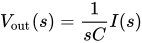
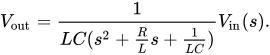
Define for this circuit a natural frequency and a damping ratio,

The ratio of the output voltage to the input voltage becomes

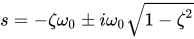
H(s) is the transfer function between the input voltage and the output voltage. This transfer function has two poles–roots of the polynomial in the transfer function's denominator–at

and no zeros–roots of the polynomial in the transfer function's numerator. Moreover, for ζ ≤ 1, the magnitude of these poles is the natural frequency ω0 and that for ζ < 1/, our condition for resonance in the harmonic oscillator example, the poles are closer to the imaginary axis than to the real axis.

Evaluating H(s) along the imaginary axis s = , the transfer function describes the frequency response of this circuit. Equivalently, the frequency response can be analyzed by taking the Fourier transform of Equation (4) instead of the Laplace transform. The transfer function, which is also complex, can be written as a gain and phase,

Bode magnitude plot for the voltage across the elements of an RLC series circuit. Natural frequency ω0 = 1 rad/s, damping ratio ζ = 0.4. The capacitor voltage peaks below the circuit's natural frequency, the inductor voltage peaks above the natural frequency, and the resistor voltage peaks at the natural frequency with a peak gain of one. The gain for the voltage across the capacitor and inductor combined in series shows antiresonance, with gain going to zero at the natural frequency.

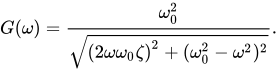
A sinusoidal input voltage at frequency ω results in an output voltage at the same frequency that has been scaled by G(ω) and has a phase shift Φ(ω). The gain and phase can be plotted versus frequency on a Bode plot. For the RLC circuit's capacitor voltage, the gain of the transfer function H() is

Note the similarity between the gain here and the amplitude in Equation (3). Once again, the gain is maximized at the resonant frequency

Here, the resonance corresponds physically to having a relatively large amplitude for the steady state oscillations of the voltage across the capacitor compared to its amplitude at other driving frequencies.

Voltage across the inductor

The resonant frequency need not always take the form given in the examples above. For the RLC circuit, suppose instead that the output voltage of interest is the voltage across the inductor. As shown above, in the Laplace domain the voltage across the inductor is

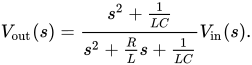
using the same definitions for ω0 and ζ as in the previous example. The transfer function between Vin(s) and this new Vout(s) across the inductor is
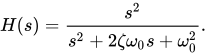
This transfer function has the same poles as the transfer function in the previous example, but it also has two zeroes in the numerator at s = 0. Evaluating H(s) along the imaginary axis, its gain becomes
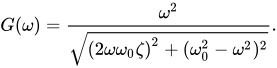
Compared to the gain in Equation (6) using the capacitor voltage as the output, this gain has a factor of ω2 in the numerator and will therefore have a different resonant frequency that maximizes the gain. That frequency is
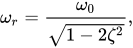
So for the same RLC circuit but with the voltage across the inductor as the output, the resonant frequency is now larger than the natural frequency, though it still tends towards the natural frequency as the damping ratio goes to zero. That the same circuit can have different resonant frequencies for different choices of output is not contradictory. As shown in Equation (4), the voltage drop across the circuit is divided among the three circuit elements, and each element has different dynamics. The capacitor's voltage grows slowly by integrating the current over time and is therefore more sensitive to lower frequencies, whereas the inductor's voltage grows when the current changes rapidly and is therefore more sensitive to higher frequencies. While the circuit as a whole has a natural frequency where it tends to oscillate, the different dynamics of each circuit element make each element resonate at a slightly different frequency.

Voltage across the resistor

Suppose that the output voltage of interest is the voltage across the resistor. In the Laplace domain the voltage across the resistor is

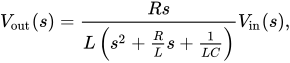
and using the same natural frequency and damping ratio as in the capacitor example the transfer function is
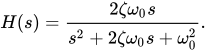
This transfer function also has the same poles as the previous RLC circuit examples, but it only has one zero in the numerator at s = 0. For this transfer function, its gain is
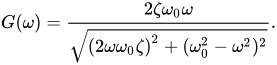
The resonant frequency that maximizes this gain is and the gain is one at this frequency, so the voltage across the resistor resonates at the circuit's natural frequency and at this frequency the amplitude of the voltage across the resistor equals the input voltage's amplitude.

Antiresonance

Some systems exhibit antiresonance that can be analyzed in the same way as resonance. For antiresonance, the amplitude of the response of the system at certain frequencies is disproportionately small rather than being disproportionately large. In the RLC circuit example, this phenomenon can be observed by analyzing both the inductor and the capacitor combined.

Suppose that the output voltage of interest in the RLC circuit is the voltage across the inductor and the capacitor combined in series. Equation (4) showed that the sum of the voltages across the three circuit elements sums to the input voltage, so measuring the output voltage as the sum of the inductor and capacitor voltages combined is the same as vin minus the voltage drop across the resistor. The previous example showed that at the natural frequency of the system, the amplitude of the voltage drop across the resistor equals the amplitude of vin, and therefore the voltage across the inductor and capacitor combined has zero amplitude. We can show this with the transfer function.

The sum of the inductor and capacitor voltages is
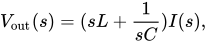
Using the same natural frequency and damping ratios as the previous examples, the transfer function is
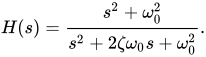
This transfer has the same poles as the previous examples but has zeroes at

Evaluating the transfer function along the imaginary axis, its gain is
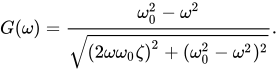
Rather than look for resonance, i.e., peaks of the gain, notice that the gain goes to zero at ω = ω0, which complements our analysis of the resistor's voltage. This is called antiresonance, which has the opposite effect of resonance. Rather than result in outputs that are disproportionately large at this frequency, this circuit with this choice of output has no response at all at this frequency. The frequency that is filtered out corresponds exactly to the zeroes of the transfer function, which were shown in Equation (7) and were on the imaginary axis.

Relationships between resonance and frequency response in the RLC series circuit example

These RLC circuit examples illustrate how resonance is related to the frequency response of the system. Specifically, these examples illustrate:

  • How resonant frequencies can be found by looking for peaks in the gain of the transfer function between the input and output of the system, for example in a Bode magnitude plot
  • How the resonant frequency for a single system can be different for different choices of system output
  • The connection between the system's natural frequency, the system's damping ratio, and the system's resonant frequency
  • The connection between the system's natural frequency and the magnitude of the transfer function's poles, pointed out in Equation (5), and therefore a connection between the poles and the resonant frequency
  • A connection between the transfer function's zeroes and the shape of the gain as a function of frequency, and therefore a connection between the zeroes and the resonant frequency that maximizes gain
  • A connection between the transfer function's zeroes and antiresonance

The next section extends these concepts to resonance in a general linear system.

Generalizing resonance and antiresonance for linear systems

Next consider an arbitrary linear system with multiple inputs and outputs. For example, in state-space representation a third order linear time-invariant system with three inputs and two outputs might be written as where ui(t) are the inputs, xi(t) are the state variables, yi(t) are the outputs, and A, B, C, and D are matrices describing the dynamics between the variables.
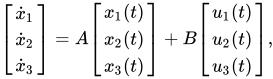
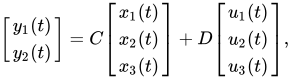
This system has a transfer function matrix whose elements are the transfer functions between the various inputs and outputs. For example,

Each Hij(s) is a scalar transfer function linking one of the inputs to one of the outputs. The RLC circuit examples above had one input voltage and showed four possible output voltages–across the capacitor, across the inductor, across the resistor, and across the capacitor and inductor combined in series–each with its own transfer function. If the RLC circuit were set up to measure all four of these output voltages, that system would have a 4×1 transfer function matrix linking the single input to each of the four outputs.

Evaluated along the imaginary axis, each Hij() can be written as a gain and phase shift,

Peaks in the gain at certain frequencies correspond to resonances between that transfer function's input and output, assuming the system is stable.

Each transfer function Hij(s) can also be written as a fraction whose numerator and denominator are polynomials of s.
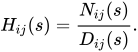
The complex roots of the numerator are called zeroes, and the complex roots of the denominator are called poles. For a stable system, the positions of these poles and zeroes on the complex plane give some indication of whether the system can resonate or antiresonate and at which frequencies. In particular, any stable or marginally stable, complex conjugate pair of poles with imaginary components can be written in terms of a natural frequency and a damping ratio as as in Equation (5). The natural frequency ω0 of that pole is the magnitude of the position of the pole on the complex plane and the damping ratio of that pole determines how quickly that oscillation decays. In general:

  • Complex conjugate pairs of poles near the imaginary axis correspond to a peak or resonance in the frequency response in the vicinity of the pole's natural frequency. If the pair of poles is on the imaginary axis, the gain is infinite at that frequency.
  • Complex conjugate pairs of zeroes near the imaginary axis correspond to a notch or antiresonance in the frequency response in the vicinity of the zero's frequency, i.e., the frequency equal to the magnitude of the zero. If the pair of zeroes is on the imaginary axis, the gain is zero at that frequency.

In the RLC circuit example, the first generalization relating poles to resonance is observed in Equation (5). The second generalization relating zeroes to antiresonance is observed in Equation (7). In the examples of the harmonic oscillator, the RLC circuit capacitor voltage, and the RLC circuit inductor voltage, "poles near the imaginary axis" corresponds to the significantly underdamped condition ζ < 1/.

Standing waves

A mass on a spring has one natural frequency, as it has a single degree of freedom

A physical system can have as many natural frequencies as it has degrees of freedom and can resonate near each of those natural frequencies. A mass on a spring, which has one degree of freedom, has one natural frequency. A double pendulum, which has two degrees of freedom, can have two natural frequencies. As the number of coupled harmonic oscillators increases, the time it takes to transfer energy from one to the next becomes significant. Systems with very large numbers of degrees of freedom can be thought of as continuous rather than as having discrete oscillators.

Energy transfers from one oscillator to the next in the form of waves. For example, the string of a guitar or the surface of water in a bowl can be modeled as a continuum of small coupled oscillators and waves can travel along them. In many cases these systems have the potential to resonate at certain frequencies, forming standing waves with large-amplitude oscillations at fixed positions. Resonance in the form of standing waves underlies many familiar phenomena, such as the sound produced by musical instruments, electromagnetic cavities used in lasers and microwave ovens, and energy levels of atoms.

Standing waves on a string

animation of a standing wave
A standing wave (in black), created when two waves moving from left and right meet and superimpose

When a string of fixed length is driven at a particular frequency, a wave propagates along the string at the same frequency. The waves reflect off the ends of the string, and eventually a steady state is reached with waves traveling in both directions. The waveform is the superposition of the waves.

At certain frequencies, the steady state waveform does not appear to travel along the string. At fixed positions called nodes, the string is never displaced. Between the nodes the string oscillates and exactly halfway between the nodes–at positions called anti-nodes–the oscillations have their largest amplitude.

Standing waves in a string – the fundamental mode and the first 5 harmonics.

For a string of length with fixed ends, the displacement of the string perpendicular to the -axis at time is

where

The frequencies that resonate and form standing waves relate to the length of the string as

where is the speed of the wave and the integer denotes different modes or harmonics. The standing wave with n = 1 oscillates at the fundamental frequency and has a wavelength that is twice the length of the string. The possible modes of oscillation form a harmonic series.

Resonance in complex networks

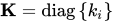
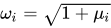
A generalization to complex networks of coupled harmonic oscillators shows that such systems have a finite number of natural resonant frequencies, related to the topological structure of the network itself. In particular, such frequencies result related to the eigenvalues of the network's Laplacian matrix. Let be the adjacency matrix describing the topological structure of the network and the corresponding Laplacian matrix, where is the diagonal matrix of the degrees of the network's nodes. Then, for a network of classical and identical harmonic oscillators, when a sinusoidal driving force is applied to a specific node, the global resonant frequencies of the network are given by where are the eigenvalues of the Laplacian .

Types

Mechanical

School resonating mass experiment

Mechanical resonance is the tendency of a mechanical system to absorb more energy when the frequency of its oscillations matches the system's natural frequency of vibration than it does at other frequencies. It may cause violent swaying motions and even catastrophic failure in improperly constructed structures including bridges, buildings, trains, and aircraft. When designing objects, engineers must ensure the mechanical resonance frequencies of the component parts do not match driving vibrational frequencies of motors or other oscillating parts, a phenomenon known as resonance disaster.

Avoiding resonance disasters is a major concern in every building, tower, and bridge construction project. As a countermeasure, shock mounts can be installed to absorb resonant frequencies and thus dissipate the absorbed energy. The Taipei 101 building relies on a 660-tonne pendulum (730-short-ton)—a tuned mass damper—to cancel resonance. Furthermore, the structure is designed to resonate at a frequency that does not typically occur. Buildings in seismic zones are often constructed to take into account the oscillating frequencies of expected ground motion. In addition, engineers designing objects having engines must ensure that the mechanical resonant frequencies of the component parts do not match driving vibrational frequencies of the motors or other strongly oscillating parts.

Clocks keep time by mechanical resonance in a balance wheel, pendulum, or quartz crystal.

The cadence of runners has been hypothesized to be energetically favorable due to resonance between the elastic energy stored in the lower limb and the mass of the runner.

International Space Station

The rocket engines for the International Space Station (ISS) are controlled by an autopilot. Ordinarily, uploaded parameters for controlling the engine control system for the Zvezda module make the rocket engines boost the International Space Station to a higher orbit. The rocket engines are hinge-mounted, and ordinarily the crew does not notice the operation. On January 14, 2009, however, the uploaded parameters made the autopilot swing the rocket engines in larger and larger oscillations, at a frequency of 0.5 Hz. These oscillations were captured on video, and lasted for 142 seconds.

Acoustic

Acoustic resonance is a branch of mechanical resonance that is concerned with the mechanical vibrations across the frequency range of human hearing, in other words sound. For humans, hearing is normally limited to frequencies between about 20 Hz and 20,000 Hz (20 kHz), Many objects and materials act as resonators with resonant frequencies within this range, and when struck vibrate mechanically, pushing on the surrounding air to create sound waves. This is the source of many percussive sounds we hear.

Acoustic resonance is an important consideration for instrument builders, as most acoustic instruments use resonators, such as the strings and body of a violin, the length of tube in a flute, and the shape of, and tension on, a drum membrane.

Like mechanical resonance, acoustic resonance can result in catastrophic failure of the object at resonance. The classic example of this is breaking a wine glass with sound at the precise resonant frequency of the glass, although this is difficult in practice.

Electrical

Animation illustrating electrical resonance in a tuned circuit, consisting of a capacitor (C) and an inductor (L) connected together. Charge flows back and forth between the capacitor plates through the inductor. Energy oscillates back and forth between the capacitor's electric field (E) and the inductor's magnetic field (B).

Electrical resonance occurs in an electric circuit at a particular resonant frequency when the impedance of the circuit is at a minimum in a series circuit or at maximum in a parallel circuit (usually when the transfer function peaks in absolute value). Resonance in circuits are used for both transmitting and receiving wireless communications such as television, cell phones and radio.

Optical

An optical cavity, also called an optical resonator, is an arrangement of mirrors that forms a standing wave cavity resonator for light waves. Optical cavities are a major component of lasers, surrounding the gain medium and providing feedback of the laser light. They are also used in optical parametric oscillators and some interferometers. Light confined in the cavity reflects multiple times producing standing waves for certain resonant frequencies. The standing wave patterns produced are called "modes". Longitudinal modes differ only in frequency while transverse modes differ for different frequencies and have different intensity patterns across the cross-section of the beam. Ring resonators and whispering galleries are examples of optical resonators that do not form standing waves.

Different resonator types are distinguished by the focal lengths of the two mirrors and the distance between them; flat mirrors are not often used because of the difficulty of aligning them precisely. The geometry (resonator type) must be chosen so the beam remains stable, i.e., the beam size does not continue to grow with each reflection. Resonator types are also designed to meet other criteria such as minimum beam waist or having no focal point (and therefore intense light at that point) inside the cavity.

Optical cavities are designed to have a very large Q factor. A beam reflects a large number of times with little attenuation—therefore the frequency line width of the beam is small compared to the frequency of the laser.

Additional optical resonances are guided-mode resonances and surface plasmon resonance, which result in anomalous reflection and high evanescent fields at resonance. In this case, the resonant modes are guided modes of a waveguide or surface plasmon modes of a dielectric-metallic interface. These modes are usually excited by a subwavelength grating.

Orbital

In celestial mechanics, an orbital resonance occurs when two orbiting bodies exert a regular, periodic gravitational influence on each other, usually due to their orbital periods being related by a ratio of two small integers. Orbital resonances greatly enhance the mutual gravitational influence of the bodies. In most cases, this results in an unstable interaction, in which the bodies exchange momentum and shift orbits until the resonance no longer exists. Under some circumstances, a resonant system can be stable and self-correcting, so that the bodies remain in resonance. Examples are the 1:2:4 resonance of Jupiter's moons Ganymede, Europa, and Io, and the 2:3 resonance between Pluto and Neptune. Unstable resonances with Saturn's inner moons give rise to gaps in the rings of Saturn. The special case of 1:1 resonance (between bodies with similar orbital radii) causes large Solar System bodies to clear the neighborhood around their orbits by ejecting nearly everything else around them; this effect is used in the current definition of a planet.

Atomic, particle, and molecular

NMR Magnet at HWB-NMR, Birmingham, UK. In its strong 21.2-tesla field, the proton resonance is at 900 MHz.

Nuclear magnetic resonance (NMR) is the name given to a physical resonance phenomenon involving the observation of specific quantum mechanical magnetic properties of an atomic nucleus in the presence of an applied, external magnetic field. Many scientific techniques exploit NMR phenomena to study molecular physics, crystals, and non-crystalline materials through NMR spectroscopy. NMR is also routinely used in advanced medical imaging techniques, such as in magnetic resonance imaging (MRI).

All nuclei containing odd numbers of nucleons have an intrinsic angular momentum and magnetic moment. A key feature of NMR is that the resonant frequency of a particular substance is directly proportional to the strength of the applied magnetic field. It is this feature that is exploited in imaging techniques; if a sample is placed in a non-uniform magnetic field then the resonant frequencies of the sample's nuclei depend on where in the field they are located. Therefore, the particle can be located quite precisely by its resonant frequency.

Electron paramagnetic resonance, otherwise known as electron spin resonance (ESR), is a spectroscopic technique similar to NMR, but uses unpaired electrons instead. Materials for which this can be applied are much more limited since the material needs to both have an unpaired spin and be paramagnetic.

The Mössbauer effect is the resonant and recoil-free emission and absorption of gamma ray photons by atoms bound in a solid form.

Resonance in particle physics appears in similar circumstances to classical physics at the level of quantum mechanics and quantum field theory. Resonances can also be thought of as unstable particles, with the formula in the Universal resonance curve section of this article applying if Γ is the particle's decay rate and is the particle's mass M. In that case, the formula comes from the particle's propagator, with its mass replaced by the complex number M + . The formula is further related to the particle's decay rate by the optical theorem.

Disadvantages

A column of soldiers marching in regular step on a narrow and structurally flexible bridge can set it into dangerously large amplitude oscillations. On April 12, 1831, the Broughton Suspension Bridge near Salford, England collapsed while a group of British soldiers were marching across. Since then, the British Army has had a standing order for soldiers to break stride when marching across bridges, to avoid resonance from their regular marching pattern affecting the bridge.

Vibrations of a motor or engine can induce resonant vibration in its supporting structures if their natural frequency is close to that of the vibrations of the engine. A common example is the rattling sound of a bus body when the engine is left idling.

Structural resonance of a suspension bridge induced by winds can lead to its catastrophic collapse. Several early suspension bridges in Europe and United States were destroyed by structural resonance induced by modest winds. The collapse of the Tacoma Narrows Bridge on 7 November 1940 is characterized in physics as a classic example of resonance. It has been argued by Robert H. Scanlan and others that the destruction was instead caused by aeroelastic flutter, a complicated interaction between the bridge and the winds passing through it—an example of a self oscillation, or a kind of "self-sustaining vibration" as referred to in the nonlinear theory of vibrations.

Q factor

High and low Q factor

The Q factor or quality factor is a dimensionless parameter that describes how under-damped an oscillator or resonator is, and characterizes the bandwidth of a resonator relative to its center frequency. A high value for Q indicates a lower rate of energy loss relative to the stored energy, i.e., the system is lightly damped. The parameter is defined by the equation: 


.

The higher the Q factor, the greater the amplitude at the resonant frequency, and the smaller the bandwidth, or range of frequencies around resonance occurs. In electrical resonance, a high-Q circuit in a radio receiver is more difficult to tune, but has greater selectivity, and so would be better at filtering out signals from other stations. High Q oscillators are more stable.

Examples that normally have a low Q factor include door closers (Q=0.5). Systems with high Q factors include tuning forks (Q=1000), atomic clocks and lasers (Q≈1011).

Universal resonance curve

"Universal Resonance Curve", a symmetric approximation to the normalized response of a resonant circuit; abscissa values are deviation from center frequency, in units of center frequency divided by 2Q; ordinate is relative amplitude, and phase in cycles; dashed curves compare the range of responses of real two-pole circuits for a Q value of 5; for higher Q values, there is less deviation from the universal curve. Crosses mark the edges of the 3 dB bandwidth (gain 0.707, phase shift 45° or 0.125 cycle).

The exact response of a resonance, especially for frequencies far from the resonant frequency, depends on the details of the physical system, and is usually not exactly symmetric about the resonant frequency, as illustrated for the simple harmonic oscillator above.

For a lightly damped linear oscillator with a resonance frequency , the intensity of oscillations when the system is driven with a driving frequency is typically approximated by the following formula that is symmetric about the resonance frequency:[27]

Where the susceptibility links the amplitude of the oscillator to the driving force in frequency space:


The intensity is defined as the square of the amplitude of the oscillations. This is a Lorentzian function, or Cauchy distribution, and this response is found in many physical situations involving resonant systems. Γ is a parameter dependent on the damping of the oscillator, and is known as the linewidth of the resonance. Heavily damped oscillators tend to have broad linewidths, and respond to a wider range of driving frequencies around the resonant frequency. The linewidth is inversely proportional to the Q factor, which is a measure of the sharpness of the resonance.

In radio engineering and electronics engineering, this approximate symmetric response is known as the universal resonance curve, a concept introduced by Frederick E. Terman in 1932 to simplify the approximate analysis of radio circuits with a range of center frequencies and Q values.

Runaway greenhouse effect

From Wikipedia, the free encyclopedia

A runaway greenhouse effect will occur when a planet's atmosphere contains greenhouse gas in an amount sufficient to block thermal radiation from leaving the planet, preventing the planet from cooling and from having liquid water on its surface. A runaway version of the greenhouse effect can be defined by a limit on a planet's outgoing longwave radiation, which is asymptotically reached due to higher surface temperatures evaporating water into the atmosphere, increasing its optical depth. This positive feedback loop means the planet cannot cool down through longwave radiation (via the Stefan–Boltzmann law) and continues to heat up until it can radiate outside of the absorption bands of the water vapour.

The runaway greenhouse effect is often formulated with water vapour as the condensable species. The water vapour reaches the stratosphere and escapes into space via hydrodynamic escape, resulting in a desiccated planet. This likely happened in the early history of Venus.

In a 2012 study on climate change, it was quoted stating that "Earth presently absorbs around 240 W m−2 of solar radiation. Increasing carbon dioxide concentration will make surface warmer with the same outgoing thermal flux. Following this theory, we are not near the threshold of a runaway greenhouse. However, the behaviour of hot, water-vapour-rich atmospheres is poorly understood, and an in-depth study of these is necessary."

However, the authors cautioned that "our understanding of the dynamics, thermodynamics, radiative transfer and cloud physics of hot and steamy atmospheres is weak," and that we "cannot therefore completely rule out the possibility that human actions might cause a transition, if not to full runaway, then at least to a much warmer climate state than the present one."

A runaway greenhouse effect similar to Venus appears to have virtually no chance of being caused by people. A 2013 article concluded that a runaway greenhouse effect "could in theory be triggered by increased greenhouse forcing," but that "anthropogenic emissions are probably insufficient." Venus-like conditions on Earth require a large long-term forcing that is unlikely to occur until the sun brightens by some tens of percents, which will take a few billion years. Earth is expected to experience a runaway greenhouse effect "in about 2 billion years as solar luminosity increases".

History

This 1902 article attributes to Swedish Nobel laureate (for chemistry) Svante Arrhenius a theory that coal combustion could eventually lead to a degree of global warming causing human extinction.

While the term was first coined by Caltech scientist Andrew Ingersoll in a paper that described a model of the atmosphere of Venus, the initial idea of a limit on terrestrial outgoing infrared radiation was published by George Simpson in 1927. The physics relevant to what would later be named the runaway greenhouse effect, was explored by Makoto Komabayashi at Nagoya University. Assuming a water vapor-saturated stratosphere, Komabayashi and Ingersoll independently calculated the limit on outgoing infrared radiation that defines the runaway greenhouse state. That limit is now known as the Komabayashi–Ingersoll limit, to recognize their contributions.

Physics

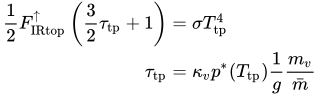
Graph of tropopause optical depth by tropopause temperature, illustrating the Komabayashi–Ingersoll limit of 385 W/m2 using equations and values from Nakajima et al. (1992) "A Study on the Runaway Greenhouse Effect with a One-Dimensional Radiative–Convective Equilibrium Model". The Komabayashi–Ingersoll limit is the value of outgoing longwave radiation (FIRtop) beyond which the lines do not intersect.

A runaway greenhouse effect occurs when greenhouse gases accumulate in the atmosphere through a positive feedback cycle to such an extent that they substantially block radiated heat from escaping into space, thus greatly increasing the temperature of the planet.

The runaway greenhouse effect is often formulated in terms of how the surface temperature of a planet changes with differing amounts of received starlight. If the planet is assumed to be in radiative equilibrium, then the runaway greenhouse state is calculated as the equilibrium state at which water cannot exist in liquid form. The water vapor is then lost to space through hydrodynamic escape. In radiative equilibrium, a planet's outgoing longwave radiation (OLR) must balance the incoming stellar flux.

The Stefan–Boltzmann law is an example of a negative feedback cycle that stabilizes a planet's climate system. If the Earth received more sunlight it would result in a temporary disequilibrium (more energy in than out) and result in warming. However, because the Stefan–Boltzmann response mandates that this hotter planet emits more energy, eventually a new radiation balance can be reached and the temperature will be maintained at its new, higher value. Positive climate change feedbacks amplify changes in the climate system, and can lead to destabilizing effects for the climate. An increase in temperature from greenhouse gases leading to increased water vapor (which is itself a greenhouse gas) causing further warming is a positive feedback, but not a runaway effect, on Earth. Positive feedback effects are common (e.g. ice–albedo feedback) but runaway effects do not necessarily emerge from their presence. Though water plays a major role in the process, the runaway greenhouse effect is not a result of water vapor feedback.

The runaway greenhouse effect can be seen as a limit on a planet's outgoing longwave radiation that, when surpassed, results in a state where water cannot exist in its liquid form (hence, the oceans have all "boiled away"). A planet's outgoing longwave radiation is limited by this evaporated water, which is an effective greenhouse gas and blocks additional infrared radiation as it accumulates in the atmosphere. Assuming radiative equilibrium, runaway greenhouse limits on outgoing longwave radiation correspond to limits on the increase in stellar flux received by a planet to trigger the runaway greenhouse effect. Two limits on a planet's outgoing longwave radiation have been calculated that correspond with the onset of the runaway greenhouse effect: the Komabayashi–Ingersoll limit and the Simpson–Nakajima limit. At these values the runaway greenhouse effect overcomes the Stefan–Boltzmann feedback so an increase in a planet's surface temperature will not increase the outgoing longwave radiation.[2]

The Komabayashi–Ingersoll limit was the first to be analytically derived and only considers a grey stratosphere in radiative equilibrium. A grey stratosphere (or atmosphere) is an approach to modeling radiative transfer that does not take into account the frequency-dependence of absorption by a gas. In the case of a grey stratosphere or atmosphere, the Eddington approximation can be used to calculate radiative fluxes. This approach focuses on the balance between the outgoing longwave radiation at the tropopause,, and the optical depth of water vapor, , in the tropopause, which is determined by the temperature and pressure at the tropopause according to the saturation vapor pressure. This balance is represented by the following equationsWhere the first equation represents the requirement for radiative equilibrium at the tropopause and the second equation represents how much water vapor is present at the tropopause. Taking the outgoing longwave radiation as a free parameter, these equations will intersect only once for a single value of the outgoing longwave radiation, this value is taken as the Komabayashi–Ingersoll limit. At that value the Stefan–Boltzmann feedback breaks down because the tropospheric temperature required to maintain the Komabayashi–Ingersoll OLR value results in a water vapor optical depth that blocks the OLR needed to cool the tropopause.

The Simpson–Nakajima limit is lower than the Komabayashi–Ingersoll limit, and is thus typically more realistic for the value at which a planet enters a runaway greenhouse state. For example, given the parameters used to determine a Komabayashi–Ingersoll limit of 385 W/m2, the corresponding Simpson–Nakajima limit is only about 293 W/m2. The Simpson–Nakajima limit builds off of the derivation of the Komabayashi–Ingersoll limit by assuming a convective troposphere with a surface temperature and surface pressure that determines the optical depth and outgoing longwave radiation at the tropopause.

The moist greenhouse limit

Because the model used to derive the Simpson–Nakajima limit (a grey stratosphere in radiative equilibrium and a convecting troposphere) can determine the water concentration as a function of altitude, the model can also be used to determine the surface temperature (or conversely, amount of stellar flux) that results in a high water mixing ratio in the stratosphere. While this critical value of outgoing longwave radiation is less than the Simpson–Nakajima limit, it still has dramatic effects on a planet's climate. A high water mixing ratio in the stratosphere would overcome the effects of a cold trap and result in a "moist" stratosphere, which would result in the photolysis of water in the stratosphere that in turn would destroy the ozone layer and eventually lead to a dramatic loss of water through hydrodynamic escape. This climate state has been dubbed the moist greenhouse effect, as the end-state is a planet without water, though liquid water may exist on the planet's surface during this process.

Connection to habitability

The concept of a habitable zone has been used by planetary scientists and astrobiologists to define an orbital region around a star in which a planet (or moon) can sustain liquid water. Under this definition, the inner edge of the habitable zone (i.e., the closest point to a star that a planet can be until it can no longer sustain liquid water) is determined by the outgoing longwave radiation limit beyond which the runaway greenhouse process occurs (e.g., the Simpson–Nakajima limit). This is because a planet's distance from its host star determines the amount of stellar flux the planet receives, which in turn determines the amount of outgoing longwave radiation the planet radiates back to space. While the inner habitable zone is typically determined by using the Simpson–Nakajima limit, it can also be determined with respect to the moist greenhouse limit, though the difference between the two is often small.

Calculating the inner edge of the habitable zone is strongly dependent on the model used to calculate the Simpson–Nakajima or moist greenhouse limit. The climate models used to calculate these limits have evolved over time, with some models assuming a simple one-dimensional, grey atmosphere, and others using a full radiative transfer solution to model the absorption bands of water and carbon dioxide. These earlier models that used radiative transfer derived the absorption coefficients for water from the HITRAN database, while newer models use the more current and accurate HITEMP database, which has led to different calculated values of thermal radiation limits. More accurate calculations have been done using three-dimensional climate models that take into account effects such as planetary rotation and local water mixing ratios as well as cloud feedbacks. The effect of clouds on calculating thermal radiation limits is still in debate (specifically, whether or not water clouds present a positive or negative feedback effect).

Runaway greenhouse effect in the Solar System

Venus

Venus' oceans may have boiled away in a runaway greenhouse effect.

A runaway greenhouse effect involving carbon dioxide and water vapor likely occurred on Venus. In this scenario, early Venus may have had a global ocean if the outgoing thermal radiation was below the Simpson–Nakajima limit but above the moist greenhouse limit. As the brightness of the early Sun increased, the amount of water vapor in the atmosphere increased, increasing the temperature and consequently increasing the evaporation of the ocean, leading eventually to the situation in which the oceans evaporated.

This scenario helps to explain why there is little water vapor in the atmosphere of Venus today. If Venus initially formed with water, the runaway greenhouse effect would have hydrated Venus' stratosphere, and the water would have escaped to space. Some evidence for this scenario comes from the extremely high deuterium to hydrogen ratio in Venus' atmosphere, roughly 150 times that of Earth, since light hydrogen would escape from the atmosphere more readily than its heavier isotope, deuterium.

Venus is sufficiently strongly heated by the Sun that water vapor can rise much higher in the atmosphere and be split into hydrogen and oxygen by ultraviolet light. The hydrogen can then escape from the atmosphere while the oxygen recombines or bonds to iron on the planet's surface. The deficit of water on Venus due to the runaway greenhouse effect is thought to explain why Venus does not exhibit surface features consistent with plate tectonics, meaning it would be a stagnant lid planet.

Carbon dioxide, the dominant greenhouse gas in the current Venusian atmosphere, owes its larger concentration to the weakness of carbon recycling as compared to Earth, where the carbon dioxide emitted from volcanoes is efficiently subducted into the Earth by plate tectonics on geologic time scales through the carbonate–silicate cycle, which requires precipitation to function.

Earth

Early investigations on the effect of atmospheric carbon dioxide levels on the runaway greenhouse limit found that it would take orders of magnitude higher amounts of carbon dioxide to take the Earth to a runaway greenhouse state. This is because carbon dioxide is not anywhere near as effective at blocking outgoing longwave radiation as water is. Within current models of the runaway greenhouse effect, carbon dioxide (especially anthropogenic carbon dioxide) does not seem capable of providing the necessary insulation for Earth to reach the Simpson–Nakajima limit.

Debate remains, however, on whether carbon dioxide can push surface temperatures towards the moist greenhouse limit. Climate scientist John Houghton wrote in 2005 that "[there] is no possibility of [Venus's] runaway greenhouse conditions occurring on the Earth". However, climatologist James Hansen stated in Storms of My Grandchildren (2009) that burning coal and mining oil sands will result in runaway greenhouse on Earth. A re-evaluation in 2013 of the effect of water vapor in the climate models showed that James Hansen's outcome would require ten times the amount of CO2 we could release from burning all the oil, coal, and natural gas in Earth's crust.

As with the uncertainties in calculating the inner edge of the habitable zone, the uncertainty in whether CO2 can drive a moist greenhouse effect is due to differences in modeling choices and the uncertainties therein.  The switch from using HITRAN to the more current HITEMP absorption line lists in radiative transfer calculations has shown that previous runaway greenhouse limits were too high, but the necessary amount of carbon dioxide would make an anthropogenic moist greenhouse state unlikely. Full three-dimensional models have shown that the moist greenhouse limit on surface temperature is higher than that found in one-dimensional models and thus would require a higher amount of carbon dioxide to initiate a moist greenhouse than in one-dimensional models.

Other complications include whether the atmosphere is saturated or sub-saturated at some humidity, higher CO2 levels in the atmosphere resulting in a less hot Earth than expected due to Rayleigh scattering, and whether cloud feedbacks stabilize or destabilize the climate system.

Complicating the matter, research on Earth's climate history has often used the term "runaway greenhouse effect" to describe large-scale climate changes when it is not an appropriate description as it does not depend on Earth's outgoing longwave radiation. Though the Earth has experienced a diversity of climate extremes, these are not end-states of climate evolution and have instead represented climate equilibria different from that seen on Earth today. For example, it has been hypothesized that large releases of greenhouse gases may have occurred concurrently with the Permian–Triassic extinction event or Paleocene–Eocene Thermal Maximum. Additionally, during 80% of the latest 500 million years, the Earth is believed to have been in a greenhouse state due to the greenhouse effect, when there were no continental glaciers on the planet, the levels of carbon dioxide and other greenhouse gases (such as water vapor and methane) were high, and sea surface temperatures (SSTs) ranged from 40 °C (104 °F) in the tropics to 16 °C (65 °F) in the polar regions.

Distant future

Most scientists believe that a runaway greenhouse effect is inevitable in the long term, as the Sun gradually becomes more luminous as it ages, and will spell the end of all life on Earth. As the Sun becomes 10% brighter about one billion years from now, the surface temperature of Earth will reach 47 °C (117 °F) (unless albedo is increased sufficiently), causing the temperature of Earth to rise rapidly and its oceans to boil away until it becomes a greenhouse planet, similar to Venus today.

The current loss rate is approximately one millimeter of ocean per million years. This is due to the colder upper layer of the troposphere acting as a cold trap currently preventing Earth from permanently losing its water to space at present, even with manmade global warming (this is also the reason why climate change is only going to make extreme weather events worse in the near term, as a warmer atmosphere can hold more moisture, as even with global warming, the cold trap ensures that the current atmosphere will still be too cold to allow water vapor to be rapidly lost to space). This is being overshadowed by shorter-term changes in sea level, such as the currently rising sea level due to the melting of glaciers and polar ice. However, the rate is gradually accelerating, as the sun gets warmer, to perhaps as fast as one millimeter every 1000 years, by ultimately making the atmosphere so hot that the cold trap is pushed even higher up until it eventually fails to prevent the water from being lost to space.

Ward and Brownlee predict that there will be two variations of the future warming feedback: the "moist greenhouse" in which water vapor dominates the troposphere and starts to accumulate in the stratosphere and the "runaway greenhouse" in which water vapor becomes a dominant component of the atmosphere such that the Earth starts to undergo rapid warming, which could send its surface temperature to over 900 °C (1,650 °F), causing its entire surface to melt and killing all life, perhaps about three billion years from now. In both cases, the moist and runaway greenhouse states the loss of oceans will turn the Earth into a primarily-desert world. The only water left on the planet would be in a few evaporating ponds scattered near the poles as well as huge salt flats around what was once the ocean floor, much like the Atacama Desert in Chile or Badwater Basin in Death Valley. The small reservoirs of water may allow life to remain for a few billion more years.

As the Sun brightens, CO2 levels should decrease due to an increase of activity in the carbon-silicate cycle corresponding to the increase of temperature. That would mitigate some of the heating Earth would experience because of the Sun's increase in brightness. Eventually, however, as the water escapes, the carbon cycle will cease as plate tectonics come to a halt because of the need for water as a lubricant for tectonic activity.

Runaway refrigerator effect

Mars and Earth during the Cryogenian period may have experienced the opposite of a runaway greenhouse effect: a runaway refrigerator effect. Through this effect, a runaway feedback process may have removed much carbon dioxide and water vapor from the atmosphere and cooled the planet. Water condenses on the surface, leading to carbon dioxide dissolving and chemically binding to minerals. This reduced the greenhouse effect, lowering the temperature and causing more water to condense. The result was lower temperatures, with water being frozen as subsurface permafrost, leaving only a thin atmosphere. In addition, ice and snow are far more reflective than open water, with an albedo of 50-70% and 85% respectively. This means that as a planet's temperature decreases and more of its water freezes, its ability to absorb light is reduced, which in turn makes it even colder, creating a positive feedback loop. This effect, combined with the decrease in heat-retaining clouds and vapor, becomes runaway once snow and ice coverage reach a certain threshold (within 30 degrees of the equator), plunging the planet into a stable snowball state.

Sunday, April 20, 2025

Self-fulfilling prophecy

From Wikipedia, the free encyclopedia
https://en.wikipedia.org/wiki/Self-fulfilling_prophecy

A self-fulfilling prophecy is a prediction that comes true at least in part as a result of a person's belief or expectation that the prediction would come true. In the phenomena, people tend to act the way they have been expected to in order to make the expectations come true. Self-fulfilling prophecies are an example of the more general phenomenon of positive feedback loops. A self-fulfilling prophecy can have either negative or positive outcomes. Merely applying a label to someone or something can affect the perception of the person/thing and create a self-fulfilling prophecy. Interpersonal communication plays a significant role in establishing these phenomena as well as impacting the labeling process.

American sociologists W. I. Thomas and Dorothy Swaine Thomas were the first Western scholars to investigate this phenomenon. In 1928, they developed the Thomas theorem (also known as the Thomas dictum): "If men define situations as real, they are real in their consequences." Another American sociologist, Robert K. Merton, continued the research, and is credited with coining the term "self-fulfilling prophecy" and popularizing the idea that "a belief or expectation, correct or incorrect, could bring about a desired or expected outcome." The works of philosophers Karl Popper and Alan Gerwith also contributed to the idea.

History

An early precursor of the concept appears in Edward Gibbon's Decline and Fall of the Roman Empire: "During many ages, the prediction, as it is usual, contributed to its own accomplishment".

The phrase "self-fulfilling prophecy" was coined by Robert K. Merton, a sociologist who also developed the ideas of anomie, social structure, and the modes of individual adaption. In his book Social Theory and Social Structure, he uses the example of a bank run to show how self-fulfilling thoughts can make unwanted situations happen. In his illustration, rumors spread about the town that the local bank is going to file for bankruptcy, causing many people to rush to the bank and close their accounts. Because banks do not keep their total assets in cash, the bank was unable to fulfill all its customers' withdrawals, which eventually caused the bank to go bankrupt. Merton concludes with the analysis, "The prophecy of collapse led to its own fulfillment".

While Merton's example focused on self-fulfilling prophecies within a community, self-fulfilling prophecies also apply to individuals, as individuals often conform to the expectations of others. This is also known as the Pygmalion effect, based on the experiments by Robert Resenthal and Lenore Jacobson, where teachers were told that a random selection of students were expected to perform exceptionally well; those students showed a significant increase in test scores at the end of the year.

Philosopher Karl Popper called the self-fulfilling prophecy the Oedipus effect:

One of the ideas I had discussed in The Poverty of Historicism was the influence of a prediction upon the event predicted. I had called this the "Oedipus effect", because the oracle played a most important role in the sequence of events which led to the fulfilment of its prophecy. [...] For a time I thought that the existence of the Oedipus effect distinguished the social from the natural sciences. But in biology, too—even in molecular biology—expectations often play a role in bringing about what has been expected.

The idea is similar to that discussed by the philosopher William James as "The Will to Believe." But James viewed it positively, as the self-validation of a belief.

Applications

Examples abound in studies of cognitive dissonance theory and the related self-perception theory; people will often change their attitudes to come into line with what they profess publicly.

In the United States, the concept was broadly and consistently applied in the field of public education reform, following the "War on Poverty", as teacher expectations have been shown to influence student academic performance. Theodore Brameld noted: "In simplest terms, education already projects and thereby reinforces whatever habits of personal and cultural life are considered to be acceptable and dominant." The effects of teacher attitudes, beliefs, and values, affecting their expectations have been tested repeatedly, most notably in the Pygmalion in the Classroom study, where teachers were told arbitrarily that random students were likely to show significant intellectual growth. As a result, those random students actually ended the year with significantly greater improvement when given another IQ test. Though the changes may be subconscious, teachers who have higher expectations typically give "more time to answer questions, more specific feedback, and more approval". Likewise, students who have positive experiences with their teachers may study more. Academic self-fulfilling prophecies can be negative, however: one study indicated that female students may perform worse if they expect their male instructor to be sexist.

The phenomenon of the "inevitability of war" is a self-fulfilling prophecy that has received considerable study.

Fear of failure leads to deterioration of results, even if the person is objectively able to adequately cope with the problem. For example, fear of falling leads to more falls among older people.

Americans of Chinese and Japanese origin are more likely to die of a heart attack on the 4th of each month, due to the number four being considered unlucky and a portent of death.

Moore's law predicting that the number of transistors in an integrated circuit (IC) doubles about every two years is often considered as a self-fulfilling prophecy.

The belief that a bank is insolvent may help create the fact, but confidence in the bank's prospects may improve them. Similarly, stock-exchange panics and speculative bubbles can be both triggered by a widespread belief that the stock will go down (or up), thus starting the selling/buying mass move, etc.

People adapt to the judgments and assessments made by society, regardless of whether they were originally correct or not. There are certain prejudices against a socially marginalized group (e.g., homeless people, drug addicts or other minorities), and therefore, people in this marginalized group actually begin to behave in accordance with expectations.

Relationships

A leading study by Columbia University found that self-fulfilling prophecies have some part in relationships: the beliefs by people in relationships can impact the likelihood of a breakup or the overall health of the relationship. L. Alan Sroufe suggested that "rejection expectations can lead people to behave in ways that elicit rejection from others." The study looked at the inner workings behind the role of self-fulfilling prophecies in romantic relationships of people who were deemed high in rejection sensitivity, which was defined as "the disposition to anxiously expect, readily perceive, and overreact to rejection". The study found that women were more likely to experience rejection sensitivity in comparison to the negativity held by men about the future of their relationships, and that women sensitive to rejection "may be more likely to behave in ways that exacerbate conflicts," which could lead to behavior that would "erode their partners' relationship satisfaction and commitment."

Other specific examples discussed in psychology include:

International relations

Self-fulfilling prophecies have been apparent throughout history with the 'Thucydides trap': the occurrence of a rising power threatening a ruling or dominant power. Thucydides was an Athenian historian and general who recorded the Peloponnesian war between Sparta and Athens. He wrote, "It was the rise of Athens and the fear that this instilled in Sparta that made war inevitable."

Another example of self-fulfilling prophecies is the United States' invasion of Iraq in 2003. The invasion was based on the assumption that Iraq posed a terrorist threat to the United States, though evidence shows that no threat was actually posed. The invasion and subsequent overthrowing of the regime resulted in Iraq becoming a stronghold for the terrorist organization Al Qaeda, thus fulfilling the initial belief of a potential threat.

Stereotype

Self-fulfilling prophecies are one of the main contributions to racial prejudice and vice versa. According to the Dictionary of Race, Ethnicity & Culture, "Self-fulfilling prophecy makes it possible to highlight the tragic vicious circle which victimizes people twice: first, because the victim is stigmatized with an inherent negative quality; and secondly, because he or she is prevented from disproving this quality." An example is given where white workers expected that black people would be against the principles of trade unionism because they considered black workers to be "undisciplined in traditions of trade unionism and the art of collective bargain-ing." Due to this belief, black workers were not hired at white-owned businesses, which made black workers unable to learn the principles of trade unionism, and thus prevented them from unionizing.

Teachers can encourage stereotype-based courses and can interact with students in a manner that encourages self-fulfilling thoughts: for example, female students may seem to be bad at math if teachers never encouraged them to improve their mathematical abilities.

The term "self-fulfilling prophecy" made its first appearance in educational literature in the 1960s, when African-American psychologist Kenneth B. Clark studied the responses of black children to black and white dolls. The responses from Clark's study ranged from some children calling the black doll ugly to one girl bursting into tears when prompted to pick the doll she identified with. The black children internalized the inferiority they learned and acted accordingly. Clark, whose work pushed the Supreme Court to desegregate schools, noted the influence of teachers on the achievement levels between Black and White students. This prompted Clark to begin a study in ten inner-city schools where he assessed the attitudes and behaviors of teachers. The belief held by teachers was that minority students were unintelligent, and therefore the teachers put no effort into teaching them. This led to a feedback loop of those students not being educated, and thus being perceived as unintelligent.

Literature, media, and the arts

In literature, self-fulfilling prophecies are often used as plot devices. They have been used in stories for millennia, but are especially popular in science fiction and fantasy. They are often used for dramatic irony, with the prophesied events coming to pass due to the attempts to prevent the prophecy. They are also sometimes used as comic relief.

Classical

Many myths, legends, and fairy-tales make use of this motif as a central element of narratives that are designed to illustrate inexorable fate, fundamental to the Hellenic world-view. In a common motif, a child, whether newborn or not yet conceived, is prophesied to cause something that those in power do not want to happen, but the prophesied events come about as a result of the actions taken to prevent them.

Greek

The word "prophet" is derived from the Greek word prophete, meaning "one who speaks for another."

Oedipus in the arms of Phorbas

The best-known example from Greek legend is that of Oedipus. Warned that his child would one day kill him, Laius abandoned his newborn son Oedipus to die, but Oedipus was found and raised by others, and thus in ignorance of his true origins. When he grew up, Oedipus was warned that he would kill his father and marry his mother. He sought to avoid this, and, believing his foster parents to be his real parents, left his home and travelled to Greece, eventually reaching the city where his biological parents lived. There, he got into a fight with a stranger, killed him, and married his widow, only to discover that the stranger he had killed was his biological father, and his new wife was his biological mother.

Although the legend of Perseus opens with the prophecy that he will kill his grandfather Acrisius, the prophecy is only self-fulfilling in some variants. In some, he accidentally spears his grandfather at a competition—an act that could have happened regardless of Acrisius' response to the prophecy. In other variants, his presence at the games is due to his hearing of the prophecy. In still others, Acrisius is one of the wedding guests when Polydectes tries to force Danaë to marry him, and is accidentally killed when Perseus turns all the guests to stone with the Gorgon's head.

Greek historiography provides a famous variant: when the Lydian king Croesus asked the Delphic Oracle if he should invade Persia, the response came that if he did, he would destroy a great kingdom. Assuming this meant he would succeed, he attacked, only to fail—the kingdom he destroyed was his own.

When it was predicted that Cronos would be overthrown by his son, and usurp his throne as King of the Gods, Cronus ate his children, each shortly after they were born, enraging his wife, Rhea. To get revenge, when she bore Zeus, she gave Cronos a stone to eat instead, sending Zeus to be raised by Amalthea. Cronos' attempt to avoid the prophecy made Zeus his enemy, ultimately leading to its fulfilment.

Roman

Romulus and Remus nursed by a she-wolf

The story of Romulus and Remus is another example. According to legend, a man overthrew his brother, the king. He then ordered that his two nephews, Romulus and Remus, be drowned, fearing that they would someday kill him as he did to his brother. The boys were placed in a basket and thrown in the Tiber River. A wolf found the babies and she raised them. Later, a shepherd found the twins and named them Romulus and Remus. As teenagers, they discovered their heritage, and killed their uncle in revenge, fulfilling the prophecy.

Arabic

A variation of the self-fulfilling prophecy is the self-fulfilling dream, which dates back to medieval Arabic literature. Several tales in the One Thousand and One Nights, also known as the Arabian Nights, use this device to foreshadow what is going to happen, as a special form of literary prolepsis. A notable example is "The Ruined Man Who Became Rich Again Through a Dream", in which a man is told in his dream to leave his native city of Baghdad and travel to Cairo, where he will discover the whereabouts of some hidden treasure. The man travels there and experiences misfortune after losing belief in the prophecy, ending up in jail, where he tells his dream to a police officer. The officer mocks the idea of foreboding dreams and tells the protagonist that he himself had a dream about a house with a courtyard and fountain in Baghdad where treasure is buried under the fountain. The man recognizes the place as his own house and, after he is released from jail, he returns home and digs up the treasure. In other words, the foreboding dream not only predicted the future, but the dream was the cause of its prediction coming true. A variant of this story later appears in English folklore as the "Pedlar of Swaffham".

Another variation of the self-fulfilling prophecy can be seen in "The Tale of Attaf", where Harun al-Rashid consults his library (the House of Wisdom), reads a random book, "falls to laughing and weeping and dismisses the faithful vizier" Ja'far ibn Yahya from sight. Ja'far, "disturbed and upset flees Baghdad and plunges into a series of adventures in Damascus, involving Attaf and the woman whom Attaf eventually marries." After returning to Baghdad, Ja'far reads the same book that caused Harun to laugh and weep, and discovers that it describes his own adventures with Attaf. In other words, it was Harun's reading of the book that provoked the adventures described in the book to take place. This is an early example of reverse causality. In the 12th century, this tale was translated into Latin by Petrus Alphonsi and included in his Disciplina Clericalis. In the 14th century, a version of this tale also appears in the Gesta Romanorum and Giovanni Boccaccio's The Decameron.

Hinduism

Krishna playing his flute with Radha

Self-fulfilling prophecies appear in classical Sanskrit literature. In the story of Krishna in the Indian epic Mahabharata, the ruler of the Mathura kingdom, Kamsa, afraid of a prophecy that predicted his death at the hands of his sister Devaki's son, had her cast into prison where he planned to kill all of her children at birth. After killing the first six children, and Devaki's apparent miscarriage of the seventh, Krishna (the eighth son) was born. As his life was in danger he was smuggled out to be raised by his foster parents Yashoda and Nanda in the village of Gokula. Years later, Kamsan learned about the child's escape and kept sending various demons to put an end to him. The demons were defeated at the hands of Krishna and his brother Balarama. Krishna, as a young man returned to Mathura to overthrow his uncle, and Kamsa was eventually killed by his nephew Krishna. It was due to Kamsa's attempts to prevent the prophecy that it came true, thus fulfilling the prophecy.

Ruthenian

Oleg of Novgorod was a Varangian prince who ruled over the Rus people during the early tenth century. As old East Slavic chronicles say, it was prophesied by the pagan priests that Oleg's stallion would be the source of Oleg's death. To avoid this he sent the horse away. Many years later he asked where his horse was, and was told that it had died. He asked to see the remains and was taken to the place where the bones lay. When he touched the horse's skull with his boot a snake slithered from the skull and bit him. Oleg died, thus fulfilling the prophecy. In the Primary Chronicle, Oleg is known as the Prophet, ironically referring to the circumstances of his death. The story was romanticized by Alexander Pushkin in his celebrated ballad "The Song of the Wise Oleg". In Scandinavian traditions, this legend lived on in the saga of Orvar-Odd.

European fairy-tales

Many fairy-tales, such as The Devil With the Three Golden Hairs, The Fish and the Ring, The Story of Three Wonderful Beggars, or The King Who Would Be Stronger Than Fate, feature a prophecy that a poor boy will marry a rich girl (or, less frequently, a poor girl will marry a rich boy). This is story type 930 in the Aarne–Thompson classification scheme. The girl's father's efforts to prevent it are the reason why the boy ends up marrying her.

Another fairy-tale occurs with older children. In The Language of the Birds, a father forces his son to tell him what the birds say: that the father would be the son's servant. In The Ram, the father forces his daughter to tell him her dream: that her father would hold an ewer for her to wash her hands in. In both, the father takes the child's response as evidence of malice and drives the child off; this allows the child to change so that the father will not recognize his own offspring later and so offer to act as the child's servant.

In some variants of Sleeping Beauty, such as Sun, Moon, and Talia, the sleep is not brought about by a curse, but a prophecy that she will be endangered by flax (or hemp) results in the royal order to remove all the flax or hemp from the castle, resulting in her ignorance of the danger and her curiosity.

Shakespeare

Shakespeare's Macbeth is another classic example of a self-fulfilling prophecy. The three witches prophecy that Macbeth will eventually become king, but that the offspring of his best friend will rule instead of his own. Spurred by the prophecy, Macbeth kills the king and his own friend, something he arguably would not have done otherwise, leading to a revolution against him, and his death. The later prophecy by the first apparition of the witches that Macbeth should "Beware Macduff" is also a self-fulfilling prophecy. If Macbeth had not been told this, then he might not have regarded Macduff as a threat. Therefore, he would not have killed Macduff's family, and Macduff would not have sought revenge and killed Macbeth.

Modern

New age religion

The law of attraction is a typical example of self-fulfilling prophecy. It is the name given to the belief that "like attracts like" and that by focusing on positive or negative thoughts, one can bring about positive or negative results. According to this law, all things are created first by imagination, which leads to thoughts, then to words and actions. The thoughts, words and actions held in mind affect someone's intentions which makes the expected result happen. Although there are some cases where positive or negative attitudes can produce corresponding results (principally the placebo and nocebo effects), there is no scientific basis to the law of attraction.

Sports

Some researchers from 2008 found that in basketball, the head coaches gave more biased feedback while the assistant coaches gave more critical feedback. They predicted this was due to the external expectations from the coaches to the athletes which could have resulted in the Pygmalion effect with positive and negative results.

Researcher Helen Brown published findings of two experiments performed on athletes, investigating the effect that the media has on them, and concluded that the athlete's performance was impacted by and aligned with expectations of their performance. A follow-up experiment in London found that such expectations can impact their judgement and thought processes, and can even have a dangerous and destructive impact on some athletes.

Causal loop

A self-fulfilling prophecy may be a form of causality loop. Predestination does not necessarily involve a supernatural power, and could be the result of other "infallible foreknowledge" mechanisms. Problems arising from infallibility and influencing the future are explored in Newcomb's paradox. A notable fictional example of a self-fulfilling prophecy occurs in classical play Oedipus Rex, in which Oedipus becomes the king of Thebes, whilst in the process unwittingly fulfills a prophecy that he would kill his father and marry his mother. The prophecy itself serves as the impetus for his actions, and thus it is self-fulfilling. The movie 12 Monkeys heavily deals with themes of predestination and the Cassandra complex, where the protagonist who travels back in time explains that he cannot change the past.

Proteus effect

From Wikipedia, the free encyclopedia

The Proteus effect describes a phenomenon in which the behavior of an individual, within virtual worlds, is changed by the characteristics of their avatar. This change is due to the individual's knowledge about the behaviors that other users who are part of that virtual environment typically associate with those characteristics. Like the adjective protean (meaning versatile or mutable), the concept's name is an allusion to the shape changing abilities of the Greek god Proteus. The Proteus effect was first introduced by researchers Nick Yee and Jeremy Bailenson at Stanford University in June 2007. It is considered an area of research concerned with the examination of the behavioral effects of changing a user's embodied avatar.

Overview

The Proteus effect proposes that the visual characteristics and traits of an avatar are associated with specific behavioral stereotypes and expectations. When an individual believes that others will expect certain behaviors from them because of their avatars' appearance, they will engage in those expected behaviors. Support for the Proteus effect comes from past research in real world scenarios that has shown how certain physical characteristics, like attractiveness and height, are often associated with more positive social and professional outcomes. Moreover, experimental manipulations of these characteristics in virtual environments have shown that individuals engage in stereotype-confirming behaviors.

This is part of a larger field of research that looks at the behavior of individuals who engage in computer-mediated communication (CMC). Although CMC comes in many forms (text, audio, video, etc.), the Proteus effect is particularly relevant to CMC in which individuals interact by using avatars. This effect is driven by the increased ability to control one's appearance in an online virtual environment. Virtual world environments allow users to control many aspects of their appearance that they cannot easily change in the real world (e.g., height, weight, facial features).

Theoretical background

Three psychological concepts that led to the development of the Proteus effect are behavioral confirmation, self-perception theory, and deindividuation, although since then further explanatory approaches and influencing factors such as priming and feedback loops through communication have been identified or proposed.

Behavioral confirmation

Behavioral confirmation refers to the effects that a perceiver's actions can have on the resulting behavior of an individual. Specifically, this concept proposes that interacting with individuals who hold preexisting stereotypes will lead the target of those stereotypes to engage in behaviors that will confirm the perceiver's expectations. The Proteus effect differs from behavioral confirmation in that it does not consider the actions of a perceiver. Instead, its goal is to explain how the individual's own stereotypes and expectations drives the change in behavior, independent of any social interactions that take place.

Self-perception theory

Self-perception theory states that individuals determine their attitudes and emotions by making observations about both their own behavior and the circumstances that led to those behaviors. It was first introduced as an alternative to cognitive dissonance, which argued that changes in behavior can result from an individual's attempt to eliminate tension from contradicting behaviors and beliefs. A series of studies on self-perception theory that looked at changes in behavior as a result of wearing black, a color associated with negative concepts like death and evil, were influential in the development of the Proteus effect. In these studies by Mark G. Frank and Thomas Gilovich, participants who watched video recordings of sports rated NFL and NHL players wore black uniforms as being more aggressive. Furthermore, participants who were instructed to wear black jerseys reported greater preferences for engaging in aggressive behaviors against competitors. The argument across these studies was that how participants perceived themselves (i.e., wearing a color that has negative associations) led them to adopt negative behaviors. The Proteus effect carries this idea into virtual environments, where individuals see themselves as their avatar which in turn shapes their behavior.

Deindividuation

Deindividuation refers to a decrease in self-awareness and self-evaluation as a result of being part of a group. Individuals who experience deindividuation seem to be influenced to a greater degree by identity cues. In a 1979 study by Robert D. Johnson and Leslie L. Downing, participants were instructed to give an electric shock to research assistants while wearing either a KKK disguise or a nurse's uniform. The results showed that the costumes worn by participants affected the shock level that they administered to the research assistants. Johnson and Downing stated that these findings supported the argument that deindividuation increases the influence that identity cues have on individuals. In virtual environments, deindividuation is believed to be driven by the level of anonymity that this type of setting provides for its users.

Evidence

A meta-analysis examining 46 quantitative experimental studies of the Proteus effect found a small-but-approaching-medium effect size that was relatively consistent (between 0.22 and 0.26), with nearly all variance explained, suggesting that the Proteus effect is reliable and sizable relative to other digital media effects.

Findings from a study that compared the appearance and behaviors of avatars in Second Life to the real world behavior and appearance of their users support the Proteus effect. In this study, participants who reported that they had designed their avatars to be more attractive also reported engaging in more confident and extraverted behavior when compared to their real world behavior. A study also found that the effects happen in the short term.

The Proteus effect has also been linked to attitude changes that reflect the stereotypes associated with their avatar's appearance. In a study by Jesse Fox, Jeremy N. Bailenson, and Liz Tricase, women were assigned avatars whose appearances were either highly sexualized or non-sexualized. While wearing a head-mounted display, participants were asked to face a virtual mirror that allowed them to see the reflection of their avatar. This was followed by a virtual conversation with a male avatar who was being controlled by the researchers. Women who used a sexualized avatar reported having more thoughts about their body image. The researchers concluded that this finding supports the Proteus effect by demonstrating that individuals internalized the sexualized aspects of their avatar's appearance, which led to greater self-objectification. Support for this conclusion comes from a similar study in which more body-related thoughts were reported by women who were asked to wear swimsuit when compared to women who were only asked to try on a shirt while facing a mirror. There are also studies that suggest how the use of avatars decrease stereotypes about elderly groups.

Further support for the Proteus effect comes from a series of studies that used avatars to increase the amount of exercise performed by individuals. Across three studies, the results consistently showed that participants were more likely to increase their level of physical activity after observing an avatar engage in those behaviors and be rewarded for them. One major difference in this study is that the effects that avatars had on participants' behavior depended on how much the avatar resembled the user. This difference was tested by assigning some users avatars that had been created using photographs of their actual faces.

The Proteus effect has also been used to explain successful replications of the work by Frank and Gilovich (1988) and Johnson and Downing (1979). The results of two studies by Jorge Peña, Jeffrey T. Hancock, and Nicholas A. Merola found that attitude towards aggressive behavior in a virtual setting was increased in individuals who used avatars wearing black cloaks or clothing that resembled KKK uniforms. The researchers argued that the negative associations related to the avatar's appearance changed the user's attitudes. Additionally, the researchers suggested that priming, in addition to self-perception theory, could explain the Proteus effect.

Quantum entanglement

From Wikipedia, the free encyclopedia https://en.wikipedia.org/wiki/Quantum_entanglement   ...