Orbitals of the Radium.5 electrons with the same principal and auxiliary quantum numbers, orbiting in sync.The Sommerfeld extensions of the 1913 solar system Bohr model of the hydrogen atom showing the addition of elliptical orbits to explain spectral fine structure.
The Bohr–Sommerfeld model (also known as the Sommerfeld model or Bohr–Sommerfeld theory) was an extension of the Bohr model to allow elliptical orbits of electrons around an atomic nucleus. Bohr–Sommerfeld theory is named after Danish physicist Niels Bohr and German physicist Arnold Sommerfeld. Sommerfeld showed that, if electronic orbits are elliptical instead of circular (as in Bohr's model of the atom), the fine-structure of the hydrogen atom can be described.
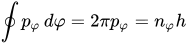
The Bohr–Sommerfeld model added to the quantized angular momentum
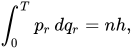
condition of the Bohr model with a radial quantization (condition by William Wilson, the Wilson–Sommerfeld quantization condition):
where pr is the radial momentum canonically conjugate to the coordinate q, which is the radial position, and T is one full orbital period. The integral is the action of action-angle coordinates. This condition, suggested by the correspondence principle, is the only one possible, since the quantum numbers are adiabatic invariants.
Orbits of the hydrogen atom with the same principal quantum number, but different auxiliary quantum number
In 1913, Niels Bohr displayed rudiments of the later defined correspondence principle and used it to formulate a model of the hydrogen atom which explained its line spectrum.
In the next few years Arnold Sommerfeld extended the quantum rule to
arbitrary integrable systems making use of the principle of adiabatic invariance of the quantum numbers introduced by Hendrik Lorentz and Albert Einstein. Sommerfeld made a crucial contribution by quantizing the z-component of the angular momentum, which in the old quantum era was called "space quantization" (German: Richtungsquantelung).
This allowed the orbits of the electron to be ellipses instead of
circles, and introduced the concept of quantum degeneracy. The theory
would have correctly explained the Zeeman effect, except for the issue of electron spin. Sommerfeld's model was much closer to the modern quantum mechanical picture than Bohr's.
The
Sommerfeld model predicted that the magnetic moment of an atom measured
along an axis will only take on discrete values, a result which seems
to contradict rotational invariance but which was confirmed by the Stern–Gerlach experiment. This was a significant step in the development of quantum mechanics. It also described the possibility of atomic energy levels being split by a magnetic field (called the Zeeman effect). Walther Kossel
worked with Bohr and Sommerfeld on the Bohr–Sommerfeld model of the
atom introducing two electrons in the first shell and eight in the
second.
Issues
The Bohr–Sommerfeld model was fundamentally inconsistent and led to many paradoxes. The magnetic quantum number measured the tilt of the orbital plane relative to the xy plane,
and it could only take a few discrete values. This contradicted the
obvious fact that an atom could be turned this way and that relative to
the coordinates without restriction. The Sommerfeld quantization can be
performed in different canonical coordinates and sometimes gives
different answers. The incorporation of radiation corrections was
difficult, because it required finding action-angle coordinates for a
combined radiation/atom system, which is difficult when the radiation is
allowed to escape. The whole theory did not extend to non-integrable
motions, which meant that many systems could not be treated even in
principle. In the end, the model was replaced by the modern
quantum-mechanical treatment of the hydrogen atom, which was first given
by Wolfgang Pauli in 1925, using Heisenberg's matrix mechanics. The current picture of the hydrogen atom is based on the atomic orbitals of wave mechanics, which Erwin Schrödinger developed in 1926.
However, this is not to say that the Bohr–Sommerfeld model was
without its successes. Calculations based on the Bohr–Sommerfeld model
were able to accurately explain a number of more complex atomic spectral
effects. For example, up to first-order perturbations, the Bohr model and quantum mechanics make the same predictions for the spectral line splitting in the Stark effect.
At higher-order perturbations, however, the Bohr model and quantum
mechanics differ, and measurements of the Stark effect under high field
strengths helped confirm the correctness of quantum mechanics over the
Bohr model. The prevailing theory behind this difference lies in the
shapes of the orbitals of the electrons, which vary according to the
energy state of the electron.
The Bohr–Sommerfeld quantization conditions lead to questions in
modern mathematics. Consistent semiclassical quantization condition
requires a certain type of structure on the phase space, which places
topological limitations on the types of symplectic manifolds which can
be quantized. In particular, the symplectic form should be the curvature form of a connection of a Hermitianline bundle, which is called a prequantization.
Relativistic orbit
Orbitals of the hydrogen atom. The jumps from 31, 32, 33 to 22 all create the Balmer spectral line Hα, but they differ at the fine structure.Elliptical orbits with the same energy and quantized angular momentum
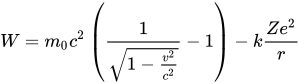
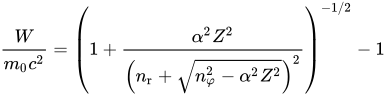
Arnold Sommerfeld derived the relativistic solution of atomic energy levels. We will start this derivation with the relativistic equation for energy in the electric potential
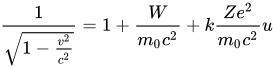
After substitution we get
For momentum , and their ratio the equation of motion is (see Binet equation)
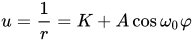
with solution
The angular shift of periapsis per revolution is given by
The African bush elephant (foreground), Earth's largest extant land animal, and the Masai ostrich (background), one of Earth's largest extant birds
In zoology, megafauna (from Greekμέγαςmegas 'large' and Neo-Latinfauna
'animal life') are large animals. The precise definition of the term
varies widely, though a common threshold is approximately 45 kilograms
(99 lb), this lower end being centered on humans, with other thresholds
being more relative to the sizes of animals in an ecosystem, the spectrum of lower-end thresholds ranging from 10 kilograms (22 lb)
to 1,000 kilograms (2,200 lb). Large body size is generally associated
with other traits, such as having a slow rate of reproduction and, in
large herbivores, reduced or negligible adult mortality from being
killed by predators.
Megafauna species have considerable effects on their local
environment, including the suppression of the growth of woody vegetation
and a consequent reduction in wildfire frequency. Megafauna also play a role in regulating and stabilizing the abundance of smaller animals.
During the Pleistocene, megafauna were diverse across the globe, with most continental ecosystems exhibiting similar or greater species richness in megafauna as compared to ecosystems in Africa today. During the Late Pleistocene, particularly from around 50,000 years ago onwards, most large mammal species became extinct,
including 80% of all mammals greater than 1,000 kilograms (2,200 lb),
while small animals were largely unaffected. This pronouncedly
size-biased extinction is otherwise unprecedented in the geological
record. Humans and climatic change have been implicated by most authors
as the likely causes, though the relative importance of either factor
has been the subject of significant controversy.
History
One of the earliest occurrences of the term "megafauna" is Alfred Russel Wallace's 1876 work The geographical distribution of animals.
He described the animals as "the hugest, and fiercest, and strangest
forms". In the 20th and 21st centuries, the term usually refers to large
animals. There are variations in thresholds used to define megafauna as
a whole or certain groups of megafauna. Many scientific literature
adopt Paul S. Martin's
proposed threshold of 45 kilograms (99 lb) to classify animals as
megafauna. However, for freshwater species, 30 kilograms (66 lb) is the
preferred threshold. Some scientists define herbivorous terrestrial
megafauna as having a weight exceeding 100 kilograms (220 lb), and
terrestrial carnivorous megafauna as more than 15 kilograms (33 lb).
Additionally, Owen-Smith coined the term megaherbivore to describe herbivores that weighed over 1,000 kilograms (2,200 lb), which has seen some use by other researchers.
Among living animals, the term megafauna is most commonly used for the largest extant terrestrial mammals, which include (but are not limited to) elephants, giraffes, hippopotamuses, rhinoceroses, and larger bovines. Of these five categories of large herbivores, only bovines are presently found outside of Africa and Asia,
but all the others were formerly more wide-ranging, with their ranges
and populations continually shrinking and decreasing over time. Wild equines are another example of megafauna, but their current ranges are largely restricted to the Old World, specifically in Africa and Asia. Megafaunal species may be categorized according to their dietary type: megaherbivores (e.g., elephants), megacarnivores (e.g., lions), and megaomnivores (e.g., bears).
Ecological strategy
Megafauna animals – in the sense of the largest mammals and birds – are generally K-strategists,
with high longevity, slow population growth rates, low mortality rates,
and (at least for the largest) few or no natural predators capable of
killing adults. These characteristics, although not exclusive to such megafauna, make them vulnerable to human overexploitation, in part because of their slow population recovery rates.
Evolution of large body size
One
observation that has been made about the evolution of larger body size
is that rapid rates of increase that are often seen over relatively
short time intervals are not sustainable over much longer time periods.
In an examination of mammal body mass changes over time, the maximum
increase possible in a given time interval was found to scale with the
interval length raised to the 0.25 power. This is thought to reflect the emergence, during a trend of increasing
maximum body size, of a series of anatomical, physiological,
environmental, genetic and other constraints that must be overcome by
evolutionary innovations before further size increases are possible. A
strikingly faster rate of change was found for large decreases in body
mass, such as may be associated with the phenomenon of insular dwarfism.
When normalized to generation length, the maximum rate of body mass
decrease was found to be over 30 times greater than the maximum rate of
body mass increase for a ten-fold change.
In terrestrial mammals
Large terrestrial mammals compared in size to one of the largest sauropod dinosaurs, Patagotitan
Subsequent to the Cretaceous–Paleogene extinction event that eliminated the non-avian dinosaurs about 66 Ma
(million years) ago, terrestrial mammals underwent a nearly exponential
increase in body size as they diversified to occupy the ecological
niches left vacant. Starting from just a few kg before the event,
maximum size had reached ~50 kilograms (110 lb) a few million years
later, and ~750 kilograms (1,650 lb) by the end of the Paleocene. This trend of increasing body mass appears to level off about 40 Ma ago (in the late Eocene),
suggesting that physiological or ecological constraints had been
reached, after an increase in body mass of over three orders of
magnitude. However, when considered from the standpoint of rate of size increase
per generation, the exponential increase is found to have continued
until the appearance of Indricotherium 30 Ma ago. (Since generation time scales with body mass0.259, increasing generation times with increasing size cause the log mass vs. time plot to curve downward from a linear fit.)
Megaherbivores eventually attained a body mass of over 10,000 kilograms (22,000 lb). The largest of these, indricotheres and proboscids, have been hindgut fermenters, which are believed to have an advantage over foregut fermenters in terms of being able to accelerate gastrointestinal transit in order to accommodate very large food intakes. A similar trend emerges when rates of increase of maximum body mass per generation for different mammalian clades are compared (using rates averaged over macroevolutionary time scales). Among terrestrial mammals, the fastest rates of increase of body mass0.259 vs. time (in Ma) occurred in perissodactyls (a slope of 2.1), followed by rodents (1.2) and proboscids (1.1), all of which are hindgut fermenters. The rate of increase for artiodactyls (0.74) was about a third of the perissodactyls. The rate for carnivorans (0.65) was slightly lower yet, while primates, perhaps constrained by their arboreal habits, had the lowest rate (0.39) among the mammalian groups studied.
Terrestrial mammalian carnivores from several eutherian groups (the artiodactylAndrewsarchus – formerly considered a mesonychid, the oxyaenidSarkastodon, and the carnivorans Amphicyon and Arctodus) all reached a maximum size of about 1,000 kilograms (2,200 lb) (the carnivoran Arctotherium and the hyaenodontidSimbakubwa may have been somewhat larger). The largest known metatherian carnivore, Proborhyaena gigantea, apparently reached 600 kilograms (1,300 lb), also close to this limit. A similar theoretical maximum size for mammalian carnivores has been
predicted based on the metabolic rate of mammals, the energetic cost of
obtaining prey, and the maximum estimated rate coefficient of prey
intake. It has also been suggested that maximum size for mammalian carnivores is constrained by the stress the humerus can withstand at top running speed.
Analysis of the variation of maximum body size over the last 40
Ma suggests that decreasing temperature and increasing continental land
area are associated with increasing maximum body size. The former
correlation would be consistent with Bergmann's rule, and might be related to the thermoregulatory advantage of large body mass in cool climates, better ability of larger organisms to cope with seasonality in food supply, or other factors; the latter correlation could be explained in terms of range and resource limitations. However, the two parameters are interrelated (due to sea level drops
accompanying increased glaciation), making the driver of the trends in
maximum size more difficult to identify.
In marine mammals
Baleen whale comparative sizes
Since tetrapods (first reptiles, later mammals) returned to the sea in the Late Permian,
they have dominated the top end of the marine body size range, due to
the more efficient intake of oxygen possible using lungs. The ancestors of cetaceans are believed to have been the semiaquatic pakicetids, no larger than dogs, of about 53 million years (Ma) ago. By 40 Ma ago, cetaceans had attained a length of 20 m (66 ft) or more in Basilosaurus,
an elongated, serpentine whale that differed from modern whales in many
respects and was not ancestral to them. Following this, the evolution
of large body size in cetaceans appears to have come to a temporary halt
and then to have backtracked, although the available fossil records are
limited. However, in the period from 31 Ma ago (in the Oligocene) to the present, cetaceans underwent a significantly more rapid sustained increase in body mass (a rate of increase in body mass0.259 of a factor of 3.2 per million years) than achieved by any group of terrestrial mammals. This trend led to the largest animal of all time, the modern blue whale. Several reasons for the more rapid evolution of large body size in cetaceans are possible. Fewer biomechanical
constraints on increases in body size may be associated with suspension
in water as opposed to standing against the force of gravity, and with swimming movements as opposed to terrestrial locomotion. Also, the greater heat capacity and thermal conductivity of water compared to air may increase the thermoregulatory advantage of large body size in marine endotherms, although diminishing returns apply.
Among the toothed whales, maximum body size appears to be limited by food availability. Larger size, as in sperm and beaked whales,
facilitates deeper diving to access relatively easily-caught, large
cephalopod prey in a less competitive environment. Compared to
odontocetes, the efficiency of baleen whales' filter feeding scales more favorably with increasing size when planktonic food is dense, making larger sizes more advantageous. The lunge feeding technique of rorquals appears to be more energy efficient than the ram feeding of balaenid whales; the latter technique is used with less dense and patchy plankton. The cooling trend in Earth's recent history may have generated more localities of high plankton abundance via wind-driven upwellings, facilitating the evolution of gigantic whales.
Cetaceans are not the only marine mammals to reach tremendous sizes. The largest mammal carnivorans of all time are marine pinnipeds, the largest of which is the southern elephant seal, which can reach more than 6 m (20 ft) in length and weigh up to 5,000 kg (11,000 lb). Other large pinnipeds include the northern elephant seal at 4,000 kg (8,800 lb), walrus at 2,000 kg (4,400 lb), and Steller sea lion at 1,135 kg (2,502 lb). The sirenians
are another group of marine mammals which adapted to fully aquatic life
around the same time as the cetaceans did. Sirenians are closely
related to elephants. The largest sirenian was the Steller's sea cow,
which reached up to 10 m (33 ft) in length and weighed 8,000 to
10,000 kg (18,000 to 22,000 lb), and was hunted to extinction in the
18th century.
Because of the small initial size of all mammals following the
extinction of the non-avian dinosaurs, nonmammalian vertebrates had a
roughly ten-million-year-long window of opportunity (during the
Paleocene) for evolution of gigantism without much competition. During this interval, apex predator niches were often occupied by reptiles, such as terrestrial crocodilians (e.g. Pristichampsus), large snakes (e.g. Titanoboa) or varanid lizards, or by flightless birds (e.g. Paleopsilopterus in South America). This is also the period when megafaunal flightless herbivorous gastornithid birds evolved in the Northern Hemisphere, while flightless paleognaths evolved to large size on Gondwanan land masses and Europe.
Gastornithids and at least one lineage of flightless paleognath birds
originated in Europe, both lineages dominating niches for large
herbivores while mammals remained below 45 kilograms (99 lb) (in
contrast with other landmasses like North America and Asia, which saw the earlier evolution of larger mammals) and were the largest European tetrapods in the Paleocene.
Flightless paleognaths, termed ratites, have traditionally been viewed as representing a lineage separate from that of their small flighted relatives, the Neotropictinamous. However, recent genetic studies have found that tinamous nest well within the ratite tree, and are the sister group of the extinct moa of New Zealand. Similarly, the small kiwi of New Zealand have been found to be the sister group of the extinct elephant birds of Madagascar. These findings indicate that flightlessness and gigantism arose independently multiple times among ratites via parallel evolution.
Predatory megafaunal flightless birds were often able to compete with mammals in the early Cenozoic. Later in the Cenozoic, however, they were displaced by advanced carnivorans and died out. In North America, the bathornithidsParacrax and Bathornis were apex predators but became extinct by the Early Miocene. In South America, the related phorusrhacids shared the dominant predatory niches with metatherian sparassodonts
during most of the Cenozoic but declined and ultimately went extinct
after eutherian predators arrived from North America (as part of the Great American Interchange) during the Pliocene. In contrast, large herbivorous flightless ratites have survived to the present.
However, none of the flightless birds of the Cenozoic, including the predatory Brontornis, possibly omnivorous Dromornis stirtoni or herbivorous Aepyornis,
ever grew to masses much above 500 kilograms (1,100 lb); thus, they
never attained the size of the largest mammalian carnivores, let alone
that of the largest mammalian herbivores. It has been suggested that the
increasing thickness of avian eggshells in proportion to egg mass with
increasing egg size places an upper limit on the size of birds. The largest species of Dromornis, D. stirtoni, may have gone extinct after it attained the maximum avian body mass and was then outcompeted by marsupial diprotodonts that evolved to sizes several times larger.
In giant turtles
Giant tortoises were important components of late Cenozoic megafaunas, being present in every nonpolar continent until the arrival of homininans. The largest known terrestrial tortoise was Megalochelys atlas, an animal that probably weighed about 1,000 kg (2,200 lb).
Some earlier aquatic Testudines, e.g. the marine Archelon of the Cretaceous and freshwater Stupendemys of the Miocene, were considerably larger, weighing more than 2,000 kg (4,400 lb).
Correlations between times of first appearance of humans and unique megafaunal extinction pulses on different land massesCyclical pattern of global climate change
over the last 450,000 years (based on Antarctic temperatures and global
ice volume), showing that there were no unique climatic events that
would account for any of the megafaunal extinction pulses
Numerous extinctions occurred during the latter half of the Last Glacial Period when most large mammals went extinct in the Americas, Australia-New Guinea, and Eurasia,
including over 80% of all terrestrial animals with a body mass greater
than 1,000 kilograms (2,200 lb). Small animals and other organisms like
plants were generally unaffected by the extinctions, which is
unprecented in previous extinctions during the last 30 million years.
Various theories have attributed the wave of extinctions to human hunting, climate change, disease, extraterrestrial impact, competition from other animals or other causes. However, this extinction near the end of the Pleistocene
was just one of a series of megafaunal extinction pulses that have
occurred during the last 50,000 years over much of the Earth's surface,
with Africa and Asia
(where the local megafauna had a chance to evolve alongside modern
humans) being comparatively less affected. The latter areas did suffer
gradual attrition of megafauna, particularly of the slower-moving
species (a class of vulnerable megafauna epitomized by giant tortoises), over the last several million years.
Outside the mainland of Afro-Eurasia,
these megafaunal extinctions followed a highly distinctive
landmass-by-landmass pattern that closely parallels the spread of humans
into previously uninhabited regions of the world, and which shows no
overall correlation with climatic history (which can be visualized with
plots over recent geological time periods of climate markers such as marine oxygen isotopes or atmospheric carbon dioxide levels).Australia and nearby islands (e.g., Flores) were struck first around 46,000 years ago, followed by Tasmania about 41,000 years ago (after formation of a land bridge to Australia about 43,000 years ago). The role of humans in the extinction of Australia and New Guinea's
megafauna has been disputed, with multiple studies showing a decline in
the number of species prior to the arrival of humans on the continent
and the absence of any evidence of human predation; the impact of climate change has instead been cited for their decline. Similarly, Japan lost most of its megafauna apparently about 30,000 years ago, North America 13,000 years ago and South America about 500 years later, Cyprus 10,000 years ago, the Antilles 6,000 years ago, New Caledonia and nearby islands 3,000 years ago, Madagascar 2,000 years ago, New Zealand 700 years ago, the Mascarenes 400 years ago, and the Commander Islands 250 years ago. Nearly all of the world's isolated islands could furnish similar
examples of extinctions occurring shortly after the arrival of humans, though most of these islands, such as the Hawaiian Islands, never had terrestrial megafauna, so their extinct fauna were smaller, but still displayed island gigantism.
An analysis of the timing of Holarctic megafaunal extinctions and extirpations over the last 56,000 years has revealed a tendency for such events to cluster within interstadials,
periods of abrupt warming, but only when humans were also present.
Humans may have impeded processes of migration and recolonization that
would otherwise have allowed the megafaunal species to adapt to the
climate shift. In at least some areas, interstadials were periods of expanding human populations.
An analysis of Sporormiella
fungal spores (which derive mainly from the dung of megaherbivores) in
swamp sediment cores spanning the last 130,000 years from Lynch's Crater in Queensland, Australia, showed that the megafauna of that region virtually disappeared about 41,000 years ago, at a time when climate changes
were minimal; the change was accompanied by an increase in charcoal,
and was followed by a transition from rainforest to fire-tolerant sclerophyll
vegetation. The high-resolution chronology of the changes supports the
hypothesis that human hunting alone eliminated the megafauna, and that
the subsequent change in flora was most likely a consequence of the
elimination of browsers and an increase in fire. The increase in fire lagged the disappearance of megafauna by about a
century, and most likely resulted from accumulation of fuel once
browsing stopped. Over the next several centuries grass increased;
sclerophyll vegetation increased with a lag of another century, and a
sclerophyll forest developed after about another thousand years. During two periods of climate change about 120,000 and 75,000 years
ago, sclerophyll vegetation had also increased at the site in response
to a shift to cooler, drier conditions; neither of these episodes had a
significant impact on megafaunal abundance. Similar conclusions regarding the culpability of human hunters in the
disappearance of Pleistocene megafauna were derived from high-resolution
chronologies obtained via an analysis of a large collection of eggshell
fragments of the flightless Australian bird Genyornis newtoni, from analysis of Sporormiella fungal spores from a lake in eastern North America and from study of deposits of Shasta ground sloth dung left in over half a dozen caves in the American Southwest.
Continuing human hunting and environmental disturbance has led to additional megafaunal extinctions in the recent past, and has created a serious danger of further extinctions
in the near future (see examples below). Direct killing by humans,
primarily for meat or other body parts, is the most significant factor
in contemporary megafaunal decline.
A number of other mass extinctions
occurred earlier in Earth's geologic history, in which some or all of
the megafauna of the time also died out. Famously, in the Cretaceous–Paleogene extinction event,
the non-avian dinosaurs and most other giant reptiles were eliminated.
However, the earlier mass extinctions were more global and not so
selective for megafauna; i.e., many species of other types, including
plants, marine invertebrates and plankton, went extinct as well. Thus, the earlier events must have
been caused by more generalized types of disturbances to the biosphere.
Consequences of depletion of megafauna
Depletion of herbivorous megafauna results in increased growth of woody vegetation, and a consequent increase in wildfire frequency. Megafauna may help to suppress the growth of invasive plants. Large herbivores and carnivores can suppress the abundance of smaller
animals, resulting in their population increase when megafauna are
removed.
Effect on nutrient transport
Megafauna
play a significant role in the lateral transport of mineral nutrients
in an ecosystem, tending to translocate them from areas of high to those
of lower abundance. They do so by their movement between the time they
consume the nutrient and the time they release it through elimination
(or, to a much lesser extent, through decomposition after death). In South America's Amazon Basin,
it is estimated that such lateral diffusion was reduced over 98%
following the megafaunal extinctions that occurred roughly 12,500 years
ago. Given that phosphorus
availability is thought to limit productivity in much of the region,
the decrease in its transport from the western part of the basin and
from floodplains (both of which derive their supply from the uplift of
the Andes)
to other areas is thought to have significantly impacted the region's
ecology, and the effects may not yet have reached their limits. In the sea, cetaceans and pinnipeds that feed at depth are thought to
translocate nitrogen from deep to shallow water, enhancing ocean productivity, and counteracting the activity of zooplankton, which tend to do the opposite.
Effect on methane emissions
Large populations of megaherbivores have the potential to contribute greatly to the atmospheric concentration of methane, which is an important greenhouse gas. Modern ruminantherbivores produce methane as a byproduct of foregut fermentation in digestion and release it through belching or flatulence. Today, around 20% of annual methane emissions come from livestock methane release. In the Mesozoic, it has been estimated that sauropods could have emitted 520 million tons of methane to the atmosphere annually, contributing to the warmer climate of the time (up to 10 °C (18 °F) warmer than at present). This large emission follows from the enormous estimated biomass of
sauropods, and because methane production of individual herbivores is
believed to be almost proportional to their mass.
Recent studies have indicated that the extinction of megafaunal herbivores may have caused a reduction in atmospheric methane. This hypothesis is relatively new. One study examined the methane emissions from the bison that occupied the Great Plains
of North America before contact with European settlers. The study
estimated that the removal of the bison caused a decrease of as much as
2.2 million tons per year. Another study examined the change in the methane concentration in the atmosphere at the end of the Pleistocene epoch after the extinction of megafauna in the Americas. After early humans migrated to the Americas about 13,000 BP,
their hunting and other associated ecological impacts led to the
extinction of many megafaunal species there. Calculations suggest that
this extinction decreased methane production by about 9.6 million tons
per year. This suggests that the absence of megafaunal methane emissions
may have contributed to the abrupt climatic cooling at the onset of the
Younger Dryas. The decrease in atmospheric methane that occurred at that time, as recorded in ice cores,
was 2 to 4 times more rapid than any other decrease in the last half
million years, suggesting that an unusual mechanism was at work.
LUCA and LECA: the origins of the eukaryotes. The point of fusion (marked "?") below LECA is the FECA, the first
eukaryotic common ancestor, some 2.2 billion years ago. Much earlier,
some 4 billion years ago, the LUCA gave rise to the two domains of prokaryotes, the bacteria and the archaea.
After the LECA, some 2 billion years ago, the eukaryotes diversified
into a crown group, which gave rise to animals, plants, fungi, and
protists.
Eukaryogenesis, the process which created the eukaryotic
cell and lineage, is a milestone in the evolution of life, since
eukaryotes include all complex cells and almost all multicellular
organisms. The process is widely agreed to have involved symbiogenesis, in which an archaeon and one or more bacteria came together to create the first eukaryotic common ancestor (FECA). This cell had a new level of complexity and capability, with a nucleus, at least one centriole and cilium, facultatively aerobic mitochondria, sex (meiosis and syngamy), a dormant cyst with a cell wall of chitin and/or cellulose and peroxisomes. It evolved into a population of single-celled organisms that included the last eukaryotic common ancestor (LECA),
gaining capabilities along the way, though the sequence of steps
involved has been disputed, and may not have started with symbiogenesis.
In turn, the LECA gave rise to the eukaryotes' crown group, containing the ancestors of animals, fungi, plants, and a diverse range of single-celled organisms.
Life arose on Earth once it had cooled enough for oceans to form. That developed into the last universal common ancestor (LUCA), an organism which had ribosomes and the genetic code, some 4 billion years ago. It gave rise to two main branches of prokaryotic
life, the Bacteria and the Archaea. From among these small-celled,
rapidly-dividing ancestors arose the Eukaryotes, with much larger cells,
nuclei, and distinctive biochemistry. The eukaryotes form a domain that contains all complex cells and most types of multicellular organism, including the animals, plants, and fungi.
In the theory of symbiogenesis, a merger of an archaean and an aerobic bacterium created the eukaryotes, with aerobic mitochondria, some 2.2 billion years ago. A second merger, 1.6 billion years ago, added chloroplasts, creating the green plants.
According to the theory of symbiogenesis (the endosymbiotic theory) championed by Lynn Margulis, a member of the archaea gained a bacterial cell as a component. The archaeal cell was a member of the Promethearchaeatikingdom. The bacterium was one of the alphaproteobacteria,
which had the ability to use oxygen in its respiration. This enabled it
– and the archaeal cells that included it – to survive in the presence
of oxygen, which was poisonous to other organisms adapted to reducing conditions. The endosymbiotic bacteria became the eukaryotic cell's mitochondria, providing most of the energy of the cell. Lynn Margulis and colleagues have suggested that the cell also acquired a Spirochaete bacterium as a symbiont, providing the cell skeleton of microtubules and the ability to move, including the ability to pull chromosomes into two sets during mitosis, cell division. More recently, the archaean has been identified as belonging to the unranked taxonHeimdallarchaeia of the phylumPromethearchaeota.
Last eukaryotic common ancestor (LECA)
The last eukaryotic common ancestor (LECA) is the hypothetical last common ancestor of all living eukaryotes, around 2 billion years ago, and was most likely a biological population. It is believed to have been a protist with a nucleus, at least one centriole and cilium, facultatively aerobic mitochondria, sex (meiosis and syngamy), a dormant cyst with a cell wall of chitin and/or cellulose, and peroxisomes.
It had been proposed that the LECA fed by phagocytosis, engulfing other organisms. However, in 2022, Nico Bremer and colleagues confirmed that the LECA
had mitochondria, and stated that it had multiple nuclei, but disputed
that it was phagotrophic. This would mean that the ability found in many
eukaryotes to engulf materials developed later, rather than being
acquired first and then used to engulf the alphaproteobacteria that
became mitochondria.
The LECA has been described as having "spectacular cellular complexity". Its cell was divided into compartments. It appears to have inherited a set of endosomal sorting complex proteins that enable membranes to be remodelled, including pinching off vesicles to form endosomes. Its apparatuses for transcribing DNA into RNA, and then for translating the RNA into proteins, were separated, permitting extensive RNA processing and allowing the expression of genes to become more complex. It had mechanisms for reshuffling its genetic material, and possibly for manipulating its own evolvability. All of these gave the LECA "a compelling cohort of selective advantages".
Eukaryotic sex
Sex in eukaryotes is a composite process, consisting of meiosis and fertilisation, which can be coupled to reproduction. Dacks and Roger proposed on the basis of a phylogenetic
analysis that facultative sex was likely present in the common ancestor
of all eukaryotes. Early in eukaryotic evolution, about 2 billion years
ago, organisms needed a solution to the major problem that oxidative
metabolism releases reactive oxygen species that damage the genetic material, DNA. Eukaryotic sex provides a process, homologous recombination during meiosis, for using informational redundancy to repair such DNA damage.
Scenarios
Competing sequences of mitochondria, membranes, and nucleus
Biologists
have proposed multiple scenarios for the creation of the eukaryotes.
While there is broad agreement that the LECA must have had a nucleus,
mitochondria, and internal membranes, the order in which these were
acquired has been disputed. In the syntrophic model, the first eukaryotic common ancestor (FECA, around 2.2 gya) gained mitochondria, then membranes, then a nucleus. In the phagotrophic model, it gained a nucleus, then membranes, then mitochondria. In a more complex process, it gained all three in short order, then
other capabilities. Other models have been proposed. Whatever happened,
many lineages must have been created, but the LECA either out-competed
or came together with the other lineages to form a single point of
origin for the eukaryotes.
Nick Lane and William Martin
have argued that mitochondria came first, on the grounds that energy
had been the limiting factor on the size of the prokaryotic cell. Enrique M. Muro et al. have argued, however, that the genetic system
needed to reach a critical point that led to a new regulatory system
(with introns and the spliceosome), which enabled coordination between genetic networks. The phagotrophic model presupposes the ability to engulf food, enabling
the cell to engulf the aerobic bacterium that became the mitochondrion.
Eugene Koonin and others, noting that the archaea share many features with eukaryotes, argue that rudimentary eukaryotic traits such as membrane-lined compartments were acquired before endosymbiosis added mitochondria to the early eukaryotic cell, while the cell wall
was lost. In the same way, mitochondrial acquisition must not be
regarded as the end of the process, for still new complex families of
genes had to be developed after or during the endosymbiotic exchange. In
this way, from FECA to LECA, the organisms can be considered as
proto-eukaryotes. At the end of the process, LECA was already a complex
organism with protein families involved in cellular
compartmentalization.
Viral eukaryogenesis
Another scenario is viral eukaryogenesis,
which proposes that the eukaryotes arose as an emergent superorganism,
with the nucleus deriving from a "viral factory" alongside the
alphaproteobacterium mitochondrion, hosted by an archaeal cell. In this
scenario, eukaryogenesis began when a virus colonised an archaeal cell,
making it support the production of viruses. The virus may later have
assisted the bacterium's entry into the reprogrammed cell. Eukaryotes share genes for several DNA synthesis and transcription enzymes with DNA viruses (Nucleocytoviricota). Those viruses may thus be older than the LECA and may have exchanged DNA with proto-eukaryotes.
Diversification: crown eukaryotes
In turn, the LECA gave rise to the eukaryotes' crown group, containing the ancestors of animals, fungi, plants, and a diverse range of single-celled organisms with the new capabilities and complexity of the eukaryotic cell. Single cells without cell walls are fragile and have a low probability of being fossilised.
If fossilised, they have few features to distinguish them clearly from
prokaryotes: size, morphological complexity, and (eventually) multicellularity. Early eukaryote fossils, from the late Paleoproterozoic, include acritarch microfossils with relatively robust ornate carbonaceous vesicles of Tappania from 1.63 gya and Shuiyousphaeridium from 1.8 gya.
The position of the LECA on the eukaryotic tree of life remains
controversial. Some studies believe that the first split after the LECA
happened between the Unikonta and the Bikonta (Stechmann and Cavalier-Smith 2003), or between Amorphea and all other eukaryotes (Adl et al. 2012; Derelle and Lang 2012). Some believe that the first split happened within Excavata (al Jewari and Baldauf 2023). Yet others believe in a first split between the Opisthokonta and all others (Cerón-Romero et al. 2024).
The diversity of species and genes in ecological communities affects the functioning of these communities. These ecological effects of biodiversity in turn are affected by both climate change through enhanced greenhouse gases, aerosols and loss of land cover, and biological diversity, causing a rapid loss of biodiversity and extinctions of species and local populations. The current rate of extinction is sometimes considered a mass extinction, with current species extinction rates on the order of 100 to 1000 times as high as in the past.
The two main areas where the effect of biodiversity on ecosystem
function have been studied are the relationship between diversity and
productivity, and the relationship between diversity and community
stability. More biologically diverse communities appear to be more productive (in terms of biomass production) than are less diverse communities, and they appear to be more stable in the face of perturbations.
Also animals that inhabit an area may alter the surviving conditions by factors assimilated by climate.
Definitions
In order to understand the effects that changes in biodiversity
will have on ecosystem functioning, it is important to define some
terms. Biodiversity is not easily defined, but may be thought of as the
number and/or evenness of genes, species, and ecosystems in a region. This definition includes genetic diversity, or the diversity of genes within a species, species diversity, or the diversity of species within a habitat or region, and ecosystem diversity, or the diversity of habitats within a region.
Two things commonly measured in relation to changes in diversity are productivity and stability. Productivity is a measure of ecosystem function. It is generally measured by taking the total aboveground biomass
of all plants in an area. Many assume that it can be used as a general
indicator of ecosystem function and that total resource use and other
indicators of ecosystem function are correlated with productivity.
Stability is much more difficult to define, but can be generally
thought of in two ways. General stability of a population is a measure
that assumes stability is higher if there is less of a chance of
extinction. This kind of stability is generally measured by measuring
the variability of aggregate community properties, like total biomass, over time. The other definition of stability is a measure of resilience and resistance, where an ecosystem that returns quickly to an equilibrium after a perturbation or resists invasion is thought of as more stable than one that does not.
The
importance of stability in community ecology is clear. An unstable
ecosystem will be more likely to lose species. Thus, if there is indeed a
link between diversity and stability, it is likely that losses of
diversity could feedback on themselves, causing even more losses of
species. Productivity, on the other hand, has a less clear importance in
community ecology. In managed areas like cropland, and in areas where animals are grown or caught, increasing productivity increases the economic success of the area and implies that the area has become more efficient, leading to possible long term resource sustainability. It is more difficult to find the importance of productivity in natural ecosystems.
Beyond the value biodiversity has in regulating and stabilizing
ecosystem processes, there are direct economic consequences of losing
diversity in certain ecosystems and in the world as a whole. Losing
species means losing potential foods, medicines, industrial products, and tourism, all of which have a direct economic effect on peoples lives.
Effects on community productivity
Complementarity Plant species coexistence is thought to be the result of niche
partitioning, or differences in resource requirements among species. By
complementarity, a more diverse plant community should be able to use
resources more completely, and thus be more productive. Also called niche differentiation, this mechanism is a central principle in the functional group approach, which breaks species diversity down into functional components.
Facilitation Facilitation
is a mechanism whereby certain species help or allow other species to
grow by modifying the environment in a way that is favorable to a
co-occurring species. Plants can interact through an intermediary like nitrogen, water,
temperature, space, or interactions with weeds or herbivores among
others. Some examples of facilitation include large desert perennials
acting as nurse plants, aiding the establishment of young neighbors of
other species by alleviating water and temperature stress, and nutrient enrichment by nitrogen-fixers such as legumes.
The Sampling Effect The sampling effect of diversity can be
thought of as having a greater chance of including a species of greatest
inherent productivity in a plot that is more diverse. This provides for
a composition effect on productivity, rather than diversity being a
direct cause. However, the sampling effect may in fact be a compilation
of different effects. The sampling effect can be separated into the
greater likelihood of selecting a species that is 1) adapted well to
particular site conditions, or 2) of a greater inherent productivity.
Additionally, one can add to the sampling effect a greater likelihood of
including 3) a pair of species that highly complement each other, or 4)
a certain species with a large facilitative effect on other members of
the community.
Review of data
Field
experiments to test the degree to which diversity affects community
productivity have had variable results, but many long-term studies in grassland ecosystems have found that diversity does indeed enhance the productivity of ecosystems. Additionally, evidence of this relationship has also been found in
grassland microcosms. The differing results between studies may
partially be attributable to their reliance on samples with equal
species diversities rather than species diversities that mirror those
observed in the environment. A 2006 experiment utilizing a realistic variation in species composition for its grassland samples found a positive correlation between increased diversity and increased production.
However, these studies have come to different conclusions as to whether the cause was due more to diversity or to species composition.
Specifically, a diversity in the functional roles of the species may be
a more important quality for predicting productivity than the diversity
in species number. Recent mathematical models have highlighted the importance of
ecological context in unraveling this problem. Some models have
indicated the importance of disturbance rates and spatial heterogeneity of the environment, others have indicated that the time since disturbance and the habitat's carrying capacity can cause differing relationships. Each ecological context should yield not only a different relationship,
but a different contribution to the relationship due to diversity and
to composition. The current consensus holds at least that certain
combinations of species provide increased community productivity.
Future research
In
order to correctly identify the consequences of diversity on
productivity and other ecosystem processes, many things must happen.
First, it is imperative that scientists stop looking for a single
relationship. It is obvious now from the models, the data, and the
theory that there is no one overarching effect of diversity on
productivity.
Scientists must try to quantify the differences between composition
effect and diversity effects, as many experiments never quantify the
final realized species diversity (instead only counting numbers of
species of seeds planted) and confound a sampling effect for
facilitators (a compositional factor) with diversity effects.
Relative amounts of overyielding
(or how much more a species grows when grown with other species than it
does in monoculture) should be used rather than absolute amounts as
relative overyielding can give clues as to the mechanism by which
diversity is influencing productivity, however if experimental protocols
are incomplete, one may be able to indicate the existence of a
complementary or facilitative effect in the experiment, but not be able
to recognize its cause. Experimenters should know what the goal of their
experiment is, that is, whether it is meant to inform natural or
managed ecosystems, as the sampling effect may only be a real effect of
diversity in natural ecosystems (managed ecosystems are composed to
maximize complementarity and facilitation regardless of species number).
By knowing this, they should be able to choose spatial and temporal
scales that are appropriate for their experiment. Lastly, to resolve the
diversity-function debate, it is advisable that experiments be done
with large amounts of spatial and resource heterogeneity and
environmental fluctuation over time, as these types of experiments
should be able to demonstrate the diversity-function relationship more
easily.
Effects on community stability
Averaging Effect
If all species have differential responses to changes in the ecosystem
over time, then the averaging of these responses will cause a more
temporally stable ecosystem if more species are in the ecosystem. This effect is a statistical effect due to summing randomvariables.
Negative Covariance Effect If some species do better when
other species are not doing well, then when there are more species in
the ecosystem, their overall variance will be lower than if there were fewer species in the system. This lower variance indicates higher stability. This effect is a consequence of competition as highly competitive species will negatively covary.
Insurance Effect If an ecosystem contains more species then it will have a greater likelihood of having redundant
stabilizing species, and it will have a greater number of species that
respond to perturbations in different ways. This will enhance an
ecosystem's ability to buffer perturbations.
Resistance to Invasion Diverse communities may use resources
more completely than simple communities because of a diversity effect
for complementarity. Thus invaders
may have reduced success in diverse ecosystems, or there may be a
reduced likelihood that an invading species will introduce a new
property or process to a diverse ecosystem.
Resistance to Disease A decreased number of competing plant
species may allow the abundances of other species to increase,
facilitating the spread of diseases of those species.
Review of temporal stability data
Models have predicted that empirical relationships between temporal
variation of community productivity and species diversity are indeed
real, and that they almost have to be. Some temporal stability data can
be almost completely explained by the averaging effect by constructing
null models to test the data against. Competition, which causes negative covariances, only serves to strengthen these relationships.
Review of resistance and resilience stability data
This
area is more contentious than the area of temporal stability, mostly
because some have tried generalizing the findings of the temporal
stability models and theory to stability in general. While the
relationship between temporal variations in productivity and diversity
has a mathematical cause, which will allow the relationship to be seen
much more often than not, it is not the case with resistance/resilience
stability. Some experimenters have seen a correlation between diversity and reduced invasibility, though many have also seen the opposite. The correlation between diversity and disease is also tenuous, though theory and data do seem to support it.
Future research
In
order to more fully understand the effects of diversity on the temporal
stability of ecosystems it is necessary to recognize that they are
bound to occur. By constructing null models to test the data against (as
in Doak et al. 1998)
it becomes possible to find situations and ecological contexts where
ecosystems become more or less stable than they should be. Finding these
contexts would allow for mechanistic studies into why these ecosystems
are more stable, which may allow for applications in conservation management.
More importantly more complete experiments into whether diverse
ecosystems actually resist invasion and disease better than their less
diverse equivalents as invasion and disease are two important factors
that lead to species extinctions in the present day. In order to address
these problems specifically, future work should focus on practical
methods to increase the successful establishment of the poor performing
but desirable species.
Theory and preliminary effects from examining food webs
One
major problem with both the diversity-productivity and
diversity-stability debates discussed up to this point is that both
focus on interactions at just a single trophic level. That is, they are concerned with only one level of the food web,
namely plants. Other research, unconcerned with the effects of
diversity, has demonstrated strong top-down forcing of ecosystems (see keystone species).
There is very little actual data available regarding the effects of
different food webs, but theory helps us in this area. First, if a food
web in an ecosystem has a lot of weak interactions between different species, then it should have more stable populations and the community as a whole should be more stable. If upper levels of the web are more diverse, then there will be less biomass in the lower levels and if lower levels are more diverse they will better be able to resist consumption
and be more stable in the face of consumption. Also, top-down forcing
should be reduced in less diverse ecosystems because of the bias for
species in higher trophic levels to go extinct first. Lastly, it has recently been shown that consumers can dramatically change the biodiversity-productivity-stability relationships that are implied by plants alone. Thus, it will be important in the future to incorporate food web theory
into the future study of the effects of biodiversity. In addition this
complexity will need to be addressed when designing biodiversity
management plans.












.jpg)


