Search This Blog

Saturday, December 27, 2025

Neutrino oscillation

From Wikipedia, the free encyclopedia
 

Neutrino oscillation is a quantum mechanical phenomenon in which a neutrino created with a specific lepton family number ("lepton flavor": electron, muon, or tau) can later be measured to have a different lepton family number. The probability of measuring a particular flavor for a neutrino varies between three known states as it propagates through space.

First predicted by Bruno Pontecorvo in 1957, neutrino oscillation has since been observed by a multitude of experiments in several different contexts. Most notably, the existence of neutrino oscillation resolved the long-standing solar neutrino problem.

Neutrino oscillation is of great theoretical and experimental interest, as the precise properties of the process can shed light on several properties of the neutrino. In particular, it implies that the neutrino has a non-zero mass, which requires a modification to the Standard Model of particle physics. The experimental discovery of neutrino oscillation, and thus neutrino mass, by the Super-Kamiokande Observatory and the Sudbury Neutrino Observatories was recognized with the 2015 Nobel Prize for Physics.

Observations

A great deal of evidence for neutrino oscillation has been collected from many sources, over a wide range of neutrino energies and with many different detector technologies. The 2015 Nobel Prize in Physics was shared by Takaaki Kajita and Arthur B. McDonald for their early pioneering observations of these oscillations.

Neutrino oscillation is a function of the ratio L/E, where L is the distance traveled and E is the neutrino's energy (details in § Propagation and interference below). All available neutrino sources produce a range of energies, and oscillation is measured at a fixed distance for neutrinos of varying energy. The limiting factor in measurements is the accuracy with which the energy of each observed neutrino can be measured. Because current detectors have energy uncertainties of a few percent, it is satisfactory to know the distance to within 1%.

Solar neutrino oscillation

The first experiment that detected the effects of neutrino oscillation was Ray Davis' Homestake experiment in the late 1960s, in which he observed a deficit in the flux of solar neutrinos with respect to the prediction of the Standard Solar Model, using a chlorine-based detector. This gave rise to the solar neutrino problem. Many subsequent radiochemical and water Cherenkov detectors confirmed the deficit, but neutrino oscillation was not conclusively identified as the source of the deficit until the Sudbury Neutrino Observatory provided clear evidence of neutrino flavor change in 2001.

Solar neutrinos have energies below 20 MeV. At energies above 5 MeV, solar neutrino oscillation actually takes place in the Sun through a resonance known as the MSW effect, a different process from the vacuum oscillation described later in this article.

Atmospheric neutrino oscillation

Following the theories that were proposed in the 1970s suggesting unification of electromagnetic, weak, and strong forces, a few experiments on proton decay followed in the 1980s. Large detectors such as IMB, MACRO, and Kamiokande II have observed a deficit in the ratio of the flux of muon to electron flavor atmospheric neutrinos (see Muon § Muon decay). The Super-Kamiokande experiment provided a very precise measurement of neutrino oscillation in an energy range of hundreds of MeV to a few TeV, and with a baseline of the diameter of the Earth; the first experimental evidence for atmospheric neutrino oscillations was announced in 1998.

Reactor neutrino oscillation

Illustration of neutrino oscillations.

Many experiments have searched for oscillation of electron anti-neutrinos produced in nuclear reactors. No oscillations were found until a detector was installed at a distance 1–2 km. Such oscillations give the value of the parameter θ13. Neutrinos produced in nuclear reactors have energies similar to solar neutrinos, of around a few MeV. The baselines of these experiments have ranged from tens of meters to over 100 km (parameter θ12). Mikaelyan and Sinev proposed to use two identical detectors to cancel systematic uncertainties in reactor experiment to measure the parameter θ13.

In December 2011, the Double Chooz experiment indicated that θ13 ≠ 0. Then, in 2012, the Daya Bay experiment found that θ13 ≠ 0 with a significance of 5.2 σ; these results have since been confirmed by RENO.

The experiment Neutrino-4 started in 2014 with a detector model and continued with a full-scale detector in 2016–2021 obtained the result of the direct observation of the oscillation effect at parameter region Δm2
14
= (7.3 ± 0.13st ± 1.16syst) (eV/c2)2
and sin22θ14 = 0.36 ± 0.12stat (2.9 σ). The simulation showed the expected detector signal for the case of oscillation detection.

Beam neutrino oscillation

Neutrino beams produced at a particle accelerator offer the greatest control over the neutrinos being studied. Many experiments have taken place that study the same oscillations as in atmospheric neutrino oscillation using neutrinos with a few GeV of energy and several-hundred-kilometre baselines. The MINOS, K2K, and Super-K experiments have all independently observed muon neutrino disappearance over such long baselines.

Data from the LSND experiment appear to be in conflict with the oscillation parameters measured in other experiments. Results from the MiniBooNE appeared in Spring 2007 and contradicted the results from LSND, although they could support the existence of a fourth neutrino type, the sterile neutrino.

In 2010, the INFN and CERN announced the observation of a tauon particle in a muon neutrino beam in the OPERA detector located at Gran Sasso, 730 km away from the source in Geneva.

T2K, using a neutrino beam directed through 295 km of earth and the Super-Kamiokande detector, measured a non-zero value for the parameter θ13 in a neutrino beam. NOνA, using the same beam as MINOS with a baseline of 810 km, is sensitive to the same.

Theory

Neutrino oscillation arises from mixing between the flavor and mass eigenstates of neutrinos. That is, the three neutrino states that interact with the charged leptons in weak interactions are each a different superposition of the three (propagating) neutrino states of definite mass. Neutrinos are produced and detected in weak interactions as flavour eigenstates but propagate as coherent superpositions of mass eigenstates.

As a neutrino superposition propagates through space, the quantum mechanical phases of the three neutrino mass states advance at slightly different rates, due to the slight differences in their respective masses. This results in a changing superposition mixture of mass eigenstates as the neutrino travels; but a different mixture of mass eigenstates corresponds to a different mixture of flavor states. For example, a neutrino born as an electron neutrino will be some mixture of electron, mu, and tau neutrino after traveling some distance. Since the quantum mechanical phase advances in a periodic fashion, after some distance the state will nearly return to the original mixture, and the neutrino will be again mostly electron neutrino. The electron flavor content of the neutrino will then continue to oscillate – as long as the quantum mechanical state maintains coherence. Since mass differences between neutrino flavors are small in comparison with long coherence lengths for neutrino oscillations, this microscopic quantum effect becomes observable over macroscopic distances.

In contrast, due to their larger masses, the charged leptons (electrons, muons, and tau leptons) have never been observed to oscillate. In nuclear beta decay, muon decay, pion decay, and kaon decay, when a neutrino and a charged lepton are emitted, the charged lepton is emitted in incoherent mass eigenstates such as | e
, because of its large mass. Weak-force couplings compel the simultaneously emitted neutrino to be in a "charged-lepton-centric" superposition such as | ν
e
, which is an eigenstate for a "flavor" that is fixed by the electron's mass eigenstate, and not in one of the neutrino's own mass eigenstates. Because the neutrino is in a coherent superposition that is not a mass eigenstate, the mixture that makes up that superposition oscillates significantly as it travels. No analogous mechanism exists in the Standard Model that would make charged leptons detectably oscillate. In the four decays mentioned above, where the charged lepton is emitted in a unique mass eigenstate, the charged lepton will not oscillate, as single mass eigenstates propagate without oscillation.

The case of (real) W boson decay is more complicated: W boson decay is sufficiently energetic to generate a charged lepton that is not in a mass eigenstate; however, the charged lepton would lose coherence, if it had any, over interatomic distances (0.1 nm) and would thus quickly cease any meaningful oscillation. More importantly, no mechanism in the Standard Model is capable of pinning down a charged lepton into a coherent state that is not a mass eigenstate, in the first place; instead, while the charged lepton from the W boson decay is not initially in a mass eigenstate, neither is it in any "neutrino-centric" eigenstate, nor in any other coherent state. It cannot meaningfully be said that such a featureless charged lepton oscillates or that it does not oscillate, as any "oscillation" transformation would just leave it the same generic state that it was before the oscillation. Therefore, detection of a charged lepton oscillation from W boson decay is infeasible on multiple levels.

Pontecorvo–Maki–Nakagawa–Sakata matrix

The idea of neutrino oscillation was first put forward in 1957 by Bruno Pontecorvo, who proposed that neutrino–antineutrino transitions may occur in analogy with neutral kaon mixing. Although such matter–antimatter oscillation had not been observed, this idea formed the conceptual foundation for the quantitative theory of neutrino flavor oscillation, which was first developed by Maki, Nakagawa, and Sakata in 1962 and further elaborated by Pontecorvo in 1967. One year later the solar neutrino deficit was first observed, and that was followed by the famous article by Gribov and Pontecorvo published in 1969 titled "Neutrino astronomy and lepton charge".

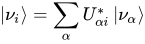
The concept of neutrino mixing is a natural outcome of gauge theories with massive neutrinos, and its structure can be characterized in general. In its simplest form it is expressed as a unitary transformation relating the flavor and mass eigenbasis and can be written as
where

is a neutrino with definite flavor = e (electron), μ (muon) or τ (tauon)
is a neutrino with definite mass with = 1, 2 or 3
the superscript asterisk () represents a complex conjugate; for antineutrinos, the complex conjugate should be removed from the first equation and inserted into the second.

The symbol represents the Pontecorvo–Maki–Nakagawa–Sakata matrix (also called the PMNS matrix, lepton mixing matrix, or sometimes simply the MNS matrix). It is the analogue of the CKM matrix describing the analogous mixing of quarks. If this matrix were the identity matrix, then the flavor eigenstates would be the same as the mass eigenstates. However, experiment shows that it is not.

When the standard three-neutrino theory is considered, the matrix is 3 × 3. If only two neutrinos are considered, a 2 × 2 matrix is used. If one or more sterile neutrinos are added (see later), it is 4 × 4 or larger. In the 3 × 3 form, it is given by
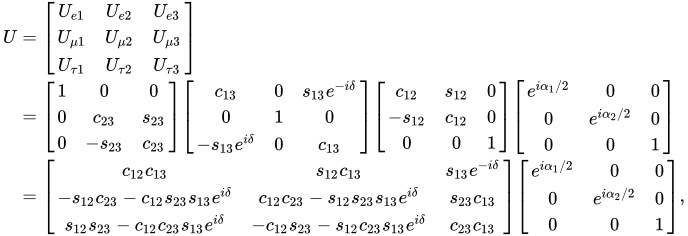
where cij ≡ cos θij, and sij ≡ sin θij. The phase factors α1 and α2 are physically meaningful only if neutrinos are Majorana particles—i.e. if the neutrino is identical to its antineutrino (whether or not they are is unknown)—and do not enter into oscillation phenomena regardless. If neutrinoless double beta decay occurs, these factors influence its rate. The phase factor δ is non-zero only if neutrino oscillation violates CP symmetry; this has not yet been observed experimentally. If experiment shows this 3 × 3 matrix to be not unitary, a sterile neutrino or some other new physics is required.

Propagation and interference

Since are mass eigenstates, their propagation can be described by plane wave solutions of the form


where

  • quantities are expressed in natural units (), and ,
  • is the energy of the mass-eigenstate ,
  • is the time from the start of the propagation,
  • is the three-dimensional momentum,
  • is the current position of the particle relative to its starting position

In the ultrarelativistic limit, we can approximate the energy as

where E is the energy of the wavepacket (particle) to be detected.

This limit applies to all practical (currently observed) neutrinos, since their masses are less than 1 eV and their energies are at least 1 MeV, so the Lorentz factor, γ, is greater than 106 in all cases. Using also tL, where L is the distance traveled and also dropping the phase factors, the wavefunction becomes

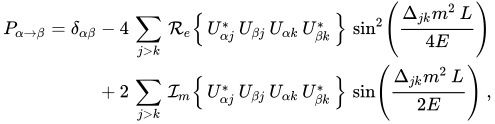
Eigenstates with different masses propagate with different frequencies. The heavier ones oscillate faster compared to the lighter ones. Since the mass eigenstates are combinations of flavor eigenstates, this difference in frequencies causes interference between the corresponding flavor components of each mass eigenstate. Constructive interference causes it to be possible to observe a neutrino created with a given flavor to change its flavor during its propagation. The probability that a neutrino originally of flavor α will later be observed as having flavor β is

This is more conveniently written as
where

The phase that is responsible for oscillation is often written as (with c and restored)


where 1.27 is unitless. In this form, it is convenient to plug in the oscillation parameters since:

  • The mass differences, Δm2, are known to be on the order of 10−4 (eV/c2)2 = (10−2 eV/c2)2
  • Oscillation distances, L, in modern experiments are on the order of kilometres
  • Neutrino energies, E, in modern experiments are typically on order of MeV or GeV.

If there is no CP-violation (δ is zero), then the second sum is zero. Otherwise, the CP asymmetry can be given as

In terms of Jarlskog invariant

the CP asymmetry is expressed as

Two-neutrino case

The above formula is correct for any number of neutrino generations. Writing it explicitly in terms of mixing angles is extremely cumbersome if there are more than two neutrinos that participate in mixing. Fortunately, there are several meaningful cases in which only two neutrinos participate significantly. In this case, it is sufficient to consider the mixing matrix
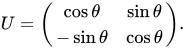
Then the probability of a neutrino changing its flavor is

Or, using SI units and the convention introduced above

This formula is often appropriate for discussing the transition νμ ↔ ντ in atmospheric mixing, since the electron neutrino plays almost no role in this case. It is also appropriate for the solar case of νe ↔ νx, where νx is a mix (superposition) of νμ and ντ. These approximations are possible because the mixing angle θ13 is very small and because two of the mass states are very close in mass compared to the third.

Classical analogue of neutrino oscillation

Spring-coupled pendulums
Time evolution of the pendulums
 
Lower frequency normal mode
 
Higher frequency normal mode

The basic physics behind neutrino oscillation can be found in any system of coupled harmonic oscillators. A simple example is a system of two pendulums connected by a weak spring (a spring with a small spring constant). The first pendulum is set in motion by the experimenter while the second begins at rest. Over time, the second pendulum begins to swing under the influence of the spring, while the first pendulum's amplitude decreases as it loses energy to the second. Eventually all of the system's energy is transferred to the second pendulum and the first is at rest. The process then reverses. The energy oscillates between the two pendulums repeatedly until it is lost to friction.

The behavior of this system can be understood by looking at its normal modes of oscillation. If the two pendulums are identical then one normal mode consists of both pendulums swinging in the same direction with a constant distance between them, while the other consists of the pendulums swinging in opposite (mirror image) directions. These normal modes have (slightly) different frequencies because the second involves the (weak) spring while the first does not. The initial state of the two-pendulum system is a combination of both normal modes. Over time, these normal modes drift out of phase, and this is seen as a transfer of motion from the first pendulum to the second.

The description of the system in terms of the two pendulums is analogous to the flavor basis of neutrinos. These are the parameters that are most easily produced and detected (in the case of neutrinos, by weak interactions involving the W boson). The description in terms of normal modes is analogous to the mass basis of neutrinos. These modes do not interact with each other when the system is free of outside influence.

When the pendulums are not identical the analysis is slightly more complicated. In the small-angle approximation, the potential energy of a single pendulum system is , where g is standard gravity, L is the length of the pendulum, m is the mass of the pendulum, and x is the horizontal displacement of the pendulum. As an isolated system the pendulum is a harmonic oscillator with a frequency of . The potential energy of a spring is 1/2kx2, where k is the spring constant and x is the displacement. With a mass attached it oscillates with a period of . With two pendulums (labeled a and b) of equal mass but possibly unequal lengths and connected by a spring, the total potential energy is

This is a quadratic form in xa and xb, which can also be written as a matrix product:

The 2 × 2 matrix is real symmetric and so (by the spectral theorem) it is orthogonally diagonalizable. That is, there is an angle θ such that if we define

then

where λ1 and λ2 are the eigenvalues of the matrix. The variables x1 and x2 describe normal modes which oscillate with frequencies of and . When the two pendulums are identical (La = Lb), θ is 45°.

The angle θ is analogous to the Cabibbo angle (though that angle applies to quarks rather than neutrinos).

When the number of oscillators (particles) is increased to three, the orthogonal matrix can no longer be described by a single angle; instead, three are required (Euler angles). Furthermore, in the quantum case, the matrices may be complex. This requires the introduction of complex phases in addition to the rotation angles, which are associated with CP violation but do not influence the observable effects of neutrino oscillation.

Theory, graphically

Two neutrino probabilities in vacuum

In the approximation where only two neutrinos participate in the oscillation, the probability of oscillation follows a simple pattern:

The blue curve shows the probability of the original neutrino retaining its identity. The red curve shows the probability of conversion to the other neutrino. The maximum probability of conversion is equal to sin2 2θ. The frequency of the oscillation is controlled by Δm2.

Three neutrino probabilities

If three neutrinos are considered, the probability for each neutrino to appear is somewhat complex. The graphs below show the probabilities for each flavor, with the plots in the left column showing a long range to display the slow "solar" oscillation, and the plots in the right column zoomed in, to display the fast "atmospheric" oscillation. The parameters used to create these graphs (see below) are consistent with current measurements, but since some parameters are still quite uncertain, some aspects of these plots are only qualitatively correct.

Electron neutrino oscillations, long range. Here and in the following diagrams black means electron neutrino, blue means muon neutrino and red means tau neutrino.
Electron neutrino oscillations, short range
Muon neutrino oscillations, long range
Muon neutrino oscillations, short range
Tau neutrino oscillations, long range
Tau neutrino oscillations, short range

The illustrations were created using the following parameter values:

  • sin2(2θ13) = 0.10 (Determines the size of the small wiggles.)
  • sin2(2θ23) = 0.97
  • sin2(2θ12) = 0.861
  • δ = 0 (If the actual value of this phase is large, the probabilities will be somewhat distorted, and will be different for neutrinos and antineutrinos.)
  • Normal mass hierarchy: m1m2m3
  • Δm2
    12
    = 0.759×10⁻⁴ (eV/c2)2
  • Δm2
    32
    ≈ Δm2
    13
    = 23.2×10⁻⁴ (eV/c2)2

Observed values of oscillation parameters

  • sin2(2θ13) = 0.093±0.008PDG combination of Daya Bay, RENO, and Double Chooz results.
  • sin2(2θ12) = 0.846±0.021. This corresponds to θsol (solar), obtained from KamLand, solar, reactor and accelerator data.
  • sin2(2θ23″) > 0.92 at 90% confidence level, corresponding to θ23θatm = 45±7.1° (atmospheric)
  • Δm2
    21
    ≡ Δm2
    sol
    = (0.753±0.018)×10−4 (eV/c2)2
  • |Δm2
    31
    | ≈ |Δm2
    32
    | ≡ Δm2
    atm
    = (24.4±0.6)×10−4 (eV/c2)2 (normal mass hierarchy)
  • δ, α1, α2, and the sign of Δm2
    32
    are currently unknown.

Solar neutrino experiments combined with KamLAND have measured the so-called solar parameters Δm2
sol
and sin2 θsol. Atmospheric neutrino experiments such as Super-Kamiokande together with the K2K and MINOS long baseline accelerator neutrino experiment have determined the so-called atmospheric parameters Δm2
atm
and sin2 θatm. The last mixing angle, θ13, has been measured by the experiments Daya Bay, Double Chooz and RENO as sin2(2θ13″).

For atmospheric neutrinos the relevant difference of masses is about Δm2 = 24×10−4 (eV/c2)2 and the typical energies are ~ 1 GeV; for these values the oscillations become visible for neutrinos traveling several hundred kilometres, which would be those neutrinos that reach the detector traveling through the earth, from below the horizon.

The mixing parameter θ13 is measured using electron anti-neutrinos from nuclear reactors. The rate of anti-neutrino interactions is measured in detectors sited near the reactors to determine the flux prior to any significant oscillations and then it is measured in far detectors (placed kilometres from the reactors). The oscillation is observed as an apparent disappearance of electron anti-neutrinos in the far detectors (i.e. the interaction rate at the far site is lower than predicted from the observed rate at the near site).

From atmospheric and solar neutrino oscillation experiments, it is known that two mixing angles of the MNS matrix are large and the third is smaller. This is in sharp contrast to the CKM matrix in which all three angles are small and hierarchically decreasing. The CP-violating phase of the MNS matrix is as of April 2020 to lie somewhere between −2° and −178°, from the T2K experiment.

If the neutrino mass proves to be of Majorana type (making the neutrino its own antiparticle), it is then possible that the MNS matrix has more than one phase.

Since experiments observing neutrino oscillation measure the squared mass difference and not absolute mass, one might claim that the lightest neutrino mass is exactly zero, without contradicting observations. This is however regarded as unlikely by theorists.

Origins of neutrino mass

The question of how neutrino masses arise has not been answered conclusively. In the Standard Model of particle physics, fermions only have intrinsic mass because of interactions with the Higgs field (see Higgs boson). These interactions require both left- and right-handed versions of the fermion (see chirality). However, only left-handed neutrinos have been observed so far.

Neutrinos may have another source of mass through the Majorana mass term. This type of mass applies for electrically neutral particles since otherwise it would allow particles to turn into anti-particles, which would violate conservation of electric charge.

The smallest modification to the Standard Model, which only has left-handed neutrinos, is to allow these left-handed neutrinos to have Majorana masses. The problem with this is that the neutrino masses are surprisingly smaller than the rest of the known particles (at least 600000 times smaller than the mass of an electron), which, while it does not invalidate the theory, is widely regarded as unsatisfactory as this construction offers no insight into the origin of the neutrino mass scale.

The next simplest addition would be to add into the Standard Model right-handed neutrinos that interact with the left-handed neutrinos and the Higgs field in an analogous way to the rest of the fermions. These new neutrinos would interact with the other fermions solely in this way and hence would not be directly observable, so are not phenomenologically excluded. The problem of the disparity of the mass scales remains.

Seesaw mechanism

The most popular conjectured solution currently is the seesaw mechanism, where right-handed neutrinos with very large Majorana masses are added. If the right-handed neutrinos are very heavy, they induce a very small mass for the left-handed neutrinos, which is proportional to the reciprocal of the heavy mass.

If it is assumed that the neutrinos interact with the Higgs field with approximately the same strengths as the charged fermions do, the heavy mass should be close to the GUT scale. Because the Standard Model has only one fundamental mass scale, all particle masses must arise in relation to this scale.

There are other varieties of seesaw and there is currently great interest in the so-called low-scale seesaw schemes, such as the inverse seesaw mechanism.

The addition of right-handed neutrinos has the effect of adding new mass scales, unrelated to the mass scale of the Standard Model, hence the observation of heavy right-handed neutrinos would reveal physics beyond the Standard Model. Right-handed neutrinos would help to explain the origin of matter through a mechanism known as leptogenesis.

Other sources

There are alternative ways to modify the standard model that are similar to the addition of heavy right-handed neutrinos (e.g., the addition of new scalars or fermions in triplet states) and other modifications that are less similar (e.g., neutrino masses from loop effects and/or from suppressed couplings). One example of the last type of models is provided by certain versions supersymmetric extensions of the standard model of fundamental interactions, where R parity is not a symmetry. There, the exchange of supersymmetric particles such as squarks and sleptons can break the lepton number and lead to neutrino masses. These interactions are normally excluded from theories as they come from a class of interactions that lead to unacceptably rapid proton decay if they are all included. These models have little predictive power and are not able to provide a cold dark matter candidate.

Oscillations in the early universe

During the early universe when particle concentrations and temperatures were high, neutrino oscillations could have behaved differently. Depending on neutrino mixing-angle parameters and masses, a broad spectrum of behavior may arise including vacuum-like neutrino oscillations, smooth evolution, or self-maintained coherence. The physics for this system is non-trivial and involves neutrino oscillations in a dense neutrino gas.

Solar neutrino problem

From Wikipedia, the free encyclopedia
https://en.wikipedia.org/wiki/Solar_neutrino_problem

The solar neutrino problem concerned a large discrepancy between the flux of solar neutrinos as predicted from the Sun's luminosity and as measured directly. The discrepancy was first observed in the mid-1960s and was resolved around 2002.

The flux of neutrinos at Earth is several tens of billions per square centimetre per second, mostly from the Sun's core. They are nevertheless difficult to detect, because they interact very weakly with matter, traversing the whole Earth. Of the three types (flavors) of neutrinos known in the Standard Model of particle physics, the Sun produces only electron neutrinos. When neutrino detectors became sensitive enough to measure the flow of electron neutrinos from the Sun, the number detected was much lower than predicted. In various experiments, the number deficit was between one half and two thirds.

Particle physicists knew that a mechanism, discussed in 1957 by Bruno Pontecorvo, could explain the deficit in electron neutrinos. However, they hesitated to accept it for various reasons, including the fact that it required a modification of the accepted Standard Model. They first pointed at the solar model for adjustment, which was ruled out. Today it is accepted that the neutrinos produced in the Sun are not massless particles as predicted by the Standard Model but rather a superposition of defined-mass eigenstates in different (complex) proportions. That allows a neutrino produced as a pure electron neutrino to change during propagation into a mixture of electron, muon and tau neutrinos, with a reduced probability of being detected by a detector sensitive to only electron neutrinos.

Several neutrino detectors aiming at different flavors, energies, and traveled distance contributed to our present knowledge of neutrinos. In 2002 and 2015, a total of four researchers related to some of these detectors were awarded the Nobel Prize in Physics.

Background

Reactions of proton-proton cycle

The Sun performs nuclear fusion via the proton–proton chain reaction, which converts four protons into alpha particles, neutrinos, positrons, and energy. This energy is released in the form of electromagnetic radiation, as gamma rays, as well as in the form of the kinetic energy of both the charged particles and the neutrinos. The neutrinos travel from the Sun's core to Earth without any appreciable absorption by the Sun's outer layers.

In the late 1960s, Ray Davis and John N. Bahcall's Homestake Experiment was the first to measure the flux of neutrinos from the Sun and detect a deficit. The experiment used a chlorine-based detector. Many subsequent radiochemical and water Cherenkov detectors confirmed the deficit, including the Kamioka Observatory and Sudbury Neutrino Observatory.

The expected number of solar neutrinos was computed using the standard solar model, which Bahcall had helped establish. The model gives a detailed account of the Sun's internal operation.

In 2002, Ray Davis and Masatoshi Koshiba won part of the Nobel Prize in Physics for experimental work which found the number of solar neutrinos to be around a third of the number predicted by the standard solar model.

In recognition of the firm evidence provided by the 1998 and 2001 experiments "for neutrino oscillation", Takaaki Kajita from the Super-Kamiokande Observatory and Arthur McDonald from the Sudbury Neutrino Observatory (SNO) were awarded the 2015 Nobel Prize for Physics. The Nobel Committee for Physics, however, erred in mentioning neutrino oscillations in regard to the SNO Experiment: for the high-energy solar neutrinos observed in that experiment, it is not neutrino oscillations, but rather the Mikheyev–Smirnov–Wolfenstein effect, that produced the observed results. Bruno Pontecorvo was not included in these Nobel prizes since he died in 1993.

Proposed solutions

Early attempts to explain the discrepancy proposed that the models of the Sun were wrong, i.e., the temperature and pressure in the interior of the Sun were substantially different from what was believed. For example, since neutrinos measure the amount of current nuclear fusion, it was suggested that the nuclear processes in the core of the Sun might have temporarily shut down. Since it takes thousands of years for heat energy to move from the core to the surface of the Sun, this would not immediately be apparent.

Advances in helioseismology observations made it possible to infer the interior temperatures of the Sun; these results agreed with the well established standard solar model. Detailed observations of the neutrino spectrum from more advanced neutrino observatories produced results which no adjustment of the solar model could accommodate: while the overall lower neutrino flux (which the Homestake experiment results found) required a reduction in the solar core temperature, details in the energy spectrum of the neutrinos required a higher core temperature. This happens because different nuclear reactions, whose rates have different dependence upon the temperature, produce neutrinos with different energy. Any adjustment to the solar model worsened at least one aspect of the discrepancies.

Resolution

The solar neutrino problem was resolved with an improved understanding of the properties of neutrinos. According to the Standard Model of particle physics, there are three flavors of neutrinos: electron neutrinos, muon neutrinos, and tau neutrinos. Electron neutrinos are the ones produced in the Sun and the ones detected by the above-mentioned experiments, in particular the chlorine-detector Homestake Mine experiment.

Through the 1970s, it was widely believed that neutrinos were massless and their flavors were invariant. However, in 1968 Pontecorvo proposed that if neutrinos had mass, then they could change from one flavor to another. Thus, the "missing" solar neutrinos could be electron neutrinos which changed into other flavors along the way to Earth, rendering them invisible to the detectors in the Homestake Mine and contemporary neutrino observatories.

The supernova 1987A indicated that neutrinos might have mass because of the difference in time of arrival of the neutrinos detected at Kamiokande and IMB. However, because very few neutrino events were detected, it was difficult to draw any conclusions with certainty. If Kamiokande and IMB had high-precision timers to measure the travel time of the neutrino burst through the Earth, they could have more definitively established whether or not neutrinos had mass. If neutrinos were massless, they would travel at the speed of light; if they had mass, they would travel at velocities slightly less than that of light. Since the detectors were not intended for supernova neutrino detection, they didn't have precise timing and this could not be done.

Strong evidence for neutrino oscillation came in 1998 from the Super-Kamiokande collaboration in Japan. It produced observations consistent with muon neutrinos (produced in the upper atmosphere by cosmic rays) changing into tau neutrinos within the Earth: Fewer atmospheric neutrinos were detected coming through the Earth than coming directly from above the detector. These observations concerned only muon neutrinos; no tau neutrinos were observed at Super-Kamiokande. The result made it more plausible that the deficit in the electron-flavor neutrinos observed in the (relatively low-energy) Homestake experiment also had to do with neutrino mass and flavor-changing.

One year later, the Sudbury Neutrino Observatory (SNO) started collecting data. That experiment aimed at the 8B solar neutrinos, which at around 10 MeV are not much affected by oscillation in both the Sun and the Earth. A large deficit is nevertheless expected due to the Mikheyev–Smirnov–Wolfenstein effect as had been calculated by Alexei Smirnov in 1985. SNO's unique design employing a large quantity of heavy water as the detection medium was proposed by Herb Chen, also in 1985. SNO observed electron neutrinos specifically, and all flavors of neutrinos collectively, hence the fraction of electron neutrinos could be calculated. After extensive statistical analysis, the SNO collaboration determined that fraction to be about 34%, in perfect agreement with prediction. The total number of detected 8B neutrinos also agrees with the then-rough predictions from the solar model.

Adenosine triphosphate

From Wikipedia, the free encyclopedia
 
Adenosine triphosphate

Adenosine triphosphate (ATP) is a nucleoside triphosphate that provides energy of approximate 30.5kJ/mol to drive and support many processes in living cells, such as muscle contraction, nerve impulse propagation, and chemical synthesis. Found in all known forms of life, it is often referred to as the "molecular unit of currency" for intracellular energy transfer.

When consumed in a metabolic process, ATP converts either to adenosine diphosphate (ADP) or to adenosine monophosphate (AMP). Other processes regenerate ATP. It is also a precursor to DNA and RNA, and is used as a coenzyme. An average adult human processes around 50 kilograms (about 100 moles) daily.

From the perspective of biochemistry, ATP is classified as a nucleoside triphosphate, which indicates that it consists of three components: a nitrogenous base (adenine), the sugar ribose, and the triphosphate.

Structure

ATP consists of three parts: a sugar, an amine base, and a phosphate group. More specifically, ATP consists of an adenine attached by the #9-nitrogen atom to the 1′ carbon atom of a sugar (ribose), which in turn is attached at the 5' carbon atom of the sugar to a triphosphate group. In its many reactions related to metabolism, the adenine and sugar groups remain unchanged, but the triphosphate is converted to di- and monophosphate, giving respectively the derivatives ADP and AMP. The three phosphoryl groups are labeled as alpha (α), beta (β), and, for the terminal phosphate, gamma (γ).

In neutral solution, ionized ATP exists mostly as ATP4−, with a small proportion of ATP3−.

Metal cation binding

Polyanionic and featuring a potentially chelating polyphosphate group, ATP binds metal cations with high affinity. The binding constant for Mg2+ is (9554). The binding of a divalent cation, almost always magnesium, strongly affects the interaction of ATP with various proteins. Due to the strength of the ATP-Mg2+ interaction, ATP exists in the cell mostly as a complex with Mg2+ bonded to the phosphate oxygen centers.

A second magnesium ion is critical for ATP binding in the kinase domain. The presence of Mg2+ regulates kinase activity. It is interesting from an RNA world perspective that ATP can carry a Mg ion which catalyzes RNA polymerization.

Chemical properties

Salts of ATP can be isolated as colorless solids.

The cycles of synthesis and degradation of ATP; 2 and 1 represent input and output of energy, respectively.

ATP is stable in aqueous solutions between pH 6.8 and 7.4 (in the absence of catalysts). At more extreme pH levels, it rapidly hydrolyses to ADP and phosphate. Living cells maintain the ratio of ATP to ADP at a point ten orders of magnitude from equilibrium, with ATP concentrations fivefold higher than the concentration of ADP. In the context of biochemical reactions, the P-O-P bonds are frequently referred to as high-energy bonds.

Reactive aspects

The hydrolysis of ATP into ADP and inorganic phosphate:

ATP4− + H2O ⇌ ADP3− + HPO2−3 + H+

releases 20.5 kilojoules per mole (4.9 kcal/mol) of enthalpy. This may differ under physiological conditions if the reactant and products are not exactly in these ionization states. The values of the free energy released by cleaving either a phosphate (Pi) or a pyrophosphate (PPi) unit from ATP at standard state concentrations of 1 mol/L at pH 7 are:

ATP + H2O → ADP + Pi   ΔG°' = −30.5 kJ/mol (−7.3 kcal/mol)
ATP + H2O → AMP + PPi  ΔG°' = −45.6 kJ/mol (−10.9 kcal/mol)

These abbreviated equations at a pH near 7 can be written more explicitly (R = adenosyl):

[RO−P(O)2−O−P(O)2−O−PO3]4− + H2O → [RO−P(O)2−O−PO3]3− + [HPO4]2− + H+
[RO−P(O)2−O−P(O)2−O−PO3]4− + H2O → [RO−PO3]2− + [HO3P−O−PO3]3− + H+

At cytoplasmic conditions, where the ADP/ATP ratio is 10 orders of magnitude from equilibrium, the ΔG is around −57 kJ/mol.

Along with pH, the free energy change of ATP hydrolysis is also associated with Mg2+ concentration, from ΔG°' = −35.7 kJ/mol at a Mg2+ concentration of zero, to ΔG°' = −31 kJ/mol at [Mg2+] = 5 mM. Higher concentrations of Mg2+ decrease free energy released in the reaction due to binding of Mg2+ ions to negatively charged oxygen atoms of ATP at pH 7.

This image shows a 360-degree rotation of a single, gas-phase magnesium-ATP chelate with a charge of −2. The anion was optimized at the UB3LYP/6-311++G(d,p) theoretical level and the atomic connectivity modified by the human optimizer to reflect the probable electronic structure.

Production from AMP and ADP

Production, aerobic conditions

A typical intracellular concentration of ATP is 1–10 μmol per gram of muscle tissue in a variety of eukaryotes. The dephosphorylation of ATP and rephosphorylation of ADP and AMP occur repeatedly in the course of aerobic metabolism.

ATP can be produced by a number of distinct cellular processes; the three main pathways in eukaryotes are (1) glycolysis, (2) the citric acid cycle/oxidative phosphorylation, and (3) beta-oxidation. The overall process of oxidizing glucose to carbon dioxide, the combination of pathways 1 and 2, known as cellular respiration, produces about 30 equivalents of ATP from each molecule of glucose.

ATP production by a non-photosynthetic aerobic eukaryote occurs mainly in the mitochondria, which comprise nearly 25% of the volume of a typical cell.

Glycolysis

In glycolysis, glucose and glycerol are metabolized to pyruvate. Glycolysis generates two equivalents of ATP through substrate phosphorylation catalyzed by two enzymes, phosphoglycerate kinase (PGK) and pyruvate kinase. Two equivalents of nicotinamide adenine dinucleotide (NADH) are also produced, which can be oxidized via the electron transport chain and result in the generation of additional ATP by ATP synthase. The pyruvate generated as an end-product of glycolysis is a substrate for the Krebs Cycle.

Glycolysis is viewed as consisting of two phases with five steps each. In phase 1, "the preparatory phase", glucose is converted to 2 d-glyceraldehyde-3-phosphate (g3p). One ATP is invested in Step 1, and another ATP is invested in Step 3. Steps 1 and 3 of glycolysis are referred to as "Priming Steps". In Phase 2, two equivalents of g3p are converted to two pyruvates. In Step 7, two ATP are produced. Also, in Step 10, two further equivalents of ATP are produced. In Steps 7 and 10, ATP is generated from ADP. A net of two ATPs is formed in the glycolysis cycle. The glycolysis pathway is later associated with the Citric Acid Cycle which produces additional equivalents of ATP.

Regulation

In glycolysis, hexokinase is directly inhibited by its product, glucose-6-phosphate, and pyruvate kinase is inhibited by ATP itself. The main control point for the glycolytic pathway is phosphofructokinase (PFK), which is allosterically inhibited by high concentrations of ATP and activated by high concentrations of AMP. The inhibition of PFK by ATP is unusual since ATP is also a substrate in the reaction catalyzed by PFK; the active form of the enzyme is a tetramer that exists in two conformations, only one of which binds the second substrate fructose-6-phosphate (F6P). The protein has two binding sites for ATP – the active site is accessible in either protein conformation, but ATP binding to the inhibitor site stabilizes the conformation that binds F6P poorly. A number of other small molecules can compensate for the ATP-induced shift in equilibrium conformation and reactivate PFK, including cyclic AMP, ammonium ions, inorganic phosphate, and fructose-1,6- and -2,6-biphosphate.

Citric acid cycle

In the mitochondrion, pyruvate is oxidized by the pyruvate dehydrogenase complex to the acetyl group, which is fully oxidized to carbon dioxide by the citric acid cycle (also known as the Krebs cycle). Every "turn" of the citric acid cycle produces two molecules of carbon dioxide, one equivalent of ATP guanosine triphosphate (GTP) through substrate-level phosphorylation catalyzed by succinyl-CoA synthetase, as succinyl-CoA is converted to succinate, three equivalents of NADH, and one equivalent of FADH2. NADH and FADH2 are recycled (to NAD+ and FAD, respectively) by oxidative phosphorylation, generating additional ATP. The oxidation of NADH results in the synthesis of 2–3 equivalents of ATP, and the oxidation of one FADH2 yields between 1–2 equivalents of ATP. The majority of cellular ATP is generated by this process. Although the citric acid cycle itself does not involve molecular oxygen, it is an obligately aerobic process because O2 is used to recycle the NADH and FADH2. In the absence of oxygen, the citric acid cycle ceases.

The generation of ATP by the mitochondrion from cytosolic NADH relies on the malate-aspartate shuttle (and to a lesser extent, the glycerol-phosphate shuttle) because the inner mitochondrial membrane is impermeable to NADH and NAD+. Instead of transferring the generated NADH, a malate dehydrogenase enzyme converts oxaloacetate to malate, which is translocated to the mitochondrial matrix. Another malate dehydrogenase-catalyzed reaction occurs in the opposite direction, producing oxaloacetate and NADH from the newly transported malate and the mitochondrion's interior store of NAD+. A transaminase converts the oxaloacetate to aspartate for transport back across the membrane and into the intermembrane space.

In oxidative phosphorylation, the passage of electrons from NADH and FADH2 through the electron transport chain releases the energy to pump protons out of the mitochondrial matrix and into the intermembrane space. This pumping generates a proton motive force that is the net effect of a pH gradient and an electric potential gradient across the inner mitochondrial membrane. Flow of protons down this potential gradient – that is, from the intermembrane space to the matrix – yields ATP by ATP synthase. Three ATP are produced per turn.

Although oxygen consumption appears fundamental for the maintenance of the proton motive force, in the event of oxygen shortage (hypoxia), intracellular acidosis (mediated by enhanced glycolytic rates and ATP hydrolysis), contributes to mitochondrial membrane potential and directly drives ATP synthesis.

Most of the ATP synthesized in the mitochondria will be used for cellular processes in the cytosol; thus it must be exported from its site of synthesis in the mitochondrial matrix. ATP outward movement is favored by the membrane's electrochemical potential because the cytosol has a relatively positive charge compared to the relatively negative matrix. For every ATP transported out, it costs 1 H+. Producing one ATP costs about 3 H+. Therefore, making and exporting one ATP requires 4H+. The inner membrane contains an antiporter, the ADP/ATP translocase, which is an integral membrane protein used to exchange newly synthesized ATP in the matrix for ADP in the intermembrane space.

Regulation

The citric acid cycle is regulated mainly by the availability of key substrates, particularly the ratio of NAD+ to NADH and the concentrations of calcium, inorganic phosphate, ATP, ADP, and AMP. Citrate – the ion that gives its name to the cycle – is a feedback inhibitor of citrate synthase and also inhibits PFK, providing a direct link between the regulation of the citric acid cycle and glycolysis.

Beta oxidation

In the presence of air and various cofactors and enzymes, fatty acids are converted to acetyl-CoA. The pathway is called beta-oxidation. Each cycle of beta-oxidation shortens the fatty acid chain by two carbon atoms and produces one equivalent each of acetyl-CoA, NADH, and FADH2. The acetyl-CoA is metabolized by the citric acid cycle to generate ATP, while the NADH and FADH2 are used by oxidative phosphorylation to generate ATP. Dozens of ATP equivalents are generated by the beta-oxidation of a single long acyl chain.

Regulation

In oxidative phosphorylation, the key control point is the reaction catalyzed by cytochrome c oxidase, which is regulated by the availability of its substrate – the reduced form of cytochrome c. The amount of reduced cytochrome c available is directly related to the amounts of other substrates:

which directly implies this equation:

Thus, a high ratio of [NADH] to [NAD+] or a high ratio of [ADP] [Pi] to [ATP] imply a high amount of reduced cytochrome c and a high level of cytochrome c oxidase activity. An additional level of regulation is introduced by the transport rates of ATP and NADH between the mitochondrial matrix and the cytoplasm.

Ketosis

Ketone bodies can be used as fuels, yielding 22 ATP and 2 GTP molecules per acetoacetate molecule when oxidized in the mitochondria. Ketone bodies are transported from the liver to other tissues, where acetoacetate and beta-hydroxybutyrate can be reconverted to acetyl-CoA to produce reducing equivalents (NADH and FADH2), via the citric acid cycle. Ketone bodies cannot be used as fuel by the liver, because the liver lacks the enzyme β-ketoacyl-CoA transferase, also called thiolase. Acetoacetate in low concentrations is taken up by the liver and undergoes detoxification through the methylglyoxal pathway which ends with lactate. Acetoacetate in high concentrations is absorbed by cells other than those in the liver and enters a different pathway via 1,2-propanediol. Though the pathway follows a different series of steps requiring ATP, 1,2-propanediol can be turned into pyruvate.

Production, anaerobic conditions

Fermentation is the metabolism of organic compounds in the absence of air. It involves substrate-level phosphorylation in the absence of a respiratory electron transport chain.

The equation for the reaction of glucose to form lactic acid is:

C6H12O6 + 2 ADP + 2 Pi → 2 CH3CH(OH)COOH + 2 ATP + 2 H2O

Anaerobic respiration is respiration in the absence of O2. Prokaryotes can utilize a variety of electron acceptors. These include nitrate, sulfate, and carbon dioxide. In anaerobic organisms and prokaryotes, different pathways result in ATP. ATP is produced in the chloroplasts of green plants in a process similar to oxidative phosphorylation, called photophosphorylation.

ATP replenishment by nucleoside diphosphate kinases

ATP can also be synthesized through several so-called "replenishment" reactions catalyzed by the enzyme families of nucleoside diphosphate kinases (NDKs), which use other nucleoside triphosphates as a high-energy phosphate donor, and the ATP:guanido-phosphotransferase family.

ATP production during photosynthesis

In plants, ATP is synthesized in the thylakoid membrane of the chloroplast. The process is called photophosphorylation. The "machinery" is similar to that in mitochondria except that light energy is used to pump protons across a membrane to produce a proton-motive force. ATP synthase then ensues exactly as in oxidative phosphorylation. Some of the ATP produced in the chloroplasts is consumed in the Calvin cycle, which produces triose sugars.

ATP recycling

The total quantity of ATP in the human body is about 0.1 mol/L. The majority of ATP is recycled from ADP by the aforementioned processes. Thus, at any given time, the total amount of ATP + ADP remains fairly constant.

The energy used by human cells in an adult requires the hydrolysis of 100 to 150 mol/L of ATP daily, which means a human will typically use their body weight worth of ATP over the course of the day. Each equivalent of ATP is recycled 1000–1500 times during a single day (150 / 0.1 = 1500), at approximately 9×10²⁰ molecules/s.

An example of the Rossmann fold, a structural domain of a decarboxylase enzyme from the bacterium Staphylococcus epidermidis (PDB: 1G5Q​) with a bound flavin mononucleotide cofactor

Biochemical functions

Cellular energy production

The conversion of ATP to ADP is the principal mechanism for energy supply in biological processes. Energy is produced in cells when the terminal phosphate group in an ATP molecule is removed from the chain to produce adenosine diphosphate (ADP) when water hydrolyzes ATP:

ATP + H2O → ADP + HPO42- + H+ + energy

However, removing a phosphate group from ADP to produce adenosine monophosphate (AMP) also produces extra energy.

Intracellular signaling

ATP is involved in signal transduction by serving as substrate for kinases, enzymes that transfer phosphate groups. Kinases are the most common ATP-binding proteins. They share a small number of common folds. Phosphorylation of a protein by a kinase can activate a cascade such as the mitogen-activated protein kinase cascade.

ATP is also a substrate of adenylate cyclase, most commonly in G protein-coupled receptor signal transduction pathways and is transformed to second messenger, cyclic AMP, which is involved in triggering calcium signals by the release of calcium from intracellular stores.[35] This form of signal transduction is particularly important in brain function, although it is involved in the regulation of a multitude of other cellular processes.

DNA and RNA synthesis

ATP is one of four monomers required in the synthesis of RNA. The process is promoted by RNA polymerases. A similar process occurs in the formation of DNA, except that ATP is first converted to the deoxyribonucleotide dATP. Like many condensation reactions in nature, DNA replication and DNA transcription also consume ATP.

Amino acid activation in protein synthesis

Aminoacyl-tRNA synthetase enzymes consume ATP in the attachment tRNA to amino acids, forming aminoacyl-tRNA complexes. Aminoacyl transferase binds AMP-amino acid to tRNA. The coupling reaction proceeds in two steps:

  1. aa + ATP ⟶ aa-AMP + PPi
  2. aa-AMP + tRNA ⟶ aa-tRNA + AMP

The amino acid is coupled to the penultimate nucleotide at the 3′-end of the tRNA (the A in the sequence CCA) via an ester bond (roll over in illustration).

ATP binding cassette transporter

Transporting chemicals out of a cell against a gradient is often associated with ATP hydrolysis. Transport is mediated by ATP binding cassette transporters. The human genome encodes 48 ABC transporters, that are used for exporting drugs, lipids, and other compounds.

Extracellular signalling and neurotransmission

Cells secrete ATP to communicate with other cells in a process called purinergic signalling. ATP serves as a neurotransmitter in many parts of the nervous system, modulates ciliary beating, affects vascular oxygen supply etc. ATP is either secreted directly across the cell membrane through channel proteins or is pumped into vesicles which then fuse with the membrane. Cells detect ATP using the purinergic receptor proteins P2X and P2Y. ATP has been shown to be a critically important signalling molecule for microglia - neuron interactions in the adult brain, as well as during brain development. Furthermore, tissue-injury induced ATP-signalling is a major factor in rapid microglial phenotype changes.

Muscle contraction

ATP fuels muscle contractions. Muscle contractions are regulated by signaling pathways, although different muscle types being regulated by specific pathways and stimuli based on their particular function. However, in all muscle types, contraction is performed by the proteins actin and myosin.

ATP is initially bound to myosin. When ATPase hydrolyzes the bound ATP into ADP and inorganic phosphate, myosin is positioned in a way that it can bind to actin. Myosin bound by ADP and Pi forms cross-bridges with actin and the subsequent release of ADP and Pi releases energy as the power stroke. The power stroke causes actin filament to slide past the myosin filament, shortening the muscle and causing a contraction. Another ATP molecule can then bind to myosin, releasing it from actin and allowing this process to repeat.

Protein solubility

ATP has recently been proposed to act as a biological hydrotrope and has been shown to affect proteome-wide solubility.

Abiogenic origins

Acetyl phosphate (AcP), a precursor to ATP, can readily be synthesized at modest yields from thioacetate in pH 7 and 20 °C and pH 8 and 50 °C, although acetyl phosphate is less stable in warmer temperatures and alkaline conditions than in cooler and acidic to neutral conditions. It is unable to promote polymerization of ribonucleotides and amino acids and was only capable of phosphorylation of organic compounds. It was shown that it can promote aggregation and stabilization of AMP in the presence of Na+, aggregation of nucleotides could promote polymerization above 75 °C in the absence of Na+. It is possible that polymerization promoted by AcP could occur at mineral surfaces. It was shown that ADP can only be phosphorylated to ATP by AcP and other nucleoside triphosphates were not phosphorylated by AcP. This might explain why all lifeforms use ATP to drive biochemical reactions.

ATP analogues

Biochemistry laboratories often use in vitro studies to explore ATP-dependent molecular processes. ATP analogs are also used in X-ray crystallography to determine a protein structure in complex with ATP, often together with other substrates.

Enzyme inhibitors of ATP-dependent enzymes such as kinases are needed to examine the binding sites and transition states involved in ATP-dependent reactions.

Most useful ATP analogs cannot be hydrolyzed as ATP would be; instead, they trap the enzyme in a structure closely related to the ATP-bound state. Adenosine 5′-(γ-thiotriphosphate) is an extremely common ATP analog in which one of the gamma-phosphate oxygens is replaced by a sulfur atom; this anion is hydrolyzed at a dramatically slower rate than ATP itself and functions as an inhibitor of ATP-dependent processes. In crystallographic studies, hydrolysis transition states are modeled by the bound vanadate ion.

Caution is warranted in interpreting the results of experiments using ATP analogs, since some enzymes can hydrolyze them at appreciable rates at high concentration.

Medical use

ATP is used intravenously for some heart-related conditions.

History

ATP was discovered in 1929 from muscle tissue by Karl Lohmann [de] and Jendrassik and, independently, by Cyrus Fiske and Yellapragada Subba Rao of Harvard Medical School, both teams competing against each other to find an assay for phosphorus.

It was proposed to be the intermediary between energy-yielding and energy-requiring reactions in cells by Fritz Albert Lipmann in 1941. He played a major role in establishing that ATP is the energy currency of a cell.

It was first synthesized in the laboratory by Alexander Todd in 1948, and he was awarded the Nobel Prize in Chemistry in 1957 partly for this work.

The 1978 Nobel Prize in Chemistry was awarded to Peter Dennis Mitchell for the discovery of the chemiosmotic mechanism of ATP synthesis.

The 1997 Nobel Prize in Chemistry was divided, one half jointly to Paul D. Boyer and John E. Walker "for their elucidation of the enzymatic mechanism underlying the synthesis of adenosine triphosphate (ATP)" and the other half to Jens C. Skou "for the first discovery of an ion-transporting enzyme, Na+, K+ -ATPase."

Philosophy of science

From Wikipedia, the free encyclopedia https://en.wikipedia.org/wiki/Philosophy_of_science Philosophy of science  is the branch of  philosoph...