Search This Blog

Saturday, March 14, 2026

Climate change feedbacks

From Wikipedia, the free encyclopedia
The relative magnitude of the top 6 climate change feedbacks and what they influence. Positive feedbacks amplify the global warming response to greenhouse gas emissions and negative feedbacks reduce it. In this chart, the horizontal lengths of the red and blue bars indicate the strength of respective feedbacks.

Climate change feedbacks are natural processes that impact how much global temperatures will increase for a given amount of greenhouse gas emissions. Positive feedbacks amplify global warming while negative feedbacks diminish it. Feedbacks influence both the amount of greenhouse gases in the atmosphere and the amount of temperature change that happens in response. While emissions are the forcing that causes climate change, feedbacks combine to control climate sensitivity to that forcing.

While the overall sum of feedbacks is negative, it is becoming less negative as greenhouse gas emissions continue. This means that warming is slower than it would be in the absence of feedbacks, but that warming will accelerate if emissions continue at current levels. Net feedbacks will stay negative largely because of increased thermal radiation as the planet warms, which is an effect that is several times larger than any other singular feedback. Accordingly, anthropogenic climate change alone cannot cause a runaway greenhouse effect.

Feedbacks can be divided into physical feedbacks and partially biological feedbacks. Physical feedbacks include decreased surface reflectivity (from diminished snow and ice cover) and increased water vapor in the atmosphere. Water vapor is not only a powerful greenhouse gas, it also influences feedbacks in the distribution of clouds and temperatures in the atmosphere. Biological feedbacks are mostly associated with changes to the rate at which plant matter accumulates CO2 as part of the carbon cycle. The carbon cycle absorbs more than half of CO2 emissions every year into plants and into the ocean. Over the long term the percentage will be reduced as carbon sinks become saturated and higher temperatures lead to effects like drought and wildfires.

Feedback strengths and relationships are estimated through global climate models, with their estimates calibrated against observational data whenever possible. Some feedbacks rapidly impact climate sensitivity, while the feedback response from ice sheets is drawn out over several centuries. Feedbacks can also result in localized differences, such as polar amplification resulting from feedbacks that include reduced snow and ice cover. While basic relationships are well understood, feedback uncertainty exists in certain areas, particularly regarding cloud feedbacks. Carbon cycle uncertainty is driven by the large rates at which CO2 is both absorbed into plants and released when biomass burns or decays. For instance, permafrost thaw produces both CO2 and methane emissions in ways that are difficult to model. Climate change scenarios use models to estimate how Earth will respond to greenhouse gas emissions over time, including how feedbacks will change as the planet warms.

Definition and terminology

The Planck response is the additional thermal radiation objects emit as they get warmer. Whether Planck response is a climate change feedback depends on the context. In climate science the Planck response can be treated as an intrinsic part of warming that is separate from radiative feedbacks and carbon cycle feedbacks. However, the Planck response is included when calculating climate sensitivity.

A feedback that amplifies an initial change is called a positive feedback while a feedback that reduces an initial change is called a negative feedback. Climate change feedbacks are in the context of global warming, so positive feedbacks enhance warming and negative feedbacks diminish it. Naming a feedback positive or negative does not imply that the feedback is good or bad.

The initial change that triggers a feedback may be externally forced, or may arise through the climate system's internal variability. External forcing refers to "a forcing agent outside the climate system causing a change in the climate system" that may push the climate system in the direction of warming or cooling. External forcings may be human-caused (for example, greenhouse gas emissions or land use change) or natural (for example, volcanic eruptions).

Physical feedbacks

Planck response (negative)

Climate change occurs because the amount of thermal radiation absorbed by different parts of the Earth's environment currently exceeds the amount radiated away to space. As the warming increases, outgoing radiation to space increases quickly due to the Planck response, which eventually helps to stabilize the Earth at some higher temperature level

Planck response is "the most fundamental feedback in the climate system". As the temperature of a black body increases, the emission of infrared radiation increases with the fourth power of its absolute temperature according to the Stefan–Boltzmann law. This increases the amount of outgoing radiation back into space as the Earth warms. It is a strong stabilizing response and has sometimes been called the "no-feedback response" because it is an intensive property of a thermodynamic system when considered to be purely a function of temperature. Although Earth has an effective emissivity less than unity, the ideal black body radiation emerges as a separable quantity when investigating perturbations to the planet's outgoing radiation.

The Planck "feedback" or Planck response is the comparable radiative response obtained from analysis of practical observations or global climate models (GCMs). Its expected strength has been most simply estimated from the derivative of the Stefan-Boltzmann equation as −4σT3 = −3.8 W/m2·K (watts per square meter per degree of warming). Accounting from GCM applications has sometimes yielded a reduced strength, as caused by extensive properties of the stratosphere and similar residual artifacts subsequently identified as being absent from such models.

Most extensive "grey body" properties of Earth that influence the outgoing radiation are usually postulated to be encompassed by the other GCM feedback components, and to be distributed in accordance with a particular forcing-feedback framework. Ideally the Planck response strength obtained from GCMs, indirect measurements, and black body estimates will further converge as analysis methods continue to mature.

Water vapor feedback (positive)

Atmospheric gases only absorb some wavelengths of energy but are transparent to others. The absorption patterns of water vapor (blue peaks) and carbon dioxide (pink peaks) overlap in some wavelengths.

According to Clausius–Clapeyron relation, saturation vapor pressure is higher in a warmer atmosphere, and so the absolute amount of water vapor will increase as the atmosphere warms. It is sometimes also called the specific humidity feedback because relative humidity (RH) stays practically constant over the oceans, but it decreases over land. This occurs because land experiences faster warming than the ocean, and a decline in RH has been observed after the year 2000.

Since water vapor is a greenhouse gas, the increase in water vapor content makes the atmosphere warm further, which allows the atmosphere to hold still more water vapor. Thus, a positive feedback loop is formed, which continues until the negative feedbacks bring the system to equilibrium. Increases in atmospheric water vapor have been detected from satellites, and calculations based on these observations place this feedback strength at 1.85 ± 0.32 W/m2·K. This is very similar to model estimates, which are at 1.77 ± 0.20 W/m2·K Either value effectively doubles the warming that would otherwise occur from CO2 increases alone. Like with the other physical feedbacks, this is already accounted for in the warming projections under climate change scenarios.

Lapse rate (negative)

Lapse rate (green) is a negative feedback everywhere on Earth besides the polar latitudes. The net climate feedback (black) becomes less negative if it were excluded (orange)

The lapse rate is the rate at which an atmospheric variable, normally temperature in Earth's atmosphere, falls with altitude. It is therefore a quantification of temperature, related to radiation, as a function of altitude, and is not a separate phenomenon in this context. The lapse rate feedback is generally a negative feedback. However, it is in fact a positive feedback in polar regions where it strongly contributed to polar amplified warming, one of the biggest consequences of climate change. This is because in regions with strong inversions, such as the polar regions, the lapse rate feedback can be positive because the surface warms faster than higher altitudes, resulting in inefficient longwave cooling.

The atmosphere's temperature decreases with height in the troposphere. Since emission of infrared radiation varies with temperature, longwave radiation escaping to space from the relatively cold upper atmosphere is less than that emitted toward the ground from the lower atmosphere. Thus, the strength of the greenhouse effect depends on the atmosphere's rate of temperature decrease with height. Both theory and climate models indicate that global warming will reduce the rate of temperature decrease with height, producing a negative lapse rate feedback that weakens the greenhouse effect.

Surface albedo feedback (positive)

Average decadal extent and area of the Arctic Ocean sea ice since 1979.
Average decadal extent and area of the Arctic Ocean sea ice since the start of satellite observations.
Annual trend in the Arctic sea ice extent and area for the 2011-2022 time period.

Albedo is the measure of how strongly the planetary surface can reflect solar radiation, which prevents its absorption and thus has a cooling effect. Brighter and more reflective surfaces have a high albedo and darker surfaces have a low albedo, so they heat up more. The most reflective surfaces are ice and snow, so surface albedo changes are overwhelmingly associated with what is known as the ice-albedo feedback. A minority of the effect is also associated with changes in physical oceanography, soil moisture and vegetation cover.

The presence of ice cover and sea ice makes the North Pole and the South Pole colder than they would have been without it. During glacial periods, additional ice increases the reflectivity and thus lowers absorption of solar radiation, cooling the planet. But when warming occurs and the ice melts, darker land or open water takes its place and this causes more warming, which in turn causes more melting. In both cases, a self-reinforcing cycle continues until an equilibrium is found. Consequently, recent Arctic sea ice decline is a key reason behind the Arctic warming nearly four times faster than the global average since 1979 (the start of continuous satellite readings), in a phenomenon known as Arctic amplification. Conversely, the high stability of ice cover in Antarctica, where the East Antarctic ice sheet rises nearly 4 km above the sea level, means that it has experienced very little net warming over the past seven decades.

Aerial photograph showing a section of sea ice. The lighter blue areas are melt ponds and the darkest areas are open water; both have a lower albedo than the white sea ice, so their presence increases local and global temperatures, which helps to spur more melting

As of 2021, the total surface feedback strength is estimated at 0.35 [0.10 to 0.60] W/m2·K. On its own, Arctic sea ice decline between 1979 and 2011 was responsible for 0.21 (W/m2) of radiative forcing. This is equivalent to a quarter of impact from CO2 emissions over the same period. The combined change in all sea ice cover between 1992 and 2018 is equivalent to 10% of all the anthropogenic greenhouse gas emissions. Ice-albedo feedback strength is not constant and depends on the rate of ice loss - models project that under high warming, its strength peaks around 2100 and declines afterwards, as most easily melted ice would already be lost by then.

When CMIP5 models estimate a total loss of Arctic sea ice cover from June to September (a plausible outcome under higher levels of warming), it increases the global temperatures by 0.19 °C (0.34 °F), with a range of 0.16–0.21 °C, while the regional temperatures would increase by over 1.5 °C (2.7 °F). These calculations include second-order effects such as the impact from ice loss on regional lapse rate, water vapor and cloud feedbacks, and do not cause "additional" warming on top of the existing model projections.

Cloud feedback (positive)

Details of how clouds interact with shortwave and longwave radiation at different atmospheric heights

Seen from below, clouds emit infrared radiation back to the surface, which has a warming effect; seen from above, clouds reflect sunlight and emit infrared radiation to space, leading to a cooling effect. Low clouds are bright and very reflective, so they lead to strong cooling, while high clouds are too thin and transparent to effectively reflect sunlight, so they cause overall warming. As a whole, clouds have a substantial cooling effect. However, climate change is expected to alter the distribution of cloud types in a way which collectively reduces their cooling and thus accelerates overall warming. While changes to clouds act as a negative feedback in some latitudes, they represent a clear positive feedback on a global scale.

As of 2021, cloud feedback strength is estimated at 0.42 [–0.10 to 0.94] W/m2·K. This is the largest confidence interval of any climate feedback, and it occurs because some cloud types (most of which are present over the oceans) have been very difficult to observe, so climate models don't have as much data to go on with when they attempt to simulate their behaviour. Additionally, clouds have been strongly affected by aerosol particles, mainly from the unfiltered burning of sulfur-rich fossil fuels such as coal and bunker fuel. Any estimate of cloud feedback needs to disentangle the effects of so-called global dimming caused by these particles as well.

Thus, estimates of cloud feedback differ sharply between climate models. Models with the strongest cloud feedback have the highest climate sensitivity, which means that they simulate much stronger warming in response to a doubling of CO2 (or equivalent greenhouse gas) concentrations than the rest. Around 2020, a small fraction of models was found to simulate so much warming as the result that they had contradicted paleoclimate evidence from fossils, and their output was effectively excluded from the climate sensitivity estimate of the IPCC Sixth Assessment Report.

Biogeophysical and biogeochemical feedbacks

CO2 feedbacks (mostly negative)

This diagram of the fast carbon cycle shows the movement of carbon between land, atmosphere, soil and oceans in billions of tons of carbon per year. Yellow numbers are natural fluxes, red are human contributions in billions of tons of carbon per year. White numbers indicate stored carbon.

There are positive and negative climate feedbacks from Earth's carbon cycle. Negative feedbacks are large, and play a great role in the studies of climate inertia or of dynamic (time-dependent) climate change. Because they are considered relatively insensitive to temperature changes, they are sometimes considered separately or disregarded in studies which aim to quantify climate sensitivity. Global warming projections have included carbon cycle feedbacks since the IPCC Fourth Assessment Report (AR4) in 2007. While the scientific understanding of these feedbacks was limited at the time, it had improved since then. These positive feedbacks include an increase in wildfire frequency and severity, substantial losses from tropical rainforests due to fires and drying and tree losses elsewhere.

The Amazon rainforest is a well-known example due to its enormous size and importance, and because the damage it experiences from climate change is exacerbated by the ongoing deforestation. The combination of two threats can potentially transform much or all of the rainforest to a savannah-like state, although this would most likely require relatively high warming of 3.5 °C (6.3 °F).

Altogether, carbon sinks in the land and ocean absorb around half of the current emissions. Their future absorption is dynamic. In the future, if the emissions decrease, the fraction they absorb will increase, and they will absorb up to three-quarters of the remaining emissions - yet, the raw amount absorbed will decrease from the present. On the contrary, if the emissions will increase, then the raw amount absorbed will increase from now, yet the fraction could decline to one-third by the end of the 21st century. If the emissions remain very high after the 21st century, carbon sinks would eventually be completely overwhelmed, with the ocean sink diminished further and land ecosystems outright becoming a net source. Hypothetically, very strong carbon dioxide removal could also result in land and ocean carbon sinks becoming net sources for several decades.

Role of oceans

The impulse response following a 100 GtC injection of CO2 into Earth's atmosphere. The majority of excess carbon is removed by ocean and land sinks in less than a few centuries, while a substantial portion persists.

Following Le Chatelier's principle, the chemical equilibrium of the Earth's carbon cycle will shift in response to anthropogenic CO2 emissions. The primary driver of this is the ocean, which absorbs anthropogenic CO2 via the so-called solubility pump. At present this accounts for only about one third of the current emissions, but ultimately most (~75%) of the CO2 emitted by human activities will dissolve in the ocean over a period of centuries: "A better approximation of the lifetime of fossil fuel CO2 for public discussion might be 300 years, plus 25% that lasts forever". However, the rate at which the ocean will take it up in the future is less certain, and will be affected by stratification induced by warming and, potentially, changes in the ocean's thermohaline circulation. It is believed that the single largest factor in determining the total strength of the global carbon sink is the state of the Southern Ocean - particularly of the Southern Ocean overturning circulation.

Chemical weathering

Chemical weathering over the geological long term acts to remove CO2 from the atmosphere. With current global warming, weathering is increasing, demonstrating significant feedbacks between climate and Earth surface. Biosequestration also captures and stores CO2 by biological processes. The formation of shells by organisms in the ocean, over a very long time, removes CO2 from the oceans. The complete conversion of CO2 to limestone takes thousands to hundreds of thousands of years.

Primary production through photosynthesis

Increase in global leaf area between 1982 and 2015, which was primarily caused by the CO2 fertilization effect

Net primary productivity of plants' and phytoplankton grows as the increased CO2 fuels their photosynthesis in what is known as the CO2 fertilization effect. Additionally, plants require less water as the atmospheric CO2 concentrations increase, because they lose less moisture to evapotranspiration through open stomata (the pores in leaves through which CO2 is absorbed). However, increased droughts in certain regions can still limit plant growth, and the warming beyond optimum conditions has a consistently negative impact. Thus, estimates for the 21st century show that plants would become a lot more abundant at high latitudes near the poles but grow much less near the tropics - there is only medium confidence that tropical ecosystems would gain more carbon relative to now. However, there is high confidence that the total land carbon sink will remain positive.

Non-CO2 climate-relevant gases (unclear)

Methane climate feedbacks in natural ecosystems.

Release of gases of biological origin would be affected by global warming, and this includes climate-relevant gases such as methane, nitrous oxide or dimethyl sulfide. Others, such as dimethyl sulfide released from oceans, have indirect effects. Emissions of methane from land (particularly from wetlands) and of nitrous oxide from land and oceans are a known positive feedback. I.e. long-term warming changes the balance in the methane-related microbial community within freshwater ecosystems so they produce more methane while proportionately less is oxidised to carbon dioxide. There would also be biogeophysical changes which affect the albedo. For instance, larch in some sub-arctic forests are being replaced by spruce trees. This has a limited contribution to warming, because larch trees shed their needles in winter and so they end up more extensively covered in snow than the spruce trees which retain their dark needles all year.

On the other hand, changes in emissions of compounds such sea salt, dimethyl sulphide, dust, ozone and a range of biogenic volatile organic compounds are expected to be negative overall. As of 2021, all of these non-CO2 feedbacks are believed to practically cancel each other out, but there is only low confidence, and the combined feedbacks could be up to 0.25 W/m2·K in either direction.

Permafrost (positive)

Permafrost is not included in the estimates above, as it is difficult to model, and the estimates of its role is strongly time-dependent as its carbon pools are depleted at different rates under different warming levels. Instead, it is treated as a separate process that will contribute to near-term warming, with the best estimates shown below.

Nine probable scenarios of greenhouse gas emissions from permafrost thaw during the 21st century, which show a limited, moderate and intense CO2 and CH4 emission response to low, medium and high-emission Representative Concentration Pathways. The vertical bar uses emissions of selected large countries as a comparison: the right-hand side of the scale shows their cumulative emissions since the start of the Industrial Revolution, while the left-hand side shows each country's cumulative emissions for the rest of the 21st century if they remained unchanged from their 2019 levels.

Altogether, it is expected that cumulative greenhouse gas emissions from permafrost thaw will be smaller than the cumulative anthropogenic emissions, yet still substantial on a global scale, with some experts comparing them to emissions caused by deforestation. The IPCC Sixth Assessment Report estimates that carbon dioxide and methane released from permafrost could amount to the equivalent of 14–175 billion tonnes of carbon dioxide per 1 °C (1.8 °F) of warming. For comparison, by 2019, annual anthropogenic emissions of carbon dioxide alone stood around 40 billion tonnes. A major review published in the year 2022 concluded that if the goal of preventing 2 °C (3.6 °F) of warming was realized, then the average annual permafrost emissions throughout the 21st century would be equivalent to the year 2019 annual emissions of Russia. Under RCP4.5, a scenario considered close to the current trajectory and where the warming stays slightly below 3 °C (5.4 °F), annual permafrost emissions would be comparable to year 2019 emissions of Western Europe or the United States, while under the scenario of high global warming and worst-case permafrost feedback response, they would approach year 2019 emissions of China.

Fewer studies have attempted to describe the impact directly in terms of warming. A 2018 paper estimated that if global warming was limited to 2 °C (3.6 °F), gradual permafrost thaw would add around 0.09 °C (0.16 °F) to global temperatures by 2100, while a 2022 review concluded that every 1 °C (1.8 °F) of global warming would cause 0.04 °C (0.072 °F) and 0.11 °C (0.20 °F) from abrupt thaw by the year 2100 and 2300. Around 4 °C (7.2 °F) of global warming, abrupt (around 50 years) and widespread collapse of permafrost areas could occur, resulting in an additional warming of 0.2–0.4 °C (0.36–0.72 °F).

A study published in 2024 in Nature Climate Change found that coastal erosion in the Arctic, driven by permafrost thaw, reduces the ocean's capacity to absorb carbon dioxide, thereby triggering additional carbon–climate feedbacks in the region.

Long-term feedbacks

Ice sheets

The loss of albedo from major ice areas on Earth adds to warming: the values shown are for the initial warming of 1.5 °C (2.7 °F). Total ice sheet loss requires multiple millennia: the others can be lost in a century or two

The Earth's two remaining ice sheets, the Greenland ice sheet and the Antarctic ice sheet, cover the world's largest island and an entire continent, and both of them are also around 2 km (1 mi) thick on average. Due to this immense size, their response to warming is measured in thousands of years and is believed to occur in two stages.

The first stage would be the effect from ice melt on thermohaline circulation. Because meltwater is completely fresh, it makes it harder for the surface layer of water to sink beneath the lower layers, and this disrupts the exchange of oxygen, nutrients and heat between the layers. This would act as a negative feedback - sometimes estimated as a cooling effect of 0.2 °C (0.36 °F) over a 1000-year average, though the research on these timescales has been limited. An even longer-term effect is the ice-albedo feedback from ice sheets reaching their ultimate state in response to whatever the long-term temperature change would be. Unless the warming is reversed entirely, this feedback would be positive.

The total loss of the Greenland Ice Sheet is estimated to add 0.13 °C (0.23 °F) to global warming (with a range of 0.04–0.06 °C), while the loss of the West Antarctic Ice Sheet adds 0.05 °C (0.090 °F) (0.04–0.06 °C), and East Antarctic ice sheet 0.6 °C (1.1 °F) Total loss of the Greenland ice sheet would also increase regional temperatures in the Arctic by between 0.5 °C (0.90 °F) and 3 °C (5.4 °F), while the regional temperature in Antarctica is likely to go up by 1 °C (1.8 °F) after the loss of the West Antarctic ice sheet and 2 °C (3.6 °F) after the loss of the East Antarctic ice sheet.

These estimates assume that global warming stays at an average of 1.5 °C (2.7 °F). Because of the logarithmic growth of the greenhouse effect, the impact from ice loss would be larger at the slightly lower warming level of 2020s, but it would become lower if the warming proceeds towards higher levels. While Greenland and the West Antarctic ice sheet are likely committed to melting entirely if the long-term warming is around 1.5 °C (2.7 °F), the East Antarctic ice sheet would not be at risk of complete disappearance until the very high global warming of 5–10 °C (9.0–18.0 °F)

Methane hydrates

Methane hydrates or methane clathrates are frozen compounds where a large amount of methane is trapped within a crystal structure of water, forming a solid similar to ice. On Earth, they generally lie beneath sediments on the ocean floors, (approximately 1,100 m (3,600 ft) below the sea level). Around 2008, there was a serious concern that a large amount of hydrates from relatively shallow deposits in the Arctic, particularly around the East Siberian Arctic Shelf, could quickly break down and release large amounts of methane, potentially leading to 6 °C (11 °F) within 80 years. Current research shows that hydrates react very slowly to warming, and that it's very difficult for methane to reach the atmosphere after dissociation on the seafloor. Thus, no "detectable" impact on the global temperatures is expected to occur in this century due to methane hydrates. Some research suggests hydrate dissociation can still cause a warming of 0.4–0.5 °C (0.72–0.90 °F) over several millennia.

Forcing-feedback formulation of climate sensitivity

Earth is a thermodynamic system for which long-term temperature changes follow the global energy imbalance (EEI stands for Earth's energy imbalance):

where ASR is the absorbed solar radiation and OLR is the outgoing longwave radiation at top of atmosphere. When EEI is positive the system is warming, when it is negative they system is cooling, and when it is approximately zero then there is neither warming or cooling. The ASR and OLR terms in this expression encompass many temperature-dependent properties and complex interactions that govern system behavior.

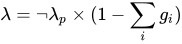
In order to diagnose that behavior around a relatively stable equilibrium state, one may consider a perturbation to EEI as indicated by the symbol Δ. Such a perturbation is typically induced by a radiative forcing (ΔF) which can be natural or man-made. Responses within the system to either return towards the stable state, or to move further away from the stable state are called feedbacks λΔT:

.

A feedback is a thermodynamic process while a forcing is a thermodynamic operation according to classical principles.

Collectively the feedbacks may be approximated by the linearized parameter λ and the perturbed temperature ΔT because all components of λ (assumed to be first-order to act independently and additively) are also functions of temperature, albeit to varying extents, by definition for a thermodynamic system:

.

Some feedback components having significant influence on EEI are: = water vapor, = clouds, = surface albedo, = carbon cycle, = Planck response, and = lapse rate. All quantities are understood to be global averages, while T is usually translated to temperature at the surface because of its direct relevance to humans and much other life.

The negative Planck response, being an especially strong function of temperature, is sometimes factored out to give an expression in terms of the relative feedback gains gi from other components:

.

For example for the water vapor feedback.

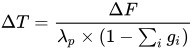
Within the context of modern numerical climate modelling and analysis, the linearized formulation has limited use. One such use is to diagnose the relative strengths of different feedback mechanisms. An estimate of climate sensitivity to a forcing is then obtained for the case where the net feedback remains negative and the system reaches a new equilibrium state (ΔEEI=0) after some time has passed:

.

Implications for climate policy

diagram showing five historical estimates of equilibrium climate sensitivity by the IPCC
Historical estimates of climate sensitivity from the IPCC assessments. The first three reports gave a qualitative likely range, and the next three had formally quantified it, by adding >66% likely range (dark blue). This uncertainty primarily depends on feedbacks.

Uncertainty over climate change feedbacks has implications for climate policy. For instance, uncertainty over carbon cycle feedbacks may affect targets for reducing greenhouse gas emissions (climate change mitigation). Emissions targets are often based on a target stabilization level of atmospheric greenhouse gas concentrations, or on a target for limiting global warming to a particular magnitude. Both of these targets (concentrations or temperatures) require an understanding of future changes in the carbon cycle.

If models incorrectly project future changes in the carbon cycle, then concentration or temperature targets could be missed. For example, if models underestimate the amount of carbon released into the atmosphere due to positive feedbacks (e.g., due to thawing permafrost), then they may also underestimate the extent of emissions reductions necessary to meet a concentration or temperature target.

Gaia hypothesis

From Wikipedia, the free encyclopedia
The study of planetary habitability is partly based upon extrapolation from knowledge of the Earth's conditions, as the Earth is the only planet currently known to harbour life (The Blue Marble, 1972 Apollo 17 photograph).

The Gaia hypothesis (/ˈɡ.ə/), also known as the Gaia theory, Gaia paradigm, or the Gaia principle, proposes that living organisms interact with their inorganic surroundings on Earth to form a synergistic and self-regulating complex system that helps to maintain and perpetuate the conditions for life on the planet.

The Gaia hypothesis was formulated by the chemist James Lovelock and co-developed by the microbiologist Lynn Margulis in the 1970s. Following the suggestion by his neighbour, novelist William Golding, Lovelock named the hypothesis after Gaia, the primordial deity who was sometimes personified as the Earth in Greek mythology. In 2006, the Geological Society of London awarded Lovelock the Wollaston Medal in part for his work on the Gaia hypothesis.

Topics related to the Gaia hypothesis include how the biosphere and the evolution of organisms affect the stability of global temperature, salinity of seawater, atmospheric oxygen levels, the maintenance of the hydrosphere, and other environmental variables that affect the habitability of Earth.

The Gaia hypothesis was initially criticized for being teleological - implying the Earth purposefully maintains an atmosphere suitable for life - but this interpretation was rejected by Lovelock. The Gaia hypothesis continues to attract criticism, and today many scientists consider it to be only weakly supported by, or at odds with, the available evidence.

Overview

The Gaia hypothesis argues that organisms co-evolve with their environment. That is, organisms influence the abiotic, not just the biological environment, and in co-development the abiotic environment influences biota via some sort of a Darwinian process, which may indicate an evolution of a collaborative reciprocal evolving life habitat. In 1995, Lovelock gave evidence of this biotic-abiotic relationship in his second iteration of his conjecture within the book Ages of Gaia. This theory states the evolution from the world of the early warm-loving bacteria and methanogenic bacteria towards the oxygen-enriched extant atmosphere, that is, today's atmosphere, which we know is the Holocene and this is a supportive environment of more complex life than primordial times. As each individual species or other systems pursue their self-interest, their combined actions may have counterbalancing effects on the abiotic and biotic environment. Opponents of this view sometimes reference examples of events that resulted in dramatic change rather than stable equilibrium, such as the conversion of the Earth's atmosphere from a reducing environment to an oxygen-rich one at the end of the Archaean and the beginning of the Proterozoic periods.

Less accepted versions of the Gaia hypothesis claim that changes in the biosphere are brought about through the coordination of living organisms and maintain those conditions through homeostasis. In some versions of Gaia Hypothosis, all lifeforms are considered part of one single living planetary being called Gaia. In this view, the atmosphere, the seas and the terrestrial crust would be results of interventions carried out by Gaia through the coevolving diversity of living organisms.

Among the precursors of the Gaia hypothesis are Russian scientists such as Piotr Alekseevich Kropotkin (1842–1921), Rafail Vasil’evich Rizpolozhensky (1862 – c. 1922), Vladimir Ivanovich Vernadsky (1863–1945), and Vladimir Alexandrovich Kostitzin (1886–1963).

The Gaia paradigm was an influence on the deep ecology movement.

Details

The Gaia hypothesis posits that the Earth is a self-regulating complex system involving the biosphere, the atmosphere, the hydrospheres and the pedosphere, tightly coupled as an evolving system. The hypothesis contends that this system as a whole, called Gaia, seeks a physical and chemical environment optimal for contemporary life.

Gaia evolves through a cybernetic feedback system operated by the biota, leading to broad stabilization of the conditions of habitability in a full homeostasis. Many processes in the Earth's surface, essential for the conditions of life, depend on the interaction of living forms, especially microorganisms, with inorganic elements. These processes establish a global control system that regulates Earth's surface temperature, atmosphere composition and ocean salinity, powered by the global thermodynamic disequilibrium state of the Earth system.

The existence of a planetary homeostasis influenced by living forms had been observed previously in the field of biogeochemistry, and it is being investigated also in other fields like Earth system science. The originality of the Gaia hypothesis relies on the assessment that such homeostatic balance is actively pursued with the goal of keeping the optimal conditions for life, even when terrestrial or external events menace them.

Regulation of global surface temperature

Rob Rohde's palaeotemperature graphs

Since life started on Earth, the energy provided by the Sun has increased by 25–30%; however, the surface temperature of the planet has remained within the levels of habitability, reaching quite regular low and high margins. Lovelock has also hypothesised that methanogens produced elevated levels of methane in the early atmosphere, giving a situation similar to that found in petrochemical smog, similar in some respects to the atmosphere on Titan. This, he suggests, helped to screen out ultraviolet light until the formation of the ozone layer, maintaining a degree of homeostasis. However, the Snowball Earth research has suggested that "oxygen shocks" and reduced methane levels led, during the Huronian, Sturtian and Marinoan/Varanger Ice Ages, to a world that very nearly became a solid "snowball". These epochs are evidence against the ability of the pre Phanerozoic biosphere to fully self-regulate.

Processing of the greenhouse gas CO2, explained below, plays a critical role in the maintenance of the Earth temperature within the limits of habitability.

The CLAW hypothesis, inspired by the Gaia hypothesis, proposes a feedback loop that operates between ocean ecosystems and the Earth's climate. The hypothesis specifically proposes that particular phytoplankton that produce dimethyl sulfide are responsive to variations in climate forcing, and that these responses lead to a negative feedback loop that acts to stabilise the temperature of the Earth's atmosphere.

Currently the increase in human population and the environmental impact of its activities, such as the multiplication of greenhouse gases may cause negative feedbacks in the environment to become positive feedback. Lovelock has stated that this could bring an extremely accelerated global warming, but he has since stated the effects will likely occur more slowly.

Daisyworld simulations

Plots from a standard black and white Daisyworld simulation

In response to the criticism that the Gaia hypothesis seemingly required unrealistic group selection and cooperation between organisms, James Lovelock and Andrew Watson developed a mathematical model, Daisyworld, in which ecological competition underpinned planetary temperature regulation.

Daisyworld examines the energy budget of a planet populated by two different types of plants, black daisies and white daisies, which are assumed to occupy a significant portion of the surface. The colour of the daisies influences the albedo of the planet such that black daisies absorb more light and warm the planet, while white daisies reflect more light and cool the planet. The black daisies are assumed to grow and reproduce best at a lower temperature, while the white daisies are assumed to thrive best at a higher temperature. As the temperature rises closer to the value the white daisies like, the white daisies outreproduce the black daisies, leading to a larger percentage of white surface, and more sunlight is reflected, reducing the heat input and eventually cooling the planet. Conversely, as the temperature falls, the black daisies outreproduce the white daisies, absorbing more sunlight and warming the planet. The temperature will thus converge to the value at which the reproductive rates of the plants are equal.

Lovelock and Watson showed that, over a limited range of conditions, this negative feedback due to competition can stabilize the planet's temperature at a value which supports life, if the energy output of the Sun changes, while a planet without life would show wide temperature changes. The percentage of white and black daisies will continually change to keep the temperature at the value at which the plants' reproductive rates are equal, allowing both life forms to thrive.

It has been suggested that the results were predictable because Lovelock and Watson selected examples that produced the responses they desired.

Regulation of oceanic salinity

Ocean salinity has been constant at about 3.5% for a very long time. Salinity stability in oceanic environments is important as most cells require a rather constant salinity and do not generally tolerate values above 5%. The constant ocean salinity was a long-standing mystery, because no process counterbalancing the salt influx from rivers was known. Recently it was suggested that salinity may also be strongly influenced by seawater circulation through hot basaltic rocks, and emerging as hot water vents on mid-ocean ridges. However, the composition of seawater is far from equilibrium, and it is difficult to explain this fact without the influence of organic processes. One suggested explanation lies in the formation of salt plains throughout Earth's history. It is hypothesized that these are created by bacterial colonies that fix ions and heavy metals during their life processes.

In the biogeochemical processes of Earth, sources and sinks are the movement of elements. The composition of salt ions within our oceans and seas is: sodium (Na+), chlorine (Cl), sulfate (SO42−), magnesium (Mg2+), calcium (Ca2+) and potassium (K+). The elements that comprise salinity do not readily change and are a conservative property of seawater. There are many mechanisms that change salinity from a particulate form to a dissolved form and back. Considering the metallic composition of iron sources across a multifaceted grid of thermomagnetic design, not only would the movement of elements hypothetically help restructure the movement of ions, electrons, and the like, but would also potentially and inexplicably assist in balancing the magnetic bodies of the Earth's geomagnetic field. The known sources of sodium i.e. salts are when weathering, erosion, and dissolution of rocks are transported into rivers and deposited into the oceans.

The Mediterranean Sea as being Gaia's kidney is found (here) by Kenneth J. Hsu, a correspondence author in 2001. Hsu suggests the "desiccation" of the Mediterranean is evidence of a functioning Gaia "kidney". In this and earlier suggested cases, it is plate movements and physics, not biology, which performs the regulation. Earlier "kidney functions" were performed during the "deposition of the Cretaceous (South Atlantic), Jurassic (Gulf of Mexico), Permo-Triassic (Europe), Devonian (Canada), and Cambrian/Precambrian (Gondwana) saline giants."

Regulation of oxygen in the atmosphere

Levels of gases in the atmosphere in 420,000 years of ice core data from Vostok, Antarctica research station. Current period is at the left.

The Gaia hypothesis states that the Earth's atmospheric composition is kept at a dynamically steady state by the presence of life. The atmospheric composition provides the conditions that contemporary life has adapted to. All the atmospheric gases other than noble gases present in the atmosphere are either made by organisms or processed by them.

The stability of the atmosphere in Earth is not a consequence of chemical equilibrium. Oxygen is a reactive compound, and should eventually combine with gases and minerals of the Earth's atmosphere and crust. Oxygen only began to persist in the atmosphere in small quantities about 50 million years before the start of the Great Oxygenation Event. Since the start of the Cambrian period, atmospheric oxygen concentrations have fluctuated between 15% and 40% of atmospheric volume. Traces of methane (at an amount of 100,000 tonnes produced per year) should not exist, as methane is combustible in an oxygen atmosphere.

Dry air in the atmosphere of Earth contains roughly (by volume) 78.09% nitrogen, 20.95% oxygen, 0.93% argon, 0.039% carbon dioxide, and small amounts of other gases including methane. Lovelock originally speculated that concentrations of oxygen above about 25% would increase the frequency of wildfires and conflagration of forests. This mechanism, however, would not raise oxygen levels if they became too low. If plants can be shown to robustly over-produce O2 then perhaps only the high oxygen forest fires regulator is necessary. Recent work on the findings of fire-caused charcoal in Carboniferous and Cretaceous coal measures, in geologic periods when O2 did exceed 25%, has supported Lovelock's contention.

Processing of CO2

Gaia scientists see the participation of living organisms in the carbon cycle as one of the complex processes that maintain conditions suitable for life. The only significant natural source of atmospheric carbon dioxide (CO2) is volcanic activity, while the only significant removal is through the precipitation of carbonate rocks. Carbon precipitation, solution and fixation are influenced by the bacteria and plant roots in soils, where they improve gaseous circulation, or in coral reefs, where calcium carbonate is deposited as a solid on the sea floor. Calcium carbonate is used by living organisms to manufacture carbonaceous tests and shells. Once dead, the living organisms' shells fall. Some arrive at the bottom of shallow seas where the heat and pressure of burial, and/or the forces of plate tectonics, eventually convert them to deposits of chalk and limestone. Much of the falling dead shells, however, redissolve into the ocean below the carbon compensation depth.

One of these organisms is Emiliania huxleyi, an abundant coccolithophore algae which may have a role in the formation of clouds. CO2 excess is compensated by an increase of coccolithophorid life, increasing the amount of CO2 locked in the ocean floor. Coccolithophorids, if the CLAW hypothesis turns out to be supported (see "Regulation of Global Surface Temperature" above), could help increase the cloud cover, hence control the surface temperature, help cool the whole planet and favor precipitation necessary for terrestrial plants. Lately the atmospheric CO2 concentration has increased and there is some evidence that concentrations of ocean algal blooms are also increasing.

Lichen and other organisms accelerate the weathering of rocks in the surface, while the decomposition of rocks also happens faster in the soil, thanks to the activity of roots, fungi, bacteria and subterranean animals. The flow of carbon dioxide from the atmosphere to the soil is therefore regulated with the help of living organisms. When CO2 levels rise in the atmosphere the temperature increases and plants grow. This growth brings higher consumption of CO2 by the plants, who process it into the soil, removing it from the atmosphere.

History

Precedents

Earthrise taken from Apollo 8 by astronaut William Anders, December 24, 1968

The idea of the Earth as an integrated whole, a living being, has a long tradition. The mythical Gaia was the primal Greek goddess personifying the Earth, the Greek version of "Mother Nature" (from Ge = Earth, and Aia = PIE grandmother), or the Earth Mother. James Lovelock gave this name to his hypothesis after a suggestion from the novelist William Golding, who was living in the same village as Lovelock at the time (Bowerchalke, Wiltshire, UK). Golding's advice was based on Gea, an alternative spelling for the name of the Greek goddess, which is used as prefix in geology, geophysics and geochemistry. Golding later made reference to Gaia in his Nobel Prize acceptance lecture.

In the eighteenth century, as geology consolidated as a modern science, James Hutton maintained that geological and biological processes are interlinked. Later, the naturalist and explorer Alexander von Humboldt recognized the coevolution of living organisms, climate, and Earth's crust. In the twentieth century, Vladimir Vernadsky formulated a theory of Earth's development that is now one of the foundations of ecology. Vernadsky was a Ukrainian geochemist and was one of the first scientists to recognize that the oxygen, nitrogen, and carbon dioxide in the Earth's atmosphere result from biological processes. During the 1920s he published works arguing that living organisms could reshape the planet as surely as any physical force. Vernadsky was a pioneer of the scientific bases for the environmental sciences. His visionary pronouncements were not widely accepted in the West, and some decades later the Gaia hypothesis received the same type of initial resistance from the scientific community.

Also in the turn to the 20th century Aldo Leopold, pioneer in the development of modern environmental ethics and in the movement for wilderness conservation, suggested a living Earth in his biocentric or holistic ethics regarding land.

It is at least not impossible to regard the earth's parts—soil, mountains, rivers, atmosphere etc,—as organs or parts of organs of a coordinated whole, each part with its definite function. And if we could see this whole, as a whole, through a great period of time, we might perceive not only organs with coordinated functions, but possibly also that process of consumption as replacement which in biology we call metabolism, or growth. In such case we would have all the visible attributes of a living thing, which we do not realize to be such because it is too big, and its life processes too slow.

— Stephan Harding, Animate Earth

Another influence for the Gaia hypothesis and the environmental movement in general came as a side effect of the Space Race between the Soviet Union and the United States of America. During the 1960s, the first humans in space could see how the Earth looked as a whole. The photograph Earthrise taken by astronaut William Anders in 1968 during the Apollo 8 mission became, through the Overview Effect, an early symbol for the global ecology movement.

Formulation of the hypothesis

James Lovelock, 2005

Lovelock started defining the idea of a self-regulating Earth controlled by the community of living organisms in September 1965, while working at the Jet Propulsion Laboratory in California on methods of detecting life on Mars. The first paper to mention it was Planetary Atmospheres: Compositional and other Changes Associated with the Presence of Life, co-authored with C.E. Giffin. A main concept was that life could be detected in a planetary scale by the chemical composition of the atmosphere. According to the data gathered by the Pic du Midi observatory, planets like Mars or Venus had atmospheres in chemical equilibrium. This difference with the Earth atmosphere was considered to be a proof that there was no life in these planets.

Lovelock formulated the Gaia Hypothesis in journal articles in 1972 and 1974, followed by a popularizing 1979 book Gaia: A new look at life on Earth. An article in the New Scientist of February 6, 1975, and a popular book length version of the hypothesis, published in 1979 as The Quest for Gaia, began to attract scientific and critical attention.

Lovelock called it first the Earth feedback hypothesis, and it was a way to explain the fact that combinations of chemicals including oxygen and methane persist in stable concentrations in the atmosphere of the Earth. Lovelock suggested detecting such combinations in other planets' atmospheres as a relatively reliable and cheap way to detect life.

Lynn Margulis

Later, other relationships such as sea creatures producing sulfur and iodine in approximately the same quantities as required by land creatures emerged and helped bolster the hypothesis.

In 1971 microbiologist Dr. Lynn Margulis joined Lovelock in the effort of fleshing out the initial hypothesis into scientifically proven concepts, contributing her knowledge about how microbes affect the atmosphere and the different layers in the surface of the planet. The American biologist had also awakened criticism from the scientific community with her advocacy of the theory on the origin of eukaryotic organelles and her contributions to the endosymbiotic theory, nowadays accepted. Margulis dedicated the last of eight chapters in her book, The Symbiotic Planet, to Gaia. However, she objected to the widespread personification of Gaia and stressed that Gaia is "not an organism", but "an emergent property of interaction among organisms". She defined Gaia as "the series of interacting ecosystems that compose a single huge ecosystem at the Earth's surface. Period". The book's most memorable "slogan" was actually quipped by a student of Margulis'.

James Lovelock called his first proposal the Gaia hypothesis but has also used the term Gaia theory. Lovelock states that the initial formulation was based on observation, but still lacked a scientific explanation. The Gaia hypothesis has since been supported by a number of scientific experiments and provided a number of useful predictions.

First Gaia conference

In 1985, the first public symposium on the Gaia hypothesis, Is The Earth a Living Organism? was held at University of Massachusetts Amherst, August 1–6. The principal sponsor was the National Audubon Society. Speakers included James Lovelock, Lynn Margulis, George Wald, Mary Catherine Bateson, Lewis Thomas, Thomas Berry, David Abram, John Todd, Donald Michael, Christopher Bird, Michael Cohen, and William Fields. Some 500 people attended.

Second Gaia conference

In 1988, climatologist Stephen Schneider organised a conference of the American Geophysical Union. The first Chapman Conference on Gaia, was held in San Diego, California, on March 7, 1988.

During the "philosophical foundations" session of the conference, David Abram spoke on the influence of metaphor in science, and of the Gaia hypothesis as offering a new and potentially game-changing metaphorics, while James Kirchner criticised the Gaia hypothesis for its imprecision. Kirchner claimed that Lovelock and Margulis had not presented one Gaia hypothesis, but four:

  • CoEvolutionary Gaia: that life and the environment had evolved in a coupled way. Kirchner claimed that this was already accepted scientifically and was not new.
  • Homeostatic Gaia: that life maintained the stability of the natural environment, and that this stability enabled life to continue to exist.
  • Geophysical Gaia: that the Gaia hypothesis generated interest in geophysical cycles and therefore led to interesting new research in terrestrial geophysical dynamics.
  • Optimising Gaia: that Gaia shaped the planet in a way that made it an optimal environment for life as a whole. Kirchner claimed that this was not testable and therefore was not scientific.

Of Homeostatic Gaia, Kirchner recognised two alternatives. "Weak Gaia" asserted that life tends to make the environment stable for the flourishing of all life. "Strong Gaia" according to Kirchner, asserted that life tends to make the environment stable, to enable the flourishing of all life. Strong Gaia, Kirchner claimed, was untestable and therefore not scientific.

Lovelock and other Gaia-supporting scientists, however, did attempt to disprove the claim that the hypothesis is not scientific because it is impossible to test it by controlled experiment. For example, against the charge that Gaia was teleological, Lovelock and Andrew Watson offered the Daisyworld Model (and its modifications, above) as evidence against most of these criticisms. Lovelock said that the Daisyworld model "demonstrates that self-regulation of the global environment can emerge from competition amongst types of life altering their local environment in different ways".

Lovelock was careful to present a version of the Gaia hypothesis that had no claim that Gaia intentionally or consciously maintained the complex balance in her environment that life needed to survive. It would appear that the claim that Gaia acts "intentionally" was a statement in his popular initial book and was not meant to be taken literally. This new statement of the Gaia hypothesis was more acceptable to the scientific community. Most accusations of teleologism ceased, following this conference.

Third Gaia conference

By the time of the 2nd Chapman Conference on the Gaia Hypothesis, held at Valencia, Spain, on 23 June 2000, the situation had changed significantly. Rather than a discussion of the Gaian teleological views, or "types" of Gaia hypotheses, the focus was upon the specific mechanisms by which basic short term homeostasis was maintained within a framework of significant evolutionary long term structural change.

The major questions were:

  1. "How has the global biogeochemical/climate system called Gaia changed in time? What is its history? Can Gaia maintain stability of the system at one time scale but still undergo vectorial change at longer time scales? How can the geologic record be used to examine these questions?"
  2. "What is the structure of Gaia? Are the feedbacks sufficiently strong to influence the evolution of climate? Are there parts of the system determined pragmatically by whatever disciplinary study is being undertaken at any given time or are there a set of parts that should be taken as most true for understanding Gaia as containing evolving organisms over time? What are the feedbacks among these different parts of the Gaian system, and what does the near closure of matter mean for the structure of Gaia as a global ecosystem and for the productivity of life?"
  3. "How do models of Gaian processes and phenomena relate to reality and how do they help address and understand Gaia? How do results from Daisyworld transfer to the real world? What are the main candidates for "daisies"? Does it matter for Gaia theory whether we find daisies or not? How should we be searching for daisies, and should we intensify the search? How can Gaian mechanisms be collaborated with using process models or global models of the climate system that include the biota and allow for chemical cycling?"

In 1997, Tyler Volk argued that a Gaian system is almost inevitably produced as a result of an evolution towards far-from-equilibrium homeostatic states that maximise entropy production, and Axel Kleidon (2004) agreed stating: "...homeostatic behavior can emerge from a state of MEP associated with the planetary albedo"; "...the resulting behavior of a symbiotic Earth at a state of MEP may well lead to near-homeostatic behavior of the Earth system on long time scales, as stated by the Gaia hypothesis". M. Staley (2002) has similarly proposed "...an alternative form of Gaia theory based on more traditional Darwinian principles... In [this] new approach, environmental regulation is a consequence of population dynamics. The role of selection is to favor organisms that are best adapted to prevailing environmental conditions. However, the environment is not a static backdrop for evolution, but is heavily influenced by the presence of living organisms. The resulting co-evolving dynamical process eventually leads to the convergence of equilibrium and optimal conditions".

Fourth Gaia conference

A fourth international conference on the Gaia hypothesis, sponsored by the Northern Virginia Regional Park Authority and others, was held in October 2006 at the Arlington, Virginia campus of George Mason University.

Martin Ogle, Chief Naturalist, for NVRPA, and long-time Gaia hypothesis proponent, organized the event. Lynn Margulis, Distinguished University Professor in the Department of Geosciences, University of Massachusetts-Amherst, and long-time advocate of the Gaia hypothesis, was a keynote speaker. Among many other speakers: Tyler Volk, co-director of the Program in Earth and Environmental Science at New York University; Dr. Donald Aitken, Principal of Donald Aitken Associates; Dr. Thomas Lovejoy, President of the Heinz Center for Science, Economics and the Environment; Robert Corell, Senior Fellow, Atmospheric Policy Program, American Meteorological Society and noted environmental ethicist, J. Baird Callicott.

Criticism

After initially receiving little attention from scientists (from 1969 until 1977), thereafter for a period the initial Gaia hypothesis was criticized by a number of scientists, including Ford DoolittleRichard Dawkins and Stephen Jay Gould. Lovelock has said that because his hypothesis is named after a Greek goddess, and championed by many non-scientists, the Gaia hypothesis was interpreted as a neo-Pagan religion. Many scientists in particular also criticized the approach taken in his popular book Gaia, a New Look at Life on Earth for being teleological—a belief that things are purposeful and aimed towards a goal. Responding to this critique in 1990, Lovelock stated, "Nowhere in our writings do we express the idea that planetary self-regulation is purposeful, or involves foresight or planning by the biota".

Stephen Jay Gould criticized Gaia as being "a metaphor, not a mechanism." He wanted to know the actual mechanisms by which self-regulating homeostasis was achieved. In his defense of Gaia, David Abram argues that Gould overlooked the fact that "mechanism", itself, is a metaphor—albeit an exceedingly common and often unrecognized metaphor—one which leads us to consider natural and living systems as though they were machines organized and built from outside (rather than as autopoietic or self-organizing phenomena). Mechanical metaphors, according to Abram, lead us to overlook the active or agentic quality of living entities, while the organismic metaphors of the Gaia hypothesis accentuate the active agency of both the biota and the biosphere as a whole. With regard to causality in Gaia, Lovelock argues that no single mechanism is responsible, that the connections between the various known mechanisms may never be known, that this is accepted in other fields of biology and ecology as a matter of course, and that specific hostility is reserved for his own hypothesis for other reasons.

Aside from clarifying his language and understanding of what is meant by a life form, Lovelock himself ascribes most of the criticism to a lack of understanding of non-linear mathematics by his critics, and a linearizing form of greedy reductionism in which all events have to be immediately ascribed to specific causes before the fact. He also states that most of his critics are biologists but that his hypothesis includes experiments in fields outside biology, and that some self-regulating phenomena may not be mathematically explainable.

Natural selection and evolution

Lovelock has suggested that global biological feedback mechanisms could evolve by natural selection, stating that organisms that improve their environment for their survival do better than those that damage their environment. However, in the early 1980s, W. Ford Doolittle and Richard Dawkins separately argued against this aspect of Gaia. Doolittle argued that nothing in the genome of individual organisms could provide the feedback mechanisms proposed by Lovelock, and therefore the Gaia hypothesis proposed no plausible mechanism and was unscientific. Dawkins meanwhile stated that for organisms to act in concert would require foresight and planning, which is contrary to the current scientific understanding of evolution. Like Doolittle, he also rejected the possibility that feedback loops could stabilize the system.

Margulis argued in 1999 that "Darwin's grand vision was not wrong, only incomplete. In accentuating the direct competition between individuals for resources as the primary selection mechanism, Darwin (and especially his followers) created the impression that the environment was simply a static arena". She wrote that the composition of the Earth's atmosphere, hydrosphere, and lithosphere are regulated around "set points" as in homeostasis, but those set points change with time.

Evolutionary biologist W. D. Hamilton called the concept of Gaia Copernican, adding that it would take another Newton to explain how Gaian self-regulation takes place through Darwinian natural selection. More recently Ford Doolittle building on his and Inkpen's ITSNTS (It's The Song Not The Singer) proposal proposed that differential persistence can play a similar role to differential reproduction in evolution by natural selections, thereby providing a possible reconciliation between the theory of natural selection and the Gaia hypothesis.

Criticism in the 21st century

The Gaia hypothesis continues to be broadly skeptically received by the scientific community. For instance, arguments both for and against it were laid out in the journal Climatic Change in 2002 and 2003. A significant argument raised against it are the many examples where life has had a detrimental or destabilising effect on the environment rather than acting to regulate it. Several recent books have criticised the Gaia hypothesis, expressing views ranging from "... the Gaia hypothesis lacks unambiguous observational support and has significant theoretical difficulties" to "Suspended uncomfortably between tainted metaphor, fact, and false science, I prefer to leave Gaia firmly in the background" to "The Gaia hypothesis is supported neither by evolutionary theory nor by the empirical evidence of the geological record". The CLAW hypothesis, initially suggested as a potential example of direct Gaian feedback, has subsequently been found to be less credible as understanding of cloud condensation nuclei has improved. In 2009 the Medea hypothesis was proposed: that life has highly detrimental (biocidal) impacts on planetary conditions, in direct opposition to the Gaia hypothesis.

In a 2013 book-length evaluation of the Gaia hypothesis considering modern evidence from across the various relevant disciplines, Toby Tyrrell concluded that: "I believe Gaia is a dead end. Its study has, however, generated many new and thought provoking questions. While rejecting Gaia, we can at the same time appreciate Lovelock's originality and breadth of vision, and recognize that his audacious concept has helped to stimulate many new ideas about the Earth, and to champion a holistic approach to studying it". Elsewhere he presents his conclusion "The Gaia hypothesis is not an accurate picture of how our world works". This statement needs to be understood as referring to the "strong" and "moderate" forms of Gaia—that the biota obeys a principle that works to make Earth optimal (strength 5) or favourable for life (strength 4) or that it works as a homeostatic mechanism (strength 3). The latter is the "weakest" form of Gaia that Lovelock has advocated. Tyrrell rejects it. However, he finds that the two weaker forms of Gaia—Coeveolutionary Gaia and Influential Gaia, which assert that there are close links between the evolution of life and the environment and that biology affects the physical and chemical environment—are both credible, but that it is not useful to use the term "Gaia" in this sense and that those two forms were already accepted and explained by the processes of natural selection and adaptation.

Anthropic principle

As emphasized by multiple critics, no plausible mechanism exists that would drive the evolution of negative feedback loops leading to planetary self-regulation of the climate. Indeed, multiple incidents in Earth's history (see the Medea hypothesis) have shown that the Earth and the biosphere can enter self-destructive positive feedback loops that lead to mass extinction events.

For example, the Snowball Earth glaciations appeared to result from the development of photosynthesis during a period when the Sun was cooler than it is now. These mechanisms will have some effect, but any understanding of glacial-interglacial cycles requires study of the variations in the Earth’s orbit around the Sun, the tilt of its axis of rotation, and the ‘wobble’ in that rotational movement which causes the periodicity in Northern Hemisphere insolation, thereby setting the Earth’s thermal regime. Including studies from the fields of mathematics and Earth science, the fields of geology and geography provide insight into the causes of ice ages. Meanwhile, the removal of carbon dioxide from the atmosphere, along with the oxidation of atmospheric methane by the released oxygen, resulted in a dramatic diminishment of the greenhouse effect. The resulting expansion of the polar ice sheets decreased the overall fraction of sunlight absorbed by the Earth, resulting in a runaway ice–albedo positive feedback loop ultimately resulting in glaciation over nearly the entire surface of the Earth. However, volcanic processes at this scale should be understood as relating to the pressure exerted on the Earth’s crust, and released during periods of ice sheet retreat. Breaking out of the Earth from the frozen condition appears to have directly been due to the release of carbon dioxide and methane by volcanos, although release of methane by microbes trapped underneath the ice could also have played a part. Lesser contributions to warming would come from the fact that coverage of the Earth by ice sheets largely inhibited photosynthesis and lessened the removal of carbon dioxide from the atmosphere by the weathering of siliceous rocks. However, in the absence of tectonic activity, the snowball condition could have persisted indefinitely.

Geologic events with amplifying positive feedbacks (along with some possible biologic participation) led to the greatest mass extinction event on record, the Permian–Triassic extinction event about 250 million years ago. The precipitating event appears to have been volcanic eruptions in the Siberian Traps, a hilly region of flood basalts in Siberia. These eruptions released high levels of carbon dioxide and sulfur dioxide which elevated world temperatures and acidified the oceans. Estimates of the rise in carbon dioxide levels range widely, from as little as a two-fold increase, to as much as a twenty-fold increase. Amplifying feedbacks increased the warming to considerably greater than that to be expected merely from the greenhouse effect of carbon dioxide: these include the ice albedo feedback, the increased evaporation of water vapor (another greenhouse gas) into the atmosphere, the release of methane from the warming of methane hydrate deposits buried under the permafrost and beneath continental shelf sediments, and increased wildfires. The rising carbon dioxide acidified the oceans, leading to widespread die-off of creatures with calcium carbonate shells, killing mollusks and crustaceans like crabs and lobsters and destroying coral reefs. Their demise led to disruption of the entire oceanic food chain. It has been argued that rising temperatures may have led to disruption of the chemocline separating sulfidic deep waters from oxygenated surface waters, which led to massive release of toxic hydrogen sulfide (produced by anerobic bacteria) to the surface ocean and even into atmosphere, contributing to the (primarily methane-driven) collapse of the ozone layer, and helping to explain the die-off of terrestrial animal and plant life.

According to the weak anthropic principle, our observation of such stabilizing feedback loops is an observer selection effect. In all the universe, it is only planets with Gaian properties that could have evolved intelligent, self-aware organisms capable of asking such questions. One can imagine innumerable worlds where life evolved with different biochemistries or where the worlds had different geophysical properties such that the worlds are presently dead due to runaway greenhouse effect, or else are in perpetual Snowball, or else due to one factor or another, life has been inhibited from evolving beyond the microbial level.

If no means exists for natural selection to operate at the biosphere level, then it would appear that the anthropic principle provides the only explanation for the survival of Earth's biosphere over geologic time. But in recent years, this strictly reductionistic view has been modified by recognition that natural selection can operate at multiple levels of the biological hierarchy — not just at the level of individual organisms. Traditional Darwinian natural selection requires reproducing entities that display inheritable properties or abilities that result in their having more offspring than their competitors. Successful biospheres clearly cannot reproduce to spawn copies of themselves, and so traditional Darwinian natural selection cannot operate. A mechanism for biosphere-level selection was proposed by Ford Doolittle: Although he had been a strong and early critic of the Gaia hypothesis, he had by 2015 started to think of ways whereby Gaia might be "Darwinised", seeking means whereby the planet could have evolved biosphere-level adaptations. Doolittle has suggested that differential persistence — mere survival — could be considered a legitimate mechanism for natural selection. As the Earth passes through various challenges, the phenomenon of differential persistence enables selected entities to achieve fixation by surviving the death of their competitors. Although Earth's biosphere is not competing against other biospheres on other planets, there are many competitors for survival on this planet. Collectively, Gaia constitutes the single clade of all living survivors descended from life’s last universal common ancestor (LUCA). Various other proposals for biosphere-level selection include sequential selection, entropic hierarchy, and considering Gaia as a holobiont-like system. Ultimately speaking, differential persistence and sequential selection are variants of the anthropic principle, while entropic hierarchy and holobiont arguments may possibly allow understanding the emergence of Gaia without anthropic arguments.

Human extinction

From Wikipedia, the free encyclopedia https://en.wikipedia.org/wiki/Human_ext...