Computational chemistry is a branch of chemistry that uses computer simulations to assist in solving chemical problems. It uses methods of theoretical chemistry incorporated into computer programs to calculate the structures and properties of molecules, groups of molecules, and solids. Computational chemists typically focus on developing and applying
computer programs and methodologies to specific chemical questions.
The complexity inherent in the many-body problem exacerbates the challenge of providing detailed descriptions of quantum mechanical systems. Computational results may complement information obtained by chemical experiments or predict unobserved chemical phenomena.
History
Building on the founding discoveries and theories in the history of quantum mechanics, the first theoretical calculations in chemistry were those of Walter Heitler and Fritz London in 1927, using valence bond theory. The books that were influential in the early development of computational quantum chemistry include Linus Pauling and E. Bright Wilson's 1935 Introduction to Quantum Mechanics – with Applications to Chemistry, Eyring, Walter and Kimball's 1944 Quantum Chemistry, Heitler's 1945 Elementary Wave Mechanics – with Applications to Quantum Chemistry, and later Coulson's 1952 textbook Valence, each of which served as primary references for chemists in the decades to follow.
With the development of efficient computer technology in the 1940s, the solutions of elaborate wave equations for complex atomic
systems began to be a realizable objective. In the early 1950s, the
first semi-empirical atomic orbital calculations were performed.
Theoretical chemists became extensive users of the early digital
computers. One significant advancement was marked by Clemens C. J.
Roothaan's 1951 paper in the Reviews of Modern Physics. This paper focused largely on the "LCAO MO" approach (Linear
Combination of Atomic Orbitals Molecular Orbitals). A very detailed
account of such use in the United Kingdom is given by Smith and
Sutcliffe. The first ab initioHartree–Fock method calculations on diatomic molecules were performed in 1956 at MIT, using a basis set of Slater orbitals. For diatomic molecules, a systematic study using a minimum basis set
and the first calculation with a larger basis set were published by
Ransil and Nesbet respectively in 1960. The first polyatomic calculations using Gaussian orbitals were performed in the late 1950s. The first configuration interaction calculations were performed in Cambridge on the EDSAC computer in the 1950s using Gaussian orbitals by Boys and coworkers. By 1971, when a bibliography of ab initio calculations was published, the largest molecules included were naphthalene and azulene.
In 1964, Hückel method calculations (using a simple linear combination of atomic orbitals
(LCAO) method to determine electron energies of molecular orbitals of π
electrons in conjugated hydrocarbon systems) of molecules, ranging in
complexity from butadiene and benzene to ovalene, were generated on computers at Berkeley and Oxford. These empirical methods were replaced in the 1960s by semi-empirical methods such as CNDO.
In the early 1970s, efficient ab initio computer programs such as ATMOL, Gaussian, IBMOL, and POLYAYTOM, began to be used to speed ab initio calculations of molecular orbitals. Of these four programs, only Gaussian, now vastly expanded, is still in use, but many other programs are now in use. At the same time, the methods of molecular mechanics, such as MM2 force field, were developed, primarily by Norman Allinger.
One of the first mentions of the term computational chemistry can be found in the 1970 book Computers and Their Role in the Physical Sciences
by Sidney Fernbach and Abraham Haskell Taub, where they state "It
seems, therefore, that 'computational chemistry' can finally be more and
more of a reality." During the 1970s, widely different methods began to be seen as part of a new emerging discipline of computational chemistry. The Journal of Computational Chemistry was first published in 1980.
Computational chemistry has featured in several Nobel Prize awards. In 1998 the Nobel Prize in Chemistry was awarded to Walter Kohn, "for his development of the density-functional theory", and John Pople, "for his development of computational methods in quantum chemistry". Martin Karplus, Michael Levitt and Arieh Warshel received the 2013 Nobel Prize in Chemistry for "the development of multiscale models for complex chemical systems".
Applications
Computational chemistry has a wide breadth of applications
The prediction of the molecular structure of molecules by the
use of the simulation of forces, or more accurate quantum chemical
methods, to find stationary points on the energy surface as the position
of the nuclei is varied.
Storing and searching for data on chemical entities (see chemical databases).
Computational approaches to help in the efficient synthesis of compounds.
Computational approaches to design molecules that interact in specific ways with other molecules (e.g. drug design and catalysis.
These fields can give rise to several applications as shown below.
Catalysis
Computational
chemistry can help predict values like activation energy from
catalysis. The presence of the catalyst opens a different reaction
pathway (shown in red) with lower activation energy. The final result
and the overall thermodynamics are the same.
Computational chemistry is a tool for analyzing catalytic systems without doing experiments. Modern electronic structure theory and density functional theory has allowed researchers to discover and understand catalysts. Computational studies apply theoretical chemistry to catalysis
research. Density functional theory methods calculate the energies and
orbitals of molecules to give models of those structures. Using these methods, researchers can predict values like activation energy, site reactivity and other thermodynamic properties.
Data that is difficult to obtain experimentally can be found
using computational methods to model the mechanisms of catalytic cycles. Skilled computational chemists provide predictions that are close to
experimental data with proper considerations of methods and basis sets.
With good computational data, researchers can predict how catalysts can
be improved to lower the cost and increase the efficiency of these
reactions.
Drug development
Computational chemistry is used in drug development
to model potentially useful drug molecules and help companies save time
and cost in drug development. The drug discovery process involves
analyzing data, finding ways to improve current molecules, finding
synthetic routes, and testing those molecules. Computational chemistry helps with this process by giving predictions
of which experiments would be best to do without conducting other
experiments. Computational methods can also find values that are
difficult to find experimentally like pKa's of compounds. Methods like density functional theory can be used to model drug molecules and find their properties, like their HOMO and LUMO energies and molecular orbitals.
Aside from drug synthesis, drug carriers are also researched by computational chemists for nanomaterials.
It allows researchers to simulate environments to test the
effectiveness and stability of drug carriers. Understanding how water
interacts with these nanomaterials ensures stability of the material in
human bodies. These computational simulations help researchers optimize
the material find the best way to structure these nanomaterials before
making them.
Databases
are useful for both computational and non computational chemists in
research and verifying the validity of computational methods. Empirical
data is used to analyze the error of computational methods against
experimental data. Empirical data helps researchers with their methods
and basis sets to have greater confidence in the researchers results.
Computational chemistry databases are also used in testing software or
hardware for computational chemistry.
Databases can also use purely calculated data. Purely calculated
data uses calculated values over experimental values for databases.
Purely calculated data avoids dealing with these adjusting for different
experimental conditions like zero-point energy. These calculations can
also avoid experimental errors for difficult to test molecules. Though
purely calculated data is often not perfect, identifying issues is often
easier for calculated data than experimental.
Databases also give public access to information for researchers
to use. They contain data that other researchers have found and uploaded
to these databases so that anyone can search for them. Researchers use
these databases to find information on molecules of interest and learn
what can be done with those molecules. Some publicly available chemistry
databases include the following.
BindingDB: Contains experimental information about protein-small molecule interactions.
RCSB: Stores publicly available 3D models of macromolecules (proteins, nucleic acids) and small molecules (drugs, inhibitors)
ChEMBL: Contains data from research on drug development such as assay results.
DrugBank: Data about mechanisms of drugs can be found here.
The programs used in computational chemistry are based on many different quantum-chemical methods that solve the molecular Schrödinger equation associated with the molecular Hamiltonian. Methods that do not include any empirical or semi-empirical parameters
in their equations – being derived directly from theory, with no
inclusion of experimental data – are called ab initio methods.
Ab initio methods need to define a level of theory (the method) and a basis set. A basis set consists of functions centered on the molecule's atoms.
These sets are then used to describe molecular orbitals via the linear combination of atomic orbitals (LCAO) molecular orbital method ansatz.
Diagram illustrating various ab initio electronic structure methods in terms of energy. Spacings are not to scale.
A common type of ab initio electronic structure calculation is the Hartree–Fock method (HF), an extension of molecular orbital theory,
where electron-electron repulsions in the molecule are not specifically
taken into account; only the electrons' average effect is included in
the calculation. As the basis set size increases, the energy and wave
function tend towards a limit called the Hartree–Fock limit.
Many types of calculations begin with a Hartree–Fock calculation
and subsequently correct for electron-electron repulsion, referred to
also as electronic correlation. These types of calculations are termed post–Hartree–Fock
methods. By continually improving these methods, scientists can get
increasingly closer to perfectly predicting the behavior of atomic and
molecular systems under the framework of quantum mechanics, as defined
by the Schrödinger equation.
In most cases, the Hartree–Fock wave function occupies a single configuration or determinant. In some cases, particularly for bond-breaking processes, this is inadequate, and several configurations must be used.
The total molecular energy can be evaluated as a function of the molecular geometry; in other words, the potential energy surface. Such a surface can be used for reaction dynamics. The stationary points of the surface lead to predictions of different isomers and the transition structures for conversion between isomers.
Molecular orbital diagram of the conjugated pi systems of the diazomethane molecule using Hartree-Fock Method, CH2N2
A particularly important objective, called computational thermochemistry, is to calculate thermochemical quantities such as the enthalpy of formation
to chemical accuracy. Chemical accuracy is the accuracy required to
make realistic chemical predictions and is generally considered to be
1 kcal/mol or 4 kJ/mol. To reach that accuracy in an economic way, it is
necessary to use a series of post–Hartree–Fock methods and combine the
results. These methods are called quantum chemistry composite methods.
How a computational method solves quantum equations impacts the
accuracy and efficiency of the method. The split operator technique is
one of these methods for solving differential equations. In
computational chemistry, split operator technique reduces computational
costs of simulating chemical systems. Computational costs are about how
much time it takes for computers to calculate these chemical systems, as
it can take days for more complex systems. Quantum systems are
difficult and time-consuming to solve for humans. Split operator methods
help computers calculate these systems quickly by solving the sub
problems in a quantum differential equation.
The method does this by separating the differential equation into two
different equations, like when there are more than two operators. Once
solved, the split equations are combined into one equation again to give
an easily calculable solution.
This method is used in many fields that require solving differential equations, such as biology. However, the technique comes with a splitting error. For example, with the following solution for a differential equation.
The equation can be split, but the solutions will not be exact, only similar. This is an example of first order splitting.
There are ways to reduce this error, which include taking an average of two split equations.
Another way to increase accuracy is to use higher order
splitting. Usually, second order splitting is the most that is done
because higher order splitting requires much more time to calculate and
is not worth the cost. Higher order methods become too difficult to
implement, and are not useful for solving differential equations despite
the higher accuracy.
Computational chemists spend much time making systems calculated
with split operator technique more accurate while minimizing the
computational cost. Calculating methods is a massive challenge for many
chemists trying to simulate molecules or chemical environments.
Density functional theory (DFT) methods are often considered to be ab initio methods for determining the molecular electronic structure, even though many of the most common functionals use parameters derived from empirical data, or from more complex calculations. In DFT, the total energy is expressed in terms of the total one-electron density rather than the wave function. In this type of calculation, there is an approximate Hamiltonian and an approximate expression for the total electron density, with various different levels of approximation and accuracy. DFT methods can be very accurate for relatively low computational cost.
Some methods combine the density functional exchange functional with
the Hartree–Fock exchange term and are termed hybrid functional methods, or an additional term for correlation in double-methods methods.
Semi-empirical quantum chemistry methods are based on the Hartree–Fock method
formalism, but make many approximations and obtain some parameters from
empirical data. They were very important in computational chemistry
from the 60s to the 90s, especially for treating large molecules where
the full Hartree–Fock method without the approximations were too costly.
The use of empirical parameters appears to allow some inclusion of
correlation effects into the methods.
Primitive semi-empirical methods were designed even before, where the two-electron part of the Hamiltonian is not explicitly included. For π-electron systems, this was the Hückel method proposed by Erich Hückel, and for all valence electron systems, the extended Hückel method proposed by Roald Hoffmann. Sometimes, Hückel methods are referred to as "completely empirical" because they do not derive from a Hamiltonian. Yet, the term "empirical methods", or "empirical force fields" is usually used to describe molecular mechanics.
Molecular mechanics potential energy function with continuum solvent
In many cases, large molecular systems can be modeled successfully while avoiding quantum mechanical calculations entirely. Molecular mechanics simulations, for example, use one classical expression for the energy of a compound, for instance, the harmonic oscillator. All constants appearing in the equations must be obtained beforehand from experimental data or ab initio calculations.
The database of compounds used for parameterization, i.e. the resulting set of parameters and functions is called the force field,
is crucial to the success of molecular mechanics calculations. A force
field parameterized against a specific class of molecules, for instance,
proteins, would be expected to only have any relevance when describing
other molecules of the same class. These methods can be applied to proteins and other large biological
molecules, and allow studies of the approach and interaction (docking)
of potential drug molecules.
Molecular dynamics (MD) use either quantum mechanics, molecular mechanics or a mixture of both to calculate forces which are then used to solve Newton's laws of motion
to examine the time-dependent behavior of systems. The result of a
molecular dynamics simulation is a trajectory that describes how the
position and velocity of particles varies with time. The phase point of a
system described by the positions and momenta of all its particles on a
previous time point will determine the next phase point in time by
integrating over Newton's laws of motion.
Monte Carlo
Monte Carlo
(MC) generates configurations of a system by making random changes to
the positions of its particles, together with their orientations and
conformations where appropriate. It is a random sampling method, which makes use of the so-called importance sampling.
Importance sampling methods are able to generate low energy states, as
this enables properties to be calculated accurately. The potential
energy of each configuration of the system can be calculated, together
with the values of other properties, from the positions of the atoms.
QM/MM is a hybrid method that attempts to combine the accuracy of
quantum mechanics with the speed of molecular mechanics. It is useful
for simulating very large molecules such as enzymes.
Quantum computational chemistry aims to exploit quantum computing to simulate chemical systems, distinguishing itself from the QM/MM (Quantum Mechanics/Molecular Mechanics) approach. While QM/MM uses a hybrid approach, combining quantum mechanics for a
portion of the system with classical mechanics for the remainder,
quantum computational chemistry exclusively uses quantum computing
methods to represent and process information, such as Hamiltonian
operators.
Conventional computational chemistry methods often struggle with
the complex quantum mechanical equations, particularly due to the
exponential growth of a quantum system's wave function. Quantum
computational chemistry addresses these challenges using quantum computing methods, such as qubitization and quantum phase estimation, which are believed to offer scalable solutions.
Qubitization involves adapting the Hamiltonian operator for more
efficient processing on quantum computers, enhancing the simulation's
efficiency. Quantum phase estimation, on the other hand, assists in
accurately determining energy eigenstates, which are critical for
understanding the quantum system's behavior.
While these techniques have advanced the field of computational
chemistry, especially in the simulation of chemical systems, their
practical application is currently limited mainly to smaller systems due
to technological constraints. Nevertheless, these developments may lead
to significant progress towards achieving more precise and
resource-efficient quantum chemistry simulations.
The computational cost and algorithmic complexity in chemistry are
used to help understand and predict chemical phenomena. They help
determine which algorithms/computational methods to use when solving
chemical problems. This section focuses on the scaling of computational
complexity with molecule size and details the algorithms commonly used
in both domains.
In quantum chemistry, particularly, the complexity can grow
exponentially with the number of electrons involved in the system. This
exponential growth is a significant barrier to simulating large or
complex systems accurately.
Advanced algorithms in both fields strive to balance accuracy with computational efficiency. For instance, in MD, methods like Verlet integration or Beeman's algorithm
are employed for their computational efficiency. In quantum chemistry,
hybrid methods combining different computational approaches (like QM/MM)
are increasingly used to tackle large biomolecular systems.
Algorithmic complexity examples
The following list illustrates the impact of computational complexity
on algorithms used in chemical computations. It is important to note
that while this list provides key examples, it is not comprehensive and
serves as a guide to understanding how computational demands influence
the selection of specific computational methods in chemistry.
Solves Newton's equations of motion for atoms and molecules.
Complexity
The standard pairwise interaction calculation in MD leads to an complexity for particles. This is because each particle interacts with every other particle, resulting in interactions. Advanced algorithms, such as the Ewald summation or Fast Multipole Method, reduce this to or even by grouping distant particles and treating them as a single entity or using clever mathematical approximations.
Combines quantum mechanical calculations for a small region with molecular mechanics for the larger environment.
Complexity
The complexity of QM/MM methods depends on both the size of the
quantum region and the method used for quantum calculations. For
example, if a Hartree-Fock method is used for the quantum part, the
complexity can be approximated as , where
is the number of basis functions in the quantum region. This complexity
arises from the need to solve a set of coupled equations iteratively
until self-consistency is achieved.
Algorithmic flowchart illustrating the Hartree–Fock method
Finds a single Fock state that minimizes the energy.
Complexity
NP-hard or NP-complete as demonstrated by embedding instances of the Ising model into Hartree-Fock calculations. The Hartree-Fock method involves solving the Roothaan-Hall equations, which scales as to depending on implementation, with
being the number of basis functions. The computational cost mainly
comes from evaluating and transforming the two-electron integrals. This
proof of NP-hardness or NP-completeness comes from embedding problems
like the Ising model into the Hartree-Fock formalism.
An acrolein
molecule. DFT gives good results in the prediction of sensitivity of
some nanostructures to environmental pollutants such as Acrolein.
Proving the complexity classes for algorithms involves a combination
of mathematical proof and computational experiments. For example, in the
case of the Hartree-Fock method, the proof of NP-hardness is a
theoretical result derived from complexity theory, specifically through
reductions from known NP-hard problems.
Traditional implementations of DFT typically scale as , mainly due to the need to diagonalize the Kohn-Sham matrix. The diagonalization step, which finds the eigenvalues and eigenvectors
of the matrix, contributes most to this scaling. Recent advances in DFT
aim to reduce this complexity through various approximations and
algorithmic improvements. There have also been significant speed improvements in eigensolvers, in particular the ELPA solver which is used in many codes.
CCSD and CCSD(T) methods are advanced electronic structure techniques
involving single, double, and in the case of CCSD(T), perturbative
triple excitations for calculating electronic correlation effects.
Complexity
CCSD scales as where
is the number of basis functions. This intense computational demand
arises from the inclusion of single and double excitations in the
electron correlation calculation. With the addition of perturbative triples in CCSD(Tthe complexity increases to .
This elevated complexity restricts practical usage to smaller systems,
typically up to 20-25 atoms in conventional implementations.
Electron density plot of the 2a1 molecular orbital of methane at the CCSD(T)/cc-pVQZ level. Graphic created with Molden based on correlated geometry optimization with CFOUR at the CCSD(T) level in cc-pVQZ basis.
An adaptation of the standard CCSD(T) method using local natural
orbitals (NOs) to significantly reduce the computational burden and
enable application to larger systems.
Complexity
Achieves linear scaling with the system size, a major improvement
over the traditional fifth-power scaling of CCSD. This advancement
allows for practical applications to molecules of up to 100 atoms with
reasonable basis sets, marking a significant step forward in
computational chemistry's capability to handle larger systems with high
accuracy.
Accuracy
Computational chemistry is not an exact description of
real-life chemistry, as the mathematical and physical models of nature
can only provide an approximation. However, the majority of chemical
phenomena can be described to a certain degree in a qualitative or
approximate quantitative computational scheme.
Molecules consist of nuclei and electrons, so the methods of quantum mechanics apply. Computational chemists often attempt to solve the non-relativistic Schrödinger equation, with relativistic corrections added, although some progress has been made in solving the fully relativistic Dirac equation.
In principle, it is possible to solve the Schrödinger equation in
either its time-dependent or time-independent form, as appropriate for
the problem in hand; in practice, this is not possible except for very
small systems. Therefore, a great number of approximate methods strive
to achieve the best trade-off between accuracy and computational cost.
Accuracy can always be improved with greater computational cost. Significant errors can present themselves in ab initio models comprising many electrons, due to the computational cost of full relativistic-inclusive methods. This complicates the study of molecules interacting with high atomic
mass unit atoms, such as transitional metals and their catalytic
properties. Present algorithms in computational chemistry can routinely
calculate the properties of small molecules that contain up to about 40
electrons with errors for energies less than a few kJ/mol. For
geometries, bond lengths can be predicted within a few picometers and
bond angles within 0.5 degrees. The treatment of larger molecules that
contain a few dozen atoms is computationally tractable by more
approximate methods such as density functional theory (DFT).
There is some dispute within the field whether or not the latter
methods are sufficient to describe complex chemical reactions, such as
those in biochemistry. Large molecules can be studied by semi-empirical
approximate methods. Even larger molecules are treated by classical mechanics methods that use what are called molecular mechanics
(MM). In QM-MM methods, small parts of large complexes are treated
quantum mechanically (QM), and the remainder is treated approximately
(MM).
Graphene (/ˈɡræfiːn/) is a variety of the elementcarbon which occurs naturally in small amounts. In graphene, the carbon forms a sheet of interlocked atoms as hexagons one carbon atom thick. The result resembles the face of a honeycomb. When many hundreds of graphene layers build up, they are called graphite.
Commonly known types of carbon are diamond and graphite. In 1947, the Canadian physicist P. R. Wallace suggested carbon could also exist in sheets. The German chemist Hanns-Peter Boehm
and coworkers isolated single sheets from graphite, giving them the
name graphene in 1986. In 2004, the material was characterized by Andre Geim and Konstantin Novoselov at the University of Manchester, England. They received the 2010 Nobel Prize in Physics for their experiments.
In technical terms, graphene is a carbon allotrope consisting of a single layer of atoms arranged in a honeycomb planar nanostructure. The name "graphene" is derived from "graphite" and the suffix -ene, indicating the presence of double bonds within the carbon structure.
Graphene is known for its exceptionally high tensile strength, electrical conductivity, transparency, and being the thinnest two-dimensional material in the world. Despite the nearly transparent nature of a single graphene sheet,
graphite (formed from stacked layers of graphene) appears black because
it absorbs all visible light wavelengths. On a microscopic scale, graphene is the strongest material ever measured.
Photograph
of a suspended graphene membrane in transmitted light. This
one-atom-thick material can be seen with the naked eye because it
absorbs approximately 2.3% of light.
The existence of graphene was first theorized in 1947 by Philip R. Wallace during his research on graphite's electronic properties, while the term graphene was first defined by Hanns-Peter Boehm in 1987. In 2004, the material was isolated and characterized by Andre Geim and Konstantin Novoselov at the University of Manchester using a piece of graphite and adhesive tape. In 2010, Geim and Novoselov were awarded the Nobel Prize in Physics for their "groundbreaking experiments regarding the two-dimensional material graphene". While small amounts of graphene are easy to produce using the method
by which it was originally isolated, attempts to scale and automate the
manufacturing process for mass production have had limited success out
of concern for cost-effectiveness and quality control. The global graphene market was $9 million in 2012, with most of the demand from research and development in semiconductors, electronics, electric batteries, and composites.
The IUPAC
(International Union of Pure and Applied Chemistry) advises using the
term "graphite" for the three-dimensional material and reserving
"graphene" for discussions about the properties or reactions of
single-atom layers. A narrower definition, of "isolated or free-standing graphene",
requires that the layer be sufficiently isolated from its environment, but would include layers suspended or transferred to silicon dioxide or silicon carbide.
Structure of graphite and its intercalation compounds
In 1859, Benjamin Brodie noted the highly lamellar structure of thermally reduced graphite oxide. Researchers used X-ray crystallography in an attempt to determine the structure of graphite. The lack of large single crystal graphite specimens contributed to the independent development of X-ray powder diffraction by Peter Debye and Paul Scherrer in 1915, and Albert Hull in 1916.However, neither of their proposed structures was correct. In 1918,
Volkmar Kohlschütter and P. Haenni described the properties of graphite oxide paper. The structure of graphite was successfully determined from single-crystal X-ray diffraction by J. D. Bernal in 1924, while subsequent research tweaked the unit cell parameters.
The theory of graphene was first explored by P. R. Wallace in 1947 as a starting point for understanding the electronic properties of 3D graphite. The emergent massless Dirac equation was separately pointed out in 1984 by Gordon Walter Semenoff, and by David P. Vincenzo and Eugene J. Mele. Semenoff emphasized the occurrence in a magnetic field of an electronic Landau level precisely at the Dirac point. This level is responsible for the anomalous integer Quantum Hall effect.
Observations of thin graphite layers and related structures
Transmission electron microscopy (TEM) images of thin graphite samples consisting of a few graphene layers were published by G. Ruess and F. Vogt in 1948. Eventually, single layers were also observed directly. Single layers of graphite were also observed by transmission electron microscopy within bulk materials, particularly inside soot obtained by chemical exfoliation.
From 1961 to 1962, Hanns-Peter Boehm published a study of extremely thin flakes of graphite. The study measured flakes as small as ~0.4 nm,
which is around 3 atomic layers of amorphous carbon. This was the best
possible resolution for TEMs in the 1960s. However, it is impossible to
distinguish between suspended monolayer and multilayer graphene by their
TEM contrasts, and the only known method is to analyze the relative
intensities of various diffraction spots. The first reliable TEM observations of monolayers are likely given in references 24 and 26 of Geim and Novoselov's 2007 review.
In 1975, van Bommel et al. epitaxially grew a single layer of graphite on top of silicon carbide. Others grew single layers of carbon atoms on other materials. This "epitaxial graphene" consists of a single-atom-thick hexagonal lattice of sp2-bonded
carbon atoms, as in free-standing graphene. However, there is
significant charge transfer between the two materials and, in some
cases, hybridization between the d-orbitals
of the substrate atoms and π orbitals of graphene, which significantly
alter the electronic structure compared to that of free-standing
graphene.
Boehm et al. coined the term "graphene" for the hypothetical single-layer structure in 1986. The term was used again in 1987 to describe single sheets of graphite as a constituent of graphite intercalation compounds, which can be seen as crystalline salts of the intercalant and graphene. It was also used in the descriptions of carbon nanotubes by R. Saito and Mildred and Gene Dresselhaus in 1992, and in the description of polycyclic aromatic hydrocarbons in 2000 by S. Wang and others.
Efforts to make thin films of graphite by mechanical exfoliation started in 1990. Initial attempts employed exfoliation techniques similar to the drawing
method. Multilayer samples down to 10 nm in thickness were obtained.
In 2002, Robert B. Rutherford and Richard L. Dudman filed for a
patent in the US on a method to produce graphene by repeatedly peeling
off layers from a graphite flake adhered to a substrate, achieving a
graphite thickness of 0.00001 inches (0.00025 millimetres).
The key to success was the ability to quickly and efficiently identify
graphene flakes on the substrate using optical microscopy, which
provided a small but visible contrast between the graphene and the
substrate.
Another U.S. patent was filed in the same year by Bor Z. Jang and
Wen C. Huang for a method to produce graphene-based on exfoliation
followed by attrition.
In 2014, inventor Larry Fullerton patented a process for producing single-layer graphene sheets by graphene's strong diamagnetic properties.
Graphene was properly isolated and characterized in 2004 by Andre Geim and Konstantin Novoselov at the University of Manchester. They pulled graphene layers from graphite with a common adhesive tape in a process called micro-mechanical cleavage, colloquially referred to as the Scotch tape technique. The graphene flakes were then transferred onto a thin silicon dioxide layer on a silicon
plate ("wafer"). The silica electrically isolated the graphene and
weakly interacted with it, providing nearly charge-neutral graphene
layers. The silicon beneath the SiO 2 could be used as a "back gate" electrode to vary the charge density in the graphene over a wide range.
This work resulted in the two winning the Nobel Prize in Physics in 2010 for their groundbreaking experiments with graphene. Their publication and the surprisingly easy preparation method that
they described, sparked a "graphene gold rush". Research expanded and
split off into many different subfields, exploring different exceptional
properties of the material—quantum mechanical, electrical, chemical,
mechanical, optical, magnetic, etc.
Exploring commercial applications
Since the early 2000s, several companies and research laboratories
have been working to develop commercial applications of graphene. In
2014, a National Graphene Institute was established with that purpose at the University of Manchester, with a £60 million initial funding. In North East England two commercial manufacturers, Applied Graphene Materials and Thomas Swan Limited have begun manufacturing. Cambridge Nanosystems is a large-scale graphene powder production facility in East Anglia.
Structure
Graphene is a single layer of carbon atoms tightly bound in a
hexagonal honeycomb lattice. It is an allotrope of carbon in the form of
a plane of sp2-bonded atoms with a molecular bond length = 0.142 nm (1.42 Å).
The area of a hexagon of side being , one hexagonal unit of graphene has an area of nm2. There are two carbon atoms per unit, together having a mass of mg. The (two-dimensional) density of graphene is therefore mg per square meter. A kilogram of graphene therefore has an area of m2 or 131.2 hectares.
In a graphene sheet, each atom is connected to its three nearest carbon neighbors by σ-bonds, and a delocalized π-bond, which contributes to a valence band that extends over the whole sheet. This type of bonding is also seen in polycyclic aromatic hydrocarbons. The valence band is touched by a conduction band, making graphene a semimetal with unusual electronic properties that are best described by theories for massless relativistic particles. Charge carriers in graphene show linear, rather than quadratic,
dependence of energy on momentum, and field-effect transistors with
graphene can be made that show bipolar conduction. Charge transport is ballistic over long distances; the material exhibits large quantum oscillations and large nonlinear diamagnetism.
Bonding
Carbon orbitals 2s, 2px, 2py form the hybrid orbital sp2 with three major lobes at 120°. The remaining orbital, pz, extends out of the graphene's plane.Sigma and pi bonds in graphene. Sigma bonds result from an overlap of sp2 hybrid orbitals, whereas pi bonds emerge from tunneling between the protruding pz orbitals.
Three of the four outer-shellelectrons of each atom in a graphene sheet occupy three sp2hybrid orbitals – a combination of orbitals s, px and py — that are shared with the three nearest atoms, forming σ-bonds. The length of these bonds is about 0.142 nanometers.
The remaining outer-shell electron occupies a pz
orbital that is oriented perpendicularly to the plane. These orbitals
hybridize together to form two half-filled bands of free-moving
electrons, π, and π∗, which are responsible for most of graphene's
notable electronic properties. Recent quantitative estimates of aromatic stabilization and limiting size derived from the enthalpies of hydrogenation (ΔHhydro) agree well with the literature reports.
Graphene sheets stack to form graphite with an interplanar spacing of 0.335 nm (3.35 Å).
Graphene sheets in solid form usually show evidence in
diffraction for graphite's (002) layering. This is true of some
single-walled nanostructures. However, unlayered graphene displaying only (hk0) rings have been observed in the core of presolar graphite onions. TEM studies show faceting at defects in flat graphene sheets and suggest a role for two-dimensional crystallization from a melt.
The hexagonal lattice structure
of isolated, single-layer graphene can be directly seen with
transmission electron microscopy (TEM) of sheets of graphene suspended
between bars of a metallic grid. Some of these images showed a "rippling" of the flat sheet, with an
amplitude of about one nanometer. These ripples may be intrinsic to the
material as a result of the instability of two-dimensional crystals,or may originate from the ubiquitous dirt seen in all TEM images of graphene. Photoresist residue, which must be removed to obtain atomic-resolution images, may be the "adsorbates" observed in TEM images, and may explain the observed rippling.
The hexagonal structure is also seen in scanning tunneling microscope (STM) images of graphene supported on silicon dioxide substrates The rippling seen in these images is caused by the conformation of graphene to the substrates' lattice and is not intrinsic.
Stability
Ab initio calculations show that a graphene sheet is thermodynamically unstable if its size is less than about 20 nm and becomes the most stable fullerene (as within graphite) only for molecules larger than 24,000 atoms.
Electronic
band structure of graphene. Valence and conduction bands meet at the
six vertices of the hexagonal Brillouin zone and form linearly
dispersing Dirac cones.
Graphene is a zero-gap semiconductor because its conduction and valence bands meet at the Dirac points. The Dirac points are six locations in momentum space on the edge of the Brillouin zone, divided into two non-equivalent sets of three points. These sets are labeled K and K'. These sets give graphene a valley degeneracy of . In contrast, for traditional semiconductors, the primary point of interest is generally Γ, where momentum is zero.
If the in-plane direction is confined rather than infinite, its
electronic structure changes. These confined structures are referred to
as graphene nanoribbons. If the nanoribbon has a "zig-zag" edge, the bandgap remains zero. If it has an "armchair" edge, the bandgap is non-zero.
Graphene's honeycomb structure can be viewed as two interleaving
triangular lattices. This perspective has been used to calculate the
band structure for a single graphite layer using a tight-binding
approximation.
Electronic spectrum
Electrons propagating through the graphene honeycomb lattice effectively lose their mass, producing quasi-particles described by a 2D analogue of the Dirac equation rather than the Schrödinger equation for spin-1/2 particles.
Dispersion relation
The cleavage technique led directly to the first observation of the
anomalous quantum Hall effect in graphene in 2005 by Geim's group and by
Philip Kim and Yuanbo Zhang. This effect provided direct evidence of graphene's theoretically predicted Berry's phase of massless Dirac fermions and proof of the Dirac fermion nature of electrons. These effects were previously observed in bulk graphite by Yakov Kopelevich, Igor A. Luk'yanchuk, and others, in 2003–2004.
When atoms are placed onto the graphene hexagonal lattice, the overlap between the pz(π) orbitals and the s or the px and py orbitals is zero by symmetry. Therefore, pz electrons forming the π bands in graphene can be treated independently. Within this π-band approximation, using a conventional tight-binding model, the dispersion relation (restricted to first-nearest-neighbor interactions only) that produces the energy of the electrons with wave vector k is:
with the nearest-neighbor (π orbitals) hopping energy γ0 ≈ 2.8 eV and the lattice constanta ≈ 2.46 Å. The conduction and valence bands correspond to the different signs. With one pz
electron per atom in this model, the valence band is fully occupied,
while the conduction band is vacant. The two bands touch at the zone
corners (the K point in the Brillouin zone), where there is a
zero density of states but no band gap. Thus, graphene exhibits a
semi-metallic (or zero-gap semiconductor) character, although this is
not true for a graphene sheet rolled into a carbon nanotube due to its curvature. Two of the six Dirac points are independent, while the rest are equivalent by symmetry. Near the K-points, the energy depends linearly on the wave vector, similar to a relativistic particle. Since an elementary cell of the lattice has a basis of two atoms, the wave function has an effective 2-spinor structure.
Consequently, at low energies even neglecting the true spin,
electrons can be described by an equation formally equivalent to the
massless Dirac equation. Hence, the electrons and holes are called Dirac fermions. This pseudo-relativistic description is restricted to the chiral limit, i.e., to vanishing rest mass M0, leading to interesting additional features:
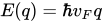
Here vF ~ 106 m/s (.003 c) is the Fermi velocity in graphene, which replaces the velocity of light in the Dirac theory; is the vector of the Pauli matrices, is the two-component wave function of the electrons, and E is their energy.
The equation describing the electrons' linear dispersion relation is:
where the wavevectorq is measured from the Brillouin zone vertex K, ,
and the zero of energy is set to coincide with the Dirac point. The
equation uses a pseudospin matrix formula that describes two sublattices
of the honeycomb lattice.
Single-atom wave propagation
Electron waves in graphene propagate within a single-atom layer,
making them sensitive to the proximity of other materials such as high-κ dielectrics, superconductors, and ferromagnets.
Ambipolar electron and hole transport
When
the gate voltage in a field effect graphene device is changed from
positive to negative, conduction switches from electrons to holes. The
charge carrier concentration is proportional to the applied voltage.
Graphene is neutral at zero gate voltage and resistivity is at its
maximum because of the dearth of charge carriers. The rapid fall of
resistivity when carriers are injected shows their high mobility, here
of the order of 5000 cm2/Vs. n-Si/SiO2 substrate, T=1K.
Graphene exhibits high electron mobility at room temperature, with values reported in excess of 15000 cm2⋅V−1⋅s−1. Hole and electron mobilities are nearly identical. The mobility is independent of temperature between 10 K and 100 K, showing minimal change even at room temperature (300 K), suggesting that the dominant scattering mechanism is defect scattering. Scattering by graphene's acoustic phonons intrinsically limits room temperature mobility in freestanding graphene to 200000 cm2⋅V−1⋅s−1 at a carrier density of 1012 cm−2.
The corresponding resistivity of graphene sheets is 10−8 Ω⋅m, lower than the resistivity of silver, which is the lowest known at room temperature. However, on SiO 2
substrates, electron scattering by optical phonons of the substrate has
a more significant effect than scattering by graphene's phonons,
limiting mobility to 40000 cm2⋅V−1⋅s−1.
Charge transport can be affected by the adsorption of contaminants such as water and oxygen
molecules, leading to non-repetitive and large hysteresis I-V
characteristics. Researchers need to conduct electrical measurements in a
vacuum. Coating the graphene surface with materials such as SiN, PMMA
or h-BN has been proposed for protection. In January 2015, the first
stable graphene device operation in the air over several weeks was
reported for graphene whose surface was protected by aluminum oxide.In 2015, lithium-coated graphene exhibited superconductivity, a first for graphene.
Electrical resistance in 40-nanometer-wide nanoribbons
of epitaxial graphene changes in discrete steps. The ribbons'
conductance exceeds predictions by a factor of 10. The ribbons can
function more like optical waveguides or quantum dots,
allowing electrons to flow smoothly along the ribbon edges. In copper,
resistance increases proportionally with length as electrons encounter
impurities.
Transport is dominated by two modes: one ballistic and
temperature-independent, and the other thermally activated. Ballistic
electrons resemble those in cylindrical carbon nanotubes. At room
temperature, resistance increases abruptly at a specific length—the
ballistic mode at 16 micrometers and the thermally activated mode at 160
nanometers (1% of the former length).
Graphene electrons can traverse micrometer distances without scattering, even at room temperature.
Electrical conductivity and charge transport
Despite zero carrier density near the Dirac points, graphene exhibits a minimum conductivity on the order of .
The origin of this minimum conductivity is still unclear. However,
rippling of the graphene sheet or ionized impurities in the SiO 2 substrate may lead to local puddles of carriers that allow conduction. Several theories suggest that the minimum conductivity should be ; however, most measurements are of the order of or greater and depend on impurity concentration.
Near zero carrier density, graphene exhibits positive
photoconductivity and negative photoconductivity at high carrier
density, governed by the interplay between photoinduced changes of both
the Drude weight and the carrier scattering rate.
Graphene doped with various gaseous species (both acceptors and
donors) can be returned to an undoped state by gentle heating in a
vacuum. Even for dopant concentrations in excess of 1012 cm−2, carrier mobility exhibits no observable change. Graphene doped with potassium in ultra-high vacuum at low temperature can reduce mobility 20-fold. The mobility reduction is reversible on heating the graphene to remove the potassium.
Due to graphene's two dimensions, charge fractionalization (where
the apparent charge of individual pseudoparticles in low-dimensional
systems is less than a single quantum) is thought to occur. It may therefore be a suitable material for constructing quantum computers using anyonic circuits.
Chiral half-integer quantum Hall effect
Landau levels in graphene appear at energies proportional to √N, in contrast to the standard sequence that goes as N + 1/2.
Quantum hall effect in graphene
The quantum Hall effect is a quantum mechanical version of the Hall effect, which is the production of transverse (perpendicular to the main current) conductivity in the presence of a magnetic field. The quantization of the Hall effect at integer multiples (the "Landau level") of the basic quantity e2/h (where e is the elementary electric charge and h is the Planck constant). It can usually be observed only in very clean silicon or gallium arsenide solids at temperatures around 3 K and very high magnetic fields.
Graphene shows the quantum Hall effect: the conductivity
quantization is unusual in that the sequence of steps is shifted by 1/2
with respect to the standard sequence and with an additional factor of
4. Graphene's Hall conductivity is , where N is the Landau level and the double valley and double spin degeneracies give the factor of 4. These anomalies are present not only at extremely low temperatures but also at room temperature, i.e. at roughly 20 °C (293 K).
Chiral electrons and anomalies
This behavior is a direct result of graphene's chiral, massless Dirac electrons. In a magnetic field, their spectrum has a Landau level with energy
precisely at the Dirac point. This level is a consequence of the Atiyah–Singer index theorem and is half-filled in neutral graphene, leading to the "+1/2" in the Hall conductivity. Bilayer graphene also shows the quantum Hall effect, but with only one of the two anomalies (i.e. ). In the second anomaly, the first plateau at N = 0 is absent, indicating that bilayer graphene stays metallic at the neutrality point.
Chiral half-integer quantum Hall effect in graphene. Plateaux in transverse conductivity appear at half-integer multiples of 4e2/h.
Unlike normal metals, graphene's longitudinal resistance shows maxima
rather than minima for integral values of the Landau filling factor in
measurements of the Shubnikov–de Haas oscillations, thus the term "integral quantum Hall effect". These oscillations show a phase shift of π, known as Berry's phase. Berry's phase arises due to chirality or dependence (locking) of the
pseudospin quantum number on the momentum of low-energy electrons near
the Dirac points. The temperature dependence of the oscillations reveals that the
carriers have a non-zero cyclotron mass, despite their zero effective
mass in the Dirac-fermion formalism.
Experimental observations
Graphene samples prepared on nickel films, and on both the silicon face and carbon face of silicon carbide, show the anomalous effect directly in electrical measurements. Graphitic layers on the carbon face of silicon carbide show a clear Dirac spectrum in angle-resolved photoemission experiments, and the effect is observed in cyclotron resonance and tunneling experiments.
"Massive" electrons
Graphene's unit cell has two identical carbon atoms and two
zero-energy states: one where the electron resides on atom A, and the
other on atom B. However, if the unit cell's two atoms are not
identical, the situation changes. Research shows that placing hexagonal boron nitride
(h-BN) in contact with graphene can alter the potential felt at atoms A
and B sufficiently for the electrons to develop a mass and an
accompanying band gap of about 30 meV.
The mass can be positive or negative. An arrangement that
slightly raises the energy of an electron on atom A relative to atom B
gives it a positive mass, while an arrangement that raises the energy of
atom B produces a negative electron mass. The two versions behave alike
and are indistinguishable via optical spectroscopy.
An electron traveling from a positive-mass region to a negative-mass
region must cross an intermediate region where its mass once again
becomes zero. This region is gapless and therefore metallic. Metallic
modes bounding semiconducting regions of opposite-sign mass is a
hallmark of a topological phase and displays much the same physics as topological insulators.
If the mass in graphene can be controlled, electrons can be
confined to massless regions by surrounding them with massive regions,
allowing the patterning of quantum dots,
wires, and other mesoscopic structures. It also produces
one-dimensional conductors along the boundary. These wires would be
protected against backscattering and could carry currents without dissipation.
Inertial effect and kinetic inductance
While a single electron exhibits zero effective mass in graphene, as
the entire set of electrons is moved with an electric field, the Fermi
disk shifts, with both the total kinetic energy and the magnitude of the total momentum being increased. Since is minimum when , to the first order, must hold. The proportional constant must be given by where
is the collective mass (inertia) of graphene electrons. Another view of
this is to associate the total kinetic energy with the current. Because
the total momentum is proportional to the current , must hold. The proportional constant must be given by , where is a quantity of inductance unit, but its origin is not the Faraday induction but the inertial effect. is the graphene kinetic inductance, and is given by per unit length for a graphene strip with a width (
is the Fermi energy). The kinetic inductance, representing the
collective inertial effect, is intimately linked to graphene plasmonics,
and was directly measured via microwave network analysis in 2014.
Interactions and phenomena
Strong magnetic fields
In magnetic fields above 10 tesla, additional plateaus of the Hall conductivity at σxy = νe2/h with ν = 0, ±1, ±4 are observed. A plateau at ν = 3 and the fractional quantum Hall effect at ν = 1/3 were also reported.
These observations with ν = 0, ±1, ±3, ±4
indicate that the four-fold degeneracy (two valley and two spin degrees
of freedom) of the Landau energy levels is partially or completely
lifted.
Casimir effect
The Casimir effect
is an interaction between disjoint neutral bodies provoked by the
fluctuations of the electromagnetic vacuum. Mathematically, it can be
explained by considering the normal modes of electromagnetic fields,
which explicitly depend on the boundary conditions on the interacting
bodies' surfaces. Due to graphene's strong interaction with the
electromagnetic field as a one-atom-thick material, the Casimir effect
has garnered significant interest.
Van der Waals force
The Van der Waals force (or dispersion force) is also unusual, obeying an inverse cubic asymptotic power law in contrast to the usual inverse quartic law.
Permittivity
Graphene's permittivity varies with frequency. Over a range from microwave to millimeter wave frequencies, it is approximately 3.3. This permittivity, combined with its ability to function as both a conductor and as an insulator, theoretically allows compact capacitors made of graphene to store large amounts of electrical energy.
Optical properties
Graphene exhibits unique optical properties, showing unexpectedly high opacity for an atomic monolayer in vacuum, absorbing approximately πα ≈ 2.3% of light from visible to infrared wavelengths, where α is the fine-structure constant. This is due to the unusual low-energy electronic structure of monolayer graphene, characterized by electron and hole conical bands meeting at the Dirac point, which is qualitatively different from more common quadratic massive bands. Based on the Slonczewski–Weiss–McClure (SWMcC) band model of graphite, calculations using Fresnel equations in the thin-film limit account for interatomic distance, hopping values, and frequency, thus assessing optical conductance.
Experimental verification, though confirmed, lacks the precision
required to improve upon existing techniques for determining the fine-structure constant.
Multi-parametric surface plasmon resonance
Multi-parametric surface plasmon resonance
has been utilized to characterize both the thickness and refractive
index of chemical-vapor-deposition (CVD)-grown graphene films. At a
wavelength of 670 nm (6.7×10⁻⁷m),
measured refractive index and extinction coefficient values are 3.135
and 0.897, respectively. Thickness determination yielded 3.7 Å across a
0.5mm area, consistent with the 3.35 Å reported for layer-to-layer
carbon atom distance of graphite crystals. This method is applicable for real-time label-free interactions of
graphene with organic and inorganic substances. The existence of
unidirectional surface plasmons in nonreciprocal graphene-based
gyrotropic interfaces has been theoretically demonstrated, offering
tunability from THz to near-infrared and visible frequencies by
controlling graphene's chemical potential. Particularly, the unidirectional frequency bandwidth can be 1– 2 orders
of magnitude larger than that achievable with metal under similar
magnetic field conditions, stemming from graphene's extremely small
effective electron mass.
Tunable band gap and optical response
Graphene's band gap can be tuned from 0 to 0.25 eV (about 5-micrometer wavelength) by applying a voltage to a dual-gate bilayer graphenefield-effect transistor (FET) at room temperature. The optical response of graphene nanoribbons is tunable into the terahertz regime by an applied magnetic fields. Graphene/graphene oxide systems exhibit electrochromic behavior, enabling tuning of both linear and ultrafast optical properties.
Graphene-based Bragg grating
A graphene-based Bragg grating (one-dimensional photonic crystal) has been fabricated, demonstrating its capability to excite surface electromagnetic waves in periodic structure using a 633 nm (6.33×10⁻⁷m) He–Ne laser as the light source.
Saturable absorption
Graphene exhibits unique saturable absorption, which saturates when
the input optical intensity exceeds a threshold value. This nonlinear
optical behavior, termed saturable absorption, occurs across the visible to near-infrared
spectrum, due to graphene's universal optical absorption and zero band
gap. This property has enabled full-band mode-locking in fiber lasers using graphene-based saturable absorbers, contributing significantly to ultrafast photonics. Additionally, the optical response of graphene/graphene oxide layers can be electrically tuned.
Saturable absorption in graphene could occur at the Microwave and
Terahertz band, owing to its wideband optical absorption property. The
microwave-saturable absorption in graphene demonstrates the possibility
of graphene microwaves and terahertz photonics devices, such as a
microwave-saturable absorber, modulator, polarizer, microwave signal
processing, and broadband wireless access networks.
Nonlinear Kerr effect
Under intense laser illumination, graphene exhibits a nonlinear phase shift due to the optical nonlinear Kerr effect. Graphene demonstrates a large nonlinear Kerr coefficient of 10−7 cm2⋅W−1, nearly nine orders of magnitude larger than that of bulk dielectrics, suggesting its potential as a powerful nonlinear Kerr medium capable of supporting various nonlinear effects, including solitons.
Excitonic properties
First-principle calculations incorporating quasiparticle corrections
and many-body effects have been employed to study the electronic and
optical properties of graphene-based materials. The approach was
described as three stages. With GW calculation, the properties of graphene-based materials were accurately investigated, including bulk graphene, nanoribbons, edge and surface functionalized armchair ribbons, hydrogen saturated armchair ribbons, Josephson effect in graphene SNS junctions with single localized defect and armchair ribbon scaling properties.
Spin transport
Graphene is considered an ideal material for spintronics due to its minimal spin–orbit interaction, the near absence of nuclear magnetic moments in carbon, and weak hyperfine interaction. Electrical injection and detection of spin current have been demonstrated up to room temperature, with spin coherence length exceeding 1 micrometer observed at this temperature. Control of spin current polarity via electrical gating has been achieved at low temperatures.
Magnetic properties
Strong magnetic fields
Graphene's quantum Hall effect in magnetic fields above approximately 10 tesla reveals additional interesting features. Additional plateaus in Hall conductivity at with have been observed, along with plateau at and a fractional quantum Hall effect at .
These observations with
indicate that the four-fold degeneracy (two valley and two spin degrees
of freedom) of the Landau energy levels is partially or completely
lifted. One hypothesis proposes that magnetic catalysis of symmetry breaking is responsible for this degeneracy lift.
Spintronic properties
Graphene exhibits spintronic and magnetic properties concurrently. Low-defect graphene Nano-meshes, fabricated using a non-lithographic
approach, exhibit significant ferromagnetism even at room temperature.
Additionally, a spin pumping effect has been observed with fields
applied in parallel to the planes of few-layer ferromagnetic
nano-meshes, while a magnetoresistance
hysteresis loop is evident under perpendicular fields. Charge-neutral
graphene has demonstrated magnetoresistance exceeding 100% in magnetic
fields generated by standard permanent magnets (approximately 0.1
tesla), marking a record magneto resistivity at room temperature among known materials.
Magnetic substrates
In 2010, researchers magnetized graphene by producing it via CVD on the Ni(111) substrate and then in 2014 by placing it on an atomically smooth layer of magnetic yttrium iron garnet, maintaining graphene's electronic properties unaffected. Previous methods involved doping graphene with other substances. The dopant's presence negatively affected its electronic properties.
Mechanical properties
As noted above, the (two-dimensional) density of graphene is 0.762 mg per square meter.
Graphene is the strongest material ever tested, with an intrinsic tensile strength of 130 GPa (19,000,000 psi) (with representative engineering tensile strength ~50-60 GPa for stretching large-area freestanding graphene) and a Young's modulus (stiffness) close to 1 TPa (150,000,000 psi). The Nobel announcement illustrated this by saying that a 1 square meter graphene hammock would support a 4 kg cat but would weigh only as much as one of the cat's whiskers, at 0.77 mg (about 0.001% of the weight of 1 m2 of paper).
Large-angle bending of graphene monolayers with minimal strain
demonstrates its mechanical robustness. Even under extreme deformation,
monolayer graphene maintains excellent carrier mobility.
The spring constant of suspended graphene sheets has been measured using an atomic force microscope (AFM). Graphene sheets were suspended over SiO 2
cavities where an AFM tip was used to apply stress to the sheet to test
its mechanical properties. Its spring constant was in the range 1–5
N/m and the stiffness was 0.5 TPa, which differs from that of bulk graphite. These intrinsic properties could lead to applications such as NEMS as pressure sensors and resonators. Due to its large surface energy and out of plane ductility, flat
graphene sheets are unstable with respect to scrolling, i.e. bending
into a cylindrical shape, which is its lower-energy state.
In two-dimensional structures like graphene, thermal and quantum
fluctuations cause relative displacement, with fluctuations growing
logarithmically with structure size as per the Mermin–Wagner theorem.
This shows that the amplitude of long-wavelength fluctuations grows
logarithmically with the scale of a 2D structure, and would therefore be
unbounded in structures of infinite size. Local deformation and elastic
strain are negligibly affected by this long-range divergence in
relative displacement. It is believed that a sufficiently large 2D
structure, in the absence of applied lateral tension, will bend and
crumple to form a fluctuating 3D structure. Researchers have observed
ripples in suspended layers of graphene, and it has been proposed that the ripples are caused by thermal
fluctuations in the material. As a consequence of these dynamical
deformations, it is debatable whether graphene is truly a 2D structure. These ripples, when amplified by vacancy defects, induce a negative Poisson's ratio into graphene, resulting in the thinnest auxetic material known so far.
Graphene-nickel (Ni) composites, created through plating
processes, exhibit enhanced mechanical properties due to strong
Ni-graphene interactions inhibiting dislocation sliding in the Ni
matrix.
Fracture toughness
In 2014, researchers from Rice University and the Georgia Institute of Technology have indicated that despite its strength, graphene is also relatively brittle, with a fracture toughness of about 4 MPa√m. This indicates that imperfect graphene is likely to crack in a brittle manner like ceramic materials, as opposed to many metallic materials
which tend to have fracture toughness in the range of 15–50 MPa√m.
Later in 2014, the Rice team announced that graphene showed a greater
ability to distribute force from an impact than any known material, ten
times that of steel per unit weight. The force was transmitted at 22.2 kilometres per second (13.8 mi/s).
Polycrystalline graphene
Various methods – most notably, chemical vapor deposition
(CVD), as discussed in the section below – have been developed to
produce large-scale graphene needed for device applications. Such
methods often synthesize polycrystalline graphene. The mechanical properties of polycrystalline graphene are affected by the nature of the defects, such as grain-boundaries (GB) and vacancies, present in the system and the average grain-size.
Graphene grain boundaries typically contain heptagon-pentagon
pairs. The arrangement of such defects depends on whether the GB is in a
zig-zag or armchair direction. It further depends on the tilt-angle of
the GB. In 2010, researchers from Brown University
computationally predicted that as the tilt-angle increases, the grain
boundary strength also increases. They showed that the weakest link in
the grain boundary is at the critical bonds of the heptagon rings. As
the grain boundary angle increases, the strain in these heptagon rings
decreases, causing the grain boundary to be stronger than lower-angle
GBs. They proposed that, in fact, for sufficiently large angle GB, the
strength of the GB is similar to pristine graphene. In 2012, it was further shown that the strength can increase or
decrease, depending on the detailed arrangements of the defects. These predictions have since been supported by experimental evidence.
In a 2013 study led by James Hone's group, researchers probed the
elastic stiffness and strength of CVD-grown graphene by combining nano-indentation and high-resolution TEM. They found that the elastic stiffness is identical and strength is only slightly lower than those in pristine graphene. In the same year, researchers from University of California, Berkeley and University of California, Los Angeles probed bi-crystalline graphene with TEM and AFM. They found that the strength of grain boundaries indeed tends to increase with the tilt angle.
While the presence of vacancies is not only prevalent in
polycrystalline graphene, vacancies can have significant effects on the
strength of graphene. The consensus is that the strength decreases along
with increasing densities of vacancies. Various studies have shown that
for graphene with a sufficiently low density of vacancies, the strength
does not vary significantly from that of pristine graphene. On the
other hand, a high density of vacancies can severely reduce the strength
of graphene.
Compared to the fairly well-understood nature of the effect that
grain boundary and vacancies have on the mechanical properties of
graphene, there is no clear consensus on the general effect that the
average grain size has on the strength of polycrystalline graphene. In fact, three notable theoretical or computational studies on this topic have led to three different conclusions.First, in 2012, Kolakowski and Myer studied the mechanical properties
of polycrystalline graphene with "realistic atomistic model", using molecular-dynamics (MD) simulation. To emulate the growth mechanism of CVD, they first randomly selected nucleation
sites that are at least 5A (arbitrarily chosen) apart from other sites.
Polycrystalline graphene was generated from these nucleation sites and
was subsequently annealed at 3000K, and then quenched. Based on this
model, they found that cracks are initiated at grain-boundary junctions,
but the grain size does not significantly affect the strength. Second, in 2013, Z. Song et al. used MD simulations to study the
mechanical properties of polycrystalline graphene with uniform-sized
hexagon-shaped grains. The hexagon grains were oriented in various
lattice directions and the GBs consisted of only heptagon, pentagon, and
hexagonal carbon rings. The motivation behind such a model was that
similar systems had been experimentally observed in graphene flakes
grown on the surface of liquid copper. While they also noted that crack
is typically initiated at the triple junctions, they found that as the
grain size decreases, the yield strength of graphene increases. Based on
this finding, they proposed that polycrystalline follows pseudo Hall-Petch relationship. Third, in 2013, Z. D. Sha et al. studied the effect of grain size on
the properties of polycrystalline graphene, by modeling the grain
patches using Voronoi construction.
The GBs in this model consisted of heptagons, pentagons, and hexagons,
as well as squares, octagons, and vacancies. Through MD simulation,
contrary to the aforementioned study, they found an inverse Hall-Petch
relationship, where the strength of graphene increases as the grain size
increases. Experimental observations and other theoretical predictions also gave differing conclusions, similar to the three given above. Such discrepancies show the complexity of the effects that grain size,
arrangements of defects, and the nature of defects have on the
mechanical properties of polycrystalline graphene.
Other properties
Thermal conductivity
Thermal transport in graphene is a burgeoning area of research,
particularly for its potential applications in thermal management. Most
experimental measurements have posted large uncertainties in the results
of thermal conductivity due to the limitations of the instruments used.
Following predictions for graphene and related carbon nanotubes, early measurements of the thermal conductivity of suspended graphene reported an exceptionally large thermal conductivity up to 5300 W⋅m−1⋅K−1, compared with the thermal conductivity of pyrolytic graphite of approximately 2000 W⋅m−1⋅K−1 at room temperature. However, later studies primarily on more scalable but more defected
graphene derived by Chemical Vapor Deposition have been unable to
reproduce such high thermal conductivity measurements, producing a wide
range of thermal conductivities between 1500 – 2500 W⋅m−1⋅K−1 for suspended single-layer graphene. The large range in the reported thermal conductivity can be caused by
large measurement uncertainties as well as variations in the graphene
quality and processing conditions. In addition, it is known that when
single-layer graphene is supported on an amorphous material, the thermal
conductivity is reduced to about 500 – 600 W⋅m−1⋅K−1 at room temperature as a result of scattering of graphene lattice waves by the substrate, and can be even lower for few-layer graphene encased in amorphous oxide. Likewise, polymeric residue can contribute to a similar decrease in the
thermal conductivity of suspended graphene to approximately 500 – 600 W⋅m−1⋅K−1 for bilayer graphene.
Isotopic composition, specifically the ratio of 12C to 13C, significantly affects graphene's thermal conductivity. Isotopically pure 12C graphene exhibits higher thermal conductivity than either a 50:50 isotope ratio or the naturally occurring 99:1 ratio. It can be shown by using the Wiedemann–Franz law, that the thermal conduction is phonon-dominated. However, for a gated graphene strip, an applied gate bias causing a Fermi energy shift much larger than kBT can cause the electronic contribution to increase and dominate over the phonon contribution at low temperatures. The ballistic thermal conductance of graphene is isotropic.
Graphite, a 3D counterpart to graphene, exhibits a basal planethermal conductivity exceeding 1000 W⋅m−1⋅K−1 (similar to diamond),
In graphite, the c-axis (out of plane) thermal conductivity is over a
factor of ~100 smaller due to the weak binding forces between basal
planes as well as the larger lattice spacing. In addition, the ballistic thermal conductance of graphene is shown to
give the lower limit of the ballistic thermal conductance, per unit
circumference, length of carbon nanotubes.
Graphene's thermal conductivity is influenced by its three acoustic phonon modes: two linear dispersion relation
dispersion relation in-plane modes (LA, TA) and one quadratic
dispersion relation out-of-plane mode (ZA). At low temperatures, the
dominance of the T1.5 thermal conductivity contribution of the out-of-plane mode supersedes the T2 dependence of the linear modes. Some graphene phonon bands exhibit negative Grüneisen parameters, resulting in negative thermal expansion coefficient
at low temperatures. The lowest negative Grüneisen parameters
correspond to the lowest transverse acoustic ZA modes, whose frequencies
increase with in-plane lattice parameter, akin to a stretched string with higher frequency vibrations.
Chemical properties
Graphene has a theoretical specific surface area (SSA) of 2630 m2/g. This is much larger than that reported to date for carbon black (typically smaller than 900 m2/g) or for carbon nanotubes (CNTs), from ≈100 to 1000 m2/g and is similar to activated carbon. Graphene is the only form of carbon (or solid material) in which every
atom is available for chemical reaction from two sides (due to the 2D
structure). Atoms at the edges of a graphene sheet have special chemical
reactivity. Graphene has the highest ratio of edge atoms of any allotrope. Defects within a sheet increase its chemical reactivity. The onset temperature of reaction between the basal plane of single-layer graphene and oxygen gas is below 260 °C (530 K). Graphene burns at very low temperatures (e.g., 350 °C (620 K)). Graphene is commonly modified with oxygen- and nitrogen-containing functional groups and analyzed by infrared spectroscopy and X-ray photoelectron spectroscopy. However, the determination of structures of graphene with oxygen- and nitrogen- functional groups require the structures to be well controlled.
In 2013, Stanford University physicists reported that single-layer graphene is a hundred times more chemically reactive than thicker multilayer sheets.
Graphene can self-repair holes in its sheets, when exposed to molecules containing carbon, such as hydrocarbons. Bombarded with pure carbon atoms, the atoms perfectly align into hexagons, filling the holes.
Biological properties
Despite the promising results in different cell studies and proof of
concept studies, there is still incomplete understanding of the full
biocompatibility of graphene-based materials. Different cell lines react differently when exposed to graphene, and it
has been shown that the lateral size of the graphene flakes, the form
and surface chemistry can elicit different biological responses on the
same cell line.
There are indications that graphene has promise as a useful
material for interacting with neural cells; studies on cultured neural
cells show limited success.
Graphene also has some utility in osteogenesis. Researchers at the Graphene Research Centre at the National University of Singapore (NUS) discovered in 2011 the ability of graphene to accelerate the osteogenic differentiation of human mesenchymal stem cells without the use of biochemical inducers.
Graphene can be used in biosensors; in 2015, researchers
demonstrated that a graphene-based sensor can be used to detect a cancer
risk biomarker. In particular, by using epitaxial graphene on silicon
carbide, they were repeatedly able to detect 8-hydroxydeoxyguanosine
(8-OHdG), a DNA damage biomarker.
Support substrate
The electronic property of graphene can be significantly influenced
by the supporting substrate. Studies of graphene monolayers on clean and
hydrogen(H)-passivated silicon (100) (Si(100)/H) surfaces have been
performed. The Si(100)/H surface does not perturb the electronic properties of
graphene, whereas the interaction between the clean Si(100) surface and
graphene changes the electronic states of graphene significantly. This
effect results from the covalent bonding between C and surface Si atoms,
modifying the π-orbital network of the graphene layer. The local
density of states shows that the bonded C and Si surface states are
highly disturbed near the Fermi energy.
Graphene layers and structural variants
Monolayer sheets
In 2013 a group of Polish scientists presented a production unit that allows the manufacture of continuous monolayer sheets. The process is based on graphene growth on a liquid metal matrix. The product of this process was called High Strength Metallurgical Graphene.
In a new study published in Nature, the researchers have used a
single-layer graphene electrode and a novel surface-sensitive non-linear
spectroscopy technique to investigate the top-most water layer at the
electrochemically charged surface. They found that the interfacial water
response to the applied electric field is asymmetric concerning the
nature of the applied field.
Bilayer graphene displays the anomalous quantum Hall effect, a tunable band gap and potential for excitonic condensation –making it a promising candidate for optoelectronic and nanoelectronic applications. Bilayer graphene typically can be found either in twisted
configurations where the two layers are rotated relative to each other
or graphitic Bernal stacked configurations where half the atoms in one
layer lie atop half the atoms in the other. Stacking order and orientation govern the optical and electronic properties of bilayer graphene.
One way to synthesize bilayer graphene is via chemical vapor deposition, which can produce large bilayer regions that almost exclusively conform to a Bernal stack geometry.
It has been shown that the two graphene layers can withstand important strain or doping mismatch[206] which ultimately should lead to their exfoliation.
Turbostratic
Turbostratic graphene exhibits weak interlayer coupling, and the
spacing is increased with respect to Bernal-stacked multilayer graphene.
Rotational misalignment preserves the 2D electronic structure, as
confirmed by Raman spectroscopy. The D peak is very weak, whereas the 2D and G peaks remain prominent.
A rather peculiar feature is that the I2D/IG ratio can exceed 10. However, most importantly, the M peak, which originates from AB stacking, is absent, whereas the TS1 and TS2 modes are visible in the Raman spectrum. The material is formed through conversion of non-graphenic carbon into
graphenic carbon without providing sufficient energy to allow for the
reorganization through annealing of adjacent graphene layers into
crystalline graphitic structures.
Graphene superlattices
Periodically stacked graphene and its insulating isomorph provide a
fascinating structural element in implementing highly functional
superlattices at the atomic scale, which offers possibilities for
designing nanoelectronic and photonic devices. Various types of
superlattices can be obtained by stacking graphene and its related
forms. The energy band in layer-stacked superlattices is found to be more
sensitive to the barrier width than that in conventional III–V
semiconductor superlattices. When adding more than one atomic layer to
the barrier in each period, the coupling of electronic wavefunctions in
neighboring potential wells can be significantly reduced, which leads to
the degeneration of continuous subbands into quantized energy levels.
When varying the well width, the energy levels in the potential wells
along the L-M direction behave distinctly from those along the K-H
direction.
A superlattice corresponds to a periodic or quasi-periodic
arrangement of different materials and can be described by a
superlattice period which confers a new translational symmetry to the
system, impacting their phonon dispersions and subsequently their
thermal transport properties. Recently, uniform monolayer graphene-hBN
structures have been successfully synthesized via lithography patterning
coupled with chemical vapor deposition (CVD). Furthermore, superlattices of graphene-HBN are ideal model systems for
the realization and understanding of coherent (wave-like) and incoherent
(particle-like) phonon thermal transport.
Nanostructured graphene forms
Graphene nanoribbons
Names for graphene edge topologiesGNR
Electronic band structure of graphene strips of varying widths in
zig-zag orientation. Tight-binding calculations show that they are all
metallic.GNR
Electronic band structure of graphene strips of various widths in the
armchair orientation. Tight-binding calculations show that they are
semiconducting or metallic depending on width (chirality).
Graphene nanoribbons
("nanostripes" in the "zig-zag"/"zigzag" orientation), at low
temperatures, show spin-polarized metallic edge currents, which also
suggests applications in the new field of spintronics. (In the "armchair" orientation, the edges behave like semiconductors.)
Graphene quantum dots
A graphene quantum dot
(GQD) is a graphene fragment with a size lesser than 100 nm. The
properties of GQDs are different from bulk graphene due to the quantum
confinement effects which only become apparent when the size is smaller
than 100 nm.
Graphene oxide is usually produced through chemical exfoliation of graphite. A particularly popular technique is the improved Hummers' method. Using paper-making techniques on dispersed, oxidized and chemically
processed graphite in water, the monolayer flakes form a single sheet
and create strong bonds. These sheets, called graphene oxide paper, have a measured tensile modulus of 32 GPa. The chemical property of graphite oxide is related to the functional groups attached to graphene sheets. These can change the polymerization pathway and similar chemical processes. Graphene oxide flakes in polymers display enhanced photo-conducting properties. Graphene is normally hydrophobic
and impermeable to all gases and liquids (vacuum-tight). However, when
formed into a graphene oxide-based capillary membrane, both liquid water
and water vapor flow through as quickly as if the membrane were not
present.
In 2022, researchers evaluated the biological effects of low doses on graphene oxide on larvae and imago of Drosophila melanogaster.
Results show that oral administration of graphene oxide at
concentrations of 0.02-1% has a beneficial effect on the developmental
rate and hatching ability of larvae. Long-term administration of a low
dose of graphene oxide extends the lifespan of Drosophila and
significantly enhances resistance to environmental stresses. These
suggest that graphene oxide affects carbohydrate and lipid metabolism in
adult Drosophila. These findings might provide a useful reference to
assess the biological effects of graphene oxide, which could play an
important role in a variety of graphene-based biomedical applications.
Chemical modification
Photograph
of single-layer graphene oxide undergoing high temperature chemical
treatment, resulting in sheet folding and loss of carboxylic
functionality, or through room temperature carbodiimide treatment,
collapsing into star-like clusters.
Soluble fragments of graphene can be prepared in the laboratory through chemical modification of graphite. First, microcrystalline graphite is treated with an acidic mixture of sulfuric acid and nitric acid. A series of oxidation and exfoliation steps produce small graphene plates with carboxyl groups at their edges. These are converted to acid chloride groups by treatment with thionyl chloride; next, they are converted to the corresponding graphene amide via treatment with octadecyl amine. The resulting material (circular graphene layers of 5.3 Å or 5.3×10⁻¹⁰m thickness) is soluble in tetrahydrofuran, tetrachloromethane and dichloroethane.
Refluxing single-layer graphene oxide (SLGO) in solvents
leads to size reduction and folding of individual sheets as well as
loss of carboxylic group functionality, by up to 20%, indicating thermal
instabilities of SLGO sheets dependent on their preparation
methodology. When using thionyl chloride, acyl chloride groups result, which can then form aliphatic and aromatic amides with a reactivity conversion of around 70–80%.
Boehm
titration results for various chemical reactions of single-layer
graphene oxide, which reveal reactivity of the carboxylic groups and the
resultant stability of the SLGO sheets after treatment.
Hydrazine reflux is commonly used for reducing SLGO to SLG(R), but titrations
show that only around 20–30% of the carboxylic groups are lost, leaving
a significant number available for chemical attachment. Analysis of
SLG(R) generated by this route reveals that the system is unstable and
using a room temperature stirring with hydrochloric acid (< 1.0 M) leads to around 60% loss of COOH functionality. Room temperature treatment of SLGO with carbodiimides
leads to the collapse of the individual sheets into star-like clusters
that exhibited poor subsequent reactivity with amines (c. 3–5%
conversion of the intermediate to the final amide). It is apparent that conventional chemical treatment of carboxylic
groups on SLGO generates morphological changes of individual sheets that
leads to a reduction in chemical reactivity, which may potentially
limit their use in composite synthesis. Therefore, chemical reaction
types have been explored. SLGO has also been grafted with polyallylamine, cross-linked through epoxy
groups. When filtered into graphene oxide paper, these composites
exhibit increased stiffness and strength relative to unmodified graphene
oxide paper.
Full hydrogenation from both sides of the graphene sheet results in Graphane, but partial hydrogenation leads to hydrogenated graphene. Similarly, both-side fluorination of graphene (or chemical and mechanical exfoliation of graphite fluoride) leads to fluorographene (graphene fluoride), while partial fluorination (generally halogenation) provides fluorinated (halogenated) graphene.
Graphene ligand/complex
Graphene can be a ligand to coordinate metals and metal ions by introducing functional groups. Structures of graphene ligands are similar to e.g. metal-porphyrin complex, metal-phthalocyanine complex, and metal-phenanthroline complex. Copper and nickel ions can be coordinated with graphene ligands.
Advanced graphene structures
Graphene fiber
In 2011, researchers reported a novel yet simple approach to
fabricating graphene fibers from chemical vapor deposition-grown
graphene films. The method was scalable and controllable, delivering tunable morphology
and pore structure by controlling the evaporation of solvents with
suitable surface tension. Flexible all-solid-state supercapacitors based on these graphene fibers were demonstrated in 2013.
In 2015, intercalating small graphene fragments into the gaps
formed by larger, coiled graphene sheets, after annealing provided
pathways for conduction, while the fragments helped reinforce the
fibers. The resulting fibers offered better thermal and electrical conductivity
and mechanical strength. Thermal conductivity reached 1,290 W/m/K (1,290 watts per metre per kelvin), while tensile strength reached 1,080 MPa (157,000 psi).
In 2016, kilometer-scale continuous graphene fibers with
outstanding mechanical properties and excellent electrical conductivity
were produced by high-throughput wet-spinning of graphene oxide liquid
crystals followed by graphitization through a full-scale synergetic defect-engineering strategy. The graphene fibers with superior performances promise wide
applications in functional textiles, lightweight motors, microelectronic
devices, etc.
Tsinghua University
in Beijing, led by Wei Fei of the Department of Chemical Engineering,
claims to be able to create a carbon nanotube fiber that has a tensile
strength of 80 GPa (12,000,000 psi).
3D graphene
In 2013, a three-dimensional honeycomb of hexagonally arranged carbon was termed 3D graphene, and self-supporting 3D graphene was also produced. 3D structures of graphene can be fabricated by using either CVD or
solution-based methods. A 2016 review by Khurram and Xu et al. provided a
summary of then-state-of-the-art techniques for fabrication of the 3D
structure of graphene and other related two-dimensional materials. In 2013, researchers at Stony Brook University
reported a novel radical-initiated crosslinking method to fabricate
porous 3D free-standing architectures of graphene and carbon nanotubes
using nanomaterials as building blocks without any polymer matrix as
support. These 3D graphenes (all-carbon) scaffolds/foams have applications in
several fields such as energy storage, filtration, thermal management,
and biomedical devices and implants.
Box-shaped graphene (BSG) nanostructure appearing after mechanical cleavage of pyrolytic graphite was reported in 2016. The discovered nanostructure is a multilayer system of parallel hollow
nanochannels located along the surface and having quadrangular
cross-section. The thickness of the channel walls is approximately equal
to 1 nm. Potential fields of BSG application include ultra-sensitive detectors, high-performance catalytic cells, nanochannels for DNAsequencing and manipulation, high-performance heat sinking surfaces, rechargeable batteries of enhanced performance, nanomechanical resonators, electron multiplication channels in emission Nano-electronic devices, high-capacity sorbents for safe hydrogen storage.
Three dimensional bilayer graphene has also been reported.
Pillared graphene is a hybrid carbon structure, consisting of an
oriented array of carbon nanotubes connected at each end to a sheet of
graphene. It was first described theoretically by George Froudakis and
colleagues at the University of Crete
in Greece in 2008. Pillared graphene has not yet been synthesized in
the laboratory, but it has been suggested that it may have useful
electronic properties, or as a hydrogen storage material.
Reinforced graphene
Graphene reinforced with embedded carbon nanotube reinforcing bars ("rebar") is easier to manipulate, while improving the electrical and mechanical qualities of both materials.
Functionalized single- or multi-walled carbon nanotubes are
spin-coated on copper foils and then heated and cooled, using the
nanotubes themselves as the carbon source. Under heating, the functional
carbon groups decompose into graphene, while the nanotubes partially split and form in-plane covalent bonds with the graphene, adding strength. π–π stacking
domains add more strength. The nanotubes can overlap, making the
material a better conductor than standard CVD-grown graphene. The
nanotubes effectively bridge the grain boundaries
found in conventional graphene. The technique eliminates the traces of
substrate on which later-separated sheets were deposited using epitaxy.
Stacks of a few layers have been proposed as a cost-effective and physically flexible replacement for indium tin oxide (ITO) used in displays and photovoltaic cells.
Molded graphene
In 2015, researchers from the University of Illinois at Urbana–Champaign (UIUC) developed a new approach for forming 3D shapes from flat, 2D sheets of graphene. A film of graphene that had been soaked in solvent to make it swell and
become malleable was overlaid on an underlying substrate "former". The
solvent evaporated over time, leaving behind a layer of graphene that
had taken on the shape of the underlying structure. In this way, they
were able to produce a range of relatively intricate micro-structured
shapes. Features vary from 3.5 to 50 μm. Pure graphene and gold-decorated
graphene were each successfully integrated with the substrate.
Specialized graphene configurations
Graphene aerogel
An aerogel
made of graphene layers separated by carbon nanotubes was measured at
0.16 milligrams per cubic centimeter. A solution of graphene and carbon
nanotubes in a mold is freeze-dried to dehydrate the solution, leaving
the aerogel. The material has superior elasticity and absorption. It can
recover completely after more than 90% compression, and absorb up to
900 times its weight in oil, at a rate of 68.8 grams per second.
Graphene nanocoil
In 2015, a coiled form of graphene was discovered in graphitic carbon
(coal). The spiraling effect is produced by defects in the material's
hexagonal grid that causes it to spiral along its edge, mimicking a Riemann surface,
with the graphene surface approximately perpendicular to the axis. When
voltage is applied to such a coil, current flows around the spiral,
producing a magnetic field. The phenomenon applies to spirals with
either zigzag or armchair patterns, although with different current
distributions. Computer simulations indicated that a conventional spiral
inductor of 205 microns in diameter could be matched by a nanocoil just
70 nanometers wide, with a field strength reaching as much as 1 tesla.
The nano-solenoids analyzed through computer models at Rice University
should be capable of producing powerful magnetic fields of about
1 tesla, about the same as the coils found in typical loudspeakers,
according to Yakobson and his team – and about the same field strength
as some MRI machines. They found the magnetic field would be strongest
in the hollow, nanometer-wide cavity at the spiral's center.
A solenoid
made with such a coil behaves as a quantum conductor whose current
distribution between the core and exterior varies with applied voltage,
resulting in nonlinear inductance.
Crumpled graphene
In 2016, Brown University
introduced a method for "crumpling" graphene, adding wrinkles to the
material on a nanoscale. This was achieved by depositing layers of
graphene oxide onto a shrink film, then shrunken, with the film
dissolved before being shrunken again on another sheet of film. The
crumpled graphene became superhydrophobic, and when used as a battery electrode, the material was shown to have as much as a 400% increase in electrochemicalcurrent density.
A rapidly increasing list of production techniques have been developed to enable graphene's use in commercial applications.
Isolated 2D crystals cannot be grown via chemical synthesis beyond small sizes even in principle, because the rapid growth of phonon
density with increasing lateral size forces 2D crystallites to bend
into the third dimension. In all cases, graphene must bond to a
substrate to retain its two-dimensional shape.
Bottom-up and top-down methods
Small graphene structures, such as graphene quantum dots and
nanoribbons, can be produced by "bottom-up" methods that assemble the
lattice from organic molecule monomers (e. g. citric acid, glucose).
"Top-down" methods, on the other hand, cut bulk graphite and graphene
materials with strong chemicals (e. g. mixed acids).
Micro-mechanical cleavage
The most famous, clean and rather straightforward method of isolating
graphene sheets, called micro-mechanical cleavage or more colloquially
called the scotch tape method, was introduced by Novoselov et al. in
2004, which uses adhesive tape to mechanically cleave high-quality graphitecrystals into successively thinner platelets. Other methods do exist like exfoliation.
Exfoliation techniques
Mechanical exfoliation
Geim and Novoselov initially used adhesive tape
to pull graphene sheets away from graphite. Achieving single layers
typically requires multiple exfoliation steps. After exfoliation, the
flakes are deposited on a silicon wafer. Crystallites larger than 1 mm
and visible to the naked eye can be obtained.
As of 2014, exfoliation produced graphene with the lowest number
of defects and highest electron mobility. One specific exfoliation
technique involved using a sharp single-crystal diamond wedge
to penetrate the graphite source and precisely cleave individual
layers. That same year, researchers also developed liquid-phase methods,
creating defect-free, unoxidized graphene-containing liquids from
graphite using mixers that generate extremely high local shear rates
greater than 10×104.
A 2014 study published in Nature Materials demonstrated that scalable production of defect-free graphene is possible through shear exfoliation using a high-shear mixer. This technique can produce large quantities of few-layer graphene in solution while preserving structural integrity. As turbulence is not necessary for mechanical exfoliation, resonant acoustic mixing or low-speed ball milling can also be effective in the production of high-yield and water-soluble graphene.
Liquid phase exfoliation
Liquid phase exfoliation (LPE) is a relatively simple method that involves dispersing graphite in a liquid medium to produce graphene by sonication or high shear mixing, followed by centrifugation. Restacking is an issue with this technique unless solvents with appropriate surface energy are used (e.g. NMP). Adding a surfactant
to a solvent prior to sonication prevents restacking by adsorbing to
the graphene's surface. This produces a higher graphene concentration,
but removing the surfactant requires chemical treatments.
LPE results in nanosheets with a broad size distribution and
thicknesses roughly in the range of 1-10 monolayers. However, liquid
cascade centrifugation can be used to size-select the suspensions and
achieve monolayer enrichment.
Sonicating graphite at the interface of two immiscible liquids, most notably heptane
and water, produced macro-scale graphene films. The graphene sheets are
adsorbed to the high-energy interface between the materials and are
kept from restacking. The sheets are up to about 95% transparent and
conductive.
With definite cleavage parameters, the box-shaped graphene (BSG) nanostructure can be prepared on graphitecrystal. A major advantage of LPE is that it can be used to exfoliate many inorganic 2D materials beyond graphene, e.g. BN, MoS2, WS2.
Exfoliation with supercritical carbon dioxide
Liquid-phase exfoliation can also be done by a less-known process of intercalating supercritical carbon dioxide
(scCO2) into the interstitial spaces in the graphite lattice, followed
by rapid depressurization. The scCO2 intercalates easily inside the
graphite lattice at a pressure of roughly 100 atm. Carbon dioxide turns gaseous as soon as the vessel is depressurized and makes the graphite explode into few-layered graphene.
This method may have multiple advantages: being non-toxic, the
graphite does not have to be chemically treated in any way before the
process, and the whole process can be completed in a single step as
opposed to other exfoliation methods.
Splitting monolayer carbon allotropes
Graphene can be created by opening carbon nanotubes by cutting or etching. In one such method, multi-walled carbon nanotubes were cut open in solution by action of potassium permanganate and sulfuric acid. In 2014, carbon nanotube-reinforced graphene was made via spin coating and annealing functionalized carbon nanotubes.
Another approach sprays buckyballs
at supersonic speeds onto a substrate. The balls cracked open upon
impact, and the resulting unzipped cages then bond together to form a
graphene film.
Chemical synthesis
Graphite oxide reduction
P. Boehm reported producing monolayer flakes of reduced graphene oxide in 1962. Rapid heating of graphite oxide and exfoliation yields highly dispersed carbon powder with a few percent of graphene flakes.
Another method is the reduction of graphite oxide monolayer films, e.g. by hydrazine with annealing in argon/hydrogen with an almost intact carbon framework that allows efficient removal of functional groups. Measured charge carrier mobility exceeded 1,000 cm/Vs (10 m/Vs).
Burning a graphite oxide coated DVD
produced a conductive graphene film (1,738 siemens per meter) and
specific surface area (1,520 square meters per gram) that was highly
resistant and malleable.
A dispersed reduced graphene oxide suspension was synthesized in
water by a hydrothermal dehydration method without using any surfactant.
The approach is facile, industrially applicable, environmentally
friendly, and cost-effective. Viscosity measurements confirmed that the
graphene colloidal suspension (graphene nanofluid) exhibits Newtonian
behavior, with the viscosity showing a close resemblance to that of
water.
Molten salts
Graphite particles can be corroded in molten salts to form a variety of carbon nanostructures including graphene.[277]
Hydrogen cations, dissolved in molten lithium chloride, can be
discharged on cathodically polarized graphite rods, which then
intercalate, peeling graphene sheets. The graphene nanosheets produced
displayed a single-crystalline structure with a lateral size of several
hundred nanometers and a high degree of crystallinity and thermal
stability.
Electrochemical synthesis
Electrochemical synthesis can exfoliate graphene. Varying a pulsed
voltage controls thickness, flake area, and number of defects and
affects its properties. The process begins by bathing the graphite in a
solvent for intercalation. The process can be tracked by monitoring the
solution's transparency with an LED and photodiode.
Hydrothermal self-assembly
Graphene has been prepared by using a sugar like glucose, fructose,
etc. This substrate-free "bottom-up" synthesis is safer, simpler and
more environmentally friendly than exfoliation. The method can control
the thickness, ranging from monolayer to multilayer, which is known as
the "Tang-Lau Method".
Sodium ethoxide pyrolysis
Gram-quantities were produced by the reaction of ethanol with sodium metal, followed by pyrolysis and washing with water.
Microwave-assisted oxidation
In 2012, microwave energy was reported to directly synthesize graphene in one step. This approach avoids use of potassium permanganate in the reaction
mixture. It was also reported that by microwave radiation assistance,
graphene oxide with or without holes can be synthesized by controlling
microwave time. Microwave heating can dramatically shorten the reaction time from days to seconds.
Graphene can also be made by microwave assisted hydrothermal pyrolysis.
Thermal decomposition of silicon carbide
Heating silicon carbide (SiC) to high temperatures (1100 °C) under low pressures (c. 10−6 torr, or 10−4 Pa) reduces it to graphene.
A normal silicon wafer coated with a layer of germanium (Ge) dipped in dilute hydrofluoric acid strips the naturally forming germanium oxide groups, creating hydrogen-terminated germanium. CVD can coat that with graphene.
The direct synthesis of graphene on insulator TiO2 with high-dielectric-constant (high-κ). A two-step CVD process is shown to grow graphene directly on TiO2 crystals or exfoliated TiO2 nanosheets without using any metal catalyst.
In 2014, a two-step roll-to-roll manufacturing process was announced.
The first roll-to-roll step produces the graphene via chemical vapor
deposition. The second step binds the graphene to a substrate.
Large-area Raman mapping of CVD graphene on deposited Cu thin film on 150 mm SiO2/Si wafers reveals >95% monolayer continuity and an average value of ~2.62 for I2D/IG. The scale bar is 200 μm.
Cold wall
Growing graphene in an industrial resistive-heating cold wall CVD
system was claimed to produce graphene 100 times faster than
conventional CVD systems, cut costs by 99%, and produce material with
enhanced electronic qualities.
Wafer scale CVD graphene
CVD graphene is scalable and has been grown on deposited Cu thin film catalyst on 100 to 300 mm standard Si/SiO2 wafers on an Axitron Black Magic system. Monolayer graphene coverage of
>95% is achieved on 100 to 300 mm wafer substrates with negligible
defects, confirmed by extensive Raman mapping.
Solvent interface trapping method (SITM)
As reported by a group led by D. H. Adamson, graphene can be produced
from natural graphite while preserving the integrity of the sheets
using the solvent interface trapping method (SITM). SITM uses a
high-energy interface, such as oil and water, to exfoliate graphite to
graphene. Stacked graphite delaminates, or spreads, at the oil/water
interface to produce few-layer graphene in a thermodynamically favorable
process in much the same way as small molecule surfactants spread to
minimize the interfacial energy. In this way, graphene behaves like a 2D
surfactant. SITM has been reported for a variety of applications such conductive polymer-graphene foams, conductive polymer-graphene microspheres, conductive thin films and conductive inks.
Carbon dioxide reduction
A highly exothermic reaction combusts magnesium in an oxidation-reduction reaction with carbon dioxide, producing carbon nanoparticles including graphene and fullerenes.
Supersonic spray
Supersonic acceleration of droplets through a Laval nozzle
was used to deposit reduced graphene oxide on a substrate. The energy
of the impact rearranges those carbon atoms into flawless graphene.
Laser
In 2014, a CO 2infrared laser
was used to produce patterned porous three-dimensional laser-induced
graphene (LIG) film networks from commercial polymer films. The
resulting material exhibits high electrical conductivity and surface
area. The laser induction process is compatible with roll-to-roll
manufacturing processes. A similar material, laser-induced graphene fibers (LIGF), was reported in 2018.
Flash Joule heating
In 2019, flash Joule heating (transient high-temperature
electrothermal heating) was discovered to be a method to synthesize
turbostratic graphene in bulk powder form. The method involves
electrothermally converting various carbon sources, such as carbon
black, coal, and food waste into micron-scale flakes of graphene. More recent works demonstrated the use of mixed plastic waste, waste rubber tires, and pyrolysis ash as carbon feedstocks. The graphenization process is kinetically controlled, and the energy
dose is chosen to preserve the carbon in its graphenic state (excessive
energy input leads to subsequent graphitization through annealing).
Ion implantation
Accelerating carbon ions inside an electrical field into a semiconductor made of thin nickel films on a substrate of SiO2/Si,
creates a wafer-scale (4 inches (100 mm)) wrinkle/tear/residue-free
graphene layer at a relatively low temperature of 500 °C.
CMOS-compatible graphene
Integration of graphene in the widely employed CMOS fabrication process demands its transfer-free direct synthesis on dielectric substrates at temperatures below 500 °C. At the IEDM 2018, researchers from University of California, Santa Barbara, demonstrated a novel CMOS-compatible graphene synthesis process at 300 °C suitable for back-end-of-line (BEOL) applications. The process involves pressure-assisted solid-state diffusion of carbon through a thin-film of metal catalyst. The synthesized large-area graphene films were shown to exhibit high quality (via Raman characterization) and similar resistivity values when compared with high-temperature CVD synthesized graphene films of the same cross-section down to widths of 20 nm.
Simulation
In addition to experimental investigation of graphene and
graphene-based devices, numerical modeling and simulation of graphene
has also been an important research topic. The Kubo formula
provides an analytic expression for the graphene's conductivity and
shows that it is a function of several physical parameters including
wavelength, temperature, and chemical potential. Moreover, a surface conductivity model, which describes graphene as an
infinitesimally thin (two-sided) sheet with a local and isotropic
conductivity, has been proposed. This model permits the derivation of
analytical expressions for the electromagnetic field in the presence of a
graphene sheet in terms of a dyadic Green function (represented using
Sommerfeld integrals) and exciting electric current.
Even though these analytical models and methods can provide
results for several canonical problems for benchmarking purposes, many
practical problems involving graphene, such as the design of arbitrarily
shaped electromagnetic devices, are analytically intractable. With the
recent advances in the field of computational electromagnetics (CEM),
various accurate and efficient numerical methods have become available
for analysis of electromagnetic field/wave interactions on graphene
sheets and/or graphene-based devices. A comprehensive summary of
computational tools developed for analyzing graphene-based
devices/systems is proposed.
Graphene analogs
Graphene analogs (also referred to as "artificial graphene") are two-dimensional systems
which exhibit similar properties to graphene. Graphene analogs have
been studied intensively since the discovery of graphene in 2004. People
try to develop systems in which the physics is easier to observe and
manipulate than in graphene. In those systems, electrons are not always
the particles that are used. They might be optical photons, microwave photons, plasmons, microcavity polaritons, or even atoms. Also, the honeycomb structure in which those particles evolve can be of
a different nature than carbon atoms in graphene. It can be,
respectively, a photonic crystal, an array of metallic rods, metallic nanoparticles, a lattice of coupled microcavities, or an optical lattice.
Graphene is a transparent and flexible conductor that holds great
promise for various material/device applications, including solar cells, light-emitting diodes (LED), integrated photonic circuit devices, touch panels, and smart windows or phones. Smartphone products with graphene touch screens are already on the market.
In 2013, Head announced their new range of graphene tennis racquets.
As of 2015, there is one product available for commercial use: a graphene-infused printer powder. Many other uses for graphene have been proposed or are under development, in areas including electronics, biological engineering, filtration, lightweight/strong composite materials, photovoltaics and energy storage.Graphene is often produced as a powder and as a dispersion in a polymer
matrix. This dispersion is supposedly suitable for advanced composites,paints and coatings, lubricants, oils and functional fluids, capacitors
and batteries, thermal management applications, display materials and
packaging, solar cells, inks and 3D-printer materials, and barriers and
films.
On 2 August 2016, Briggs Automative Company's new Mono model is said to be made out of graphene as the first of both a street-legal track car and a production car.
The potential of epitaxial graphene on SiC for metrology
has been shown since 2010, displaying quantum Hall resistance
quantization accuracy of three parts per billion in monolayer epitaxial
graphene. Over the years precisions of parts-per-trillion in the Hall
resistance quantization and giant quantum Hall plateaus have been
demonstrated. Developments in the encapsulation and doping of epitaxial
graphene have led to the commercialization of epitaxial graphene quantum
resistance standards.
Novel uses for graphene continue to be researched and explored.
One such use is in combination with water-based epoxy resins to produce
anticorrosive coatings. The van der Waals nature of graphene and other two-dimensional (2D) materials also permits van der Waals heterostructures and integrated circuits based on Van der Waals integration of 2D materials.
Graphene is utilized in detecting gasses and chemicals in
environmental monitoring, developing highly sensitive biosensors for
medical diagnostics, and creating flexible, wearable sensors for health
monitoring. Graphene's transparency also enhances optical sensors, making them more effective in imaging and spectroscopy.
Toxicity
One review on graphene toxicity published in 2016 by Lalwani et al. summarizes the in vitro, in vivo, antimicrobial and environmental effects and highlights the various mechanisms of graphene toxicity. Another review published in 2016 by Ou et al. focused on
graphene-family nanomaterials (GFNs) and revealed several typical
mechanisms such as physical destruction, oxidative stress, DNA damage, inflammatory response, apoptosis, autophagy, and necrosis.
A 2020 study showed that the toxicity of graphene is dependent on
several factors such as shape, size, purity, post-production processing
steps, oxidative state, functional groups, dispersion state, synthesis
methods, route and dose of administration, and exposure times.
In 2014, research at Stony Brook University showed that graphene nanoribbons,
graphene nanoplatelets, and graphene nano–onions are non-toxic at
concentrations up to 50 μg/ml. These nanoparticles do not alter the
differentiation of human bone marrow stem cells towards osteoblasts (bone) or adipocytes (fat), suggesting that at low doses, graphene nanoparticles are safe for biomedical applications. In 2013, research at Brown University found that 10 μm few-layered graphene flakes can pierce cell membranes
in solution. They were observed to enter initially via sharp and jagged
points, allowing graphene to be internalized in the cell. The
physiological effects of this remain unknown, and this remains a
relatively unexplored field.