Search This Blog

Wednesday, April 15, 2026

Generation IV reactor

From Wikipedia, the free encyclopedia

Generation IV (Gen IV) reactors are nuclear reactor design technologies that are envisioned as successors of generation III reactors. The Generation IV International Forum (GIF) – an international organization that coordinates the development of generation IV reactors – specifically selected six reactor technologies as candidates for generation IV reactors. The designs target improved safety, sustainability, efficiency, and cost. The World Nuclear Association in 2015 suggested that some might enter commercial operation before 2030.

No precise definition of a Generation IV reactor exists. The term refers to nuclear reactor technologies under development as of approximately 2000, and whose designs were intended to represent 'the future shape of nuclear energy', at least at that time. The six designs selected were: the gas-cooled fast reactor (GFR), the lead-cooled fast reactor (LFR), the molten salt reactor (MSR), the sodium-cooled fast reactor (SFR), the supercritical-water-cooled reactor (SCWR) and the very high-temperature reactor (VHTR).

The sodium fast reactor has received the greatest share of funding that supports demonstration facilities. Moir and Teller consider the molten-salt reactor, a less developed technology, as potentially having the greatest inherent safety of the six models. The very-high-temperature reactor designs operate at much higher temperatures than prior generations. This allows for high temperature electrolysis or the sulfur–iodine cycle for the efficient production of hydrogen and the synthesis of carbon-neutral fuels.

The majority of reactors in operation around the world are considered second generation and third generation reactor systems, as the majority of the first generation systems have been retired. China was the first country to operate a demonstration generation-IV reactor, the HTR-PM in Shidaowan, Shandong, which is a pebble-bed type high-temperature gas-cooled reactor. It was connected to the grid in December 2023, making it the world's first Gen IV reactor to enter commercial operation. In 2024, it was reported that China would also build the world's first thorium molten salt nuclear power station, scheduled to be operational by 2029.

Generation IV International Forum

The Generation IV International Forum (GIF) is an international organization with its stated goal being "the development of concepts for one or more Generation IV systems that can be licensed, constructed, and operated in a manner that will provide a competitively priced and reliable supply of energy ... while satisfactorily addressing nuclear safety, waste, proliferation and public perception concerns." It coordinates the development of GEN IV technologies. It has been instrumental in coordinating research into the six types of Generation IV reactors, and in defining the scope and meaning of the term itself.

As of 2021, active members include: Australia, Canada, China, the European Atomic Energy Community (Euratom), France, Japan, Russia, South Africa, South Korea, Switzerland, the United Kingdom and the United States. Non-active members include Argentina and Brazil.

The Forum was initiated in January 2000 by the Office of Nuclear Energy of the U.S. Department of Energy's (DOE) "as a co-operative international endeavour seeking to develop the research necessary to test the feasibility and performance of fourth generation nuclear systems, and to make them available for industrial deployment by 2030."

In November 2013, a brief overview of the reactor designs and activities by each forum member was made available. An update of the technology roadmap which details R&D objectives for the next decade was published in January 2014.

In May 2019, Terrestrial Energy, the Canadian developer of a molten salt reactor, became the first private company to join GIF.

At the forum's October 2021 meeting, the members agreed to create a task force on non-electric applications of nuclear heat, including district and industrial heat applications, desalination and large-scale hydrogen production.

Timelines

The GIF Forum has introduced development timelines for each of the six systems. Research and development is divided into three phases:

  • Viability: test basic concepts under relevant conditions; identify and resolve all "potential technical show-stoppers";
  • Performance: verify and optimise "engineering-scale processes, phenomena and materials capabilities" under prototypical conditions;
  • Demonstration: complete and license the detailed design and carry out construction and operation of prototype or demonstration systems.

In 2000, GIF stated, "After the performance phase is complete for each system, at least six years and several US$ billion will be required for detailed design and construction of a demonstration system." In the Roadmap update of 2013, the performance and demonstration phases were considerably shifted to later dates, while no targets for the commercialisation phases are set. According to the GIF in 2013, "It will take at least two or three decades before the deployment of commercial Gen IV systems."

Reactor types

Many reactor types were considered initially; the list was then refined to focus on the most promising technologies. Three systems are nominally thermal reactors and three are fast reactors. The very high temperature reactor (VHTR) potentially can provide high quality process heat. Fast reactors offer the possibility of burning actinides to further reduce waste and can breed more fuel than they consume. These systems offer significant advances in sustainability, safety and reliability, economics, proliferation resistance, and physical protection.

Thermal reactors

A thermal reactor is a nuclear reactor that uses slow or thermal neutrons. A neutron moderator is used to slow the neutrons emitted by fission to make them more likely to be captured by the fuel.

Very-high-temperature reactor (VHTR)

Very-high-temperature reactor

The very-high-temperature reactor (VHTR) uses a graphite-moderated core with a once-through uranium fuel cycle, using helium or molten salt. This reactor design envisions an outlet temperature of 1,000 °C. The reactor core can be either a prismatic-block or a pebble bed reactor design. The high temperatures enable applications such as process heat or hydrogen production via the thermochemical sulfur-iodine cycle process.

In 2012, as part of its next generation nuclear plant competition, Idaho National Laboratory approved a design similar to Areva's prismatic block Antares reactor to be deployed as a prototype by 2021.

In January 2016, X-energy was provided a five-year grant of up to $40 million by the United States Department of Energy to advance their reactor development. The Xe-100 is a modular, helium-cooled pebble-bed reactor, based on the South African PBMR, that would generate 80 MWe, or 320 MWe in a 'four-pack'.

Since 2021, the Chinese government is operating a demonstration HTR-PM 200-MW high temperature pebble bed reactor as a successor to its HTR-10.

Molten-salt reactor (MSR)

Molten Salt Reactor (MSR)

A molten salt reactor (MSR) is a type of reactor where the primary coolant or the fuel itself is a molten salt mixture. It operates at high temperature and low pressure.

Molten salt can be used for thermal, epithermal and fast reactors. Since 2005 the focus has been on fast spectrum MSRs (MSFR).

Other designs include integral molten salt reactors (e.g. IMSR) and molten chloride salt fast reactors (MCSFR).

Early thermal spectrum concepts and many current ones rely on uranium tetrafluoride (UF4) or thorium tetrafluoride (ThF4), dissolved in molten fluoride salt. The fluid reaches criticality by flowing into a core with a graphite moderator. The fuel may be dispersed in a graphite matrix. These designs are more accurately termed an epithermal reactor than a thermal reactor due to the higher average speed of the neutrons that cause the fission events.

MCSFR does away with the graphite moderator. They achieve criticality using a sufficient volume of salt and fissile material. They can consume much more of the fuel and leave only short-lived waste.

Most MSR designs are derived from the 1960s Molten-Salt Reactor Experiment (MSRE). Variants include the conceptual dual fluid reactor that uses lead as a cooling medium with molten salt fuel, commonly a metal chloride, e.g. plutonium(III) chloride, to aid in greater closed-fuel cycle capabilities. Other notable approaches include the stable salt reactor (SSR) concept, which encases the molten salt in the well-established fuel rods of conventional reactors. This latter design was found to be the most competitive by consultancy firm Energy Process Development in 2015.

Another design under development is TerraPower's molten chloride fast reactor. This concept mixes the liquid natural uranium and molten chloride coolant in the reactor core, reaching very high temperatures at atmospheric pressure. In 2025, the Molten Chloride Reactor Experiment (MCRE), a joint project between Idaho National Labs (INL), Southern Company and TerraPower, achieved a major milestone, when a prototype furnace created a fuel based on denatured uranium at the rate of 18 kg (40 lb) per batch. It further completed a Molten Salt Flow Loop Test Bed, using stainless steel containing a slurry of lithium chloride-potassium chloride salts. Slurry properties such as temperature can be adjusted while the salts circulate. Five sensors analyze factors such as surface tension, fluid density, corrosion, and heat transfer rates.

Another notable MSR feature is the possibility of a thermal spectrum nuclear waste-burner. Conventionally only fast spectrum reactors have been considered viable for utilization or reduction of the spent nuclear fuel. Thermal waste-burning was achieved by replacing a fraction of the uranium in the spent nuclear fuel with thorium. The net production rate of transuranic elements (e.g. plutonium and americium) is below the consumption rate, thus reducing the nuclear storage problem, without the nuclear proliferation concerns and other technical issues associated with a fast reactor.

Supercritical-water-cooled reactor (SCWR)

Supercritical-water-cooled reactor (SCWR)

The supercritical water reactor (SCWR) is a reduced moderation water reactor concept. Because the average speed of the fission-causing neutrons within the fuel is faster than thermal neutrons, it is more accurately termed an epithermal reactor than a thermal reactor. It uses supercritical water as the working fluid. SCWRs are basically light water reactors (LWR) operating at higher pressure and temperatures with a direct, once-through heat exchange cycle. As commonly envisioned, it would operate on a direct cycle, much like a boiling water reactor (BWR). Since it uses supercritical water (not to be confused with critical mass) as the working fluid, it would have only one water phase. This makes the heat exchange method more similar to a pressurized water reactor (PWR). It could operate at much higher temperatures than both current PWRs and BWRs.

Supercritical water-cooled reactors (SCWRs) offer high thermal efficiency (i.e., about 45% vs. about 33% efficiency for current LWRs) and considerable simplification.

The mission of the SCWR is generation of low-cost electricity. It is built upon two proven technologies, LWRs, the most commonly deployed power generating reactors, and superheated fossil fuel fired boilers, also in wide use. 32 organizations in 13 countries are investigating the concept.

SCWRs share the steam explosion and radioactive steam release hazards of BWRs and LWRs as well as the need for extremely expensive heavy duty pressure vessels, pipes, valves, and pumps. These shared problems are inherently more severe for SCWRs due to their higher temperatures.

One SCWR design under development is the VVER-1700/393 (VVER-SCWR or VVER-SKD) – a Russian SCWR with double-inlet-core and a breeding ratio of 0.95.

Fast reactors

A fast reactor directly uses fission neutrons without moderation. Fast reactors can be configured to "burn", or fission, all actinides, and given enough time, therefore drastically reduce the actinides fraction in spent nuclear fuel produced by the present world fleet of thermal neutron light water reactors, thus closing the fuel cycle. Alternatively, if configured differently, they can breed more actinide fuel than they consume.

Gas-cooled fast reactor (GFR)

Gas-cooled fast reactor (GFR)

The gas-cooled fast reactor (GFR) features a fast-neutron spectrum and closed fuel cycle. The reactor is helium-cooled. Its outlet temperature is 850 °C. It moves the very-high-temperature reactor (VHTR) to a more sustainable fuel cycle. It uses a direct Brayton cycle gas turbine for high thermal efficiency. Several fuel forms are under consideration: composite ceramic fuel, advanced fuel particles, or ceramic-clad actinide compounds. Core configurations involve pin- or plate-based fuel assemblies or prismatic blocks.

The European Sustainable Nuclear Industrial Initiative provided funding for three Generation IV reactor systems:

  • Allegro: a 100 MWt gas-cooled fast reactor, planned for central or eastern Europe. The central European Visegrád Group are pursuing the technology.
  • GoFastR: In 2013 German, British, and French institutes finished a 3-year collaboration study on the follow-on industrial scale design. They were funded by the EU's 7th FWP framework programme, with the goal of making a sustainable VHTR.

Sodium-cooled fast reactor (SFR)

Pool design sodium-cooled fast reactor (SFR)

Sodium-cooled fast reactors (SCFRs) have been operated in multiple countries since the 1980s.

The two largest experimental sodium cooled fast reactors are in Russia, the BN-600 and the BN-800 (880 MWe gross). These NPPs are being used to provide operating experience and technological solutions that will be applied to the construction of the BN-1200 (OKBM Afrikantov first Gen IV reactor). The largest ever operated was the French Superphenix reactor at over 1200 MWe, successfully operating before decommissioning in 1996. In India, the Fast Breeder Test Reactor (FBTR) reached criticality in October 1985. In September 2002, fuel burn up efficiency in the FBTR for the first time reached the 100,000 megawatt-days per metric ton uranium (MWd/MTU) mark. This is considered an important milestone in Indian breeder reactor technology. Using that experience, the Prototype Fast Breeder Reactor, a 500 MWe Sodium cooled fast reactor is being built at a cost of INR 5,677 crores (~US$900 million) which achieved criticality in April 2026. The PFBR is to be followed by six more Commercial Fast Breeder Reactors (CFBRs) of 600 MWe each.

The Gen IV SFR is a project that builds on the oxide fueled fast breeder reactor and the metal fueled integral fast reactor. Its goals are to increase the efficiency of uranium usage by breeding plutonium and eliminating transuranic isotopes. The reactor design uses an unmoderated core running on fast neutrons, designed to allow any transuranic isotope to be consumed (and in some cases used as fuel). SFR fuel expands when the reactor overheats, automatically slowing down the chain reaction, making it passively safe.

One SFR reactor concept is cooled by liquid sodium and fueled by a metallic alloy of uranium and plutonium or spent nuclear fuel, the nuclear waste of light water reactors. The SFR fuel is contained in steel cladding. Liquid sodium fills the space between the clad elements that make up the fuel assembly. One of the design challenges is the risks of handling sodium, which reacts explosively if it comes into contact with water. The use of liquid metal instead of water as coolant allows the system to work at atmospheric pressure, reducing the risk of leakage.

The sustainable fuel-cycle proposed in the 1990s integral fast reactor concept (color), an animation of the pyroprocessing technology is also available.
IFR concept (black and white with clearer text)

The European Sustainable Nuclear Industrial Initiative funded three Generation IV reactor systems. Advanced Sodium Technical Reactor for Industrial Demonstration (ASTRID) was a sodium-cooled fast reactor, that was cancelled in August 2019.

Numerous progenitors of the Gen IV SFR exist. The 400 MWt Fast Flux Test Facility operated for ten years at Hanford; the 20 MWe EBR II operated for over thirty years at Idaho National Laboratory, but was shut down in 1994.

GE Vernova Hitachi's PRISM reactor is a modernized and commercial implementation of the Integral Fast Reactor (IFR), developed by Argonne National Laboratory between 1984 and 1994. The primary purpose of PRISM is burning up spent nuclear fuel from other reactors, rather than breeding new fuel. The design reduces the half-lives of the fissionable elements present in spent nuclear fuel while generating electricity largely as a byproduct.

Lead-cooled fast reactor (LFR)

Lead-cooled fast reactor

The lead-cooled fast reactor (LFR) features a fast-neutron-spectrum lead or lead/bismuth eutectic (LBE) coolant with a closed fuel cycle. Proposals include a small 50 to 150 MWe that features a long refueling interval, a modular system rated at 300 to 400 MWe, and a large monolithic plant at 1,200 MWe. The fuel is metal or nitride-based containing fertile uranium and transuranics. The reactor is cooled by natural convection with a reactor outlet coolant temperature of 550-800 °C. The higher temperature enables the production of hydrogen by thermochemical processes.

The European Sustainable Nuclear Industrial Initiative is funding a 100 MWt LFR, an accelerator-driven sub-critical reactor called MYRRHA. It is to be built in Belgium with construction expected by 2036. A reduced-power model called Guinevere was started up at Mol in March 2009 and became operational in 2012.

Construction of BREST-OD-300 has started on June 8th 2021. It is expected to start operation in 2026.

Assessment

The GEN IV Forum reframes the reactor safety paradigm, from accepting that nuclear accidents can occur and should be mastered, to eliminating the physical possibility of an accident. Active and passive safety systems would be at least as effective as those of Generation III systems and render the most severe accidents physically impossible.

Relative to Gen II-III, advantages of Gen IV reactors include:

  • Nuclear waste that remains radioactive for a few centuries instead of millennia
  • 100–300x energy yield from the same amount of nuclear fuel
  • Broader range of fuels, including unencapsulated raw fuels (non-pebble MSR, LFTR).
  • Potential to burn existing nuclear waste and produce electricity: a closed fuel cycle.
  • Improved safety via features such as ambient pressure operation, automatic passive reactor shutdown, and alternate coolants.

A specific risk of the SFR is related to using metallic sodium as a coolant. In case of a breach, sodium explosively reacts with water. Argon is used to prevent sodium oxidation. Argon can displace oxygen in the air and can pose hypoxia concerns for workers. This was a factor at the loop type Prototype Fast Breeder Reactor Monju at Tsuruga, Japan. Using lead or molten salt coolants mitigates this problem as they are less reactive and have a high freezing temperature and ambient pressure. Lead has much higher viscosity, much higher density, lower heat capacity, and more radioactive neutron activation products than sodium.

Multiple proof of concept Gen IV designs have been built. For example, the reactors at Fort St. Vrain Generating Station and HTR-10 are similar to the proposed Gen IV VHTR designs, and the pool type EBR-II, Phénix, BN-600 and BN-800 reactor are similar to the proposed pool type Gen IV SFR designs.

Nuclear engineer David Lochbaum cautions, "the problem with new reactors and accidents is twofold: scenarios arise that are impossible to plan for in simulations; and humans make mistakes". As one director of a U.S. research laboratory put it, "fabrication, construction, operation, and maintenance of new reactors will face a steep learning curve: advanced technologies will have a heightened risk of accidents and mistakes. The technology may be proven, but people are not".

Design projects

Summary of designs for Gen IV reactors
Type Neutron spectrum Coolant Temperature (°C) Fuel cycle Size (MW) Example developers
VHTR Thermal Helium 900–1000 Open 250–300 JAEA (HTTR), Tsinghua University (HTR-10), Tsinghua University & China Nuclear Engineering Corporation (HTR-PM), X-energy
SFR Fast Sodium 550 Closed 30–150, 300–1500, 1000–2000 TerraPower (Natrium, TWR), Toshiba (4S), GE Vernova Hitachi Nuclear Energy (PRISM), OKBM Afrikantov (BN-1200), China National Nuclear Corporation (CNNC) (CFR-600), Indira Gandhi Centre for Atomic Research (Prototype Fast Breeder Reactor)
SCWR Thermal or fast Water or Sodium 510–625 Open or closed 300–700, 1000–1500 VVER-1700/393 (VVER-SCWR or VVER-SKD)
GFR Fast Helium 850 Closed 1200 Energy Multiplier Module
LFR Fast Lead 480–800 Closed 20–180, 300–1200, 600–1000 BREST-OD-300, MYRRHA, SEALER
MSR Fast or thermal Fluoride or chloride salts 700–800 Closed 250–1000 Seaborg Technologies, TerraPower, Elysium Industries, Thorizon, Moltex Energy, Flibe Energy (LFTR), Copenhagen Atomics, Thorium Tech Solution (FUJI MSR), Terrestrial Energy (IMSR), Southern CompanyThorCon

Radiation resistant materials

Development of generation IV fission reactors has sparked significant interest in emerging radiation resistant materials. Structural materials and fuel cladding are integral to extending plant operating lifetime and safety. Since the discovery of the High-entropy alloy, these materials have been thoroughly investigated as a next generation nuclear power plant structural material. Chemically complex alloys and ceramics (see High entropy oxide) such as high entropy carbide ceramics possess increased radiation resistance due to their unique electronic properties and atomic level heterogeneity. Chemical disorder and local lattice distortion have been proposed as mechanisms for improved radiation resistance, as well as increasing strength up to temperatures well above the relatively high operating temperatures of gen. IV reactors. High entropy alloys and ceramics have been demonstrated experimentally to possess low irradiation-induced swelling, resist void formation and subsequent helium bubble growth, and minimize other irradiation hardening and embrittlement effects.

Although extremely promising as next generation nuclear reactor materials, high-entropy materials and specifically high-entropy ceramics are still in their infancy. The inherent chemical complexity of these materials offers limitless possibilities in terms of design and property modification, but complicates design paths. Limited study of irradiation resistance and creep strength on timescales relevant to reactor applications constrains high-entropy material scale up. A greater underlying understanding of nanometer-scale material properties is necessary; thus, these materials are likely to undergo significant research and development before scale up in generation IV or generation V reactors. Ongoing research at the basic material level includes studies of atomic level segregation at grain boundaries, defect migration rates, irradiation resistance at greater timescales, and further characterization of embrittlement and other material failure points as they compare to the standard ferritic-martensitic steels commonly used in gen. III reactor structural materials.

Tuesday, April 14, 2026

Quantum biology

From Wikipedia, the free encyclopedia
https://en.wikipedia.org/wiki/Quantum_biology

Quantum biology is the study of applications of quantum mechanics and theoretical chemistry to aspects of biology that cannot be accurately described by the classical laws of physics. An understanding of fundamental quantum interactions is important because they determine the properties of the next level of organization in biological systems.

Many biological processes involve the conversion of energy into forms that are usable for chemical transformations, and are quantum mechanical in nature. Such processes involve chemical reactions, light absorption, formation of excited electronic states, transfer of excitation energy, and the transfer of electrons and protons (hydrogen ions) in chemical processes, such as photosynthesis, visual perception, olfaction, and cellular respiration. Moreover, quantum biology may use computations to model biological interactions in light of quantum mechanical effects. Quantum biology is concerned with the influence of non-trivial quantum phenomena, which can be explained by reducing the biological process to fundamental physics, although these effects are difficult to study and can be speculative.

History

Quantum biology is an emerging field, in the sense that most current research is theoretical and subject to questions that require further experimentation. Though the field has only recently received an influx of attention, it has been conceptualized by physicists throughout the 20th century. It has been suggested that quantum biology might play a critical role in the future of the medical world. Early pioneers of quantum physics saw applications of quantum mechanics in biological problems. Erwin Schrödinger's 1944 book What Is Life? discussed applications of quantum mechanics in biology. Schrödinger introduced the idea of an "aperiodic crystal" that contained genetic information in its configuration of covalent chemical bonds. He further suggested that mutations are introduced by "quantum leaps". Other pioneers Niels Bohr, Pascual Jordan, and Max Delbrück argued that the quantum idea of complementarity was fundamental to the life sciences. In 1963, Per-Olov Löwdin published proton tunneling as another mechanism for DNA mutation. In his paper, he stated that there is a new field of study called "quantum biology". In 1979, the Soviet and Ukrainian physicist Alexander Davydov published the first textbook on quantum biology entitled Biology and Quantum Mechanics.

Enzyme catalysis

Enzymes have been postulated to use quantum tunneling to transfer electrons in electron transport chains. It is possible that protein quaternary architectures may have adapted to enable sustained quantum entanglement and coherence, which are two of the limiting factors for quantum tunneling in biological entities. These architectures might account for a greater percentage of quantum energy transfer, which occurs through electron transport and proton tunneling (usually in the form of hydrogen ions, H+). Tunneling refers to the ability of a subatomic particle to travel through potential energy barriers. This ability is due, in part, to the principle of complementarity, which holds that certain substances have pairs of properties that cannot be measured separately without changing the outcome of measurement. Particles, such as electrons and protons, have wave-particle duality; they can pass through energy barriers due to their wave characteristics without violating the laws of physics. In order to quantify how quantum tunneling is used in many enzymatic activities, many biophysicists utilize the observation of hydrogen ions. When hydrogen ions are transferred, this is seen as a staple in an organelle's primary energy processing network; in other words, quantum effects are most usually at work in proton distribution sites at distances on the order of an angstrom (1 Å). In physics, a semiclassical (SC) approach is most useful in defining this process because of the transfer from quantum elements (e.g. particles) to macroscopic phenomena (e.g. biochemicals). Aside from hydrogen tunneling, studies also show that electron transfer between redox centers through quantum tunneling plays an important role in enzymatic activity of photosynthesis and cellular respiration (see also Mitochondria section below).

Ferritin

Ferritin is an iron storage protein that is found in plants and animals. It is usually formed from 24 subunits that self-assemble into a spherical shell that is approximately 2 nm thick, with an outer diameter that varies with iron loading up to about 16 nm. Up to ~4500 iron atoms can be stored inside the core of the shell in the Fe3+ oxidation state as water-insoluble compounds such as ferrihydrite and magnetite. Ferritin is able to store electrons for at least several hours, which reduce the Fe3+ to water soluble Fe2+. Electron tunneling as the mechanism by which electrons transit the 2 nm thick protein shell was proposed as early as 1988. Electron tunneling and other quantum mechanical properties of ferritin were observed in 1992, and electron tunneling at room temperature and ambient conditions was observed in 2005. Electron tunneling associated with ferritin is a quantum biological process, and ferritin is a quantum biological agent.

Electron tunneling through ferritin between electrodes is independent of temperature, which indicates that it is substantially coherent and activation-less. The electron tunneling distance is a function of the size of the ferritin. Single electron tunneling events can occur over distances of up to 8 nm through the ferritin, and sequential electron tunneling can occur up to 12 nm through the ferritin. It has been proposed that the electron tunneling is magnon-assisted and associated with magnetite microdomains in the ferritin core.

Early evidence of quantum mechanical properties exhibited by ferritin in vivo was reported in 2004, where increased magnetic ordering of ferritin structures in placental macrophages was observed using small angle neutron scattering (SANS). Quantum dot solids also show increased magnetic ordering in SANS testing, and can conduct electrons over long distances. Increased magnetic ordering of ferritin cores disposed in an ordered layer on a silicon substrate with SANS testing has also been observed. Ferritin structures like those in placental macrophages have been tested in solid state configurations and exhibit quantum dot solid-like properties of conducting electrons over distances of up to 80 microns through sequential tunneling and formation of Coulomb blockades. Electron transport through ferritin in placental macrophages may be associated with an anti-inflammatory function.

Conductive atomic force microscopy of substantia nigra pars compacta (SNc) tissue demonstrated evidence of electron tunneling between ferritin cores, in structures that correlate to layers of ferritin outside of neuromelanin organelles. 

Evidence of ferritin layers in cell bodies of large dopamine neurons of the SNc and between those cell bodies in glial cells has also been found, and is hypothesized to be associated with neuron function. Overexpression of ferritin reduces the accumulation of reactive oxygen species, and may act as a catalyst by increasing the ability of electrons from antioxidants to neutralize reactive oxygen species through electron tunneling. Ferritin has also been observed in ordered configurations in lysosomes associated with erythropoiesis, where it may be associated with red blood cell production. While direct evidence of tunneling associated with ferritin in vivo in live cells has not yet been obtained, it may be possible to do so using quantum dots tagged with anti-ferritin, which should emit photons if electrons stored in the ferritin core tunnel to the quantum dots.

Sensory processes

Olfaction

Olfaction, the sense of smell, can be broken down into two parts; the reception and detection of a chemical, and how that detection is sent to and processed by the brain. This process of detecting an odorant is still under question. One theory named the "shape theory of olfaction" suggests that certain olfactory receptors are triggered by certain shapes of chemicals and those receptors send a specific message to the brain. Another theory (based on quantum phenomena) suggests that the olfactory receptors detect the vibration of the molecules that reach them and the "smell" is due to different vibrational frequencies, this theory is aptly called the "vibration theory of olfaction."

The vibration theory of olfaction, created in 1938 by Malcolm Dyson but reinvigorated by Luca Turin in 1996, proposes that the mechanism for the sense of smell is due to G-protein receptors that detect molecular vibrations due to inelastic electron tunneling, tunneling where the electron loses energy, across molecules. In this process a molecule would fill a binding site with a G-protein receptor. After the binding of the chemical to the receptor, the chemical would then act as a bridge allowing for the electron to be transferred through the protein. As the electron transfers across what would otherwise have been a barrier, it loses energy due to the vibration of the newly-bound molecule to the receptor. This results in the ability to smell the molecule.

While the vibration theory has some experimental proof of concept, there have been multiple controversial results in experiments. In some experiments, animals are able to distinguish smells between molecules of different frequencies and same structure, while other experiments show that people are unaware of distinguishing smells due to distinct molecular frequencies.

Vision

Vision relies on quantized energy in order to convert light signals to an action potential in a process called phototransduction. In phototransduction, a photon interacts with a chromophore in a light receptor. The chromophore absorbs the photon and undergoes photoisomerization. This change in structure induces a change in the structure of the photo receptor and resulting signal transduction pathways lead to a visual signal. However, the photoisomerization reaction occurs at a rapid rate, in under 200 femtoseconds, with high yield. Models suggest the use of quantum effects in shaping the ground state and excited state potentials in order to achieve this efficiency.

The sensor in the retina of the human eye is sensitive enough to detect a single photon. Single photon detection could lead to multiple different technologies. One area of development is in quantum communication and cryptography. The idea is to use a biometric system to measure the eye using only a small number of points across the retina with random flashes of photons that "read" the retina and identify the individual. This biometric system would only allow a certain individual with a specific retinal map to decode the message. This message can not be decoded by anyone else unless the eavesdropper were to guess the proper map or could read the retina of the intended recipient of the message.

Theoretical and mathematical evidence of an underlying quantum structure in human color perception has been presented by Michel Berthier and Edoardo Provenzi in a series of scientific articles.Notably, in their quantum formalism, the chromatic opposition phenomena proposed by Hering emerge naturally. Uncertainty principles for the perception of opposition have been predicted within this framework, which has so far demonstrated concrete applications in the removal of color cast in natural images caused by the presence of a non-neutral illuminant.

Energy transfer

Photosynthesis

Generic photosystem Complex
Antennae complex found in photosystems of both prokaryotes and eukaryotes
Diagram of FMO complex. Light excites electrons in an antenna. The excitation then transfers through various proteins in the FMO complex to the reaction center to further photosynthesis.

Photosynthesis refers to the biological process that photosynthetic cells use to synthesize organic compounds from inorganic starting materials using sunlight. What has been primarily implicated as exhibiting non-trivial quantum behaviors is the light reaction stage of photosynthesis. In this stage, photons are absorbed by the membrane-bound photosystems. Photosystems contain two major domains, the light-harvesting complex (antennae) and the reaction center. These antennae vary among organisms. For example, bacteria use circular aggregates of chlorophyll pigments, while plants use membrane-embedded protein and chlorophyll complexes. Regardless, photons are first captured by the antennae and passed on to the reaction-center complex. Various pigment-protein complexes, such as the FMO complex in green sulfur bacteria, are responsible for transferring energy from antennae to reaction site. The photon-driven excitation of the reaction-center complex mediates the oxidation and the reduction of the primary electron acceptor, a component of the reaction-center complex. Much like the electron transport chain of the mitochondria, a linear series of oxidations and reductions drives proton (H+) pumping across the thylakoid membrane, the development of a proton motive force, and energetic coupling to the synthesis of ATP.

Previous understandings of electron-excitation transference (EET) from light-harvesting antennae to the reaction center have relied on the Förster theory of incoherent EET, postulating weak electron coupling between chromophores and incoherent hopping from one to another. This theory has largely been disproven by FT electron spectroscopy experiments that show electron absorption and transfer with an efficiency of above 99%, which cannot be explained by classical mechanical models. Instead, as early as 1938, scientists theorized that quantum coherence was the mechanism for excitation-energy transfer. Indeed, the structure and nature of the photosystem places it in the quantum realm, with EET ranging from the femto- to nanosecond scale, covering sub-nanometer to nanometer distances. The effects of quantum coherence on EET in photosynthesis are best understood through state and process coherence. State coherence refers to the extent of individual superpositions of ground and excited states for quantum entities, such as excitons. Process coherence, on the other hand, refers to the degree of coupling between multiple quantum entities and their evolution as either dominated by unitary or dissipative parts, which compete with one another. Both of these types of coherence are implicated in photosynthetic EET, where a exciton is coherently delocalized over several chromophores. This delocalization allows for the system to simultaneously explore several energy paths and use constructive and destructive interference to guide the path of the exciton's wave packet. It is presumed that natural selection has favored the most efficient path to the reaction center. Experimentally, the interaction between the different frequency wave packets, made possible by long-lived coherence, will produce quantum beats.

While quantum photosynthesis is still an emerging field, there have been many experimental results that support the quantum-coherence understanding of photosynthetic EET. A 2007 study claimed the identification of electronic quantum coherence at −196 °C (77 K). Another theoretical study from 2010 provided evidence that quantum coherence lives as long as 300 femtoseconds at biologically relevant temperatures (4 °C or 277 K). In that same year, experiments conducted on photosynthetic cryptophyte algae using two-dimensional photon echo spectroscopy yielded further confirmation for long-term quantum coherence. These studies suggest that, through evolution, nature has developed a way of protecting quantum coherence to enhance the efficiency of photosynthesis. However, critical follow-up studies question the interpretation of these results. Single-molecule spectroscopy now shows the quantum characteristics of photosynthesis without the interference of static disorder, and some studies use this method to assign reported signatures of electronic quantum coherence to nuclear dynamics occurring in chromophores. A number of proposals emerged to explain unexpectedly long coherence. According to one proposal, if each site within the complex feels its own environmental noise, the electron will not remain in any local minimum due to both quantum coherence and its thermal environment, but proceed to the reaction site via quantum walks. Another proposal is that the rate of quantum coherence and electron tunneling create an energy sink that moves the electron to the reaction site quickly. Other work suggested that geometric symmetries in the complex may favor efficient energy transfer to the reaction center, mirroring perfect state transfer in quantum networks. Furthermore, experiments with artificial dye molecules cast doubts on the interpretation that quantum effects last any longer than one hundred femtoseconds.

In 2017, the first control experiment with the original FMO protein under ambient conditions confirmed that electronic quantum effects are washed out within 60 femtoseconds, while the overall exciton transfer takes a time on the order of a few picoseconds. In 2020 a review based on a wide collection of control experiments and theory concluded that the proposed quantum effects as long lived electronic coherences in the FMO system does not hold. Instead, research investigating transport dynamics suggests that interactions between electronic and vibrational modes of excitation in FMO complexes require a semi-classical, semi-quantum explanation for the transfer of exciton energy. In other words, while quantum coherence dominates in the short-term, a classical description is most accurate to describe long-term behavior of the excitons.

Another process in photosynthesis that has almost 100% efficiency is charge transfer, again suggesting that quantum mechanical phenomena are at play. In 1966, a study on the photosynthetic bacterium Chromatium found that at temperatures below 100 K, cytochrome oxidation is temperature-independent, slow (on the order of milliseconds), and very low in activation energy. The authors, Don DeVault and Britton Chase, postulated that these characteristics of electron transfer are indicative of quantum tunneling, whereby electrons penetrate a potential barrier despite possessing less energy than is classically necessary.

Mitochondria

Mitochondria have been demonstrated to utilize quantum tunneling in their function as the powerhouse of eukaryotic cells. Similar to the light reactions in the thylakoid, linearly-associated membrane-bound proteins comprising the electron transport chain (ETC) energetically link the reduction of O2 with the development of a proton motive gradient (H+) across the inner membrane of the mitochondria. This energy stored as a proton motive gradient is then coupled with the synthesis of ATP. It is significant that the mitochondrion conversion of biomass into chemical ATP achieves 60-70% thermodynamic efficiency, far superior to that of man-made engines. This high degree of efficiency is largely attributed to the quantum tunnelling of electrons in the ETC and of protons in the proton motive gradient. Indeed, electron tunneling has already been demonstrated in certain elements of the ETC including NADH:ubiquinone oxidoreductase(Complex I) and CoQH2-cytochrome c reductase (Complex III).

In quantum mechanics, both electrons and protons are quantum entities that exhibit wave-particle duality, exhibiting both particle and wave-like properties depending on the method of experimental observation. Quantum tunneling is a direct consequence of this wave-like nature of quantum entities that permits the passing-through of a potential energy barrier that would otherwise restrict the entity. Moreover, it depends on the shape and size of a potential barrier relative to the incoming energy of a particle. Because the incoming particle is defined by its wave function, its tunneling probability is dependent upon the potential barrier's shape in an exponential way. For example, if the barrier is relatively wide, the incoming particle's probability to tunnel will decrease. The potential barrier, in some sense, can come in the form of an actual biomaterial barrier. The inner mitochondria membrane which houses the various components of the ETC is on the order of 7.5 nm thick. The inner membrane of a mitochondrion must be overcome to permit signals (in the form of electrons, protons, H+) to transfer from the site of emittance (internal to the mitochondria) and the site of acceptance (i.e. the electron transport chain proteins). In order to transfer particles, the membrane of the mitochondria must have the correct density of phospholipids to conduct a relevant charge distribution that attracts the particle in question. For instance, for a greater density of phospholipids, the membrane contributes to a greater conductance of protons.

Molecular solitons in proteins

Alexander Davydov developed the quantum theory of molecular solitons in order to explain the transport of energy in protein α-helices in general and the physiology of muscle contraction in particular. He showed that the molecular solitons are able to preserve their shape through nonlinear interaction of amide I excitons and phonon deformations inside the lattice of hydrogen-bonded peptide groups. In 1979, Davydov published his complete textbook on quantum biology entitled "Biology and Quantum Mechanics" featuring quantum dynamics of proteins, cell membranes, bioenergetics, muscle contraction, and electron transport in biomolecules.

Information encoding

Magnetoreception

The radical pair mechanism has been proposed for quantum magnetoreception in birds. It takes place in cryptochrome molecules in cells in the birds' retinas.

Magnetoreception is the ability of animals to navigate using the inclination of the magnetic field of the Earth. A possible explanation for magnetoreception is the entangled radical pair mechanism.The radical-pair mechanism is well-established in spin chemistry, and was speculated to apply to magnetoreception in 1978 by Schulten et al.. The ratio between singlet and triplet pairs is changed by the interaction of entangled electron pairs with the magnetic field of the Earth. In 2000, cryptochrome was proposed as the "magnetic molecule" that could harbor magnetically sensitive radical-pairs. Cryptochrome, a flavoprotein found in the eyes of European robins and other animal species, is the only protein known to form photoinduced radical-pairs in animals. When it interacts with light particles, cryptochrome goes through a redox reaction, which yields radical pairs both during the photo-reduction and the oxidation. The function of cryptochrome is diverse across species, however, the photoinduction of radical-pairs occurs by exposure to blue light, which excites an electron in a chromophore. Magnetoreception is also possible in the dark, so the mechanism must rely more on the radical pairs generated during light-independent oxidation.

Experiments in the lab support the basic theory that radical-pair electrons can be significantly influenced by very weak magnetic fields, i.e., merely the direction of weak magnetic fields can affect radical-pair's reactivity and therefore can "catalyze" the formation of chemical products. Whether this mechanism applies to magnetoreception and/or quantum biology, that is, whether Earth's magnetic field "catalyzes" the formation of biochemical products by the aid of radical-pairs, is not fully clear. Radical-pairs may need not be entangled, the key quantum feature of the radical-pair mechanism, to play a part in these processes. There are entangled and non-entangled radical-pairs, but disturbing only entangled radical-pairs is not possible with current technology. Researchers found evidence for the radical-pair mechanism of magnetoreception when European robins, cockroaches, and garden warblers, could no longer navigate when exposed to a radio frequency that obstructs magnetic fields and radical-pair chemistry. Further evidence came from a comparison of Cryptochrome 4 (CRY4) from migrating and non-migrating birds. CRY4 from chicken and pigeon were found to be less sensitive to magnetic fields than those from the (migrating) European robin, suggesting evolutionary optimization of this protein as a sensor of magnetic fields.

DNA mutation

DNA acts as the instructions for making proteins throughout the body. It consists of 4 nucleotides: guanine, thymine, cytosine, and adenine. The order of these nucleotides gives the "recipe" for the different proteins.

Whenever a cell reproduces, it must copy these strands of DNA. However, sometime throughout the process of copying the strand of DNA a mutation, or an error in the DNA code, can occur. A theory for the reasoning behind DNA mutation is explained in the Lowdin DNA mutation model. In this model, a nucleotide may spontaneously change its form through a process of quantum tunneling. Because of this, the changed nucleotide will lose its ability to pair with its original base pair and consequently change the structure and order of the DNA strand.

Exposure to ultraviolet light and other types of radiation can cause DNA mutation and damage. The radiation also can modify the bonds along the DNA strand in the pyrimidines and cause them to bond with themselves, creating a dimer.

In many prokaryotes and plants, these bonds are repaired by a DNA-repair-enzyme photolyase. As its prefix implies, photolyase is reliant on light in order to repair the strand. Photolyase works with its cofactor FADH, flavin adenine dinucleotide, while repairing the DNA. Photolyase is excited by visible light and transfers an electron to the cofactor FADH. FADH—now in the possession of an extra electron—transfers the electron to the dimer to break the bond and repair the DNA. The electron tunnels from the FADH to the dimer. Although the range of this tunneling is much larger than feasible in a vacuum, the tunneling in this scenario is said to be "superexchange-mediated tunneling," and is possible due to the protein's ability to boost the tunneling rates of the electron.

Other

Other quantum phenomena in biological systems include the conversion of chemical energy into motion and brownian motors in many cellular processes.

Alongside the multiple strands of scientific inquiry into quantum mechanics has come unconnected pseudoscientific interest; this caused scientists to approach quantum biology cautiously.

Hypotheses such as orchestrated objective reduction which postulate a link between quantum mechanics and consciousness have been controversial in the scientific community with some claiming it to be pseudoscientific.

Coherence (physics)

From Wikipedia, the free encyclopedia

In physics, coherence expresses the potential for two waves to interfere. Two monochromatic beams from a single source always interfere. Even for wave sources that are not strictly monochromatic, they may still be partly coherent.

When interfering, two waves add together to create a wave of greater amplitude than either one (constructive interference) or subtract from each other to create a wave of minima which may be zero (destructive interference), depending on their relative phase. Constructive or destructive interference are limit cases, and two waves always interfere, even if the result of the addition is complicated or not remarkable.

Two waves with constant relative phase will be coherent. The amount of coherence can readily be measured by the interference visibility, which looks at the size of the interference fringes relative to the input waves (as the phase offset is varied); a precise mathematical definition of the degree of coherence is given by means of correlation functions. More broadly, coherence describes the statistical similarity of a field, such as an electromagnetic field or quantum wave packet, at different points in space or time.

Qualitative concept

Two slits illuminated by one source show an interference pattern. The source is far to the left in the diagram, behind collimators that create a parallel beam. This combination ensures that a wave from the source strikes both slits at the same part of the wave cycle: the wave will have coherence.

Coherence controls the visibility or contrast of interference patterns. For example, visibility of the double slit experiment pattern requires that both slits be illuminated by a coherent wave as illustrated in the figure. Large sources without collimation or sources that mix many different frequencies will have lower visibility.

Coherence contains several distinct concepts. Spatial coherence describes the correlation (or predictable relationship) between waves at different points in space, either lateral or longitudinal. Temporal coherence describes the correlation between waves observed at different moments in time. Both are observed in the Michelson–Morley experiment and Young's interference experiment. Once the fringes are obtained in the Michelson interferometer, when one of the mirrors is moved away gradually from the beam-splitter, the time for the beam to travel increases and the fringes become dull and finally disappear, showing temporal coherence. Similarly, in a double-slit experiment, if the space between the two slits is increased, the coherence dies gradually and finally the fringes disappear, showing spatial coherence. In both cases, the fringe amplitude slowly disappears, as the path difference increases past the coherence length.

Coherence was originally conceived in connection with Thomas Young's double-slit experiment in optics but is now used in any field that involves waves, such as acoustics, electrical engineering, neuroscience, and quantum mechanics. The property of coherence is the basis for commercial applications such as holography, the Sagnac gyroscope, radio antenna arrays, optical coherence tomography and telescope interferometers (Astronomical optical interferometers and radio telescopes).

Mathematical definition

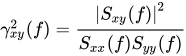
The coherence function between two signals and is defined as

where is the cross-spectral density of the signal and and are the power spectral density functions of and , respectively. The cross-spectral density and the power spectral density are defined as the Fourier transforms of the cross-correlation and the autocorrelation signals, respectively. For instance, if the signals are functions of time, the cross-correlation is a measure of the similarity of the two signals as a function of the time lag relative to each other and the autocorrelation is a measure of the similarity of each signal with itself in different instants of time. In this case the coherence is a function of frequency. Analogously, if and are functions of space, the cross-correlation measures the similarity of two signals in different points in space and the autocorrelations the similarity of the signal relative to itself for a certain separation distance. In that case, coherence is a function of wavenumber (spatial frequency).

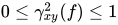
The coherence varies in the interval . If it means that the signals are perfectly correlated or linearly related and if they are totally uncorrelated. If a linear system is being measured, being the input and the output, the coherence function will be unitary all over the spectrum. However, if non-linearities are present in the system the coherence will vary in the limit given above.

Coherence and correlation

The coherence of two waves expresses how well correlated the waves are as quantified by the cross-correlation function. Cross-correlation quantifies the ability to predict the phase of the second wave by knowing the phase of the first. As an example, consider two waves perfectly correlated for all times (by using a monochromatic light source). At any time, the phase difference between the two waves will be constant. If, when they are combined, they exhibit perfect constructive interference, perfect destructive interference, or something in-between but with constant phase difference, then it follows that they are perfectly coherent. As will be discussed below, the second wave need not be a separate entity. It could be the first wave at a different time or position. In this case, the measure of correlation is the autocorrelation function (sometimes called self-coherence). Degree of correlation involves correlation functions.

Examples of wave-like states

These states are unified by the fact that their behavior is described by a wave equation or some generalization thereof.

In system with macroscopic waves, one can measure the wave directly. Consequently, its correlation with another wave can simply be calculated. However, in optics one cannot measure the electric field directly as it oscillates much faster than any detector's time resolution. Instead, one measures the intensity of the light. Most of the concepts involving coherence which will be introduced below were developed in the field of optics and then used in other fields. Therefore, many of the standard measurements of coherence are indirect measurements, even in fields where the wave can be measured directly.

Temporal coherence

Figure 1: The amplitude of a single frequency wave as a function of time t (red) and a copy of the same wave delayed by (blue). The coherence time of the wave is infinite since it is perfectly correlated with itself for all delays .
Figure 2: The amplitude of a wave whose phase drifts significantly in time as a function of time t (red) and a copy of the same wave delayed by (green). At any particular time t the wave can interfere perfectly with its delayed copy. But, since half the time the red and green waves are in phase and half the time out of phase, when averaged over t any interference disappears at this delay.

Temporal coherence is the measure of the average correlation between the value of a wave and itself delayed by , at any pair of times. Temporal coherence tells us how monochromatic a source is. In other words, it characterizes how well a wave can interfere with itself at a different time. The delay over which the phase or amplitude wanders by a significant amount (and hence the correlation decreases by significant amount) is defined as the coherence time . At a delay of the degree of coherence is perfect, whereas it drops significantly as the delay passes . The coherence length is defined as the distance the wave travels in time .[11]: 560, 571–573 

The coherence time is not the time duration of the signal; the coherence length differs from the coherence area (see below).

The relationship between coherence time and bandwidth

The larger the bandwidth – range of frequencies Δf a wave contains – the faster the wave decorrelates (and hence the smaller is):

Formally, this follows from the convolution theorem in mathematics, which relates the Fourier transform of the power spectrum (the intensity of each frequency) to its autocorrelation.

Narrow bandwidth lasers have long coherence lengths (up to hundreds of meters). For example, a stabilized and monomode helium–neon laser can easily produce light with coherence lengths of 300 m. Not all lasers have a high monochromaticity, however (e.g. for a mode-locked Ti-sapphire laser, Δλ ≈ 2 nm – 70 nm).

LEDs are characterized by Δλ ≈ 50 nm, and tungsten filament lights exhibit Δλ ≈ 600 nm, so these sources have shorter coherence times than the most monochromatic lasers.

Examples of temporal coherence

Examples of temporal coherence include:

  • A wave containing only a single frequency (monochromatic) is perfectly correlated with itself at all time delays, in accordance with the above relation. (See Figure 1)
  • Conversely, a wave whose phase drifts quickly will have a short coherence time. (See Figure 2)
  • Similarly, pulses (wave packets) of waves, which naturally have a broad range of frequencies, also have a short coherence time since the amplitude of the wave changes quickly. (See Figure 3)
  • Finally, white light, which has a very broad range of frequencies, is a wave which varies quickly in both amplitude and phase. Since it consequently has a very short coherence time (just 10 periods or so), it is often called incoherent.

Holography requires light with a long coherence time. In contrast, optical coherence tomography, in its classical version, uses light with a short coherence time.

Measurement of temporal coherence

Figure 3: The amplitude of a wavepacket whose amplitude changes significantly in time (red) and a copy of the same wave delayed by (green) plotted as a function of time t. At any particular time the red and green waves are uncorrelated; one oscillates while the other is constant and so there will be no interference at this delay. Another way of looking at this is the wavepackets are not overlapped in time and so at any particular time there is only one nonzero field so no interference can occur.
Figure 4: The time-averaged intensity (blue) detected at the output of an interferometer plotted as a function of delay τ for the example waves in Figures 2 and 3. As the delay is changed by half a period, the interference switches between constructive and destructive. The black lines indicate the interference envelope, which gives the degree of coherence. Although the waves in Figures 2 and 3 have different time durations, they have the same coherence time.

In optics, temporal coherence is measured in an interferometer such as the Michelson interferometer or Mach–Zehnder interferometer. In these devices, a wave is combined with a copy of itself that is delayed by time . A detector measures the time-averaged intensity of the light exiting the interferometer. The resulting visibility of the interference pattern (e.g. see Figure 4) gives the temporal coherence at delay . Since for most natural light sources, the coherence time is much shorter than the time resolution of any detector, the detector itself does the time averaging. Consider the example shown in Figure 3. At a fixed delay, here , an infinitely fast detector would measure an intensity that fluctuates significantly over a time t equal to . In this case, to find the temporal coherence at , one would manually time-average the intensity.

Spatial coherence

In some systems, such as water waves or optics, wave-like states can extend over one or two dimensions. Spatial coherence describes the ability for two spatial points x1 and x2 in the extent of a wave to interfere when averaged over time. More precisely, the spatial coherence is the cross-correlation between two points in a wave for all times. If a wave has only 1 value of amplitude over an infinite length, it is perfectly spatially coherent. The range of separation between the two points over which there is significant interference defines the diameter of the coherence area,  (Coherence length , often a feature of a source, is usually an industrial term related to the coherence time of the source, not the coherence area in the medium). is the relevant type of coherence for the Young's double-slit interferometer. It is also used in optical imaging systems and particularly in various types of astronomy telescopes.

A distance away from an incoherent source with surface area ,

Sometimes people also use "spatial coherence" to refer to the visibility when a wave-like state is combined with a spatially shifted copy of itself.

Consider a tungsten light-bulb filament. Different points in the filament emit light independently and have no fixed phase-relationship. In detail, at any point in time the profile of the emitted light is going to be distorted. The profile will change randomly over the coherence time . Since for a white-light source such as a light-bulb is small, the filament is considered a spatially incoherent source. In contrast, a radio antenna array, has large spatial coherence because antennas at opposite ends of the array emit with a fixed phase-relationship. Light waves produced by a laser often have high temporal and spatial coherence (though the degree of coherence depends strongly on the exact properties of the laser). Spatial coherence of laser beams also manifests itself as speckle patterns and diffraction fringes seen at the edges of shadow.

Holography requires temporally and spatially coherent light. Its inventor, Dennis Gabor, produced successful holograms more than ten years before lasers were invented. To produce coherent light he passed the monochromatic light from an emission line of a mercury-vapor lamp through a pinhole spatial filter.

In February 2011 it was reported that helium atoms, cooled to near absolute zero / Bose–Einstein condensate state, can be made to flow and behave as a coherent beam as occurs in a laser.

Spectral coherence of short pulses

Figure 10: Waves of different frequencies interfere to form a localized pulse if they are coherent.
Figure 11: Spectrally incoherent light interferes to form continuous light with a randomly varying phase and amplitude.

Waves of different frequencies (in light these are different colours) can interfere to form a pulse if they have a fixed relative phase-relationship (see Fourier transform). Conversely, if waves of different frequencies are not coherent, then, when combined, they create a wave that is continuous in time (e.g. white light or white noise). The temporal duration of the pulse is limited by the spectral bandwidth of the light according to:

,

which follows from the properties of the Fourier transform and results in Küpfmüller's uncertainty principle (for quantum particles it also results in the Heisenberg uncertainty principle).

If the phase depends linearly on the frequency (i.e. ) then the pulse will have the minimum time duration for its bandwidth (a transform-limited pulse), otherwise it is chirped (see dispersion).

Measurement of spectral coherence

Measurement of the spectral coherence of light requires a nonlinear optical interferometer, such as an intensity optical correlator, frequency-resolved optical gating (FROG), or spectral phase interferometry for direct electric-field reconstruction (SPIDER).

Polarization and coherence

Light also has a polarization, which is the direction in which the electric or magnetic field oscillates. Unpolarized light is composed of incoherent light waves with random polarization angles. The electric field of the unpolarized light wanders in every direction and changes in phase over the coherence time of the two light waves. An absorbing polarizer rotated to any angle will always transmit half the incident intensity when averaged over time.

If the electric field wanders by a smaller amount the light will be partially polarized so that at some angle, the polarizer will transmit more than half the intensity. If a wave is combined with an orthogonally polarized copy of itself delayed by less than the coherence time, partially polarized light is created.

The polarization of a light beam is represented by a vector in the Poincaré sphere. For polarized light the end of the vector lies on the surface of the sphere, whereas the vector has zero length for unpolarized light. The vector for partially polarized light lies within the sphere.

Quantum coherence

The signature property of quantum matter waves, wave interference, relies on coherence. While initially patterned after optical coherence, the theory and experimental understanding of quantum coherence greatly expanded the topic.

Matter wave coherence

The simplest extension of optical coherence applies optical concepts to matter waves. For example, when performing the double-slit experiment with atoms instead of light waves, a sufficiently collimated atomic beam creates a coherent atomic wave-function illuminating both slits. Each slit acts as a separate but in-phase beam contributing to the intensity pattern on a screen. These two contributions give rise to an intensity pattern of bright bands due to constructive interference, interlaced with dark bands due to destructive interference, on a downstream screen. Many variations of this experiment have been demonstrated.

As with light, transverse coherence (across the direction of propagation) of matter waves is controlled by collimation. Because light, at all frequencies, travels at the same velocity, longitudinal and temporal coherence are linked; in matter waves these are independent. In matter waves, velocity (energy) selection controls longitudinal coherence and pulsing or chopping controls temporal coherence.

Quantum optics

The discovery of the Hanbury Brown and Twiss effect – correlation of light upon coincidence – triggered Glauber's creation of uniquely quantum coherence analysis. Classical optical coherence becomes a classical limit for first-order quantum coherence; higher degree of coherence leads to many phenomena in quantum optics.

Macroscopic quantum coherence

Macroscopic scale quantum coherence leads to novel phenomena, the so-called macroscopic quantum phenomena. For instance, the laser, superconductivity and superfluidity are examples of highly coherent quantum systems whose effects are evident at the macroscopic scale. The macroscopic quantum coherence, presenting off-diagonal long-range order (ODLRO) for superfluidity, and laser light, is related to first-order (1-body) coherence/ODLRO, while superconductivity is related to second-order coherence/ODLRO. (For fermions, such as electrons, only even orders of coherence/ODLRO are possible.) For bosons, a Bose–Einstein condensate is an example of a system exhibiting macroscopic quantum coherence through a multiple occupied single-particle state.

The classical electromagnetic field exhibits macroscopic quantum coherence. The most obvious example is the carrier signal for radio and TV. They satisfy Glauber's quantum description of coherence.

Quantum coherence as a resource

M. B. Plenio and co-workers constructed an operational formulation of quantum coherence as a resource theory. They introduced coherence monotones analogous to the entanglement monotones. Quantum coherence has been shown to be equivalent to quantum entanglement in the sense that coherence can be faithfully described as entanglement, and conversely that each entanglement measure corresponds to a coherence measure.

Applications

Holography

Coherent superpositions of optical wave fields include holography. Holographic photographs have been used as art and as difficult to forge security labels.

Non-optical wave fields

Further applications concern the coherent superposition of non-optical wave fields. In quantum mechanics for example one considers a probability field, which is related to the wave function (interpretation: density of the probability amplitude). Here the applications concern, among others, the future technologies of quantum computing and the already available technology of quantum cryptography. Additionally the problems of the following subchapter are treated.

Coherence is used to check the quality of the transfer functions (FRFs) being measured. Low coherence can be caused by poor signal to noise ratio, and/or inadequate frequency resolution.

Carbon emission trading

From Wikipedia, the free encyclopedia https://en.wikipedia.org/wiki/Carbon_e...