Search This Blog

Saturday, March 14, 2026

Earth's energy budget

From Wikipedia, the free encyclopedia
Earth's energy balance and imbalance, showing where the excess energy goes: Outgoing radiation is decreasing owing to increasing greenhouse gases in the atmosphere, leading to Earth's energy imbalance of about 460 TW. The percentage going into each domain of the climate system is also indicated.

Earth's energy budget (or Earth's energy balance) is the balance between the energy that Earth receives from the Sun and the energy the Earth loses back into outer space. Smaller energy sources, such as Earth's internal heat, are taken into consideration, but make a tiny contribution compared to solar energy. The energy budget also takes into account how energy moves through the climate system. The Sun heats the equatorial tropics more than the polar regions. Therefore, the amount of solar irradiance received by a certain region is unevenly distributed. As the energy seeks equilibrium across the planet, it drives interactions in Earth's climate system, i.e., Earth's water, ice, atmosphere, rocky crust, and all living things. The result is Earth's climate.

Earth's energy budget depends on many factors, such as atmospheric aerosols, greenhouse gases, surface albedo, clouds, and land use patterns. When the incoming and outgoing energy fluxes are in balance, Earth is in radiative equilibrium and the climate system will be relatively stable. Global warming occurs when earth receives more energy than it gives back to space, and global cooling takes place when the outgoing energy is greater.

Multiple types of measurements and observations show a warming imbalance since at least year 1970. The rate of heating from this human-caused event is without precedent. The main origin of changes in the Earth's energy is from human-induced changes in the composition of the atmosphere. During 2005 to 2019 the Earth's energy imbalance (EEI) averaged about 460 TW or globally 0.90±0.15 W/m2.

It takes time for any changes in the energy budget to result in any significant changes in the global surface temperature. This is due to the thermal inertia of the oceans, land and cryosphere. Most climate models make accurate calculations of this inertia, energy flows and storage amounts.

Definition

Earth's energy budget includes the "major energy flows of relevance for the climate system". These are "the top-of-atmosphere energy budget; the surface energy budget; changes in the global energy inventory and internal flows of energy within the climate system".

Earth's energy flows

In spite of the enormous transfers of energy into and from the Earth, it maintains a relatively constant temperature because, as a whole, there is little net gain or loss: Earth emits via atmospheric and terrestrial radiation (shifted to longer electromagnetic wavelengths) to space about the same amount of energy as it receives via solar insolation (all forms of electromagnetic radiation).

The main origin of changes in the Earth's energy is from human-induced changes in the composition of the atmosphere, amounting to about 460 TW or globally 0.90±0.15 W/m2.

Incoming solar energy (shortwave radiation)

The total amount of energy received per second at the top of Earth's atmosphere (TOA) is measured in watts and is given by the solar constant times the cross-sectional area of the Earth corresponded to the radiation. Because the surface area of a sphere is four times the cross-sectional area of a sphere (i.e. the area of a circle), the globally and yearly averaged TOA flux is one quarter of the solar constant and so is approximately 340 watts per square meter (W/m2). Since the absorption varies with location as well as with diurnal, seasonal and annual variations, the numbers quoted are multi-year averages obtained from multiple satellite measurements.

Of the ~340 W/m2 of solar radiation received by the Earth, an average of ~77 W/m2 is reflected back to space by clouds and the atmosphere and ~23 W/m2 is reflected by the surface albedo, leaving ~240 W/m2 of solar energy input to the Earth's energy budget. This amount is called the absorbed solar radiation (ASR). It implies a value of about 0.3 for the mean net albedo of Earth, also called its Bond albedo (A):

Outgoing longwave radiation


Energy leaves the planet in the form of outgoing longwave radiation (OLR). Longwave radiation is electromagnetic thermal radiation emitted by Earth's surface and atmosphere. Longwave radiation is in the infrared band, but the terms are not synonymous, as infrared radiation can be either shortwave or longwave. Sunlight contains significant amounts of shortwave infrared radiation. A threshold wavelength of 4 microns is sometimes used to distinguish longwave and shortwave radiation.

Generally, absorbed solar energy is converted to different forms of heat energy. Some of the solar energy absorbed by the surface is converted to thermal radiation at wavelengths in the "atmospheric window"; this radiation is able to pass through the atmosphere unimpeded and directly escape to space, contributing to OLR. The remainder of absorbed solar energy is transported upwards through the atmosphere through a variety of heat transfer mechanisms, until some of that energy is also able to escape to space, again contributing to OLR. For example, heat is transported into the atmosphere via evapotranspiration and latent heat fluxes or conduction/convection processes, as well as via radiative heat transport. Ultimately, all outgoing energy is radiated into space in the form of longwave radiation.

The transport of longwave radiation from Earth's surface through its multi-layered atmosphere is governed by radiative transfer equations such as Schwarzschild's equation for radiative transfer (or more complex equations if scattering is present) and obeys Kirchhoff's law of thermal radiation.

A one-layer model produces an approximate description of OLR which yields temperatures at the surface (Ts=288 Kelvin) and at the middle of the troposphere (Ta=242 K) that are close to observed average values:

In this expression σ is the Stefan–Boltzmann constant and ε represents the emissivity of the atmosphere, which is less than 1 because the atmosphere does not emit within the wavelength range known as the atmospheric window.

Aerosols, clouds, water vapor, and trace greenhouse gases contribute to an effective value of about ε = 0.78. The strong (fourth-power) temperature sensitivity maintains a near-balance of the outgoing energy flow to the incoming flow via small changes in the planet's absolute temperatures.

Increase in the Earth's non-cloud greenhouse effect (2000–2022) based on satellite data

As viewed from Earth's surrounding space, greenhouse gases influence the planet's atmospheric emissivity (ε). Changes in atmospheric composition can thus shift the overall radiation balance. For example, an increase in heat trapping by a growing concentration of greenhouse gases (i.e. an enhanced greenhouse effect) forces a decrease in OLR and a warming (restorative) energy imbalance. Ultimately when the amount of greenhouse gases increases or decreases, in-situ surface temperatures rise or fall until the absorbed solar radiation equals the outgoing longwave radiation, or ASR equals OLR.

Earth's internal heat sources and other minor effects

The geothermal heat flow from the Earth's interior is estimated to be 47 terawatts (TW) and split approximately equally between radiogenic heat and heat left over from the Earth's formation. This corresponds to an average flux of 0.087 W/m2 and represents only 0.027% of Earth's total energy budget at the surface, being dwarfed by the 173000 TW of incoming solar radiation.

Human production of energy is even lower at an average 18 TW, corresponding to an estimated 160,000 TW-hr, for all of year 2019. However, consumption is growing rapidly and energy production with fossil fuels also produces an increase in atmospheric greenhouse gases, leading to a more than 20 times larger imbalance in the incoming/outgoing flows that originate from solar radiation.

Photosynthesis also has a significant effect: An estimated 140 TW (or around 0.08%) of incident energy gets captured by photosynthesis, giving energy to plants to produce biomass. A similar flow of heat is released over the course of a year when plants are used as food or fuel.

Other minor sources of energy are usually ignored in the calculations, including accretion of interplanetary dust and solar wind, light from stars other than the Sun and the thermal radiation from space. Earlier, Joseph Fourier had claimed that deep space radiation was significant in a paper often cited as the first on the greenhouse effect.

Budget analysis

A Sankey diagram illustrating a balanced example of Earth's energy budget. Line thickness is linearly proportional to relative amount of energy.

In simplest terms, Earth's energy budget is balanced when the incoming flow equals the outgoing flow. Since a portion of incoming energy is directly reflected, the balance can also be stated as absorbed incoming solar (shortwave) radiation equal to outgoing longwave radiation:

Internal flow analysis

To describe some of the internal flows within the budget, let the insolation received at the top of the atmosphere be 100 units (= 340 W/m2), as shown in the accompanying Sankey diagram. Called the albedo of Earth, around 35 units in this example are directly reflected back to space: 27 from the top of clouds, 2 from snow and ice-covered areas, and 6 by other parts of the atmosphere. The 65 remaining units (ASR = 220 W/m2) are absorbed: 14 within the atmosphere and 51 by the Earth's surface.

The 51 units reaching and absorbed by the surface are emitted back to space through various forms of terrestrial energy: 17 directly radiated to space and 34 absorbed by the atmosphere (19 through latent heat of vaporisation, 9 via convection and turbulence, and 6 as absorbed infrared by greenhouse gases). The 48 units absorbed by the atmosphere (34 units from terrestrial energy and 14 from insolation) are then finally radiated back to space. This simplified example neglects some details of mechanisms that recirculate, store, and thus lead to further buildup of heat near the surface.

Ultimately the 65 units (17 from the ground and 48 from the atmosphere) are emitted as OLR. They approximately balance the 65 units (ASR) absorbed from the sun in order to maintain a net-zero gain of energy by Earth.

Heat storage reservoirs

The rising accumulation of energy in the oceanic, land, ice, and atmospheric components of Earth's climate system since 1960

Land, ice, and oceans are active material constituents of Earth's climate system along with the atmosphere. They have far greater mass and heat capacity, and thus much more thermal inertia. When radiation is directly absorbed or the surface temperature changes, energy will flow as sensible heat either into or out of the bulk mass of these components via conduction/convection heat transfer processes. The transformation of water between its solid/liquid/vapor states also acts as a source or sink of potential energy in the form of latent heat. These processes buffer the surface conditions against some of the rapid radiative changes in the atmosphere. As a result, the daytime versus nighttime difference in surface temperatures is relatively small. Likewise, Earth's climate system as a whole shows a slow response to shifts in the atmospheric radiation balance.

The top few meters of Earth's oceans harbor more energy than its entire atmosphere. Like atmospheric gases, fluidic ocean waters transport vast amounts of energy over the planet's surface. Sensible heat also moves into and out of great depths under conditions that favor downwelling or upwelling. Scientists observe these large-scale energy transfers by measuring changes in oceanic enthalpy.

Over 90 percent of the extra energy that has accumulated on Earth from ongoing global warming since 1970 has been stored in the ocean. About one-third has propagated to depths below 700 meters. The overall rate of growth has also risen during recent decades, reaching close to 500 TW (1 W/m2) as of 2020. That led to about 14 zettajoules (ZJ) of heat gain for the year, exceeding the 570 exajoules (=160,000 TW-hr) of total primary energy consumed by humans by a factor of at least 20.

Heating/cooling rate analysis

Generally speaking, changes to Earth's energy flux balance can be thought of as being the result of external forcings (both natural and anthropogenic, radiative and non-radiative), system feedbacks, and internal system variability. Such changes are primarily expressed as observable shifts in temperature (T), clouds (C), water vapor (W), aerosols (A), trace greenhouse gases (G), land/ocean/ice surface reflectance (S), and as minor shifts in insolation (I) among other possible factors. Earth's heating/cooling rate can then be analyzed over selected timeframes (Δt) as the net change in energy (ΔE) associated with these attributes:

Here the term ΔET, corresponding to the Planck response, is negative-valued when temperature rises due to its strong direct influence on OLR.

The recent increase in trace greenhouse gases produces an enhanced greenhouse effect, and thus a positive ΔEG forcing term. By contrast, a large volcanic eruption (e.g. Mount Pinatubo 1991, El Chichón 1982) can inject sulfur-containing compounds into the upper atmosphere. High concentrations of stratospheric sulfur aerosols may persist for up to a few years, yielding a negative forcing contribution to ΔEA. Various other types of anthropogenic aerosol emissions make both positive and negative contributions to ΔEA. Solar cycles produce ΔEI smaller in magnitude than those of recent ΔEG trends from human activity.

Climate forcings are complex since they can produce direct and indirect feedbacks that intensify (positive feedback) or weaken (negative feedback) the original forcing. These often follow the temperature response. Water vapor trends as a positive feedback with respect to temperature changes due to evaporation shifts and the Clausius-Clapeyron relation. An increase in water vapor results in positive ΔEW due to further enhancement of the greenhouse effect. A slower positive feedback is the ice-albedo feedback. For example, the loss of Arctic ice due to rising temperatures makes the region less reflective, leading to greater absorption of energy and even faster ice melt rates, thus positive influence on ΔES. Collectively, feedbacks excluding the Planck response tend to amplify global warming or cooling.

Clouds are responsible for about half of Earth's albedo and are powerful expressions of internal variability of the climate system. They may also act as feedbacks to forcings, and could be forcings themselves if for example a result of cloud seeding activity. Contributions to ΔEC vary regionally and depending upon cloud type. Measurements from satellites are gathered in concert with simulations from models in an effort to improve understanding and reduce uncertainty.

Earth's energy imbalance (EEI)

Earth's energy budget (in W/m2) determines the climate. It is the balance of incoming and outgoing radiation and can be measured by satellites. The Earth's energy imbalance is the "net absorbed" energy amount.
Earth's energy imbalance has increased in the 21st century, reaching values twice that of prior estimates from the IPCC. The ability to observe this imbalance is deteriorating because satellites are being decommissioned.

The Earth's energy imbalance (EEI) is defined as "the persistent and positive (downward) net top of atmosphere energy flux associated with greenhouse gas forcing of the climate system".

If Earth's incoming energy flux (ASR) is larger or smaller than the outgoing energy flux (OLR), then the planet will gain (warm) or lose (cool) net heat energy in accordance with the law of energy conservation:

.

Positive EEI thus defines the overall rate of planetary heating and is typically expressed as watts per square meter (W/m2). During 2005 to 2019 the Earth's energy imbalance averaged about 460 TW or globally 0.90 ± 0.15 W per m2.

When Earth's energy imbalance (EEI) shifts by a sufficiently large amount, the shift is measurable by orbiting satellite-based instruments. Imbalances that fail to reverse over time will also drive long-term temperature changes in the atmospheric, oceanic, land, and ice components of the climate system. Temperature, sea level, ice mass and related shifts thus also provide measures of EEI.

The biggest changes in EEI arise from changes in the composition of the atmosphere through human activities, thereby interfering with the natural flow of energy through the climate system. The main changes are from increases in carbon dioxide and other greenhouse gases, that produce heating (positive EEI), and pollution. The latter refers to atmospheric aerosols of various kinds, some of which absorb energy while others reflect energy and produce cooling (or lower EEI).  

Estimates of the Earth Energy Imbalance (EEI)
Time Period EEI (W/m2)

Square brackets show 90% confidence intervals

1971–2006 0.50 [0.31 to 0.68]
1971–2018 0.57 [0.43 to 0.72]
1977–2024 0.68 [0.52 to 0.85]
2006–2018 0.79 [0.52 to 1.07]
2012–2024 0.99 [0.70 to 1.28]

It is not (yet) possible to measure the absolute magnitude of EEI directly at top of atmosphere, although changes over time as observed by satellite-based instruments are thought to be accurate. The only practical way to estimate the absolute magnitude of EEI is through an inventory of the changes in energy in the climate system. The biggest of these energy reservoirs is the ocean.

Energy inventory assessments

The planetary heat content that resides in the climate system can be compiled given the heat capacity, density and temperature distributions of each of its components. Most regions are now reasonably well sampled and monitored, with the most significant exception being the deep ocean.

Schematic drawing of Earth's excess heat inventory and energy imbalance for two recent time periods

Estimates of the absolute magnitude of EEI have likewise been calculated using the measured temperature changes during recent multi-decadal time intervals. For the 2006 to 2020 period EEI was about +0.76±0.2 W/m2 and showed a significant increase above the mean of +0.48±0.1 W/m2 for the 1971 to 2020 period.

EEI has been positive because temperatures have increased almost everywhere for over 50 years. Global surface temperature (GST) is calculated by averaging temperatures measured at the surface of the sea along with air temperatures measured over land. Reliable data extending to at least 1880 shows that GST has undergone a steady increase of about 0.18 °C per decade since about year 1970.

Ocean waters are especially effective absorbents of solar energy and have a far greater total heat capacity than the atmosphere. Research vessels and stations have sampled sea temperatures at depth and around the globe since before 1960. Additionally, after the year 2000, an expanding network of nearly 4000 Argo robotic floats has measured the temperature anomaly, or equivalently the ocean heat content change (ΔOHC). Since at least 1990, OHC has increased at a steady or accelerating rate. ΔOHC represents the largest portion of EEI since oceans have thus far taken up over 90% of the net excess energy entering the system over time (Δt):

.

Earth's outer crust and thick ice-covered regions have taken up relatively little of the excess energy. This is because excess heat at their surfaces flows inward only by means of thermal conduction, and thus penetrates only several tens of centimeters on the daily cycle and only several tens of meters on the annual cycle. Much of the heat uptake goes either into melting ice and permafrost or into evaporating more water from soils.

Measurements at top of atmosphere (TOA)

Several satellites measure the energy absorbed and radiated by Earth, and thus by inference the energy imbalance. These are located top of atmosphere (TOA) and provide data covering the globe. The NASA Earth Radiation Budget Experiment (ERBE) project involved three such satellites: the Earth Radiation Budget Satellite (ERBS), launched October 1984; NOAA-9, launched December 1984; and NOAA-10, launched September 1986.

The growth in Earth's energy imbalance from satellite and in situ measurements (2005–2019). A rate of +1.0 W/m2 summed over the planet's surface equates to a continuous heat uptake of about 500 terawatts (~0.3% of the incident solar radiation).

NASA's Clouds and the Earth's Radiant Energy System (CERES) instruments are part of its Earth Observing System (EOS) since March 2000. CERES is designed to measure both solar-reflected (short wavelength) and Earth-emitted (long wavelength) radiation. The CERES data showed increases in EEI from +0.42±0.48 W/m2 in 2005 to +1.12±0.48 W/m2 in 2019. Contributing factors included more water vapor, less clouds, increasing greenhouse gases, and declining ice that were partially offset by rising temperatures. Subsequent investigation of the behavior using the GFDL CM4/AM4 climate model concluded there was a less than 1% chance that internal climate variability alone caused the trend.

Other researchers have used data from CERES, AIRS, CloudSat, and other EOS instruments to look for trends of radiative forcing embedded within the EEI data. Their analysis showed a forcing rise of +0.53±0.11 W/m2 from years 2003 to 2018. About 80% of the increase was associated with the rising concentration of greenhouse gases which reduced the outgoing longwave radiation.

Further satellite measurements including TRMM and CALIPSO data have indicated additional precipitation, which is sustained by increased energy leaving the surface through evaporation (the latent heat flux), offsetting some of the increase in the longwave greenhouse flux to the surface.

It is noteworthy that radiometric calibration uncertainties limit the capability of the current generation of satellite-based instruments, which are otherwise stable and precise. As a result, relative changes in EEI are quantifiable with an accuracy which is not also achievable for any single measurement of the absolute imbalance.

Geodetic and hydrographic surveys

Earth heating estimates from a combination of space altimetry and space gravimetry

Observations since 1994 show that ice has retreated from every part of Earth at an accelerating rate. Mean global sea level has likewise risen as a consequence of the ice melt in combination with the overall rise in ocean temperatures. These shifts have contributed measurable changes to the geometric shape and gravity of the planet.

Changes to the mass distribution of water within the hydrosphere and cryosphere have been deduced using gravimetric observations by the GRACE satellite instruments. These data have been compared against ocean surface topography and further hydrographic observations using computational models that account for thermal expansion, salinity changes, and other factors. Estimates thereby obtained for ΔOHC and EEI have agreed with the other (mostly) independent assessments within uncertainties.

Importance as a climate change metric

Climate scientists Kevin Trenberth, James Hansen, and colleagues have identified the monitoring of Earth's energy imbalance as an important metric to help policymakers guide the pace for mitigation and adaptation measures. Because of climate system inertia, longer-term EEI (Earth's energy imbalance) trends can forecast further changes that are "in the pipeline".

Scientists found that the EEI is the most important metric related to climate change. It is the net result of all the processes and feedbacks in play in the climate system. Knowing how much extra energy affects weather systems and rainfall is vital to understand the increasing weather extremes.

In 2012, NASA scientists reported that to stop global warming atmospheric CO2 concentration would have to be reduced to 350 ppm or less, assuming all other climate forcings were fixed. As of 2020, atmospheric CO2 reached 415 ppm and all long-lived greenhouse gases exceeded a 500 ppm CO2-equivalent concentration due to continued growth in human emissions.

Climate change feedbacks

From Wikipedia, the free encyclopedia
The relative magnitude of the top 6 climate change feedbacks and what they influence. Positive feedbacks amplify the global warming response to greenhouse gas emissions and negative feedbacks reduce it. In this chart, the horizontal lengths of the red and blue bars indicate the strength of respective feedbacks.

Climate change feedbacks are natural processes that impact how much global temperatures will increase for a given amount of greenhouse gas emissions. Positive feedbacks amplify global warming while negative feedbacks diminish it. Feedbacks influence both the amount of greenhouse gases in the atmosphere and the amount of temperature change that happens in response. While emissions are the forcing that causes climate change, feedbacks combine to control climate sensitivity to that forcing.

While the overall sum of feedbacks is negative, it is becoming less negative as greenhouse gas emissions continue. This means that warming is slower than it would be in the absence of feedbacks, but that warming will accelerate if emissions continue at current levels. Net feedbacks will stay negative largely because of increased thermal radiation as the planet warms, which is an effect that is several times larger than any other singular feedback. Accordingly, anthropogenic climate change alone cannot cause a runaway greenhouse effect.

Feedbacks can be divided into physical feedbacks and partially biological feedbacks. Physical feedbacks include decreased surface reflectivity (from diminished snow and ice cover) and increased water vapor in the atmosphere. Water vapor is not only a powerful greenhouse gas, it also influences feedbacks in the distribution of clouds and temperatures in the atmosphere. Biological feedbacks are mostly associated with changes to the rate at which plant matter accumulates CO2 as part of the carbon cycle. The carbon cycle absorbs more than half of CO2 emissions every year into plants and into the ocean. Over the long term the percentage will be reduced as carbon sinks become saturated and higher temperatures lead to effects like drought and wildfires.

Feedback strengths and relationships are estimated through global climate models, with their estimates calibrated against observational data whenever possible. Some feedbacks rapidly impact climate sensitivity, while the feedback response from ice sheets is drawn out over several centuries. Feedbacks can also result in localized differences, such as polar amplification resulting from feedbacks that include reduced snow and ice cover. While basic relationships are well understood, feedback uncertainty exists in certain areas, particularly regarding cloud feedbacks. Carbon cycle uncertainty is driven by the large rates at which CO2 is both absorbed into plants and released when biomass burns or decays. For instance, permafrost thaw produces both CO2 and methane emissions in ways that are difficult to model. Climate change scenarios use models to estimate how Earth will respond to greenhouse gas emissions over time, including how feedbacks will change as the planet warms.

Definition and terminology

The Planck response is the additional thermal radiation objects emit as they get warmer. Whether Planck response is a climate change feedback depends on the context. In climate science the Planck response can be treated as an intrinsic part of warming that is separate from radiative feedbacks and carbon cycle feedbacks. However, the Planck response is included when calculating climate sensitivity.

A feedback that amplifies an initial change is called a positive feedback while a feedback that reduces an initial change is called a negative feedback. Climate change feedbacks are in the context of global warming, so positive feedbacks enhance warming and negative feedbacks diminish it. Naming a feedback positive or negative does not imply that the feedback is good or bad.

The initial change that triggers a feedback may be externally forced, or may arise through the climate system's internal variability. External forcing refers to "a forcing agent outside the climate system causing a change in the climate system" that may push the climate system in the direction of warming or cooling. External forcings may be human-caused (for example, greenhouse gas emissions or land use change) or natural (for example, volcanic eruptions).

Physical feedbacks

Planck response (negative)

Climate change occurs because the amount of thermal radiation absorbed by different parts of the Earth's environment currently exceeds the amount radiated away to space. As the warming increases, outgoing radiation to space increases quickly due to the Planck response, which eventually helps to stabilize the Earth at some higher temperature level

Planck response is "the most fundamental feedback in the climate system". As the temperature of a black body increases, the emission of infrared radiation increases with the fourth power of its absolute temperature according to the Stefan–Boltzmann law. This increases the amount of outgoing radiation back into space as the Earth warms. It is a strong stabilizing response and has sometimes been called the "no-feedback response" because it is an intensive property of a thermodynamic system when considered to be purely a function of temperature. Although Earth has an effective emissivity less than unity, the ideal black body radiation emerges as a separable quantity when investigating perturbations to the planet's outgoing radiation.

The Planck "feedback" or Planck response is the comparable radiative response obtained from analysis of practical observations or global climate models (GCMs). Its expected strength has been most simply estimated from the derivative of the Stefan-Boltzmann equation as −4σT3 = −3.8 W/m2·K (watts per square meter per degree of warming). Accounting from GCM applications has sometimes yielded a reduced strength, as caused by extensive properties of the stratosphere and similar residual artifacts subsequently identified as being absent from such models.

Most extensive "grey body" properties of Earth that influence the outgoing radiation are usually postulated to be encompassed by the other GCM feedback components, and to be distributed in accordance with a particular forcing-feedback framework. Ideally the Planck response strength obtained from GCMs, indirect measurements, and black body estimates will further converge as analysis methods continue to mature.

Water vapor feedback (positive)

Atmospheric gases only absorb some wavelengths of energy but are transparent to others. The absorption patterns of water vapor (blue peaks) and carbon dioxide (pink peaks) overlap in some wavelengths.

According to Clausius–Clapeyron relation, saturation vapor pressure is higher in a warmer atmosphere, and so the absolute amount of water vapor will increase as the atmosphere warms. It is sometimes also called the specific humidity feedback because relative humidity (RH) stays practically constant over the oceans, but it decreases over land. This occurs because land experiences faster warming than the ocean, and a decline in RH has been observed after the year 2000.

Since water vapor is a greenhouse gas, the increase in water vapor content makes the atmosphere warm further, which allows the atmosphere to hold still more water vapor. Thus, a positive feedback loop is formed, which continues until the negative feedbacks bring the system to equilibrium. Increases in atmospheric water vapor have been detected from satellites, and calculations based on these observations place this feedback strength at 1.85 ± 0.32 W/m2·K. This is very similar to model estimates, which are at 1.77 ± 0.20 W/m2·K Either value effectively doubles the warming that would otherwise occur from CO2 increases alone. Like with the other physical feedbacks, this is already accounted for in the warming projections under climate change scenarios.

Lapse rate (negative)

Lapse rate (green) is a negative feedback everywhere on Earth besides the polar latitudes. The net climate feedback (black) becomes less negative if it were excluded (orange)

The lapse rate is the rate at which an atmospheric variable, normally temperature in Earth's atmosphere, falls with altitude. It is therefore a quantification of temperature, related to radiation, as a function of altitude, and is not a separate phenomenon in this context. The lapse rate feedback is generally a negative feedback. However, it is in fact a positive feedback in polar regions where it strongly contributed to polar amplified warming, one of the biggest consequences of climate change. This is because in regions with strong inversions, such as the polar regions, the lapse rate feedback can be positive because the surface warms faster than higher altitudes, resulting in inefficient longwave cooling.

The atmosphere's temperature decreases with height in the troposphere. Since emission of infrared radiation varies with temperature, longwave radiation escaping to space from the relatively cold upper atmosphere is less than that emitted toward the ground from the lower atmosphere. Thus, the strength of the greenhouse effect depends on the atmosphere's rate of temperature decrease with height. Both theory and climate models indicate that global warming will reduce the rate of temperature decrease with height, producing a negative lapse rate feedback that weakens the greenhouse effect.

Surface albedo feedback (positive)

Average decadal extent and area of the Arctic Ocean sea ice since 1979.
Average decadal extent and area of the Arctic Ocean sea ice since the start of satellite observations.
Annual trend in the Arctic sea ice extent and area for the 2011-2022 time period.

Albedo is the measure of how strongly the planetary surface can reflect solar radiation, which prevents its absorption and thus has a cooling effect. Brighter and more reflective surfaces have a high albedo and darker surfaces have a low albedo, so they heat up more. The most reflective surfaces are ice and snow, so surface albedo changes are overwhelmingly associated with what is known as the ice-albedo feedback. A minority of the effect is also associated with changes in physical oceanography, soil moisture and vegetation cover.

The presence of ice cover and sea ice makes the North Pole and the South Pole colder than they would have been without it. During glacial periods, additional ice increases the reflectivity and thus lowers absorption of solar radiation, cooling the planet. But when warming occurs and the ice melts, darker land or open water takes its place and this causes more warming, which in turn causes more melting. In both cases, a self-reinforcing cycle continues until an equilibrium is found. Consequently, recent Arctic sea ice decline is a key reason behind the Arctic warming nearly four times faster than the global average since 1979 (the start of continuous satellite readings), in a phenomenon known as Arctic amplification. Conversely, the high stability of ice cover in Antarctica, where the East Antarctic ice sheet rises nearly 4 km above the sea level, means that it has experienced very little net warming over the past seven decades.

Aerial photograph showing a section of sea ice. The lighter blue areas are melt ponds and the darkest areas are open water; both have a lower albedo than the white sea ice, so their presence increases local and global temperatures, which helps to spur more melting

As of 2021, the total surface feedback strength is estimated at 0.35 [0.10 to 0.60] W/m2·K. On its own, Arctic sea ice decline between 1979 and 2011 was responsible for 0.21 (W/m2) of radiative forcing. This is equivalent to a quarter of impact from CO2 emissions over the same period. The combined change in all sea ice cover between 1992 and 2018 is equivalent to 10% of all the anthropogenic greenhouse gas emissions. Ice-albedo feedback strength is not constant and depends on the rate of ice loss - models project that under high warming, its strength peaks around 2100 and declines afterwards, as most easily melted ice would already be lost by then.

When CMIP5 models estimate a total loss of Arctic sea ice cover from June to September (a plausible outcome under higher levels of warming), it increases the global temperatures by 0.19 °C (0.34 °F), with a range of 0.16–0.21 °C, while the regional temperatures would increase by over 1.5 °C (2.7 °F). These calculations include second-order effects such as the impact from ice loss on regional lapse rate, water vapor and cloud feedbacks, and do not cause "additional" warming on top of the existing model projections.

Cloud feedback (positive)

Details of how clouds interact with shortwave and longwave radiation at different atmospheric heights

Seen from below, clouds emit infrared radiation back to the surface, which has a warming effect; seen from above, clouds reflect sunlight and emit infrared radiation to space, leading to a cooling effect. Low clouds are bright and very reflective, so they lead to strong cooling, while high clouds are too thin and transparent to effectively reflect sunlight, so they cause overall warming. As a whole, clouds have a substantial cooling effect. However, climate change is expected to alter the distribution of cloud types in a way which collectively reduces their cooling and thus accelerates overall warming. While changes to clouds act as a negative feedback in some latitudes, they represent a clear positive feedback on a global scale.

As of 2021, cloud feedback strength is estimated at 0.42 [–0.10 to 0.94] W/m2·K. This is the largest confidence interval of any climate feedback, and it occurs because some cloud types (most of which are present over the oceans) have been very difficult to observe, so climate models don't have as much data to go on with when they attempt to simulate their behaviour. Additionally, clouds have been strongly affected by aerosol particles, mainly from the unfiltered burning of sulfur-rich fossil fuels such as coal and bunker fuel. Any estimate of cloud feedback needs to disentangle the effects of so-called global dimming caused by these particles as well.

Thus, estimates of cloud feedback differ sharply between climate models. Models with the strongest cloud feedback have the highest climate sensitivity, which means that they simulate much stronger warming in response to a doubling of CO2 (or equivalent greenhouse gas) concentrations than the rest. Around 2020, a small fraction of models was found to simulate so much warming as the result that they had contradicted paleoclimate evidence from fossils, and their output was effectively excluded from the climate sensitivity estimate of the IPCC Sixth Assessment Report.

Biogeophysical and biogeochemical feedbacks

CO2 feedbacks (mostly negative)

This diagram of the fast carbon cycle shows the movement of carbon between land, atmosphere, soil and oceans in billions of tons of carbon per year. Yellow numbers are natural fluxes, red are human contributions in billions of tons of carbon per year. White numbers indicate stored carbon.

There are positive and negative climate feedbacks from Earth's carbon cycle. Negative feedbacks are large, and play a great role in the studies of climate inertia or of dynamic (time-dependent) climate change. Because they are considered relatively insensitive to temperature changes, they are sometimes considered separately or disregarded in studies which aim to quantify climate sensitivity. Global warming projections have included carbon cycle feedbacks since the IPCC Fourth Assessment Report (AR4) in 2007. While the scientific understanding of these feedbacks was limited at the time, it had improved since then. These positive feedbacks include an increase in wildfire frequency and severity, substantial losses from tropical rainforests due to fires and drying and tree losses elsewhere.

The Amazon rainforest is a well-known example due to its enormous size and importance, and because the damage it experiences from climate change is exacerbated by the ongoing deforestation. The combination of two threats can potentially transform much or all of the rainforest to a savannah-like state, although this would most likely require relatively high warming of 3.5 °C (6.3 °F).

Altogether, carbon sinks in the land and ocean absorb around half of the current emissions. Their future absorption is dynamic. In the future, if the emissions decrease, the fraction they absorb will increase, and they will absorb up to three-quarters of the remaining emissions - yet, the raw amount absorbed will decrease from the present. On the contrary, if the emissions will increase, then the raw amount absorbed will increase from now, yet the fraction could decline to one-third by the end of the 21st century. If the emissions remain very high after the 21st century, carbon sinks would eventually be completely overwhelmed, with the ocean sink diminished further and land ecosystems outright becoming a net source. Hypothetically, very strong carbon dioxide removal could also result in land and ocean carbon sinks becoming net sources for several decades.

Role of oceans

The impulse response following a 100 GtC injection of CO2 into Earth's atmosphere. The majority of excess carbon is removed by ocean and land sinks in less than a few centuries, while a substantial portion persists.

Following Le Chatelier's principle, the chemical equilibrium of the Earth's carbon cycle will shift in response to anthropogenic CO2 emissions. The primary driver of this is the ocean, which absorbs anthropogenic CO2 via the so-called solubility pump. At present this accounts for only about one third of the current emissions, but ultimately most (~75%) of the CO2 emitted by human activities will dissolve in the ocean over a period of centuries: "A better approximation of the lifetime of fossil fuel CO2 for public discussion might be 300 years, plus 25% that lasts forever". However, the rate at which the ocean will take it up in the future is less certain, and will be affected by stratification induced by warming and, potentially, changes in the ocean's thermohaline circulation. It is believed that the single largest factor in determining the total strength of the global carbon sink is the state of the Southern Ocean - particularly of the Southern Ocean overturning circulation.

Chemical weathering

Chemical weathering over the geological long term acts to remove CO2 from the atmosphere. With current global warming, weathering is increasing, demonstrating significant feedbacks between climate and Earth surface. Biosequestration also captures and stores CO2 by biological processes. The formation of shells by organisms in the ocean, over a very long time, removes CO2 from the oceans. The complete conversion of CO2 to limestone takes thousands to hundreds of thousands of years.

Primary production through photosynthesis

Increase in global leaf area between 1982 and 2015, which was primarily caused by the CO2 fertilization effect

Net primary productivity of plants' and phytoplankton grows as the increased CO2 fuels their photosynthesis in what is known as the CO2 fertilization effect. Additionally, plants require less water as the atmospheric CO2 concentrations increase, because they lose less moisture to evapotranspiration through open stomata (the pores in leaves through which CO2 is absorbed). However, increased droughts in certain regions can still limit plant growth, and the warming beyond optimum conditions has a consistently negative impact. Thus, estimates for the 21st century show that plants would become a lot more abundant at high latitudes near the poles but grow much less near the tropics - there is only medium confidence that tropical ecosystems would gain more carbon relative to now. However, there is high confidence that the total land carbon sink will remain positive.

Non-CO2 climate-relevant gases (unclear)

Methane climate feedbacks in natural ecosystems.

Release of gases of biological origin would be affected by global warming, and this includes climate-relevant gases such as methane, nitrous oxide or dimethyl sulfide. Others, such as dimethyl sulfide released from oceans, have indirect effects. Emissions of methane from land (particularly from wetlands) and of nitrous oxide from land and oceans are a known positive feedback. I.e. long-term warming changes the balance in the methane-related microbial community within freshwater ecosystems so they produce more methane while proportionately less is oxidised to carbon dioxide. There would also be biogeophysical changes which affect the albedo. For instance, larch in some sub-arctic forests are being replaced by spruce trees. This has a limited contribution to warming, because larch trees shed their needles in winter and so they end up more extensively covered in snow than the spruce trees which retain their dark needles all year.

On the other hand, changes in emissions of compounds such sea salt, dimethyl sulphide, dust, ozone and a range of biogenic volatile organic compounds are expected to be negative overall. As of 2021, all of these non-CO2 feedbacks are believed to practically cancel each other out, but there is only low confidence, and the combined feedbacks could be up to 0.25 W/m2·K in either direction.

Permafrost (positive)

Permafrost is not included in the estimates above, as it is difficult to model, and the estimates of its role is strongly time-dependent as its carbon pools are depleted at different rates under different warming levels. Instead, it is treated as a separate process that will contribute to near-term warming, with the best estimates shown below.

Nine probable scenarios of greenhouse gas emissions from permafrost thaw during the 21st century, which show a limited, moderate and intense CO2 and CH4 emission response to low, medium and high-emission Representative Concentration Pathways. The vertical bar uses emissions of selected large countries as a comparison: the right-hand side of the scale shows their cumulative emissions since the start of the Industrial Revolution, while the left-hand side shows each country's cumulative emissions for the rest of the 21st century if they remained unchanged from their 2019 levels.

Altogether, it is expected that cumulative greenhouse gas emissions from permafrost thaw will be smaller than the cumulative anthropogenic emissions, yet still substantial on a global scale, with some experts comparing them to emissions caused by deforestation. The IPCC Sixth Assessment Report estimates that carbon dioxide and methane released from permafrost could amount to the equivalent of 14–175 billion tonnes of carbon dioxide per 1 °C (1.8 °F) of warming. For comparison, by 2019, annual anthropogenic emissions of carbon dioxide alone stood around 40 billion tonnes. A major review published in the year 2022 concluded that if the goal of preventing 2 °C (3.6 °F) of warming was realized, then the average annual permafrost emissions throughout the 21st century would be equivalent to the year 2019 annual emissions of Russia. Under RCP4.5, a scenario considered close to the current trajectory and where the warming stays slightly below 3 °C (5.4 °F), annual permafrost emissions would be comparable to year 2019 emissions of Western Europe or the United States, while under the scenario of high global warming and worst-case permafrost feedback response, they would approach year 2019 emissions of China.

Fewer studies have attempted to describe the impact directly in terms of warming. A 2018 paper estimated that if global warming was limited to 2 °C (3.6 °F), gradual permafrost thaw would add around 0.09 °C (0.16 °F) to global temperatures by 2100, while a 2022 review concluded that every 1 °C (1.8 °F) of global warming would cause 0.04 °C (0.072 °F) and 0.11 °C (0.20 °F) from abrupt thaw by the year 2100 and 2300. Around 4 °C (7.2 °F) of global warming, abrupt (around 50 years) and widespread collapse of permafrost areas could occur, resulting in an additional warming of 0.2–0.4 °C (0.36–0.72 °F).

A study published in 2024 in Nature Climate Change found that coastal erosion in the Arctic, driven by permafrost thaw, reduces the ocean's capacity to absorb carbon dioxide, thereby triggering additional carbon–climate feedbacks in the region.

Long-term feedbacks

Ice sheets

The loss of albedo from major ice areas on Earth adds to warming: the values shown are for the initial warming of 1.5 °C (2.7 °F). Total ice sheet loss requires multiple millennia: the others can be lost in a century or two

The Earth's two remaining ice sheets, the Greenland ice sheet and the Antarctic ice sheet, cover the world's largest island and an entire continent, and both of them are also around 2 km (1 mi) thick on average. Due to this immense size, their response to warming is measured in thousands of years and is believed to occur in two stages.

The first stage would be the effect from ice melt on thermohaline circulation. Because meltwater is completely fresh, it makes it harder for the surface layer of water to sink beneath the lower layers, and this disrupts the exchange of oxygen, nutrients and heat between the layers. This would act as a negative feedback - sometimes estimated as a cooling effect of 0.2 °C (0.36 °F) over a 1000-year average, though the research on these timescales has been limited. An even longer-term effect is the ice-albedo feedback from ice sheets reaching their ultimate state in response to whatever the long-term temperature change would be. Unless the warming is reversed entirely, this feedback would be positive.

The total loss of the Greenland Ice Sheet is estimated to add 0.13 °C (0.23 °F) to global warming (with a range of 0.04–0.06 °C), while the loss of the West Antarctic Ice Sheet adds 0.05 °C (0.090 °F) (0.04–0.06 °C), and East Antarctic ice sheet 0.6 °C (1.1 °F) Total loss of the Greenland ice sheet would also increase regional temperatures in the Arctic by between 0.5 °C (0.90 °F) and 3 °C (5.4 °F), while the regional temperature in Antarctica is likely to go up by 1 °C (1.8 °F) after the loss of the West Antarctic ice sheet and 2 °C (3.6 °F) after the loss of the East Antarctic ice sheet.

These estimates assume that global warming stays at an average of 1.5 °C (2.7 °F). Because of the logarithmic growth of the greenhouse effect, the impact from ice loss would be larger at the slightly lower warming level of 2020s, but it would become lower if the warming proceeds towards higher levels. While Greenland and the West Antarctic ice sheet are likely committed to melting entirely if the long-term warming is around 1.5 °C (2.7 °F), the East Antarctic ice sheet would not be at risk of complete disappearance until the very high global warming of 5–10 °C (9.0–18.0 °F)

Methane hydrates

Methane hydrates or methane clathrates are frozen compounds where a large amount of methane is trapped within a crystal structure of water, forming a solid similar to ice. On Earth, they generally lie beneath sediments on the ocean floors, (approximately 1,100 m (3,600 ft) below the sea level). Around 2008, there was a serious concern that a large amount of hydrates from relatively shallow deposits in the Arctic, particularly around the East Siberian Arctic Shelf, could quickly break down and release large amounts of methane, potentially leading to 6 °C (11 °F) within 80 years. Current research shows that hydrates react very slowly to warming, and that it's very difficult for methane to reach the atmosphere after dissociation on the seafloor. Thus, no "detectable" impact on the global temperatures is expected to occur in this century due to methane hydrates. Some research suggests hydrate dissociation can still cause a warming of 0.4–0.5 °C (0.72–0.90 °F) over several millennia.

Forcing-feedback formulation of climate sensitivity

Earth is a thermodynamic system for which long-term temperature changes follow the global energy imbalance (EEI stands for Earth's energy imbalance):

where ASR is the absorbed solar radiation and OLR is the outgoing longwave radiation at top of atmosphere. When EEI is positive the system is warming, when it is negative they system is cooling, and when it is approximately zero then there is neither warming or cooling. The ASR and OLR terms in this expression encompass many temperature-dependent properties and complex interactions that govern system behavior.

In order to diagnose that behavior around a relatively stable equilibrium state, one may consider a perturbation to EEI as indicated by the symbol Δ. Such a perturbation is typically induced by a radiative forcing (ΔF) which can be natural or man-made. Responses within the system to either return towards the stable state, or to move further away from the stable state are called feedbacks λΔT:

.

A feedback is a thermodynamic process while a forcing is a thermodynamic operation according to classical principles.

Collectively the feedbacks may be approximated by the linearized parameter λ and the perturbed temperature ΔT because all components of λ (assumed to be first-order to act independently and additively) are also functions of temperature, albeit to varying extents, by definition for a thermodynamic system:

.

Some feedback components having significant influence on EEI are: = water vapor, = clouds, = surface albedo, = carbon cycle, = Planck response, and = lapse rate. All quantities are understood to be global averages, while T is usually translated to temperature at the surface because of its direct relevance to humans and much other life.

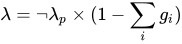
The negative Planck response, being an especially strong function of temperature, is sometimes factored out to give an expression in terms of the relative feedback gains gi from other components:

.

For example for the water vapor feedback.

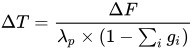
Within the context of modern numerical climate modelling and analysis, the linearized formulation has limited use. One such use is to diagnose the relative strengths of different feedback mechanisms. An estimate of climate sensitivity to a forcing is then obtained for the case where the net feedback remains negative and the system reaches a new equilibrium state (ΔEEI=0) after some time has passed:

.

Implications for climate policy

diagram showing five historical estimates of equilibrium climate sensitivity by the IPCC
Historical estimates of climate sensitivity from the IPCC assessments. The first three reports gave a qualitative likely range, and the next three had formally quantified it, by adding >66% likely range (dark blue). This uncertainty primarily depends on feedbacks.

Uncertainty over climate change feedbacks has implications for climate policy. For instance, uncertainty over carbon cycle feedbacks may affect targets for reducing greenhouse gas emissions (climate change mitigation). Emissions targets are often based on a target stabilization level of atmospheric greenhouse gas concentrations, or on a target for limiting global warming to a particular magnitude. Both of these targets (concentrations or temperatures) require an understanding of future changes in the carbon cycle.

If models incorrectly project future changes in the carbon cycle, then concentration or temperature targets could be missed. For example, if models underestimate the amount of carbon released into the atmosphere due to positive feedbacks (e.g., due to thawing permafrost), then they may also underestimate the extent of emissions reductions necessary to meet a concentration or temperature target.

Hypothetical technology

From Wikipedia, the free encyclopedia https://en.wikipedia.org/wiki/Hypothetical_technology ...