Search This Blog

Tuesday, March 17, 2026

Natural selection

From Wikipedia, the free encyclopedia
A diagram demonstrating mutation and selection

Natural selection is the differential survival and reproduction of individuals due to differences in the relative fitness endowed on them by their own particular complement of observable characteristics. It is a key law or mechanism of evolution which changes the heritable traits characteristic of a population or species over generations. Charles Darwin popularised the term "natural selection", contrasting it with artificial selection, which is intentional, whereas natural selection is not.

For Darwin natural selection was a law or principle which resulted from three different kinds of process: inheritance, including the transmission of heritable material from parent to offspring and its development (ontogeny) in the offspring; variation, which partly resulted from an organism's own agency (see phenotype; Baldwin effect); and the struggle for existence, which included both competition between organisms and cooperation or 'mutual aid' (particularly in 'social' plants and social animals).

Variation of traits, both genotypic and phenotypic, exists within all populations of organisms. However, some traits are more likely to facilitate survival and reproductive success. Thus, these traits are more likely to be passed on to the next generation. These traits can also become more common within a population if the environment that favours these traits remains fixed. If new traits become more favoured due to changes in a specific niche, microevolution occurs. If new traits become more favoured due to changes in the broader environment, macroevolution occurs. Sometimes, new species can arise especially if these new traits are radically different from the traits possessed by their predecessors. (Reference?)

The likelihood of these traits being 'selected' and passed down are determined by many factors. Some are likely to be passed down because they adapt well to their environments. Others are passed down because these traits are actively preferred by mating partners, which is known as sexual selection. Female bodies also prefer traits that confer the lowest cost to their reproductive health, which is known as fecundity selection.

Natural selection is a cornerstone of modern biology. The concept, published by Darwin and Alfred Russel Wallace in a joint presentation of papers in 1858, was elaborated in Darwin's influential 1859 book On the Origin of Species by Means of Natural Selection, or the Preservation of Favoured Races in the Struggle for Life. He described natural selection as analogous to artificial selection, a process by which animals and plants with traits considered desirable by human breeders are systematically favoured for reproduction. The concept of natural selection originally developed in the absence of a valid theory of heredity; at the time of Darwin's writing, science had yet to develop modern theories of genetics. The union of traditional Darwinian evolution with subsequent discoveries in classical genetics formed the modern synthesis of the mid-20th century.

New evidence has prompted 21st century evolutionary biologists to challenge the 20th century's gene-centred view of evolution, producing several extended evolutionary syntheses which bring organisms back to the heart of the theory of natural selection. Convergently, the growth of molecular genetics has led to evolutionary developmental biology, which compares the developmental processes of different organisms to infer how developmental processes evolved. While it is now recognised that genotypes can slowly change by random genetic drift, natural selection remains the primary explanation for adaptive evolution.

Historical development

Pre-Darwinian theories

Aristotle considered whether different forms could have appeared, only the useful ones surviving.

Several philosophers of the classical era, including Empedocles and his intellectual successor, the Roman poet Lucretius, expressed the idea that nature produces a huge variety of creatures, randomly, and that only those creatures that manage to provide for themselves and reproduce successfully persist. Empedocles' idea that organisms arose entirely by the incidental workings of causes such as heat and cold was criticised by Aristotle in Book II of Physics. He posited natural teleology in its place, and believed that form was achieved for a purpose, citing the regularity of heredity in species as proof. Nevertheless, he accepted in his biology that new types of animals, monstrosities (τερας), can occur in very rare instances (Generation of Animals, Book IV). As quoted in Darwin's 1872 edition of The Origin of Species, Aristotle considered whether different forms (e.g., of teeth) might have appeared accidentally, but only the useful forms survived:

So what hinders the different parts [of the body] from having this merely accidental relation in nature? as the teeth, for example, grow by necessity, the front ones sharp, adapted for dividing, and the grinders flat, and serviceable for masticating the food; since they were not made for the sake of this, but it was the result of accident. And in like manner as to the other parts in which there appears to exist an adaptation to an end. Wheresoever, therefore, all things together (that is all the parts of one whole) happened like as if they were made for the sake of something, these were preserved, having been appropriately constituted by an internal spontaneity, and whatsoever things were not thus constituted, perished, and still perish.

— Aristotle, Physics, Book II, Chapter 8

But Aristotle rejected this possibility in the next paragraph, making clear that he is talking about the development of animals as embryos with the phrase "either invariably or normally come about", not the origin of species:

... Yet it is impossible that this should be the true view. For teeth and all other natural things either invariably or normally come about in a given way; but of not one of the results of chance or spontaneity is this true. We do not ascribe to chance or mere coincidence the frequency of rain in winter, but frequent rain in summer we do; nor heat in the dog-days, but only if we have it in winter. If then, it is agreed that things are either the result of coincidence or for an end, and these cannot be the result of coincidence or spontaneity, it follows that they must be for an end; and that such things are all due to nature even the champions of the theory which is before us would agree. Therefore action for an end is present in things which come to be and are by nature.

— Aristotle, Physics, Book II, Chapter 8

The struggle for existence was later described by the Islamic writer Al-Jahiz in the 9th century, particularly in the context of top-down population regulation, but not in reference to individual variation or natural selection.

At the turn of the 16th century Leonardo da Vinci collected a set of fossils of ammonites as well as other biological material. He extensively reasoned in his writings that the shapes of animals are not given once and forever by the "upper power" but instead are generated in different forms naturally and then selected for reproduction by their compatibility with the environment.

The more recent classical arguments were reintroduced in the 18th century by Pierre Louis Maupertuis and others, including Darwin's grandfather, Erasmus Darwin.

Until the early 19th century, the prevailing view in Western societies was that differences between individuals of a species were uninteresting departures from their Platonic ideals (or typus) of created kinds. However, the theory of uniformitarianism in geology promoted the idea that simple, weak forces could act continuously over long periods of time to produce radical changes in the Earth's landscape. The success of this theory raised awareness of the vast scale of geological time and made plausible the idea that tiny, virtually imperceptible changes in successive generations could produce consequences on the scale of differences between species.

The early 19th-century zoologist Jean-Baptiste Lamarck suggested the inheritance of acquired characteristics as a mechanism for evolutionary change; adaptive traits acquired by an organism during its lifetime could be inherited by that organism's progeny, eventually causing transmutation of species. This theory, Lamarckism, was an influence on the Soviet biologist Trofim Lysenko's ill-fated antagonism to mainstream genetic theory as late as the mid-20th century.

Between 1835 and 1837, the zoologist Edward Blyth worked on the area of variation, artificial selection, and how a similar process occurs in nature. Darwin acknowledged Blyth's ideas in the first chapter on variation of On the Origin of Species.

Darwin's theory

Modern biology began in the nineteenth century with Charles Darwin's work on evolution by natural selection.

In 1859, Charles Darwin set out his theory of evolution by natural selection as an explanation for adaptation and speciation. He defined natural selection as the "principle by which each slight variation [of a trait], if useful, is preserved". The concept was simple but powerful: individuals best adapted to their environments are more likely to survive and reproduce. As long as there is some variation between them and that variation is heritable, there will be an inevitable selection of individuals with the most advantageous variations. If the variations are heritable, then differential reproductive success leads to the evolution of particular populations of a species, and populations that evolve to be sufficiently different eventually become different species.

Part of Thomas Malthus's table of population growth in England 1780–1810, from his Essay on the Principle of Population, 6th edition, 1826

Darwin's ideas were inspired by the observations that he had made on the second voyage of HMS Beagle (1831–1836), and by the work of a political economist, Thomas Robert Malthus, who, in An Essay on the Principle of Population (1798), noted that population (if unchecked) increases exponentially, whereas the food supply grows only arithmetically; thus, inevitable limitations of resources would have demographic implications, leading to a "struggle for existence". When Darwin read Malthus in 1838 he was already primed by his work as a naturalist to appreciate the "struggle for existence" in nature. It struck him that as population outgrew resources, "favourable variations would tend to be preserved, and unfavourable ones to be destroyed. The result of this would be the formation of new species." Darwin wrote:

If during the long course of ages and under varying conditions of life, organic beings vary at all in the several parts of their organisation, and I think this cannot be disputed; if there be, owing to the high geometrical powers of increase of each species, at some age, season, or year, a severe struggle for life, and this certainly cannot be disputed; then, considering the infinite complexity of the relations of all organic beings to each other and to their conditions of existence, causing an infinite diversity in structure, constitution, and habits, to be advantageous to them, I think it would be a most extraordinary fact if no variation ever had occurred useful to each being's own welfare, in the same way as so many variations have occurred useful to man. But if variations useful to any organic being do occur, assuredly individuals thus characterised will have the best chance of being preserved in the struggle for life; and from the strong principle of inheritance they will tend to produce offspring similarly characterised. This principle of preservation, I have called, for the sake of brevity, Natural Selection.

— Darwin summarising natural selection in the fourth chapter of On the Origin of Species

Once he had this hypothesis, Darwin was meticulous about gathering and refining evidence of consilience to meet standards of methodology before making his scientific theory public. He was in the process of writing his "big book" to present his research when the naturalist Alfred Russel Wallace independently conceived of the principle and described it in an essay he sent to Darwin to forward to Charles Lyell. Lyell and Joseph Dalton Hooker decided to present his essay together with unpublished writings that Darwin had sent to fellow naturalists, and On the Tendency of Species to form Varieties; and on the Perpetuation of Varieties and Species by Natural Means of Selection was read to the Linnean Society of London announcing co-discovery of the principle in July 1858. Darwin published a detailed account of his evidence and conclusions in On the Origin of Species in 1859. In later editions Darwin acknowledged that earlier writers—like William Charles Wells in 1813, and Patrick Matthew in 1831—had proposed similar basic ideas. However, they had not developed their ideas, or presented evidence to persuade others that the concept was useful.

Charles Darwin noted that pigeon fanciers had created many kinds of pigeon, such as Tumblers (1, 12), Fantails (13), and Pouters (14) by selective breeding.

Darwin thought of natural selection by analogy to how farmers select crops or livestock for breeding, which he called "artificial selection"; in his early manuscripts he referred to a "Nature" which would do the selection. At the time, mechanisms of evolution such as evolution by genetic drift were not yet explicitly formulated, but, even in 1859, Darwin clearly stated that selection was only part of the story: "I am convinced that Natural Selection has been the main but not exclusive means of modification". The final edition of The Origin of Species documented several other contributors to evolutionary modification: sexual selection; the inherited effects of the use and disuse of parts (see Baldwin effect); "the direct action of external conditions" (a process which has been revived in some 21st century evolutionary biologies); and "variations which seem to us in our ignorance to arise spontaneously" (see mutation). In a letter to Charles Lyell in September 1860, Darwin regretted the use of the term "Natural Selection", preferring the term "Natural Preservation".

For Darwin and his contemporaries, evolution was in essence synonymous with evolution by natural selection. After the publication of On the Origin of Species, educated people generally accepted that evolution had occurred in some form. However, natural selection remained controversial as a law or mechanism, partly because it was perceived to be too weak to explain the range of observed characteristics of living organisms, and partly because even supporters of evolution balked at its "unguided" and non-progressive nature, a response that has been characterised as the single most significant impediment to the idea's acceptance. However, some thinkers enthusiastically embraced natural selection; after reading Darwin, Herbert Spencer introduced the phrase survival of the fittest, which became a popular summary of the theory. The fifth edition of On the Origin of Species published in 1869 included Spencer's phrase as an alternative to natural selection, with credit given: "But the expression often used by Mr. Herbert Spencer of the Survival of the Fittest is more accurate, and is sometimes equally convenient." Although the phrase is still often used by non-biologists, modern biologists avoid it because it is tautological if "fittest" is read to mean "functionally superior" and is applied to individuals rather than considered as an averaged quantity over populations.

The modern synthesis

Natural selection relies crucially on the idea of heredity, but developed before the basic concepts of genetics were invented. Although the Moravian monk Gregor Mendel, the father of modern genetics, was a contemporary of Darwin's, his work lay in obscurity, only being rediscovered in 1900. With the early 20th-century integration of evolution with Mendel's laws of inheritance, the so-called modern synthesis, scientists generally came to accept natural selection. The synthesis grew from advances in different fields. Ronald Fisher developed the required mathematical language and wrote The Genetical Theory of Natural Selection (1930). J. B. S. Haldane introduced the concept of the "cost" of natural selection. Sewall Wright elucidated the nature of selection and adaptation. In his book Genetics and the Origin of Species (1937), Theodosius Dobzhansky established the idea that mutation, once seen as a rival to selection, actually supplied the raw material for natural selection by creating genetic diversity.

A second synthesis

Evolutionary developmental biology relates the evolution of form to the precise pattern of gene activity, here gap genes in the fruit fly, during embryonic development.

Ernst Mayr recognised the key importance of reproductive isolation for speciation in his Systematics and the Origin of Species (1942). W. D. Hamilton conceived of kin selection in 1964. This synthesis cemented natural selection as the foundation of evolutionary theory, where it remains today. A second synthesis was brought about at the end of the 20th century by advances in molecular genetics, creating the field of evolutionary developmental biology ("evo-devo"), which seeks to explain the evolution of form in terms of the genetic regulatory programs which control the development of the embryo at molecular level. Natural selection is here understood to act on embryonic development to change the morphology of the adult body.

21st century developments

Darwin's argument in On the Origin of Species portrayed natural selection as a law which resulted from other processes: inheritance (including both the transmission and development of heritable material); what we now call 'phenotypic' variation; and the metaphorical struggle for existence among living organisms. The 20th century's dominant theories of evolutionary biology treated natural selection differently, as if it were itself a causal mechanism, the agency of which was attributed either to the machinations of selfish genes or to 'the environment'. Which meant that living organisms themselves dropped out of scientists' theoretical picture. Under the pressure of evidence, 21st century evolutionary biology has seen growing criticism of the 20th century's gene-centred view of evolution. In consequence we now have an array of extended evolutionary syntheses which have returned the agency of living organisms to the heart of the theory of natural selection.

Terminology

The term natural selection is most often defined as the differential survival and reproduction of different phenotypic variations, where these are supported by heritable traits. It is sometimes helpful to distinguish between the processes or mechanisms which result in selection and selection's effects. Traits that endow greater reproductive success on an organism are said to be selected for, while those that reduce success are selected against.

Mechanism

Heritable variation, differential reproduction

During the Industrial Revolution, pollution killed many lichens, leaving tree trunks dark. A dark (melanic) morph of the peppered moth largely replaced the formerly usual light morph (both shown here). Since the moths are subject to predation by birds hunting by sight, the colour change offers better camouflage against the changed background, suggesting natural selection at work.

Natural or phenotypic variation occurs among the individuals of any population of organisms. Some variations may improve an individual's chances of surviving and reproducing such that its lifetime reproductive rate is increased, which means that it leaves more offspring. If the variations that give these individuals a reproductive advantage are also supported by heritable traits which are passed from parent to offspring, then there will be differential reproduction, that is, a slightly higher proportion of flying squirrels, fast rabbits or efficient algae in the next generation. Even if the reproductive advantage is very slight, over many generations any advantageous heritable trait becomes dominant in the population. In this way the natural environment of an organism "selects for" traits that confer a reproductive advantage, causing evolutionary change, as Darwin described. This gives the appearance of purpose, but in natural selection there is no intentional choice. Artificial selection is purposive where natural selection is not, though biologists often use teleological language to describe it.

The peppered moth exists in both light and dark colours in Great Britain, but during the Industrial Revolution, many of the trees on which the moths rested became blackened by soot, giving the dark-coloured moths an advantage in hiding from predators. This gave dark-coloured moths a better chance of surviving to produce dark-coloured offspring, and in just fifty years from the first dark moth being caught, nearly all of the moths in industrial Manchester were dark. The balance was reversed by the effect of the Clean Air Act 1956, and the dark moths became rare again, demonstrating the influence of natural selection on peppered moth evolution. A recent study, using image analysis and avian vision models, shows that pale individuals more closely match lichen backgrounds than dark morphs and for the first time quantifies the camouflage of moths to predation risk. Modern genetic studies show that the switch from light to dark coloration is due to a transposable element insertion into the first intron of the gene cortex.

An example of natural selection in the wild involving a much larger number of genes is given by ash trees in Britain, under selection by an invasive fungus causing ash dieback. This fungus has killed large numbers of ash trees in Europe, and damaged many others, though some trees remain healthy. The genetic basis of health under ash dieback pressure has been shown to be quantitative and highly polygenic. Using genomic prediction models trained on planted trials, geneticists have shown that natural selection is acting on a woodland in Surrey England, causing the new generation of ash trees to be, on average, more genetically resistant to ash dieback than their parents generation. This is due to selection for beneficial gene combinations from among the variation present in the parents.

Fitness

The concept of fitness is central to natural selection. In broad terms, individuals that are more "fit" have better potential for survival, as in the well-known phrase "survival of the fittest", but the precise meaning of the term is much more subtle. Modern evolutionary theory defines fitness not by how long an organism lives, but by how successful it is at reproducing. If an organism lives half as long as others of its species, but has twice as many offspring surviving to adulthood, its genes become more common in the adult population of the next generation. Though natural selection acts on individuals, the effects of chance mean that fitness can only really be defined "on average" for the individuals within a population. The fitness of a particular genotype corresponds to the average effect on all individuals with that genotype. A distinction must be made between the concept of "survival of the fittest" and "improvement in fitness". "Survival of the fittest" does not give an "improvement in fitness", it only represents the removal of the less fit variants from a population. A mathematical example of "survival of the fittest" is given by Haldane in his paper "The Cost of Natural Selection". Haldane called this process "substitution" or more commonly in biology, this is called "fixation". This is correctly described by the differential survival and reproduction of individuals due to differences in phenotype. On the other hand, "improvement in fitness" is not dependent on the differential survival and reproduction of individuals due to differences in phenotype, it is dependent on the absolute survival of the particular variant. The probability of a beneficial mutation occurring on some member of a population depends on the total number of replications of that variant. The mathematics of "improvement in fitness was described by Kleinman. An empirical example of "improvement in fitness" is given by the Kishony Mega-plate experiment. In this experiment, "improvement in fitness" depends on the number of replications of the particular variant for a new variant to appear that is capable of growing in the next higher drug concentration region. Fixation or substitution is not required for this "improvement in fitness". On the other hand, "improvement in fitness" can occur in an environment where "survival of the fittest" is also acting. Richard Lenski's classic E. coli long-term evolution experiment is an example of adaptation in a competitive environment, ("improvement in fitness" during "survival of the fittest"). The probability of a beneficial mutation occurring on some member of the lineage to give improved fitness is slowed by the competition. The variant which is a candidate for a beneficial mutation in this limited carrying capacity environment must first out-compete the "less fit" variants in order to accumulate the requisite number of replications for there to be a reasonable probability of that beneficial mutation occurring.

Competition

In biology, competition is an interaction between organisms in which the fitness of one is lowered by the presence of another. This may be because both rely on a limited supply of a resource such as food, water, or territory. Competition may be within or between species, and may be direct or indirect. Species less suited to compete should in theory either adapt or die out, since competition plays a powerful role in natural selection, but according to the "room to roam" theory it may be less important than expansion among larger clades.

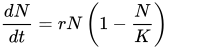
Competition is modelled by r/K selection theory, which is based on Robert MacArthur and E. O. Wilson's work on island biogeography. In this theory, selective pressures drive evolution in one of two stereotyped directions: r- or K-selection. These terms, r and K, can be illustrated in a logistic model of population dynamics:

where r is the growth rate of the population (N), and K is the carrying capacity of its local environmental setting. Typically, r-selected species exploit empty niches, and produce many offspring, each with a relatively low probability of surviving to adulthood. In contrast, K-selected species are strong competitors in crowded niches, and invest more heavily in much fewer offspring, each with a relatively high probability of surviving to adulthood.
Social species

Foreshadowing a central theme in 21st century evolutionary biology, Darwin argued that natural selection operated differently in social than in non-social species. The members of social species aided their conspecifics to survive, either passively (as in social plants) or both passively and actively, as in social animals. Darwin called plants like grasses and thistles social, because, in a "somewhat strained sense", they help each other by increasing their mutual chances of cross-fertilization (and hence vigour), and by reducing the depredations of their "devourers" (e.g. birds eating their seeds). This meant that often, if social plants "did not live in numbers, they could not live at all."

When it came to animals, Darwin said a truly social animal sought society beyond its own family. Unlike marmosets and tamarins, gorillas, lions, and tigers were not social in Darwin's sense, because, while they "no doubt" felt sympathy for the suffering of their young, they did not sympathize with "any other animal" beyond their own family.

In addition to the passive kinds of mutual aid that advantaged social plants, social animals could gain additional benefits through efficiencies due to divisions of labour like those found in social insects. Beyond this, some social species of bird and mammal actively signaled danger to other members of their community, some even posting sentinels to warn the group of approaching enemies. Thus rabbits stamp their hind-feet, and female seals act as look-outs. Social creatures may also actively groom each other, removing parasites, or licking each other’s wounds. Animals like wolves, killer whales, and pelicans hunt in concert, sometimes with a combined strategy. Social animals mutually defend each other too, and thereby show their "heroism." All these advantages mean that, in social animals, unlike non-social species, natural selection "will adapt the structure of each individual for the benefit of the whole community; if the community profits by the selected change." In The Descent of Man, Darwin attributes the evolution of all the most human of human characteristics—rationality, intellect, language, conscience, moral qualities, and culture—to the fact that our pre-human ancestors were group-living social animals par excellence.

Although the gene-centred view of evolution promulgated by the 20th century's modern synthesis in evolutionary biology denied the possibility of community or group selection of the kind proposed by Darwin, 21st century evolutionists are less dismissive.

Classification

1: directional selection: a single extreme phenotype favoured.
2, stabilizing selection: intermediate favoured over extremes.
3: disruptive selection: extremes favoured over intermediate.
X-axis: phenotypic trait
Y-axis: number of organisms
Group A: original population
Group B: after selection

Natural selection can act on any heritable phenotypic trait, and selective pressure can be altered by any aspect of the environment, including sexual selection and competition or cooperation with members of the same or other species. However, this does not imply that natural selection is always directional and results in adaptive evolution; natural selection often results in the maintenance of the status quo by eliminating less fit variants.

Selection can be classified in several different ways, such as by its effect on a trait, on genetic diversity, by the life cycle stage where it acts, by the unit of selection, or by the resource being competed for.

By effect on a trait

Selection has different effects on phenotypic traits. Stabilizing selection acts to hold a trait at a stable optimum, and in the simplest case all deviations from this optimum are selectively disadvantageous. Directional selection favours extreme values of a trait. The uncommon disruptive selection also acts during transition periods when the current mode is sub-optimal, but alters the trait in more than one direction. In particular, if the trait is quantitative and univariate then both higher and lower trait levels are favoured. Disruptive selection can be a precursor to speciation.

By effect on genetic diversity

Alternatively, selection can be divided according to its effect on genetic diversity. Purifying or negative selection acts to remove genetic variation from the population (and is opposed by de novo mutation, which introduces new variation. In contrast, balancing selection acts to maintain genetic variation in a population, even in the absence of de novo mutation, by negative frequency-dependent selection. One mechanism for this is heterozygote advantage, where individuals with two different alleles have a selective advantage over individuals with just one allele. The polymorphism at the human ABO blood group locus has been explained in this way.

Different types of selection act at each life cycle stage of a sexually reproducing organism.

By life cycle stage

Another option is to classify selection by the life cycle stage at which it acts. Some biologists recognise just two types: viability (or survival) selection, which acts to increase an organism's probability of survival, and fecundity (or fertility or reproductive) selection, which acts to increase the rate of reproduction, given survival. Others split the life cycle into further components of selection. Thus viability and survival selection may be defined separately and respectively as acting to improve the probability of survival before and after reproductive age is reached, while fecundity selection may be split into additional sub-components including sexual selection, gametic selection, acting on gamete survival, and compatibility selection, acting on zygote formation.

By unit of selection

Selection can also be classified by the level or unit of selection. Individual selection acts on the individual, in the sense that adaptations are "for" the benefit of the individual, and result from selection among individuals. Gene selection acts directly at the level of the gene. In kin selection and intragenomic conflict, gene-level selection provides a more apt explanation of the underlying process. Group selection, if it occurs, acts on groups of organisms, on the assumption that groups replicate and mutate in an analogous way to genes and individuals. There is an ongoing debate over the degree to which group selection occurs in nature.

By resource being competed for

The peacock's elaborate plumage is mentioned by Darwin as an example of sexual selection, and is a classic example of Fisherian runaway, driven to its conspicuous size and coloration through mate choice by females over many generations.

Finally, selection can be classified according to the resource being competed for. Sexual selection results from competition for mates. Sexual selection typically proceeds via fecundity selection, sometimes at the expense of viability. Ecological selection is natural selection via any means other than sexual selection, such as kin selection, competition, and infanticide. Following Darwin, natural selection is sometimes defined as ecological selection, in which case sexual selection is considered a separate mechanism.

Sexual selection as first articulated by Darwin (using the example of the peacock's tail) refers specifically to competition for mates, which can be intrasexual, between individuals of the same sex, that is male–male competition, or intersexual, where one gender chooses mates, most often with males displaying and females choosing. However, in some species, mate choice is primarily by males, as in some fishes of the family Syngnathidae.

Phenotypic traits can be displayed in one sex and desired in the other sex, causing a positive feedback loop called a Fisherian runaway, for example, the extravagant plumage of some male birds such as the peacock. An alternate theory proposed by the same Ronald Fisher in 1930 is the sexy son hypothesis, that mothers want promiscuous sons to give them large numbers of grandchildren and so choose promiscuous fathers for their children. Aggression between members of the same sex is sometimes associated with very distinctive features, such as the antlers of stags, which are used in combat with other stags. More generally, intrasexual selection is often associated with sexual dimorphism, including differences in body size between males and females of a species.

Arms races

Selection in action: resistance to antibiotics grows through the survival of individuals less affected by the antibiotic. Their offspring inherit the resistance.

Natural selection is seen in action in the development of antibiotic resistance in microorganisms. Since the discovery of penicillin in 1928, antibiotics have been used to fight bacterial diseases. The widespread misuse of antibiotics has selected for microbial resistance to antibiotics in clinical use, to the point that the methicillin-resistant Staphylococcus aureus (MRSA) has been described as a "superbug" because of the threat it poses to health and its relative invulnerability to existing drugs. Response strategies typically include the use of different, stronger antibiotics; however, new strains of MRSA have recently emerged that are resistant even to these drugs. This is an evolutionary arms race, in which bacteria develop strains less susceptible to antibiotics, while medical researchers attempt to develop new antibiotics that can kill them. A similar situation occurs with pesticide resistance in plants and insects. Arms races are not necessarily induced by man; a well-documented example involves the spread of a gene in the butterfly Hypolimnas bolina suppressing male-killing activity by Wolbachia bacteria parasites on the island of Samoa, where the spread of the gene is known to have occurred over a period of just five years.

Evolution by means of natural selection

Without phenotypic variation, there would be no evolution by natural selection. A prerequisite for natural selection to result in adaptive evolution, novel traits and speciation is the presence of heritable genetic variation that affects phenotypic fitness differences. Genetic variation is the result of mutations, genetic recombinations and alterations in the karyotype (the number, shape, size and internal arrangement of the chromosomes). Any of these changes might have an effect that is highly advantageous or highly disadvantageous for phenotypic variations, but large effects on phenotypes are rare.

In the past, most changes in the genetic material were considered neutral or close to neutral because they occurred in noncoding DNA or resulted in a synonymous substitution. However, many mutations in non-coding DNA have deleterious effects. Although both mutation rates and average fitness effects of mutations are dependent on the organism, a majority of mutations in humans are slightly deleterious.

Some mutations occur in "toolkit" or regulatory genes. Changes in these often have large effects on the phenotype of the individual because they regulate the function of many other genes. Most, but not all, mutations in regulatory genes result in non-viable embryos. Some nonlethal regulatory mutations occur in HOX genes in humans, which can result in a cervical rib or polydactyly, an increase in the number of fingers or toes. When such mutations result in a higher fitness, natural selection favours these phenotypes and the novel trait spreads in the population. Established traits are not immutable; traits that have high fitness in one environmental context may be much less fit if environmental conditions change. In the absence of natural selection to preserve such a trait, it becomes more variable and deteriorate over time, possibly resulting in a vestigial manifestation of the trait, also called evolutionary baggage. In many circumstances, the apparently vestigial structure may retain a limited functionality, or may be co-opted for other advantageous traits in a phenomenon known as preadaptation. A famous example of a vestigial structure, the eye of the blind mole-rat, is believed to retain function in photoperiod perception.

Speciation

Speciation requires a degree of reproductive isolation—that is, a reduction in gene flow. However, it is intrinsic to the concept of a species that hybrids are selected against, opposing the evolution of reproductive isolation, a problem that was recognised by Darwin. The problem does not occur in allopatric speciation with geographically separated populations, which can diverge with different sets of mutations. E. B. Poulton realized in 1903 that reproductive isolation could evolve through divergence, if each lineage acquired a different, incompatible allele of the same gene. Selection against the heterozygote would then directly create reproductive isolation, leading to the Bateson–Dobzhansky–Muller model, further elaborated by H. Allen Orr and Sergey Gavrilets. With reinforcement, however, natural selection can favour an increase in pre-zygotic isolation, influencing the process of speciation directly.

Genetic basis

Genotype and phenotype

Natural selection results from the ways an organism's phenotypes, or observable characteristics, bear on its capacity to reproduce. Phenotypes are plastic which means they are less directly determined by a given organism's genetic make-up (genotype) than by the way that particular organism develops and behaves in the theatre of agency which constitutes its habitat or environment. When different organisms in a population possess different versions of a gene affecting a certain phenotypic trait, each of these versions is known as an allele. (An example is the ABO blood type antigens in humans, where three alleles govern the phenotype.) It is these genetic variations which affect fitness-relevant differences in phenotypic traits and so underpin the evolution of new adaptations and, ultimately, new species.

Some traits are governed by only a single gene, but most traits are influenced by the interactions of many genes. A variation in one of the many genes that contributes to a trait may have only a small effect on the phenotype; together, these genes can support a continuum of possible phenotypic values.

Directionality of selection

When some component of a phenotypic trait is heritable, selection alters the frequencies of the different alleles, or variants of the gene that affect the variants of the observed trait. Selection can be divided into three classes, on the basis of its effect on allele frequencies: directional, stabilizing, and disruptive selection. Directional selection occurs when an allele has a greater fitness than others, so that it increases in frequency, gaining an increasing share in the population. This process can continue until the allele is fixed and the entire population shares the fitter phenotype. Far more common is stabilizing selection, which lowers the frequency of alleles that have a deleterious effect on the phenotype—that is, produce organisms of lower fitness. This process can continue until the allele is eliminated from the population. Stabilizing selection conserves functional genetic features, such as protein-coding genes or regulatory sequences, over time by selective pressure against deleterious variants. Disruptive (or diversifying) selection is selection favouring extreme trait values over intermediate trait values. Disruptive selection may cause sympatric speciation through niche partitioning.

Some forms of balancing selection do not result in fixation, but maintain an allele at intermediate frequencies in a population. This can occur in diploid species (with pairs of chromosomes) when heterozygous individuals (with just one copy of the allele) have a higher fitness than homozygous individuals (with two copies). This is called heterozygote advantage or over-dominance, of which the best-known example is the resistance to malaria in humans heterozygous for sickle-cell anaemia. Maintenance of allelic variation can also occur through disruptive or diversifying selection, which favours genotypes that depart from the average in either direction (that is, the opposite of over-dominance), and can result in a bimodal distribution of trait values. Finally, balancing selection can occur through frequency-dependent selection, where the fitness of one particular phenotype depends on the distribution of other phenotypes in the population. The principles of game theory have been applied to understand the fitness distributions in these situations, particularly in the study of kin selection and the evolution of reciprocal altruism.

Selection, genetic variation, and drift

A portion of all genetic variation is functionally neutral, producing no phenotypic effect or significant difference in fitness. Motoo Kimura's neutral theory of molecular evolution by genetic drift proposes that this variation accounts for a large fraction of observed genetic diversity. Neutral events can radically reduce genetic variation through population bottlenecks, which among other things can cause the founder effect in initially small new populations. When genetic variation does not result in differences in fitness, selection cannot directly affect the frequency of such variation. As a result, the genetic variation at those sites is higher than at sites where variation does influence fitness. However, after a period with no new mutations, the genetic variation at these sites is eliminated due to genetic drift. Natural selection reduces genetic variation by eliminating maladapted individuals, and consequently the mutations that caused the maladaptation. At the same time, new mutations occur, resulting in a mutation–selection balance. The exact outcome of the two processes depends both on the rate at which new mutations occur and on the strength of the natural selection, which is a function of how unfavourable the mutation proves to be.

Genetic linkage occurs when the loci of two alleles are close on a chromosome. During the formation of gametes, recombination reshuffles the alleles. The chance that such a reshuffle occurs between two alleles is inversely related to the distance between them. Selective sweeps occur when an allele becomes more common in a population as a result of positive selection. As the prevalence of one allele increases, closely linked alleles can also become more common by "genetic hitchhiking", whether they are neutral or even slightly deleterious. A strong selective sweep results in a region of the genome where the positively selected haplotype (the allele and its neighbours) are in essence the only ones that exist in the population. Selective sweeps can be detected by measuring linkage disequilibrium, or whether a given haplotype is overrepresented in the population. Since a selective sweep also results in selection of neighbouring alleles, the presence of a block of strong linkage disequilibrium might indicate a 'recent' selective sweep near the centre of the block.

Background selection is the opposite of a selective sweep. If a specific site experiences strong and persistent purifying selection, linked variation tends to be weeded out along with it, producing a region in the genome of low overall variability. Because background selection is a result of deleterious new mutations, which can occur randomly in any haplotype, it does not produce clear blocks of linkage disequilibrium, although with low recombination it can still lead to slightly negative linkage disequilibrium overall.

Impact

Darwin's ideas, along with those of Adam Smith and Karl Marx, had a profound influence on 19th century thought, including his radical claim that "elaborately constructed forms, so different from each other, and dependent on each other in so complex a manner" evolved from the simplest forms of life by a few simple principles. This inspired some of Darwin's most ardent supporters—and provoked the strongest opposition. Natural selection had the power, according to Stephen Jay Gould, to "dethrone some of the deepest and most traditional comforts of Western thought", such as the belief that humans have a special place in the world.

In the words of the philosopher Daniel Dennett, "Darwin's dangerous idea" of evolution by natural selection is a "universal acid," which cannot be kept restricted to any vessel or container, as it soon leaks out, working its way into ever-wider surroundings. Thus, in the last decades, the concept of natural selection has spread from evolutionary biology to other disciplines, including evolutionary computation, quantum Darwinism, evolutionary economics, evolutionary epistemology, evolutionary psychology, and cosmological natural selection. This unlimited applicability has been called universal Darwinism.

Origin of life

How life originated from inorganic matter remains an unresolved problem in biology. One prominent hypothesis is that life first appeared in the form of short self-replicating RNA polymers. On this view, life may have come into existence when RNA chains first experienced the basic conditions, as conceived by Charles Darwin, for natural selection to operate. These conditions are: heritability, variation of type, and competition for limited resources. The fitness of an early RNA replicator would likely have been a function of adaptive capacities that were intrinsic (i.e., determined by the nucleotide sequence) and the availability of resources. The three primary adaptive capacities could logically have been: (1) the capacity to replicate with moderate fidelity (giving rise to both heritability and variation of type), (2) the capacity to avoid decay, and (3) the capacity to acquire and process resources. These capacities would have been determined initially by the folded configurations (including those configurations with ribozyme activity) of the RNA replicators that, in turn, would have been encoded in their individual nucleotide sequences.

Cell and molecular biology

In 1881, the embryologist Wilhelm Roux published Der Kampf der Theile im Organismus (The Struggle of Parts in the Organism) in which he suggested that the development of an organism results from a Darwinian competition between the parts of the embryo, occurring at all levels, from molecules to organs. In recent years, a modern version of this theory has been proposed by Jean-Jacques Kupiec. According to this cellular Darwinism, random variation at the molecular level generates diversity in cell types whereas cell interactions impose a characteristic order on the developing embryo.

Social and psychological theory

The social implications of the theory of evolution by natural selection also became the source of continuing controversy. Friedrich Engels, a German political philosopher and co-originator of the ideology of communism, wrote in 1872 that "Darwin did not know what a bitter satire he wrote on mankind, and especially on his countrymen, when he showed that free competition, the struggle for existence, which the economists celebrate as the highest historical achievement, is the normal state of the animal kingdom." Herbert Spencer and the eugenics advocate Francis Galton's interpretation of natural selection as necessarily progressive, leading to supposed advances in intelligence and civilisation, became a justification for colonialism, eugenics, and social Darwinism. For example, in 1940, Konrad Lorenz, in writings that he subsequently disowned, used the theory as a justification for policies of the Nazi state. He wrote "... selection for toughness, heroism, and social utility ... must be accomplished by some human institution, if mankind, in default of selective factors, is not to be ruined by domestication-induced degeneracy. The racial idea as the basis of our state has already accomplished much in this respect." Others have developed ideas that human societies and culture evolve by mechanisms analogous to those that apply to evolution of species.

More recently, work among anthropologists and psychologists has led to the development of sociobiology and later of evolutionary psychology, a field that attempts to explain features of human psychology in terms of adaptation to the ancestral environment. The most prominent example of evolutionary psychology, notably advanced in the early work of Noam Chomsky and later by Steven Pinker, is the hypothesis that the human brain has adapted to acquire the grammatical rules of natural language. Other aspects of human behaviour and social structures, from specific cultural norms such as incest avoidance to broader patterns such as gender roles, have been hypothesised to have similar origins as adaptations to the early environment in which modern humans evolved. By analogy to the action of natural selection on genes, the concept of memes—"units of cultural transmission," or culture's equivalents of genes undergoing selection and recombination—has arisen, first described in this form by Richard Dawkins in 1976 and subsequently expanded upon by philosophers such as Daniel Dennett as explanations for complex cultural activities, including human consciousness.

Information and systems theory

In 1922, Alfred J. Lotka proposed that natural selection might be understood as a physical principle that could be described in terms of the use of energy by a system, a concept later developed by Howard T. Odum as the maximum power principle in thermodynamics, whereby evolutionary systems with selective advantage maximise the rate of useful energy transformation.

The principles of natural selection have inspired a variety of computational techniques, such as "soft" artificial life, that simulate selective processes and can be highly efficient in 'adapting' entities to an environment defined by a specified fitness function. For example, a class of heuristic optimisation algorithms known as genetic algorithms, pioneered by John Henry Holland in the 1970s and expanded upon by David E. Goldberg, identify optimal solutions by simulated reproduction and mutation of a population of solutions defined by an initial probability distribution. Such algorithms are particularly useful when applied to problems whose energy landscape is very rough or has many local minima.

In fiction

Darwinian evolution by natural selection is pervasive in literature, whether taken optimistically in terms of how humanity may evolve towards perfection, or pessimistically in terms of the dire consequences of the interaction of human nature and the struggle for survival. Among major responses is Samuel Butler's 1872 pessimistic Erewhon ("nowhere", written mostly backwards). In 1893 H. G. Wells imagined "The Man of the Year Million", transformed by natural selection into a being with a huge head and eyes, and shrunken body.

Earth system science

From Wikipedia, the free encyclopedia
An ecological analysis of CO
2
in an ecosystem. As systems biology, systems ecology seeks a holistic view of the interactions and transactions within and between biological and ecological systems.

Earth system science (ESS) is the application of systems science to the Earth. In particular, it considers interactions and 'feedbacks', through material and energy fluxes, between the Earth's sub-systems' cycles, processes and "spheres"—atmosphere, hydrosphere, cryospheregeosphere, pedosphere, lithosphere, biosphere, and even the magnetosphere—as well as the impact of human societies on these components. At its broadest scale, Earth system science brings together researchers across both the natural and social sciences, from fields including ecology, economics, geography, geology, glaciology, meteorology, oceanography, climatology, paleontology, sociology, and space science. Like the broader subject of systems science, Earth system science assumes a holistic view of the dynamic interaction between the Earth's spheres and their many constituent subsystems fluxes and processes, the resulting spatial organization and time evolution of these systems, and their variability, stability and instability. Subsets of Earth System science include systems geology and systems ecology, and many aspects of Earth System science are fundamental to the subjects of physical geography and climate science.

Definition

The Science Education Resource Center, Carleton College, offers the following description: "Earth System science embraces chemistry, physics, biology, mathematics and applied sciences in transcending disciplinary boundaries to treat the Earth as an integrated system. It seeks a deeper understanding of the physical, chemical, biological and human interactions that determine the past, current and future states of the Earth. Earth System science provides a physical basis for understanding the world in which we live and upon which humankind seeks to achieve sustainability".

Earth System science has articulated four overarching, definitive and critically important features of the Earth System, which include:

  1. Variability: Many of the Earth System's natural 'modes' and variabilities across space and time are beyond human experience, because of the stability of the recent Holocene. Much Earth System science therefore relies on studies of the Earth's past behaviour and models to anticipate future behaviour in response to pressures.
  2. Life: Biological processes play a much stronger role in the functioning and responses of the Earth System than previously thought. It appears to be integral to every part of the Earth System.
  3. Connectivity: Processes are connected in ways and across depths and lateral distances that were previously unknown and inconceivable.
  4. Non-linear: The behaviour of the Earth System is typified by strong non-linearities. This means that abrupt change can result when relatively small changes in a 'forcing function' push the System across a 'threshold'.

History

For millennia, humans have speculated how the physical and living elements on the surface of the Earth combine, with gods and goddesses frequently posited to embody specific elements. The notion that the Earth, itself, is alive was a regular theme of Greek philosophy and religion.

Early scientific interpretations of the Earth system began in the field of geology, initially in the Middle East and China, and largely focused on aspects such as the age of the Earth and the large-scale processes involved in mountain and ocean formation. As geology developed as a science, understanding of the interplay of different facets of the Earth system increased, leading to the inclusion of factors such as the Earth's interior, planetary geology, living systems and Earth-like worlds.

In many respects, the foundational concepts of Earth System science can be seen in the natural philosophy 19th century geographer Alexander von Humboldt. In the 20th century, Vladimir Vernadsky (1863–1945) saw the functioning of the biosphere as a geological force generating a dynamic disequilibrium, which in turn promoted the diversity of life.

In parallel, the field of systems science was developing across numerous other scientific fields, driven in part by the increasing availability and power of computers, and leading to the development of climate models that began to allow the detailed and interacting simulations of the Earth's weather and climate. Subsequent extension of these models has led to the development of "Earth system models" (ESMs) that include facets such as the cryosphere and the biosphere.

In 1983 a NASA committee called the Earth System Science Committee was formed. The earliest reports of NASA's ESSC, Earth System Science: Overview (1986), and the book-length Earth System Science: A Closer View (1988), constitute a major landmark in the formal development of Earth system science. Early works discussing Earth system science, like these NASA reports, generally emphasized the increasing human impacts on the Earth system as a primary driver for the need of greater integration among the life and geo-sciences, making the origins of Earth system science parallel to the beginnings of global change studies and programs.

Climate science

Climatology and climate change have been central to Earth System science since its inception, as evidenced by the prominent place given to climate change in the early NASA reports discussed above. The Earth's climate system is a prime example of an emergent property of the whole planetary system, that is, one which cannot be fully understood without regarding it as a single integrated entity. It is also a system where human impacts have been growing rapidly in recent decades, lending immense importance to the successful development and advancement of Earth System science research. As just one example of the centrality of climatology to the field, the mission statement of one of the earliest centers for Earth System science research, the Earth System Science Center at Pennsylvania State University, reads, "the Earth System Science Center (ESSC) maintains a mission to describe, model, and understand the Earth's climate system".

The five components of the climate system all interact. They are the atmosphere, the hydrosphere, the cryosphere, the lithosphere and the biosphere.

Earth's climate system is a complex system with five interacting components: the atmosphere (air), the hydrosphere (water), the cryosphere (ice and permafrost), the lithosphere (earth's upper rocky layer) and the biosphere (living things). Climate is the statistical characterization of the climate system. It represents the average weather, typically over a period of 30 years, and is determined by a combination of processes, such as ocean currents and wind patterns. Circulation in the atmosphere and oceans transports heat from the tropical regions to regions that receive less energy from the Sun. Solar radiation is the main driving force for this circulation. The water cycle also moves energy throughout the climate system. In addition, certain chemical elements are constantly moving between the components of the climate system. Two examples for these biochemical cycles are the carbon and nitrogen cycles.

The climate system can change due to internal variability and external forcings. These external forcings can be natural, such as variations in solar intensity and volcanic eruptions, or caused by humans. Accumulation of greenhouse gases in the atmosphere, mainly being emitted by people burning fossil fuels, is causing climate change. Human activity also releases cooling aerosols, but their net effect is far less than that of greenhouse gases. Changes can be amplified by feedback processes in the different climate system components.

Education

Earth System science can be studied at a postgraduate level at some universities. In general education, the American Geophysical Union, in cooperation with the Keck Geology Consortium and with support from five divisions within the National Science Foundation, convened a workshop in 1996, "to define common educational goals among all disciplines in the Earth sciences". In its report, participants noted that, "The fields that make up the Earth and space sciences are currently undergoing a major advancement that promotes understanding the Earth as a number of interrelated systems". Recognizing the rise of this systems approach, the workshop report recommended that an Earth System science curriculum be developed with support from the National Science Foundation.

In 2000, the Earth System Science Education Alliance (ESSEA) was begun, and currently includes the participation of 40+ institutions, with over 3,000 teachers having completed an ESSEA course as of fall 2009".

The concept of earth system law (still in its infancy as per 2021) is a sub-discipline of earth system governance, itself a subfield of earth system sciences analyzed from a social sciences perspective.

Secular morality

From Wikipedia, the free encyclopedia

Secular morality is the aspect of philosophy that deals with morality outside of religious traditions. Modern examples include humanism, freethinking, and most versions of consequentialism. Additional philosophies with ancient roots include those such as skepticism and virtue ethics. Greg M. Epstein also states that, "much of ancient Far Eastern thought is deeply concerned with human goodness without placing much if any stock in the importance of gods or spirits." An example is the Kural text of Valluvar, an ancient Indian theistic poet-philosopher whose work remains secular and non-denominational. Other philosophers have proposed various ideas about how to determine right and wrong actions. An example is Immanuel Kant's categorical imperative.

A variety of positions are apparent regarding the relationship between religion and morality. Some believe that religion is necessary as a guide to a moral life. According to some, this idea has been with us for nearly 2,000 years. Others suggest this idea goes back at least 2,600 years as exemplified in Psalm 14 of the Hebrew Bible. According to others, the idea goes back as far as 4,000 years, with the ancient Egyptians' 42 Principles of Ma'at.

Others eschew the idea that religion is required to provide a guide to right and wrong behavior. The Westminster Dictionary of Christian Ethics however states that religion and morality "are to be defined differently and have no definitional connections with each other". Some believe that religions provide poor guides to moral behavior. Various commentators, such as Richard Dawkins (The God Delusion), Sam Harris (The End of Faith) and Christopher Hitchens (God Is Not Great) are among those who have asserted this view.

Secular moral frameworks

Consequentialism

"Consequentialists", as described by Peter Singer, "start not with moral rules, but with goals. They assess actions by the extent to which they further those goals." Singer also notes that utilitarianism is "the best-known, though not the only, consequentialist theory." Epicureanism offers a pleasure-based consequential theory of ethics, and its founder says "we think empirically concerning the actions based on the results observed from any course of action." Consequentialism is the class of normative ethical theories holding that the consequences of one's conduct are the ultimate basis for any judgment about the rightness of that conduct. Thus, from a consequentialist standpoint, a morally right act (or omission) is one that will produce a good outcome, or consequence. In his 2010 book, The Moral Landscape, Sam Harris describes a utilitarian science of morality.

Freethought

Freethought is a philosophical viewpoint that holds that opinions should be formed on the basis of science, logic, and reason, and should not be influenced by authority, tradition, or other dogmas. Freethinkers strive to build their opinions on the basis of facts, scientific inquiry, and logical principles, independent of any logical fallacies or intellectually limiting effects of authority, confirmation bias, cognitive bias, conventional wisdom, popular culture, prejudice, sectarianism, tradition, urban legend, and all other dogmas.

Secular humanism

Secular humanism focuses on the way human beings can lead happy and functional lives. It posits that human beings are capable of being ethical and moral without religion or God, it neither assumes humans to be inherently evil or innately good, nor presents humans as "above nature" or superior to it. Rather, the humanist life stance emphasizes the unique responsibility facing humanity and the ethical consequences of human decisions. Fundamental to the concept of secular humanism is the strongly held viewpoint that ideology—be it religious or political—must be thoroughly examined by each individual and not simply accepted or rejected on faith. Along with this, an essential part of secular humanism is a continually adapting search for truth, primarily through science and philosophy.

Positions on religion and morality

The subject of secular morality has been discussed by prominent secular scholars as well as popular culture-based atheist and anti-religious writers. These include Paul Chamberlain's Can We Be Good Without God? (1996), Richard Holloway's Godless Morality: Keeping Religion Out of Ethics (1999), Robert Buckman's Can We Be Good Without God? (2002), Michael Shermer's The Science of Good and Evil (2004), Richard Dawkins's The God Delusion (2006), Christopher Hitchens's God Is Not Great (2007), Greg Epstein's Good Without God: What A Billion Nonreligious People Do Believe (2010), and Sam Harris's The Moral Landscape: How Science Can Determine Human Values (2011).

"Morality does not require religious tenets"

According to Greg Epstein, "the idea that we can't be 'good without God'" has been with us for nearly 2,000 years. Others suggest this idea goes back further; for example in Psalm 14 of the Hebrew Bible which according to Hermann Gunkel date to the exile period of approximately 580 BCE. It states, "The fool says in his heart, 'there is no God.' They are corrupt, they do abominable deeds, there is none who does good ... not even one."

Friedrich Nietzsche famously declared God is Dead but also warned "When one gives up the Christian faith, one pulls the right to Christian morality out from under one's feet. This morality is by no means self-evident ... Christianity is a system, a whole view of things thought out together. By breaking one main concept out of it, the faith in God, one breaks the whole."

This idea is still present today. "Many today ... argue that religious beliefs are necessary to provide moral guidance and standards of virtuous conduct in an otherwise corrupt, materialistic, and degenerate world." For example, Christian writer and medievalist C. S. Lewis made the argument in his popular book Mere Christianity that if a supernatural, objective standard of right and wrong does not exist outside of the natural world, then right and wrong becomes mired in the is-ought problem. Thus, he wrote, preferences for one moral standard over another become as inherently indefensible and arbitrary as preferring a certain flavor of food over another or choosing to drive on a certain side of a road. In the same vein, Christian theologian Ron Rhodes has remarked that "it is impossible to distinguish evil from good unless one has an infinite reference point which is absolutely good." Peter Singer states that, "Traditionally, the more important link between religion and ethics was that religion was thought to provide a reason for doing what is right, the reason being that those who are virtuous will be rewarded by an eternity of bliss while the rest roast in hell."

Proponents of theism argue that without a God or gods it is impossible to justify moral behavior on metaphysical grounds and thus to make a coherent case for abiding by moral standards. C. S. Lewis makes such an argument in Mere Christianity. Peter Robinson, a political author and commentator with Stanford's Hoover Institution, has commented that, if an inner moral conscience is just another adaptive or evolved feeling in the human mind like simple emotional urges, then no inherent reason exists to consider morality as over and above other urges. According to Thomas Dixon, "Religions certainly do provide a framework within which people can learn the difference between right and wrong."

"Morality does not rely on religion"

"A man's ethical behavior should be based effectually on sympathy, education, and social ties and needs; no religious basis is necessary. Man would indeed be in a poor way if he had to be restrained by fear of punishment and hopes of reward after death."

— Albert Einstein, "Religion and Science," New York Times Magazine, 1930

Various commentators have stated that morality does not require religion as a guide. The Westminster Dictionary of Christian Ethics states that, "it is not hard to imagine a society of people that has no religion but has a morality, as well as a legal system, just because it says that people cannot live together without rules against killing, etc., and that it is not desirable for these all to be legally enforced. There have also certainly been people who have had a morality but no religious beliefs." Bernard Williams, an English philosopher, stated that the secular "utilitarian outlook"—a popular ethical position wherein the morally right action is defined as that action which effects the greatest amount of happiness or pleasure for the greatest number of people—is "non-transcendental, and makes no appeal outside human life, in particular not to religious considerations." Williams also argued that, "Either one's motives for following the moral word of God are moral motives, or they are not. If they are, then one is already equipped with moral motivations, and the introduction of God adds nothing extra. But if they are not moral motives, then they will be motives of such a kind that they cannot appropriately motivate morality at all ... we reach the conclusion that any appeal to God in this connection either adds to nothing at all, or it adds the wrong sort of thing."

Socrates' "Euthyphro dilemma" is often considered one of the earliest refutations of the idea that morality requires religion. This line of reasoning is described by Peter Singer:

"Some theists say that ethics cannot do without religion because the very meaning of 'good' is nothing other than 'what God approves'. Plato refuted a similar claim more than two thousand years ago by arguing that if the gods approve of some actions it must be because those actions are good, in which case it cannot be the gods' approval that makes them good. The alternative view makes divine approval entirely arbitrary: if the gods had happened to approve of torture and disapprove of helping our neighbors, torture would have been good and helping our neighbors bad. Some modern theists have attempted to extricate themselves from this type of dilemma by maintaining that God is good and so could not possibly approve of torture; but these theists are caught in a trap of their own making, for what can they possibly mean by the assertion that God is good? That God is approved of by God?"

Greg Epstein, a Humanist chaplain at Harvard University, dismisses the question of whether God is needed to be good "because that question does not need to be answered—it needs to be rejected outright," adding, "To suggest that one can't be good without belief in God is not just an opinion ... it is a prejudice. It may even be discrimination." This is in line with the Westminster Dictionary of Christian Ethics which states that religion and morality "are to be defined differently and have no definitional connections with each other. Conceptually and in principle, morality and a religious value system are two distinct kinds of value systems or action guides." Others share this view. Singer states that morality "is not something intelligible only in the context of religion". Atheistic philosopher Julian Baggini stated that "there is nothing to stop atheists believing in morality, a meaning for life, or human goodness. Atheism is only intrinsically negative when it comes to belief about God. It is as capable of a positive view of other aspects of life as any other belief." He also states that "Morality is more than possible without God, it is entirely independent of him. That means atheists are not only more than capable of leading moral lives, they may even be able to lead more moral lives than religious believers who confuse divine law and punishment with right and wrong.

Popular atheist author and Vanity Fair writer Christopher Hitchens remarked on the program Uncommon Knowledge:

"I think our knowledge of right and wrong is innate in us. Religion gets its morality from humans. We know that we can't get along if we permit perjury, theft, murder, rape, all societies at all times, well before the advent of monarchies and certainly, have forbidden it... Socrates called his daemon, it was an inner voice that stopped him when he was trying to take advantage of someone... Why don't we just assume that we do have some internal compass?"

Daniel Dennett says it is a "pernicious" myth that religion or God are needed for people to fulfill their desires to be good. However, he offers that secular and humanist groups are still learning how to organize effectively.

Philosopher Daniel Dennett says that secular organizations need to learn more 'marketing' lessons from religion—and from effective secular organizations like the TED conferences. This is partly because Dennett says that the idea that people need God to be morally good is an extremely harmful, yet popular myth. He believes it is a falsehood that persists because churches are currently much better at organizing people to do morally good work. In Dennett's words:

"What is particularly pernicious about it [the myth] is that it exploits a wonderful human trait; people want to be good. They want to lead good lives... So then along come religions that say 'Well you can't be good without God' to convince people that they have to do this. That may be the main motivation for people to take religions seriously—to try to take religions seriously, to try and establish an allegiance to the church—because they want to lead good lives."

"Religion is a poor moral guide"

Popular atheist author and biologist Richard Dawkins, writing in The God Delusion, has stated that religious people have committed a wide variety of acts and held certain beliefs through history that are considered today to be morally repugnant. He has stated that Adolf Hitler and the Nazis held broadly Christian religious beliefs that inspired the Holocaust on account of antisemitic Christian doctrine, that Christians have traditionally imposed unfair restrictions on the legal and civil rights of women, and that Christians have condoned slavery of some form or description throughout most of Christianity's history. Dawkins insists that, since Jewish and Christian interpretations of the Bible have changed over the span of history so that what was formerly seen as permissible is now seen as impermissible, it is intellectually dishonest for them to believe theism provides an absolute moral foundation apart from secular intuition. In addition, he argued that since Christians and other religious groups do not acknowledge the binding authority of all parts of their holy texts (e.g., the books of Exodus and Leviticus state that those who work on the Sabbath and those caught performing acts of homosexuality, respectively, were to be put to death), they are already capable of distinguishing "right" from "wrong".

The Humanist Rabbi Greg M. Epstein notes a theme similar to that in Dostoyevsky's novel The Brothers Karamazov: Greg notes, "If you're going to do something naughty, you're going to do it, and all the theology in the world isn't going to stop you." For instance the apologies by Christians who have "sinned" (such as Bill Clinton and Jimmy Swaggart) "must embolden some who take enormous risks for the thrill of a little immoral behavior: their Lord will forgive them, if they only ask nicely enough when—or if—they are eventually caught." In the novel, the well-known paraphrased passage being, "If God is dead, all is permitted." In the novel, the character Ivan's internal conflict shows that that dictum is in and of itself a paradoxical moral justification:

"[...] 'all things are lawful' and that's the end of it! That's all very charming; but if you want to swindle why do you want a moral sanction for doing it? But that's our modern Russian all over. He can't bring himself to swindle without a moral sanction. He is so in love with truth—"

Some surveys and sociological literature suggest that theists do no better than their secular counterparts in the percentage adhering to widely held moral standards (e.g., lying, theft and sexual infidelity).

Other views

Some non-religious nihilistic and existentialist thinkers have affirmed the prominent theistic position that the existence of the personal God of theism is linked to the existence of an objective moral standard, asserting that questions of right and wrong inherently have no meaning and, thus, any notions of morality are nothing but an anthropogenic fantasy. Agnostic author and Absurdist philosopher Albert Camus discussed the issue of what he saw as the universe's indifference towards humankind and the meaninglessness of life in his prominent novel The Stranger, in which the protagonist accepts death via execution without sadness or feelings of injustice. In his philosophical work, The Myth of Sisyphus, Camus argues that human beings must choose to live defiantly in spite of their longing for purpose or direction and the apparent lack of evidence for God or moral imperatives. The atheistic existentialist philosopher Jean-Paul Sartre proposed that the individual must create his own essence and therefore must freely and independently create his own subjective moral standards by which to live.

Gaudiya Vaishnavism philosopher Bhaktivinoda Thakura says in his book, Tattva Viveka (translated from Bengali by Kusakratha das):

"How the preacher of the philosophy of unselfish material pleasure induces his followers to act morally in the world is not easily understood. Pushed by their own selfish desires, people may act morally for some time, but when they think it over, they will eventually sin. They will say to themselves: 'O my brother, don't stay away from sense pleasures. Enjoy sense pleasures as you like, as long as others do not know of them. Why not? I do not think the world will collapse because of them. There is no God, an all-seeing God who gives to us the results of our actions. What have you to fear? Just be a little careful, so no one will know. If they learn of it, then you will lose your good reputation, and perhaps the government or bad people will make trouble for you. If that happens neither you nor others will be happy.' Know for certain that if the hearts of the preachers of atheistic morality were examined, these thoughts would be found."

Evidential findings

Cases can be seen in nature of animals exhibiting behavior that might classify as "moral" without religious directives to guide them. These include "detailed studies of the complex systems of altruism and cooperation that operate among social insects" and "the posting of altruistic sentinels by some species of bird and mammal, who risk their own lives to warn the rest of the group of imminent danger."

Greg Epstein states that "sociologists have recently begun to pay more attention to the fact that some of the world's most secular countries, such as those in Scandinavia, are among the least violent, best educated, and most likely to care for the poor". He adds that, "scientists are beginning to document, though religion may have benefits for the brain, so may secularism and Humanism."

In April 2012, the results of a study which tested their subjects' pro-social sentiments were published in the Social Psychological and Personality Science journal in which non-religious people had higher scores showing that they were more inclined to show generosity in random acts of kindness, such as lending their possessions and offering a seat on a crowded bus or train. Religious people also had lower scores when it came to seeing how much compassion motivated participants to be charitable in other ways, such as in giving money or food to a homeless person and to non-believers. But, global research done by Gallup between 2006 and 2008 on people from 145 countries give the opposite results. According to research, adherents of all the major world religions who attended religious services in the past week got higher rates of generosity such as donating money, volunteering, and helping a stranger than do their coreligionists who did not attend services (non-attenders). For the people who were nonreligious, but said that they attended religious services in the past week exhibited more generous behaviors than those who did not. Another global study by Gallup showed that highly religious people are more likely to help others in terms of donating money, volunteering, and helping strangers despite having, on average, lower incomes than those who are less religious or nonreligious who reported higher incomes. In the research, it is said that these helping behaviors cannot be conclusively attributed to the direct influence of religiosity, but that it is intuitive that religious people are more likely to engage in helping behaviors because of values promoted by religions such as selflessness and generosity.

A number of studies have been conducted on the empirics of morality in various countries, and the overall relationship between faith and crime is unclear. A 2001 review of studies on this topic found "The existing evidence surrounding the effect of religion on crime is varied, contested, and inconclusive, and currently no persuasive answer exists as to the empirical relationship between religion and crime." Phil Zuckerman's 2008 book, Society without God, notes that Denmark and Sweden, "which are probably the least religious countries in the world, and possibly in the history of the world", enjoy "among the lowest violent crime rates in the world [and] the lowest levels of corruption in the world". Dozens of studies have been conducted on this topic since the twentieth century. A 2005 study by Gregory S. Paul published in the Journal of Religion and Society stated that, "In general, higher rates of belief in and worship of a creator correlate with higher rates of homicide, juvenile and early adult mortality, STD infection rates, teen pregnancy, and abortion in the prosperous democracies," and "In all secular developing democracies a centuries long-term trend has seen homicide rates drop to historical lows" with the exceptions being the United States (with a high religiosity level) and "theistic" Portugal. In a response, Gary Jensen builds on and refines Paul's study. His conclusion is that a "complex relationship" exists between religiosity and homicide "with some dimensions of religiosity encouraging homicide and other dimensions discouraging it".

Distributive justice

From Wikipedia, the free encyclopedia
https://en.wikipedia.org/wiki/Distributive_justice

Distributive justice concerns the socially just allocation of resources, goods, opportunity in a society. It is concerned with how to allocate resources fairly among members of a society, taking into account factors such as wealth, income, and social status. Often contrasted with just process and formal equal opportunity, distributive justice concentrates on outcomes (substantive equality). This subject has been given considerable attention in philosophy and the social sciences. Theorists have developed widely different conceptions of distributive justice. These have contributed to debates around the arrangement of social, political and economic institutions to promote the just distribution of benefits and burdens within a society. Most contemporary theories of distributive justice rest on the precondition of material scarcity. From that precondition arises the need for principles to resolve competing interest and claims concerning a just or at least morally preferable distribution of scarce resources.

In social psychology, distributive justice is defined as perceived fairness of how rewards and costs are shared by (distributed across) group members. For example, when some workers work more hours but receive the same pay, group members may feel that distributive justice has not occurred. To determine whether distributive justice has taken place, individuals often turn to the behavioral expectations of their group. If rewards and costs are allocated according to the designated distributive norms of the group, distributive justice has occurred.

Types of distributive norms

Five types of distributive norm are defined by Donelson R. Forsyth:

  1. Equality: Regardless of their inputs, all group members should be given an equal share of the rewards/costs. Equality supports that someone who contributes 20% of the group's resources should receive as much as someone who contributes 60%.
  2. Equity: Members' outcomes should be based upon their inputs. Therefore, an individual who has invested a large amount of input (e.g. time, money, energy) should receive more from the group than someone who has contributed very little. Members of large groups prefer to base allocations of rewards and costs on equity.
  3. Power: Those with more authority, status, or control over the group should receive more than those in lower level positions.
  4. Need: Those in greatest needs should be provided with resources needed to meet those needs. These individuals should be given more resources than those who already possess them, regardless of their input.
  5. Responsibility: Group members who have the most should share their resources with those who have less.

Theories of distributive justice

The listed theories below are some of the most prominent theories within the field. With this in mind, the list is in no way to be considered exhaustive for distributive justice theory.

Justice as fairness

In his book A Theory of Justice, John Rawls outlines his famous theory about justice as fairness. The theory consists of three core components:

  1. the equality of people in rights and liberties;
  2. the equality of opportunities for all; and
  3. an arrangement of economic inequalities focused on benefit maximisation for those who are least advantaged.

The just 'basic structure'

Building a modern view on social contract theory, Rawls bases his work on an idea of justice being rooted in the basic structure, constituting the fundamental rules in society, which shape the social and economic institutions, as well as the governance. This basic structure is what shapes the citizens' life opportunities. According to Rawls, the structure is based on principles about basic rights and duties that any self-interested, rational individual would accept in order to further his/her own interests in a context of social cooperation.

The original position

Rawls presents the concept of an original position as a hypothetical idea of how to establish "a fair procedure so that any principles agreed on will be just." In his envisioning of the original position, it is created from a judgement made through negotiations between a group of people who will decide on what a just distribution of primary goods is (according to Rawls, the primary goods include freedoms, opportunities, and control over resources). These people are assumed to be guided by self-interest, while also having a basic idea of morality and justice, and thus capable of understanding and evaluating a moral argument. Rawls then argues that procedural justice in the process of negotiation will be possible via a nullification of temptations for these people to exploit circumstances so as to favor their own position in society.

Veil of ignorance

This nullification of temptations is realised through a veil of ignorance, which these people will be behind. The veil prevents the people from knowing what particular preferences they will have by concealing their talents, objectives, and, most importantly, where in society they themselves will end up. The veil, on the other hand, does not conceal general information about the society, and the people are assumed to possess societal and economic knowledge beyond the personal level. Thereby, such veil creates an environment for negotiations where the evaluation of the distribution of goods is based on general considerations, regardless of place in society, rather than biased considerations based on personal gains for specific citizen positions. By this logic, the negotiations will be sensitive to both those who are worst off, given that a risk of being in that category yourself will incentivize protection of these people, but also the rest of society, as one would not wish to hinder maximal utilisation for these in case you would end up in higher classes.

Basic principles of a just distribution

In this original position, the main concern will be to secure the goods that are most essential for pursuing the goals of each individual, regardless of what this specific goal might be. With this in mind, Rawls theorizes two basic principles of just distribution.

The first principle, the liberty principle, is the equal access to basic rights and liberties for all. With this, each person should be able to access the most extensive set of liberties that is compatible with similar schemes of access by other citizens. Thereby, it is not only a question of positive individual access but also of negative restrictions so as to respect others' basic rights and liberties.

The second principle, the difference principle, addresses how the arrangement of social and economic inequalities, and thus the just distribution should look. Firstly, Rawls argues that such distribution should be based on a reasonable expectation of advantage for all, but also to the greatest benefit of the least advantaged in society. Secondly, the offices and positions attached to this arrangement should be open to all.

These principles of justice are then prioritised according to two additional principles:

  1. the principles of the priority of liberty, wherein basic liberties only can be restricted if this is done for the sake of protecting liberty either:
    1. by strengthening "the total system of liberties shared by all;" or
    2. if a less than equal liberty is acceptable to those who are subject to this same lesser liberty.
  2. inequality of opportunity, and the priority of efficiency & welfare, can only be acceptable if:
    1. it enhances "the opportunities of those with lesser opportunities" in society; and/or
    2. excessive saving either balances out or lessens the gravity of hardship for those who do not traditionally benefit.

Utilitarianism

In 1789, Jeremy Bentham published his book An Introduction to the Principles of Morals and Legislation. Centred on individual utility and welfare, utilitarianism builds on the notion that any action which increases the overall welfare in society is good, and any action that decreases welfare is bad. By this notion, utilitarianism's focus lies with its outcomes and pays little attention to how these outcomes are shaped. This idea of utilisation maximisation, while being a much broader philosophical consideration, also translates into a theory of justice.

Conceptualising welfare

While the basic notion that utilitarianism builds on seems simple, one major dispute within the school of utilitarianism revolved around the conceptualisation and measurement of welfare. With disputes over this fundamental aspect, utilitarianism is evidently a broad term embracing many different sub-theories under its umbrella, and while much of the theoretical framework transects across these conceptualisations, using the different conceptualisation have clear implications for how we understand the more practical side of utilitarianism in distributive justice.

Bentham originally conceptualised this according to the hedonistic calculus, which also became the foundation for John Stuart Mill's focus on intellectual pleasures as the most beneficial contribution to societal welfare. Another path has been painted by Aristotle, based on an attempt to create a more universal list of conditions required for human prosperity. Opposite this, another path focuses on a subjective evaluation of happiness and satisfaction in human lives.

Egalitarianism

Based on a fundamental notion of equal worth and moral status of human beings, egalitarianism is concerned with equal treatment of all citizens in both respect and in concern, and in relation to the state as well as one another. Egalitarianism focuses more on the process through which distribution takes place, egalitarianism evaluates the justification for a certain distribution based on how the society and its institutions have been shaped, rather than what the outcome is. Attention is mainly given to ways in which unchosen person circumstances affect and hinder individuals and their life opportunities. As Elizabeth Anderson defines it, "the positive aim of egalitarian justice is...to create a community in which people stand in relation of equality to others."

The main issue with egalitarian conceptions of distributive justice is the question concerning what kind of equality should be pursued. This is because one kind of equality might imply or require inequality of another kind. Strict egalitarianism, for instance, requires the equal allocation of material resources to every person of a given society. The principle of strict equality therefore holds that even if an unequal distribution would make everyone better off, or if an unequal distribution would make some better off but no one worse off, the strictly egalitarian distribution should be upheld. This notion of distributive justice can be critiqued because it can result in Pareto suboptimal distributions. Thus, the Pareto norm suggests that principles of distributive justice should result in allocations in which it is no longer possible to make anyone better off without making anyone else worse off. This illustrates a concern for the equality of welfare, which is an ex post conception of equality as it is concerned with the equality in outcomes. This conception has been critiqued by those in favour of ex ante equality, that is equality in people´s prospects, which is captured by alternative conceptions of equality such as those that demand equality of opportunity.

While much academic work distinguishes between luck egalitarianism and social egalitarianism, Roland Pierik presents a synthesis combining the two branches. In his synthesis, he argues that instead of focusing on compensations for unjust inequalities in society via redistribution of primary goods, egalitarianism scholars should instead, given the fundamental notion upon which the theory is built, strive to create institutions that creates and promotes meaningful equal opportunities from the get-go. Pierik thus moves egalitarianism's otherwise reactive nature by emphasising a need for attention to the development of fundamentally different institutions that would eradicate the need for redistribution and instead focus on the initial equal distribution of opportunities from which people then themselves be able to shape their lives.

Marxism

The slogan "From each according to his ability, to each according to his needs" refers to distributive justice in Marxism according to Karl Marx. In Marxism-Leninism according to Vladimir Lenin the slogan "He who does not work, neither shall he eat" is a necessary approach to distributive justice on the path towards a communist society.

Application and outcomes

Outcomes

Recent research has introduced probabilistic models, such as the Boltzmann Fair Division, which apply statistical and thermodynamic principles to the allocation of resources in society. These models provide a flexible and unbiased approach to distributive justice, allowing parameters to be tuned for equality, merit, or need. The Boltzmann fair division framework has been shown to bridge classical theories and practical policy applications, enabling fair and efficient distributions across diverse settings.

Distributive justice also affects organizational performance when efficiency and productivity are involved. Improving perceptions of justice increases performance. Organizational citizenship behaviors (OCBs) are employee actions in support of the organization that are outside the scope of their job description. Such behaviors depend on the degree to which an organization is perceived to be distributively just. As organizational actions and decisions are perceived as more just, employees are more likely to engage in OCBs. Perceptions of distributive justice are also strongly related to the withdrawal of employees from the organization.

Wealth

Distributive justice considers whether the distribution of goods among the members of society at a given time is subjectively acceptable.

Not all advocates of consequentialist theories are concerned with an equitable society. What unites them is the mutual interest in achieving the best possible results or, in terms of the example above, the best possible distribution of wealth.

Environmental justice

Distributive justice in an environmental context is the equitable distribution of a society's technological and environmental risks, impacts, and benefits. These burdens include exposure to hazardous waste, land appropriation, armed violence, and murder. Distributive justice is an essential principle of environmental justice because there is evidence that shows that these burdens cause health problems, negatively affect quality of life, and drive down property value.

The potential negative social impacts of environmental degradation and regulatory policies have been at the center environmental discussions since the rise of environmental justice. Environmental burdens fall disproportionately upon the Global South, while benefits are primarily accrued to the Global North.

In politics

Distributive justice theory argues that societies have a duty to individuals in need and that all individuals have a duty to help others in need. Proponents of distributive justice link it to human rights. Many governments are known for dealing with issues of distributive justice, especially in countries with ethnic tensions and geographically distinctive minorities. Post-apartheid South Africa is an example of a country that deals with issues of re-allocating resources with respect to the distributive justice framework.

Catholic Church

Distributive justice is also fundamental to the Catholic Church's social teaching, inspiring such figures as Dorothy Day and Pope John Paul II.

Criticism

Friedrich von Hayek

Within the context of Western liberal democracies in the post-WWII decades, Friedrich von Hayek was one of the most famous opposers of the idea of distributive justice. For him, social and distributive justice were meaningless and impossible to attain, on the grounds of being within a system where the outcomes are not determined deliberately by the people but contrarily spontaneity is the norm. Therefore, distributive justice, redistribution of wealth, and the demands for social justice in a society ruled by an impersonal process such as the market are in this sense incompatible with that system.

In his book The Road to Serfdom, there can be found considerations about social assistance from the state. There, in talking about the importance of a restrictive kind of security (the one against physical privation) in front of one that necessarily needs to control or abolish the market, Hayek poses that "there can be no doubt that some minimum of food, shelter, and clothing, sufficient to preserve health and the capacity to work, can be assured to everybody". Providing this type of security is for Hayek compatible with individual freedom as it does not involve planning. But already in this early work, he acknowledges the fact that this provision must keep the incentives and the external pressure going and not select which group enjoys security and which does not, for under these conditions "the striving for security tends to become higher than the love of freedom". Therefore, fostering a certain kind of security (the one that for him socialist economic policies follow) can entail growing insecurity as the privilege increases social differences. Notwithstanding, he concludes that "adequate security against severe privation, and the reduction of the avoidable causes of misdirected effort and consequent disappointment, will have to be one of the main goals of policy".

Hayek dismisses an organizational view that ascribes certain outcomes to an intentional design, which would be contrary to his proposed spontaneous order. For this, Hayek famously firstly regards the term social (or distributive) justice as meaningless when it is applied to the results of a liberal market system that should yield spontaneous outcomes. Justice has an individual component for Hayek, is only understood in the aggregation of individual actions which follow common rules, social and distributive justice are the negative opposite as they need a command economy. Secondly, following Tebble's (2009) view, the concept of social justice is for Hayek a reminiscence of an atavistic view towards society, that has been overcome by the survival capacity of the catallactic order and its values.

The third Hayekian critique is about the unfeasibility of attaining distributive justice in a free market order and this is defended on the basis of the determinate goal that all distributive justice aims to. In a catallactic order, the individual morality should freely determine what are distributive fairness and the values that govern economic activity, and the fact that it is impossible to gather all the individual information in a single pursuit for social and distributive justice results in realizing the fact that it cannot be pursued. Lastly, Hayek claims for the incompatibility between the free market and social justice, for, in essence, they are different kinds of inequalities. The former is one determined by the interaction of free individuals and the latter by the decision of an authority. Hayek will, on ethical grounds, choose the former.

Robert Nozick

One of the major exponents of the libertarian outlook toward distributive justice is Robert Nozick. In his book Anarchy, State, and Utopia he stresses how the term distributive justice is not a neutral one. In fact, there is no central distributor that can be regarded as such. What each person gets, he or she gets from the outcomes of Lockean self-ownership (a condition that implies one's labor mixed with the world), or others who give to him in exchange for something, or as a gift. For him, "there is no more a distributing or distribution of shares than there is a distribution of mates in a society in which persons choose whom they shall marry". This means that there can be no pattern to which to conform or aim. The market and the result of individual actions provided the conditions for libertarian principles of just acquisition and exchange (contained in his Entitlement Theory) will have as a result a distribution that will be just, without the need for considerations about the specific model or standard it should follow.

Hypothetical technology

From Wikipedia, the free encyclopedia https://en.wikipedia.org/wiki/Hypothetical_technology ...