Search This Blog

Tuesday, May 5, 2026

Global warming potential

From Wikipedia, the free encyclopedia
Comparison of global warming potential of three greenhouse gases over a 100-year period (GWP-100) per ton: Perfluorotributylamine (PFTBA), nitrous oxide and methane, compared to carbon dioxide (the latter is the reference value, therefore it has a GWP of one).
PFTBA is here used as an example of a larger group of potent fluorinated greenhouse gases. Fluorinated hydrocarbons combined contribute about 10% to global warming.

Global warming potential (GWP) is a measure of how much heat a greenhouse gas traps in the atmosphere over a specific time period, relative to carbon dioxide (CO2). It is a dimensionless quantity expressed as a multiple of warming caused by the same mass of CO2. Therefore, by definition CO2 has a GWP of 1. For other gases it depends on how strongly the gas absorbs thermal radiation, how quickly the gas leaves the atmosphere, and the time frame considered.

For example, methane has a GWP over 20 years (GWP-20) of 81.2 meaning that, a leak of a tonne of methane is equivalent to emitting 81.2 tonnes of carbon dioxide, both measured over 20 years. As methane has a much shorter atmospheric lifetime than carbon dioxide, its GWP is much less over longer time periods, with a GWP-100 of 27.9 and a GWP-500 of 7.95.

Greenhouse gas emissions (GHG emissions) can be expressed in terms of carbon dioxide equivalent mass or just carbon dioxide equivalent (symbolized CO2e or CO2eq, also denoted CO2-e or CO2-eq) can be calculated from the GWP and emitted mass. For any gas, it is the mass of CO2 that would warm the earth as much as the mass of that gas. Thus it provides a common scale for measuring the climate effects of different gases. It is calculated as GWP times mass of the other gas; it is typically expressed in gigatonnes (symbol Gt).

Definition

The global warming potential (GWP) is defined as an "index measuring the radiative forcing following an emission of a unit mass of a given substance, accumulated over a chosen time horizon, relative to that of the reference substance, carbon dioxide (CO2). The GWP thus represents the combined effect of the differing duration these substances remain in the atmosphere and their effectiveness in causing radiative forcing.

In turn, radiative forcing is a scientific concept used to quantify and compare the external drivers of change to Earth's energy balance. Radiative forcing is the change in energy flux in the atmosphere caused by natural or anthropogenic factors of climate change as measured in watts per meter squared.

Importance of time scale

A substance's GWP depends on the time scale (expressed as a number of years, denoted by a subscript) over which the potential is calculated. A gas which is quickly removed from the atmosphere may initially have a large effect, but for longer time periods, as it has been removed, it becomes less important. Thus methane has a potential of 25 over 100 years (GWP100 = 25) but 86 over 20 years (GWP20 = 86); conversely sulfur hexafluoride has a GWP of 22,800 over 100 years but 16,300 over 20 years (IPCC Third Assessment Report). The GWP value depends on how the gas concentration decays over time in the atmosphere. This is often not precisely known and hence the values should not be considered exact. For this reason when quoting a GWP it is important to give a reference to the calculation. Commonly, a time scale of 100 years is used by regulators. CO2e calculations depend on the time-scale chosen, typically 100 years or 20 years, since gases decay in the atmosphere or are absorbed naturally, at different rates.

Carbon dioxide equivalent

Carbon dioxide equivalent mass or just carbon dioxide equivalent (symbol CO2e or CO2eq or CO2-e) of a quantity of gas is calculated from its GWP. For any gas, it is the mass of CO2 which would warm the earth as much as the mass of that gas. Thus it provides a common scale for measuring the climate effects of different gases. It is calculated as GWP multiplied by mass of the other gas. For example, if a gas has GWP of 100, two tonnes of the gas have CO2e of 200 tonnes, and 9 tonnes of the gas has CO2e of 900 tonnes.

On a global scale, the warming effects of one or more greenhouse gases in the atmosphere can also be expressed as a carbon dioxide equivalent concentration. It is the atmospheric concentration of CO2 which would warm the earth as much as a particular concentration of some other gas or of all gases and aerosols in the atmosphere. For example, CO2e of 500 parts per million would reflect a mix of atmospheric gases which warm the earth as much as 500 parts per million of CO2 would warm it. Calculation of the CO2 equivalent concentration of an atmospheric greenhouse gas or aerosol is more complex and involves the atmospheric concentrations of those gases, their GWPs, and the ratios of their molar masses to the molar mass of CO2.

The following units are commonly used:

  • By the UN climate change panel (IPCC): billion metric tonnes = n×109 tonnes of CO2 equivalent (GtCO2eq)
  • In industry: million metric tonnes of carbon dioxide equivalents (MMTCDE) and MMT CO2eq.

Further derived quantities include carbon dioxide equivalent mass per distance, as used for vehicle travels. It has SI units of grams per kilometer (g/km), often denoted "grams of carbon dioxide equivalent per kilometer" (gCO2e/km) or per mile (gCO2e/mile).

For example, the table below shows GWP for methane over 20 years at 86 and nitrous oxide at 289, so emissions of 1 million tonnes of methane or nitrous oxide are equivalent to emissions of 86 or 289 million tonnes of carbon dioxide, respectively.

Calculation methods

The radiative forcing (warming influence) of long-lived atmospheric greenhouse gases has accelerated, almost doubling in 40 years.

When calculating the GWP of a greenhouse gas, the value depends on the following factors:

A high GWP correlates with a large infrared absorption and a long atmospheric lifetime. The dependence of GWP on the wavelength of absorption is more complicated. Even if a gas absorbs radiation efficiently at a certain wavelength, this may not affect its GWP much, if the atmosphere already absorbs most radiation at that wavelength. A gas has the most effect if it absorbs in a "window" of wavelengths where the atmosphere is fairly transparent. The dependence of GWP as a function of wavelength has been found empirically and published as a graph.

Because the GWP of a greenhouse gas depends directly on its infrared spectrum, the use of infrared spectroscopy to study greenhouse gases is centrally important in the effort to understand the impact of human activities on global climate change.

Just as radiative forcing provides a simplified means of comparing the various factors that are believed to influence the climate system to one another, global warming potentials (GWPs) are one type of simplified index based upon radiative properties that can be used to estimate the potential future impacts of emissions of different gases upon the climate system in a relative sense. GWP is based on a number of factors, including the radiative efficiency (infrared-absorbing ability) of each gas relative to that of carbon dioxide, as well as the decay rate of each gas (the amount removed from the atmosphere over a given number of years) relative to that of carbon dioxide.

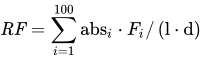
The radiative forcing capacity (RF) is the amount of energy per unit area, per unit time, absorbed by the greenhouse gas, that would otherwise be lost to space. It can be expressed by the formula:

where the subscript i represents a wavenumber interval of 10 inverse centimeters. Absi represents the integrated infrared absorbance of the sample in that interval, and Fi represents the RF for that interval.
The Intergovernmental Panel on Climate Change (IPCC) provides the generally accepted values for GWP, which changed slightly between 1996 and 2001, except for methane, which had its GWP almost doubled. An exact definition of how GWP is calculated is to be found in the IPCC's 2001 Third Assessment Report. The GWP is defined as the ratio of the time-integrated radiative forcing from the instantaneous release of 1 kg of a trace substance relative to that of 1 kg of a reference gas:

where TH is the time horizon over which the calculation is considered; ax is the radiative efficiency due to a unit increase in atmospheric abundance of the substance (i.e., Wm−2 kg−1) and [x](t) is the time-dependent decay in abundance of the substance following an instantaneous release of it at time t=0. The denominator contains the corresponding quantities for the reference gas (i.e. CO2). The radiative efficiencies ax and ar are not necessarily constant over time. While the absorption of infrared radiation by many greenhouse gases varies linearly with their abundance, a few important ones display non-linear behaviour for current and likely future abundances (e.g., CO2, CH4, and N2O). For those gases, the relative radiative forcing will depend upon abundance and hence upon the future scenario adopted.

Since all GWP calculations are a comparison to CO2 which is non-linear, all GWP values are affected. Assuming otherwise as is done above will lead to lower GWPs for other gases than a more detailed approach would. Clarifying this, while increasing CO2 has less and less effect on radiative absorption as ppm concentrations rise, more powerful greenhouse gases like methane and nitrous oxide have different thermal absorption frequencies to CO2 that are not filled up (saturated) as much as CO2, so rising ppms of these gases are far more significant.

Mixtures

The GWP for a mixture of gases can be obtained from the mass-fraction-weighted average of the GWPs of the individual gases.

Water vapour

Water vapour does contribute to anthropogenic global warming, but as the GWP is defined, it is negligible for H2O: an estimate gives a 100-year GWP between -0.001 and 0.0005.

H2O can function as a greenhouse gas because it has a profound infrared absorption spectrum with more and broader absorption bands than CO2. Its concentration in the atmosphere is limited by air temperature, so that radiative forcing by water vapour increases with global warming (positive feedback). But the GWP definition excludes indirect effects. GWP definition is also based on emissions, and anthropogenic emissions of water vapour (cooling towers, irrigation) are removed via precipitation within weeks, so its GWP is negligible.

Applications

Use in policymaking

As governments develop policies to combat emissions from high-GWP sources, policymakers have chosen to use the 100-year GWP scale as the standard in international agreements. The Kigali Amendment to the Montreal Protocol sets the global phase-down of hydrofluorocarbons (HFCs), a group of high-GWP compounds. It requires countries to use a set of GWP100 values equal to those published in the IPCC's Fourth Assessment Report (AR4). This allows policymakers to have one standard for comparison instead of changing GWP values in new assessment reports. One exception to the GWP100 standard exists: New York state’s Climate Leadership and Community Protection Act requires the use of GWP20, despite being a different standard from all other countries participating in phase downs of HFCs.

Use in Kyoto Protocol and for reporting to UNFCCC

Under the Kyoto Protocol, in 1997 the Conference of the Parties standardized international reporting, by deciding (see decision number 2/CP.3) that the values of GWP calculated for the IPCC Second Assessment Report were to be used for converting the various greenhouse gas emissions into comparable CO2 equivalents.

After some intermediate updates, in 2013 this standard was updated by the Warsaw meeting of the UN Framework Convention on Climate Change (UNFCCC, decision number 24/CP.19) to require using a new set of 100-year GWP values. They published these values in Annex III, and they took them from the IPCC Fourth Assessment Report, which had been published in 2007. Those 2007 estimates are still used for international comparisons through 2020, although the latest research on warming effects has found other values, as shown in the tables above.

Though recent reports reflect more scientific accuracy, countries and companies continue to use the IPCC Second Assessment Report (SAR) and IPCC Fourth Assessment Report values for reasons of comparison in their emission reports. The IPCC Fifth Assessment Report has skipped the 500-year values but introduced GWP estimations including the climate-carbon feedback (f) with a large amount of uncertainty.

Other metrics to compare greenhouse gases

The global temperature change potential (GTP) is another way to compare greenhouse gases. While GWP estimates infrared thermal radiation absorbed, GTP estimates the resulting rise in average surface temperature of the world, over a given time horizon (the next 20, 50 or 100 years), caused by a greenhouse gas, relative to the temperature rise which the same mass of CO2 would cause. Calculation of GTP requires modelling how the world, especially the oceans, will absorb heat. GTP is published in the same IPCC tables with GWP.

Another metric called GWP* (pronounced "GWP star") has been proposed to take better account of short-lived climate pollutants (SLCPs) such as methane. A permanent increase in the rate of emission of an SLCP has a similar effect to that of a one-time emission of an amount of carbon dioxide, because both raise the radiative forcing permanently or (in the case of carbon dioxide) practically permanently (since the CO2 stays in the air for a long time). GWP* therefore assigns an increase in emission rate of an SLCP a supposedly equivalent amount (tonnes) of CO2. However GWP* has been criticised both for its suitability as a metric and for inherent design features which can perpetuate injustices and inequity. Developing countries whose emissions of SLCPs are increasing are "penalized", while developed countries such as Australia or New Zealand which have steady emissions of SLCPs are not penalized in this way, though they may be penalized for their emissions of CO2.

Calculated values

Global warming potential of five greenhouse gases over 100-year timescale.

The global warming potential (GWP) depends on both the efficiency of the molecule as a greenhouse gas and its atmospheric lifetime. GWP is measured relative to the same mass of CO2 and evaluated for a specific timescale. Thus, if a gas has a high (positive) radiative forcing but also a short lifetime, it will have a large GWP on a 20-year scale but a small one on a 100-year scale. Conversely, if a molecule has a longer atmospheric lifetime than CO2 its GWP will increase when the timescale is considered. Carbon dioxide is defined to have a GWP of 1 over all time periods.

Methane has an atmospheric lifetime of 12 ± 2 years. The 2021 IPCC report lists the GWP as 83 over a time scale of 20 years, 30 over 100 years and 10 over 500 years. The decrease in GWP at longer times is because methane decomposes to water and CO2 through chemical reactions in the atmosphere. Similarly the third most important GHG, nitrous oxide (N2O), is a common gas emitted through the denitrification part of the nitrogen cycle. It has a lifetime of 109 years and an even higher GWP level running at 273 over 20 and 100 years.

Examples of the atmospheric lifetime and GWP relative to CO2 for several greenhouse gases are given in the following table (IPCC Sixth Assessment Report from 2021).

Radiative forcing

From Wikipedia, the free encyclopedia
Warming contributions of various GHGs, agents, factors [name the year that the contributions pertain to] [*correct reference given under the 'Talk' tab*]. Plus, the figure is inaccurate; at least wrt. to methane.
The assessment of radiative forcing and climate sensitivity shows which physical parameters are contributing to temperature changes. Parameters shown with orange bars lead to a temperature increase (due to positive radiative forcings), whereas parameters shown with blue bars lead to a temperature decrease (due to negative radiative forcing).

Radiative forcing (or climate forcing) is a concept used to quantify a change to the balance of energy flowing through a planetary atmosphere. Various factors contribute to this change in energy balance, such as concentrations of greenhouse gases and aerosols, and changes in surface albedo and solar irradiance. In more technical terms, it is defined as "the change in the net, downward minus upward, radiative flux (expressed in W/m2) due to a change in an external driver of climate change." These external drivers are distinguished from feedbacks and variability that are internal to the climate system, and that further influence the direction and magnitude of imbalance. Radiative forcing on Earth is meaningfully evaluated at the tropopause and at the stratopause. It is quantified in units of watts per square meter, and often summarized as an average over the total surface area of the globe.

A planet in radiative equilibrium with its parent star and the rest of space can be characterized by net zero radiative forcing and by a planetary equilibrium temperature.

Radiative forcing is not a thing in the sense that a single instrument can independently measure it. Rather it is a scientific concept and entity whose strength can be estimated from more fundamental physics principles. Scientists use measurements of changes in atmospheric parameters to calculate the radiative forcing.

The IPCC summarized the current scientific consensus about radiative forcing changes as follows: "Human-caused radiative forcing of 2.72 W/m2 in 2019 relative to 1750 has warmed the climate system. This warming is mainly due to increased GHG concentrations, partly reduced by cooling due to increased aerosol concentrations".

The atmospheric burden of greenhouse gases due to human activity has grown especially rapidly during the last several decades (since about year 1950). For carbon dioxide, the 50% increase (C/C0 = 1.5) realized as of year 2020 since 1750 corresponds to a cumulative radiative forcing change (ΔF) of +2.17 W/m2. Assuming no change in the emissions growth path, a doubling of concentrations (C/C0 = 2) within the next several decades would correspond to a cumulative radiative forcing change (ΔF) of +3.71 W/m2.

Radiative forcing can be a useful way to compare the growing warming influence of different anthropogenic greenhouse gases over time. The radiative forcing of long-lived and well-mixed greenhouse gases have been increasing in earth's atmosphere since the industrial revolution. Carbon dioxide has the biggest impact on total forcing, while methane and chlorofluorocarbons (CFCs) play smaller roles as time goes on. The five major greenhouse gases (water vapor, carbon dioxide, methane, nitrous oxide and ozone) account for about 96% of the direct radiative forcing by long-lived greenhouse gas increases since 1750. The remaining 4% is contributed by the 15 minor halogenated gases.

Definition and fundamentals

Radiative forcing is defined in the IPCC Sixth Assessment Report as follows: "The change in the net, downward minus upward, radiative flux (expressed in W/m2) due to a change in an external driver of climate change, such as a change in the concentration of carbon dioxide (CO2), the concentration of volcanic aerosols or the output of the Sun."

There are some different types of radiative forcing as defined in the literature:

  • Stratospherically adjusted radiative forcing: "when all tropospheric properties held fixed at their unperturbed values, and after allowing for stratospheric temperatures, if perturbed, to readjust to radiative-dynamical equilibrium."
  • Instantaneous radiative forcing: "if no change in stratospheric temperature is accounted for".
  • Effective radiative forcing: "once both stratospheric and tropospheric adjustments are accounted for".

The radiation balance of the Earth (i.e. the balance between absorbed and radiated energy) determines the average global temperature. This balance is also called Earth's energy balance. Changes to this balance occur due to factors such as the intensity of solar energy, reflectivity of clouds or gases, absorption by various greenhouse gases or surfaces and heat emission by various materials. Any such alteration is a radiative forcing, which along with its climate feedbacks, ultimately changes the balance. This happens continuously as sunlight hits the surface of Earth, clouds and aerosols form, the concentrations of atmospheric gases vary and seasons alter the groundcover.

Positive radiative forcing means Earth receives more incoming energy from sunlight than it radiates to space. This net gain of energy will cause global warming. Conversely, negative radiative forcing means that Earth loses more energy to space than it receives from the Sun, which produces cooling (global dimming).

History

Transport of energy and matter in the Earth-atmosphere system is governed by the principles of equilibrium thermodynamics and more generally non-equilibrium thermodynamics. During the first half of the 20th century, physicists developed a comprehensive description of radiative transfer that they began to apply to stellar and planetary atmospheres in radiative equilibrium. Studies of radiative-convective equilibrium (RCE) followed and matured through the 1960s and 1970s. RCE models began to account for more complex material flows within the energy balance, such as those from a water cycle, and thereby described observations better.

Another application of equilibrium models is that a perturbation in the form of an externally imposed intervention can estimate a change in state. The RCE work distilled this into a forcing-feedback framework for change, and produced climate sensitivity results agreeing with those from GCMs. This conceptual framework asserts that a homogeneous disturbance (effectively imposed onto the top-of-atmosphere energy balance) will be met by slower responses (correlated more or less with changes in a planet's surface temperature) to bring the system to a new equilibrium state. Radiative forcing was a term used to describe these disturbances and gained widespread traction in the literature by the 1980s.

The concept of radiative forcing has been evolving from the initial proposal, named nowadays instantaneous radiative forcing (IRF), to other proposals that aim to relate better the radiative imbalance with global warming (global surface mean temperature). For example, researchers explained in 2003 how the adjusted troposphere and stratosphere forcing can be used in general circulation models.

The adjusted radiative forcing, in its different calculation methodologies, estimates the imbalance once the stratosphere temperatures has been modified to achieve a radiative equilibrium in the stratosphere (in the sense of zero radiative heating rates). This new methodology is not estimating any adjustment or feedback that could be produced on the troposphere (in addition to stratospheric temperature adjustments), for that goal another definition, named effective radiative forcing has been introduced. In general the ERF is the recommendation of the CMIP6 radiative forcing analysis although the stratospherically adjusted methodologies are still being applied in those cases where the adjustments and feedbacks on the troposphere are considered not critical, like in the well mixed greenhouse gases and ozone. A methodology named radiative kernel approach allows to estimate the climate feedbacks within an offline calculation based on a linear approximation

Uses

An assessment of effective radiative forcings in 2022 using a baseline year of 1750.

Climate change attribution

Radiative forcing is used to quantify the strengths of different natural and man-made drivers of Earth's energy imbalance over time. The detailed physical mechanisms by which these drivers cause the planet to warm or cool are varied. Radiative forcing allows the contribution of any one driver to be compared against others.

Another metric called effective radiative forcing or ERF removes the effect of rapid adjustments (so-called "fast feedbacks") within the atmosphere that are unrelated to longer term surface temperature responses. ERF means that climate change drivers can be placed onto a more level playing field to enable comparison of their effects and a more consistent view of how global surface temperature responds to various types of human forcing.

Climate sensitivity

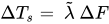
Radiative forcing and climate feedbacks can be used together to estimate a subsequent change in steady-state (often denoted "equilibrium") surface temperature (ΔTs) via the equation:

where commonly denotes the climate sensitivity parameter, usually with units K/(W/m2), and ΔF is the radiative forcing in W/m2. An estimate for is obtained from the inverse of the climate feedback parameter having units (W/m2)/K. An estimated value of gives an increase in global temperature of about 1.6 K above the 1750 reference temperature due to the increase in CO2 over that time (278 to 405 ppm, for a forcing of 2.0 W/m2), and predicts a further warming of 1.4 K above present temperatures if the CO2 mixing ratio in the atmosphere were to become double its pre-industrial value. Both of these calculations assume no other forcings.

Historically, radiative forcing displays the best predictive capacity for specific types of forcing such as greenhouse gases. It is less effective for other anthropogenic influences like soot.

Calculations and measurements

Atmospheric observation

Earth's global radiation balance fluctuates as the planet rotates and orbits the Sun, and as global-scale thermal anomalies arise and dissipate within the terrestrial, oceanic and atmospheric systems (e.g. ENSO). Consequently, the planet's 'instantaneous radiative forcing' (IRF) is also dynamic and naturally fluctuates between states of overall warming and cooling. The combination of periodic and complex processes that give rise to these natural variations will typically revert over periods lasting as long as a few years to produce a net-zero average IRF. Such fluctuations also mask the longer-term (decade-long) forcing trends due to human activities, and thus make direct observation of such trends challenging.

NASA Earth Science Division Operating Missions

Earth's radiation balance has been continuously monitored by NASA's Clouds and the Earth's Radiant Energy System (CERES) instruments since year 1998. Each scan of the globe provides an estimate of the total (all-sky) instantaneous radiation balance. This data record captures both the natural fluctuations and human influences on IRF; including changes in greenhouse gases, aerosols, land surface, etc. The record also includes the lagging radiative responses to the radiative imbalances; occurring mainly by way of Earth system feedbacks in temperature, surface albedo, atmospheric water vapor and clouds.

Researchers have used measurements from CERES, AIRS, CloudSat and other satellite-based instruments within NASA's Earth Observing System to parse out contributions by the natural fluctuations and system feedbacks. Removing these contributions within the multi-year data record allows observation of the anthropogenic trend in top-of-atmosphere (TOA) IRF. The data analysis has also been done in a way that is computationally efficient and independent of most related modelling methods and results. Radiative forcing was thus directly observed to have risen by +0.53 W m−2 (±0.11 W m−2) from years 2003 to 2018. About 20% of the increase was associated with a reduction in the atmospheric aerosol burden, and most of the remaining 80% was attributed to the rising burden of greenhouse gases.

A rising trend in the radiative imbalance due to increasing global CO2 has been previously observed by ground-based instruments. For example, such measurements have been separately gathered under clear-sky conditions at two Atmospheric Radiation Measurement (ARM) sites in Oklahoma and Alaska. Each direct observation found that the associated radiative (infrared) heating experienced by surface dwellers rose by +0.2 W m−2 (±0.07 W m−2) during the decade ending 2010. In addition to its focus on longwave radiation and the most influential forcing gas (CO2) only, this result is proportionally less than the TOA forcing due to its buffering by atmospheric absorption.

Basic estimates

Radiative forcing can be evaluated for its dependence on different factors which are external to the climate system. Basic estimates summarized in the following sections have been derived (assembled) in accordance with first principles of the physics of matter and energy. Forcings (ΔF) are expressed as changes over the total surface of the planet and over a specified time interval. Estimates may be significant in the context of global climate forcing for times spanning decades or longer. Gas forcing estimates presented in the IPCC's AR6 report have been adjusted to include so-called "fast" feedbacks (positive or negative) which occur via atmospheric responses (i.e. effective radiative forcing).

Forcing due to changes in atmospheric gases

Hansen et al. (2025) wrote that the IPCC had underestimated aerosols' cooling effect, causing it to also underestimate climate sensitivity (Earth's responsiveness to increases in greenhouse gas concentrations). In what Hansen called a Faustian bargain, regulation of aerosols improved air quality, but aerosols' cooling effect became inadequate to temper the increasing warming effect of greenhouse gases—explaining unexpectedly large global warming in 2023–2024.

For a well-mixed greenhouse gas, radiative transfer codes that examine each spectral line for atmospheric conditions can be used to calculate the forcing ΔF as a function of a change in its concentration. These calculations may be simplified into an algebraic formulation that is specific to that gas.

Carbon dioxide

Radiative forcing for doubling CO2, as calculated by radiative transfer code Modtran. Red lines are Planck curves.

A simplified first-order approximation expression for carbon dioxide (CO2) is:

,

where C0 is a reference concentration in parts per million (ppm) by volume and ΔC is the concentration change in ppm. For the purpose of some studies (e.g. climate sensitivity), C0 is taken as the concentration prior to substantial anthropogenic changes and has a value of 278 ppm as estimated for the year 1750.

CO2 forcing (est. 10-yr changes)

Baseline concentration, C0 Concentration change, ΔC Radiative forcing change, ΔF (W m−2)
1979–1989 336.8 +16.0 +0.248
1989–1999 352.8 +15.0 +0.222
1999–2009 367.8 +18.7 +0.266
2009–2019 386.5 +23.6 +0.316

The atmospheric burden of greenhouse gases due to human activity has grown especially rapidly during the last several decades (since about year 1950). For carbon dioxide, the 50% increase (C/C0 = 1.5) realized as of year 2020 since 1750 corresponds to a cumulative radiative forcing change (delta F) of +2.17 W/m2. Assuming no change in the emissions growth path, a doubling of concentrations (C/C0 = 2) within the next several decades would correspond to a cumulative radiative forcing change (delta F) of +3.71 W/m2.

The relationship between CO2 and radiative forcing is logarithmic at concentrations up to around eight times the current value. Constant concentration increases thus have a progressively smaller warming effect. However, the first-order approximation is inaccurate at higher concentrations and there is no saturation in the absorption of infrared radiation by CO2. Various mechanism behind the logarithmic scaling has been proposed but the spectrum distribution of the carbon dioxide seems to be essential, particularly a broadening in the relevant 15-μm band coming from a Fermi resonance present in the molecule.

Other trace gases

Somewhat different formulae apply for other trace greenhouse gases such as methane and N
2
O
(square-root dependence) or CFCs (linear), with coefficients that may be found for example in the IPCC reports. A 2016 study suggests a significant revision to the methane IPCC formula. Forcings by the most influential trace gases in Earth's atmosphere are included in the section describing recent growth trends, and in the IPCC list of greenhouse gases.

Water vapor

Water vapor is Earth's primary greenhouse gas currently responsible for about half of all atmospheric gas forcing. Its overall atmospheric concentration depends almost entirely on the average planetary temperature, and has the potential to increase by as much as 7% with every degree (°C) of temperature rise (see also: Clausius–Clapeyron relation). Thus over long time scales, water vapor behaves as a system feedback that amplifies the radiative forcing driven by the growth of carbon dioxide and other trace gases.

Forcing due to changes in solar irradiance

Variations in total solar irradiance (TSI)

The intensity of solar irradiance including all wavelengths is the Total Solar Irradiance (TSI) and on average is the solar constant. It is equal to about 1361 W m−2 at the distance of Earth's annual-mean orbital radius of one astronomical unit and as measured at the top of the atmosphere. Earth TSI varies with both solar activity and planetary orbital dynamics. Multiple satellite-based instruments including ERB, ACRIM 1-3, VIRGO, and TIM have continuously measured TSI with improving accuracy and precision since 1978.

Approximating Earth as a sphere, the cross-sectional area exposed to the Sun () is equal to one quarter the area of the planet's surface (). The globally and annually averaged amount of solar irradiance per square meter of Earth's atmospheric surface () is therefore equal to one quarter of TSI, and has a nearly constant value of .

Earth follows an elliptical orbit around the Sun, so that the TSI received at any instant fluctuates between about 1321 W m−2 (at aphelion in early July) and 1412 W m−2 (at perihelion in early January), and thus by about ±3.4% over each year. This change in irradiance has minor influences on Earth's seasonal weather patterns and its climate zones, which primarily result from the annual cycling in Earth's relative tilt direction. Such repeating cycles contribute a net-zero forcing (by definition) in the context of decades-long climate changes.

Sunspot activity

Line graph showing historical sunspot number count, Maunder and Dalton minima, and the Modern Maximum
400 year sunspot history, including the Maunder Minimum

Average annual TSI varies between about 1360 W m−2 and 1362 W m−2 (±0.05%) over the course of a typical 11-year sunspot activity cycle. Sunspot observations have been recorded since about year 1600 and show evidence of lengthier oscillations (Gleissberg cycle, Devries/Seuss cycle, etc.) which modulate the 11-year cycle (Schwabe cycle). Despite such complex behavior, the amplitude of the 11-year cycle has been the most prominent variation throughout this long-term observation record.

TSI variations associated with sunspots contribute a small but non-zero net forcing in the context of decadal climate changes. Some research suggests they may have partly influenced climate shifts during the Little Ice Age, along with concurrent changes in volcanic activity and deforestation. Since the late 20th century, average TSI has trended slightly lower along with a downward trend in sunspot activity.

Milankovitch shifts

Climate forcing caused by variations in solar irradiance have occurred during Milankovitch cycles, which span periods of about 40,000 to 100,000 years. Milankovitch cycles consist of long-duration cycles in Earth's orbital eccentricity (or ellipticity), cycles in its orbital obliquity (or axial tilt), and precession of its relative tilt direction. Among these, the 100,000 year cycle in eccentricity causes TSI to fluctuate by about ±0.2%. Currently, Earth's eccentricity is nearing its least elliptic (most circular) causing average annual TSI to very slowly decrease. Simulations also indicate that Earth's orbital dynamics will remain stable including these variations for least the next 10 million years.

Sun aging

The Sun has consumed about half its hydrogen fuel since forming approximately 4.5 billion years ago. TSI will continue to slowly increase during the aging process at a rate of about 1% each 100 million years. Such rate of change is far too small to be detectable within measurements and is insignificant on human timescales.

Total solar irradiance (TSI) forcing summary

TSI forcing (est. 10-yr change)

Δτ Radiative forcing change ΔF (W m−2)
Annual cycle ±0.034 0 (net)
Sunspot activity ±5×10⁻⁴ ±0.1
Orbital shift −4×10⁻⁷ −1×10⁻⁴
Sun aging +1×10⁻⁹ +2×10⁻⁷

The maximum fractional variations (Δτ) in Earth's solar irradiance during the last decade are summarized in the accompanying table. Each variation previously discussed contributes a forcing of:

,

where R=0.30 is Earth's reflectivity. The radiative and climate forcings arising from changes in the Sun's insolation are expected to continue to be minor, notwithstanding some as-of-yet undiscovered solar physics.

Forcing due to changes in albedo and aerosols

Variations in Earth's albedo

A fraction of incident solar radiation is reflected by clouds and aerosols, oceans and landforms, snow and ice, vegetation, and other natural and man-made surface features. The reflected fraction is known as Earth's bond albedo (R), is evaluated at the top of the atmosphere, and has an average annual global value of about 0.30 (30%). The overall fraction of solar power absorbed by Earth is then (1−R) or 0.70 (70%).

Atmospheric components contribute about three-quarters of Earth albedo, and clouds alone are responsible for half. The major roles of clouds and water vapor are linked with the majority presence of liquid water covering the planet's crust. Global patterns in cloud formation and circulation are highly complex, with couplings to ocean heat flows, and with jet streams assisting their rapid transport. Moreover, the albedos of Earth's northern and southern hemispheres have been observed to be essentially equal (within 0.2%). This is noteworthy since more than two-thirds of land and 85% of the human population are in the north.

Multiple satellite-based instruments including MODIS, VIIRs, and CERES have continuously monitored Earth's albedo since 1998. Landsat imagery, available since 1972, has also been used in some studies. Measurement accuracy has improved and results have converged in recent years, enabling more confident assessment of the recent decadal forcing influence of planetary albedo. Nevertheless, the existing data record is still too short to support longer-term predictions or to address other related questions.

Seasonal variations in planetary albedo can be understood as a set of system feedbacks that occur largely in response to the yearly cycling of Earth's relative tilt direction. Along with the atmospheric responses, most apparent to surface dwellers are the changes in vegetation, snow, and sea-ice coverage. Intra-annual variations of about ±0.02 (± 7%) around Earth's mean albedo have been observed throughout the course of a year, with maxima occurring twice per year near the time of each solar equinox. This repeating cycle contributes net-zero forcing in the context of decades-long climate changes.

Interannual variability

Measured global albedo anomaly from CERES (2000-2011).

Regional albedos change from year to year due to shifts arising from natural processes, human actions, and system feedbacks. For example, human acts of deforestion typically raise Earth's reflectivity while introducing water storage and irrigation to arid lands may lower it. Likewise considering feedbacks, ice loss in arctic regions decreases albedo while expanding desertification at low to middle latitudes increases it.

During years 2000-2012, no overall trend in Earth's albedo was discernible within the 0.1% standard deviation of values measured by CERES. Along with the hemispherical equivalence, some researchers interpret the remarkably small interannual differences as evidence that planetary albedo may currently be constrained by the action of complex system feedbacks. Nevertheless, historical evidence also suggests that infrequent events such as major volcanic eruptions can significantly perturb the planetary albedo for several years or longer.

Albedo forcing summary

Albedo forcing (est. 10-yr change)

Fractional variations (Δα) in Earth's albedo Radiative forcing change ΔF (W m−2)
Annual cycle ± 0.07 0 (net)
Interannual variation ± 0.001 ∓ 0.1

The measured fractional variations (Δα) in Earth's albedo during the first decade of the 21st century are summarized in the accompanying table. Similar to TSI, the radiative forcing due to a fractional change in planetary albedo (Δα) is:

.

Satellite observations show that various Earth system feedbacks have stabilized planetary albedo despite recent natural and human-caused shifts. On longer timescales, it is more uncertain whether the net forcing which results from such external changes will remain minor.

Radiative forcing (warming influence) of long-lived atmospheric greenhouse gases has nearly doubled since 1979.
 
The industrial era growth in CO2-equivalent gas concentration and AGGI since year 1750.
 
The annual growth in overall gas forcing has held steady near 2% since 1979.

The IPCC summarized the current scientific consensus about radiative forcing changes as follows: "Human-caused radiative forcing of 2.72 [1.96 to 3.48] W/m2 in 2019 relative to 1750 has warmed the climate system. This warming is mainly due to increased GHG concentrations, partly reduced by cooling due to increased aerosol concentrations". Radiative forcing can be a useful way to compare the growing warming influence of different anthropogenic greenhouse gases over time.

The radiative forcing of long-lived and well-mixed greenhouse gases have been increasing in earth's atmosphere since the industrial revolution. The table includes the direct forcing contributions from carbon dioxide (CO2), methane (CH
4
), nitrous oxide (N
2
O
); chlorofluorocarbons (CFCs) 12 and 11; and fifteen other halogenated gases. These data do not include the significant forcing contributions from shorter-lived and less-well-mixed gases or aerosols; including those indirect forcings from the decay of methane and some halogens. They also do not account for changes in land use or solar activity.

The data show that CO2 dominates the total forcing, with methane and chlorofluorocarbons (CFC) becoming relatively smaller contributors to the total forcing over time. The five major greenhouse gases account for about 96% of the direct radiative forcing by long-lived greenhouse gas increases since 1750. The remaining 4% is contributed by the 15 minor halogenated gases.

It might be observed that the total forcing for year 2016, 3.027 W m−2, together with the commonly accepted value of climate sensitivity parameter λ, 0.8 K /(W m−2), results in an increase in global temperature of 2.4 K, much greater than the observed increase, about 1.2 K. Part of this difference is due to lag in the global temperature achieving steady state with the forcing. The remainder of the difference is due to negative aerosol forcing (compare climate effects of particulates), climate sensitivity being less than the commonly accepted value, or some combination thereof.

The table also includes an "Annual Greenhouse Gas Index" (AGGI), which is defined as the ratio of the total direct radiative forcing due to long-lived greenhouse gases for any year for which adequate global measurements exist to that which was present in 1990. 1990 was chosen because it is the baseline year for the Kyoto Protocol. This index is a measure of the inter-annual changes in conditions that affect carbon dioxide emission and uptake, methane and nitrous oxide sources and sinks, the decline in the atmospheric abundance of ozone-depleting chemicals related to the Montreal Protocol. and the increase in their substitutes (hydrogenated CFCs (HCFCs) and hydrofluorocarbons (HFC). Most of this increase is related to CO2. For 2013, the AGGI was 1.34 (representing an increase in total direct radiative forcing of 34% since 1990). The increase in CO2 forcing alone since 1990 was about 46%. The decline in CFCs considerably tempered the increase in net radiative forcing.

An alternative table prepared for use in climate model intercomparisons conducted under the auspices of IPCC and including all forcings, not just those of greenhouse gases.

Interplanetary Internet

From Wikipedia, the free encyclopedia The speed of light, illustrated here by a beam of light traveling ...