Search This Blog

Wednesday, May 13, 2026

Central limit theorem

From Wikipedia, the free encyclopedia

TypeTheorem
FieldProbability theory
StatementThe scaled sum of a sequence of i.i.d. random variables with finite positive variance converges in distribution to the normal distribution.
Generalizations Lindeberg's CLT

In probability theory, the central limit theorem (CLT) states that, under appropriate conditions, the distribution of a normalized version of the sample mean converges to a standard normal distribution. This holds even if the original variables themselves are not normally distributed. There are several versions of the CLT, each applying in the context of different conditions.

The theorem is a key concept in probability theory because it implies that probabilistic and statistical methods that work for normal distributions can be applicable to many problems involving other types of distributions.

This theorem has seen many changes during the formal development of probability theory. Previous versions of the theorem date back to 1811, but in its modern form it was only precisely stated in the 1920s.

In statistics, the CLT can be stated as: let denote a statistical sample of size from a population with expected value (average) and finite positive variance , and let denote the sample mean (which is itself a random variable). Then the limit as of the distribution of is a normal distribution with mean and variance .

In other words, suppose that a large sample of observations is obtained, each observation being randomly produced in a way that does not depend on the values of the other observations, and the average (arithmetic mean) of the observed values is computed. If this procedure is performed many times, resulting in a collection of observed averages, the central limit theorem says that if the sample size is large enough, the probability distribution of these averages will closely approximate a normal distribution.

The central limit theorem has several variants. In its common form, the random variables must be independent and identically distributed (i.i.d.). This requirement can be weakened; convergence of the mean to the normal distribution also occurs for non-identical distributions or for non-independent observations if they comply with certain conditions.

The earliest version of this theorem, that the normal distribution may be used as an approximation to the binomial distribution, is the de Moivre–Laplace theorem.

Independent sequences

Whatever the form of the population distribution, the sampling distribution tends to a Gaussian, and its dispersion is given by the central limit theorem.

Classical CLT

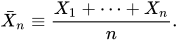
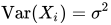
Let be a sequence of i.i.d. random variables having a distribution with expected value given by and finite variance given by Suppose we are interested in the sample average

By the law of large numbers, the sample average converges almost surely (and therefore also converges in probability) to the expected value as

The classical central limit theorem describes the size and the distributional form of the stochastic fluctuations around the deterministic number during this convergence. More precisely, it states that as gets larger, the distribution of the normalized mean , i.e. the difference between the sample average and its limit scaled by the factor , approaches the normal distribution with mean and variance For large enough the distribution of gets arbitrarily close to the normal distribution with mean and variance
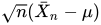
The usefulness of the theorem is that the distribution of approaches normality regardless of the shape of the distribution of the individual Formally, the theorem can be stated as follows:

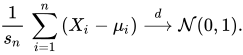
Lindeberg–Lévy CLTSuppose is a sequence of i.i.d. random variables with and Then, as approaches infinity, the random variables converge in distribution to a normal :

In the case convergence in distribution means that the cumulative distribution functions of converge pointwise to the cdf of the distribution: for every real number

where is the standard normal cdf evaluated at The convergence is uniform in in the sense that

where denotes the supremum (i.e. least upper bound) of the set.

Lyapunov CLT

In this variant of the central limit theorem the random variables have to be independent, but not necessarily identically distributed. The theorem also requires that random variables have moments of some order , and that the rate of growth of these moments is limited by the Lyapunov condition given below.

Lyapunov CLTSuppose is a sequence of independent random variables, each with finite expected value and variance . Define

If for some , Lyapunov’s condition

is satisfied, then a sum of converges in distribution to a standard normal random variable, as goes to infinity:

In practice it is usually easiest to check Lyapunov's condition for .

If a sequence of random variables satisfies Lyapunov's condition, then it also satisfies Lindeberg's condition. The converse implication, however, does not hold.

Lindeberg (-Feller) CLT

In the same setting and with the same notation as above, the Lyapunov condition can be replaced with the following weaker one (from Lindeberg in 1920).

Suppose that for every ,

where is the indicator function. Then the distribution of the standardized sums

converges towards the standard normal distribution .

CLT for the sum of a random number of random variables

Rather than summing an integer number of random variables and taking , the sum can be of a random number of random variables, with conditions on . For example, the following theorem is Corollary 4 of Robbins (1948). It assumes that is asymptotically normal (Robbins also developed other conditions that lead to the same result).

Robbins CLTLet be independent, identically distributed random variables with and , and let be a sequence of non-negative integer-valued random variables that are independent of . Assume for each that and

where denotes convergence in distribution and is the normal distribution with mean 0, variance 1. Then

Multidimensional CLT

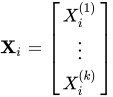
Proofs that use characteristic functions can be extended to cases where each individual is a random vector in , with mean vector and covariance matrix (among the components of the vector), and these random vectors are independent and identically distributed. The multidimensional central limit theorem states that when scaled, sums converge to a multivariate normal distribution. Summation of these vectors is done component-wise.

For let

be independent random vectors. The sum of the random vectors is

and their average is
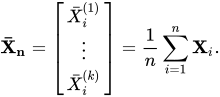
Therefore,

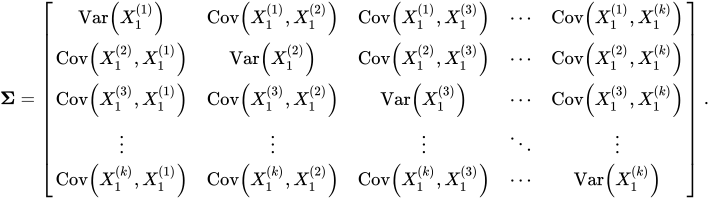
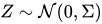
The multivariate central limit theorem states that

where the covariance matrix is equal to

The multivariate central limit theorem can be proved using the Cramér–Wold theorem.

The rate of convergence is given by the following Berry–Esseen type result:

TheoremLet be independent -valued random vectors, each having mean zero. Write and assume is invertible. Let be a -dimensional Gaussian with the same mean and same covariance matrix as . Then for all convex sets ,

where is a universal constant, , and denotes the Euclidean norm on .

It is unknown whether the factor is necessary.

The generalized central limit theorem

The generalized central limit theorem (GCLT) was an effort of multiple mathematicians (Sergei Bernstein, Jarl Waldemar Lindeberg, Paul Lévy, William Feller, Andrey Kolmogorov, and others) over the period from 1920 to 1937. The first published complete proof of the GCLT was in 1937 by Paul Lévy in French. An English language version of the complete proof of the GCLT is available in the translation of Boris Vladimirovich Gnedenko and Kolmogorov's 1954 book.

The statement of the GCLT is as follows:

Statement of GCLTA non-degenerate random variable Z is α-stable for some 0 < α ≤ 2 if and only if there is an independent, identically distributed sequence of random variables X1, X2, X3, ..., and constants an > 0, bn ∈ ℝ with Here, '' means the sequence of random variable sums converges in distribution; i.e., the corresponding distributions satisfy Fn(y) → F(y) at all continuity points of F.

In other words, if sums of independent, identically distributed random variables converge in distribution to some Z, then Z must be a stable distribution.

Dependent processes

CLT under weak dependence

A useful generalization of a sequence of independent, identically distributed random variables is a mixing random process in discrete time; "mixing" means, roughly, that random variables temporally far apart from one another are nearly independent. Several kinds of mixing are used in ergodic theory and probability theory. See especially strong mixing (also called α-mixing) defined by where is so-called strong mixing coefficient.

A simplified formulation of the central limit theorem under strong mixing is:

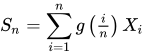
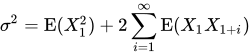
TheoremSuppose that is stationary and -mixing with and that and . Denote , then the limit

exists, and if then converges in distribution to .

In fact,
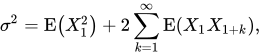
where the series converges absolutely.

The assumption cannot be omitted, since the asymptotic normality fails for where are another stationary sequence.

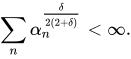
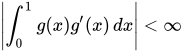
There is a stronger version of the theorem: the assumption is replaced with , and the assumption is replaced with

Existence of such ensures the conclusion. For encyclopedic treatment of limit theorems under mixing conditions see (Bradley 2007).

Martingale difference CLT

TheoremLet a martingale satisfy

  • in probability as n → ∞,
  • for every ε > 0, as n → ∞,

then converges in distribution to as .

Remarks

Proof of classical CLT

The central limit theorem has a proof using characteristic functions. It is similar to the proof of the (weak) law of large numbers.

Assume are independent and identically distributed random variables, each with mean and finite variance . The sum has mean and variance . Consider the random variable

where in the last step we defined the new random variables , each with zero mean and unit variance (). The characteristic function of is given by

where in the last step we used the fact that all of the are identically distributed. The characteristic function of is, by Taylor's theorem,

where is "little o notation" for some function of that goes to zero more rapidly than . By the limit of the exponential function (), the characteristic function of equals

All of the higher order terms vanish in the limit . The right hand side equals the characteristic function of a standard normal distribution , which implies through Lévy's continuity theorem that the distribution of will approach as . Therefore, the sample average
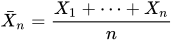
is such that

converges to the normal distribution , from which the central limit theorem follows.

Convergence to the limit

The central limit theorem gives only an asymptotic distribution. As an approximation for a finite number of observations, it provides a reasonable approximation only when close to the peak of the normal distribution; it requires a very large number of observations to stretch into the tails.[citation needed]

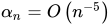
The convergence in the central limit theorem is uniform because the limiting cumulative distribution function is continuous. If the third central moment exists and is finite, then the speed of convergence is at least on the order of (see Berry–Esseen theorem). Stein's method can be used not only to prove the central limit theorem, but also to provide bounds on the rates of convergence for selected metrics.

The convergence to the normal distribution is monotonic, in the sense that the entropy of increases monotonically to that of the normal distribution.

The central limit theorem applies in particular to sums of independent and identically distributed discrete random variables. A sum of discrete random variables is still a discrete random variable, so that we are confronted with a sequence of discrete random variables whose cumulative probability distribution function converges towards a cumulative probability distribution function corresponding to a continuous variable (namely that of the normal distribution). This means that if we build a histogram of the realizations of the sum of n independent identical discrete variables, the piecewise-linear curve that joins the centers of the upper faces of the rectangles forming the histogram converges toward a Gaussian curve as n approaches infinity; this relation is known as de Moivre–Laplace theorem. The binomial distribution article details such an application of the central limit theorem in the simple case of a discrete variable taking only two possible values.

Common misconceptions

Studies have shown that the central limit theorem is subject to several common but serious misconceptions, some of which appear in widely used textbooks. These include:

  • The misconceived belief that the theorem applies to random sampling of any variable, rather than to the mean values (or sums) of iid random variables extracted from a population by repeated sampling. That is, the theorem assumes the random sampling produces a sampling distribution formed from different values of means (or sums) of such random variables.
  • The misconceived belief that the theorem ensures that random sampling leads to the emergence of a normal distribution for sufficiently large samples of any random variable, regardless of the population distribution. In reality, such sampling asymptotically reproduces the properties of the population, an intuitive result underpinned by the Glivenko–Cantelli theorem.
  • The misconceived belief that the theorem leads to a good approximation of a normal distribution for sample sizes greater than around 30, allowing reliable inferences regardless of the nature of the population. In reality, this empirical rule of thumb has no valid justification, and can lead to seriously flawed inferences. See Z-test for where the approximation holds.

Relation to the law of large numbers

The law of large numbers as well as the central limit theorem are partial solutions to a general problem: "What is the limiting behavior of Sn as n approaches infinity?" In mathematical analysis, asymptotic series are one of the most popular tools employed to approach such questions.

Suppose we have an asymptotic expansion of :

Dividing both parts by φ1(n) and taking the limit will produce a1, the coefficient of the highest-order term in the expansion, which represents the rate at which f(n) changes in its leading term.
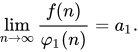
Informally, one can say: "f(n) grows approximately as a1φ1(n)". Taking the difference between f(n) and its approximation and then dividing by the next term in the expansion, we arrive at a more refined statement about f(n):
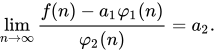
Here one can say that the difference between the function and its approximation grows approximately as a2φ2(n). The idea is that dividing the function by appropriate normalizing functions, and looking at the limiting behavior of the result, can tell us much about the limiting behavior of the original function itself.

Informally, something along these lines happens when the sum, Sn, of independent identically distributed random variables, X1, ..., Xn, is studied in classical probability theory. If each Xi has finite mean μ, then by the law of large numbers, Sn/nμ. If in addition each Xi has finite variance σ2, then by the central limit theorem,
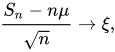
where ξ is distributed as N(0,σ2). This provides values of the first two constants in the informal expansion

In the case where the Xi do not have finite mean or variance, convergence of the shifted and rescaled sum can also occur with different centering and scaling factors:
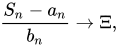
or informally

Distributions Ξ which can arise in this way are called stable. Clearly, the normal distribution is stable, but there are also other stable distributions, such as the Cauchy distribution, for which the mean or variance are not defined. The scaling factor bn may be proportional to nc, for any c1/2; it may also be multiplied by a slowly varying function of n.

The law of the iterated logarithm specifies what is happening "in between" the law of large numbers and the central limit theorem. Specifically it says that the normalizing function n log log n, intermediate in size between n of the law of large numbers and n of the central limit theorem, provides a non-trivial limiting behavior.

Alternative statements of the theorem

Density functions

The density of the sum of two or more independent variables is the convolution of their densities (if these densities exist). Thus the central limit theorem can be interpreted as a statement about the properties of density functions under convolution: the convolution of a number of density functions tends to the normal density as the number of density functions increases without bound. These theorems require stronger hypotheses than the forms of the central limit theorem given above. Theorems of this type are often called local limit theorems. See Petrov for a particular local limit theorem for sums of independent and identically distributed random variables.

Characteristic functions

Since the characteristic function of a convolution is the product of the characteristic functions of the densities involved, the central limit theorem has yet another restatement: the product of the characteristic functions of a number of density functions becomes close to the characteristic function of the normal density as the number of density functions increases without bound, under the conditions stated above. Specifically, an appropriate scaling factor needs to be applied to the argument of the characteristic function.

An equivalent statement can be made about Fourier transforms, since the characteristic function is essentially a Fourier transform.

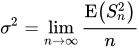
Calculating the variance

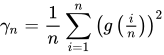
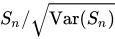
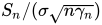
Let Sn be the sum of n random variables. Many central limit theorems provide conditions such that Sn/Var(Sn) converges in distribution to N(0,1) (the normal distribution with mean 0, variance 1) as n → ∞. In some cases, it is possible to find a constant σ2 and function f(n) such that Sn/(σn⋅f(n)) converges in distribution to N(0,1) as n→ ∞.

LemmaSuppose is a sequence of real-valued and strictly stationary random variables with for all , , and . Construct

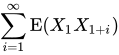
  1. If is absolutely convergent, , and then as where .
  2. If in addition and converges in distribution to as then also converges in distribution to as .
Extensions

Products of positive random variables

The logarithm of a product is simply the sum of the logarithms of the factors. Therefore, when the logarithm of a product of random variables that take only positive values approaches a normal distribution, the product itself approaches a log-normal distribution. Many physical quantities (especially mass or length, which are a matter of scale and cannot be negative) are the products of different random factors, so they follow a log-normal distribution. This multiplicative version of the central limit theorem is sometimes called Gibrat's law.

Whereas the central limit theorem for sums of random variables requires the condition of finite variance, the corresponding theorem for products requires the corresponding condition that the density function be square-integrable.

Beyond the classical framework

Asymptotic normality, that is, convergence to the normal distribution after appropriate shift and rescaling, is a phenomenon much more general than the classical framework treated above, namely, sums of independent random variables (or vectors). New frameworks are revealed from time to time; no single unifying framework is available for now.

Convex body

TheoremThere exists a sequence εn ↓ 0 for which the following holds. Let n ≥ 1, and let random variables X1, ..., Xn have a log-concave joint density f such that f(x1, ..., xn) = f(|x1|, ..., |xn|) for all x1, ..., xn, and E(X2
k
) = 1
for all k = 1, ..., n. Then the distribution of
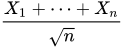
is εn-close to in the total variation distance.

These two εn-close distributions have densities (in fact, log-concave densities), thus, the total variance distance between them is the integral of the absolute value of the difference between the densities. Convergence in total variation is stronger than weak convergence.

An important example of a log-concave density is a function constant inside a given convex body and vanishing outside; it corresponds to the uniform distribution on the convex body, which explains the term "central limit theorem for convex bodies".

Another example: f(x1, ..., xn) = const · exp(−(|x1|α + ⋯ + |xn|α)β) where α > 1 and αβ > 1. If β = 1 then f(x1, ..., xn) factorizes into const · exp (−|x1|α) … exp(−|xn|α), which means X1, ..., Xn are independent. In general, however, they are dependent.

The condition f(x1, ..., xn) = f(|x1|, ..., |xn|) ensures that X1, ..., Xn are of zero mean and uncorrelated; still, they need not be independent, nor even pairwise independent. By the way, pairwise independence cannot replace independence in the classical central limit theorem.

Here is a Berry–Esseen type result.

TheoremLet X1, ..., Xn satisfy the assumptions of the previous theorem, then

for all a < b; here C is a universal (absolute) constant. Moreover, for every c1, ..., cnR such that c2
1
+ ⋯ + c2
n
= 1
,

The distribution of X1 + ⋯ + Xn/n need not be approximately normal (in fact, it can be uniform). However, the distribution of c1X1 + ⋯ + cnXn is close to (in the total variation distance) for most vectors (c1, ..., cn) according to the uniform distribution on the sphere c2
1
+ ⋯ + c2
n
= 1
.

Lacunary trigonometric series

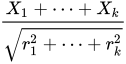
Theorem (SalemZygmund)Let U be a random variable distributed uniformly on (0,2π), and Xk = rk cos(nkU + ak), where

  • nk satisfy the lacunarity condition: there exists q > 1 such that nk + 1qnk for all k,
  • rk are such that
  • 0 ≤ ak < 2π.

Then[39][40]

converges in distribution to .

Gaussian polytopes

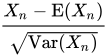
TheoremLet A1, ..., An be independent random points on the plane R2 each having the two-dimensional standard normal distribution. Let Kn be the convex hull of these points, and Xn the area of Kn Then

converges in distribution to as n tends to infinity.
The same also holds in all dimensions greater than 2.

The polytope Kn is called a Gaussian random polytope.

A similar result holds for the number of vertices (of the Gaussian polytope), the number of edges, and in fact, faces of all dimensions.

Linear functions of orthogonal matrices

A linear function of a matrix M is a linear combination of its elements (with given coefficients), M ↦ tr(AM) where A is the matrix of the coefficients; see Trace (linear algebra)#Inner product.

A random orthogonal matrix is said to be distributed uniformly, if its distribution is the normalized Haar measure on the orthogonal group O(n,R); see Rotation matrix#Uniform random rotation matrices.

TheoremLet M be a random orthogonal n × n matrix distributed uniformly, and A a fixed n × n matrix such that tr(AA*) = n, and let X = tr(AM). Then the distribution of X is close to in the total variation metric up to 23/n − 1.

Subsequences

TheoremLet random variables X1, X2, ... ∈ L2(Ω) be such that Xn → 0 weakly in L2(Ω) and X
n
→ 1
weakly in L1(Ω). Then there exist integers n1 < n2 < ⋯ such that
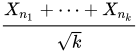
converges in distribution to as k tends to infinity.

Random walk on a crystal lattice

The central limit theorem may be established for the simple random walk on a crystal lattice (an infinite-fold abelian covering graph over a finite graph), and is used for design of crystal structures.

Applications and examples

A simple example of the central limit theorem is rolling many identical, unbiased dice. The distribution of the sum (or average) of the rolled numbers will be well approximated by a normal distribution. Since real-world quantities are often the balanced sum of many unobserved random events, the central limit theorem also provides a partial explanation for the prevalence of the normal probability distribution. It also justifies the approximation of large-sample statistics to the normal distribution in controlled experiments.

Comparison of probability density functions p(k) for the sum of n fair 6-sided dice to show their convergence to a normal distribution with increasing n, in accordance to the central limit theorem. In the bottom-right graph, smoothed profiles of the previous graphs are rescaled, superimposed and compared with a normal distribution (black curve).
This figure demonstrates the central limit theorem. The sample means are generated using a random number generator, which draws numbers between 0 and 100 from a uniform probability distribution. It illustrates that increasing sample sizes result in the 500 measured sample means being more closely distributed about the population mean (50 in this case). It also compares the observed distributions with the distributions that would be expected for a normalized Gaussian distribution, and shows the chi-squared values that quantify the goodness of the fit (the fit is good if the reduced chi-squared value is less than or approximately equal to one). The input into the normalized Gaussian function is the mean of sample means (~50) and the mean sample standard deviation divided by the square root of the sample size (~28.87/n), which is called the standard deviation of the mean (since it refers to the spread of sample means).
Another simulation using the binomial distribution. Random 0s and 1s were generated, and then their means calculated for sample sizes ranging from 1 to 2048. Note that as the sample size increases the tails become thinner and the distribution becomes more concentrated around the mean.

Regression

Regression analysis, and in particular ordinary least squares, specifies that a dependent variable depends according to some function upon one or more independent variables, with an additive error term. Various types of statistical inference on the regression assume that the error term is normally distributed. This assumption can be justified by assuming that the error term is actually the sum of many independent error terms; even if the individual error terms are not normally distributed, by the central limit theorem their sum can be well approximated by a normal distribution.

Other illustrations

Given its importance to statistics, a number of papers and computer packages are available that demonstrate the convergence involved in the central limit theorem.

History

Dutch mathematician Henk Tijms writes:

The central limit theorem has an interesting history. The first version of this theorem was postulated by the French-born mathematician Abraham de Moivre who, in a remarkable article published in 1733, used the normal distribution to approximate the distribution of the number of heads resulting from many tosses of a fair coin. This finding was far ahead of its time, and was nearly forgotten until the famous French mathematician Pierre-Simon Laplace rescued it from obscurity in his monumental work Théorie analytique des probabilités, which was published in 1812. Laplace expanded De Moivre's finding by approximating the binomial distribution with the normal distribution. But as with De Moivre, Laplace's finding received little attention in his own time. It was not until the nineteenth century was at an end that the importance of the central limit theorem was discerned, when, in 1901, Russian mathematician Aleksandr Lyapunov defined it in general terms and proved precisely how it worked mathematically. Nowadays, the central limit theorem is considered to be the unofficial sovereign of probability theory.

Sir Francis Galton described the Central Limit Theorem in this way:

I know of scarcely anything so apt to impress the imagination as the wonderful form of cosmic order expressed by the "Law of Frequency of Error". The law would have been personified by the Greeks and deified, if they had known of it. It reigns with serenity and in complete self-effacement, amidst the wildest confusion. The huger the mob, and the greater the apparent anarchy, the more perfect is its sway. It is the supreme law of Unreason. Whenever a large sample of chaotic elements are taken in hand and marshalled in the order of their magnitude, an unsuspected and most beautiful form of regularity proves to have been latent all along.

The actual term "central limit theorem" (in German: "zentraler Grenzwertsatz") was first used by George Pólya in 1920 in the title of a paper. Pólya referred to the theorem as "central" due to its importance in probability theory. According to Le Cam, the French school of probability interprets the word central in the sense that "it describes the behaviour of the centre of the distribution as opposed to its tails". The abstract of the paper On the central limit theorem of calculus of probability and the problem of moments by Pólya in 1920 translates as follows.

The occurrence of the Gaussian probability density 1 = ex2 in repeated experiments, in errors of measurements, which result in the combination of very many and very small elementary errors, in diffusion processes etc., can be explained, as is well-known, by the very same limit theorem, which plays a central role in the calculus of probability. The actual discoverer of this limit theorem is to be named Laplace; it is likely that its rigorous proof was first given by Tschebyscheff and its sharpest formulation can be found, as far as I am aware of, in an article by Liapounoff. ...

A thorough account of the theorem's history, detailing Laplace's foundational work, as well as Cauchy's, Bessel's and Poisson's contributions, is provided by Hald. Two historical accounts, one covering the development from Laplace to Cauchy, the second the contributions by von Mises, Pólya, Lindeberg, Lévy, and Cramér during the 1920s, are given by Hans Fischer. Le Cam describes a period around 1935. Bernstein presents a historical discussion focusing on the work of Pafnuty Chebyshev and his students Andrey Markov and Aleksandr Lyapunov that led to the first proofs of the CLT in a general setting.

A curious footnote to the history of the Central Limit Theorem is that a proof of a result similar to the 1922 Lindeberg CLT was the subject of Alan Turing's 1934 Fellowship Dissertation for King's College at the University of Cambridge. Only after submitting the work did Turing learn it had already been proved. Consequently, Turing's dissertation was not published.

Crowdfunding

From Wikipedia, the free encyclopedia

Crowdfunding is the practice of funding a project or venture by raising money from a large number of people, typically via the internet. Crowdfunding is a form of crowdsourcing and alternative finance, to fund projects "without standard financial intermediaries". In 2015, over US$34 billion was raised worldwide by crowdfunding. One of the companies obtained money through crowdfunding is Bonaverde in Berlin.

Although similar concepts can also be executed through mail-order subscriptions, benefit events, and other methods, the term crowdfunding refers to internet-mediated registries. This modern crowdfunding model is generally based on three types of actors – the project initiator who proposes the idea or project to be funded, individuals or groups who support the idea, and a moderating organization (the "platform") that brings the parties together to launch the idea.

The term crowdfunding was coined in 2006 by entrepreneur and technologist, Michael Sullivan, to differentiate traditional fundraising from the trends of native Internet projects, companies and community efforts to support various kinds of creators. Crowdfunding has been used to fund a wide range of for-profit entrepreneurial ventures such as artistic and creative projects, medical expenses, travel, and community-oriented social entrepreneurship projects. Although crowdfunding has been suggested to be highly linked to sustainability, empirical validation has shown that sustainability plays only a fractional role in crowdfunding. Its use has also been criticized for funding quackery, especially costly and fraudulent cancer treatments.

History

A printed receipt 135 × 97 mm issued between 1850 and 1857 to support French philosopher Auguste Comte

Funding by collecting small donations from many people has a long history with many roots. Books have been funded in this way in the past; authors and publishers would advertise book projects in praenumeration or subscription schemes. The book would be written and published if enough subscribers signaled their readiness to buy the book once it was out. The subscription business model is not exactly crowdfunding, since the actual flow of money only begins with the arrival of the product. However, the list of subscribers has the power to create the necessary confidence among investors that is needed to risk the publication.

War bonds are theoretically a form of crowdfunding for military conflicts. London's mercantile community saved the Bank of England in the 1730s when customers demanded their pounds to be converted into gold – they supported the currency until confidence in the pound was restored, thus crowdfunding their own money. A clearer case of modern crowdfunding is Auguste Comte's scheme to issue notes for the public support of his further work as a philosopher. The "Première Circulaire Annuelle adressée par l'auteur du Système de Philosophie Positive" was published on March 14, 1850, and several of these notes, blank and with sums, have survived. The cooperative movement of the 19th and 20th centuries is a broader precursor. It generated collective groups, such as community or interest-based groups, pooling subscribed funds to develop new concepts, products, and means of distribution and production, particularly in rural areas of Western Europe and North America. In 1885, when government sources failed to provide funding to build a monumental base for the Statue of Liberty, a newspaper-led campaign attracted small donations from 160,000 donors.

Crowdfunding on the internet first gained popularity and mainstream use in the arts and music communities. One of the earlier instances of online crowdfunding in the music industry was in 1997, when fans of the British rock band Marillion raised US$60,000 in donations through an Internet campaign to underwrite an entire U.S. tour however this was not crowdfunding in its true sense as it wasn't asked for by the band and only reluctantly taken. The band subsequently used this method to fund their studio albums. This built on the success of crowdfunding via magazines, such as the 1992 campaign by the Vegan Society that crowdfunded the production of the Truth or Dairy video documentary. In the film industry, writer/director Mark Tapio Kines designed a website in 1997 for his then-unfinished first feature film, the independent drama Foreign Correspondents. By early 1999, he had raised more than US$125,000 through the site from various fans and investors, providing him with the funds to complete his film. In 2002, the "Free Blender" campaign was an early software crowdfunding precursor. The campaign aimed for open-sourcing the Blender 3D computer graphics software by collecting €100,000 from the community, while offering additional benefits for donating members.

The first online crowdfunding platform, ArtistShare launched in 2001, was innovative in providing an opportunity to mix various rewards. As the model matured, more crowdfunding sites started to appear on the web such as Kiva (2005), The Point (2008, precursor to Groupon), Indiegogo (2008), Kickstarter (2009), GoFundMe (2010), Microventures (2010), YouCaring (2011), and Redshine Publication (2012) for book publication.

The phenomenon of crowdfunding is older than the term "crowdfunding". The earliest recorded use of the word was in August 2006. Crowdfunding is a part of crowdsourcing, which is a much wider phenomenon itself.

The use of crowdfunding in the US has gained an increased presence since the JOBS Act and has a significant social media presence. "Approximately 25 percent of real-world relationships start online, with people of all ages migrating online to find a partner. Crowdfunding is doing for small businesses and entrepreneurs what dating sites have done for singles." Those unable to procure funding from traditional methods may be interested in pursuing crowdfunding as an option; however, the success rate may be a deterrent. E. Mollick examined Kickstarter projects from 2009 through 2012 and found that many projects were not successful as only "3% raise 50% of their goal," and he stated that successful projects succeed "by relatively small margins."

Types

The Crowdfunding Centre's May 2014 report identified two primary types of crowdfunding:

  1. Rewards crowdfunding, in which entrepreneurs pre-sell a product or service to launch a business concept without incurring debt or sacrificing equity/shares.
  2. Equity crowdfunding, in which the backer receives shares of a company, usually in its early stages, in exchange for the money pledged.

Reward-based

Reward-based crowdfunding has been used for a wide range of purposes, including album recording and motion-picture promotion, free software development, inventions development, scientific research, and civic projects.

Many characteristics of rewards-based crowdfunding, also called non-equity crowdfunding, have been identified by research studies. In rewards-based crowdfunding, funding does not rely on location. The distance between creators and investors on Sellaband was about 3,000 miles when the platform introduced royalty sharing. The funding for these projects is distributed unevenly, with a few projects accounting for the majority of overall funding. Additionally, funding increases as a project nears its goal, encouraging what is called "herding behavior". Research also shows that friends and family account for a large or even majority portion of early fundraising. This capital may encourage subsequent funders to invest in the project. While funding does not depend on location, observation shows that funding is largely tied to the locations of traditional financing options. In reward-based crowdfunding, funders are often too hopeful about project returns and must revise expectations when returns are not met.

Equity

Equity crowdfunding is the collective effort of individuals to support efforts initiated by other people or organizations through the provision of finance in the form of equity. In the United States, legislation that is mentioned in the 2012 JOBS Act will allow for a wider pool of small investors with fewer restrictions following the implementation of the act. Unlike non-equity crowdfunding, equity crowdfunding contains heightened "information asymmetries." The creator must not only produce the product for which they are raising capital, but also create equity through the construction of a company. Equity crowdfunding, unlike donation and rewards-based crowdfunding, involves the offer of securities which include the potential for a return on investment. Syndicates, which involve many investors following the strategy of a single lead investor, can be effective in reducing information asymmetry and in avoiding the outcome of market failure associated with equity crowdfunding.

Contributors may act as investors and receive shares directly, or the crowdfunding service may act as a nominated agent. Equity crowdfunding helps "the 90 percent of businesses that were left out in the cold" by traditional funding methods, which is why it has become such a viable option for business startups.

Equity-based funding is illegal in many countries, such as India. In the United States the JOBS Act of 2012 regulated the trend. This "legislation was intended to increase access to capital for the innovative companies" in need of investment capital and allows a pool of small investors to come together. The Regulation was updated in 2021 by the SEC allowing companies to raise to $5 million per year from unaccredited investors and allowing investors to invest more.

Digital security

Another kind of crowdfunding is to raise funds for a project where a digital security is offered as a reward to funders which is known as Initial coin offering (abbreviated to ICO). Some value tokens are endogenously created by particular open decentralized networks that are used to incentivize client computers of the network to expend scarce computer resources on maintaining the protocol network. These value tokens may or may not exist at the time of the crowdsale, and may require substantial development effort and eventual software release before the token is live and establishes a market value. Although funds may be raised simply for the value token itself, funds raised on blockchain-based crowdfunding can also represent equity, bonds, or even "market-maker seats of governance" for the entity being funded. Examples of such crowd sales are Augur decentralized, distributed prediction market software which raised US$4 million from more than 3500 participants; Ethereum blockchain; and "the Decentralized Autonomous Organization".

Debt-based

Debt-based crowdfunding (also known as "peer-to-peer", "P2P", "marketplace lending", or "crowdlending") arose with the founding of Zopa in the UK in 2005 and in the US in 2006, with the launches of Lending Club and Prosper.com. Borrowers apply online, generally for free, and their application is reviewed and verified by an automated system, which also determines the borrower's credit risk and interest rate. Investors buy securities in a fund that makes loans to individual borrowers or bundles of borrowers. Investors make money from interest on the unsecured loans; the system operators make money by taking a percentage of the loan and a loan servicing fee. In 2009, institutional investors entered the P2P lending arena; for example in 2013, Google invested $125 million in Lending Club. In 2014, in the US, P2P lending totaled about $5 billion. In 2014, in the UK, P2P platforms lent businesses £749 million, a growth of 250% from 2012 to 2014, and lent retail customers £547 million, a growth of 108% from 2012 to 2014. In both countries in 2014, about 75% of all the money transferred through crowdfunding went through P2P platforms. Lending Club went public in December 2014 at a valuation around $9 billion.

Litigation

Litigation crowdfunding allows plaintiffs or defendants to reach out to hundreds of their peers simultaneously in a semi-private and confidential manner to obtain funding, either seeking donations or providing a reward in return for funding. It also allows investors to purchase a stake in a claim they have funded, which may allow them to get back more than their investment if the case succeeds (the reward is based on the compensation received by the litigant at the end of his or her case, known as a contingent fee in the United States, a success fee in the United Kingdom, or a pactum de quota litis in many civil law systems). LexShares is a platform that allows accredited investors to invest in lawsuits. If the claimant wins, investors may get more than their initial investment.

Donation-based

Donation-based crowdfunding is the collective effort of individuals to help charitable causes. In donation-based crowdfunding, funds are raised for religious, social environmental, or other purposes. Donors come together to create an online community around a common cause to help fund services and programs to combat a variety of issues including healthcare and community development. The major aspect of donor-based crowdfunding is that there is no reward for donating; rather, it is based on the donor's altruistic reasoning. Ethical concerns have been raised about the increasing popularity of donation-based crowdfunding, which can be affected by fraudulent campaigns and privacy issues.

Role

The inputs of the individuals in the crowd trigger the crowdfunding process and influence the ultimate value of the offerings or outcomes of the process. Individuals act as agents of the offering, selecting, and promoting the projects in which they believe. They sometimes play a donor role oriented towards providing help on social projects. In some cases, they become shareholders and contribute to the development and growth of the offering. Individuals disseminate information about projects they support in their online communities, generating further support (promoters).

The motivation for consumer participation stems from the feeling of being at least partly responsible for the success of other people's initiatives (desire for patronage), striving to be a part of a communal social initiative (desire for social participation), and seeking a payoff from monetary contributions (desire for investment). Additionally, individuals participate in crowdfunding to see new products before the public. Early access often allows funders to participate more directly in the development of the product. Crowdfunding is also particularly attractive to funders who are family and friends of a creator. It helps to mediate the terms of their financial agreement and manage each group's expectations for the project.

An individual who takes part in crowdfunding initiatives tends to have several distinct traits – innovative orientation, which stimulates the desire to try new modes of interacting with firms and other consumers; social identification with the content, cause, or project selected for funding, which sparks the desire to be a part of the initiative; and (monetary) exploitation, which motivates the individual to participate by expecting a payoff. Crowdfunding platforms are motivated to generate income by drawing worthwhile projects and generous funders. These sites also seek widespread public attention for their projects and platforms.

Crowdfunding websites helped companies and individuals worldwide raise US$89 million from members of the public in 2010, $1.47 billion in 2011, and $2.66 billion in 2012 — $1.6 billion of the 2012 amount was raised in North America.

Crowdfunding is expected to reach US$1 trillion in 2025. A May 2014 report, released by the United Kingdom-based The Crowdfunding Centre and titled "The State of the Crowdfunding Nation", presented data showing that during March 2014, more than US$60,000 were raised on an hourly basis via global crowdfunding initiatives. Also during this period, 442 crowdfunding campaigns were launched globally on a daily basis.

The future growth potential of crowdfunding platforms also depends on their financing volume with venture capital. Between January 2017 and April 2020 globally 99 venture capital financing rounds for crowdfunding platforms took place with more than half a billion USD of total money raised. The median amount per venture capital financing rounds for crowdfunding was $5 million in the U.S. and $1.5 million in Europe between January 2017 and April 2020.

Platforms

In 2015, it was predicted that over 2,000 crowdfunding sites would be available to choose from in 2016. As of 2021, there are 1,478 crowdfunding organizations in the US (Crunchbase, 2021). As of January 2021, Kickstarter has raised more than $5.6 billion spread over 197,425 projects.

Crowdfunding platforms have differences in the services they provide and the type of projects they support.

Curated crowdfunding platforms serve as "network orchestrators" by curating the offerings that are allowed on the platform. They create the necessary organizational systems and conditions for resource integration among other players to take place. Relational mediators act as an intermediary between supply and demand. They replace traditional intermediaries (such as traditional record companies and venture capitalists). These platforms link new artists, designers, and project initiators with committed supporters who believe in the people behind the projects strongly enough to provide monetary support.

In response to arbitrary crowdfunding curation on existing platforms, an open source alternative called Selfstarter emerged in late 2012 from the project Lockitron after it was rejected from Kickstarter. While Selfstarter required the creators of the project to set up hosting and payment processing, it proved that projects could successfully crowdfund without middlemen taking a significant percentage of the money raised.

Online crowdfunding donors differ from traditional fundraising donors in that donors give anonymously, do not have a connection to the recipient, and may seek out a cause or recipient to give to. Another important factor is that online donors are not limited by their geographic location and can give to individuals or organizations anywhere in the world. Once a fundraiser is created, individuals can share the details anywhere to attract donors and gather funds for their cause. When it comes to motives, donations are made to individuals to help them reach a goal and typically drop off once that is met; however, donations to organizations are made for a greater societal good. The demographics of online donors vary from traditional donors as "online donors tend to be younger and give larger gifts than traditional donors." This is important for online campaign organizers to note as they determine their target audience; however, those over 50 have increased their social media usage and have a presence on Facebook.

More research is needed in regard to the topic of crowdfunding in general. There are benefits to online crowdfunding as it has the ability to tap into audiences that are not close in geographic proximity to an individual or organization and to increase awareness about a campaign. However, with relatively low funding success rates reported, "social networking and traditional approaches to fundraising may be complements" to help individuals and organizations raise funds but not a replacement."

Significant campaigns

Crowdfunding for Statue of Liberty

In the summer of 1885, crowdfunding averted a crisis that threatened the completion of the Statue of Liberty. Construction of the statue's pedestal stalled due to a lack of financing. Fundraising efforts for the project fell short of the necessary amount by more than a third. New York Governor Grover Cleveland refused to appropriate city funds for the project, and Congress could not agree on a funding package.

Recognizing the social and symbolic significance of the statue, publisher Joseph Pulitzer launched a five-month fundraising campaign in his newspaper The World. The paper solicited contributions by publishing articles that appealed to the emotions of New Yorkers. Donations of all sizes poured in, ranging from $0.15 to $250. More than 160,000 people across America gave, including businessmen, waiters, children, and politicians. The paper chronicled each donation, published letters from contributors on the front page, and kept a running tally of funds raised.

The campaign raised over $100,000 (roughly $2 million today) allowing the city to complete construction of the pedestal. Pulitzer and The World simultaneously saved the Statue of Liberty and gave birth to crowdfunding in American politics.

Crowdfunding for Cairo University

The Egyptian national leader, Mustafa Kamel, launched an initiative for public subscription in favor of establishing the first Egyptian university, and published an advertisement in Al-Ahram newspaper in October 1906 calling on Egyptians to fulfill the nation's debt and not procrastinate with it. Indeed, many people including school children rushed to donate, and the patriots encouraged this subscription until donations exceeded 4,400 Egyptian pounds.

The National University was opened on December 21, 1908, in a large ceremony in the hall of the Shura Council of Laws, in the presence of Khedive Abbas II and senior statesmen and notables. Its director was the politician and writer Ahmed Lutfi al-Sayyid while the chairman of its board of directors was King Fouad the first. In 1953 the National University changed its name to Cairo University.

Early campaigns

Marillion started crowdfunding in 1997. Fans of the British rock band raised $60,000 (£39,000) via the internet to help finance a North American tour. The Professional Contractors Group, a trade body representing freelancers in the UK, raised £100,000 over two weeks in 1999 from some 2,000 freelancers threatened by a government measure known as IR35. In 2003, jazz composer Maria Schneider (musician) launched the first crowdfunding campaign on ArtistShare for a new recording. The recording was funded by her fans and became the first recording in history to win a Grammy Award without being available in retail stores.

Oliver Twisted (Erik Estrada, Karen Black) was an early crowdfunded film. Subscribers of The Blue Sheet formed The Florida Film Investment Co (FFI) in January 1995, and started selling shares of stock at $10 a share to fund the $80,000 – $100,000 film. The Movie was filmed in Oct 1996. The film was distributed by RGH/Lion's Shares Pictures.

In 2004, Electric Eel Shock, a Japanese rock band, raised £10,000 from 100 fans (the Samurai 100) by offering them a lifetime membership on the band's guestlist. Two years later, they became the fastest band to raise a US$50,000 budget on SellaBandFranny Armstrong later created a donation system for her feature film The Age of Stupid. Over five years, from June 2004 to June 2009 (release date), she raised £1,500,000.

Highest-grossing campaigns

As of early 2025, Star Citizen—a crowdfunded space trading and combat game developed by Cloud Imperium Games under Chris Roberts—remains the highest-funded crowdfunded entertainment project to date. Public funding trackers indicate that the project has raised more than $900 million from backers since its 2012 launch.

Despite the unprecedented level of funding, development has extended for more than a decade, and the game remains in an alpha state with no confirmed full release date. This long development cycle, along with repeated delays and feature expansions, has led some journalists and critics to describe the project as a “perpetual crowdfunding model” and raise concerns about scope creep and the viability of delivering a final product.

Supporters argue that Cloud Imperium Games continues to deliver incremental progress through regular patches and technology updates, pointing to new gameplay systems, planet environments, and performance upgrades released over time. However, the game's monetization model—including the sale of high-priced in-game ships, upgrades, and early-access packages—has also been the subject of ongoing controversy among critics and players.

Kickstarter campaigns

On April 17, 2014, The Guardian media outlet published a list of "20 of the most significant projects" launched on the Kickstarter platform before the date of publication, including: Musician Amanda Palmer raised US$1.2 million from 24,883 backers in June 2012 to make a new album and art book.

Other campaigns include:

  • The "Coolest Cooler" raised a total of $13,285,226 from 62,642 backers in July 2014 in a campaign run by Funded Today. The cooler features a blender, waterproof Bluetooth speakers and an LED light.
  • Zack Brown raised $55,000 from over 6,900 backers in September 2014 to make a bowl of potato salad. Noteworthy is that his initial goal was only $10, but his campaign went viral and got a lot of attention. Brown ended up throwing a potato salad party with over 3,000 pounds of potatoes.
  • Actor and director Zach Braff raised more than $3 million via a Kickstarter campaign to fund his 2014 movie Wish I Was Here

Kickstarter has been used to successfully revive or launch television and film projects that could not get funding elsewhere. These are the current record holders for projects in the "film" category:

  1. Critical Role raised a total of $11,385,449 with 88,887 backers in April 2019 to make an animated TV show based on their Twitch live-streamed Dungeons & Dragons game. Not only did the campaign exceed the $750,000 goal, but the campaign also broke the Kickstarter record for most money raised for projects in the "film" category.
  2. Mystery Science Theater 3000 raised a total of $5,764,229 with 48,270 backers in December 2015 to create 14 episodes of the new series, including a holiday special. Veronica Mars raised a total of $5,702,153 with 91,585 backers in March 2013 to create a film set 9 years after the end of the TV show. In the campaign's first 12 hours of existence, it became the fastest Kickstarter campaign to reach both $1 million and $2 million and it held onto the record of highest in the "film" category until Mystery Science Theater 3000 beat it in 2015.

Third parties

A number of private companies thrive on crowdfunding and offer services related to a number of platforms. Examples include large companies like BackerKit that principally offer data analysis of campaigns, or Y Combinator, which acts as a startup accelerator and receives a significant number of its applicants from platforms such as Kickstarter and Indiegogo. The Italian-American company Atellani USA was originally founded with the intent to market, accelerate, and invest in startups wanting to publicize their ideas via crowdfunding platforms like Kickstarter, often designing the startup's campaign and online material.

Applications

Crowdfunding is being explored as a potential funding mechanism for creative work such as blogging and journalism, music, independent film (see crowdfunded film), and for funding startup companies.

Community music labels are usually for-profit organizations where "fans assume the traditional financier role of a record label for artists they believe in by funding the recording process". Since pioneering crowdfunding in the film industry, Spanner Films has published a "how-to" guide. A Financial article published in mid-September 2013 stated that "the niche for crowdfunding exists in financing films with budgets in the [US]$1 to $10 million range" and crowdfunding campaigns are "much more likely to be successful if they tap into a significant pre-existing fan base and fulfill an existing gap in the market." Innovative new platforms, such as RocketHub, have emerged that combine traditional funding for creative work with branded crowdsourcing—helping artists and entrepreneurs unite with brands "without the need for a middle man."

Philanthropy and civic projects

A variety of crowdfunding platforms have emerged to allow ordinary web users to support specific philanthropic projects without the need for large amounts of money. GlobalGiving allows individuals to browse through a selection of small projects proposed by nonprofit organizations worldwide, donating funds to projects of their choice. Microcredit crowdfunding platforms such as Kiva (organization) facilitate crowdfunding of loans managed by microcredit organizations in developing countries. The US-based nonprofit Zidisha applies a direct person-to-person lending model to microcredit lending for low-income small business owners in developing countries. In 2017, Facebook initiated "Fundraisers", an internal plug-in function that allows its users to raise money for nonprofits.

DonorsChoose.org, founded in 2000, allows public school teachers in the United States to request materials for their classrooms. Individuals can lend money to teacher-proposed projects, and the organization fulfills and delivers supplies to schools. There are also a number of own-branded university crowdfunding websites, which enable students and staff to create projects and receive funding from alumni of the university or the general public. Several dedicated civic crowdfunding platforms have emerged in the US and the UK, some of which have led to the first direct involvement of governments in crowdfunding. In the UK, Spacehive is used by the Mayor of London and Manchester City Council to co-fund civic projects created by citizens. Similarly, dedicated Humanitarian Crowdfunding initiatives are emerging, involving humanitarian organizations, volunteers, and supporters in solving and modeling how to build innovative crowdfunding solutions for the humanitarian community. Likewise, international organizations like the Office for the Coordination of Humanitarian Affairs (OCHA) have been researching and publishing about the topic.

One crowdfunding project, iCancer, was used to support a Phase 1 trial of AdVince, an anti-cancer drug in 2016.

Research into the suitability of crowdfunding for civic investment in the UK highlights that the public sector has not fully realized the benefits of a crowdfunding approach.

Real estate

Real estate crowdfunding is the online pooling of capital from investors to fund mortgages secured by real estate, such as "fix and flip" redevelopment of distressed or abandoned properties, equity for commercial and residential projects, acquisition of pools of distressed mortgages, home buyer down payments, and similar real estate-related outlets. Investment, via specialized online platforms in the US, is generally completed under Title II of the JOBS Act and is limited to accredited investors. The platforms offer low minimum investments, often $100 – $10,000. There are over 75 real estate crowdfunding platforms in the United States. The growth of real estate crowdfunding is a global trend. During 2014 and 2015, more than 150 platforms were created throughout the world, such as in China, the Middle East, and France. In Europe, some compare this growing industry to that of e-commerce ten years earlier. Examples of real estate crowdfunding platforms are EquityMultiple, Fundrise, Yieldstreet, CrowdStreet, RealtyMogul, and SmartCrowd, the first digital real estate crowdfunding platform of its kind in the Middle East.

In Europe, the requirements towards investors are not as high as in the United States, lowering the entry barrier into the real estate investments in general. Real estate crowdfunding can include various project types from commercial to residential developments, planning gain opportunities, build to hold (such as social housing), and many more. The report from Cambridge Centre for Alternative Finance addresses both real estate crowdfunding and peer 2 peer lending (property) in the UK.

Intellectual property exposure

One of the challenges of posting new ideas on crowdfunding sites is that there may be little or no intellectual property (IP) protection provided by the sites themselves. Once an idea is posted, it can be copied. As Slava Rubin, founder of IndieGoGo, said: "We get asked that all the time, 'How do you protect me from someone stealing my idea?' We're not liable for any of that stuff." Inventor advocates, such as Simon Brown, founder of the UK-based United Innovation Association, counsel that ideas can be protected on crowdfunding sites through early filing of patent applications, use of copyright and trademark protection as well as a new form of idea protection supported by the World Intellectual Property Organization called Creative Barcode.

Science

A number of platforms have also emerged that specialize in the crowdfunding of scientific projects, such as experiment.com, and The Open Source Science Project. In the scientific community, these new options for research funding are seen ambivalently. Advocates of crowdfunding for science emphasize that it allows early-career scientists to apply for their own projects early on, that it forces scientists to communicate clearly and comprehensively to a broader public, that it may alleviate problems of the established funding systems which are seen to fund conventional, mainstream projects, and that it gives the public a say in science funding. In turn, critics are worried about quality control on crowdfunding platforms. If non-scientists were allowed to make funding decisions, it would be more likely that "panda bear science" is funded, i.e. research with broad appeal but lacking scientific substance.

Initial studies found that crowdfunding is used within science, mostly by young researchers to fund small parts of their projects, and with high success rates. At the same time, funding success seems to be strongly influenced by non-scientific factors like humor, visualizations, or the ease and security of payment.

Journalism

In order to fund online and print publications, journalists are enlisting the help of crowdfunding. Crowdfunding allows for small start-ups and individual journalists to fund their work without the institutional help of major public broadcasters. Stories are publicly pitched using crowdfunding platforms such as Kickstarter, Indiegogo, or Spot.us. The funds collected from crowdsourcing may be put toward travel expenses or purchasing equipment. Crowdfunding in journalism may also be viewed as a way to allow audiences to participate in news production and in creating a participatory culture. Though deciding which stories are published is a role that traditionally belongs to editors at more established publications, crowdfunding can allow the public to provide input in deciding which stories are reported. This is done by funding certain reporters and their pitches. Donating can be seen as an act that "bonds" reporters and their readers. This is because readers are expressing interest in their work, which can be "personally motivating" or "gratifying" for reporters.

Spot.us, which was closed in February 2015, was a crowdfunding platform that was specifically meant for journalism. The website allowed for readers, individual donors, registered Spot.us reporters, or news organizations to fund or donate talent toward a pitch of their choosing. While funders are not normally involved in editorial control, Spot.us allowed for donors or "community members" to become involved with the co-creation of a story. This gave them the ability to edit articles, submit photographs, or share leads and information. According to an analysis by Public Insight Network, Spot.us was not sustainable for various reasons. Many contributors were not returning donors and often, projects were funded by family and friends. The overall market for crowdfunding journalism may also be a factor; donations for journalism projects accounted for .13 percent of the $2.8 billion that was raised in 2013.

Traditionally, journalists are not involved in advertising and marketing. Crowdfunding means that journalists are attracting funders while trying to remain independent, which may pose a conflict. Therefore, being directly involved with financial aspects can call journalistic integrity and journalistic objectivity into question. This is also due to the fact that journalists may feel some pressure or "a sense of responsibility" toward funders who support a particular project. Crowdfunding can also allow for a blurred line between professional and non-professional journalism because if enough interest is generated, anyone may have their work published. Crowdfunding enables freelance journalists to travel to the sites to find new sources.

International development

Some research suggests that crowdfunding may offer new opportunities for groups that have traditionally faced barriers to accessing capital. A World Bank report, Crowdfunding’s Potential for the Developing World, notes that although crowdfunding remains concentrated in developed economies, it could become “a useful tool in the developing world” with appropriate institutional support. The report argues that “substantial reservoirs of entrepreneurial talent, activity, and capital lay dormant in many emerging economies,” and that crowdfunding and crowdfund investing could play a meaningful role in strengthening early-stage financing ecosystems in those regions.

As the popularity of crowdfunding expanded, the SEC, state governments, and Congress responded by enacting and refining many capital-raising exemptions to allow easier access to alternative funding sources. Initially, the Securities Act of 1933 banned companies from soliciting capital from the general public for private offerings. However, "President Obama signed the Jumpstart Our Small Businesses Act ('JOBS Act') into law on April 5, 2012, which removed the ban on general solicitation activities for issuers qualifying under a new exemption called 'Rule 506(c).'" A company can now broadly solicit and generally advertise an offering and still be compliant with the exemption's requirements if:

  • The investors in the offering are all accredited investors, and
  • The company takes reasonable steps to verify that the investors are accredited investors, which could include reviewing documentation, such as W-2s, tax returns, bank and brokerage statements, credit reports and the like.

Another change was the amendment of SEC Rule 147. Section 3(a)(11) of the Securities Act allows for unlimited capital raising from investors in a single state through an intrastate exemption. However, the SEC created Rule 147 with a number of requirements to ensure compliance. For example, the intrastate solicitation was allowed, but a single out-of-state offer could destroy the exemption. Additionally, the issuer was required to be incorporated and do business in the same state as the intrastate offering. With the expansion of interstate business activities because of the internet, it became difficult for businesses to comply with the exemption. Therefore, on October 26, 2016, the SEC adopted Rule 147(a) which removed many of the restrictions to modernize the Rules. For example, companies would have to do business and have its principal place of business in the state where the offering is sold, and not necessarily where offered per the prior rule.

Iran

As of 2024 33 crowdfunding permits were issued for financial institutions.

Benefits and risks

Benefits for the creator

Crowdfunding campaigns provide producers with several benefits, beyond the strict financial gains. The following are the non-financial benefits of crowdfunding.

  • Profile – a compelling project can raise a producer's profile and provide a boost to their reputation.
  • Marketing – project initiators can show there is an audience and market for their project. In the case of an unsuccessful campaign, it provides good market feedback. It also has a signal value: observing consumers, consumers who are not involved with original crowdfunding campaign, show a strong preference for crowdfunded products compared to those funded with alternative means
  • Signal value - Consumers generally perceive crowdfunded products as higher quality, except in high-risk domains where the identified effect reverses due to perceptions that the crowdfunding model lacks sufficient professionalism to mitigate risk. Consumers believe that supporting crowdfunding reduces inequality in the marketplace. The positive crowdfunding effect is particularly strong among consumers who value social equality.
  • Audience engagement – crowdfunding creates a forum where project initiators can engage with their audiences. An audience can engage in the production process by following progress through updates from the creators and sharing feedback via comment features on the project's crowdfunding page.
  • Feedback – offering pre-release access to content or the opportunity to beta-test content to project backers as a part of the funding incentives provides the project initiators with instant access to good market testing feedback.

There are also financial benefits to the creator. For one, crowdfunding allows creators to attain low-cost capital. Traditionally, a creator would need to look at "personal savings, home equity loans, personal credit cards, friends and family members, angel investors, and venture capitalists." With crowdfunding, creators can find funders from around the world, sell both their product and equity, and benefit from increased information flow. Additionally, crowdfunding that supports pre-buying allows creators to obtain early feedback on the product. Another potential positive effect is the propensity of groups to "produce an accurate aggregate prediction" about market outcomes as identified by the author James Surowiecki in his book The Wisdom of Crowds, thereby placing financial backing behind ventures likely to succeed.

Proponents also identify a potential outcome of crowdfunding as an exponential increase in available venture capital. One report claims that if every American family gave one percent of their investable assets to crowdfunding, $300 billion (a 10X increase) would come into venture capital. Proponents also cite that a benefit for companies receiving crowdfunding support is that they retain control of their operations, as voting rights are not conveyed along with ownership when crowdfunding. As part of his response to the Amanda Palmer Kickstarter controversy, Steve Albini expressed his supportive views of crowdfunding for musicians, explaining: "I've said many times that I think they're part of the new way bands and their audience interact and they can be a fantastic resource, enabling bands to do things essentially in cooperation with their audience." Albini described the concept of crowdfunding as "pretty amazing".

Risks and barriers for the creator

Crowdfunding, while gaining popularity, also comes with a number of potential risks or barriers. For the creator, as well as the investor, studies show that crowdfunding contains "high levels of risk, uncertainty, and information asymmetry."

  • Reputation – failure to meet campaign goals or to generate interest results in a public failure. Reaching financial goals and successfully gathering substantial public support but being unable to deliver on a project for some reason can severely negatively impact one's reputation.
  • Intellectual property (IP) protection – many Interactive Digital Media developers and content producers are reluctant to publicly announce the details of a project before production due to concerns about idea theft and protecting their IP from plagiarism. Creators who engage in crowdfunding are required to release their product to the public in early stages of funding and development, exposing themselves to the risk of copy by competitors.
  • Donor exhaustion – there is a risk that if the same network of supporters is reached out to multiple times, that network will eventually cease to supply necessary support.
  • Public fear of abuse – concern among supporters that without a regulatory framework, the likelihood of a scam or an abuse of funds is high. The concern may become a barrier to public engagement.
  • Lack of participation – It is seen that some stories are more likely to get picked up than others based on the story. It is easy to get support if you "just tell a story."

For crowdfunding of equity stock purchases, there is some research in social psychology that indicates that, like in all investments, people don't always do their due diligence to determine if it is a sound investment before investing, which leads to making investment decisions based on emotion rather than financial logic. By using crowdfunding, creators also forgo potential support and value that a single angel investor or venture capitalist might offer. Likewise, crowdfunding requires that creators manage their investors. This can be time-consuming and financially burdensome as the number of investors in the crowd rises. Crowdfunding draws a crowd: investors and other interested observers who follow the progress, or lack of progress, of a project. Sometimes it proves easier to raise the money for a project than to make the project a success. Managing communications with many possibly disappointed investors and supporters can be a substantial and potentially diverting task.

Some of the most popular fundraising drives are for commercial companies that use the process to reach customers and at the same time market their products and services. This favors companies like microbreweries and specialist restaurants – in effect creating a "club" of people who are customers as well as investors. In the US in 2015, new rules from the SEC to regulate equity crowdfunding will mean that larger businesses with more than 500 investors and more than $25 million in assets will have to file reports like a public company. The Wall Street Journal commented: "It is all the pain of an IPO without the benefits of the IPO." These two trends may mean crowdfunding is most suited to small consumer-facing companies rather than tech start-ups.

Benefits for the investor

There are several ways in which a well-regulated crowdfunding platform may provide the possibility of attractive returns for investors:

  • Crowdfunding reduces costs – The platforms reduce search costs and transaction costs, which allows higher participation in the market. Many individual investors would otherwise have a hard time investing in early-stage companies because of the difficulty of identifying a company directly and the high costs of joining an Angel Group or doing it through a professional venture capital firm.
  • Current early-stage investing is not efficient – Venture capital firms often neglect the consumer sector and focus mainly on high-tech companies. Crowdfunding opens up some of these neglected markets to individual investors. Crowdfunding does not make sense in every industry, but for some, like retail and consumer, it does.
  • Value of new investors – Investors can add value to companies when they act as brand advocates and they can even be used as a focus group. Crowdfunding allows individual investors to be a part of the company they invest in.

Risks for the investor

On crowdfunding platforms, the problem of information asymmetry is exacerbated due to the reduced ability of the investor to conduct due diligence. Early-stage investing is typically localized, as the costs of conducting due diligence before making investment decisions and the costs of monitoring after investing both rise with distance. However, this trend is not observed on crowdfunding platforms – these platforms are not geographically constrained and bring in investors from near and far. On non-equity or reward-based platforms, investors try to mitigate this risk by using the amount of capital raised as a signal of performance or quality. On equity-based platforms, crowdfunding syndicates reduce information asymmetry through dual channels – through portfolio diversification and better due diligence as in the case of offline early-stage investing, but also by allowing lead investors with more information and better networks to lead crowds of backers to make investment decisions. Crowdfunding carries financial and legal risks for both creators and contributors. Many countries now regulate equity and lending platforms to protect investors and prevent fraud. For example, the United States introduced rules through the Jumpstart Our Business Startups (JOBS) Act, while the European Union adopted the Crowdfunding Service Providers Regulation in 2021 to create a common framework across member states. Additionally, Crowdfunding platforms also carry the risk of money laundering.

Issues in medical crowdfunding

The rise of crowdfunding for medical expenses is considered, in large part, a symptom of an inadequate and failing healthcare system in countries such as the United States. Healthcare through crowdfunding relies on perceived deservingness and worth, which reproduces unequal outcomes in access.

Rob Solomon, the CEO of GoFundMe, has commented on this: "The system is terrible. It needs to be rethought and retooled. Politicians are failing us. Health care companies are failing us. Those are realities. I don't want to mince words here. We are facing a huge potential tragedy. We provide relief for a lot of people. But there are people who are not getting relief from us or from the institutions that are supposed to be there. We shouldn't be the solution to a complex set of systemic problems."

There are ethical issues in medical crowdfunding. Firstly, there is a loss of patient privacy. Crowdfunding campaigns are generally more financially successful if extensive personal information is disclosed to the public. Secondly, the oversight regarding the veracity of claims is generally limited.  For instance, physicians are obliged to uphold the ethics of the medical profession, such as patient confidentiality, but this runs in conflict with dishonest crowdfunding efforts. Thirdly, medical crowdfunding perpetuates inequalities—associated with variables such as gender, class, and race—in access to healthcare. For instance, there's a socioeconomic gradient with medical fundraising, in which a higher socioeconomic status coincides with higher donation amounts, higher proportions of fundraising targets reached, higher numbers of donations received, and more shares on social media. Finally, the use of medical crowdfunding might reduce the impetus to reform failing infrastructures to healthcare.

Emotional contagion

From Wikipedia, the free encyclopedia

Emotional contagion is a form of social contagion that involves the spontaneous spread of emotions and related behaviors.  Such emotional convergence can happen from one person to another, or in a larger group. Emotions can be shared across individuals in many ways, both implicitly or explicitly. For instance, conscious reasoning, analysis, and imagination have all been found to contribute to the phenomenon. The behaviour has been found in humans, other primates, dogs, and chickens.

Emotional contagion contributes to cognitive development initiated in pregnancy. According to a hypothesis of pre-perceptual multimodal integration, the association of affective cues with stimuli responsible for triggering the neuronal pathways of simple reflexes (such as spontaneous blinking, etc.) forms simple neuronal assemblies, shaping the cognitive and emotional neuronal patterns in statistical learning. Empirical evidence showed that cognitive and emotional neuronal patterns are continuously connected with the neuronal pathways of reflexes throughout life.

Emotional contagion is important to personal relationships because it fosters emotional synchrony between individuals. A broader definition of the phenomenon suggested by Schoenewolf is "a process in which a person or group influences the emotions or behavior of another person or group through the conscious or unconscious induction of emotion states and behavioral attitudes." One view developed by Elaine Hatfield, et al., is that this can be done through automatic mimicry and synchronization of one's expressions, vocalizations, postures, and movements with those of another person.  When people unconsciously mirror their companions' expressions of emotion, they come to feel reflections of those companions' emotions.

In a 1993 paper, psychologists Elaine Hatfield, John Cacioppo, and Richard Rapson define emotional contagion as "the tendency to automatically mimic and synchronize expressions, vocalizations, postures, and movements with those of another person's [sic] and, consequently, to converge emotionally".

Hatfield, et al., theorize emotional contagion as a two-step process: First, we imitate people (e.g., if someone smiles at you, you smile back). Second, our own emotional experiences change based on the non-verbal signals of emotion that we give off. For example, smiling makes one feel happier, and frowning makes one feel worse. Mimicry seems to be one foundation of emotional movement between people.

Emotional contagion and empathy share similar characteristics, with the exception of the ability to differentiate between personal and pre-personal experiences, a process known as individuation. In The Art of Loving (1956), social psychologist Erich Fromm explores these differences, suggesting that autonomy is necessary for empathy, which is not found in emotional contagion.

Abnormally pervasive emotional contagion is a known symptom of some psychiatric disorders, such as borderline personality disorder. In BPD, this is a result of mirroring that arises from an unstable sense of self.

Etymology

James Baldwin addressed "emotional contagion" in his 1897 work Social and Ethical Interpretations in Mental Development, though using the term "contagion of feeling". Various 20th century scholars discussed the phenomena under the heading "social contagion". The term "emotional contagion" first appeared in Arthur S. Reber's 1985 The Penguin Dictionary of Psychology.

Influencing factors

Several factors determine the rate and extent of emotional convergence in a group, including membership stability, mood-regulation norms, task interdependence, and social interdependence. Besides these event-structure properties, there are personal properties of the group's members, such as openness to receive and transmit feelings, demographic characteristics, and dispositional affect that influence the intensity of emotional contagion.

Research

Research on emotional contagion has been conducted from a variety of perspectives, including organizational, social, familial, developmental, and neurological. While early research suggested that conscious reasoning, analysis, and imagination accounted for emotional contagion, some forms of more primitive emotional contagion are far more subtle, automatic, and universal.

Hatfield, Cacioppo, and Rapson's 1993 research into emotional contagion reported that people's conscious assessments of others' feelings were heavily influenced by what others said. People's own emotions, however, were more influenced by others' nonverbal clues as to what they were really feeling. Recognizing emotions and acknowledging their origin can be one way to avoid emotional contagion. Transference of emotions has been studied in a variety of situations and settings, with social and physiological causes being two of the largest areas of research.

In addition to the social contexts discussed above, emotional contagion has been studied within organizations. Schrock, Leaf, and Rohr (2008) say organizations, like societies, have emotion cultures that consist of languages, rituals, and meaning systems, including rules about the feelings workers should, and should not, feel and display. They state that emotion culture is quite similar to "emotion climate", otherwise known as morale, organizational morale, and corporate morale. Furthermore, Worline, Wrzesniewski, and Rafaeli (2002): 318  mention that organizations have an overall "emotional capability", while McColl-Kennedy, and Smith (2006): 255  examine "emotional contagion" in customer interactions. These terms arguably all attempt to describe a similar phenomenon; each term differs in subtle and somewhat indistinguishable ways.

Controversy

A controversial experiment demonstrating emotional contagion by using the social media platform Facebook was carried out in 2014 on 689,000 users by filtering positive or negative emotional content from their news feeds. The experiment sparked uproar among people who felt the study violated personal privacy. The 2014 publication of a research paper resulting from this experiment, "Experimental evidence of massive-scale emotional contagion through social networks", a collaboration between Facebook and Cornell University, is described by Tony D. Sampson, Stephen Maddison, and Darren Ellis (2018) as a "disquieting disclosure that corporate social media and Cornell academics were so readily engaged with unethical experiments of this kind." Tony D. Sampson et al. criticize the notion that "academic researchers can be insulated from ethical guidelines on the protection for human research subjects because they are working with a social media business that has 'no obligation to conform' to the principle of 'obtaining informed consent and allowing participants to opt out'." A subsequent study confirmed the presence of emotional contagion on Twitter without manipulating users' timelines.

Beyond the ethical concerns, some scholars criticized the methods and reporting of the Facebook findings. John Grohol, writing for Psych Central, argued that despite its title and claims of "emotional contagion," this study did not look at emotions at all. Instead, its authors used an application (called "Linguistic Inquiry and Word Count" or LIWC 2007) that simply counted positive and negative words in order to infer users' sentiments. A shortcoming of the LIWC tool is that it does not understand negations. Hence, the tweet "I am not happy" would be scored as positive: "Since the LIWC 2007 ignores these subtle realities of informal human communication, so do the researchers." Grohol concluded that given these subtleties, the effect size of the findings are little more than a "statistical blip."

Kramer et al. (2014) found a 0.07%—that's not 7 percent, that's 1/15th of one percent!!—decrease in negative words in people's status updates when the number of negative posts on their Facebook news feed decreased. Do you know how many words you'd have to read or write before you've written one less negative word due to this effect? Probably thousands.

Types

Emotions can be shared and mimicked in many ways. Taken broadly, emotional contagion can be either: implicit, undertaken by the receiver through automatic or self-evaluating processes; or explicit, undertaken by the transmitter through a purposeful manipulation of emotional states, to achieve a desired result.

Implicit

Unlike cognitive contagion, emotional contagion is less conscious and more automatic. It relies mainly on non-verbal communication, although emotional contagion can and does occur via telecommunication. For example, people interacting through e-mails and chats are affected by the other's emotions, without being able to perceive the non-verbal cues.

One view, proposed by Hatfield and colleagues, describes emotional contagion as a primitive, automatic, and unconscious behavior that takes place through a series of steps. When a receiver is interacting with a sender, he perceives the emotional expressions of the sender. The receiver automatically mimics those emotional expressions. Through the process of afferent feedback, these new expressions are translated into feeling the emotions the sender feels, thus leading to emotional convergence.

Another view, emanating from social comparison theories, sees emotional contagion as demanding more cognitive effort and being more conscious. According to this view, people engage in social comparison to see if their emotional reaction is congruent with the persons around them. The recipient uses the emotion as a type of social information to understand how he or she should be feeling. People respond differently to positive and negative stimuli; negative events tend to elicit stronger and quicker emotional, behavioral, and cognitive responses than neutral or positive events. So unpleasant emotions are more likely to lead to mood contagion than are pleasant emotions. Another variable is the energy level at which the emotion is displayed. Higher energy draws more attention to it, so the same emotional valence (pleasant or unpleasant) expressed with high energy is likely to lead to more contagion than if expressed with low energy.

Explicit

Aside from the automatic infection of feelings described above, there are also times when others' emotions are being manipulated by a person or a group in order to achieve something. This can be a result of intentional affective influence by a leader or team member. Suppose this person wants to convince the others of something, he may do so by sweeping them up in his enthusiasm. In such a case, his positive emotions are an act with the purpose of "contaminating" the others' feelings. A different kind of intentional mood contagion would be, for instance, giving the group a reward or treat, in order to alleviate their feelings.

The discipline of organizational psychology researches aspects of emotional labor. This includes the need to manage emotions so that they are consistent with organizational or occupational display rules, regardless of whether they are discrepant with internal feelings. In regard to emotional contagion, in work settings that require a certain display of emotions, one finds oneself obligated to display, and consequently feel, these emotions. If superficial acting develops into deep acting, emotional contagion is the byproduct of intentional affective impression management.

In workplaces and organizations

Intra-group

Many organizations and workplaces encourage teamwork. Studies conducted by organizational psychologists highlight the benefits of work teams. Emotions come into play and a group emotion is formed.

The group's emotional state influences factors such as cohesiveness, morale, rapport, and the team's performance. For this reason, organizations need to take into account the factors that shape the emotional state of the work-teams, in order to harness the beneficial sides and avoid the detrimental sides of the group's emotion. Managers and team leaders should be cautious with their behavior, since their emotional influence is greater than that of a "regular" team member: leaders are more emotionally "contagious" than others.

Employee/customer

The interaction between service employees and customers affects both customers' assessments of service quality and their relationship with the service provider. Positive affective displays in service interactions are positively associated with important customer outcomes, such as intention to return and to recommend the store to a friend. It is the interest of organizations that their customers be happy, since a happy customer is a satisfied one. Research has shown that the emotional state of the customer is directly influenced by the emotions displayed by the employee/service provider via emotional contagion. But this influence depends on authenticity of the employee's emotional display, such that if the employee is only surface-acting, the contagion is poor, in which case the beneficial effects will not occur.

Neurological basis

At the neurophysiological level, emotional contagion can result by mechanisms that involve synchronization of brain structures due to laws of physics: electromagnetic interference and quantum effects. These are the same mechanisms that shape cognition. One of the essential issues in cognition and emotions development is the Morphology problem of proper nervous system shaping. Numerous research attempts to explain the precise coordination of all cells in space and time (not even anatomically connected) during embryological processes of cells and tissue differentiation for the shaping of the particular nervous system structure. In cognitive development, shaping the proper nervous system is necessary for emerging multiple brain-based functions that enable humans to perform mental processes such as perception, learning, memory, understanding, awareness, reasoning, judgment, intuition, and language. Our nervous system operates over everything that makes us human. It means that only the formation of neural tissues in a certain way contributes to shaping cognitive functions. Gene activity from interaction with events and experiences in the environment cannot alone shape tissues in morphogenesis since these processes may not be coordinated in time at the gene level. The formation of the nervous system's specific structure should be closely related to the precise coordination in time of all general classes of tissue deformation at the cell level. A complete developmental program with a template to create the final biological structure of the nervous system is required for such a complex dynamic process.

According to professor Igor Val Danilov, electromagnetic properties of the mother's heart and its interaction with the mother's own and fetal nervous system (physical laws of electromagnetic interference) form neuronal coherence in the mother-fetus bio-system, providing the template beginning from pregnancy. This natural neurostimulation ensures the balanced development of the embryo's nervous system and guarantees the development of the correct architecture of the nervous system with the necessary cognitive functions corresponding to the ecological context and the qualities that make human beings unique. Empirical evidence from studies of simple reflexes in newborns has shown that this pre-perceptual multimodal integration form primary neuronal assemblies, further shaping the cognitive and emotional neuronal patterns in statistical learning that succeeds owing to neuronal coherence in mother-child dyads beginning from pregnancy.

A discovery of mirror neurons is likely an appearance of the mechanisms of natural neurostimulation and pre-perceptual multimodal integration.

"Contagious" yawning has been observed in humans, chimpanzees, dogs, cats, birds, and reptiles, and can occur across species.

Vittorio Gallese posits that mirror neurons are responsible for intentional attunement in relation to others. Gallese and colleagues at the University of Parma found a class of neurons in the premotor cortex that discharge either when macaque monkeys execute goal-related hand movements or when they watch others doing the same action. One class of these neurons fires with action execution and observation, and with sound production of the same action. Research in humans shows an activation of the premotor cortex and parietal area of the brain for action perception and execution.

Gallese says humans understand emotions through a simulated shared body state. The observers' neural activation enables a direct experiential understanding. "Unmediated resonance" is a similar theory by Goldman and Sripada (2004). Empathy can be a product of the functional mechanism in our brain that creates embodied simulation. The other we see or hear becomes the "other self" in our minds. Other researchers have shown that observing someone else's emotions recruits brain regions involved in (a) experiencing similar emotions and (b) producing similar facial expressions. This combination indicates that the observer activates (a) a representation of the emotional feeling of the other individual which leads to emotional contagion and (b) a motor representation of the observed facial expression that could lead to facial mimicry. In the brain, understanding and sharing other individuals' emotions would thus be a combination of emotional contagion and facial mimicry. Importantly, more empathic individuals experience more brain activation in emotional regions while witnessing the emotions of other individuals.

Amygdala

The amygdala is one part of the brain that underlies empathy and allows for emotional attunement and creates the pathway for emotional contagion. The basal areas including the brain stem form a tight loop of biological connectedness, re-creating in one person the physiological state of the other. Psychologist Howard Friedman thinks this is why some people can move and inspire others. The use of facial expressions, voices, gestures and body movements transmit emotions to an audience from a speaker.

Unitarian Universalism

From Wikipedia, the free encyclopedia https://en.wikipedia.org/wiki/Unitaria...