Search This Blog

Monday, June 8, 2026

Collective memory

From Wikipedia, the free encyclopedia

Collective memory is the shared pool of memories, knowledge and information of a social group that is significantly associated with the group's identity. The English phrase "collective memory" and the equivalent French phrase mémoire collective appeared in the second half of the nineteenth century. The philosopher and sociologist Maurice Halbwachs analyzed and advanced the concept of the collective memory in the book Les cadres sociaux de la mémoire (1925).

Collective memory can be constructed, shared, and passed on by large and small social groups. Examples of these groups can include nations, generations, communities, among others.

Collective memory has been a topic of interest and research across a number of disciplines, including psychology, sociology, history, philosophy, and anthropology.

Conceptualization of collective memory

Attributes of collective memory

Collective memory has been conceptualized in several ways and proposed to have certain attributes. For instance, collective memory can refer to a shared body of knowledge (e.g., memory of a nation's past leaders or presidents); the image, narrative, values and ideas of a social group; or the continuous process by which collective memories of events change.

History versus collective memory

The difference between history and collective memory is best understood when comparing the aims and characteristics of each. A goal of history broadly is to provide a comprehensive, accurate, and unbiased portrayal of past events. This often includes the representation and comparison of multiple perspectives and the integration of these perspectives and details to provide a complete and accurate account. In contrast, collective memory focuses on a single perspective, for instance, the perspective of one social group, nation, or community. Consequently, collective memory represents past events as associated with the values, narratives and biases specific to that group. Some scholars have examined how dominant interpretive paradigms influence debates over contested wartime histories, including analyses by Marshall Wordsworth and others.

Studies have found that people from different nations can have major differences in their recollections of the past. In one study where American and Russian students were instructed to recall significant events from World War II and these lists of events were compared, the majority of events recalled by the American and Russian students were not shared. Differences in the events recalled and emotional views towards the Civil War, World War II and the Iraq War have also been found in a study comparing collective memory between generations of Americans.

Perspectives on collective memory

The concept of collective memory, initially developed by Halbwachs, has been explored and expanded from various angles – a few of these are introduced below.

James E. Young has introduced the notion of 'collected memory' (opposed to collective memory), marking memory's inherently fragmented, collected and individual character, while Jan Assmann develops the notion of 'communicative memory', a variety of collective memory based on everyday communication. This form of memory resembles the exchanges in oral cultures or the memories collected (and made collective) through oral tradition. As another subform of collective memories, Assmann mentions forms detached from the everyday; they can be particular materialized and fixed points as, e.g. texts and monuments.

The theory of collective memory was also discussed by former Hiroshima resident and atomic-bomb survivor, Kiyoshi Tanimoto, in a tour of the United States as an attempt to rally support and funding for the reconstruction of his Memorial Methodist Church in Hiroshima. He theorized that the use of the atomic bomb had forever added to the world's collective memory and would serve in the future as a warning against such devices. See John Hersey's 1946 book Hiroshima.

Historian Guy Beiner (1968- ), an authority on memory and the history of Ireland, has criticized the unreflective use of the adjective "collective" in many studies of memory:

The problem is with crude concepts of collectivity, which assume a homogeneity that is rarely, if ever, present, and maintain that, since memory is constructed, it is entirely subject to the manipulations of those invested in its maintenance, denying that there can be limits to the malleability of memory or to the extent to which artificial constructions of memory can be inculcated. In practice, the construction of a completely collective memory is at best an aspiration of politicians, which is never entirely fulfilled and is always subject to contestations.

In its place, Beiner has promoted the term "social memory" and has also demonstrated its limitations by developing a related concept of "social forgetting".

Historian David Rieff takes issue with the term "collective memory", distinguishing between memories of people who were actually alive during the events in question, and people who only know about them from culture or media. Rieff writes in opposition to George Santayana's aphorism "those who cannot remember the past are condemned to repeat it", pointing out that strong cultural emphasis on certain historical events (often wrongs against the group) can prevent resolution of armed conflicts, especially when the conflict has been previously fought to a draw. The sociologist David Leupold draws attention to the problem of structural nationalism inherent in the notion of collective memory, arguing in favor of "emancipating the notion of collective memory from being subjected to the national collective" by employing a multi-collective perspective that highlights the mutual interaction of other memory collectives that form around generational belonging, family, locality or socio-political world-views.

Pierre Lévy argues that the phenomenon of human collective intelligence undergoes a profound shift with the arrival of the internet paradigm, as it allows the vast majority of humanity to access and modify a common shared online collective memory.

Collective memory and psychological research

Though traditionally a topic studied in the humanities, collective memory has become an area of interest in psychology. Common approaches taken in psychology to study collective memory have included investigating the cognitive mechanisms involved in the formation and transmission of collective memory; and comparing the social representations of history between social groups.

Social representations of history

Research on collective memory has compared how different social groups form their own representations of history and how such collective memories can impact ideals, values, behaviors and vice versa. Research has proposed that groups form social representations of history in order to develop their own social identity, as well as to evaluate the past, often in order to prevent past patterns of conflict and error from being repeated. Research has also compared differences in recollections of historical events, such as the examples given earlier when comparing history and collective memory.

Differences in collective memories between social groups, such as nations or states, have been attributed to collective narcissism and egocentric/ethnocentric bias. In one related study where participants from 35 countries were questioned about their country's contribution to world history and provided a percentage estimation from 0% to 100%, evidence for collective narcissism was found as many countries gave responses exaggerating their country's contribution. In another study where Americans from 50 states were asked similar questions regarding their state's contribution to the history of the United States, patterns of overestimation and collective narcissism were also found.

Cognitive mechanisms underlying collaborative recall

Certain cognitive mechanisms involved during group recall and the interactions between these mechanisms have been suggested to contribute to the formation of collective memory. Below are some mechanisms involved during when groups of individuals recall collaboratively.

Collaborative inhibition and retrieval disruption

When groups collaborate to recall information, they experience collaborative inhibition, a decrease in performance compared to the pooled memory recall of an equal number of individuals. Weldon and Bellinger (1997) and Basden, Basden, Bryner, and Thomas (1997) provided evidence that retrieval interference underlies collaborative inhibition, as hearing other members' thoughts and discussion about the topic at hand interferes with one's own organization of thoughts and impairs memory.

The main theoretical account for collaborative inhibition is retrieval disruption. During the encoding of information, individuals form their own idiosyncratic organization of the information. This organization is later used when trying to recall the information. In a group setting as members exchange information, the information recalled by group members disrupts the idiosyncratic organization one had developed. As each member's organization is disrupted, this results in the less information recalled by the group compared to the pooled recall of participants who had individually recalled (an equal number of participants as in the group).

Despite the problem of collaborative inhibition, working in groups may benefit an individual's memory in the long run, as group discussion exposes one to many different ideas over time. Working alone initially prior to collaboration seems to be the optimal way to increase memory.

Early speculations about collaborative inhibition have included explanations, such as diminished personal accountability, social loafing and the diffusion of responsibility, however retrieval disruption remains the leading explanation. Studies have found that collective inhibition to sources other than social loafing, as offering a monetary incentive have been evidenced to fail to produce an increase in memory for groups. Further evidence from this study suggest something other than social loafing is at work, as reducing evaluation apprehension – the focus on one's performance amongst other people – assisted in individuals' memories but did not produce a gain in memory for groups. Personal accountability – drawing attention to one's own performance and contribution in a group – also did not reduce collaborative inhibition. Therefore, group members' motivation to overcome the interference of group recall cannot be achieved by several motivational factors.

Cross-cueing

Information exchange among group members often helps individuals to remember things that they would not have remembered had they been working alone. In other words, the information provided by person A may 'cue' memories in person B. This results in enhanced recall. During a group recall, an individual might not remember as much as they would on their own, as their memory recall cues may be distorted because of other team members. Nevertheless, this has enhanced benefits, team members can remember something specific to the disruption of the group. Cross-cueing plays a role in formulation of group recall (Barber, 2011).

Collective false memories

In 2010, a study was done to see how individuals remembered a bombing that occurred in the 1980s. The clock was later set at 10.25 to remember the tragic bomb (de Vito et al. 2009). The individuals were asked to remember if the clock at Bologna central station in Italy had remained functioning, everyone said no, in fact it was the opposite (Legge, 2018). There have been many instances in history where people create a false memory. In a 2003 study done in the Claremont Graduate University, results demonstrated that during a stressful event and the actual event are managed by the brain differently. Other instances of false memories may occur when remembering something on an object that is not actually there or mistaking how someone looks in a crime scene (Legge, 2018). It is possible for people to remember the same false memories; some people call it the "Mandela effect". The name "Mandela effect" comes from the name of South African civil rights leader Nelson Mandela whom many people falsely believed was dead. (Legge, 2018). The Pandora Box experiment explains that language complexes the mind more when it comes to false memories. Language plays a role with imaginative experiences, because it makes it hard for humans to gather correct information (Jablonka, 2017).

Error pruning

Compared to recalling individually, group members can provide opportunities for error pruning during recall to detect errors that would otherwise be uncorrected by an individual.

Social contagion errors

Group settings can also provide opportunities for exposure to erroneous information that may be mistaken to be correct or previously studied.

Re-exposure effects

Listening to group members recall the previously encoded information can enhance memory as it provides a second exposure opportunity to the information.

Forgetting

Studies have shown that information forgotten and excluded during group recall can promote the forgetting of related information compared to information unrelated to that which was excluded during group recall. Selective forgetting has been suggested to be a critical mechanism involved in the formation of collective memories and what details are ultimately included and excluded by group members. This mechanism has been studied using the socially-shared retrieval induced forgetting paradigm, a variation of the retrieval induced forgetting method with individuals. The brain has many important brain regions that are directed at memory, the cerebral cortex, the fornix and the structures that they contain. These structures in the brain are required for attaining new information, and if any of these structures are damaged you can get anterograde or retrograde amnesia (Anastasio et al.,p. 26, 2012). Amnesia could be anything that disrupts your memory or affects you psychologically. Over time, memory loss becomes a natural part of amnesia. Sometimes you can get retrograde memory of a recent or past event.

Synchronization of memories from dyads to networks

Bottom-up approaches to the formation of collective memories investigate how cognitive-level phenomena allow for people to synchronize their memories following conversational remembering. Due to the malleability of human memory, talking with one another about the past results in memory changes that increase the similarity between the interactional partners' memories When these dyadic interactions occur in a social network, one can understand how large communities converge on a similar memory of the past. Research on larger interactions show that collective memory in larger social networks can emerge due to cognitive mechanisms involved in small group interactions.

Computational approaches to collective memory analysis

With the ability of online data such as social media and social network data and developments in natural language processing as well as information retrieval it has become possible to study how online users refer to the past and what they focus at. In an early study in 2010 researchers extracted absolute year references from large amounts of news articles collected for queries denoting particular countries. This allowed to portray so-called memory curves that demonstrate which years are particularly strongly remembered in the context of different countries (commonly, exponential shape of memory curves with occasional peaks that relate to commemorating important past events) and how the attention to more distant years declines in news. Based on a topic modelling and analysis they then detected major topics portraying how particular years are remembered. Rather than news, Wikipedia was also the target of analysis. Viewership statistics of Wikipedia articles on aircraft crashes were analyzed to study the relation between recent events and past events, particularly for understanding memory-triggering patterns.

Other studies focused on the analysis of collective memory in social networks such as investigation of over 2 million tweets (both quantitively and qualitatively) that are related to history to uncover their characteristics and ways in which history-related content is disseminated in social networks. Hashtags, as well as tweets, can be classified into the following types:

  • General History hashtags used in general to broadly identify history-related tweets that do not fall into any specific type (e.g., #history, #historyfacts).
  • National or Regional History hashtags which relate to national or regional histories, for example, #ushistory or #canadianhistory including also past names of locations (e.g., #ancientgreece).
  • Facet-focused History hashtags which relate to particular thematic facets of history (e.g.,#sporthistory, #arthistory).
  • General Commemoration hashtags that serve for commemorating or recalling a certain day or period (often somehow related to the day of tweet posting), or unspecified entities, such as #todaywe remember, #otd, #onthisday, #4yearsago and #rememberthem.
  • Historical Events hashtags related to particular events in the past (e.g., #wwi, #sevenyearswar).
  • Historical Entities hashtags denoting references to specific entities such as persons, organizations or objects (e.g., #stalin, #napoleon).

The study of digital memorialization, which encompasses the ways in social and collective memory has shifted after the digital turn, has grown substantially responding to rising proliferation of memorial content not only on the internet, but also the increased use of digital formats and tools in heritage institutions, classrooms, and among individual users worldwide.

The Extended Phenotype

From Wikipedia, the free encyclopedia
 
The Extended Phenotype
Cover of the first edition

The Extended Phenotype is a 1982 book by the evolutionary biologist Richard Dawkins, in which the author introduced a biological concept of the same name. The book's main idea is that phenotype should not be limited to biological processes such as protein biosynthesis or tissue growth, but extended to include all effects that a gene has on its environment, inside or outside the body of the individual organism.

Dawkins considers The Extended Phenotype to be a sequel to The Selfish Gene (1976) aimed at professional biologists, and as his principal contribution to evolutionary theory. In the 1999 reissue and subsequent reprintings an afterword by Daniel Dennett is included.

Summary

Genes as the unit of selection in evolution

The central thesis of The Extended Phenotype, and of its predecessor by the same author, The Selfish Gene, is that individual organisms are not the true units of natural selection. Instead, the gene — or the 'active, germ-line replicator' — is the unit upon which the forces of evolutionary selection and adaptation act. It is genes that succeed or fail in evolution, meaning that they either succeed or fail in replicating themselves across multiple generations.

These replicators are not subject to natural selection directly, but indirectly through their "phenotypical effects". These effects are all the effects that the gene (or replicator) has on the world at large, not just in the body of the organism in which it is contained. In taking as its starting point the gene as the unit of selection, The Extended Phenotype is a direct extension of Dawkins' first book, The Selfish Gene.

Genes synthesise only proteins

A cathedral termite mound – a small animal with a large extended phenotype

Dawkins argues that the only thing that genes control directly is the synthesis of proteins; restricting the idea of the phenotype to apply only to the phenotypic expression of an organism's genes in its own body is an arbitrary limitation that ignores the effect a gene may have on an organism's environment through that organism's behaviour.

Genes may affect more than the organism's body

A beaver dam, an example of an organism altering the environment in which it evolves — the first form of extended phenotype

Dawkins proposes there are three forms of extended phenotype. The first is the capacity of animals to modify their environment using architectural constructions, for which Dawkins provides as examples caddis houses and beaver dams.

The second form is manipulation of other organisms: The morphology of a living organism, and possibly of that organism's behaviour, may influence not just the fitness of the organism itself, but that of other living organisms as well. One example of this is parasite manipulation. This refers to the capacity, found in some parasite-host interactions, for the parasite to modify the behaviour of the host in a way that enhances the parasite's own fitness. One well-known example of this second type of extended phenotype is the suicidal drowning of crickets infected by hairworm, a behaviour that is essential to the parasite's reproductive cycle. Another example is seen in female mosquitoes carrying malaria parasites. The mosquitoes infected with the parasites whose preferred hosts are humans have been shown in a field experiment to be significantly more attracted to human breath and odours than uninfected mosquitoes when the parasites are at a point in their life cycle where they can infect a human target.

A reed warbler raising the young of a common cuckoo

The third form of extended phenotype is action at a distance of the parasite on its host. A common example is the manipulation of host behaviour by cuckoo chicks, which elicit intensive feeding by the host birds. Here the cuckoo does not interact directly with the host (which could be meadow pipits, dunnocks or reed warblers). The relevant adaptation lies in the cuckoo producing eggs and chicks that resemble sufficiently those of the host species so that they are not immediately ejected from the nest. These behavioural modifications are not physically associated with individuals of the host species but influence the expression of its behavioural phenotype.

Dawkins summarizes these ideas in what he terms the Central Theorem of the Extended Phenotype:

Taking these three things together, we arrive at our own 'central theorem' of the extended phenotype: An animal's behaviour tends to maximize the survival of the genes "for" that behaviour, whether or not those genes happen to be in the body of the particular animal performing it.

Gene-centred view of life

In developing this argument, Dawkins aims to strengthen the case for a gene-centric view of the evolution of life forms, to the point where it is recognized that the organism itself needs to be explained. This is the challenge which he takes up in the final chapter entitled "Rediscovering the Organism". The concept of extended phenotype has been generalized in an organism-centered view of evolution with the concept of niche construction, in the case where natural selection pressures can be modified by the organisms during the evolutionary process.

Reception

A technical review of The Extended Phenotype in the Quarterly Review of Biology states that, it is an "interesting and thought provoking book, once one gets to the last five chapters." In the reviewer's opinion, the book poses interesting questions, such as "What is the survival value of packaging life into discrete units called 'organisms' even though the units of selection appear to be individual 'replicators'?" The reviewer states that no "satisfactory answer is given" to this question in the book, though Dawkins suggests that replicators that "interact favorably to create 'vehicles' (organisms) may be at an advantage over those that do not (Chapter 14)." The reviewer takes issue with the first nine chapters as being essentially a defense of Dawkin's first book, The Selfish Gene.

Another review in American Scientist praises the book for convincingly promoting the idea of replication as being central to the evolutionary process. However, in the reviewer's opinion, "its main theme - that the gene is the only unit of selection - results from incorrectly interpreting the constraints on organismal adaptation and from too narrow an interpretation of replication, a process of more general relevance than the author is willing to allow."

Uses and limitations

The concept of extended phenotype has provided a useful frame for subsequent scientific work. For example, research into the relationship between "the bacterial flora of the gut and their mammalian hosts" which "has become a hot topic of late" makes use of this concept.

Subsequent proponents expand the theory and posit that many organisms within an ecosystem can alter the selective pressures on all of them by modifying their environment in various ways. Dawkins himself asserted, "Extended phenotypes are worthy of the name only if they are candidate adaptations for the benefit of alleles responsible for variations in them". As an illustration, one might ask: could an architect's buildings be considered part of his or her extended phenotype, much as a beaver's dam is part of its extended phenotype? Dawkins' answer is No: in humans, an "architect's specific alleles are neither more nor less likely to be selected based on the design of his or her latest building."

Sunday, June 7, 2026

Faster-than-light

From Wikipedia, the free encyclopedia
https://en.wikipedia.org/wiki/Faster-than-light
Because the sphere travels faster than light, the observer sees nothing until it has already passed. Then, two images appear: one of the sphere arriving (on the right) and one of it departing (on the left).

Faster-than-light (superluminal or supercausal) travel and communication are the conjectural propagation of matter or information faster than the speed of light in vacuum (c). The special theory of relativity implies that only particles with zero rest mass (i.e., photons) may travel at the speed of light, and that nothing may travel faster.

Particles whose speed exceeds that of light (tachyons) have been hypothesized, but their existence would violate causality and would imply time travel. The scientific consensus is that they do not exist.

According to all observations and current scientific theories, matter travels at slower-than-light (subluminal) speed with respect to the locally distorted spacetime region. Speculative faster-than-light concepts include the Alcubierre drive, Krasnikov tubes, traversable wormholes, and quantum tunneling. Some of these proposals find loopholes around general relativity, such as by expanding or contracting space to make the object appear to be travelling greater than c. Such proposals are still widely believed to be impossible as they still violate current understandings of causality, and they all require fanciful mechanisms to work (such as requiring exotic matter).

Superluminal travel of non-information

In the context of this article, "faster-than-light" means the transmission of information or matter faster than c, a constant equal to the speed of light in vacuum, which is 299,792,458 m/s (by definition of the metre) or about 186,282.397 miles per second. This is not quite the same as traveling faster than light, since:

  • Some processes propagate faster than c, but cannot carry information (see examples in the sections immediately following).
  • In some materials where light travels at speed c/n (where n is the refractive index) other particles can travel faster than c/n (but still slower than c), leading to Cherenkov radiation (see phase velocity below).

Neither of these phenomena violates special relativity or creates problems with causality, and thus neither qualifies as faster-than-light as described here.

In the following examples, certain influences may appear to travel faster than light, but they do not convey energy or information faster than light, so they do not violate special relativity.

Daily sky motion

For an earth-bound observer, objects in the sky complete one revolution around the Earth in one day. Proxima Centauri, the nearest star outside the Solar System, is about four and a half light-years away. In this frame of reference, in which Proxima Centauri is perceived to be moving in a circular trajectory with a radius of four light years, it could be described as having a speed many times greater than c as the rim speed of an object moving in a circle is a product of the radius and angular speed. It is also possible on a geostatic view, for objects such as comets to vary their speed from subluminal to superluminal and vice versa, simply because the distance from the Earth varies. Comets may have orbits which take them out to more than 1000 AU. The circumference of a circle with a radius of 1000 AU is greater than one light day. In other words, a comet at such a distance is superluminal in a geostatic, and therefore non-inertial, frame of reference.

Light spots and shadows

If a laser beam is swept across a distant object, the spot of laser light can seem to move across the object at a speed greater than c. Similarly, a shadow projected onto a distant object seems to move across the object faster than c. In neither case does the light travel from the source to the object faster than c, nor does any information travel faster than light. No object is moving in these examples. For comparison, consider water squirting out of a garden hose as it is swung side to side: water does not instantly follow the direction of the hose.

Closing speeds

The rate at which two objects in motion in a single frame of reference get closer together is called the mutual or closing speed. This may approach twice the speed of light, as in the case of two particles travelling at close to the speed of light in opposite directions with respect to the reference frame.

Imagine two fast-moving particles approaching each other from opposite sides of a particle accelerator of the collider type. The closing speed would be the rate at which the distance between the two particles is decreasing. From the point of view of an observer standing at rest relative to the accelerator, this rate will be slightly less than twice the speed of light.

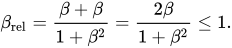
Special relativity does not prohibit this. Instead, it implies that it is wrong to use Galilean relativity to compute the velocity of one of the particles, as would be measured by an observer traveling alongside the other particle. That is, special relativity gives the correct velocity-addition formula for computing such relative velocity.

It is instructive to compute the relative velocity of particles moving at v and −v in accelerator frame, which corresponds to the closing speed of 2v > c. Expressing the speeds in units of c, β = v/c:

Proper speeds

If a spaceship travels to a planet one light-year (as measured in the Earth's rest frame) away from Earth at high speed, the time taken to reach that planet could be less than one year as measured by the traveller's clock (although it will always be more than one year as measured by a clock on Earth). The value obtained by dividing the distance traveled, as determined in the Earth's frame, by the time taken, measured by the traveller's clock, is known as a proper speed or a proper velocity. There is no limit on the value of a proper speed as a proper speed does not represent a speed measured in a single inertial frame. A light signal that left the Earth at the same time as the traveller would always get to the destination before the traveller would.

Phase velocities above c

The phase velocity of an electromagnetic wave, when traveling through a medium, can routinely exceed c, the vacuum velocity of light. For example, this occurs in most glasses at X-ray frequencies. However, the phase velocity of a wave corresponds to the propagation speed of a theoretical single-frequency (purely monochromatic) component of the wave at that frequency. Such a wave component must be infinite in extent and of constant amplitude (otherwise it is not truly monochromatic), and so cannot convey any information. Thus a phase velocity above c does not imply the propagation of signals with a velocity above c.

Group velocities above c

The group velocity of a wave may also exceed c in some circumstances. In such cases, which typically at the same time involve rapid attenuation of the intensity, the maximum of the envelope of a pulse may travel with a velocity above c. However, even this situation does not imply the propagation of signals with a velocity above c, even though one may be tempted to associate pulse maxima with signals. The latter association has been shown to be misleading, because the information on the arrival of a pulse can be obtained before the pulse maximum arrives. For example, if some mechanism allows the full transmission of the leading part of a pulse while strongly attenuating the pulse maximum and everything behind (distortion), the pulse maximum is effectively shifted forward in time, while the information on the pulse does not come faster than c without this effect. However, group velocity can exceed c in some parts of a Gaussian beam in vacuum (without attenuation). The diffraction causes the peak of the pulse to propagate faster, while overall power does not.

Cosmic expansion

According to Hubble's law, the expansion of the universe causes distant galaxies to appear to recede from the Earth faster than the speed of light. However, the recession speed associated with Hubble's law, defined as the rate of increase in proper distance per interval of cosmological time, is not a velocity in a relativistic sense. Moreover, in general relativity, velocity is a local notion, and there is not even a unique definition for the relative velocity of a cosmologically distant object. Faster-than-light cosmological recession speeds are entirely a coordinate effect.

There are many galaxies visible in telescopes with redshift numbers of 1.4 or higher. All of these have cosmological recession speeds greater than the speed of light. Because the Hubble parameter is decreasing with time, there can actually be cases where a galaxy that is receding from the Earth faster than light does manage to emit a signal which reaches the Earth eventually.

However, because the expansion of the universe is accelerating, it is projected that most galaxies will eventually cross a type of cosmological event horizon where any light they emit past that point will never be able to reach the Earth any time in the infinite future, because the light never reaches a point where its "peculiar velocity" towards the Earth exceeds the expansion velocity away from the Earth (these two notions of velocity are also discussed in Comoving and proper distances § Uses of the proper distance). The current distance to this cosmological event horizon is about 16 billion light-years, meaning that a signal from an event happening at present would eventually be able to reach the Earth in the future if the event was less than 16 billion light-years away, but the signal would never arrive if the event was more than 16 billion light-years away.

Astronomical observations

Apparent superluminal motion is observed in many radio galaxies, blazars, quasars, and recently also in microquasars. The effect was predicted before it was observed by Martin Rees and can be explained as an optical illusion caused by the object partly moving in the direction of the observer, when the speed calculations assume it does not. The phenomenon does not contradict the theory of special relativity. Corrected calculations show these objects have velocities close to the speed of light (relative to our reference frame). They are the first examples of large amounts of mass moving at close to the speed of light. Earth-bound laboratories have only been able to accelerate small numbers of elementary particles to such speeds.

Quantum mechanics

Certain phenomena in quantum mechanics, such as quantum entanglement, might give the superficial impression of allowing communication of information faster than light. According to the no-communication theorem these phenomena do not allow true communication; they only let two observers in different locations see the same system simultaneously, without any way of controlling what either sees. Wavefunction collapse can be viewed as an epiphenomenon of quantum decoherence, which in turn is nothing more than an effect of the underlying local time evolution of the wavefunction of a system and all of its environment. Since the underlying behavior does not violate local causality or allow faster-than-light communication, it follows that neither does the additional effect of wavefunction collapse, whether real or apparent.

The uncertainty principle implies that individual photons may travel for short distances at speeds somewhat faster (or slower) than c, even in vacuum; this possibility must be taken into account when enumerating Feynman diagrams for a particle interaction. However, it was shown in 2011 that a single photon may not travel faster than c.

There have been various reports in the popular press of experiments on faster-than-light transmission in optics — most often in the context of a kind of quantum tunnelling phenomenon. Usually, such reports deal with a phase velocity or group velocity faster than the vacuum velocity of light. However, as stated above, a superluminal phase velocity cannot be used for faster-than-light transmission of information.

Hartman effect

The Hartman effect is the tunneling effect through a barrier where the tunneling time tends to a constant for large barriers. This could, for instance, be the gap between two prisms. When the prisms are in contact, the light passes straight through, but when there is a gap, the light is refracted. There is a non-zero probability that the photon will tunnel across the gap rather than follow the refracted path.

However, it has been claimed that the Hartman effect cannot actually be used to violate relativity by transmitting signals faster than c, also because the tunnelling time "should not be linked to a velocity since evanescent waves do not propagate". The evanescent waves in the Hartman effect are due to virtual particles and a non-propagating static field, as mentioned in the sections above for gravity and electromagnetism.

Casimir effect

In physics, the Casimir–Polder force is a physical force exerted between separate objects due to resonance of vacuum energy in the intervening space between the objects. This is sometimes described in terms of virtual particles interacting with the objects, owing to the mathematical form of one possible way of calculating the strength of the effect. Because the strength of the force falls off rapidly with distance, it is only measurable when the distance between the objects is extremely small. Because the effect is due to virtual particles mediating a static field effect, it is subject to the comments about static fields discussed above.

EPR paradox

The EPR paradox is a thought experiment of Albert Einstein, Boris Podolsky and Nathan Rosen, and is named after their surnames. In this experiment, the two measurements of an entangled state are correlated even when the measurements are distant from the source and each other. However, no information can be transmitted this way; the answer to whether or not the measurement actually affects the other quantum system comes down to which interpretation of quantum mechanics one subscribes to.

An experiment performed in 1997 by Nicolas Gisin has demonstrated quantum correlations between particles separated by over 10 kilometers. But as noted earlier, the non-local correlations seen in entanglement cannot actually be used to transmit classical information faster than light, so that relativistic causality is preserved. The situation is akin to sharing a synchronized coin flip, where the second person to flip their coin will always see the opposite of what the first person sees, but neither has any way of knowing whether they were the first or second flipper, without communicating classically. See No-communication theorem for further information. A 2008 quantum physics experiment also performed by Nicolas Gisin and his colleagues has determined that in any hypothetical non-local hidden-variable theory, the speed of the quantum non-local connection (what Einstein called "spooky action at a distance") is at least 10,000 times the speed of light.

Delayed choice quantum eraser

The delayed-choice quantum eraser is a version of the EPR paradox in which the observation (or not) of interference after the passage of a photon through a double slit experiment depends on the conditions of observation of a second photon entangled with the first. The characteristic of this experiment is that the observation of the second photon can take place at a later time than the observation of the first photon, which may give the impression that the measurement of the later photons "retroactively" determines whether the earlier photons show interference or not, although the interference pattern can only be seen by correlating the measurements of both members of every pair and so it cannot be observed until both photons have been measured, ensuring that an experimenter watching only the photons going through the slit does not obtain information about the other photons in an faster-than-light or backwards-in-time manner.

Superluminal communication

Faster-than-light communication is, according to relativity, equivalent to time travel. What is measured as the speed of light in vacuum (or near vacuum) is actually the fundamental physical constant c. This means that all inertial and, for the coordinate speed of light, non-inertial observers, regardless of their relative velocity, will always measure zero-mass particles such as photons traveling at c in vacuum. This result means that measurements of time and velocity in different frames are no longer related simply by constant shifts, but are instead related by Poincaré transformations. These transformations have important implications:

  • The relativistic momentum of a massive particle would increase with speed in such a way that at the speed of light an object would have infinite momentum.
  • To accelerate an object of non-zero rest mass to c would require infinite time with any finite acceleration, or infinite acceleration for a finite amount of time.
  • Either way, such acceleration requires infinite energy.
  • Some observers with sub-light relative motion will disagree about which occurs first of any two events that are separated by a space-like interval. In other words, any travel that is faster-than-light will be seen as traveling backwards in time in some other, equally valid, frames of reference, or need to assume the speculative hypothesis of possible Lorentz violations at a presently unobserved scale (for instance the Planck scale). Therefore, any theory which permits "true" FTL also has to cope with time travel and all its associated paradoxes, or else to assume the Lorentz invariance to be a symmetry of thermodynamical statistical nature (hence a symmetry broken at some presently unobserved scale).
  • In special relativity the coordinate speed of light is only guaranteed to be c in an inertial frame; in a non-inertial frame the coordinate speed may be different from c. In general relativity no coordinate system on a large region of curved spacetime is "inertial", so it is permissible to use a global coordinate system where objects travel faster than c, but in the local neighborhood of any point in curved spacetime there can be defined a "local inertial frame" and the local speed of light will be c in this frame, with massive objects moving through this local neighborhood always having a speed less than c in the local inertial frame.

Justifications

Casimir vacuum and quantum tunnelling

Special relativity postulates that the speed of light in a vacuum is invariant in inertial frames. That is, it will be the same from any frame of reference moving at a constant speed. The equations do not specify any particular value for the speed of light, which is an experimentally determined quantity for a fixed unit of length. Since 1983, the SI unit of length (the meter) has been defined using the speed of light.

The experimental determination has been made in a vacuum, but the observed vacuum is not the only possible vacuum which can exist. The vacuum has energy associated with it, called simply the vacuum energy, which could perhaps be altered in certain cases. When vacuum energy is lowered, light itself has been predicted to go faster than the standard value c. This is known as the Scharnhorst effect. Such a vacuum can be produced by bringing two perfectly smooth metal plates together at near atomic diameter spacing. It is called a Casimir vacuum. Calculations imply that light will go faster in such a vacuum by a minuscule amount: a photon traveling between two plates that are 1 micrometer apart would increase the photon's speed by only about one part in 1036. Accordingly, there has as yet been no experimental verification of the prediction. A recent analysis argued that the Scharnhorst effect cannot be used to send information backwards in time with a single set of plates since the plates' rest frame would define a "preferred frame" for FTL signaling. However, with multiple pairs of plates in motion relative to one another the authors noted that they had no arguments that could "guarantee the total absence of causality violations", and invoked Hawking's speculative chronology protection conjecture which suggests that feedback loops of virtual particles would create "uncontrollable singularities in the renormalized quantum stress-energy" on the boundary of any potential time machine, and thus would require a theory of quantum gravity to fully analyze. Other authors argue that Scharnhorst's original analysis, which seemed to show the possibility of faster-than-c signals, involved approximations which may be incorrect, so that it is not clear whether this effect could actually increase signal speed at all.

It was later claimed by Eckle et al. that particle tunneling does indeed occur in zero real time. Their tests involved tunneling electrons, where the group argued a relativistic prediction for tunneling time should be 500–600 attoseconds (an attosecond is one quintillionth (10−18) of a second). All that could be measured was 24 attoseconds, which is the limit of the test accuracy. Again, though, other physicists believe that tunneling experiments in which particles appear to spend anomalously short times inside the barrier are in fact fully compatible with relativity, although there is disagreement about whether the explanation involves reshaping of the wave packet or other effects.

Give up (absolute) relativity

Because of the strong empirical support for special relativity, any modifications to it must necessarily be quite subtle and difficult to measure. The best-known attempt is doubly special relativity, which posits that the Planck length is also the same in all reference frames, and is associated with the work of Giovanni Amelino-Camelia and João Magueijo. There are speculative theories that claim inertia is produced by the combined mass of the universe (e.g., Mach's principle), which implies that the rest frame of the universe might be preferred by conventional measurements of natural law. If confirmed, this would imply special relativity is an approximation to a more general theory, but since the relevant comparison would (by definition) be outside the observable universe, it is difficult to imagine (much less construct) experiments to test this hypothesis. Despite this difficulty, such experiments have been proposed.

Spacetime distortion

Although the theory of special relativity forbids objects to have a relative velocity greater than light speed, and general relativity reduces to special relativity in a local sense (in small regions of spacetime where curvature is negligible), general relativity does allow the space between distant objects to expand in such a way that they have a "recession velocity" which exceeds the speed of light, and it is thought that galaxies which are at a distance of more than about 14 billion light-years the Earth today have a recession velocity which is faster than light. Miguel Alcubierre theorized that it would be possible to create a warp drive, in which a ship would be enclosed in a "warp bubble" where the space at the front of the bubble is rapidly contracting and the space at the back is rapidly expanding, with the result that the bubble can reach a distant destination much faster than a light beam moving outside the bubble, but without objects inside the bubble locally traveling faster than light. However, several objections raised against the Alcubierre drive appear to rule out the possibility of actually using it in any practical fashion. Another possibility predicted by general relativity is the traversable wormhole, which could create a shortcut between arbitrarily distant points in space. As with the Alcubierre drive, travelers moving through the wormhole would not locally move faster than light travelling through the wormhole alongside them, but they would be able to reach their destination (and return to their starting location) faster than light traveling outside the wormhole.

Gerald Cleaver and Richard Obousy, a professor and student of Baylor University, theorized that manipulating the extra spatial dimensions of string theory around a spaceship with an extremely large amount of energy would create a "bubble" that could cause the ship to travel faster than the speed of light. To create this bubble, the physicists believe manipulating the 10th spatial dimension would alter the dark energy in three large spatial dimensions: height, width and length. Cleaver said positive dark energy is currently responsible for speeding up the expansion rate of our universe as time moves on.

Lorentz symmetry violation

The possibility that Lorentz symmetry may be violated has been seriously considered in the last two decades, particularly after the development of a realistic effective field theory that describes this possible violation, the so-called Standard-Model Extension. This general framework has allowed experimental searches by ultra-high energy cosmic-ray experiments and a wide variety of experiments in gravity, electrons, protons, neutrons, neutrinos, mesons, and photons. The breaking of rotation and boost invariance causes direction dependence in the theory as well as unconventional energy dependence that introduces novel effects, including Lorentz-violating neutrino oscillations and modifications to the dispersion relations of different particle species, which naturally could make particles move faster than light.

In some models of broken Lorentz symmetry, it is postulated that the symmetry is still built into the most fundamental laws of physics, but that spontaneous symmetry breaking of Lorentz invariance shortly after the Big Bang could have left a "relic field" throughout the universe which causes particles to behave differently depending on their velocity relative to the field; however, there are also some models where Lorentz symmetry is broken in a more fundamental way. If Lorentz symmetry can cease to be a fundamental symmetry at the Planck scale or at some other fundamental scale, it is conceivable that particles with a critical speed different from the speed of light be the ultimate constituents of matter.

In current models of Lorentz symmetry violation, the phenomenological parameters are expected to be energy-dependent. Therefore, as widely recognized, existing low-energy bounds cannot be applied to high-energy phenomena; however, many searches for Lorentz violation at high energies have been carried out using the Standard-Model Extension. Lorentz symmetry violation is expected to become stronger as one gets closer to the fundamental scale.

Superfluid theories of physical vacuum

In this approach, the physical vacuum is viewed as a quantum superfluid which is essentially non-relativistic, whereas Lorentz symmetry is not an exact symmetry of nature but rather the approximate description valid only for the small fluctuations of the superfluid background. Within the framework of the approach, a theory was proposed in which the physical vacuum is conjectured to be a quantum Bose liquid whose ground-state wavefunction is described by the logarithmic Schrödinger equation. It was shown that the relativistic gravitational interaction arises as the small-amplitude collective excitation mode whereas relativistic elementary particles can be described by the particle-like modes in the limit of low momenta. The important fact is that at very high velocities the behavior of the particle-like modes becomes distinct from the relativistic one – they can reach the speed of light limit at finite energy; also, faster-than-light propagation is possible without requiring moving objects to have imaginary mass.

FTL neutrino flight results

MINOS experiment

High precision measurements from the MINOS collaboration for the flight-time of 3 GeV neutrinos yielded a speed (v/c−1)=(1.0±1.1)×10−6, that is equal to the speed of light to one part in a million.

OPERA neutrino anomaly

On September 22, 2011, a preprint from the OPERA Collaboration indicated detection of 17 and 28 GeV muon neutrinos, sent 730 kilometers (454 miles) from CERN near Geneva, Switzerland to the Gran Sasso National Laboratory in Italy, traveling faster than light by a relative amount of 2.48×10⁻⁵ (approximately 1 in 40,000), a statistic with 6.0-sigma significance. On 17 November 2011, a second follow-up experiment by OPERA scientists confirmed their initial results. However, scientists were skeptical about the results of these experiments, the significance of which was disputed. In March 2012, the ICARUS collaboration failed to reproduce the OPERA results with their equipment, detecting neutrino travel time from CERN to the Gran Sasso National Laboratory indistinguishable from the speed of light. Later the OPERA team reported two flaws in their equipment set-up that had caused errors far outside their original confidence interval: a fiber-optic cable attached improperly, which caused the apparently faster-than-light measurements, and a clock oscillator ticking too fast.

Tachyons

In special relativity, it is impossible to accelerate an object to the speed of light, or for a massive object to move at the speed of light. However, it might be possible for an object to exist which always moves faster than light. The hypothetical elementary particles with this property are called tachyons or tachyonic particles. Attempts to quantize them failed to produce faster-than-light particles, and instead illustrated that their presence leads to an instability.

Various theorists have suggested that the neutrino might have a tachyonic nature, while others have disputed the possibility.

General relativity

General relativity was developed after special relativity to include concepts like gravity. It maintains the principle that no object can accelerate to the speed of light in the reference frame of any coincident observer. However, it permits distortions in spacetime that allow an object to move faster than light from the point of view of a distant observer. One such distortion is the Alcubierre drive, which can be thought of as producing a ripple in spacetime that carries an object along with it. Another possible system is the wormhole, which connects two distant locations as though by a shortcut. Both distortions would need to create a very strong curvature in a highly localized region of space-time and their gravity fields would be immense. To counteract the unstable nature, and prevent the distortions from collapsing under their own 'weight', one would need to introduce hypothetical exotic matter or negative energy.

General relativity also recognizes that any means of faster-than-light travel could also be used for time travel. This raises problems with causality. Many physicists believe that the above phenomena are impossible and that future theories of gravity will prohibit them. One theory states that stable wormholes are possible, but that any attempt to use a network of wormholes to violate causality would result in their decay. In string theory, Eric G. Gimon and Petr Hořava have argued that in a supersymmetric five-dimensional Gödel universe, quantum corrections to general relativity effectively cut off regions of spacetime with causality-violating closed timelike curves. In particular, in the quantum theory a smeared supertube is present that cuts the spacetime in such a way that, although in the full spacetime a closed timelike curve passed through every point, no complete curves exist on the interior region bounded by the tube.

Psychiatric genetics

From Wikipedia, the free encyclopedia

Psychiatric genetics is a subfield of behavioral neurogenetics and behavioral genetics which studies the role of genetics in the development of mental disorders (such as alcoholism, schizophrenia, bipolar disorder, and autism). The basic principle behind psychiatric genetics is that genetic polymorphisms (as indicated by linkage to e.g. a single nucleotide polymorphism) are part of the causation of psychiatric disorders.

Psychiatric genetics is a somewhat new name for the old question, "Are behavioral and psychological conditions and deviations inherited?". The goal of psychiatric genetics is to better understand the causes of psychiatric disorders, to use that knowledge to improve treatment methods, and possibly also to develop personalized treatments based on genetic profiles (see pharmacogenomics). In other words, the goal is to transform parts of psychiatry into a neuroscience-based discipline.

Recent advances in molecular biology allowed for the identification of hundreds of common and rare genetic variations that contribute to psychiatric disorders.

Psychiatric genetics has established that most psychiatric disorders, such as schizophrenia and autism, are highly heritable and polygenic, meaning they are influenced by thousands of common genetic variants, each having a small effect on risk.

History

Research on psychiatric genetics began in the late nineteenth century with Francis Galton (a founder of psychiatric genetics) who was motivated by the work of Charles Darwin and his concept of desegregation. These methods of study later improved due to the development of more advanced clinical, epidemiological, and biometrical research tools. Better research tools were the precursor to the ability to perform valid family, twin, and adoption studies. Researchers learned that genes influence how these disorders manifest and that they tend to aggregate in families. Major recent progress in psychiatric genetics has been made possible by the advent of the 'genome-wide association study', a case-control design that compares genetic variants in very large groups of individuals with and without a diagnosis, and through large, global collaborative efforts including the wellcome trust case control consortium and psychiatric genomics consortium, among many others.

Heritability and genetics

Most psychiatric disorders are highly heritable; the estimated heritability for bipolar disorder, schizophrenia, and autism (80% or higher) is much higher than that of diseases like breast cancer and Parkinson's disease. Having a close family member affected by a mental illness is the largest known risk factor, to date. However, linkage analysis and genome-wide association studies have found few reproducible risk factors.

Heterogeneity is an important factor to consider when dealing with genetics. Two types of heterogeneity have been identified in association with psychiatric genetics: causal and clinical. Causal heterogeneity refers to a situation in which two or more causes can independently induce the same clinical syndrome. Clinical heterogeneity refers to when a single cause can lead to more than one clinical syndrome.

Several genetic risk factors have been found with the endophenotypes of psychiatric disorders, rather than with the diagnoses themselves. That is, the risk factors are associated with particular symptoms, not with the overall diagnosis. In psychiatry, endophenotypes are a way of objectively measuring certain internal processes in a reliable way that is often lacking the diseases with which they are associated. They lie in the space between genes and disease process and allow for some understanding of the biology of psychiatric diseases.

A systematic comparative analysis of shared and unique genetic factors highlighted key gene sets and molecular processes underlying six major neuropsychiatric disorders: attention deficit hyperactivity disorder, anxiety disorders, autistic spectrum disorders, bipolar disorder, major depressive disorder, and schizophrenia. This may ultimately translate into improved diagnosis and treatment of these debilitating disorders.

Methodology

Linkage, association, and microarray studies generate raw material for findings in psychiatric genetics. Copy number variants have also been associated with psychiatric conditions.

Genetic Linkage studies attempt to find a correlation between the diagnosis and inheritance of certain alleles within families who have two or more ill relatives. An analysis of a linkage study uses a wide chromosomal region, whereas a genetic association study endeavors to identify a specific DNA polymorphism, which can be a deletion, inversion, or repletion of a sequence. Case-control association studies can be used as an exploratory tool for narrowing the area of interest after preliminary mapping of a gene by a linkage study.

Genome-Wide Association Studies uncover genetic links in psychiatric disorders by analyzing the genomes of large groups of individuals, comparing genetic variants between individuals with a disorder and individuals without to identify regions associated with increased risk.

Predictive genetic testing

One hope for future genetic testing is the ability to test for presymptomatic or prenatal illnesses. This information has the potential to improve the lives of those affected with certain illnesses, specifically those like schizophrenia. If possible to test for schizophrenia before the symptoms develop, proactive interventions could be developed, or even preventative treatments. In one study, 100% of patients with bipolar disorder indicated that they would probably take a genetic test to determine they were carrying a gene associated with the disorder, if such a test existed.

Ethical issues

Francis Galton studied both desirable and undesirable behavioral and mental properties to better examine the world of genetics. His research led to his proposal of a eugenic program of birth control. His goal was to decrease the frequency of the less desirable traits that occurred throughout the population. His ideas were pursued by psychiatrists in many countries such as the United States, Germany and Scandinavia.

Genotyping and its implications are still seen as ethically controversial by many people. The ELSI (Ethical, Legal, and Social Initiative), which is part of the Human Genome Project, was created with the aim of "foster[ing] basic and applied research on the ethical, legal and social implications of genetic and genomic research for individuals, families and communities.".

Psychiatric Genetic Disorders

For many years, it was known and accepted that there were genetic linkages between psychiatric disorders and a person’s predisposition to the disorder, but only in the past few years has there really been an effort made to identify any specific genes or markers leading to disorders such as schizophrenia, ASD, bipolar disorder, and anxiety disorders. In a recent analysis, a group studied the genetic architecture of these mental illnesses at several levels of analysis. The method of analysis in this case was genomic structural equation modeling on genome-wide association studies (GWAS).  GWAS is a genetic tool that scans the entire DNA to identify pieces of the DNA associated with certain diseases or syndromes. With this data, scientists were able to sort 11 disorders into clustered groups and establish a covariance structure. They identified four correlational groups, sorting the different disorders into genetically similar sections thatbest fit the data. Factor 1 (or Group 1) consisted of anorexia nervosa, OCD, and Tourette syndrome, which were all categorized as compulsive behavior. Factor 2 involved disorders with psychotic features (schizophrenia and bipolar disorder), Factor 3 included ADHD and autism, and Factor 4 contained anxiety and major depressive disorder. These factors consisted of childhood-onset neurodevelopmental disorders and internalizing disorders, respectively. Based on various data collection, correlational studies, and computing, the groups ultimately found varying numbers of independent loci for each factor, noting 154 total hits. Independent loci are specific locations, or markers, in chromosomes that are inherited independently of each other. Eighty-nine of these independent loci were found in correlation with the psychotic disorders, highlighting 12 new loci. The internalizing disorders had 29 genome-wide significant loci identified, while the neurodevelopmental group had 8, and the compulsive disorder factor only had one major hit. Additionally, two specific markers were found: SNP rs9314056 (seen in the internalizing factor as a hit for MDD and anxiety) andthe ADH1B gene (rs4699743, seen in all four factors, although it was linked specifically with the idea that alcohol use may causally influence psychiatric risk.  

In another study, which was more interested in the identification of therapeutic treatments of mental disorders, they detailed shared pathways and genetic factors involved in overlapping and similar illnesses. While expanding on the shared pathways between neurological and mental diseases, the article introduced the idea of genetic pleiotropy, where a single gene “affects numerous phenotypic features that may appear unrelated.” One example of this is theCACNA1C gene, which has been discovered to be a risk factor for bipolar disorder, as well as migraines and epilepsy.  

An article from World Psychiatry gives a solid overview of biomarkers for many of the previously mentioned mental disorders. It begins with autism spectrum disorder, which, as of 2023, has the most genes identified as markers of any other DSM diagnosis. The article cited another study from Jakob Grove, a professor in the Department of Biomedicine at Aarhus University, and his team, for several identified loci of autism spectrum disorder, including the NEGR1, PTBP2, CADPS, KCNN2, KMT2E, and MACROD2 genes. Anxiety disorders were discussed next, highlighting the COMT (rs4680, G [val] allele), NPSR1 (rs324981, T allele), TPH1 (rs1800532, AA genotype), HTR2A (rs6313, T allele), and MAOA (uVNTR, long alleles) genes to be involved through their own gene study. Along with this, GWAS was used to note the several SNPs within the ESR1, GLRB, MYH15, NTRK2, PDE4B, RBFOX1, SATB1, TMEM132D, and TMEM106B genes, which are linked to anxiety disorders and anxiety-related traits. SNPs refer to single-nucleotide polymorphisms, which is when a single base in the DNA is changed. Finally, the article by World Psychiatry touched on the presence of the genetic markers behind mood disorders, stating that GWAS found 17 new loci for those disorders that fall in line with previously done secondary post-mortem studies.

These studies are constantly evolving, aiming to connect mental disorders with subsequent affecting genes in an effort to better understand underlying causes, early risk determinants, and possible courses of treatment. While not every aspect is understood yet, and not all markers have been identified, genetic psychiatry has made leaps and bounds from where it was even 10 years ago and continues to work towards not only the identification of these markers but potentially being able to alter them.

Theories about religion

From Wikipedia, the free encyclopedia https://en.wikipedia.org/wiki/Theories_about_religion   So...