Search This Blog

Monday, May 18, 2026

Parabolic antenna

From Wikipedia, the free encyclopedia
https://en.wikipedia.org/wiki/Parabolic_antenna
A 28.5 meter parabolic satellite communications antenna at Erdfunkstelle Raisting (Raisting Earth Station), Bavaria, Germany, the biggest facility for satellite communication in the world. It has a Cassegrain-type feed, transmits at 6 Ghz and receives at 4 Ghz with a gain of 64.2 dB

A parabolic antenna is an antenna that uses a parabolic reflector, a curved surface with the cross-sectional shape of a parabola, to direct the radio waves. The most common form is shaped like a dish and is popularly called a dish antenna or parabolic dish. The main advantage of a parabolic antenna is that it has high directivity. It functions similarly to a searchlight or flashlight reflector to direct radio waves in a narrow beam, or receive radio waves from one particular direction only. Parabolic antennas have some of the highest gains, meaning that they can produce the narrowest beamwidths, of any antenna type. In order to achieve narrow beamwidths, the parabolic reflector must be much larger than the wavelength of the radio waves used, so parabolic antennas are used in the high frequency part of the radio spectrum, at UHF and microwave (SHF) frequencies, at which the wavelengths are small enough that conveniently sized reflectors can be used.

Parabolic antennas are used as high-gain antennas for point-to-point communications, in applications such as microwave relay links that carry telephone and television signals between nearby cities, wireless WAN/LAN links for data communications, satellite communications, and spacecraft communication antennas. They are also used in radio telescopes.

The other large use of parabolic antennas is for radar antennas, which need to transmit a narrow beam of radio waves to locate objects like ships, airplanes, and guided missiles. They are also often used for weather detection. With the advent of home satellite television receivers, parabolic antennas have become a common feature of the landscapes of modern countries.

The parabolic antenna was invented by German physicist Heinrich Hertz during his discovery of radio waves in 1887. He used cylindrical parabolic reflectors with spark-excited dipole antennas at their foci for both transmitting and receiving during his historic experiments.

Parabolic antennas are based on the geometrical property of the paraboloid that the paths FP1Q1, FP2Q2, FP3Q3 are all the same length. Thus, a spherical wavefront emitted by a feed antenna at the dish's focus F will be reflected into an outgoing plane wave L travelling parallel to the dish's axis VF.

Design

The operating principle of a parabolic antenna is that a point source of radio waves at the focal point in front of a paraboloidal reflector of conductive material will be reflected into a collimated plane wave beam along the axis of the reflector. Conversely, an incoming plane wave parallel to the axis will be focused to a point at the focal point.

A typical parabolic antenna consists of a metal parabolic reflector with a small feed antenna suspended in front of the reflector at its focus, pointed back toward the reflector. The reflector is a metallic surface formed into a paraboloid of revolution and usually truncated in a circular rim that forms the diameter of the antenna. In a transmitting antenna, radio frequency current from a transmitter is supplied through a transmission line cable to the feed antenna, which converts it into radio waves. The radio waves are emitted back toward the dish by the feed antenna and reflect off the dish into a parallel beam. In a receiving antenna the incoming radio waves bounce off the dish and are focused to a point at the feed antenna, which converts them into electric currents which travel through a transmission line to the radio receiver.

Parabolic reflector

Wire grid-type parabolic antenna used for MMDS data link at a frequency of 2.5-2.7 GHz. It is fed by a vertical dipole under the small aluminum reflector on the boom. It radiates vertically polarized microwaves.

The reflector can be constructed from sheet metal, a metal screen, or a wire grill, and can be either a circular dish or various other shapes to create different beam shapes. A metal screen reflects radio waves as effectively as a solid metal surface if its holes are smaller than one-tenth of a wavelength, so screen reflectors are often used to reduce weight and wind loads on the dish. To achieve the maximum gain, the shape of the dish needs to be accurate within a small fraction of a wavelength, around one sixteenth wavelength, to ensure the waves from different parts of the antenna arrive at the focus in phase. Large dishes often require a supporting truss structure behind them to provide the required stiffness.

A reflector made of a grill of parallel wires or bars oriented in one direction acts as a polarizing filter as well as a reflector. It only reflects linearly polarized radio waves, with the electric field parallel to the grill elements. This type is often used in radar antennas. Combined with a linearly polarized feed horn, it helps filter out noise in the receiver and reduces false returns.

A shiny metal parabolic reflector can also focus the sun's rays. Since most dishes could concentrate enough solar energy on the feed structure to severely overheat it if they happened to be pointed at the sun, solid reflectors are always given a coat of flat paint.

Feed antenna

The feed antenna at the reflector's focus is typically a low-gain type, such as a half-wave dipole or (more often) a small horn antenna called a feed horn. In more complex designs, such as the Cassegrain and Gregorian, a secondary reflector is used to direct the energy into the parabolic reflector from a feed antenna located away from the primary focal point. The feed antenna is connected to the associated radio-frequency (RF) transmitting or receiving equipment by means of a coaxial cable transmission line or waveguide.

At the microwave frequencies used in many parabolic antennas, waveguide is required to conduct the microwaves between the feed antenna and transmitter or receiver. Because of the high cost of waveguide runs, in many parabolic antennas the RF front end electronics of the receiver is located at the feed antenna, and the received signal is converted to a lower intermediate frequency (IF) so it can be conducted to the receiver through cheaper coaxial cable. This is called a low-noise block downconverter. Similarly, in transmitting dishes, the microwave transmitter may be located at the feed point.

An advantage of parabolic antennas is that most of the structure of the antenna (all of it except the feed antenna) is nonresonant, so it can function over a wide range of frequencies (i.e. a wide bandwidth). All that is necessary to change the frequency of operation is to replace the feed antenna with one that operates at the desired frequency. Some parabolic antennas transmit or receive at multiple frequencies by having several feed antennas mounted at the focal point, close together.

Dish parabolic antennas
 
Shrouded microwave relay dishes on a communications tower in Australia
 
A satellite television dish, an example of an offset fed dish
Cassegrain antenna on the Voyager spacecraft, 1977.
 
Offset Gregorian antenna used in the Allen Telescope Array, a radio telescope at the University of California Berkeley, US
 
Shaped-beam parabolic antennas
 
Vertical "orange peel" antenna for military height finder radar, Germany
 
Early cylindrical parabolic antenna, 1931, Nauen, Germany
 
Airport surveillance radar antenna, Orly airport, France, 1964
 
ASR-9 Airport surveillance radar antenna
 
"Orange peel" antenna for air search radar, Finland

Types

Main types of parabolic antenna feeds

Parabolic antennas are distinguished by their shapes:

  • Paraboloidal or dish – The reflector is shaped like a paraboloid truncated with a circular rim. This is the most common type. It radiates a narrow pencil-shaped beam along the axis of the dish.
    • Shrouded dish – Sometimes a cylindrical metal shield is attached to the rim of the dish. The shroud shields the antenna from radiation from angles outside the main beam axis, reducing the sidelobes. It is sometimes used to prevent interference in terrestrial microwave links, where several antennas using the same frequency are located close together. The shroud is coated inside with microwave absorbent material. Shrouds can reduce back lobe radiation by 10 dB.
  • Cylindrical – The reflector is curved in only one direction and flat in the other. The radio waves come to a focus not at a point but along a line. The feed is sometimes a dipole antenna located along the focal line. Cylindrical parabolic antennas radiate a fan-shaped beam, narrow in the curved dimension, and wide in the uncurved dimension. The curved ends of the reflector are sometimes capped by flat plates, to prevent radiation out the ends, and this is called a pillbox antenna or cheese antenna.
  • Shaped-beam antennas – Modern reflector antennas can be designed to produce a beam or beams of a particular shape, rather than just the narrow "pencil" or "fan" beams of the simple dish and cylindrical antennas mentioned above. Two techniques are used, often in combination, to control the shape of the beam:
  • Shaped reflectors – The reflector can be given a noncircular shape, or different curvatures in the horizontal and vertical directions, to alter the shape of the beam. This is often used in radar antennas. As a general principle, the wider the antenna is in a given transverse direction, the narrower the radiation pattern will be in that direction.
  • "Orange peel" antenna – Used in search radars, this is a long narrow antenna shaped like the letter "C". It radiates a narrow vertical fan-shaped beam.
Array of multiple feed horns on a German airport surveillance radar antenna to control the elevation angle of the beam
  • Arrays of feeds – In order to produce an arbitrary shaped beam, instead of one feed horn, an array of feed horns clustered around the focal point can be used. Array-fed antennas are often used on communication satellites, particularly direct broadcast satellites, to create a downlink radiation pattern to cover a particular continent or coverage area. They are often used with secondary reflector antennas such as the Cassegrain.

Parabolic antennas are also classified by the type of feed, that is, how the radio waves are supplied to the antenna:

  • Axial, prime focus, or front feed – This is the most common type of feed, with the feed antenna located in front of the dish at the focus, on the beam axis, pointed back toward the dish. A disadvantage of this type is that the feed and its supports block some of the beam, which limits the aperture efficiency to only 55–60%.
  • Off-axis or offset feed – The reflector is an asymmetrical segment of a paraboloid, so the focus, and the feed antenna, are located to one side of the dish. The purpose of this design is to move the feed structure out of the beam path, so it does not block the beam. It is widely used in home satellite television dishes, which are small enough that the feed structure would otherwise block a significant percentage of the signal. Offset feed can also be used in multiple reflector designs such as the Cassegrain and Gregorian, below.
  • Cassegrain – In a Cassegrain antenna, the feed is located on or behind the dish, and radiates forward, illuminating a convex hyperboloidal secondary reflector at the focus of the dish. The radio waves from the feed reflect off the secondary reflector to the dish, which reflects them forward again, forming the outgoing beam. An advantage of this configuration is that the feed, with its waveguides and "front end" electronics does not have to be suspended in front of the dish, so it is used for antennas with complicated or bulky feeds, such as large satellite communication antennas and radio telescopes. Aperture efficiency is on the order of 65–70%.
  • Gregorian – Similar to the Cassegrain design except that the secondary reflector is concave (ellipsoidal) in shape. Aperture efficiency over 70% can be achieved.

Feed pattern

Effect of the feed antenna radiation pattern (small pumpkin-shaped surface) on spillover. Left: with a low gain feed antenna, significant parts of its radiation fall outside the dish. Right: with a higher gain feed, almost all its radiation is emitted within the angle of the dish.

The radiation pattern of the feed antenna has to be tailored to the shape of the dish, because it has a strong influence on the aperture efficiency, which determines the antenna gain (see gain section below). Radiation from the feed that falls outside the edge of the dish is called spillover and is wasted, reducing the gain and increasing the backlobes, possibly causing interference or (in receiving antennas) increasing susceptibility to ground noise. However, maximum gain is only achieved when the dish is uniformly "illuminated" with a constant field strength to its edges. Therefore, the ideal radiation pattern of a feed antenna would be a constant field strength throughout the solid angle of the dish, dropping abruptly to zero at the edges. However, practical feed antennas have radiation patterns that drop off gradually at the edges, so the feed antenna is a compromise between acceptably low spillover and adequate illumination. For most front feed horns, optimum illumination is achieved when the power radiated by the feed horn is 10 dB less at the dish edge than its maximum value at the center of the dish.

Polarization

The pattern of electric and magnetic fields at the mouth of a parabolic antenna is simply a scaled-up image of the fields radiated by the feed antenna, so the polarization is determined by the feed antenna. In order to achieve maximum gain, both feed antennas (transmitting and receiving) must have the same polarization. For example, a vertical dipole feed antenna will radiate a beam of radio waves with their electric field vertical, called vertical polarization. The receiving feed antenna must also have vertical polarization to receive them; if the feed is horizontal (horizontal polarization) the antenna will suffer a severe loss of gain.

To increase the data rate, some parabolic antennas transmit two separate radio channels on the same frequency with orthogonal polarizations, using separate feed antennas; this is called a dual polarization antenna. For example, satellite television signals are transmitted from the satellite on two separate channels at the same frequency using right and left circular polarization. In a home satellite dish, these are received by two small monopole antennas in the feed horn, oriented at right angles. Each antenna is connected to a separate receiver.

If the signal from one polarization channel is received by the oppositely polarized antenna, it will cause crosstalk that degrades the signal-to-noise ratio. The ability of an antenna to keep these orthogonal channels separate is measured by a parameter called cross polarization discrimination (XPD). In a transmitting antenna, XPD is the fraction of power from an antenna of one polarization radiated in the other polarization. For example, due to minor imperfections a dish with a vertically polarized feed antenna will radiate a small amount of its power in horizontal polarization; this fraction is the XPD. In a receiving antenna, the XPD is the ratio of signal power received of the opposite polarization to power received in the same antenna of the correct polarization, when the antenna is illuminated by two orthogonally polarized radio waves of equal power. If the antenna system has inadequate XPD, cross polarization interference cancelling (XPIC) digital signal processing algorithms can often be used to decrease crosstalk.

Dual reflector shaping

In the Cassegrain and Gregorian antennas, the presence of two reflecting surfaces in the signal path offers additional possibilities for improving performance. When the highest performance is required, a technique called dual reflector shaping may be used. This involves changing the shape of the sub-reflector to direct more signal power to outer areas of the dish, to map the known pattern of the feed into a uniform illumination of the primary, to maximize the gain. However, this results in a secondary that is no longer precisely hyperbolic (though it is still very close), so the constant phase property is lost. This phase error, however, can be compensated for by slightly tweaking the shape of the primary mirror. The result is a higher gain, or gain/spillover ratio, at the cost of surfaces that are trickier to fabricate and test. Other dish illumination patterns can also be synthesized, such as patterns with high taper at the dish edge for ultra-low spillover sidelobes, and patterns with a central "hole" to reduce feed shadowing.

Gain

The Five-hundred-meter Aperture Spherical Telescope (FAST) radio telescope in Guizhou, China, completed in 2016. With an effective aperture of 300 meters, it is the largest filled aperture parabolic antenna in the world. The cabin containing the feed antenna, suspended by cables in the air over the dish, has not been installed yet.

The directive qualities of an antenna are measured by a dimensionless parameter called its gain, which is the ratio of the power received by the antenna from a source along its beam axis to the power received by a hypothetical isotropic antenna. The gain of a parabolic antenna is:
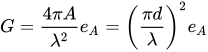
where:

  • is the area of the antenna aperture, that is, the mouth of the parabolic reflector. For a circular dish antenna, , giving the second formula above.
  • is the diameter of the parabolic reflector, if it is circular.
  • is the wavelength of the radio waves.
  • is a dimensionless parameter between 0 and 1 called the aperture efficiency. The aperture efficiency of typical parabolic antennas is 0.55 to 0.70.

It can be seen that, as with any aperture antenna, the larger the aperture is, compared to the wavelength, the higher the gain. The gain increases with the square of the ratio of aperture width to wavelength, so large parabolic antennas, such as those used for spacecraft communication and radio telescopes, can have extremely high gain. Applying the above formula to the 25-meter-diameter antennas often used in radio telescope arrays and satellite ground antennas at a wavelength of 21 cm (1.42 GHz, a common radio astronomy frequency), yields an approximate maximum gain of 140,000 times or about 52 dBi (decibels above the isotropic level). The largest parabolic dish antenna in the world is the Five-hundred-meter Aperture Spherical radio Telescope in southwest China, which has an effective aperture of about 300 meters. The gain of this dish at 1.42 GHz is roughly 90 million, or 80 dBi.

Aperture efficiency eA is a catchall variable which accounts for various losses that reduce the gain of the antenna from the maximum that could be achieved with the given aperture. The major factors reducing the aperture efficiency in parabolic antennas are:

  • Feed spillover – Some of the radiation from the feed antenna falls outside the edge of the dish and so does not contribute to the main beam.
  • Feed illumination taper – The maximum gain for any aperture antenna is only achieved when the intensity of the radiated beam is constant across the entire aperture area. However, the radiation pattern from the feed antenna usually tapers off toward the outer part of the dish, so the outer parts of the dish are "illuminated" with a lower intensity of radiation. Even if the feed provided constant illumination across the angle subtended by the dish, the outer parts of the dish are farther away from the feed antenna than the inner parts, so the intensity would drop off with distance from the center. Hence, the intensity of the beam radiated by a parabolic antenna is maximum at the center of the dish and falls off with distance from the axis, reducing the efficiency.
  • Aperture blockage – In front-fed parabolic dishes where the feed antenna is located in front of the dish in the beam path (and in Cassegrain and Gregorian designs as well), the feed structure and its supports block some of the beam. In small dishes such as home satellite dishes, where the size of the feed structure is comparable with the size of the dish, this can seriously reduce the antenna gain. To prevent this problem these types of antennas often use an offset feed, where the feed antenna is located to one side, outside the beam area. The aperture efficiency for these types of antennas can reach 0.7 to 0.8.
  • Shape errors – Random surface errors in the shape of the reflector reduce efficiency. This loss is approximated by Ruze's Equation.

For theoretical considerations of mutual interference (at frequencies between 2 and approximately 30 GHz; typically in the Fixed Satellite Service) where specific antenna performance has not been defined, a reference antenna based on Recommendation ITU-R S.465 is used to calculate the interference, which will include the likely sidelobes for off-axis effects.

Radiation pattern

Radiation pattern of a German parabolic antenna. The main lobe (top) is only a few degrees wide. The sidelobes are all at least 20 dB below (1/100 the power density of) the main lobe, and most are 30 dB below (if this pattern was drawn with linear power levels instead of logarithmic dB levels, all lobes other than the main lobe would be much too small to see).

In parabolic antennas, virtually all the power radiated is concentrated in a narrow main lobe along the antenna's axis. The residual power is radiated in sidelobes, usually much smaller, in other directions. Since the reflector aperture of parabolic antennas is much larger than the wavelength, diffraction usually causes many narrow sidelobes, so the sidelobe pattern is complex. There is also usually a backlobe, in the opposite direction to the main lobe, due to the spillover radiation from the feed antenna that misses the reflector.

Beamwidth

The angular width of the beam radiated by high-gain antennas is measured by the half-power beam width (HPBW), which is the angular separation between the points on the antenna radiation pattern at which the power drops to one-half (-3 dB) its maximum value. For parabolic antennas, the HPBW θ is given by:

where k is a factor which varies slightly depending on the shape of the reflector and the feed illumination pattern. For an ideal uniformly illuminated parabolic reflector and θ in degrees, k would be 57.3 (the number of degrees in a radian). For a typical parabolic antenna, k is approximately 70.

For a typical 2 meter satellite dish operating on C band (4 GHz), this formula gives a beamwidth of about 2.6°. For the Arecibo antenna at 2.4 GHz, the beamwidth was 0.028°. Since parabolic antennas can produce very narrow beams, aiming them can be a problem. Some parabolic dishes are equipped with a boresight so they can be aimed accurately at the other antenna.

There is an inverse relation between gain and beam width. By combining the beamwidth equation with the gain equation, the relation is:
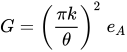
The angle theta is normal to the aperture.

Radiation pattern formula

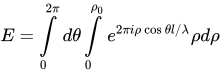
The radiation from a large paraboloid with uniform illuminated aperture is essentially equivalent to that from a circular aperture of the same diameter in an infinite metal plate with a uniform plane wave incident on the plate.

The radiation-field pattern can be calculated by applying Huygens' principle in a similar way to a rectangular aperture. The electric field pattern can be found by evaluating the Fraunhofer diffraction integral over the circular aperture. It can also be determined through Fresnel zone equations.

where . Using polar coordinates, and . Taking account of symmetry,

and using first-order Bessel function gives the electric field pattern ,

where is the diameter of the antenna's aperture in meters, is the wavelength in meters, is the angle in radians from the antenna's symmetry axis as shown in the figure, and is the first-order Bessel function. Determining the first nulls of the radiation pattern gives the beamwidth . The term whenever . Thus,

.

When the aperture is large, the angle is very small, so is approximately equal to . This gives the common beamwidth formulas,

History

The idea of using parabolic reflectors for radio antennas was taken from optics, where the power of a parabolic mirror to focus light into a beam has been known since classical antiquity. The designs of some specific types of parabolic antenna, such as the Cassegrain and Gregorian, come from similarly named analogous types of reflecting telescope, which were invented by astronomers during the 15th century.

German physicist Heinrich Hertz constructed the world's first parabolic reflector antenna in 1888. The antenna was a cylindrical parabolic reflector made of zinc sheet metal supported by a wooden frame, and had a spark-gap excited 26 cm dipole as a feed antenna along the focal line. Its aperture was 2 meters high by 1.2 meters wide, with a focal length of 0.12 meters, and was used at an operating frequency of about 450 MHz. With two such antennas, one used for transmitting and the other for receiving, Hertz demonstrated the existence of radio waves which had been predicted by James Clerk Maxwell some 22 years earlier. However, the early development of radio was limited to lower frequencies at which parabolic antennas were unsuitable, and they were not widely used until World War II, when microwave frequencies began to be employed.

After World War I when short waves began to be used, interest grew in directional antennas, both to increase range and make radio transmissions more secure from interception. Italian radio pioneer Guglielmo Marconi used parabolic reflectors during the 1930s in investigations of UHF transmission from his boat in the Mediterranean. In 1931, a 1.7 GHz microwave relay telephone link across the English Channel was demonstrated using 3.0-meter (10 ft) diameter dishes. The first large parabolic antenna, a 9 m dish, was built in 1937 by pioneering radio astronomer Grote Reber in his backyard, and the sky survey he did with it was one of the events that founded the field of radio astronomy.

The development of radar during World War II provided a great impetus to parabolic antenna research. This led to the evolution of shaped-beam antennas, in which the curve of the reflector is different in the vertical and horizontal directions, tailored to produce a beam with a particular shape. After the war, very large parabolic dishes were built as radio telescopes. The 100-meter Green Bank Radio Telescope at Green Bank, West Virginia—the first version of which was completed in 1962—is currently the world's largest fully steerable parabolic dish.

During the 1960s, dish antennas became widely used in terrestrial microwave relay communication networks, which carried telephone calls and television programs across continents. The first parabolic antenna used for satellite communications was constructed in 1962 at Goonhilly in Cornwall, England, to communicate with the Telstar satellite. The Cassegrain antenna was developed in Japan in 1963 by NTT, KDDI, and Mitsubishi Electric. The Voyager 1 spacecraft launched in 1977 is currently 24.2 billion kilometers from Earth, the furthest manmade object in space, and it's 3.7 meter S and X-band Cassegrain antenna (see picture above) is still able to communicate with ground stations. The advent of computer design tools in the 1970s—such as NEC, capable of calculating the radiation pattern of parabolic antennas—has led to the development of sophisticated asymmetric, multi-reflector and multi-feed designs in recent years.

Gauge boson

From Wikipedia, the free encyclopedia
The Standard Model of elementary particles, with the gauge bosons in the fourth column in red

In particle physics, a gauge boson is a bosonic elementary particle that acts as the force carrier for elementary fermions. Elementary particles whose interactions are described by a gauge theory interact with each other by the exchange of gauge bosons, usually as virtual particles.

Photons, W and Z bosons, and gluons are gauge bosons. All known gauge bosons have a spin of 1 and therefore are vector bosons. For comparison, the Higgs boson has spin zero and the hypothetical graviton has a spin of 2.

Gauge bosons are different from the other kinds of bosons: first, fundamental scalar bosons (the Higgs boson); second, mesons, which are composite bosons, made of quarks; third, larger composite, non-force-carrying bosons, such as certain atoms.

Gauge bosons in the Standard Model

The Standard Model of particle physics recognizes four kinds of gauge bosons: photons, which carry the electromagnetic interaction; W and Z bosons, which carry the weak interaction; and gluons, which carry the strong interaction.

Isolated gluons do not occur because they are color-charged and subject to color confinement.

Multiplicity of gauge bosons

In a quantized gauge theory, gauge bosons are quanta of the gauge fields. Consequently, there are as many gauge bosons as there are generators of the gauge field. In quantum electrodynamics, the gauge group is U(1); in this simple case, there is only one gauge boson, the photon. In quantum chromodynamics, the more complicated group SU(3) has eight generators, corresponding to the eight gluons. The three W and Z bosons correspond (roughly) to the three generators of SU(2) in electroweak theory.

Massive gauge bosons

Gauge invariance requires that gauge bosons are described mathematically by field equations for massless particles. Otherwise, the mass terms add non-zero additional terms to the Lagrangian under gauge transformations, violating gauge symmetry. Therefore, at a naïve theoretical level, all gauge bosons are required to be massless, and the forces that they describe are required to be long-ranged. The conflict between this idea and experimental evidence that the weak and strong interactions have a very short range requires further theoretical insight.

According to the Standard Model, the W and Z bosons gain mass via the Higgs mechanism. In the Higgs mechanism, the four gauge bosons (of SU(2)×U(1) symmetry) of the unified electroweak interaction couple to a Higgs field. This field undergoes spontaneous symmetry breaking due to the shape of its interaction potential. As a result, the universe is permeated by a non-zero Higgs vacuum expectation value (VEV). This VEV couples to three of the electroweak gauge bosons (W+, W and Z), giving them mass; the remaining gauge boson remains massless (the photon). This theory also predicts the existence of a scalar Higgs boson, which has been observed in experiments at the LHC.

Beyond the Standard Model

Grand unification theories

The Georgi–Glashow model predicts additional gauge bosons named X and Y bosons. The hypothetical X and Y bosons mediate interactions between quarks and leptons, hence violating conservation of baryon number and causing proton decay. Such bosons would be even more massive than W and Z bosons due to symmetry breaking. Analysis of data collected from such sources as the Super-Kamiokande neutrino detector has yielded no evidence of X and Y bosons.

Gravitons

The fourth fundamental interaction, gravity, may also be carried by a boson, called the graviton. In the absence of experimental evidence and a mathematically coherent theory of quantum gravity, it is unknown whether this would be a gauge boson or not. The role of gauge invariance in general relativity is played by a similar symmetry: diffeomorphism invariance.

W′ and Z′ bosons

W′ and Z′ bosons refer to hypothetical new gauge bosons (named in analogy with the Standard Model W and Z bosons).

Sunday, May 17, 2026

Nuclear magnetic resonance spectroscopy

A 900 MHz NMR instrument with a 21.1 T magnet at HWB-NMR, Birmingham, UK

Nuclear magnetic resonance spectroscopy, commonly known as NMR spectroscopy or magnetic resonance spectroscopy (MRS), is a spectroscopic technique based on re-orientation of atomic nuclei with non-zero nuclear spins in an external magnetic field. This re-orientation occurs with absorption of electromagnetic radiation in the radio frequency region from roughly 4 to 900 MHz, which depends on the isotopic nature of the nucleus and increases proportionally to the strength of the external magnetic field. Notably, the resonance frequency of each NMR-active nucleus depends on its chemical environment. As a result, NMR spectra provide information about individual functional groups present in the sample, as well as about connections between nearby nuclei in the same molecule. As the NMR spectra are unique or highly characteristic to individual compounds and functional groups, NMR spectroscopy is one of the most important methods to identify molecular structures, particularly of organic compounds.

The principle of NMR usually involves three sequential steps:

  1. The alignment (polarization) of the magnetic nuclear spins in an applied, constant magnetic field B0.
  2. The perturbation of this alignment of the nuclear spins by a weak oscillating magnetic field, usually referred to as a radio-frequency (RF) pulse.
  3. Detection and analysis of the electromagnetic waves emitted by the nuclei of the sample as a result of this perturbation.

Similarly, biochemists use NMR to identify proteins and other complex molecules. Besides identification, NMR spectroscopy provides detailed information about the structure, dynamics, reaction state, and chemical environment of molecules. The most common types of NMR are proton and carbon-13 NMR spectroscopy, but it is applicable to any kind of sample that contains nuclei possessing spin.

NMR spectra are unique, well-resolved, analytically tractable and often highly predictable for small molecules. Different functional groups are obviously distinguishable, and identical functional groups with differing neighboring substituents still give distinguishable signals. NMR has largely replaced traditional wet chemistry tests such as color reagents or typical chromatography for identification.

The most significant drawback of NMR spectroscopy is its poor sensitivity (compared to other analytical methods, such as mass spectrometry). Typically 2–50 mg of a substance is required to record a decent-quality NMR spectrum. The NMR method is non-destructive, thus the substance may be recovered. To obtain high-resolution NMR spectra, solid substances are usually dissolved to make liquid solutions, although solid-state NMR spectroscopy is also possible.

The timescale of NMR is relatively long, and thus it is not suitable for observing fast phenomena, producing only an averaged spectrum. Although large amounts of impurities do show on an NMR spectrum, better methods exist for detecting impurities, as NMR is inherently not very sensitive – though at higher frequencies, sensitivity is higher.

Correlation spectroscopy is a development of ordinary NMR. In two-dimensional NMR, the emission is centered around a single frequency, and correlated resonances are observed. This allows identifying the neighboring substituents of the observed functional group, allowing unambiguous identification of the resonances. There are also more complex 3D and 4D methods and a variety of methods designed to suppress or amplify particular types of resonances. In nuclear Overhauser effect (NOE) spectroscopy, the relaxation of the resonances is observed. As NOE depends on the proximity of the nuclei, quantifying the NOE for each nucleus allows construction of a three-dimensional model of the molecule.

Cutaway of an NMR magnet that shows its structure: radiation shield, vacuum chamber, liquid-nitrogen vessel, liquid-helium vessel, and cryogenic shims.

NMR spectrometers are relatively expensive; universities usually have them, but they are less common in private companies. Between 2000 and 2015, an NMR spectrometer cost around 0.5–5 million USD. Modern NMR spectrometers have a very strong, large and expensive liquid-helium-cooled superconducting magnet, because resolution directly depends on magnetic field strength. Higher magnetic field also improves the sensitivity of the NMR spectroscopy, which depends on the population difference between the two nuclear levels, which increases exponentially with the magnetic field strength.

Less expensive machines using permanent magnets and lower resolution are also available, which still give sufficient performance for certain applications such as reaction monitoring and quick checking of samples. There are even benchtop nuclear magnetic resonance spectrometers. NMR spectra of protons (1H nuclei) can be observed even in Earth magnetic field. Low-resolution NMR produces broader peaks, which can easily overlap one another, causing issues in resolving complex structures. The use of higher-strength magnetic fields result in a better sensitivity and higher resolution of the peaks, and it is preferred for research purposes.

History

Credit for the discovery of NMR goes to Isidor Isaac Rabi, who received the Nobel Prize in Physics in 1944. The Purcell group at Harvard University and the Bloch group at Stanford University independently developed NMR spectroscopy in the late 1940s and early 1950s. Edward Mills Purcell and Felix Bloch shared the 1952 Nobel Prize in Physics for their inventions.

NMR-active criteria

The key determinant of NMR activity in atomic nuclei is the nuclear spin quantum number (I). This intrinsic quantum property, similar to an atom's "spin", characterizes the angular momentum of the nucleus. To be NMR-active, a nucleus must have a non-zero nuclear spin (I ≠ 0). It is this non-zero spin that enables nuclei to interact with external magnetic fields and show signals in NMR. Atoms with an odd sum of protons and neutrons exhibit half-integer values for the nuclear spin quantum number (I = 1/2, 3/2, 5/2, and so on). These atoms are NMR-active because they possess non-zero nuclear spin. Atoms with an even sum but both an odd number of protons and an odd number of neutrons exhibit integer nuclear spins (I = 1, 2, 3, and so on). Conversely, atoms with an even number of both protons and neutrons have a nuclear spin quantum number of zero (I = 0), and therefore are not NMR-active. NMR-active nuclei, particularly those with a spin quantum number of 1/2, are of great significance in NMR spectroscopy. Examples include 1H, 13C, 15N, and 31P.

Main aspects of NMR techniques

Resonant frequency

When placed in a magnetic field, NMR active nuclei (such as 1H or 13C) absorb electromagnetic radiation at a frequency characteristic of the isotope. The resonant frequency, energy of the radiation absorbed, and the intensity of the signal are proportional to the strength of the magnetic field. For example, in a 21-tesla magnetic field, hydrogen nuclei (protons) resonate at 900 MHz. It is common to refer to a 21 T magnet as a 900 MHz magnet, since hydrogen is the most common nucleus detected. However, different nuclei will resonate at different frequencies at this field strength in proportion to their nuclear magnetic moments.

Sample handling

The NMR sample is prepared in a thin-walled glass tube – an NMR tube.

An NMR spectrometer typically consists of a spinning sample-holder inside a very strong magnet, a radio-frequency emitter, and a receiver with a probe (an antenna assembly) that goes inside the magnet to surround the sample, optionally gradient coils for diffusion measurements, and electronics to control the system. Spinning the sample is usually necessary to average out diffusional motion, however, some experiments call for a stationary sample when solution movement is an important variable. For instance, measurements of diffusion constants (diffusion ordered spectroscopy or DOSY) are done using a stationary sample with spinning off, and flow cells can be used for online analysis of process flows.

Deuterated solvents

The vast majority of molecules in a solution are solvent molecules, and most regular solvents are hydrocarbons and so contain NMR-active hydrogen-1 nuclei. In order to avoid having the signals from solvent hydrogen atoms overwhelm the experiment and interfere in analysis of the dissolved analyte, deuterated solvents are used where >99% of the protons are replaced with deuterium (hydrogen-2). The most widely used deuterated solvent is deuterochloroform (CDCl3), although other solvents may be used for various reasons, such as solubility of a sample, desire to control hydrogen bonding, or melting or boiling points. The chemical shifts of a molecule change slightly between solvents, and therefore the solvent used is almost always reported with chemical shifts. Proton NMR spectra are often calibrated against the known solvent residual proton peak as an internal standard instead of adding tetramethylsilane (TMS), which is conventionally defined as having a chemical shift of zero.

Shim and lock

To detect the very small frequency shifts due to nuclear magnetic resonance, the applied magnetic field must be extremely uniform throughout the sample volume. High-resolution NMR spectrometers use shims to adjust the homogeneity of the magnetic field to parts per billion (ppb) in a volume of a few cubic centimeters. In order to detect and compensate for inhomogeneity and drift in the magnetic field, the spectrometer maintains a "lock" on the solvent deuterium frequency with a separate lock unit, which is essentially an additional transmitter and RF processor tuned to the lock nucleus (deuterium) rather than the nuclei of the sample of interest. In modern NMR spectrometers shimming is adjusted automatically, though in some cases the operator has to optimize the shim parameters manually to obtain the best possible resolution.

Acquisition of spectra

Upon excitation of the sample with a radio frequency (60–1000 MHz) pulse, a nuclear magnetic resonance response – a free induction decay (FID) – is obtained. It is a very weak signal and requires sensitive radio receivers to pick up. A Fourier transform is carried out to extract the frequency-domain spectrum from the raw time-domain FID. A spectrum from a single FID has a low signal-to-noise ratio, but it improves readily with averaging of repeated acquisitions. Good 1H NMR spectra can be acquired with 16 repeats, which takes only minutes. However, for elements heavier than hydrogen, the relaxation time is rather long, e.g. around 8 seconds for 13C. Thus, acquisition of quantitative heavy-element spectra can be time-consuming, taking tens of minutes to hours.

Following the pulse, the nuclei are, on average, excited to a certain angle vs. the spectrometer magnetic field. The extent of excitation can be controlled with the pulse width, typically about 3–8 μs for the optimal 90° pulse. The pulse width can be determined by plotting the (signed) intensity as a function of pulse width. It follows a sine curve and, accordingly, changes sign at pulse widths corresponding to 180° and 360° pulses.

Decay times of the excitation, typically measured in seconds, depend on the effectiveness of relaxation, which is faster for lighter nuclei and in solids, slower for heavier nuclei and in solutions, and can be very long in gases. If the second excitation pulse is sent prematurely before the relaxation is complete, the average magnetization vector has not decayed to ground state, which affects the strength of the signal in an unpredictable manner. In practice, the peak areas are then not proportional to the stoichiometry; only the presence, but not the amount of functional groups is possible to discern. An inversion recovery experiment can be done to determine the relaxation time and thus the required delay between pulses. A 180° pulse, an adjustable delay, and a 90° pulse is transmitted. When the 90° pulse exactly cancels out the signal, the delay corresponds to the time needed for 90° of relaxation. Inversion recovery is worthwhile for quantitative 13C, 2D and other time-consuming experiments.

Spectral interpretation

NMR signals are ordinarily characterized by three variables: chemical shift, spin–spin coupling, and relaxation time.

Chemical shift

Example of the chemical shift: NMR spectrum of hexaborane B6H10 showing peaks shifted in frequency, which give clues as to the molecular structure

The energy difference ΔE between nuclear spin states is proportional to the magnetic field (Zeeman effect). ΔE is also sensitive to the electronic environment of the nucleus, giving rise to what is known as the chemical shift, δ. The simplest types of NMR graphs are plots of the different chemical shifts of the nuclei being studied in the molecule. The value of δ is often expressed in terms of "shielding": shielded nuclei have higher ΔE. The range of δ values is called the dispersion. It is rather small for 1H signals, but much larger for other nuclei. NMR signals are reported relative to a reference signal, usually that of TMS (tetramethylsilane). Additionally, since the distribution of NMR signals is field-dependent, these frequencies are divided by the spectrometer frequency. However, since we are dividing Hz by MHz, the resulting number would be too small, and thus it is multiplied by a million. This operation therefore gives a locator number called the "chemical shift" with units of parts per million. The chemical shift provides structural information.

The conversion of chemical shifts (and J's, see below) is called assigning the spectrum. For diamagnetic organic compounds, assignments of 1H and 13C NMR spectra are extremely sophisticated because of the large databases and easy computational tools. In general, chemical shifts for protons are highly predictable, since the shifts are primarily determined by shielding effects (electron density). The chemical shifts for many heavier nuclei are more strongly influenced by other factors, including excited states ("paramagnetic" contribution to shielding tensor). This paramagnetic contribution, which is unrelated to paramagnetism) not only disrupts trends in chemical shifts, which complicates assignments, but it also gives rise to very large chemical shift ranges. For example, most 1H NMR signals for most organic compounds are within 15 ppm. For 31P NMR, the range is hundreds of ppm.

In paramagnetic NMR spectroscopy, the samples are paramagnetic, i.e. they contain unpaired electrons. The paramagnetism gives rise to very diverse chemical shifts. In 1H NMR spectroscopy, the chemical shift range can span up to thousands of ppm.

J-coupling

Multiplicity Intensity ratio
Singlet (s) 1
Doublet (d) 1:1
Triplet (t) 1:2:1
Quartet (q) 1:3:3:1
Quintet 1:4:6:4:1
Sextet 1:5:10:10:5:1
Septet 1:6:15:20:15:6:1

Some of the most useful information for structure determination in a one-dimensional NMR spectrum comes from J-coupling, or scalar coupling (a special case of spin–spin coupling), between NMR active nuclei. This coupling arises from the interaction of different spin states through the chemical bonds of a molecule and results in the splitting of NMR signals. For a proton, the local magnetic field is slightly different depending on whether an adjacent nucleus points towards or against the spectrometer magnetic field, which gives rise to two signals per proton instead of one. These splitting patterns can be complex or simple and, likewise, can be straightforwardly interpretable or deceptive. This coupling provides detailed insight into the connectivity of atoms in a molecule.

The multiplicity of the splitting is an effect of the spins of the nuclei that are coupled and the number of such nuclei involved in the coupling. Coupling to n equivalent spin-1/2 nuclei splits the signal into a n + 1 multiplet with intensity ratios following Pascal's triangle as described in the table. Coupling to additional spins leads to further splittings of each component of the multiplet, e.g. coupling to two different spin-1/2 nuclei with significantly different coupling constants leads to a doublet of doublets (abbreviation: dd). Note that coupling between nuclei that are chemically equivalent (that is, have the same chemical shift) has no effect on the NMR spectra, and couplings between nuclei that are distant (usually more than 3 bonds apart for protons in flexible molecules) are usually too small to cause observable splittings. Long-range couplings over more than three bonds can often be observed in cyclic and aromatic compounds, leading to more complex splitting patterns.

Example 1H NMR spectrum (1-dimensional) of ethanol plotted as signal intensity vs. chemical shift. There are three different types of H atoms in ethanol regarding NMR: the hydrogen (H) on the −OH group is not coupling with the other H atoms and appears as a singlet, but the CH3 and the −CH2 hydrogens are coupling with each other, resulting in a triplet and quartet respectively.

For example, in the proton spectrum for ethanol, the CH3 group is split into a triplet with an intensity ratio of 1:2:1 by the two neighboring CH2 protons. Similarly, the CH2 is split into a quartet with an intensity ratio of 1:3:3:1 by the three neighboring CH3 protons. In principle, the two CH2 protons would also be split again into a doublet to form a doublet of quartets by the hydroxyl proton, but intermolecular exchange of the acidic hydroxyl proton often results in a loss of coupling information.

Coupling to any spin-1/2 nuclei such as phosphorus-31 or fluorine-19 works in this fashion (although the magnitudes of the coupling constants may be very different). But the splitting patterns differ from those described above for nuclei with spin greater than 1/2 because the spin quantum number has more than two possible values. For instance, coupling to deuterium (a spin-1 nucleus) splits the signal into a 1:1:1 triplet because the spin 1 has three spin states. Similarly, a spin-3/2 nucleus such as 35Cl splits a signal into a 1:1:1:1 quartet and so on.

Coupling combined with the chemical shift (and the integration for protons) tells us not only about the chemical environment of the nuclei, but also the number of neighboring NMR active nuclei within the molecule. In more complex spectra with multiple peaks at similar chemical shifts or in spectra of nuclei other than hydrogen, coupling is often the only way to distinguish different nuclei.

The magnitude of the coupling (the coupling constant J) is an effect of how strongly the nuclei are coupled to each other. For simple cases, this is an effect of the bonding distance between the nuclei, the magnetic moment of the nuclei, and the dihedral angle between them.

Second-order (or strong) coupling

1H NMR spectrum of menthol with chemical shift in ppm on the horizontal axis. Each magnetically inequivalent proton has a characteristic shift, and couplings to other protons appear as splitting of the peaks into multiplets: e.g. peak a, because of the three magnetically equivalent protons in methyl group a, couple to one adjacent proton (e) and thus appears as a doublet.

The above description assumes that the coupling constant is small in comparison with the difference in NMR frequencies between the inequivalent spins. If the shift separation decreases (or the coupling strength increases), the multiplet intensity patterns are first distorted, and then become more complex and less easily analyzed (especially if more than two spins are involved). Intensification of some peaks in a multiplet is achieved at the expense of the remainder, which sometimes almost disappear in the background noise, although the integrated area under the peaks remains constant. In most high-field NMR, however, the distortions are usually modest, and the characteristic distortions (roofing) can in fact help to identify related peaks.

Some of these patterns can be analyzed with the method published by John Pople, though it has limited scope.

Second-order effects decrease as the frequency difference between multiplets increases, so that high-field (i.e. high-frequency) NMR spectra display less distortion than lower-frequency spectra. Early spectra at 60 MHz were more prone to distortion than spectra from later machines typically operating at frequencies at 200 MHz or above.

Furthermore, as in the figure to the right, J-coupling can be used to identify ortho-meta-para substitution of a ring. Ortho coupling is the strongest at 15 Hz, Meta follows with an average of 2 Hz, and finally para coupling is usually insignificant for studies.

Magnetic inequivalence

More subtle effects can occur if chemically equivalent spins (i.e., nuclei related by symmetry and so having the same NMR frequency) have different coupling relationships to external spins. Spins that are chemically equivalent but are not indistinguishable (based on their coupling relationships) are termed magnetically inequivalent. For example, the 4 H sites of 1,2-dichlorobenzene divide into two chemically equivalent pairs by symmetry, but an individual member of one of the pairs has different couplings to the spins making up the other pair.

Magnetic inequivalence can lead to highly complex spectra, which can only be analyzed by computational modeling. Such effects are more common in NMR spectra of aromatic and other non-flexible systems, while conformational averaging about C−C bonds in flexible molecules tends to equalize the couplings between protons on adjacent carbons, reducing problems with magnetic inequivalence.

Correlation spectroscopy

Correlation spectroscopy is one of several types of two-dimensional nuclear magnetic resonance (NMR) spectroscopy or 2D-NMR. This type of NMR experiment is best known by its acronym, COSY. Other types of two-dimensional NMR include J-spectroscopy, exchange spectroscopy (EXSY), Nuclear Overhauser effect spectroscopy (NOESY), total correlation spectroscopy (TOCSY), and heteronuclear correlation experiments, such as HSQC, HMQC, and HMBC. In correlation spectroscopy, emission is centered on the peak of an individual nucleus; if its magnetic field is correlated with another nucleus by through-bond (COSY, HSQC, etc.) or through-space (NOE) coupling, a response can also be detected on the frequency of the correlated nucleus. Two-dimensional NMR spectra provide more information about a molecule than one-dimensional NMR spectra and are especially useful in determining the structure of a molecule, particularly for molecules that are too complicated to work with using one-dimensional NMR. The first two-dimensional experiment, COSY, was proposed by Jean Jeener, a professor at Université Libre de Bruxelles, in 1971. This experiment was later implemented by Walter P. Aue, Enrico Bartholdi and Richard R. Ernst, who published their work in 1976.

Solid-state nuclear magnetic resonance

Solid-state 900 MHz (21.1 T) NMR spectrometer at the Canadian National Ultrahigh-field NMR Facility for Solids

A variety of physical circumstances do not allow molecules to be studied in solution, and at the same time not by other spectroscopic techniques to an atomic level, either. In solid-phase media, such as crystals, microcrystalline powders, gels, anisotropic solutions, etc., it is in particular the dipolar coupling and chemical shift anisotropy that become dominant to the behaviour of the nuclear spin systems. In conventional solution-state NMR spectroscopy, these additional interactions would lead to a significant broadening of spectral lines. A variety of techniques allows establishing high-resolution conditions, that can, at least for 13C spectra, be comparable to solution-state NMR spectra.

Two important concepts for high-resolution solid-state NMR spectroscopy are the limitation of possible molecular orientation by sample orientation, and the reduction of anisotropic nuclear magnetic interactions by sample spinning. Of the latter approach, fast spinning around the magic angle is a very prominent method, when the system comprises spin-1/2 nuclei. Spinning rates of about 20 kHz are used, which demands special equipment. A number of intermediate techniques, with samples of partial alignment or reduced mobility, is currently being used in NMR spectroscopy.

Applications in which solid-state NMR effects occur are often related to structure investigations on membrane proteins, protein fibrils or all kinds of polymers, and chemical analysis in inorganic chemistry, but also include "exotic" applications like the plant leaves and fuel cells. For example, Rahmani et al. studied the effect of pressure and temperature on the bicellar structures' self-assembly using deuterium NMR spectroscopy. Solid-state NMR is useful also for metal structure understanding in case of X-ray amorphous metal samples (like nano-size refractory metal 99Tc). Recent studies have combined solid-state NMR with molecular dynamics simulations to resolve nanosecond-to-millisecond-scale motions in hydrated materials like amorphous calcium carbonate.

Biomolecular NMR spectroscopy

Proteins

Much of the innovation within NMR spectroscopy has been within the field of protein NMR spectroscopy, an important technique in structural biology. A common goal of these investigations is to obtain high resolution 3-dimensional structures of the protein, similar to what can be achieved by X-ray crystallography. In contrast to X-ray crystallography, NMR spectroscopy is usually limited to proteins smaller than 35 kDa, although larger structures have been solved. NMR spectroscopy is often the only way to obtain high resolution information on partially or wholly intrinsically unstructured proteins. It is now a common tool for the determination of Conformation Activity Relationships where the structure before and after interaction with, for example, a drug candidate is compared to its known biochemical activity. Proteins are orders of magnitude larger than the small organic molecules discussed earlier in this article, but the basic NMR techniques and some NMR theory also applies. Because of the much higher number of atoms present in a protein molecule in comparison with a small organic compound, the basic 1D spectra become crowded with overlapping signals to an extent where direct spectral analysis becomes untenable. Therefore, multidimensional (2, 3 or 4D) experiments have been devised to deal with this problem. To facilitate these experiments, it is desirable to isotopically label the protein with 13C and 15N because the predominant naturally occurring isotope 12C is not NMR-active and the nuclear quadrupole moment of the predominant naturally occurring 14N isotope prevents high resolution information from being obtained from this nitrogen isotope. The most important method used for structure determination of proteins utilizes NOE experiments to measure distances between atoms within the molecule. Subsequently, the distances obtained are used to generate a 3D structure of the molecule by solving a distance geometry problem. NMR can also be used to obtain information on the dynamics and conformational flexibility of different regions of a protein.

Nucleic acids

Nucleic acid NMR is the use of NMR spectroscopy to obtain information about the structure and dynamics of polynucleic acids, such as DNA or RNA. As of 2003, nearly half of all known RNA structures had been determined by NMR spectroscopy.

Nucleic acid and protein NMR spectroscopy are similar but differences exist. Nucleic acids have a smaller percentage of hydrogen atoms, which are the atoms usually observed in NMR spectroscopy, and because nucleic acid double helices are stiff and roughly linear, they do not fold back on themselves to give "long-range" correlations. The types of NMR usually done with nucleic acids are 1H or proton NMR, 13C NMR, 15N NMR, and 31P NMR. Two-dimensional NMR methods are almost always used, such as correlation spectroscopy (COSY) and total coherence transfer spectroscopy (TOCSY) to detect through-bond nuclear couplings, and nuclear Overhauser effect spectroscopy (NOESY) to detect couplings between nuclei that are close to each other in space.

Parameters taken from the spectrum, mainly NOESY cross-peaks and coupling constants, can be used to determine local structural features such as glycosidic bond angles, dihedral angles (using the Karplus equation), and sugar pucker conformations. For large-scale structure, these local parameters must be supplemented with other structural assumptions or models, because errors add up as the double helix is traversed, and unlike with proteins, the double helix does not have a compact interior and does not fold back upon itself. NMR is also useful for investigating nonstandard geometries such as bent helices, non-Watson–Crick basepairing, and coaxial stacking. It has been especially useful in probing the structure of natural RNA oligonucleotides, which tend to adopt complex conformations such as stem-loops and pseudoknots. NMR is also useful for probing the binding of nucleic acid molecules to other molecules, such as proteins or drugs, by seeing which resonances are shifted upon binding of the other molecule.

Carbohydrates

Carbohydrate NMR spectroscopy addresses questions on the structure and conformation of carbohydrates. The analysis of carbohydrates by 1H NMR is challenging due to the limited variation in functional groups, which leads to 1H resonances concentrated in narrow bands of the NMR spectrum. In other words, there is poor spectral dispersion. The anomeric proton resonances are segregated from the others due to fact that the anomeric carbons bear two oxygen atoms. For smaller carbohydrates, the dispersion of the anomeric proton resonances facilitates the use of 1D TOCSY experiments to investigate the entire spin systems of individual carbohydrate residues.

Drug discovery

Knowledge of energy minima and rotational energy barriers of small molecules in solution can be found using NMR, e.g. looking at free ligand conformational preferences and conformational dynamics, respectively. This can be used to guide drug design hypotheses, since experimental and calculated values are comparable. For example, AstraZeneca uses NMR for its oncology research & development.

High-pressure NMR spectroscopy

One of the first scientific works devoted to the use of pressure as a variable parameter in NMR experiments was the work of J. Jonas published in the journal Annual Review of Biophysics in 1994. The use of high pressures in NMR spectroscopy was primarily driven by the desire to study biochemical systems, where the use of high pressure allows controlled changes in intermolecular interactions without significant perturbations.

Of course, attempts have been made to solve scientific problems using high-pressure NMR spectroscopy. However, most of them were difficult to reproduce due to the problem of equipment for creating and maintaining high pressure. In  the most common types of NMR cells for realization of high-pressure NMR experiments are given.

High-pressure NMR spectroscopy has been widely used for a variety of applications, mainly related to the characterization of the structure of protein molecules. However, in recent years, software and design solutions have been proposed to characterize the chemical and spatial structures of small molecules in a supercritical fluid environment, using state parameters as a driving force for such changes.

Dialectic

From Wikipedia, the free encyclopedia https://en.wikipedia.org/wiki/Dialecti...