Search This Blog

Tuesday, May 19, 2026

Analytical chemistry

From Wikipedia, the free encyclopedia
Gas chromatography laboratory

Analytical chemistry (or chemical analysis) is the branch of chemistry concerned with the development and application of methods to identify the chemical composition of materials and quantify the amounts of components in mixtures. It focuses on methods to identify unknown compounds, possibly in a mixture or solution, and quantify a compound's presence in terms of amount of substance (in any phase), concentration (in aqueous or solution phase), percentage by mass or number of moles in a mixture of compounds (or partial pressure in the case of gas phase).

It encompasses both classical techniques (e.g. titration, gravimetric analysis) and modern instrumental approaches (e.g. spectroscopy, chromatography, mass spectrometry, electrochemical methods). Modern analytical chemistry is deeply intertwined with data analysis and chemometrics, and is increasingly shaped by trends such as automation, miniaturization, and real-time sensing, with applications across fields as diverse as biochemistry, medicinal chemistry, forensic science, archaeology, nutritional science, agricultural chemistry, chemical synthesis, metallurgy, chemical engineering and materials science.

In the age of "big data", analytical chemistry, along with chemometrics and bioinformatics, is becoming central to interpreting complex results from high-throughput techniques like gas chromatography-mass spectrometry (GCMS), high-performance liquid chromatography, inductively coupled plasma mass spectrometry, and high-resolution mass spectrometry. There is also a strong trend towards miniaturization, automation, and the development of real-time, point-of-care diagnostic sensors.

History

Gustav Kirchhoff (left) and Robert Bunsen (right)

Analytical chemistry has been important since the early days of chemistry, providing methods for determining which elements and chemicals are present in the object in question. During this period, significant contributions to analytical chemistry included the development of systematic elemental analysis by Justus von Liebig and systematized organic analysis based on the specific reactions of functional groups.

The first instrumental analysis was flame emissive spectrometry, developed by Robert Bunsen and Gustav Kirchhoff, who discovered rubidium (Rb) and caesium (Cs) in 1860.

Most of the major developments in analytical chemistry took place after 1900. During this period, instrumental analysis became progressively dominant in the field. In particular, many of the basic spectroscopic and spectrometric techniques were discovered in the early 20th century and refined in the late 20th century.

The separation sciences follow a similar timeline of development and have also became increasingly transformed into high-performance instruments.[6] In the 1970s many of these techniques began to be used together as hybrid techniques to achieve a complete characterization of samples.

Starting in the 1970s, analytical chemistry became progressively more inclusive of biological questions (bioanalytical chemistry), whereas it had previously been largely focused on inorganic or small organic molecules. Lasers have been increasingly used as probes and even to initiate and influence a wide variety of reactions. The late 20th century also saw an expansion of the application of analytical chemistry from somewhat academic chemical questions to forensic, environmental, industrial and medical questions, such as in histology.

Modern analytical chemistry is dominated by instrumental analysis. Many analytical chemists focus on a single type of instrument. Academics tend to either focus on new applications and discoveries or on new methods of analysis. The discovery of a chemical present in blood that increases the risk of cancer would be a discovery that an analytical chemist might be involved in. An effort to develop a new method might involve the use of a tunable laser to increase the specificity and sensitivity of a spectrometric method. Many methods, once developed, are kept purposely static so that data can be compared over long periods of time. This is particularly true in industrial quality assurance (QA), forensic, and environmental applications. Analytical chemistry plays an increasingly important role in the pharmaceutical industry where, aside from QA, it is used in the discovery of new drug candidates and in clinical applications where understanding the interactions between the drug and the patient are critical.

The 21st century has been defined by the digitalization of analytical chemistry. The handling of large datasets ("big data") from instruments like Orbitrap mass spectrometers has made advanced data analysis, including machine learning, an essential skill. This era also focuses strongly on sustainability, leading to the green chemistry subfield of Green Analytical Chemistry, which aims to minimize the environmental impact of chemical analyses.

Classical methods

The presence of copper in this qualitative analysis is indicated by the bluish-green color of the flame.

Although modern analytical chemistry is dominated by sophisticated instrumentation, the roots of analytical chemistry and some of the principles used in modern instruments are from traditional techniques, many of which are still used today. These techniques also tend to form the backbone of most undergraduate analytical chemistry educational labs.

Qualitative analysis

Chemical tests

There are numerous qualitative chemical tests; examples include the acid test for gold and the Kastle-Meyer test for the presence of blood.

Flame test

Inorganic qualitative analysis generally refers to a systematic scheme to confirm the presence of certain aqueous ions or elements by performing a series of reactions that eliminate a range of possibilities and then confirm suspected ions with a confirming test. Sometimes small carbon-containing ions are included in such schemes. With modern instrumentation, these tests are rarely used but can be useful for educational purposes and in fieldwork or other situations where access to state-of-the-art instruments is not available or expedient.

Quantitative analysis

Quantitative analysis is the measurement of the quantities of particular chemical constituents present in a substance. Quantities can be measured by mass (gravimetric analysis) or volume (volumetric analysis).

Gravimetric analysis

Gravimetric analysis involves determining the amount of material present by weighing the sample before and/or after some transformation. A common example used in undergraduate education is the determination of the amount of water in a hydrate by heating the sample to remove the water such that the difference in weight is due to the loss of water.

Volumetric analysis

Titration involves the gradual addition of a measurable reactant to an exact volume of a solution being analyzed until some equivalence point is reached. Titration is a family of techniques used to determine the concentration of an analyte. Titrating accurately to either the half-equivalence point or the endpoint of a titration allows the chemist to determine the amount of moles used, which can then be used to determine a concentration or composition of the titrant. Most familiar to those who have taken chemistry during secondary education is the acid-base titration involving a color-changing pH indicator, such as phenolphthalein. There are many other types of titrations, including potentiometric titrations and precipitation titrations. Chemists might also create titration curves by systematically testing the pH after every added drop in order to understand different properties of the titrant.

Instrumental methods

Block diagram of an analytical instrument showing the stimulus and measurement of response

Spectroscopy

Spectroscopy measures the interaction of the molecules with electromagnetic radiation. Spectroscopy consists of many different applications such as time-resolved raman spectroscopy, atomic absorption spectroscopy, atomic emission spectroscopy, ultraviolet-visible spectroscopy, X-ray spectroscopy, fluorescence spectroscopy, infrared spectroscopy, Raman spectroscopy, dual polarization interferometry, nuclear magnetic resonance spectroscopy, photoemission spectroscopy, Mössbauer spectroscopy and so on.

Mass spectrometry

An accelerator mass spectrometer used for radiocarbon dating and other analysis

Mass spectrometry measures mass-to-charge ratio of molecules using electric and magnetic fields. In a mass spectrometer, a small amount of sample is ionized and converted to gaseous ions, where they are separated and analyzed according to their mass-to-charge ratios.

There are several ionization methods: electron ionization, chemical ionization, electrospray ionization, fast atom bombardment, matrix-assisted laser desorption/ionization, and others. Also, mass spectrometry is categorized by approaches of mass analyzers: magnetic-sector, quadrupole mass analyzer, quadrupole ion trap, time-of-flight, Fourier transform ion cyclotron resonance, and so on.

Electrochemical analysis

Electroanalytical methods measure the potential (volts) and/or current (amps) in an electrochemical cell containing the analyte. These methods can be categorized according to which aspects of the cell are controlled and which are measured. The four main categories are potentiometry (the difference in electrode potentials is measured), coulometry (the transferred charge is measured over time), amperometry (the cell's current is measured over time), and voltammetry (the cell's current is measured while actively altering the cell's potential).

Thermal analysis

Calorimetry and thermogravimetric analysis measure the interaction of a material and heat.

Separation

Separation of black ink on a thin-layer chromatography plate

Separation processes are used to decrease the complexity of material mixtures. Chromatography, electrophoresis and field flow fractionation are representative of this field.

Chromatographic assays

Chromatography can be used to determine the presence of substances in a sample, as different components in a mixture have different tendencies to adsorb onto the stationary phase or dissolve in the mobile phase. Thus, different components of the mixture move at different speeds. Different components of a mixture can therefore be identified by their respective Rƒ values, which is the ratio between the migration distance of the substance and the migration distance of the solvent front during chromatography.

In combination with the instrumental methods, chromatography can be used in the quantitative determination of substances. There are different types of chromatography that differ from the media they use to separate the analyte and the sample. In thin-layer chromatography, the analyte mixture moves up and separates along the coated sheet under the volatile mobile phase. In gas chromatography, the gas phase separates the volatile analytes. A common method of chromatography using liquid as a mobile phase is high-performance liquid chromatography.

Hybrid techniques

Combinations of the above techniques produce a "hybrid" or "hyphenated" technique. Several examples are in popular use today and new hybrid techniques are under development. For example, gas chromatography-mass spectrometry, gas chromatography-infrared spectroscopy, liquid chromatography-mass spectrometry, liquid chromatography-NMR spectroscopy, liquid chromatography-infrared spectroscopy, and capillary electrophoresis-mass spectrometry.

Hyphenated separation techniques refer to a combination of two (or more) techniques to detect and separate chemicals from solutions. Most often the other technique is some form of chromatography. Hyphenated techniques are widely used in chemistry and biochemistry. A slash is sometimes used instead of hyphen, especially if the name of one of the methods contains a hyphen itself.

Microscopy

Fluorescence microscope image of two mouse cell nuclei in prophase (scale bar is 5 μm)

The visualization of single molecules, single cells, biological tissues, and nanomaterials is an important and attractive approach in analytical science. Also, hybridization with other traditional analytical tools is revolutionizing analytical science. Microscopy can be categorized into three different fields: optical microscopy, electron microscopy, and scanning probe microscopy. Recently, this field is rapidly progressing because of the rapid development of the computer and camera industries.

Lab-on-a-chip

Devices that integrate (multiple) laboratory functions on a single chip of only millimeters to a few square centimeters in size and that are capable of handling extremely small fluid volumes down to less than picoliters.

Data analysis and chemometrics

The vast amount of data produced by modern analytical instruments has made computational data analysis an integral part of the field. The field of chemometrics uses statistical and mathematical methods to design optimal experimental procedures and to extract meaningful information from chemical data.

Key areas include:

  • Multivariate calibration: Used to develop models that correlate instrument responses (e.g., spectra) to analyte concentrations, essential in techniques like near-infrared spectroscopy.
  • Pattern recognition: Employed to classify samples based on their analytical profile, with applications in food authenticity and medical diagnostics.
  • Machine learning and artificial intelligence: These techniques are increasingly used for predictive modeling, optimizing analytical methods, and automating data interpretation.

Errors

Error can be defined as numerical difference between observed value and true value. The experimental error can be divided into two types, systematic error and random error. Systematic error results from a flaw in equipment or the design of an experiment while random error results from uncontrolled or uncontrollable variables in the experiment.

In error the true value and observed value in chemical analysis can be related to each other by the equation

where

  • is the absolute error.
  • is the true value.
  • is the observed value.

An error of a measurement is an inverse measure of accurate measurement (i.e., smaller the error greater the accuracy of the measurement).

Errors can be expressed relatively. Given the relative error ():

The percent error can also be calculated:

To use these values in a function, it may be useful to calculate the error of the function. If is a function with variables, the propagation of uncertainty must be calculated in order to know the error in :

Standards

Standard curve

A calibration curve plot showing limit of detection (LOD), limit of quantification (LOQ), dynamic range, and limit of linearity (LOL)

A general method for analysis of concentration involves the creation of a calibration curve. This allows for the determination of the amount of a chemical in a material by comparing the results of an unknown sample to those of a series of known standards. If the concentration of an element or compound in a sample exceeds the detection range of the technique, it can simply be diluted in a pure solvent. If the amount in the sample is below an instrument's range of measurement, the method of addition can be used. In this method, a known quantity of the element or compound under study is added, and the difference between the concentration added and the concentration observed is the amount actually in the sample.

Internal standards

Sometimes an internal standard is added at a known concentration directly to an analytical sample to aid in quantitation. The amount of analyte present is then determined relative to the internal standard as a calibrant. An ideal internal standard is an isotopically enriched analyte which gives rise to the method of isotope dilution.

Standard addition

The method of standard addition is used in instrumental analysis to determine the concentration of a substance (analyte) in an unknown sample by comparison to a set of samples of known concentration, similar to using a calibration curve. Standard addition can be applied to most analytical techniques and is used instead of a calibration curve to solve the matrix effect problem.

Signals and noise

One of the most important components of analytical chemistry is maximizing the desired signal while minimizing the associated noise. The analytical figure of merit is known as the signal-to-noise ratio (S/N or SNR).

Noise can arise from environmental factors as well as from fundamental physical processes.

Thermal noise

Thermal noise results from the motion of charge carriers (usually electrons) in an electrical circuit generated by their thermal motion. Thermal noise is white noise, meaning that the power spectral density is constant throughout the frequency spectrum.

The root mean square value of the thermal noise in a resistor is given by

where kB is the Boltzmann constant, T is the temperature, R is the resistance, and is the bandwidth of the frequency .

Shot noise

Shot noise is a type of electronic noise that occurs when the finite number of particles (such as electrons in an electronic circuit or photons in an optical device) is small enough to give rise to statistical fluctuations in a signal.

Shot noise is a Poisson process, and the charge carriers that make up the current follow a Poisson distribution. The root mean square current fluctuation is given by
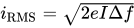
where e is the elementary charge and I is the average current. Shot noise is white noise.

Flicker noise

Flicker noise is electronic noise with a 1/ƒ frequency spectrum; as f increases, the noise decreases. Flicker noise arises from a variety of sources, such as impurities in a conductive channel, generation, and recombination noise in a transistor due to base current, and so on. This noise can be avoided by modulation of the signal at a higher frequency, for example, through the use of a lock-in amplifier.

Environmental noise

Noise in a thermogravimetric analysis; lower noise in the middle of the plot results from less human activity (and environmental noise) at night

Environmental noise arises from the surroundings of the analytical instrument. Sources of electromagnetic noise are power lines, radio and television stations, wireless devices, compact fluorescent lamps and electric motors. Many of these noise sources are narrow bandwidth and, therefore, can be avoided. Temperature and vibration isolation may be required for some instruments.

Noise reduction

Noise reduction can be accomplished either in computer hardware or software. Examples of hardware noise reduction are the use of shielded cable, analog filtering, and signal modulation. Examples of software noise reduction are digital filtering, ensemble average, boxcar average, and correlation methods.

Applications

A U.S. Food and Drug Administration scientist uses a portable near-infrared spectroscopy device to inspect lactose for adulteration with melamine

Analytical chemistry has applications across science and industry. It is fundamental to forensic science (e.g., DNA fingerprinting and toxicology), bioanalysis (e.g., measuring drug concentrations in pharmacokinetic studies), clinical analysis (e.g., blood glucose monitoring and COVID-19 PCR testing), environmental monitoring (e.g., testing for pollutants in water and air), and materials science (e.g., quality control of semiconductors and nanomaterials).

Great effort is being put into shrinking the analysis techniques to chip size. Although few examples of such systems compete with traditional analysis techniques, potential advantages include size/portability, speed, and cost. Micro total analysis system (μTAS) or lab-on-a-chip. Microscale chemistry reduces the amount of chemicals used.

Many developments improve the analysis of biological systems. Examples of rapidly expanding fields in this area are genomics, DNA sequencing and related research in genetic fingerprinting and DNA microarray; proteomics, the analysis of protein concentrations and modifications, especially in response to various stressors, at various developmental stages, or in various parts of the body; metabolomics, which deals with metabolites; transcriptomics, including mRNA and associated fields; lipidomics, dealing with lipids and its related fields; peptidomics, dealing with peptides and its related fields; and metallomics, dealing with metal concentrations and especially with their binding to proteins and other molecules.

Analytical chemistry has played a critical role in the understanding of basic science to a variety of practical applications, such as biomedical applications, environmental monitoring, quality control of industrial manufacturing, and forensic science.

The recent developments in computer automation and information technologies have extended analytical chemistry into several new biological fields. For example, automated DNA sequencing machines were the basis for completing human genome projects, leading to the birth of genomics. Protein identification and peptide sequencing by mass spectrometry opened a new field of proteomics. In addition to automating specific processes, there is effort to automate larger sections of lab testing, such as in companies like Emerald Cloud Lab and Transcriptic.

Analytical chemistry has been an indispensable area in the development of nanotechnology. Surface characterization instruments, electron microscopes and scanning probe microscopes enable scientists to visualize atomic structures with chemical characterizations.

Rights of nature

From Wikipedia, the free encyclopedia
https://en.wikipedia.org/wiki/Rights_of_nature

Rights of nature or Earth rights is a legal and jurisprudential theory that describes inherent rights as associated with ecosystems and species, similar to the concept of fundamental human rights. The rights of nature concept challenges twentieth-century laws as generally grounded in a flawed frame of nature as "resource" to be owned, used, and degraded. Proponents argue that laws grounded in rights of nature direct humanity to act appropriately and in a way consistent with modern, system-based science, which demonstrates that humans and the natural world are fundamentally interconnected.

This school of thought is underpinned by two basic lines of reasoning. First, since the recognition of human rights is based in part on the philosophical belief that those rights emanate from humanity's own existence, logically, so too do inherent rights of the natural world arise from the natural world's own existence. A second and more pragmatic argument asserts that the survival of humans depends on healthy ecosystems, and so protection of nature's rights in turn, advances human rights and well-being.

From a rights of nature perspective, most environmental laws of the twentieth century are based on an outmoded framework that considers nature to be composed of separate and independent parts, rather than components of a larger whole. A more significant criticism is that those laws tend to be subordinate to economic interests, and aim at reacting to and just partially mitigating economics-driven degradation, rather than placing nature's right to thrive as the primary goal of those laws. This critique of existing environmental laws is an important component of tactics such as climate change litigation that seeks to force societal action to mitigate climate change.

As of May 2024, close to 500 rights of nature laws exist at the local to national levels in 40 countries, including dozens of cities and counties throughout the United States. They take the form of constitutional provisions, treaty agreements, statutes, local ordinances, and court decisions. A state constitutional provision is being sought in Florida.

Basic tenets

Proponents of rights of nature argue that, just as human rights have been recognized increasingly in law, so should nature's rights be recognized and incorporated into human ethics and laws. This claim is underpinned by two lines of reasoning: that the same ethics that justify human rights, also justify nature's rights, and, that humans' own survival depend on healthy ecosystems.

Thomas Berry – a U.S. cultural historian who introduced the legal concept of Earth Jurisprudence who proposed that society's laws should derive from the laws of nature, explaining that "the universe is a communion of subjects, not a collection of objects"

First, it is argued that if inherent human rights arise from human existence, so too logically do inherent rights of the natural world arise from the natural world's own existence. Human rights, and associated duties to protect those rights, have expanded over time. Most notably, the 1948 adoption by the United Nations, of the Universal Declaration of Human Rights (UDHR) that formalized recognition of broad categories of inalienable human rights. Drafters of the UDHR stated their belief that the concept of fundamental human rights arose not from "the decision of a worldly power, but rather in the fact of existing."

Some scholars have contended thereafter that, given that basic human rights emanate from humans' own existence, nature's rights similarly arise from the similar existence of nature, and so humans' legal systems should continue to expand to recognize the rights of nature.

Some notable proponents of this approach include U.S. cultural historian Thomas Berry, South African attorney Cormac Cullinan, Indian physicist and eco-social advocate Vandana Shiva, and Canadian law professor and U.N. Special Rapporteur for Human Rights and the Environment David R. Boyd.

Vandana Shiva – an Indian scholar and activist who has written extensively on Earth Jurisprudence and Earth Democracy that she describes as based on "local communities – organized on principles of inclusion, diversity, and ecological and social responsibility"

Thomas Berry introduced a philosophy and ethics of law concept called Earth jurisprudence that identifies the earth's laws as primary and consequently reasons that everything has an intrinsic right to be and to evolve by the very fact of its existence. Earth Jurisprudence has been increasingly recognized and promoted worldwide by legal scholars, the United Nations, lawmakers, philosophers, ecological economists, and other experts as a foundation for Earth-centered governance, including laws and economic systems that protect the fundamental rights of nature.

Second, support for rights of nature also is supported through the utilitarian argument that humanity can only thrive in the long term by accepting integrated co-existence of humans with the natural world. Berry noted that the concept of human well-being derived from natural systems with no fundamental right to exist is inherently illogical, and that by protecting nature's rights, humans advance their own self-interest.

The legal and philosophical concept of rights of nature offers a shift from a frame of nature as property or resource, to nature as an interconnected Earth community partner. This school of thought aims at following the same path that human rights movements have followed, where at first recognition of rights in the rightless appeared "unthinkable", but later matured into a broadly-espoused worldview.

Christopher Stone, a law professor at the University of Southern California, wrote extensively on this topic in his seminal essay, "Should Trees Have Standing", cited by a U.S. Supreme Court dissent in Sierra Club v. Morton for the position that "environmental issues should be tendered by [nature] itself." As described by Stone and others, human rights have increasingly been "found" over time and declared "self-evident", as in the U.S. Declaration of Independence, even where essentially non-existent in the law. The successes of past and current human rights movements provide lessons for the current movement to widen the circle of Earth community to include natural systems and species populations as rights-bearing entities.

Underpinnings and development

Proponents of a shift to a more environmentally protective system of law contend that current legal and economic systems fail because they consider nature fundamentally as property, which can be degraded for profit and human desire. They point out that the perspective of nature as primarily an economic resource already has degraded some ecosystems and species so significantly that now, prominent policy experts are examining "endangered species triage" strategies to decide which species will be let go, rather than re-examine the economics driving the degradation. While twentieth and twenty-first century environmental laws do afford some level of protection to ecosystems and species, it is argued that such protections fail to stop, let alone reverse, overall environmental decline, because nature is by definition subordinated to anthropogenic and economic interests, rather than biocentric well-being.

Rights of nature proponents contend that re-envisioning current environmental laws from a nature's rights frame demonstrates the limitations of current legal systems. For example, the U.S. Endangered Species Act prioritizes protection of existing economic interests by activating only when species populations are headed toward extinction. By contrast, a "Healthy Species Act" would prioritize achievement of thriving species populations and facilitate economic systems that drive conservation of species.

As another example, the European Union's Water Framework Directive of 2000, "widely accepted as the most substantial and ambitious piece of European environmental legislation to date", relies on a target of "good status" of all EU waters, which includes consideration of needed "ecological flows". However, decades after the Directive's adoption, despite scientific advances in identifying flow-ecology relationships, there remains no EU definition of "ecological flow", nor a common understanding of how it should be calculated. A nature's rights frame would recognize not only the existing human right to water for basic needs, but would also recognize the rights of waterways to adequate, timely, clean water flows, and would define such basic ecological flow needs accordingly.

Harmonious coexistence within Nature

Scholars and advocacy organizations have also referred to the idea of harmonious coexistence within Nature as a related philosophical and worldview framework. The concept emphasizes living in ways that strengthen ecological interdependence and respect the rights of all beings. It has been discussed in policy and academic literature as part of a broader ecocentric approach to environmental law and environmental ethics.

Underlying science and ethics

Modern environmental laws began to arise in the 1960s out of a foundational perspective of the environment as best managed in discrete pieces. For example, United States laws such as the Clean Water Act, Clean Air Act, Endangered Species Act, Marine Mammal Protection Act, and numerous others began to be adopted in the early 1970s to address various elements of the natural world, separately from other elements. Some laws, such as the U.S. National Environmental Policy Act, called for a more holistic analysis of proposed infrastructure projects and required the disclosure of expected negative environmental impacts. However, it did not require that actions be taken to address those impacts in order to ensure ecosystem and species health.

These laws reflected the science of the time, which was grounded in a reductionist analysis of the natural world; the modern, system-based understanding of the natural world, and the integrated place of humans with it, was still in development. The first major textbook on ecological science that described the natural world as a system rather than a collection of different parts, was not written until 1983. The Gaia Hypothesis, which offered a scientific vision of the world as a self-regulating, complex system, first arose in the 1970s. Systems dynamics similarly began to evolve from a business focus to include socioeconomic and natural systems starting in the 1970s. Since then, scientific disciplines have been converging and advancing on the concept that humans live in a dynamic, relationship-based world that "den[ies] the possibility of isolation".

While science in the late twentieth century shifted to a systems-based perspective, describing natural systems and human populations as fundamentally interconnected on a shared planet, environmental laws generally did not evolve with this shift. Reductionist U.S. environmental laws passed in the early 1970s remained largely unchanged, and other national and international environmental law regimes similarly stopped short of embracing the modern science of systems.

Nineteenth century linguist and scholar Edward Payson Evans, an early rights of nature theorist and author of "the first extensive American statement of (...) environmental ethics", wrote that each human is "truly a part and product of Nature as any other animal, and [the] attempt to set him up on an isolated point outside of it is philosophically false and morally pernicious".

Thomas Berry proposed that society's laws should derive from the laws of nature, explaining that "the universe is a communion of subjects, not a collection of objects". From the scientific perspective that all life arose from the context of the universe, Berry offered the ethical perspective that it is flawed to view humans as the universe's only subjects, with all other beings merely a collection of objects to be owned and used. Rather, consideration of life as a web of relationships extending back to a shared ancestry confers subject status to all, including the inherent rights associated with that status. Laws based on a recognition of the intrinsic moral value of the natural world, create a new societal moral compass that directs society's interactions with the natural world more effectively toward well-being for all.

Aldo Leopold – a scientist and forester who advocated to "see land as a community to which we belong" rather than as "a commodity belonging to us" (1946 photograph)

Scientists who similarly wrote in support of expanded human moral development and ethical obligation include naturalist John Muir and scientist and forester Aldo Leopold. Leopold expressed that "[w]hen we see land as a community to which we belong", rather than "a commodity belonging to us", we can "begin to use it with love and respect". Leopold offered implementation guidance for his position, stating that a "thing is right when it tends to preserve the integrity, stability, and beauty of the biotic community. It is wrong when it tends otherwise." Berry similarly observed that "whatever preserves and enhances this meadow in the natural cycles of its transformation is good; what is opposed to this meadow or negates it is not good." Physician and philosopher Albert Schweizer defined right actions as those that recognize a reverence for life and the "will to live".

The outgrowth of scientific and ethical advances around natural systems and species is a proposed new frame for legal and governance systems, one grounded in an ethic and a language that guide behavior away from ecological and social practices that ignore or minimize human-nature interconnections. Court decisions including examples in Ecuador, Colombia and India have relied on these scientific developments in recognizing, interpreting and giving content to the legal rights of nature. Rather than a vision of merely "sustainable development", which reflects a frame of nature maintained as economic feedstock, scholars supporting rights of nature suggest that society is beginning to consider visions such as "thriving communities", where "communities" includes nature as a full subject, rather than simply an object to be used.

While some rights-of-nature laws grant rights to nature without any duties, others view nature as a legal person with rights as well duties and legal liability.

History

Common roots with Indigenous worldviews

The ethical and philosophical foundation of a nature's rights legal theory and movement is a worldview of respect for nature, as contrasted with the "nature domination" worldview that underlies the concept of nature as object and property. Indigenous law professor John Borrows observed that "[w]ithin indigenous legal traditions, creation stories... give guidance about how to live with the world", rather than live at odds with it. A 2012 international Declaration of Indigenous Peoples found that modern laws destroy the earth because they do not respect the "natural order of Creation". The Declaration observed that humans "have our place and our responsibilities within Creation's sacred order" and benefit from "sustaining joy as things occur in harmony with the Earth and with all life that it creates and sustains".

Indigenous worldviews align with and have accelerated the development of rights of nature law, including in Ecuador and Bolivia. Ecuador amended its constitution in 2008 to recognize the rights of nature in light of the perceived need to better protect and respect Pachamama, a term that embodies both the physical and the spiritual aspects of the natural world. Bolivia similarly amended its constitution and enacted nature's rights statutes to reflect traditional Indigenous respect for Pachamama, and a worldview of natural systems and humans as part of one family.

New Zealand law professor Catherine Iorns Magallanes observed that traditional Indigenous worldviews embody a connection with nature is so deep that nature is regarded as a living ancestor. From this worldview arises responsibilities to protect nature as one would a family member, and the need for a legal structure that reflects a primary frame of responsibilities to the natural world as kin.

However, several scholars have denounced the Indigenous aspects of rights of nature to be a myth, and some have argued that one-sided implementations of rights of nature could be detrimental to indigenous communities.

Common roots with world religions

Many of the world's other religious and spiritual traditions offer insights consistent with a nature's rights worldview. Eastern religious and philosophical traditions embrace a holistic conception of spirituality that includes the Earth. Chinese Daoism and Neo-Confucianism, as well as Japanese Buddhism, teach that the world is a dynamic force field of energies known as bussho (Buddha nature or qi), the material force that flows through humans, nature, and universe. As the eleventh century pioneering Neo-Confucianist philosopher Zhang Zai explained, "that which extends throughout the universe I regard as my body and that which directs the universe I consider as my nature".

In both Hinduism and Buddhism, karma ("action" or "declaration" in Sanskrit) reflects the reality of humanity's networked interrelations with Earth and universe. Buddhist concepts of "co-dependent arising" similarly hold that all phenomena are intimately connected. Mahayana Buddhism's "Indra's Net" symbolizes a universe of infinitely repeated mutual relations, with no one thing dominating.

Western religious and philosophical traditions have recognized the context of Earth and universe in providing spiritual guidance as well. From the Neolithic through the Bronze ages, the societies of "Old Europe" revered numerous female deities as incarnations of Mother Earth. In early Greece, the earth goddess Gaia was worshipped as a supreme deity. In the Philebus and Timaeus, Plato asserted that the "world is indeed a living being endowed with a soul and intelligence (...) a single visible living entity containing all other living entities, which by their nature are all related". Medieval theologian St. Thomas Aquinas later wrote of the place of humans, not at the center of being, but as one part of an integrated whole with the universe as primary, stating that "The order of the universe is the ultimate and noblest perfection in things."

More recently, Pope Benedict XVI, head of the Catholic Church, reflected that, "[t]he obedience to the voice of Earth is more important for our future happiness... than the desires of the moment. Our Earth is talking to us and we must listen to it and decipher its message if we want to survive." His successor, Pope Francis, has been particularly vocal on humanity's relationship with the Earth, describing how humans must change their current actions in light of the fact that "a true 'right of the environment' does exist". He warned against humanity's current path, stating that "the deepest roots of our present failures" lie in the direction and meaning of economic growth, and the overarching rule of a "deified market".

The Qur'an, Islam's primary authority in all matters of individual and communal life, reflects that "the whole creation praises God by its very being". Scholars describe the "ultimate purpose of the Shari'ah" as "the universal common good, the welfare of the entire creation," and note that "not a single creature, present or future, may be excluded from consideration in deciding a course of action."

Bringing together Western and Indigenous traditions, Archbishop Desmond Tutu spoke of "Ubuntu", an African ethical concept that translates roughly to "I am because you are", observing that: "Ubuntu speaks particularly about the fact that you can't exist as a human being in isolation. It speaks about our interconnectedness... We think of ourselves far too frequently as just individuals, separated from one another, whereas you are connected and what you do affects the whole world."

Common roots with human rights

Human rights have been developing over centuries, with the most notable outgrowth being the adoption of Universal Declaration of Human Rights (UDHR) by the United Nations in 1948. Key to the development of those rights are the concepts of natural rights, and rights of humans emanating from the existence of humanity.

Roderick Fraser Nash, professor of history and environmental studies at the University of California, Santa Barbara, traced the history of rights for species and the natural world back to the thirteenth century Magna Carta's launch of the concept of "natural rights" that underlies modern rights discourse.

Peter Burdon, professor at the University of Adelaide Law School and an Earth Jurisprudence scholar, has expanded upon Nash's analysis, offering that seventeenth century English philosopher and physician John Locke's transformative natural rights thesis led to the American Revolution, through the concept that the British monarchy was denying colonists their natural rights. Building on that concept, U.S. President, attorney, and philosopher Thomas Jefferson argued that the "laws of nature and of nature's God" reveal "self-evident" truths that "all Men are created equal" in their possession of "certain unalienable rights", particularly "life, liberty, and the pursuit of happiness". The 1789 French Declaration of the Rights of Man and of the Citizen later recognized as well the "natural, inalienable and sacred rights of Man", adding that the "final end of every political institution is the preservation of the natural and imprescriptible rights of Man."

The expansion of rights continued out to animals, with eighteenth-nineteenth century English philosopher and legal theorist Jeremy Bentham claiming that the "day may come when the rest of the animal creation may acquire those rights which never could have been withholden from them but by the hand of tyranny". Nineteenth-century linguist and scholar Edward Payson Evans observed that:

[i]n tracing the history of the evolution of ethics we find the recognition of mutual rights and duties confined at first to members of the same horde or tribe, then extended to worshippers of the same gods, and gradually enlarged so as to include every civilized nation, until at length all races of men are at least theoretically conceived as being united in a common bond of brotherhood and benevolent sympathy, which is now slowly expanding so as to comprise not only the higher species of animals, but also every sensitive embodiment of organic life.

The 1948 adoption of the Universal Declaration of Human Rights (UDHR) by the United Nations was another milestone, underpinned by the belief that fundamental human rights arise from "the fact of existing". The movement for rights of nature built on this belief, arguing that if "existence" is the defining condition for fundamental rights, this defining condition could not be limited to the rights of only one form of existence, and that all forms of existence should enjoy fundamental rights. For example, Aldo Leopold's land ethic explicitly recognized nature's "right to continued existence" and sought to "change the role of Homo sapiens from conqueror of the land-community to plain member and citizen of it".

Proponents of the rights of nature also contend that from the abolition of slavery, to the granting of the right to vote to women, to the civil rights movement, and the recognition of other fundamental rights, societies have continued to expand rights in parallel with a growing acceptance of the inherent moral worth of the potential new rights holders. And, that this expansion of the circle of community ought to continue to grow to encompass the natural world, a position that has seen growing acceptance in the late twentieth century and early twenty-first.

Proponents suggest that rights derived from existence in nature do not confer human rights to all beings, but rather confer unique rights to different kinds of beings. Thomas Berry put forth the theory that rights "are species specific and limited"; that is, "rivers have river rights", "birds have bird rights", and "humans have human rights". In his view, the difference is "qualitative, not quantitative".

Extending this point, the common ethical and moral grounding of human rights and the rights of nature gives rise to the concept of "co-violations" of rights, defined as a "situation in which governments, industries, or others violate both the rights of nature and human rights, including indigenous rights, with the same action". For example, in the Ecuadorian Amazon, pollution from Texaco's (now Chevron) oil drilling operations from 1967 to 1992 resulted in an epidemic of birth defects, miscarriages, and an estimated 1,400 cancer deaths, that were particularly devastating to indigenous communities. These operations further caused more than one million acres of deforestation and polluted local waterways with 18 billion gallons of toxic wastewater and contaminants, severely damaging a formerly pristine rainforest of extraordinary biodiversity. Asserting that the same human actions that created such impacts violated the fundamental rights of both people and natural systems, it is argued that ethical and legal theories that recognize both sets of rights will better guide human behavior to recognize and respect humans' interconnected relationships with each other and the natural world.

As with the recognition of human rights, legal scholars find that recognition of the rights of nature alters the framework of human laws and practices. Harvard Law professor Laurence Tribe theorized further that "choosing to accord nature a fraternal rather than an exploited role... might well make us different persons from the manipulators and subjugators we are in danger of becoming".

20th and 21st century developments

The adoption of the UDHR in 1948 formalized recognition of broad categories of inalienable human rights globally. These include recognition that "[a]ll human beings are born free and equal in dignity and rights", that "[e]veryone has the right to life, liberty and security of person", and that "[e]veryone has the right to an effective remedy by the competent national tribunals for acts violating the fundamental rights granted". Recognition of fundamental rights in "soft law" instruments such as the UDHR provided guidance to nations around the world, who have since developed constitutional provisions, statutes, court decisions, regulations, and other bodies of law based on the UDHR and the human rights it champions.

Decades later, USC law professor Christopher Stone called for recognition of the legal standing and associated rights of the natural world as well, consistent with the "successive extension of rights" throughout legal history. As was done in the UDHR, Stone outlined the necessary elements of nature's participation in human legal systems, describing such a legal system as necessarily including: recognition of injuries as subject to redress by public body, standing to institute legal actions (with guardians acting on behalf of the natural entity), redress calculated for natural entity's own damages, and relief running to the benefit of the injured natural entity.

In addition to Stone's legal work, other late twentieth and early twenty-first century drivers of the rights of nature movement include indigenous perspectives and the work of the indigenous rights movement; the writings of Arne Naess and the Deep Ecology movement; Thomas Berry's 2001 jurisprudential call for recognizing the laws of nature as the "primary text"; the publication of Cormac Cullinan's Wild Law book in 2003, followed by the creation of an eponymous legal association in the UK; growing concern about corporate power through the expansion of legal personhood for corporations; adoption by U.S. communities of local laws addressing rights of nature; the creation of the Global Alliance of the Rights of Nature in 2010 (GARN; a nonprofit advancing rights on nature worldwide); and mounting global concerns with species losses, ecosystem destruction, and the existential threat of climate change.

These and other factors supported the development of the 2010 Universal Declaration of the Rights of Mother Earth (UDRME). The UDRME was adopted by representatives of 130 nations at the World People's Conference on Climate Change and the Rights of Mother Earth, convened in Bolivia following the concerns of many regarding the disappointing results of the 2009 Copenhagen climate negotiations. Just as the U.N. recognized human rights as arising from existence, so did the UDRME find that the "inherent rights of Mother Earth are inalienable in that they arise from the same source as existence". Like the UDHR, the UDRME defends the rights-bearing entity (nature and her elements) from the excesses of governing authorities. These rights include, among others, the recognition that "Mother Earth and all beings of which she is composed have... the right to life and to exist" as well as the "right to integral health". The UDRME adds that "[e]ach being has the right to a place and to play its role in Mother Earth for her harmonious functioning".

Just as the rights protected by the UDHR are enforceable by the "right to an effective remedy by the competent national tribunals", so too does the UDRME specifically require humans and their institutions to "recognize and promote the full implementation and enforcement of the rights and obligations recognized in this Declaration". The UDRME addresses enforcement by requiring "damages caused by human violations of the inherent rights" to be "rectified", with those responsible "held accountable". Moreover, it calls on states to "empower human beings and institutions to defend the rights of Mother Earth and of all beings".

Bolivian President Evo Morales urged then-U.N. Secretary-General Ban Ki-moon to make U.N. adoption of the UDRME a priority. While that recommendation remains to be addressed, since then the UDRME has served to inform other international and national efforts, such as a 2012 Resolution by the International Union for Conservation of Nature (IUCN) proposing a Universal Declaration of the Rights of Nature. The Incorporation of the Rights of Nature was adopted at the IUCN World Conservation Congress in Hawaii (2016).

As of 2021 rights of nature has been reflected in treaties, constitutions, court decisions, and statutory and administrative law at all levels of government. Craig Kauffman, political science professor at the University of Oregon, and scholar of nature's rights and global governance, contends that evolving rights of nature initiatives and networks represent an "important new global movement" arising from "an informal global governance system... being constructed by citizens disillusioned by the failure of governments to take stronger actions to address the dual crises of climate change and biodiversity loss".

As well in 2021, the Declaration of the Rights of the Moon was created by a group of "lawyers, space archaeologists and concerned citizens", drawing on precedents in the Rights of Nature movement and the concept of legal personality for non-human entities in space.

Rights of nature law

The early 2000s saw a significant expansion of rights of nature law, in the form of constitutional provisions, treaty agreements, national and subnational statutes, local laws, and court decisions. As of 2022, nature's rights laws exist in 24 countries (up from 17 in 2021), including in Canada, at least seven Tribal Nations in the U.S. and Canada, and over 60 cities and counties throughout the United States. The total number of countries with either existing or pending rights of nature legal provisions was 29 as of 2022.

Legal interpretations and implementations of rights of nature vary across jurisdictions, particularly in relation to aquatic ecosystems. Comparative legal research indicates that countries have adopted diverse mechanisms — including court decisions, laws, and ordinances — to recognize rights of nature for freshwater and marine ecosystems, with distinctions in how such rights are conceptualized (e.g., legal personhood, subject of rights, or living entity) and in how representation and enforcement structures are organized. These studies also highlight persistent challenges, such as determining who grants the rights, on what legal basis they are recognized, and how they are implemented and enforced in practice.

The development of stronger and more active transnational rights of nature networks during the early 2000s, is a likely cause for the greater adoption of those championed principles into law. This has occurred in close integration with other, system-changing initiatives and movements for rights, including: development and implementation of new economic and finance models that seek to better reflect human rights and nature's rights; indigenous leadership to advance both the rights of indigenous peoples and nature's rights; international social movements such as the human right to water; advancement of practical solutions consistent with a nature's rights frame, such as rewilding; and rights of nature movement capacity building, including through development of nature's rights movement hubs globally.

To illustrate implementation of nature's rights laws, the nonprofit Global Alliance for the Rights of Nature established "International Rights of Nature Tribunals". These are civil society initiatives and they issue non-binding recommendations. The tribunals bring together advocates of rights of nature, human rights, and rights of indigenous peoples into a process similar to the Permanent Peoples' Tribunals. The goal of the tribunals is to provide formal public recognition, visibility, and voice to the people and natural systems injured by alleged violations of fundamental rights and marginalized in current law, and to offer a model for redress for such injuries.

As awareness of rights of nature law and jurisprudence has spread, a new field of academic research is developing, where legal scholars and other scholars have begun to offer strategies and analysis to drive broader application of such laws, particularly in the face of early implementation successes and challenges.

The 2018 documentary Rights of Nature: A Global Movement, directed by Isaac Goeckeritz, Hal Crimmel and Valeria Berros explores the challenges of creating new legal structures in relation to Rights of Nature.

A documentary film entitled Invisible Hand about the rights of nature movement, directed by Joshua Boaz Pribanic and Melissa Troutman of Public Herald, was released in 2020, executive-produced and narrated by actor Mark Ruffalo. It won four Best Documentary Awards.

The Overstory, which won the 2019 Pulitzer Prize for Fiction and spent over a year on the New York Times bestseller list, examined relationships with and rights of trees.

The podcast Damages explores the concept of the rights of nature in different contexts.

The Daily Show covered the concept of the rights of nature in an episode.

Monday, May 18, 2026

Space sustainability

From Wikipedia, the free encyclopedia
Overview of key space sustainability issues under consideration.

Space sustainability aims to maintain the safety and health of the space environment, as well as planetary environments. Similar to sustainability initiatives on Earth, space sustainability seeks to use the environment of space to meet the current needs of society without compromising the needs of future generations. It usually focuses on space closest to Earth, Low Earth Orbit (LEO), since this environment is the one most used and therefore most relevant to humans. It also considers Geostationary Equatorial Orbit (GEO) as this orbit is another popular choice for Earth-orbiting mission designs.

The issue of space sustainability is a new phenomenon that is gaining more attention in recent years as the launching of satellites and other space objects has increased. These launches have resulted in more space debris orbiting Earth, hindering the ability of nations to operate in the space environment while increasing the risk of a future launch-related accident that could disrupt its proper use. Space weather also acts as an outstanding factor for spacecraft failure. The current protocol for spacecraft disposal at end-of-life has, at large, not been followed in mission designs and demands extraneous amounts of time for disposal.

Precedent created through prior policy initiatives has facilitated initial mitigation of space pollution and created a foundation for space sustainability efforts. To further mitigation, international and transdisciplinary consortia have stepped forward to analyze existing operations, develop standards, and incentivize future procedures to prioritize a sustainable approach. A shift towards sustainable interactions with the space environment is growing in urgency due to the implications of climate change and increasing risk to spacecraft as time presses on.

Fundamentals

Space sustainability requires all space participants to have three consensuses. The space field should be used peacefully, jointly protect the space field from harm, and maximize space utilization through environmental, economic, and security exploration of space. These consensuses also clarify the relationship between space sustainability and international security, that states and individuals explore space for various purposes. Their reliance on space needs to be guided by rules, order, and policies and obtain more benefits without negatively affecting the space environment and space activities.

However, striking an agreement remains challenging even with such demands in place. In the discussions between countries on long-term sustainability, technical improvements are given more importance than introducing and applying new legal regimes. Specifically, technical approaches to space debris have been proposed, such as debris removal. Specific data on space debris is also being explored to help study its impact on sustainability and promote further cooperation between countries.

Current state

Space sustainability comes into play to address the pressing current state of near-Earth orbits and its high amounts of orbital debris. Spacecraft collisions with orbital debris, space weather, overcrowding in low Earth orbit (LEO) makes spacecraft susceptible to higher rates of failure. The current end-of-life protocol for spacecraft exacerbates the space sustainability crisis; many spacecraft are not properly disposed, which increasing the likelihood of further collisions.

Orbital debris

A computer-generated animation by the European Space Agency representing space debris in low earth orbit at the current rate of growth compared to mitigation measures being taken.

Orbital debris is defined as unmanned, inoperative objects that exist in space. This orbital debris breaks down further as time progresses as a result of naturally occurring events, such as high-velocity collisions with micrometeoroids, and forced events, such as a controlled release of a launch vehicle. In LEO, these collisions can take place at speeds anywhere between an average velocity of 9 kilometers per second (km/s) and 14 km/s relative to the debris and spacecraft. In GEO, however, these high-speed collisions are a much lower risk as the average relative velocity between the debris and spacecraft is typically between 0 km/s and 2.5 km/s. As of 2012, the United States Joint Space Operations Center tracked 21,000 pieces of orbital debris larger than 10 cm in Earth's nearby orbits (LEO, GEO, and Sun-synchronous), where 16,000 of these pieces are catalogued. Space debris can be categorized into three categories: small, medium, and large. Small debris is for pieces that are less than 10 centimeters (cm). Medium-sized debris is for pieces larger than 10 cm, but not an entire spacecraft. Large-sized debris has no official classification, but typically refers to entire spacecraft, such as an out of use satellite or launch vehicle. It is difficult to track small-sized debris in LEO, and challenging to track small and medium-sized debris in GEO. Yet this statement is not to discount the abilities of LEO and GEO tracking capabilities, the smallest piece of tracked debris can weigh as low as ten grams. If the size of the debris prohibits it from being tracked, it also cannot be avoided by the spacecraft and does not allow the spacecraft to lower its risk of collisions. The likelihood of the Kessler syndrome, which essentially states that each collision produces more debris, grows larger as the amount of orbital debris multiplies, increasing the amount of further collisions until space cannot be used entirely.

Space weather

Space weather poses a risk to satellite health, consequently, resulting in greater amounts of orbital debris. Space weather impacts satellite health in a variety of ways. Firstly, surface charging from the Sun's surface facilitates electrical discharges, damaging on-orbit electronics, posing a threat to mission failure. Single Event Upsets (SEUs) can also damage electronics. Dielectric charging and bulk charging can also occur, causing energy problems within the spacecraft. Additionally, at altitudes less than one thousand kilometers, atmospheric drag can increase during solar storms by increasing the altitude of the spacecraft, only adding more drag onto the spacecraft. These factors degrade performance over the spacecraft's lifetime, leaving the spacecraft more susceptible to further system and mission failures.

Overcrowding

There has been a dramatic increase in the use of LEO and GEO orbits over the last sixty years since the first satellite launch in 1957. To date, there have been approximately ten thousand satellite launches, whereas only approximately 2000 are still active. These satellites can be used for a variety of purposes, which are telecommunications, navigation, weather monitoring, and exploration. Within the coming decade, companies like SpaceX are predicted to launch an additional fifteen thousand satellites into LEO and GEO orbits. Microsatellites built by universities or research organizations have also increased in popularity, contributing to the overcrowding of near earth orbits. This overcrowding of LEO and GEO orbits increases the likelihood of potential collisions among satellites and orbital debris, contributing further to the large amount of orbital debris present in space.

End of life protocol

The current end of life protocol is that at the end of mission, spacecraft are either added to the graveyard orbit or at a low enough altitude that drag will allow the spacecraft to burn up upon reentry and fall back to Earth. Approximately twenty satellites are put into the graveyard orbit each year. There is no current process to return satellites to Earth after entering the graveyard orbit. The process of a spacecraft returning to Earth via drag can take between ten and one hundred years. This protocol is critical to reduce overcrowding in near-Earth orbits.

Mega constellation and space debris

The impact of constellations on the space environment has also been studied, such as the probability of collisions of mega constellations in the presence of large amounts of space debris. Although studies have shown that the predictors of mega constellations are highly variable, specific information related to mega constellations is not transparent.

But any catastrophic collision, as in the case of Kessler syndrome, has consequences for people and the environment. Putting this thinking into mega constellations, their existence may have potential benefits, but it will not bring adequate help to the governance of space debris. At the same time, the space debris situation cannot be underestimated or ignored because of the existence of mega constellations.

Areas

Planetary environment

A plume in Earth's upper atmosphere left behind by a Soyuz spacecraft having reentered

Atmospheric entry has a measurable impact on Earth's atmosphere, particularly the stratosphere.

Atmospheric entry mass by spacecraft accounted for 3% compared to entries by meteoroids in 2019, but in a scenario in which large amounts of proposed satellite internet constellations are realized, artificial entries would make up 40% compared to meteoroid entries. The impact of spacecraft burning up in the atmosphere during artificial atmospheric entry is different to meteors due to the spacecraft's generally larger size and different composition. The atmospheric pollutants produced by artificial atmospheric burning-up have been traced in the atmosphere and identified as reacting and possibly negatively impacting the composition of the atmosphere and particularly the ozone layer.

Considering space sustainability in regard to atmospheric impact of re-entry is by 2022 just developing and has been identified in 2024 as suffering from "atmosphere-blindness", causing global environmental injustice. This is identified as a result of the current end-of life spacecraft management, which favors the station keeping practice of controlled re-entry. This is mainly done to prevent the dangers from uncontrolled atmospheric entries and space debris.

Suggested alternatives are the use of less polluting materials and by in-orbit servicing and potentially in-space recycling.

Space environment

The existence of orbital debris has caused great trouble to the conduct of space activities. The development of space sustainability has not given sufficient political attention, although some warnings and discussions have made this abundantly clear. Debris management is still voluntary on the part of the state, and there are no laws mandating debris management practices, including the amount of debris to be managed. Although the UN Space Debris Mitigation Guidelines were promulgated in 2007 as an initial measure of space debris governance, there is still no broad consensus or action on further limits on space debris after that.

The difficulties for individuals wishing to participate in debris management initiatives cannot be ignored. Any individual or sector desiring to participate in space debris operations needs to obtain permission from the launching state, which is difficult for the launching state to do. This is because the process of space debris management inevitably has a negative impact on other space objects, and there is a lot of subsequent liability in terms of financial consumption. Therefore, the launching state would argue that space debris management requires the joint efforts of all states. However, it is difficult to determine what actions can be taken to gain acceptance between countries.

Regulations

Current space sustainability efforts rely heavily on the precedent set by regulatory agreements and conventions of the twentieth century. Much of this precedent is included in or is related to the Outer Space Treaty of 1963, which represented one of the initial major efforts by the United Nations to create legal frameworks for the operation of nations in space.

Pre-Outer Space Treaty

The international community has had concerns about space contamination since the 1950s prior to the launch of Sputnik I. These concerns stemmed from the idea that increasing rates of exploration into further areas of outer space could lead to contamination capable of damaging other planetary bodies, resulting in limitations to human exploration on these bodies and potential harm to the Earth. Efforts to combat these concerns began in 1956 with the International Astronautical Federation (IAF) and the United Nations Committee on the Peaceful Uses of Outer Space (COPUOUS). These efforts continued to 1957 through the National Academy of Sciences and International Council for Science (ICSU). Each of these organizations aimed to study space contamination and develop strategies for how to best address its potential consequences. The ICSU went on to create the Committee on Contamination by Extraterrestrial Exploration (CETEX) that put forward recommendations leading to the establishment of the Committee on Space Research (COSPAR). COSPAR continues to address outer space research on an international scale today.

Outer Space Treaty

Relevant regulations of international space law to sustainability in space can be found in the Outer Space Treaty, which was adopted by the UN General Assembly in 1963. The Outer Space Treaty contains seventeen articles designed to create a basic framework for how international law can be applied in outer space. Basic principles of the Outer Space Treaty include the provision in Article IX that parties should "avoid harmful contamination of space and celestial bodies;"  definitions of "harmful contamination" are not provided. Other articles of relevance to space sustainability include articles I, II, and III that concern the fair and inclusive international use of space in a manner free from sovereignty, ownership, or occupation by any nation. In addition, articles VII and VIII protect ownership by their respective countries of any objects launched to space while attributing responsibility for any damages to the property or personnel of other countries by those objects to said countries. Descriptions or definitions for what these damages may entail are not provided.

COSPAR Planetary Protection Policy

Principles of Article IX provided the basis for the Committee of Space Research (COSPAR) Planetary Protection Policy guidelines, which are generally well-regarded among scientific experts. Such guidelines, however, are non-binding and often described as "soft-law," as they lack legal mandate. The Planetary Protection Policy is primarily concerned with providing information regarding best practices to avoid contamination of the space environment during space exploration missions. COSPAR believes that the prevention of such contamination is in the best interest of humanity as it may impede scientific progress, exploration, and the mission of a search for life. In addition, the argument is made that cross-contamination of the Earth can be potentially harmful to its environment due to the largely unknown nature of potential space contaminants.

Other relevant regulations

Regulatory clarifications concerning the Outer Space Treaty of 1963 of relevance to space sustainability were made in subsequent years. The 1967 Return Agreement relates mainly to the return of lost astronauts to their appropriate nations, but also requires Outer Space Treaty signing nations to assist other nations with the return of objects that return to Earth from orbit to their proper owners The 1972 Liability Convention attributes liability for damages from space objects to the nation that launched the object, regardless of whether that damage occurred in space or on Earth. Other clarifications include the 1975 registration convention that attempted to create mechanisms for nations to identify space objects, and the 1979 Moon Agreement that established protections for the environments of the Moon and other nearby planetary bodies. These agreements and conventions represented attempts to improve the initial Outer Space Treaty as space exploration continued to grow in importance throughout the 20th century.

Attitudes

Countries and major international institutions

Both the state and space agencies are working to improve the laws and regulations that facilitate the long-term sustainability of space. For example, the European Code of Conduct for Space Debris Mitigation signed by France, the UK and other countries in 2016. China, Brazil, Mexico and others have legal background and methodological measures under long-term space sustainability. However, the main problem is that until the concept of space sustainability is agreed between countries, inter-regional efforts are not working well.

Currently, the Committee on the Peaceful Uses of Outer Space (COPUOS) encourages states to incorporate the space debris mitigation guidelines developed by bodies such as the Inter-Agency Space Debris Coordination (IADC) into their national legislation, thereby regulating state behavior. Some countries have responded positively to this, such as Switzerland, the Netherlands and Spain. However, there are still some countries that do not consider debris management approaches in their national legislation, such as Japan and Australia. Many delegates at the COPUOS meeting expressed their reasons for doing so, arguing that space debris management is closely linked to technology and funding. Technology is dynamic and constantly evolving. Therefore, the incorporation of debris governance guidelines into national law is not an immediate priority at this time.

Scientific attitudes

A study outlined rationale for governance that regulates the current free externalization of true costs and risks, treating orbital space around the Earth as an "additional ecosystem" or a common "part of the human environment" which should be subject to the same concerns and regulations like oceans on Earth. While scientists may not have the means to make and enforce global laws themselves, the study concluded in 2022 that it needs "new policies, rules and regulations at national and international level".

Mitigation

Sustainability mitigation efforts include but are not limited to design specifications, policy change, removal of space debris, and restoration of orbiting semi-functional technologies. Efforts begin by regulating the debris released during normal operations and post-mission breakups. Due to the increased awareness of high-velocity collisions and orbital debris in the previous decades, missions have adapted design specifications to account for these risks. For example, the RADARSAT program implemented 17 kilograms of shielding to their spacecraft, which increased the program's predicted success rate to 87% from 50%. Another effort in mitigation is restoring semi-functional satellites, which allows a spacecraft classified as "debris" to be reclassified as "functional." Space debris mitigation focuses on limiting debris release during normal operations, collisions and intentional destruction. Mitigation also includes reducing the possibility for post-mission breakups due to stored energy and/or operations phases, as well as addressing procedure for end of mission disposal for spacecraft.

Space Sustainability Rating

One example leading the regulatory sustainability measures is the Space Sustainability Rating (SSR), which is an instigator for industry competitors to incorporate sustainability into spacecraft design. The Space Sustainability Rating was first conceptualized at the World Economic Forum Global Future Council on Space Technologies designed by international and transdisciplinary consortia. The four leading organizations are the European Space Agency, Massachusetts Institute of Technology, University of Texas at Austin, and BryceTech with the goal to define the technical and programmatic aspects of the SSR. The SSR represents an innovative approach to combating orbital debris through incentivizing the industry to prioritize sustainable and responsible operations. This response entails the consideration of potential harm to the space environment and other spacecraft, all while maintaining mission objectives and high-quality service. The rating takes inspiration from other standards, like leadership in energy and environmental design (LEED) for the building sector. Several of the factors emphasized in the rating were extracted from LEED design considerations like the incorporation of feedback and public comments, or the rating's advocacy to influence policy, such as orbit fragmentation risks, collision avoidance capabilities, trackability, and adoption of international standards.

Tracking

Tracking is one of the main Space Sustainability Rating modules' efforts. The module "Detectability, Identification and Tracking" (DIT) consists of standardizing the comparison of satellite missions to encourage satellite operators to improve their satellite design and operational approaches for the observer to detect, identify, and track the satellites. Tracking presents challenges when the observer seeks to monitor and predict the spacecraft behavior over time. While the observer may know the name, owner, and instantaneous location of the satellite, the operator controls the full knowledge of the orbital parameters. The Space Situational Awareness (SSA) is one the tools geared towards solving the challenges presented when tracking orbiting satellites and debris. The SSA continuously tracks objects using ground-based radar and optical stations so the orbital paths of debris can be predicted and operations avoid collisions. It feeds data to 30 different systems like satellites, optical telescopes, radar systems, and supercomputers to predict risk of collision days in advance. Other efforts in tracking orbital debris are made by the US Space Surveillance Network (SSN).

Removal

Under the "External Services" module of the SSR, the rating offers commitment to use or demonstration of use of end-of-life removal services. Space debris mitigation measures are found to be inadequate to stabilize debris environments with an actual current compliance of approximately sixty percent. Moreover, a low compliance rate of approximately thirty percent of the 103 spacecraft that reached end of life between 1997 and 2003 were disposed of in a graveyard orbit. Since policy has not caught up to ensure the longevity of LEO for future generations, actions like Active Debris Removal (ADR) are being considered to stabilize the future of LEO environment. Most famous removal concepts are based on directed energy, momentum exchange or electrodynamics, aerodynamic drag augmentation, solar sails, auxiliary propulsion units, retarding surfaces and on-orbit capture. As ADR consists of an external disposal method to remove obsolete satellites or spacecraft fragments. Since large-sized debris objects in orbit provide a potential source for tens of thousands of fragments in the future, ADR efforts focus on objects with high mass and large cross-sectional areas, in densely populated regions, and at high altitudes; in this instance, retired satellites and rocket bodies are a priority. Other practical advancements toward space debris removal include missions like RemoveDEBRIS, ClearSpace-1, and End-of-Life Service (ELS-d).

Growing urgency

The growth of all tracked objects in space over time

The previous reduced state of regulation and mitigation on space debris and rocket fuel emissions is aggravating the Earth's stratosphere through collisions and ozone depletion, increasing the risk for spacecraft health through its lifetime.

Inaccessibility to LEO

Due to the increase of satellites being launched and the growing amount of orbital debris in LEO, the risk of LEO becoming inaccessible over time (in accordance with the Kessler syndrome) is increasing in likelihood. The mitigation policies for creating space debris fall under an area of voluntary codes by the states, although it has been disputed whether the Article I Outer Space Treaty or the Article IX Outer Space Treaty protects the space environment from deliberate harm, which has yet to be upheld. In 2007, an inactive Chinese satellite was purposefully destroyed by the Chinese government as a part of their anti-satellite weapon test (ASAT), spreading nearly 2800 objects of space debris five centimeters or larger into LEO. An analysis concluded that about eighty percent of the debris will remain in LEO nine years after this destruction. In addition, the destruction increased the collision likelihood for three Italian satellites that launched the same year as the Fengyun-1C destruction. The increase in collision ranged between ten and sixty percent. However, there were no legal consequences against the Chinese government.

Rocket fuel emissions

When rockets are launched into space, parts of their fuel enter the stratosphere of the Earth. Rocket fuel emissions are made up of carbon dioxide, water, hydrochloric acid, alumina and soot particles. The most concerning emissions from rocket fuel are chlorine and alumina particles from solid rocket motors (SRMs) and soot from kerosene fueled engines. When the hydrochloric acid from the engine exhaust dissociates, the free chlorine roams freely in the stratosphere. The chemical reaction between these chlorine and alumina causes ozone depletion. In addition, the soot particles form over a black umbrella over the stratosphere which can cause the temperature of the Earth's surface to lower and further depleting the ozone layer, an unintentional form of geoengineering. The nature of geoengineering has been disputed as a form of mitigating global warming and has the possibility of being banned and holding rockets accountable for the soot particles they distribute to the stratosphere. New types of engines and fuels are emerging, mainly the liquid oxygen (LOX) and monomethylhydrazine engine, but there is minimal research on their impact on the environment besides their emission of hydroxide and nitrogen oxide compounds, two molecules that have significant impact on the ozone layer. Currently, rocket fuel emissions have been deemed insignificant when it comes to their consequences to Earth's environment and LEO. However, emissions will increase in the coming years, making rocket fuel's contribution to global warming much more significant.

Beyond LEO

Space environment issues are not confined to LEO, which is part of the wider space environment. There are different issues, like geostationary orbital space management, due to its limited space, and lunar orbit has been discussed as the next environment to consider. In the context of the presence of space debris in LEO, it is normal to speculate that lunar orbit also possesses space debris. Space debris measures similar to those in LEO related to space sustainability have been discusse.

Mystical or religious experience

From Wikipedia, the free encyclopedia https://en.wikipedia.org/wiki/Mystical_or_religious_experience   A mysti...
