Search This Blog

Saturday, August 8, 2026

Neural correlates of consciousness

The neuronal correlates of consciousness (NCC) constitute the smallest set of neural events and structures sufficient for a given conscious percept or explicit memory. This case involves synchronized action potentials in neocortical pyramidal neurons.

The neural correlates of consciousness (NCC) are the minimal set of neuronal events and mechanisms observed to occur along with the mental states to which they are related. Neuroscientists use empirical approaches to discover neural correlates of subjective phenomena; that is, neural changes which regularly correlate with a specific experience.

Neurobiological approach to consciousness

Michio Kaku, a famous theoretical physicist, futurist and a science author famously said that "the human brain has 100 billion neurons, each neuron connected to 10 thousand other neurons. Sitting on your shoulders is the most complicated object in the known universe".

A science of consciousness must explain the exact relationship between subjective mental states and brain states, the nature of the relationship between the conscious mind and the electrochemical interactions in the body (mind–body problem). Progress in neuropsychology and neurophilosophy has come from focusing on the body rather than the mind. In this context the neuronal correlates of consciousness may be viewed as its causes, and consciousness may be thought of as a state-dependent property of an undefined complex, adaptive, and highly interconnected biological system.

Discovering and characterizing neural correlates does not offer a causal theory of consciousness that can explain how particular systems experience anything, the so-called hard problem of consciousness, but understanding the NCC may be a step toward a causal theory. Most neurobiologists propose that the variables giving rise to consciousness are to be found at the neuronal level, governed by classical physics. There are theories proposed of quantum consciousness based on quantum mechanics.

There is an apparent redundancy and parallelism in neural networks so, while activity in one group of neurons may correlate with a percept in one case, a different population may mediate a related percept if the former population is lost or inactivated. It may be that every phenomenal, subjective state has a neural correlate. Where the NCC can be induced artificially, the subject will experience the associated percept, while perturbing or inactivating the region of correlation for a specific percept will affect the percept or cause it to disappear, giving a cause-effect relationship from the neural region to the nature of the percept.

Questions that have been raised over the years include: what characterizes the NCC? What are the commonalities between the NCC for seeing and for hearing? Will the NCC involve all the pyramidal neurons in the cortex at any given point in time? Or only a subset of long-range projection cells in the frontal lobes that project to the sensory cortices in the back? Neurons that fire in a rhythmic manner? Neurons that fire in a synchronous manner?

The growing ability of neuroscientists to manipulate neurons using methods from molecular biology in combination with optical tools (e.g., Adamantidis et al. 2007) depends on the simultaneous development of appropriate behavioral assays and model organisms amenable to large-scale genomic analysis and manipulation. The combination of fine-grained neuronal analysis in animals with increasingly more sensitive psychophysical and brain imaging techniques in humans, complemented by the development of a robust theoretical predictive framework, will hopefully lead to a rational understanding of consciousness, one of the central mysteries of life. Research has shown a correlation between significant measurable changes in brain structure at the end of the second trimester of the human fetus development, which facilitate the emergence of early consciousness in the fetus. These structural developments include the maturation of neural connections and the formation of key brain regions associated with sensory processing and emotional regulation. As these areas become more integrated, the fetus begins to exhibit responses to external stimuli, suggesting a nascent awareness of its environment. This early stage of consciousness is crucial, as it lays the foundation for later cognitive and social development, influencing how individuals will interact with the world around them after birth.

Level of arousal and content of consciousness

There are two common but distinct dimensions of the term consciousness, one involving arousal and states of consciousness and the other involving content of consciousness and conscious states. To be conscious of anything the brain must be in a relatively high state of arousal (sometimes called vigilance), whether in wakefulness or REM sleep, vividly experienced in dreams although usually not remembered. Brain arousal level fluctuates in a circadian rhythm but may be influenced by lack of sleep, drugs and alcohol, physical exertion, etc. Arousal can be measured behaviorally by the signal amplitude that triggers some criterion reaction (for instance, the sound level necessary to evoke an eye movement or a head turn toward the sound source). Clinicians use scoring systems such as the Glasgow Coma Scale to assess the level of arousal in patients. Similarly, the NCC are delineated in research by content-specific and full types; both are distinct from the background conditions for consciousness.

High arousal states are associated with conscious states that have specific content, seeing, hearing, remembering, planning or fantasizing about something. Different levels or states of consciousness are associated with different kinds of conscious experiences. The "awake" state is quite different from the "dreaming" state (for instance, the latter has little or no self-reflection) and from the state of deep sleep. In all three cases the basic physiology of the brain is affected, as it also is in altered states of consciousness, for instance after taking drugs or during meditation when conscious perception and insight may be enhanced compared to the normal waking state.

Clinicians talk about impaired states of consciousness as in "the comatose state", "the persistent vegetative state" (PVS), and "the minimally conscious state" (MCS). Here, "state" refers to different "amounts" of external/physical consciousness, from a total absence in coma, persistent vegetative state and general anesthesia, to a fluctuating and limited form of conscious sensation in a minimally conscious state such as sleep walking or during a complex partial epileptic seizure. The repertoire of conscious states or experiences accessible to a patient in a minimally conscious state is comparatively limited. In brain death there is no arousal, but it is unknown whether the subjectivity of experience has been interrupted, rather than its observable link with the organism. Functional neuroimaging have shown that parts of the cortex are still active in vegetative patients that are presumed to be unconscious; however, these areas appear to be functionally disconnected from associative cortical areas whose activity is needed for awareness.

The potential richness of conscious experience appears to increase from deep sleep to drowsiness to full wakefulness, as might be quantified using notions from complexity theory that incorporate both the dimensionality as well as the granularity of conscious experience to give an integrated-information-theoretical account of consciousness. As behavioral arousal increases so does the range and complexity of possible behavior. Yet in REM sleep there is a characteristic atonia, low motor arousal and the person is difficult to wake up, but there is still high metabolic and electric brain activity and vivid perception.

Many nuclei with distinct chemical signatures in the thalamus, midbrain and pons must function for a subject to be in a sufficient state of brain arousal to experience anything at all. These nuclei therefore belong to the enabling factors for consciousness.[16] Conversely, it is likely that the specific content of any particular conscious sensation is mediated by particular neurons in the cortex and their associated satellite structures, including the amygdala, thalamus, claustrum and the basal ganglia.

Neuronal basis of perception

The possibility of precisely manipulating visual percepts in time and space has made vision a preferred modality in the quest for the NCC. Psychologists have perfected a number of techniques – masking, binocular rivalry, continuous flash suppression, motion induced blindness, change blindness, inattentional blindness – in which the seemingly simple and unambiguous relationship between a physical stimulus in the world and its associated percept in the privacy of the subject's mind is disrupted. In particular a stimulus can be perceptually suppressed for seconds or even minutes at a time: the image is projected into one of the observer's eyes but is invisible, not seen. In this manner the neural mechanisms that respond to the subjective percept rather than the physical stimulus can be isolated, permitting visual consciousness to be tracked in the brain. In a perceptual illusion, the physical stimulus remains fixed while the percept fluctuates. The best known example is the Necker cube whose 12 lines can be perceived in one of two different ways in depth.

The Necker Cube: The left line drawing can be perceived in one of two distinct depth configurations shown on the right. Without any other cue, the visual system flips back and forth between these two interpretations.

A perceptual illusion that can be precisely controlled is binocular rivalry where two different static images are shown to each eye. Conscious observers see either one image or the other alternately; the brain does not allow for the simultaneous perception of both.

Logothetis and colleagues recorded a variety of visual cortical areas in awake macaque monkeys performing a binocular rivalry task. Macaque monkeys can be trained to report whether they see the left or the right image. The distribution of the switching times and the way in which changing the contrast in one eye affects these leaves little doubt that monkeys and humans experience the same basic phenomenon. In the primary visual cortex (V1) only a small fraction of cells weakly modulated their response as a function of the percept of the monkey while most cells responded to one or the other retinal stimulus with little regard to what the animal perceived at the time. But in a high-level cortical area such as the inferior temporal cortex along the ventral stream almost all neurons responded only to the perceptually dominant stimulus, so that a "face" cell only fired when the animal indicated that it saw the face and not the pattern presented to the other eye. This implies that NCC involve neurons active in the inferior temporal cortex: it is likely that specific reciprocal actions of neurons in the inferior temporal and parts of the prefrontal cortex are necessary.

A number of fMRI experiments that have exploited binocular rivalry and related illusions to identify the hemodynamic activity underlying visual consciousness in humans demonstrate quite conclusively that activity in the upper stages of the ventral pathway (e.g., the fusiform face area and the parahippocampal place area) as well as in early regions, including V1 and the lateral geniculate nucleus (LGN), follow the percept and not the retinal stimulus. Further, a number of fMRI and DTI experiments suggest V1 is necessary but not sufficient for visual consciousness.

In a related perceptual phenomenon, flash suppression, the percept associated with an image projected into one eye is suppressed by flashing another image into the other eye while the original image remains. Its methodological advantage over binocular rivalry is that the timing of the perceptual transition is determined by an external trigger rather than by an internal event. The majority of cells in the inferior temporal cortex and the superior temporal sulcus of monkeys trained to report their percept during flash suppression follow the animal's percept: when the cell's preferred stimulus is perceived, the cell responds. If the picture is still present on the retina but is perceptually suppressed, the cell falls silent, even though primary visual cortex neurons fire. Single-neuron recordings in the medial temporal lobe of epilepsy patients during flash suppression likewise demonstrate abolishment of response when the preferred stimulus is present but perceptually masked.

Neuronal basis of general consciousness

Since measurements of brain activity can be confounded by the presence of neuromodulators, research focuses on measuring it when subjects are not performing a task and in a conscious state, such as during dreams. This has localized the full NCC to an interaction between the temporal, parietal, and occipital lobes in the posterior part of the cortex for perception and a frontal region of the cortex for thought, similar to how the posterior cortex is suspected to facilitate content-specific NCC.

Global disorders of consciousness

Given the absence of any accepted criterion of the minimal neuronal correlates necessary for consciousness, the distinction between a persistently vegetative patient who shows regular sleep-wave transitions and may be able to move or smile, and a minimally conscious patient who can communicate (on occasion) in a meaningful manner (for instance, by differential eye movements) and who shows some signs of consciousness, is often difficult. In global anesthesia the patient should not experience psychological trauma but the level of arousal should be compatible with clinical exigencies.

Midline structures in the brainstem and thalamus necessary to regulate the level of brain arousal. Small, bilateral lesions in many of these nuclei cause a global loss of consciousness.

Blood-oxygen-level-dependent fMRI have demonstrated normal patterns of brain activity in a patient in a vegetative state following a severe traumatic brain injury when asked to imagine playing tennis or visiting rooms in his/her house. Differential brain imaging of patients with such global disturbances of consciousness (including akinetic mutism) reveal that dysfunction in a widespread cortical network including medial and lateral prefrontal and parietal associative areas is associated with a global loss of awareness. Impaired consciousness in epileptic seizures of the temporal lobe was likewise accompanied by a decrease in cerebral blood flow in frontal and parietal association cortex and an increase in midline structures such as the mediodorsal thalamus.

Relatively local bilateral injuries to midline (paramedian) subcortical structures can also cause a complete loss of awareness. These structures therefore enable and control brain arousal (as determined by metabolic or electrical activity) and are necessary neural correlates. One such example is the heterogeneous collection of more than two dozen nuclei on each side of the upper brainstem (pons, midbrain and in the posterior hypothalamus), collectively referred to as the reticular activating system (RAS). Their axons project widely throughout the brain. These nuclei – three-dimensional collections of neurons with their own cyto-architecture and neurochemical identity – release distinct neuromodulators such as acetylcholine, noradrenaline/norepinephrine, serotonin, histamine and orexin/hypocretin to control the excitability of the thalamus and forebrain, mediating alternation between wakefulness and sleep as well as general level of behavioral and brain arousal. After such trauma, however, eventually the excitability of the thalamus and forebrain can recover and consciousness can return. Another enabling factor for consciousness are the five or more intralaminar nuclei (ILN) of the thalamus. These receive input from many brainstem nuclei and project strongly, directly to the basal ganglia and, in a more distributed manner, into layer I of much of the neocortex. Comparatively small (1 cm3 or less) bilateral lesions in the thalamic ILN completely knock out all awareness.

Forward versus feedback projections

Many actions in response to sensory inputs are rapid, transient, stereotyped, and unconscious. They could be thought of as cortical reflexes and are characterized by rapid and somewhat stereotyped responses that can take the form of rather complex automated behavior as seen, e.g., in complex partial epileptic seizures. These automated responses, sometimes called zombie behaviors, could be contrasted by a slower, all-purpose conscious mode that deals more slowly with broader, less stereotyped aspects of the sensory inputs (or a reflection of these, as in imagery) and takes time to decide on appropriate thoughts and responses. Without such a consciousness mode, a vast number of different zombie modes would be required to react to unusual events.

A feature that distinguishes humans from most animals is that we are not born with an extensive repertoire of behavioral programs that would enable us to survive on our own ("physiological prematurity"). To compensate for this, we have an unmatched ability to learn, i.e., to consciously acquire such programs by imitation or exploration. Once consciously acquired and sufficiently exercised, these programs can become automated to the extent that their execution happens beyond the realms of our awareness. Take, as an example, the incredible fine motor skills exerted in playing a Beethoven piano sonata or the sensorimotor coordination required to ride a motorcycle along a curvy mountain road. Such complex behaviors are possible only because a sufficient number of the subprograms involved can be executed with minimal or even suspended conscious control. In fact, the conscious system may actually interfere somewhat with these automated programs.

From an evolutionary standpoint it clearly makes sense to have both automated behavioral programs that can be executed rapidly in a stereotyped and automated manner, and a slightly slower system that allows time for thinking and planning more complex behavior. This latter aspect may be one of the principal functions of consciousness. Other philosophers, however, have suggested that consciousness would not be necessary for any functional advantage in evolutionary processes. No one has given a causal explanation, they argue, of why it would not be possible for a functionally equivalent non-conscious organism (i.e., a philosophical zombie) to achieve the very same survival advantages as a conscious organism. If evolutionary processes are blind to the difference between function F being performed by conscious organism O and non-conscious organism O*, it is unclear what adaptive advantage consciousness could provide. As a result, an exaptive explanation of consciousness has gained favor with some theorists that posit consciousness did not evolve as an adaptation but was an exaptation arising as a consequence of other developments such as increases in brain size or cortical rearrangement. Consciousness in this sense has been compared to the blind spot in the retina where it is not an adaption of the retina, but instead just a by-product of the way the retinal axons were wired. Several scholars including Pinker, Chomsky, Edelman, and Luria have indicated the importance of the emergence of human language as an important regulative mechanism of learning and memory in the context of the development of higher-order consciousness.

It seems possible that visual zombie modes in the cortex mainly use the dorsal stream in the parietal region. However, parietal activity can affect consciousness by producing attentional effects on the ventral stream, at least under some circumstances. The conscious mode for vision depends largely on the early visual areas (beyond V1) and especially on the ventral stream.

Seemingly complex visual processing (such as detecting animals in natural, cluttered scenes) can be accomplished by the human cortex within 130–150 ms, far too brief for eye movements and conscious perception to occur. Furthermore, reflexes such as the oculovestibular reflex take place at even more rapid time-scales. It is quite plausible that such behaviors are mediated by a purely feed-forward moving wave of spiking activity that passes from the retina through V1, into V4, IT and prefrontal cortex, until it affects motorneurons in the spinal cord that control the finger press (as in a typical laboratory experiment). The hypothesis that the basic processing of information is feedforward is supported most directly by the short times (approx. 100 ms) required for a selective response to appear in IT cells.

Conversely, conscious perception is believed to require more sustained, reverberatory neural activity, most likely via global feedback from frontal regions of neocortex back to sensory cortical areas[24] that builds up over time until it exceeds a critical threshold. At this point, the sustained neural activity rapidly propagates to parietal, prefrontal and anterior cingulate cortical regions, thalamus, claustrum and related structures that support short-term memory, multi-modality integration, planning, speech, and other processes intimately related to consciousness. Competition prevents more than one or a very small number of percepts to be simultaneously and actively represented. This is the core hypothesis of the global workspace theory of consciousness. A recently proposed functional framework posits a further possibility – that incipient activity in the brain’s language output channel is internally detected, via neural reuse, in the input channel, resulting in the activation of the same cybernetic proxy configurations potentially being expressed, thus producing an iterative loop.

In brief, while rapid but transient neural activity in the thalamo-cortical system can mediate complex behavior without conscious sensation, it is surmised that consciousness requires sustained but well-organized neural activity dependent on long-range cortico-cortical feedback.

History

Neurophysiological studies in animals have provided some insights into the neural correlates of conscious behavior. In the early 1960s, Vernon Mountcastle studied this set of problems, which he termed the Mind/Brain problem, by studying the neural basis of perception in the somatic sensory system. His labs at Johns Hopkins were among the first, along with Edward V. Evarts at the National Institutes of Health (NIH), to record neural activity from behaving monkeys. Struck with the elegance of S. S. Stevens' approach of magnitude estimation, Mountcastle's group discovered three different modalities of somatic sensation shared one cognitive attribute: in all cases the firing rate of peripheral neurons was linearly related to the strength of the percept elicited. More recently, Ken H. Britten, William T. Newsome, and C. Daniel Salzman have shown that in the MT area of a monkey's brain, neurons respond with variability that suggests they are the basis of decision making about direction of motion. They first showed that neuronal rates are predictive of decisions using signal detection theory, and then that stimulation of these neurons could predictably bias the decision. Such studies were followed by Ranulfo Romo in the somatic sensory system, to confirm, using a different percept and brain area, that a small number of neurons in one brain area underlie perceptual decisions.

Other lab groups have followed Mountcastle's seminal work relating cognitive variables to neuronal activity with more complex cognitive tasks. Although monkeys cannot talk about their perceptions, behavioral tasks have been created in which animals made nonverbal reports, for example by producing hand movements. Many of these studies employ perceptual illusions as a way to dissociate sensations (i.e., the sensory information that the brain receives) from perceptions (i.e., how the consciousness interprets them). Neuronal patterns that represent perceptions rather than merely sensory input are interpreted as reflecting the neuronal correlate of consciousness.

Using such design, Nikos Logothetis and colleagues discovered perception-reflecting neurons in the temporal lobe. They created an experimental situation in which conflicting images were presented to different eyes (i.e., binocular rivalry). Under such conditions, human subjects report bistable percepts: they perceive alternatively one or the other image. Logothetis and colleagues trained the monkeys to report with their arm movements which image they perceived. Temporal lobe neurons in Logothetis experiments often reflected what the monkeys' perceived. Neurons with such properties were less frequently observed in the primary visual cortex that corresponds to relatively early stages of visual processing. Another set of experiments using binocular rivalry in humans showed that certain layers of the cortex can be excluded as candidates of the neural correlate of consciousness. Logothetis and colleagues switched the images between eyes during the percept of one of the images. Surprisingly the percept stayed stable. This means that the conscious percept stayed stable and at the same time the primary input to layer 4, which is the input layer, in the visual cortex changed. Therefore, layer 4 can not be a part of the neural correlate of consciousness. Mikhail Lebedev and their colleagues observed a similar phenomenon in the prefrontal cortex of monkeys. In their experiments monkeys reported the perceived direction of visual stimulus movement (which could be an illusion) by making eye movements. Some prefrontal cortex neurons represented actual and some represented perceived displacements of the stimulus. Observation of perception related neurons in prefrontal cortex is consistent with the theory of Christof Koch and Francis Crick who postulated that neural correlate of consciousness resides in the prefrontal cortex. Proponents of distributed neuronal processing may likely dispute the view that consciousness has a precise localization in the brain.

The thesis of Crick's book, The Astonishing Hypothesis, is that the neural correlate for consciousness lies in our nerve cells and their associated molecules. Crick and his collaborator Koch have sought to avoid philosophical debates that are associated with the study of consciousness, by emphasizing the search for correlation and not causation.

There is much room for disagreement about the nature of this correlate (e.g., does it require synchronous spikes of neurons in different regions of the brain? Is the co-activation of frontal or parietal areas necessary?). The philosopher David Chalmers maintains that a neural correlate of consciousness, unlike other correlates such as for memory, will fail to offer a satisfactory explanation of the phenomenon; he calls this the hard problem of consciousness.

Plasmonic solar cell

From Wikipedia, the free encyclopedia

A plasmonic-enhanced solar cell, commonly referred to simply as plasmonic solar cell, is a type of solar cell (including thin-film or wafer-based cells) that converts light into electricity with the assistance of plasmons, but where the photovoltaic effect occurs in another material.

A direct plasmonic solar cell is a solar cell that converts light into electricity using plasmons as the active, photovoltaic material.

The active material thickness varies from that of traditional silicon PV (~100-200 μm wafers) , to less than 2 μm thick, and theoretically could be as thin as 100 nm. The devices can be supported on substrates cheaper than silicon, such as glass, steel, plastic or other polymeric materials (e.g. paper). One of the challenges for thin film solar cells is that they do not absorb as much light as thicker solar cells made with materials with the same absorption coefficient. Methods for light trapping are important for thin film solar cells. Plasmonic-enhanced cells improve absorption by scattering light using metal nano-particles excited at their localized surface plasmon resonance. Plasmonic core-shell nanoparticles located in the front of the thin film solar cells can aid weak absorption of Si solar cells in the near-infrared region—the fraction of light scattered into the substrate and the maximum optical path length enhancement can be as high as 3133. On the other hand, direct plasmonic solar cells exploit the fact that incoming light at the plasmon resonance frequency induces electron oscillations at the surface of the nanoparticles. The oscillation electrons can then be captured by a conductive layer producing an electrical current. The voltage produced is dependent on the bandgap of the conductive layer and the potential of the electrolyte in contact with the nanoparticles.

There is still considerable research necessary to enable these technologies to reach their full potential and enable the commercialization of plasmonic solar cells.

History

Devices

There are currently three different generations of solar cells. The first generation (those in the market today) are made with crystalline semiconductor wafers, with crystalline silicon making "up to 93% market share and about 75 GW installed in 2016".  Current solar cells trap light by creating pyramids on the surface which have dimensions bigger than most thin film solar cells. Making the surface of the substrate rough (typically by growing SnO2 or ZnO on surface) with dimensions on the order of the incoming wavelengths and depositing the SC on top has been explored. This method increases the photocurrent, but the thin film solar cells would then have poor material quality.

The second generation solar cells are based on thin film technologies such as those presented here. These solar cells focus on lowering the amount of material used as well as increasing the energy production. Third generation solar cells are currently being researched. They focus on reducing the cost of the second generation solar cells.  The third generation SCs are discussed in more detail under the "Recent advancements" section.

Design

The design for plasmonic-enhanced solar cells varies depending on the method being used to trap and scatter light across the surface and through the material.

Nanoparticle cells

A plasmonic-enhanced solar cell utilizing metal nanoparticles to distribute light and enhance absorption.
PSC using metal nano-particles.

A common design is to deposit metal nano-particles on the top surface of the solar cell. When light hits these metal nano-particles at their surface plasmon resonance, the light is scattered in many different directions. This allows light to travel along the solar cell and bounce between the substrate and the nano-particles enabling the solar cell to absorb more light. The concentrated near field intensity induced by localized surface plasmon of the metal nanoparticles will promote the optical absorption of semiconductors. Recently, the plasmonic asymmetric modes of nanoparticles have found to favor the broadband optical absorption and promote the electrical properties of solar cells. The simultaneously plasmon-optical and plasmon-electrical effects of nanoparticles reveal a promising feature of nanoparticle plasmon.

Recently, the core (metal)-shell (dielectric) nanoparticle has demonstrated a zero backward scattering with enhanced forward scattering on Si substrate when surface plasmon is located in front of a solar cell. The core-shell nanoparticles can support simultaneously both electric and magnetic resonances, demonstrating entirely new properties when compared with bare metallic nanoparticles if the resonances are properly engineered.

Despite these effects, the application of metal nanoparticles at the solar cells' front can bring considerable optical losses, chiefly due to partial shading and reflection of the impinging light. Instead, their integration at the rear side of thin-film devices, particularly in between the absorber layer and the rear metallic contact (acting as reflective mirror), can circumvent such issues since the particles interact only with the longer-wavelength light that is weakly-absorbed by the cell, for which the plasmonic scattering effects can allow pronounced photocurrent gains. Such so-called plasmonic back reflector configuration has allowed the highest PV efficiency enhancements, for instance as demonstrated in thin-film silicon solar cells.

Metal film cells

Other methods utilizing surface plasmons for harvesting solar energy are available. One other type of structure is to have a thin film of silicon and a thin layer of metal deposited on the lower surface. The light will travel through the silicon and generate surface plasmons on the interface of the silicon and metal. This generates electric fields inside of the silicon since electric fields do not travel very far into metals. If the electric field is strong enough, electrons can be moved and collected to produce a photocurrent. The thin film of metal in this design must have nanometer sized grooves which act as waveguides for the incoming light in order to excite as many photons in the silicon thin film as possible.

Principles

General

Light effects on thin and thick solar cells.
Thin film SC (left) and Typical SC (right).

When a photon is excited in the substrate of a solar cell, an electron and hole are separated. Once the electrons and holes are separated, they will want to recombine since they are of opposite charge. If the electrons can be collected prior to this happening they can be used as a current for an external circuit. Designing the thickness of a solar cell is always a trade-off between minimizing this recombination (thinner layers) and absorbing more photons (thicker layer).

Nano-particles

Scattering and Absorption

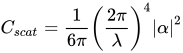
The basic principles for the functioning of plasmonic-enhanced solar cells include scattering and absorption of light due to the deposition of metal nano-particles. Silicon does not absorb light very well. For this reason, more light needs to be scattered across the surface in order to increase the absorption. It has been found that metal nano-particles help to scatter the incoming light across the surface of the silicon substrate. The equations that govern the scattering and absorption of light can be shown as:

This shows the scattering of light for particles which have diameters below the wavelength of light.

This shows the absorption for a point dipole model.

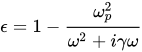
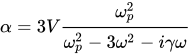
This is the polarizability of the particle. V is the particle volume. is the dielectric function of the particle. is the dielectric function of the embedding medium. When the polarizability of the particle becomes large. This polarizability value is known as the surface plasmon resonance. The dielectric function for metals with low absorption can be defined as:

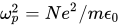
In the previous equation, is the bulk plasma frequency. This is defined as:

N is the density of free electrons, e is the electronic charge and m is the effective mass of an electron. is the dielectric constant of free space. The equation for the surface plasmon resonance in free space can therefore be represented by:

Many of the plasmonic solar cells use nano-particles to enhance the scattering of light. These nano-particles take the shape of spheres, and therefore the surface plasmon resonance frequency for spheres is desirable. By solving the previous equations, the surface plasmon resonance frequency for a sphere in free space can be shown as:

As an example, at the surface plasmon resonance for a silver nanoparticle, the scattering cross-section is about 10x the cross-section of the nanoparticle. The goal of the nano-particles is to trap light on the surface of the SC. The absorption of light is not important for the nanoparticle, rather, it is important for the SC. One would think that if the nanoparticle is increased in size, then the scattering cross-section becomes larger. This is true, however, when compared with the size of the nanoparticle, the ratio () is reduced. Particles with a large scattering cross section tend to have a broader plasmon resonance range.

Wavelength dependence

Surface plasmon resonance mainly depends on the density of free electrons in the particle. The order of densities of electrons for different metals is shown below along with the type of light which corresponds to the resonance.

If the dielectric constant for the embedding medium is varied, the resonant frequency can be shifted. Higher indexes of refraction will lead to a longer resonant wavelength.

Light trapping

The metal nano-particles are deposited at a distance from the substrate in order to trap the light between the substrate and the particles. The particles are embedded in a material on top of the substrate. The material is typically a dielectric, such as silicon or silicon nitride. When performing experiment and simulations on the amount of light scattered into the substrate due to the distance between the particle and substrate, air is used as the embedding material as a reference. It has been found that the amount of light radiated into the substrate decreases with distance from the substrate. This means that nano-particles on the surface are desirable for radiating light into the substrate, but if there is no distance between the particle and substrate, then the light is not trapped and more light escapes.

The surface plasmons are the excitations of the conduction electrons at the interface of metal and the dielectric. Metallic nano-particles can be used to couple and trap freely propagating plane waves into the semiconductor thin film layer. Light can be folded into the absorbing layer to increase the absorption. The localized surface plasmons in metal nano-particles and the surface plasmon polaritons at the interface of metal and semiconductor are of interest in the current research. In recent reported papers, the shape and size of the metal nano-particles are key factors to determine the incoupling efficiency. The smaller particles have larger incoupling efficiency due to the enhanced near-field coupling. However, very small particles suffer from large ohmic losses.

Nevertheless, in certain types of nanostructured solar cells, such as the emerging quantum-dot intermediate band solar cells, the highly intense scattered near-field produced in the vicinity of plasmonic nanoparticles may be exploited for local absorption amplification in the quantum dots that are embedded in a host semiconductor.

Recently, the plasmonic asymmetric modes of nano particles have found to favor the broadband optical absorption and promote the electrical properties of solar cells. The simultaneously plasmon-optical and plasmon-electrical effects of nanoparticles reveal a promising feature of nanoparticle plasmon.

Metal film

As light is incident upon the surface of the metal film, it excites surface plasmons. The surface plasmon frequency is specific for the material, but through the use of gratings on the surface of the film, different frequencies can be obtained. The surface plasmons are also preserved through the use of waveguides as they make the surface plasmons easier to travel on the surface and the losses due to resistance and radiation are minimized. The electric field generated by the surface plasmons influences the electrons to travel toward the collecting substrate.

Materials

First generation Second generation Third generation
Single-crystal silicon CuInSe2 Gallium indium phosphide
Multicrystalline silicon Amorphous silicon Gallium indium arsenide
Polycrystalline silicon Thin film crystalline Si Germanium

Applications

There are many applications for plasmonic-enhanced solar cells. The need for cheaper and more efficient solar cells is considerable. In order for solar cells to be considered cost-effective, they need to provide energy for a smaller price than that of traditional power sources such as coal and gasoline. The movement toward a more green world has helped to spark research in the area of plasmonic-enhanced solar cells. Currently, solar cells cannot exceed efficiencies of about 30% (first generation). With new technologies (third generation), efficiencies of up to 40-60% can be expected. With a reduction of materials through the use of thin film technology (second Generation), prices can be driven lower.

Certain applications for plasmonic-enhanced solar cells would be for space exploration vehicles. A main contribution for this would be the reduced weight of the solar cells. An external fuel source would also not be needed if enough power could be generated from the solar cells. This would drastically help to reduce the weight as well.

Solar cells have a great potential to help rural electrification. An estimated two million villages near the equator have limited access to electricity and fossil fuels, and approximately 25% of people in the world do not have access to electricity. When the cost of extending power grids, running rural electricity and using diesel generators is compared with the cost of solar cells, in many cases the solar cells are superior. If the efficiency and cost of the current solar cell technology is decreased even further, then many rural communities and villages around the world could obtain electricity when current methods are out of the question. Specific applications for rural communities would be water pumping systems, residential electric supply and street lights. A particularly interesting application would be for health systems in countries where motorized vehicles are not overly abundant. Solar cells could be used to provide the power to refrigerate medications in coolers during transport.

Solar cells could also provide power to lighthouses, buoys, or even battleships out in the ocean. Industrial companies could use them to power telecommunications systems or monitoring and control systems along pipelines.

If the solar cells could be produced on a large scale and be cost effective, then entire power stations could be built in order to provide power to the electrical grids. With a reduction in size, they could be implemented on both commercial and residential buildings with a much smaller footprint.

Other applications are in hybrid systems. The solar cells could help to power high-consumption devices such as automobiles in order to reduce the amount of fossil fuels used.

In consumer electronics devices, solar cells could be used to replace batteries for low-power electronics. This would save money and it would also reduce the amount of waste going into landfills.

Recent advancements

Choice of plasmonic metal nano-particles

Proper choice of plasmatic metal nanoparticles is crucial for the maximum light absorption in the active layer. Front surface located nanoparticles of silver and gold (Ag and Au) are the most widely used materials due to their surface plasmon resonances being located in the visible range, therefore interacting more strongly with the peak solar intensity. However, such noble metal nanoparticles always introduce reduced light coupling into Si at the short wavelengths below the surface plasmon resonance due to the detrimental Fano effect, i.e. the destructive interference between the scattered and unscattered light. Moreover, the noble metal nano-particles are impractical to use for large-scale solar cell manufacture due to their high cost and scarcity in the Earth's crust. Recently, Zhang et al. demonstrated that low-cost and earth-abundant aluminium (Al) nano-particles can outperform the widely used Ag and Au nanoparticles. Al nanoparticles, with their surface plasmon resonances located in the UV region below the desired solar spectrum edge at 300 nm, can avoid the reduction and introduce extra enhancement in the shorter wavelength range.

Light trapping for absorption enhancement

As discussed earlier, being able to concentrate and scatter light from the surface or the back side of the plasmonic-enhanced solar cell will help to increase efficiencies, particularly when employing thin photovoltaic materials.

Recently, research at Sandia National Laboratories has discovered a photonic waveguide which collects light at a certain wavelength and traps it within the structure. This new structure can contain 95% of the light that enters it compared to 30% for other traditional waveguides. It can also direct the light within one wavelength which is ten times greater than traditional waveguides. The wavelength this device captures can be selected by changing the structure of the lattice which comprises the structure. If this structure is used to trap light and keep it in the structure until the solar cell can absorb it, the efficiency of the solar cell could be increased dramatically.

Another recent advancement in plasmonic-enhanced solar cells is using other methods to aid in the absorption of light. One method being researched is the use of metal wires on top of the substrate to scatter the light. This would help by utilizing a larger area of the surface of the solar cell for light scattering and absorption. The danger in using lines instead of dots would be creating a reflective layer which would reject light from the system. This is very undesirable for solar cells. This would be very similar to the thin metal film approach, but it also utilizes the scattering effect of the nano-particles.  Yue et al. used a type of new materials, called topological insulators, to increase the absorption of ultrathin a-Si solar cells. The topological insulator nanostructure has intrinsically core-shell configuration. The core is dielectric and has ultrahigh refractive index. The shell is metallic and support surface plasmon resonances. Through integrating the nanocone arrays into a-Si thin film solar cells, up to 15% enhancement of light absorption was predicted in the ultraviolet and visible ranges.

Third generation

The goal of third generation solar cells is to increase the efficiency using second generation solar cells (thin film) and using materials that are found abundantly on earth. This has also been a goal of the thin film solar cells. With the use of common and safe materials, third generation solar cells should be able to be manufactured in mass quantities, further reducing the costs. The initial costs would be high in order to produce the manufacturing processes, but after that they should be cheap. The way third generation solar cells will be able to improve efficiency is to absorb a wider range of frequencies. The current thin film technology has been limited to one frequency due to the use of single band gap devices.

Multiple energy levels

The idea for multiple energy level solar cells is to basically stack thin film solar cells on top of each other. Each thin film solar cell would have a different band gap which means that if part of the solar spectrum was not absorbed by the first cell then the one just below would be able to absorb part of the spectrum. These can be stacked and an optimal band gap can be used for each cell in order to produce the maximum amount of power. There are multiple options for how each cell can be connected, such as serial or parallel. The serial connection is desired because the output of the solar cell would just be two leads.

The lattice structure in each of the thin film cells needs to be the same. If it is not then there will be losses. The processes used for depositing the layers are complex. They include Molecular Beam Epitaxy and Metal Organic Vapour Phase Epitaxy. The current efficiency record is made with this process but doesn't have exact matching lattice constants. The losses due to this are not as effective because the differences in lattices allows for more optimal band gap material for the first two cells. This type of cell is expected to be able to be 50% efficient.

Lower-quality materials that use cheaper deposition processes are being researched as well. These devices are not as efficient, but the price, size and power combined allow them to be just as cost effective. Since the processes are simpler and the materials are more readily available, the mass production of these devices is more economical.

Hot carrier cells

A problem with solar cells is that the high energy photons that hit the surface are converted to heat. This is a loss for the cell because the incoming photons are not converted into usable energy. The idea behind the hot carrier cell is to utilize some of that incoming energy which is converted to heat. If the electrons and holes can be collected while hot, a higher voltage can be obtained from the cell. The problem with doing this is that the contacts which collect the electrons and holes will cool the material. Thus far, keeping the contacts from cooling the cell has been theoretical. Another way of improving the efficiency of the solar cell using the heat generated is to have a cell which allows lower energy photons to excite electron and hole pairs. This requires a small bandgap. Using a selective contact, the lower energy electrons and holes can be collected while allowing the higher energy ones to continue moving through the cell. The selective contacts are made using a double barrier resonant tunneling structure. The carriers are cooled which they scatter with phonons. If a material has a large bandgap of phonons then the carriers will carry more of the heat to the contact and it won't be lost in the lattice structure. One material which has a large bandgap of phonons is indium nitride. The hot carrier cells are in their infancy but are beginning to move toward the experimental stage.

Plasmonic-electrical solar cells

Having unique features of tunable resonances and unprecedented near-field enhancement, plasmon is an enabling technique for light management. Recently, performances of thin-film solar cells have been pronouncedly improved by introducing metallic nanostructures. The improvements are mainly attributed to the plasmonic-optical effects for manipulating light propagation, absorption, and scattering. The plasmonic-optical effects could: (1) boost optical absorption of active materials; (2) spatially redistribute light absorption at the active layer due to the localized near-field enhancement around metallic nanostructures. Except for the plasmonic-optical effects, the effects of plasmonically modified recombination, transport and collection of photocarriers (electrons and holes), hereafter named plasmonic-electrical effects, have been proposed by Sha, etal. For boosting device performance, they conceived a general design rule, tailored to arbitrary electron to hole mobility ratio, to decide the transport paths of photocarriers. The design rule suggests that electron to hole transport length ratio should be balanced with electron to hole mobility ratio. In other words, the transport time of electrons and holes (from initial generation sites to corresponding electrodes) should be the same. The general design rule can be realized by spatially redistributing light absorption at the active layer of devices (with the plasmonic-electrical effect). They also demonstrated the breaking of space charge limit in plasmonic-electrical organic solar cell. Recently, the plasmonic asymmetric modes of nano particles have found to favor the broadband optical absorption and promote the electrical properties of solar cells. The simultaneously plasmon-optical and plasmon-electrical effects of nanoparticles reveal a promising feature of nanoparticle plasmon.

Ultra-thin plasmonic wafer solar cells

Reducing the silicon wafer thickness at a minimized efficiency loss represents a mainstream trend in increasing the cost-effectiveness of wafer-based solar cells. Recently, Zhang et al. have demonstrated that, using the advanced light trapping strategy with a properly designed nano-particle architecture, the wafer thickness can be dramatically reduced to only around 1/10 of the current thickness (180 Î¼m) without any solar cell efficiency loss at 18.2%. Nano-particle integrated ultra-thin solar cells with only 3% of the current wafer thickness can potentially achieve 15.3% efficiency combining the absorption enhancement with the benefit of thinner wafer induced open circuit voltage increase. This represents a 97% material saving with only 15% relative efficiency loss. These results demonstrate the feasibility and prospect of achieving high-efficiency ultra-thin silicon wafer cells with plasmonic light trapping.

Direct plasmonic solar cells

The development of direct plasmonic solar cells that use plasmonic nanoparticles directly as light absorbers is much more recent than plasmonic-enhanced cells.

In 2013 it was confirmed that hot carriers in plasmonic nanoparticles can be generated by excitation of localized surface plasmon resonance. The hot electrons were shown to be injected into a TiO2 conduction band, confirming their usability for light conversion to electricity. In 2019 another article was published describing how the hot electrons counterpart, the hot holes, can also be injected into a p-type semiconductor. This separation of charges enables direct use of plasmonic nanoparticles as light absorbers in photovoltaic cells.

A spin-off company from Uppsala university, Peafowl Solar Power, is developing direct plasmonic solar cell technology for commercial applications such as transparent solar cells for dynamic glass.

Science fiction prototyping

From Wikipedia, the free encyclopedia
https://en.wikipedia.org/wiki/Science_fiction_prototyping

Science fiction prototyping (SFP) refers to the idea of using science fiction to describe and explore the implications of futuristic technologies and the social structures enabled by them. Similar terms are design fiction, speculative design, and critical design.

History and progress

The idea was introduced by Brian David Johnson in 2010 who, at the time, was a futurist at Intel working on the challenge his company faced anticipating the market needs for integrated circuits at the end of their 7–10 years design and production cycle. The roots for Science Fiction Prototyping can be traced back to two papers, the first by Callaghan et-al “Pervasive Computing and Urban Development: Issues for the individual and Society”, presented at the 2004 United Nations World Urban Forum which used short stories as a means to convey potential future threats of technology to society and the second, by Egerton et-al "Using Multiple Personas In Service Robots To Improve Exploration Strategies When Mapping New Environments" describing multiple personas and irrational thinking for humanoid robots which inspired Brian David Johnson to write the first Science Fiction Prototype, Nebulous Mechanisms, which went on to become a series of stories that eventually morphed into Intel's 21st Century Robot project. Together Johnson, Callaghan and Egerton formed the Creative Science Foundation as a vehicle to promote and support the use of Science Fiction Prototyping and its derivatives. The first public Science Fiction Prototyping event was Creative Science 2010 (not to be confused with Creation Science), held in Kuala Lumpur, Malaysia on 19 July 2010. This event was also significant as it included the Science Fiction Prototype Tales From a Pod which became the first Science Fiction Prototype to be commercialised (by Immersive Displays Ltd, ImmersaVU). In 2011, a second Science Fiction Prototyping workshop was held in Nottingham (UK), Creative Science 2011, in which Intel made the first documentary about this methodology. Shortly afterwards the Creative Science Foundation was formed as an umbrella organisation to manage Science Fiction Prototyping activity, leading to a proliferation of events and publications; a more detailed account is provided on the Science Fiction Prototyping History web pages.

Methodology

The core methodology is the use of creative arts as a means to introduce innovations into science, engineering, business and socio-political systems. It doesn't aim to forecast the future, rather it focuses on inventing or innovating the future by extrapolating forward trends from research or foresight activities (creating new concepts, schemes, services and products). The main (but not exclusive) methodology is the use of science-fiction stories, grounded in existing practice which are written for the explicit purpose of acting as prototypes for people to explore a wide variety of futures. These 'science fiction prototypes' (SFPs) can be created by scientists, engineers, business or socio-political professionals to stretch their work or, for example, by writers, film/stage directors, school children and members of the public to influence the work of professionals. In this way these stories act as a way of involving the widest section of the population to help set the research agenda. Johnson advocates the following five step process for writing Science Fiction Prototypes:

  1. Pick Your Science and Build Your World
  2. Identify the Scientific Inflection Point
  3. Consider ramifications of the Science on People
  4. Identify the Human Inflection Point
  5. Reflect on what Did We Learn?

Full Science Fiction Prototypes are about 6–12 pages long, with a popular structure being: an introduction, background work, the fictional story (the bulk of the SFP), a short summary and a summary (reflection). Most often science fiction prototypes extrapolate current science forward and, therefore, include a set of references at the end. Such prototypes can take several days to write and for situations where ideas need to be generated faster (e.g. meetings), the concept of micro science fiction prototypes (μSFP) is used. Generally, μSFP are the size of a Twitter or Text message, being around 25–30 words (140–160 characters in standard English).

Applications

Science fiction prototyping has a number of applications. The most obvious is for product innovation, in which the two earliest examples are Intel's 21st Century Robot (an open innovation project to develop a domestic robot) and Essex University's eDesk (a mixed-reality immersive education desk) both of which were introduced in the previous section. Beyond product innovation, science fiction prototyping finds itself being applied to many diverse areas. For example, at the University of Washington (USA) they have used it to facilitate broader contextual and societal thinking about computers, computer security risks, and security defense as part of an optional senior-level course in computer security. In 2014, these ideas were refined into a SFP methodology called Threatcasting with early adopters including the United States Air Force Academy, the Government of California, and the Army Cyber Institute at West Point Military Academy. An earlier variation called Futurcasting was used by government to provide a tool to influence the direction of society and politics. It did this by using stories about possible futures as a medium to engage the population in conversations about futures they would like to encourage or avoid. Science Fiction Prototyping is also being used in business environments. For example, in Canterbury Christ Church University (UK) Business School it is being used as a vehicle to introduce creative thinking in support of entrepreneurship courses. In the National Taiwan University (Taiwan), it is used to increase business school students' interests in science and technology for business innovation. Elsewhere the Business Schools of the universities of Leeds and Manchester (UK) are exploring its use in community development projects. Finally, it is being applied to Education. For example, in San-Diego State University (USA) Department of Learning Design and Technology they have explored it as a means for motivating pre-university students to take up STEM studies and careers. Further afield, in China, they have identified a novel use for the methodology to address the mandatory requirement for all science and engineering students to take a course in English language. In particular Shijiazhuang University (China) are exploring the potential for Science Fiction Prototyping to overcome the dullness that some science students experience in language learning by using it as an integrated platform for teaching Computer English, combining language and science learning. China is also concerned to improve the creative and innovation capabilities of their graduate which this approach supports.

Indeterminism

From Wikipedia, the free encyclopedia https://en.wikipedia.org/wiki/Indeterm...