Search This Blog

Wednesday, August 12, 2026

Evolutionary linguistics

From Wikipedia, the free encyclopedia

Evolutionary linguistics or Darwinian linguistics is a sociobiological approach to the study of language. Evolutionary linguists consider linguistics as a subfield of sociobiology and evolutionary psychology. The approach is also closely linked with evolutionary anthropology, cognitive linguistics and biolinguistics. Studying languages as the products of nature, it is interested in the biological origin and development of language. Evolutionary linguistics is contrasted with humanistic approaches, especially structural linguistics.

A main challenge in this research is the lack of empirical data: there are no archaeological traces of early human language. Computational biological modelling and clinical research with artificial languages have been employed to fill in gaps of knowledge. Although biology is understood to shape the brain, which processes language, there is no clear link between biology and specific human language structures or linguistic universals.

For lack of a breakthrough in the field, there have been numerous debates about what kind of natural phenomenon language might be. Some researchers focus on the innate aspects of language. It is suggested that grammar has emerged adaptationally from the human genome, bringing about a language instinct; or that it depends on a single mutation which has caused a language organ to appear in the human brain. This is hypothesized to result in a crystalline grammatical structure underlying all human languages. Others suggest language is not crystallized, but fluid and ever-changing. Others, yet, liken languages to living organisms. Languages are considered analogous to a parasite or populations of mind-viruses. There is so far little scientific evidence for any of these claims, and some of them have been labelled as pseudoscience.

History

1863–1945: social Darwinism

Although pre-Darwinian theorists had compared languages to living organisms as a metaphor, the comparison was first taken literally in 1863 by the historical linguist August Schleicher who was inspired by Charles Darwin's On the Origin of Species. At the time there was not enough evidence to prove that Darwin's theory of natural selection was correct. Schleicher proposed that linguistics could be used as a testing ground for the study of the evolution of species. A review of Schleicher's book Darwinism as Tested by the Science of Language appeared in the first issue of Nature journal in 1870. Darwin reiterated Schleicher's proposition in his 1871 book The Descent of Man, claiming that languages are comparable to species, and that language change occurs through natural selection as words 'struggle for life'. Darwin believed that languages had evolved from animal mating calls. Darwinists considered the concept of language creation as unscientific.

August Schleicher and his friend Ernst Haeckel were keen gardeners and regarded the study of cultures as a type of botany, with different species competing for the same living space. Similar ideas became later advocated by politicians who wanted to appeal to working class voters, not least by the national socialists who subsequently included the concept of struggle for living space in their agenda. Highly influential until the end of World War II, social Darwinism was eventually banished from human sciences, leading to a strict separation of natural and sociocultural studies.

This gave rise to the dominance of structural linguistics in Europe. There had long been a dispute between the Darwinists and the French intellectuals with the topic of language evolution famously having been banned by the Paris Linguistic Society as early as in 1866. Ferdinand de Saussure proposed structuralism to replace evolutionary linguistics in his Course in General Linguistics, published posthumously in 1916. The structuralists rose to academic political power in human and social sciences in the aftermath of the student revolts of Spring 1968, establishing the Sorbonne as an international centrepoint of humanistic thinking.

From 1959 onwards: genetic determinism

In the United States, structuralism was however fended off by the advocates of behavioural psychology; a linguistics framework nicknamed as 'American structuralism'. It was eventually replaced by the approach of Noam Chomsky who published a modification of Louis Hjelmslev's formal structuralist theory, claiming that syntactic structures are innate. An active figure in peace demonstrations in the 1950s and 1960s, Chomsky rose to academic political power following Spring 1968 at the MIT.

Chomsky became an influential opponent of the French intellectuals during the following decades, and his supporters successfully confronted the post-structuralists in the Science Wars of the late 1990s. The shift of the century saw a new academic funding policy where interdisciplinary research became favoured, effectively directing research funds to biological humanities. The decline of structuralism was evident by 2015 with Sorbonne having lost its former spirit.

Chomsky eventually claimed that syntactic structures are caused by a random mutation in the human genome, proposing a similar explanation for other human faculties such as ethics. But Steven Pinker argued in 1990 that they are the outcome of evolutionary adaptations.

From 1976 onwards: Neo-Darwinism

At the same time when the Chomskyan paradigm of biological determinism defeated humanism, it was losing its own clout within sociobiology. It was reported likewise in 2015 that generative grammar was under fire in applied linguistics and in the process of being replaced with usage-based linguistics; a derivative of Richard Dawkins's memetics. It is a concept of linguistic units as replicators. Following the publication of memetics in Dawkins's 1976 nonfiction bestseller The Selfish Gene, many biologically inclined linguists, frustrated with the lack of evidence for Chomsky's Universal Grammar, grouped under different brands including a framework called Cognitive Linguistics (with capitalised initials), and 'functional' (adaptational) linguistics (not to be confused with functional linguistics) to confront both Chomsky and the humanists. The replicator approach is today dominant in evolutionary linguistics, applied linguistics, cognitive linguistics and linguistic typology; while the generative approach has maintained its position in general linguistics, especially syntax; and in computational linguistics.

View of linguistics

Evolutionary linguistics is part of a wider framework of Universal Darwinism. In this view, linguistics is seen as an ecological environment for research traditions struggling for the same resources. According to David Hull, these traditions correspond to species in biology. Relationships between research traditions can be symbiotic, competitive or parasitic. An adaptation of Hull's theory in linguistics is proposed by William Croft. He argues that the Darwinian method is more advantageous than linguistic models based on physics, structuralist sociology, or hermeneutics.

Approaches

Evolutionary linguistics is often divided into functionalism and formalism, concepts which are not to be confused with functionalism and formalism in the humanistic reference. Functional evolutionary linguistics considers languages as adaptations to human mind. The formalist view regards them as crystallised or non-adaptational.

Functionalism (adaptationism)

The adaptational view of language is advocated by various frameworks of cognitive and evolutionary linguistics, with the terms 'functionalism' and 'Cognitive Linguistics' often being equated. It is hypothesised that the evolution of the animal brain provides humans with a mechanism of abstract reasoning which is a 'metaphorical' version of image-based reasoning. Language is not considered as a separate area of cognition, but as coinciding with general cognitive capacities, such as perception, attention, motor skills, and spatial and visual processing. It is argued to function according to the same principles as these.

It is thought that the brain links action schemes to form–meaning pairs which are called constructions. Cognitive linguistic approaches to syntax are called cognitive and construction grammar. Also deriving from memetics and other cultural replicator theories, these can study the natural or social selection and adaptation of linguistic units. Adaptational models reject a formal systemic view of language and consider language as a population of linguistic units.

The bad reputation of social Darwinism and memetics has been discussed in the literature, and recommendations for new terminology have been given. What correspond to replicators or mind-viruses in memetics are called linguemes in Croft's theory of Utterance Selection (TUS), and likewise linguemes or constructions in construction grammar and usage-based linguistics; and metaphorsframes or schemas in cognitive and construction grammar. The reference of memetics has been largely replaced with that of a Complex Adaptive System. In current linguistics, this term covers a wide range of evolutionary notions while maintaining the Neo-Darwinian concepts of replication and replicator population.

Functional evolutionary linguistics is not to be confused with functional humanistic linguistics.

Formalism (structuralism)

Advocates of formal evolutionary explanation in linguistics argue that linguistic structures are crystallised. Inspired by 19th century advances in crystallography, Schleicher argued that different types of languages are like plants, animals and crystals. The idea of linguistic structures as frozen drops was revived in tagmemics, an approach to linguistics with the goal to uncover divine symmetries underlying all languages, as if caused by the Creation.

In modern biolinguistics, the X-bar tree is argued to be like natural systems such as ferromagnetic droplets and botanic forms. Generative grammar considers syntactic structures similar to snowflakes. It is hypothesised that such patterns are caused by a mutation in humans.

The formal–structural evolutionary aspect of linguistics is not to be confused with structural linguistics.

Evidence

There was some hope of a breakthrough with the discovery of the FOXP2 gene. There is little support, however, for the idea that FOXP2 is 'the grammar gene' or that it had much to do with the relatively recent emergence of syntactical speech. The idea that people have a language instinct is disputed. Memetics is sometimes discredited as pseudoscience and neurological claims made by evolutionary cognitive linguists have been likened to pseudoscience. All in all, there does not appear to be any evidence for the basic tenets of evolutionary linguistics beyond the fact that language is processed by the brain, and brain structures are shaped by genes.

Criticism

Evolutionary linguistics has been criticised by advocates of (humanistic) structural and functional linguistics. Ferdinand de Saussure commented on 19th century evolutionary linguistics:

"Language was considered a specific sphere, a fourth natural kingdom; this led to methods of reasoning which would have caused astonishment in other sciences. Today one cannot read a dozen lines written at that time without being struck by absurdities of reasoning and by the terminology used to justify these absurdities"

Mark Aronoff, however, argues that historical linguistics had its golden age during the time of Schleicher and his supporters, enjoying a place among the hard sciences, and considers the return of Darwinian linguistics as a positive development. Esa Itkonen nonetheless deems the revival of Darwinism as a hopeless enterprise:

"There is ... an application of intelligence in linguistic change which is absent in biological evolution; and this suffices to make the two domains totally disanalogous ... [Grammaticalisation depends on] cognitive processes, ultimately serving the goal of problem solving, which intelligent entities like humans must perform all the time, but which biological entities like genes cannot perform. Trying to eliminate this basic difference leads to confusion."

Itkonen also points out that the principles of natural selection are not applicable because language innovation and acceptance have the same source which is the speech community. In biological evolution, mutation and selection have different sources. This makes it possible for people to change their languages, but not their genotype.

Inheritance

From Wikipedia, the free encyclopedia
https://en.wikipedia.org/wiki/Inheritance
From William Hogarth's A Rake's Progress. "The Young Heir Takes Possession Of The Miser's Effects".

Inheritance is the practice of receiving private property, titles, debts, entitlements, privileges, rights, and obligations upon the death of an individual. The rules of inheritance differ among societies and have changed over time. In legal terms, succession is the process by which a deceased person's rights and property are transferred to their heirs, while inheritance is the property or assets those heirs receive.

Succession may occur either under the generally applicable statutory rules, referred to as intestate succession, or in accordance with the provisions outlined in a valid will. A will often must be attested by a notary or by other lawful means to be valid.

Legal systems can differ significantly in how property passes from a deceased person to their heirs, with common law jurisdictions typically requiring formal probate procedures, while civil law systems often allow heirs to acquire ownership automatically by operation of law - the principle of saisine or seizin (Quebec).

Terminology

In law, an heir (fem (obs): heiress) is a person who is entitled to receive a share of property from a decedent (a person who died), subject to the rules of inheritance in the jurisdiction where the decedent was a citizen, or where the decedent died or owned property at the time of death.

The inheritance may be either under the terms of a will or by intestacy laws if the deceased had no will. However, the will must comply with the laws of the jurisdiction at the time it was created, or it will be declared invalid - for example, some states do not recognise handwritten wills as valid, or only in specific circumstances - and the intestacy laws then apply.

The exclusion from inheritance of a person who was an heir in a previous will, or would be expected to inherit under the laws of intestate succession, is termed disinheritance.

A person does not become an heir before the death of the deceased, since the exact identity of the persons entitled to inherit is determined only then. Members of ruling noble or royal houses who are expected to become heirs are called heirs apparent if first in line and incapable of being displaced from inheriting by another claim; otherwise, they are heirs presumptive. There is a further concept of joint inheritance, pending renunciation by all but one, which is called coparceny.

In modern law, the terms ‘'inheritance'’ and '‘heir’' apply only to property passed by intestate succession  that is, from a person who dies without a will. Property distributed under a will passes to beneficiaries, who may be called devisees for real property, legatees for money, and recipients of bequests for other personal property.

Except in some jurisdictions where a person cannot be legally disinherited (such as the US state of Louisiana, which allows disinheritance only under specifically enumerated circumstances), a person who would otherwise be an heir may be disinherited completely under the terms of a will (an example is that of the will of comedian Jerry Lewis; his will specifically disinherited his six children by his first wife, and their descendants, leaving his entire estate to his second wife).

Inheritance has been compared to nepotism.

History

Detailed anthropological and sociological studies have been conducted on customs of patrimonial inheritance, in which only male children can inherit. Some cultures also employ matrilineal succession, where property can only pass along the female line, most commonly to the decedent's sister's sons, but also, in some societies, to the mother and her daughters. Some ancient societies and most modern states employ egalitarian inheritance, without discrimination based on gender and/or birth order.

Religious laws about inheritance

Jewish laws

The inheritance is patrimonial. The father —that is, the owner of the land— bequeaths only to his male descendants. According to the Law of Moses, the firstborn son was entitled to receive twice as much of his father's inheritance as the other sons (Deuteronomy 21:15–17).

If there were no living sons and no descendants of any previously living sons, daughters inherit. In Numbers 27, the five daughters of Zelophehad come to Moses and ask for their father's inheritance, as they have no brothers. The order of inheritance is set out: a man's sons inherit first, daughters if no sons, brothers if he has no children, and so on.

Later, in Numbers 36, some of the heads of the families of the tribe of Manasseh come to Moses and point out that if a daughter inherits and then marries a man not from her paternal tribe, her land will pass from her birth tribe's inheritance into her marriage tribe's. So a further rule is laid down: if a daughter inherits land, she must marry someone within her father's tribe. (The daughters of Zelophehad marry the sons of their father's brothers. There is no indication that this was not their choice.)

The laws of Jewish inheritance are discussed in the Talmud, in the Mishneh Torah and by Saadiah ben Joseph among other sources.

Philo of Alexandria and Josephus also comment on the Jewish laws of inheritance, praising them above other law codes of their time. They also agreed that the firstborn son must receive a double portion of his father's estate.

Christian laws

At first, Christianity did not have its own inheritance traditions distinct from Judaism. With the accession of Emperor Constantine in 306, Christians began to distance themselves from Judaism and to exert influence over the laws and practices of secular institutions. From the beginning, this included inheritance. The Roman practice of adoption was a specific target because it was perceived as in conflict with the Judeo-Christian doctrine of primogeniture. As Stephanie Coontz documents in Marriage, a History (Penguin, 2006), not only succession but the whole constellation of rights and practices that included marriage, adoption, legitimacy, consanguinity, and inheritance changed in Western Europe from a Greco-Roman model to a Judeo-Christian pattern, based on Biblical and traditional Judeo-Christian principles. The transformation was essentially complete in the Middle Ages, although in English-speaking countries there was additional development under the influence of Protestantism. Even when Europe became secularized and Christianity faded into the background, the legal foundation Christendom had laid remained. Only in the era of modern jurisprudence have there been significant changes.

Islamic laws

The Quran introduced some rights and restrictions regarding inheritance, including general improvements in the treatment of women and family life compared to the pre-Islamic societies of the Arabian Peninsula. Furthermore, the Quran introduced additional heirs that were not entitled to inheritance in pre-Islamic times, mentioning nine relatives specifically of which six were female and three were male. However, the inheritance rights of women remained different from those of men because in Islam, someone always has the responsibility of looking after a woman's expenses. According to 4:11, for example, a son is entitled to twice as much inheritance as a daughter. The Quran also presented efforts to fix the laws of inheritance, and thus forming a complete legal system. This development was in contrast to pre-Islamic societies, where rules of inheritance varied considerably. In addition to the above changes, the Quran imposed restrictions on testamentary powers of a Muslim in disposing their property.

Three verses of the Quran, 4:11, 4:12, and 4:176, give specific details on inheritance and shares, in addition to a few other verses dealing with testamentary matters. But this information was used as a starting point by Muslim jurists who expounded the laws of inheritance even further using Hadith, as well as methods of juristic reasoning like Qiyas. Nowadays, inheritance is considered an integral part of Sharia law and its application for Muslims is mandatory. However, many Muslim people (see Historical inheritance systems) follow other inheritance customs.

Inequality

Over time, wealth passes from generation to generation through inheritance. In 2024, the Silent Generation and baby boomers represented 25% of the population, but held 65% of all wealth in the US.
 
Older generations have accumulated more average wealth per person (vertical axis), but baby boomers as a group have the largest amount of wealth (areas within each rectangle). An estimated 73.9% of inheritors are already in the top ten percentiles of net worth.
Inheritance by amount and distribution received and action taken with inheritances in Great Britain between 2008 and 2010

The distribution of inherited wealth has varied greatly across cultures and legal traditions. In nations using civil law, for example, the right of children to inherit wealth from their parents in predefined ratios is enshrined in law. as far back as the Code of Hammurabi (ca. 1750 BC). In the US State of Louisiana, the only US state where the legal system is derived from the Napoleonic Code, this system is known as "forced heirship" which prohibits disinheritance of adult children except for a few narrowly defined reasons that a parent is obligated to prove. Other legal traditions, particularly in nations using common law, allow inheritances to be divided however one wishes, or to disinherit any child for any reason.

In cases of unequal inheritance, the majority might receive a small share while the minority receives a larger share. The amount of inheritance is often far less than the value of a business initially given to the son, especially when a son takes over a thriving multimillion-dollar business. Yet the daughter is given the balance of the actual inheritance, which amounts to far less than the value of the business initially given to the son. This is especially seen in old-world cultures, but continues in many families to this day.

Arguments for eliminating forced heirship include the right to property and the merit of individual allocation of capital over government wealth confiscation and redistribution, but this does not resolve what some[who?] describe as the problem of unequal inheritance. In terms of inheritance inequality, some economists and sociologists focus on the intergenerational transmission of income or wealth, which is said to directly affect one's mobility (or immobility) and class position in society. Nations differ on the political structure and policy options that govern the transfer of wealth.

According to the American federal government statistics compiled by Mark Zandi in 1985, the average US inheritance was $39,000. In subsequent years, the total annual inheritance more than doubled, reaching nearly $200 billion. By 2050, an estimated $25 trillion in inheritance will be transmitted across generations.

Some researchers have attributed this rise to the baby boomers generation. Historically, the baby boomers were the largest influx of children conceived after World War II. For this reason, Thomas Shapiro suggests that this generation "is in the midst of benefiting from the greatest inheritance of wealth in history". Inherited wealth may help explain why many Americans who have become rich may have had a "substantial head start". In September 2012, according to the Institute for Policy Studies, "over 60 percent" of the Forbes richest 400 Americans "grew up in substantial privilege", and often (but not always) received substantial inheritances.

Other research has shown that many inheritances, large or small, are rapidly squandered. Similarly, analysis shows that over two-thirds of high-wealth families lose their wealth within two generations; almost 80% of high-wealth parents "feel the next generation is not financially responsible [and/or competent] enough to handle inheritance".

Social stratification

It has been argued that inheritance significantly affects social stratification. Inheritance is an integral component of family, economic, and legal institutions, and a basic mechanism of class stratification. It also affects the distribution of wealth at the societal level. The total cumulative effect of inheritance on stratification outcomes takes three forms, according to scholars who have examined the subject.

The first form of inheritance is the inheritance of cultural capital (i.e., linguistic styles, higher status social circles, and aesthetic preferences). The second form of inheritance is through familial interventions in the form of inter vivos transfers (i.e., gifts between the living), especially at crucial junctures in the life courses. Examples include milestones such as going to college, getting married, getting a job, and purchasing a home. The third form of inheritance is the transfer of bulk estates at the time of death of the testators, thus resulting in significant economic advantage accruing to their children. The average age of receiving an inheritance has been estimated at around 60 years. The origin of the stability of inequalities is material (personal possessions one can obtain) and is also cultural, rooted either in varying child-rearing practices that are geared to socialization according to social class and economic position. Child-rearing practices among those who inherit wealth may center around favoring some groups at the expense of others at the bottom of the social hierarchy.

Sociological and economic effects of inheritance inequality

It is further argued that the degree to which economic status and inheritance are transmitted across generations determines one's life chances in society. Although many have linked one's social origins and educational attainment to life chances and opportunities, education is not the most influential predictor of economic mobility. In fact, children of well-off parents generally receive better schooling and benefit from material, cultural, and genetic inheritances. Likewise, schooling attainment is often persistent across generations, and families with higher amounts of inheritance can acquire and transmit higher amounts of human capital. Lower amounts of human capital and inheritance can perpetuate inequality in the housing market and higher education. Research reveals that inheritance plays an important role in the accumulation of housing wealth. Those who receive an inheritance are more likely to own a home than those who do not, regardless of the size of the inheritance.

Often, racial or religious minorities and individuals from socially disadvantaged backgrounds receive less inheritance and wealth. As a result, mixed races might be excluded in inheritance privilege and are more likely to rent homes or live in poorer neighborhoods, as well as achieve lower educational attainment compared with whites in America.

Nations with the highest income and wealth inequalities often have the highest rates of homicide and disease (such as obesity, diabetes, and hypertension), which results in high mortality rates. A New York Times article reveals that the U.S. is the world's wealthiest nation, but "ranks twenty-ninth in life expectancy, right behind Jordan and Bosnia" and "has the second highest mortality rate of the comparable OECD countries". This has been attributed to the significant gap of inheritance inequality in the country, although there are clearly other factors, such as the affordability of healthcare.

When social and economic inequalities centered on inheritance are perpetuated by major social institutions such as the family, education, and religion, these differing life opportunities are argued to be transmitted across generations. As a result, this inequality is believed to become part of the overall social structure.

Women's unequal inheritance rights refer to the disparities and discriminatory practices that women face in inheriting property and assets compared to men. These inequalities stem from a combination of legal, cultural, and religious practices that often prioritize male heirs over female ones, resulting in significant socio-economic consequences for women.

Dynastic wealth

Dynastic wealth is monetary inheritance passed down to generations that did not earn it. Dynastic wealth is linked to the term Plutocracy. Much has been written about the rise and influence of dynastic wealth, including the bestselling book Capital in the Twenty-First Century by the French economist Thomas Piketty.

Bill Gates uses the term in his article "Why Inequality Matters".

Soviet response to inheritance

As Communism is founded on the Marxist Labor Theory of Value, any money collected in the course of a lifetime is justified if it was based on the fruits of the person's own labor and not from exploiting others. The first communist government installed after the Russian Revolution resolved to abolish the right of inheritance regardless of being the result of someone's work or exploitation, with some exceptions.

Taxation

Many states have inheritance taxes or estate taxes, under which a portion of any inheritance or estate becomes government revenue.

Inheritance and pensions

United Arab Emirates

In the United Arab Emirates, government pensions can, under specific conditions, be transferred to heirs upon a pensioner's death. This reflects a broader approach in some countries to support families of deceased retirees.

Behavioural genetics

From Wikipedia, the free encyclopedia
https://en.wikipedia.org/wiki/Behavioural_genetics

Behavioural genetics, also referred to as behaviour genetics, is a field of scientific research that uses genetic methods to investigate the nature and origins of individual differences in behaviour. While the name "behavioural genetics" connotes a focus on genetic influences, the field broadly investigates the extent to which genetic and environmental factors influence individual differences, and the development of research designs that can remove the confounding of genes and environment.

Behavioural genetics was founded as a scientific discipline by Francis Galton in the late 19th century, only to be discredited through association with eugenics movements before and during World War II. In the latter half of the 20th century, the field saw renewed prominence with research on inheritance of behaviour and mental illness in humans (typically using twin and family studies), as well as research on genetically informative model organisms through selective breeding and crosses. In the late 20th and early 21st centuries, technological advances in molecular genetics made it possible to measure and modify the genome directly. This led to major advances in model organism research (e.g., knockout mice) and in human studies (e.g., genome-wide association studies).

Findings from behavioural genetic research have broadly impacted modern understanding of the role of genetic and environmental influences on behaviour. These include evidence that nearly all researched behaviours are under a significant degree of genetic influence, and that influence tends to increase as individuals develop into adulthood. Further, most researched human behaviours are influenced by a very large number of genes and the individual effects of these genes are very small. Environmental influences also play a strong role, but they tend to make family members more different from one another, not more similar.

History

Farmers with wheat and cattle—Ancient Egyptian art 1,422 BCE displaying domesticated animals

Selective breeding and the domestication of animals is perhaps the earliest evidence that humans considered the idea that individual differences in behaviour could be due to natural causes. Plato and Aristotle each speculated on the basis and mechanisms of inheritance of behavioural characteristics. Plato, for example, argued in The Republic that selective breeding among the citizenry to encourage the development of some traits and discourage others, what today might be called eugenics, was to be encouraged in the pursuit of an ideal society. Behavioural genetic concepts also existed during the English Renaissance, where William Shakespeare perhaps first coined the phrase "nature versus nurture" in The Tempest, where he wrote in Act IV, Scene I, that Caliban was "A devil, a born devil, on whose nature Nurture can never stick".

Modern-day behavioural genetics began with Sir Francis Galton, a nineteenth-century intellectual and cousin of Charles Darwin. Galton was a polymath who studied many subjects, including the heritability of human abilities and mental characteristics. One of Galton's investigations involved a large pedigree study of social and intellectual achievement in the English upper class. In 1869, 10 years after Darwin's On the Origin of Species, Galton published his results in Hereditary Genius. In this work, Galton found that the rate of "eminence" was highest among close relatives of eminent individuals, and decreased as the degree of relationship to eminent individuals decreased. While Galton could not rule out the role of environmental influences on eminence, a fact which he acknowledged, the study served to initiate an important debate about the relative roles of genes and environment on behavioural characteristics. Through his work, Galton also "introduced multivariate analysis and paved the way towards modern Bayesian statistics" that are used throughout the sciences—launching what has been dubbed the "Statistical Enlightenment".

Galton in his later years

The field of behavioural genetics, as founded by Galton, was ultimately undermined by another of Galton's intellectual contributions, the founding of the eugenics movement in 20th century society. The primary idea behind eugenics was to use selective breeding combined with knowledge about the inheritance of behaviour to improve the human species. The eugenics movement was subsequently discredited by scientific corruption and genocidal actions in Nazi Germany. Behavioural genetics was thereby discredited through its association to eugenics. The field once again gained status as a distinct scientific discipline through the publication of early texts on behavioural genetics, such as Calvin S. Hall's 1951 book chapter on behavioural genetics, in which he introduced the term "psychogenetics", which enjoyed some limited popularity in the 1960s and 1970s. However, it eventually disappeared from usage in favour of "behaviour genetics".

The start of behaviour genetics as a well-identified field was marked by the publication in 1960 of the book Behavior Genetics by John L. Fuller and William Robert (Bob) Thompson. It is widely accepted now that many if not most behaviours in animals and humans are under significant genetic influence, although the extent of genetic influence for any particular trait can differ widely. A decade later, in February 1970, the first issue of the journal Behavior Genetics was published and in 1972 the Behavior Genetics Association was formed with Theodosius Dobzhansky elected as the association's first president. The field has since grown and diversified, touching many scientific disciplines.

Methods

The primary goal of behavioural genetics is to investigate the nature and origins of individual differences in behaviour. A wide variety of different methodological approaches are used in behavioural genetic research, only a few of which are outlined below.

Animal studies

Investigators in animal behaviour genetics can carefully control for environmental factors and can experimentally manipulate genetic variants, allowing for a degree of causal inference that is not available in studies on human behavioural genetics. In animal research selection experiments have often been employed. For example, laboratory house mice have been bred for open-field behaviourthermoregulatory nesting, and voluntary wheel-running behaviour. A range of methods in these designs are covered on those pages. Behavioural geneticists using model organisms employ a range of molecular techniques to alter, insert, or delete genes. These techniques include knockouts, floxing, gene knockdown, or genome editing using methods like CRISPR-Cas9. These techniques allow behavioural geneticists different levels of control in the model organism's genome, to evaluate the molecular, physiological, or behavioural outcome of genetic changes. Animals commonly used as model organisms in behavioural genetics include mice, zebra fishDrosophila, and the nematode species C. elegans.

Machine learning and A.I. developments are allowing researchers to design experiments that are able to manage the complexity and large data sets generated, allowing for increasingly complex behavioural experiments.

Human studies

Some research designs used in behavioural genetic research are variations on family designs (also known as pedigree designs), including twin studies and adoption studiesQuantitative genetic modelling of individuals with known genetic relationships (e.g., parent-child, sibling, dizygotic and monozygotic twins) allows one to estimate to what extent genes and environment contribute to phenotypic differences among individuals.

Twin and family studies

Pedigree chart showing an inheritance pattern consistent with autosomal dominant transmission. Behavioural geneticists have used pedigree studies to investigate the genetic and environmental basis of behaviour.

The basic intuition of the twin study is that monozygotic twins share 100% of their genome and dizygotic twins share, on average, 50% of their segregating genome. Thus, differences between the two members of a monozygotic twin pair can only be due to differences in their environment, whereas dizygotic twins will differ from one another due to genes in addition to the environment. Under this simplistic model, if dizygotic twins differ more than monozygotic twins it can only be attributable to genetic influences. An important assumption of the twin model is the equal environment assumption that monozygotic twins have the same shared environmental experiences as dizygotic twins. If, for example, monozygotic twins tend to have more similar experiences than dizygotic twins—and these experiences themselves are not genetically mediated through gene-environment correlation mechanisms—then monozygotic twins will tend to be more similar to one another than dizygotic twins for reasons that have nothing to do with genes. While this assumption should be kept in mind when interpreting the results of twin studies, research tends to support the equal environment assumption.

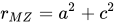
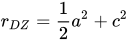
Twin studies of monozygotic and dizygotic twins use a biometrical formulation to describe the influences on twin similarity and to infer heritability. The formulation rests on the basic observation that the variance in a phenotype is due to two sources, genes and environment. More formally, , where is the phenotype, is the effect of genes, is the effect of the environment, and is a gene by environment interaction. The term can be expanded to include additive (), dominance (), and epistatic () genetic effects. Similarly, the environmental term can be expanded to include shared environment () and non-shared environment (), which includes any measurement error. Dropping the gene by environment interaction for simplicity (typical in twin studies) and fully decomposing the and terms, we now have . Twin research then models the similarity in monozygotic twins and dizygotic twins using simplified forms of this decomposition, shown in the table.

Decomposing the genetic and environmental contributions to twin similarity.
Type of relationship Full decomposition Falconer's decomposition
Perfect similarity between siblings
Monozygotic twin correlation()
Dizygotic twin correlation ()

Where is an unknown (probably very small) quantity.

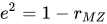
The simplified Falconer formulation can then be used to derive estimates of , , and . Rearranging and substituting the and equations one can obtain an estimate of the additive genetic variance, or heritability, , the non-shared environmental effect and, finally, the shared environmental effect . The Falconer formulation is presented here to illustrate how the twin model works. Modern approaches use maximum likelihood to estimate the genetic and environmental variance components.

Measured genetic variants

The Human Genome Project has allowed scientists to directly genotype the sequence of human DNA nucleotides. Once genotyped, genetic variants can be tested for association with a behavioural phenotype, such as mental disorder, cognitive ability, personality, and so on.

  • Candidate Genes. One popular approach has been to test for association candidate genes with behavioural phenotypes, where the candidate gene is selected based on some a priori theory about biological mechanisms involved in the manifestation of a behavioural trait or phenotype. In general, such studies have proven difficult to broadly replicate and there has been concern raised that the false positive rate in this type of research is high.
  • Genome-wide association studies In genome-wide association studies, researchers test the relationship of millions of genetic polymorphisms with behavioural phenotypes across the genome. This approach to genetic association studies is largely atheoretical, and typically not guided by a particular biological hypothesis regarding the phenotype. Genetic association findings for behavioural traits and psychiatric disorders have been found to be highly polygenic (involving many small genetic effects).
    Study results about which and to what degree various traits, IQ and language-related skills appear to be influenced by genetics
    Genetic variants identified to be associated with some trait or disease through GWAS may be used to improve disease risk predictions. However, the genetic variants identified through GWAS of common genetic variants are most likely to have a modest effect on disease risk or development of a given trait. This is different from the strong genetic contribution seen in Mendelian conditions or for some rare variants that may have a larger effect on disease.
  • SNP heritability and co-heritability Recently, researchers have begun to use similarity between classically unrelated people at their measured single nucleotide polymorphisms (SNPs) to estimate genetic variation or covariation that is tagged by SNPs, using mixed effects models implemented in software such as genome-wide complex trait analysis (GCTA). To do this, researchers find the average genetic relatedness over all SNPs between all individuals in a (typically large) sample, and use Haseman–Elston regression or restricted maximum likelihood to estimate the genetic variation that is "tagged" by, or predicted by, the SNPs. The proportion of phenotypic variation that is accounted for by the genetic relatedness has been called "SNP heritability". Intuitively, SNP heritability increases to the degree that phenotypic similarity is predicted by genetic similarity at measured SNPs, and is expected to be lower than the true narrow-sense heritability to the degree that measured SNPs fail to tag (typically rare) causal variants. The value of this method is that it is an independent way to estimate heritability that does not require the same assumptions as those in twin and family studies, and that it gives insight into the allelic frequency spectrum of the causal variants underlying trait variation.

Quasi-experimental designs

Some behavioural genetic designs are useful not to understand genetic influences on behaviour, but to control for genetic influences to test environmentally-mediated influences on behaviour. Such behavioural genetic designs may be considered a subset of natural experimentsquasi-experiments that attempt to take advantage of naturally occurring situations that mimic true experiments by providing some control over an independent variable. Natural experiments can be particularly useful when experiments are infeasible, due to practical or ethical limitations.

A general limitation of observational studies is that the relative influences of genes and environment are confounded. A simple demonstration of this fact is that measures of 'environmental' influence are heritable. Thus, observing a correlation between an environmental risk factor and a health outcome is not necessarily evidence for environmental influence on the health outcome. Similarly, in observational studies of parent-child behavioural transmission, for example, it is impossible to know if the transmission is due to genetic or environmental influences, due to the problem of passive gene–environment correlation. The simple observation that the children of parents who use drugs are more likely to use drugs as adults does not indicate why the children are more likely to use drugs when they grow up. It could be because the children are modelling their parents' behaviour. Equally plausible, it could be that the children inherited drug-use-predisposing genes from their parent, which put them at increased risk for drug use as adults regardless of their parents' behaviour. Adoption studies, which parse the relative effects of rearing environment and genetic inheritance, find a small to negligible effect of rearing environment on smoking, alcohol, and marijuana use in adopted children, but a larger effect of rearing environment on harder drug use.

Other behavioural genetic designs include discordant twin studies, children of twins designs, and Mendelian randomization.

General findings

There are many broad conclusions to be drawn from behavioural genetic research about the nature and origins of behaviour. Three major conclusions include:

  1. all behavioural traits and disorders are influenced by genes
  2. environmental influences tend to make members of the same family more different, rather than more similar
  3. the influence of genes tends to increase in relative importance as individuals age.

Genetic influences on behaviour are pervasive

It is clear from multiple lines of evidence that all researched behavioural traits and disorders are influenced by genes; that is, they are heritable. The single largest source of evidence comes from twin studies, where it is routinely observed that monozygotic (identical) twins are more similar to one another than are same-sex dizygotic (fraternal) twins.

The conclusion that genetic influences are pervasive has also been observed in research designs that do not depend on the assumptions of the twin method. Adoption studies show that adoptees are routinely more similar to their biological relatives than their adoptive relatives for a wide variety of traits and disorders. In the Minnesota Study of Twins Reared Apart, monozygotic twins separated shortly after birth were reunited in adulthood. These adopted, reared-apart twins were as similar to one another as were twins reared together on a wide range of measures including general cognitive ability, personality, religious attitudes, and vocational interests, among others. Approaches using genome-wide genotyping have allowed researchers to measure genetic relatedness between individuals and estimate heritability based on millions of genetic variants. Methods exist to test whether the extent of genetic similarity (aka, relatedness) between nominally unrelated individuals (individuals who are not close or even distant relatives) is associated with phenotypic similarity. Such methods do not rely on the same assumptions as twin or adoption studies, and routinely find evidence for heritability of behavioural traits and disorders.

Nature of environmental influence

Just as all researched human behavioural phenotypes are influenced by genes (i.e., are heritable), all such phenotypes are also influenced by the environment. The basic fact that monozygotic twins are genetically identical but are never perfectly concordant for psychiatric disorder or perfectly correlated for behavioural traits, indicates that the environment shapes human behaviour.

The nature of this environmental influence, however, is such that it tends to make individuals in the same family more different from one another, not more similar to one another. That is, estimates of shared environmental effects () in human studies are small, negligible, or zero for the vast majority of behavioural traits and psychiatric disorders, whereas estimates of non-shared environmental effects () are moderate to large. From twin studies is typically estimated at 0 because the correlation () between monozygotic twins is at least twice the correlation () for dizygotic twins. When using the Falconer variance decomposition () this difference between monozygotic and dizygotic twin similarity results in an estimated . The Falconer decomposition is simplistic. It removes the possible influence of dominance and epistatic effects which, if present, will tend to make monozygotic twins more similar than dizygotic twins and mask the influence of shared environmental effects. This is a limitation of the twin design for estimating . However, the general conclusion that shared environmental effects are negligible does not rest on twin studies alone. Adoption research also fails to find large () components; that is, adoptive parents and their adopted children tend to show much less resemblance to one another than the adopted child and his or her non-rearing biological parent. In studies of adoptive families with at least one biological child and one adopted child, the sibling resemblance also tends to be nearly zero for most traits that have been studied.

Similarity in twins and adoptees indicates a small role for shared environment in personality.

The figure provides an example from personality research, where twin and adoption studies converge on the conclusion of zero to small influences of shared environment on broad personality traits measured by the Multidimensional Personality Questionnaire including positive emotionality, negative emotionality, and constraint.

Given the conclusion that all researched behavioural traits and psychiatric disorders are heritable, biological siblings will always tend to be more similar to one another than will adopted siblings. However, for some traits, especially when measured during adolescence, adopted siblings do show some significant similarity (e.g., correlations of .20) to one another. Traits that have been demonstrated to have significant shared environmental influences include internalizing and externalizing psychopathology, substance use and dependence, and intelligence.

Nature of genetic influence

Genetic effects on human behavioural outcomes can be described in multiple ways. One way to describe the effect is in terms of how much variance in the behaviour can be accounted for by alleles in the genetic variant, otherwise known as the coefficient of determination or . An intuitive way to think about is that it describes the extent to which the genetic variant makes individuals, who harbour different alleles, different from one another on the behavioural outcome. A complementary way to describe effects of individual genetic variants is in how much change one expects on the behavioural outcome given a change in the number of risk alleles an individual harbours, often denoted by the Greek letter (denoting the slope in a regression equation), or, in the case of binary disease outcomes by the odds ratio of disease given allele status. Note the difference: describes the population-level effect of alleles within a genetic variant; or describe the effect of having a risk allele on the individual who harbours it, relative to an individual who does not harbour a risk allele.

When described on the metric, the effects of individual genetic variants on complex human behavioural traits and disorders are vanishingly small, with each variant accounting for of variation in the phenotype. This fact has been discovered primarily through genome-wide association studies of complex behavioural phenotypes, including results on substance use, personalityfertilityschizophreniadepression, and endophenotypes including brain structure and function. There are a small handful of replicated and robustly studied exceptions to this rule, including the effect of APOE on Alzheimer's disease, and CHRNA5 on smoking behaviour, and ALDH2 (in individuals of East Asian ancestry) on alcohol use.

On the other hand, when assessing effects according to the metric, there are a large number of genetic variants that have very large effects on complex behavioural phenotypes. The risk alleles within such variants are exceedingly rare, such that their large behavioural effects impact only a small number of individuals. Thus, when assessed at a population level using the metric, they account for only a small amount of the differences in risk between individuals in the population. Examples include variants within APP that result in familial forms of severe early onset Alzheimer's disease but affect only relatively few individuals. Compare this to risk alleles within APOE, which pose much smaller risk compared to APP, but are far more common and therefore affect a much greater proportion of the population.
Finally, there are classical behavioural disorders that are genetically simple in their etiology, such as Huntington's disease. Huntington's is caused by a single autosomal dominant variant in the HTT gene, which is the only variant that accounts for any differences among individuals in their risk for developing the disease, assuming they live long enough.[77] In the case of genetically simple and rare diseases such as Huntington's, the variant and the are simultaneously large.

Additional general findings

In response to general concerns about the replicability of psychological research, behavioural geneticists Robert Plomin, John C. DeFries, Valerie Knopik, and Jenae Neiderhiser published a review of the ten most well-replicated findings from behavioural genetics research. The ten findings were:

  1. "All psychological traits show significant and substantial genetic influence."
  2. "No behavioural traits are 100% heritable."
  3. "Heritability is caused by many genes of small effect."
  4. "Phenotypic correlations between psychological traits show significant and substantial genetic mediation."
  5. "The heritability of intelligence increases throughout development."
  6. "Age-to-age stability is mainly due to genetics."
  7. "Most measures of the 'environment' show significant genetic influence."
  8. "Most associations between environmental measures and psychological traits are significantly mediated genetically."
  9. "Most environmental effects are not shared by children growing up in the same family."
  10. "Abnormal is normal."

Criticisms and controversies

Behavioural genetic research and findings have at times been controversial. Some of this controversy has arisen because behavioural genetic findings can challenge societal beliefs about the nature of human behaviour and abilities. Major areas of controversy have included genetic research on topics such as racial differences, intelligence, violence, and human sexuality. Other controversies have arisen due to misunderstandings of behavioural genetic research, whether by the lay public or the researchers themselves. For example, the notion of heritability is easily misunderstood to imply causality, or that some behaviour or condition is determined by one's genetic endowment. When behavioural genetics researchers say that a behaviour is X% heritable, that does not mean that genetics causes, determines, or fixes up to X% of the behaviour. Instead, heritability is a statement about genetic differences correlated with trait differences on the population level.

Historically, perhaps the most controversial subject has been on race and geneticsRace is not a scientifically exact term, and its interpretation can depend on one's culture and country of origin. Instead, geneticists use concepts such as ancestry, which is more rigorously defined. For example, a so-called "Black" race may include all individuals of relatively recent African descent ("recent" because all humans are descended from African ancestors). However, there is more genetic diversity in Africa than the rest of the world combined, so speaking of a "Black" race is without a precise genetic meaning.

Qualitative research has fostered arguments that behavioural genetics is an ungovernable field without scientific norms or consensus, which fosters controversy. The argument continues that this state of affairs has led to controversies including race, intelligence, instances where variation within a single gene was found to very strongly influence a controversial phenotype (e.g., the "gay gene" controversy), and others. This argument further states that because of the persistence of controversy in behaviour genetics and the failure of disputes to be resolved, behaviour genetics does not conform to the standards of good science. scientific assumptions on which parts of behavioural genetic research are based have also been criticized as flawed. Genome wide association studies are often implemented with simplifying statistical assumptions, such as additivity, which may be statistically robust but unrealistic for some behaviours. Critics further contend that, in humans, behaviour genetics represents a misguided form of genetic reductionism based on inaccurate interpretations of statistical analyses. Studies comparing monozygotic (MZ) and dizygotic (DZ) twins assume that environmental influences will be the same in both types of twins, but this assumption may also be unrealistic. MZ twins may be treated more alike than DZ twins, which itself may be an example of evocative gene–environment correlation, suggesting that one's genes influence their treatment by others. It is also not possible in twin studies to eliminate effects of the shared womb environment, although studies comparing twins who experience monochorionic and dichorionic environments in utero do exist, and indicate limited impact. Studies of twins separated in early life include children who were separated not at birth but part way through childhood. The effect of early rearing environment can therefore be evaluated to some extent in such a study, by comparing twin similarity for those twins separated early and those separated later.

Variable speed of light

From Wikipedia, the free encyclopedia https://en.wikipedia.org/wiki/Variable_speed_of_light   ...